
Lake Mburo National Park is Uganda’s smallest savanna national park, but once you enter, its size becomes part of its charm. This is one of the easiest parks to reach from Kampala and Entebbe. It sits close to the main highway connecting central Uganda to the western safari route, which makes it a very good stop for travellers heading towards Bwindi, Queen Elizabeth, or the gorilla highlands.
Lake Mburo works equally well in the opposite direction. After gorilla trekking, chimpanzee trekking, and several days on Uganda’s western safari circuit, it offers a gentler final wildlife experience before the return to Kampala or Entebbe. Whether you use it as an opening stop, a break on the way west, or a relaxed conclusion to a longer safari, Lake Mburo gives you time to slow down without giving up rewarding wildlife encounters.
The park lies about 240 kilometres from Kampala, about 290 kilometres from Entebbe Airport, and around 30 kilometres from Mbarara, the main town in western Uganda. It is bordered by the wider districts of Mbarara, Lyantonde, Isingiro North, and Kiruhura, placing it right in the heart of Ankole cattle country. It covers around 270 square kilometres, making it compact enough for a short visit but still rich enough for game drives, boat cruises, birding, nature walks, horseback safaris, and quiet lodge stays surrounded by wildlife.
What makes Mburo special is the mix of open savanna, acacia woodland, rolling hills, riparian forest, papyrus swamp, and lakes. Wetlands cover about 20% of the park’s surface and form part of a 50-kilometre wetland system connected by swamps and five lakes within the park. Lake Mburo itself is the largest of these lakes and the scenic centre of the park, drawing wildlife, birds, and aquatic life to its shores. Around the lake, thick forest and papyrus open into grasslands where zebras, impalas, warthogs, and other plains game are regularly seen.
The park also carries a strong cultural and historical story. The name “Mburo” is believed to come from a legendary local herdsman whose cattle grazed these savannas, a fitting connection in a landscape long associated with the Banyankore pastoralists, commonly known as the Bahima. The area was first gazetted in 1933 as a controlled hunting area, became a game reserve in 1963, and was later declared a national park in 1983. Today, that layered history, the nearby Ankole communities, the lake system, and the easy road access make this one of Uganda’s most rewarding short safari stops.
Wildlife in Lake Mburo National Park
Lake Mburo is one of Uganda’s best places for close, relaxed wildlife viewing. It is a small savanna park, but its mix of open acacia woodland, rolling grassland, papyrus swamp, riparian forest, rocky outcrops, lakeshores, and open water gives it a surprising variety of animals and birds. This is the park we recommend when you want a soft, easy safari that still feels wild. You can see zebras grazing near the tracks, impalas standing alert on the open plains, buffaloes feeding near the water, and hippos calling from the lake.
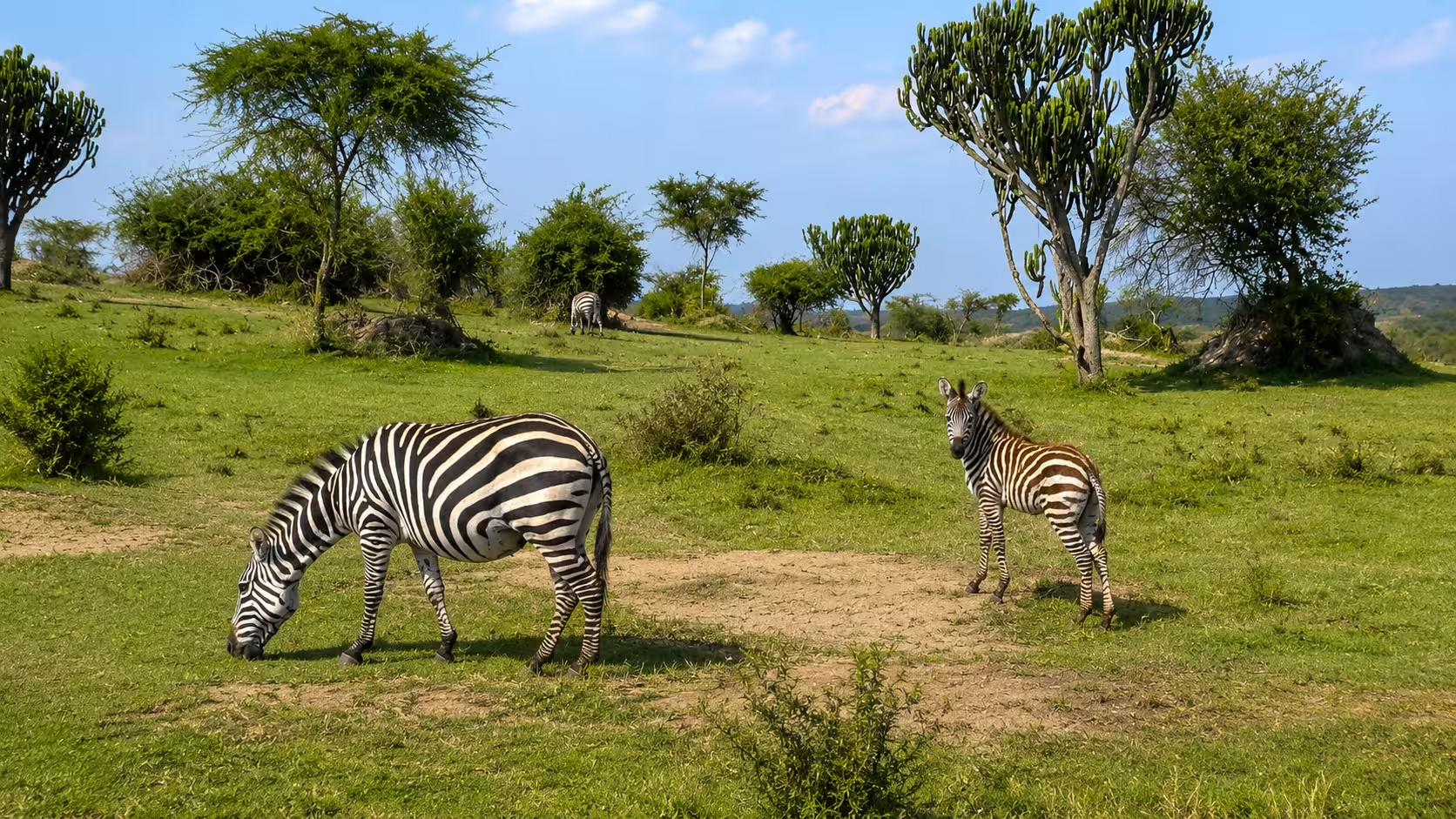
Burchell’s zebras in Lake Mburo National Park
The park is famous for its large number of herbivores and has a very different predator profile from Uganda’s lion parks. The leopard is Lake Mburo’s only large cat. It is present but secretive, while spotted hyenas and smaller predators also move through the park. With no resident lion population dominating the plains, Lake Mburo has a calmer, more open character. This helps make it one of Uganda’s strongest parks for guided walking safaris, nature walks, horseback riding, and cycling, as well as traditional game drives. Wildlife is spread across the savanna and wetlands, but the lakeshores, Rwonyo area, acacia plains, and swamp valleys give you some of the most rewarding sightings.
Animals to See in Lake Mburo National Park
Burchell’s zebras are the signature animals of the park. They are among the easiest mammals to see here, grazing in groups across the open acacia savanna and sometimes appearing close to the roads before you have even driven deep into the park. In Uganda, zebras are found in very few places, with Lake Mburo and Kidepo Valley National Park being the main parks where you look for them.
Impalas are another major highlight. Lake Mburo is the only national park in Uganda where impalas are naturally found in strong numbers, and their presence gives the park its graceful savanna character. You will see males standing on raised ground or termite mounds, watching over their territories, while females and young move in groups through the grasslands.
Elands, Africa’s largest antelopes, are also found here. These shy, powerful antelopes are best looked for in woodland and open grazing areas. Other antelope species include topi, waterbuck, bushbuck, oribi, klipspringer, duikers, and sitatunga. Klipspringers prefer rocky areas, while sitatunga live deep in the papyrus swamps, helped by their long, narrow hooves that allow them to move through marshy ground.
Rothschild giraffes were introduced to the park in 2015, adding more variety to the wildlife experience. Today, giraffes are seen on game drives through the open woodland and savanna. African buffaloes are also common, feeding around the lake shores, open plains, and wetland margins. Warthogs are easy to spot around tracks and lodge areas, trotting through the grass with their tails raised.
Other mammals in the park include aardvark, hyrax, porcupine, pangolin, civet, genet, spotted hyena, leopard, and baboon. The leopard is the park’s only large cat, but it is secretive, so a night game drive gives you the best chance of a sighting. Lake Mburo is therefore better known for plains game, wetland wildlife, and close herbivore viewing than for a conventional big-cat safari.
Hippos, Crocodiles, and Lake Wildlife
Lake Mburo itself is the heart of the park. It is the largest of the five lakes within the protected area and forms part of the wider wetland system connected by swamps and waterways and this setting supports hippos, crocodiles, waterbirds, papyrus specialists, and aquatic life. A boat cruise gives you the closest and safest view of the park’s water animals. Hippos are present in large numbers and are best enjoyed from the boat as they surface, grunt, yawn, and move between pods. Crocodiles rest along the shores and slide quietly into the water when approached.
Your boat captain keeps a safe distance, giving you good viewing while respecting the animals’ space. The lake and surrounding wetlands are also excellent for kingfishers, herons, fish eagles, cormorants, pelicans, and rarer swamp species. Around the papyrus edges, patient birders can search for African finfoot, papyrus gonolek, papyrus yellow warbler, swamp flycatcher, and the rare shoebill stork.
Birds in Lake Mburo National Park
Lake Mburo is one of Uganda’s strong birding parks, with more than 350 recorded bird species across its savanna, woodland, lake, swamp, grassland, and forest habitats. It is a very good park for travellers who want a mixed safari, because you can combine mammals, boat cruising, walking, and birdwatching in a short stay. The birdlife is helped by the park’s habitat variety. The acacia savanna brings species such as martial eagles, Bateleur eagles, red-faced barbets, bare-faced go-away-birds, coqui francolins, emerald-spotted wood doves, Lake Mburo National Park 3 brown-chested lapwings, grey crowned cranes, and Rufous long-tailed starlings. The grey crowned crane, Uganda’s national bird, is one of the most beautiful birds to look for in the open grassland and wetland edges.
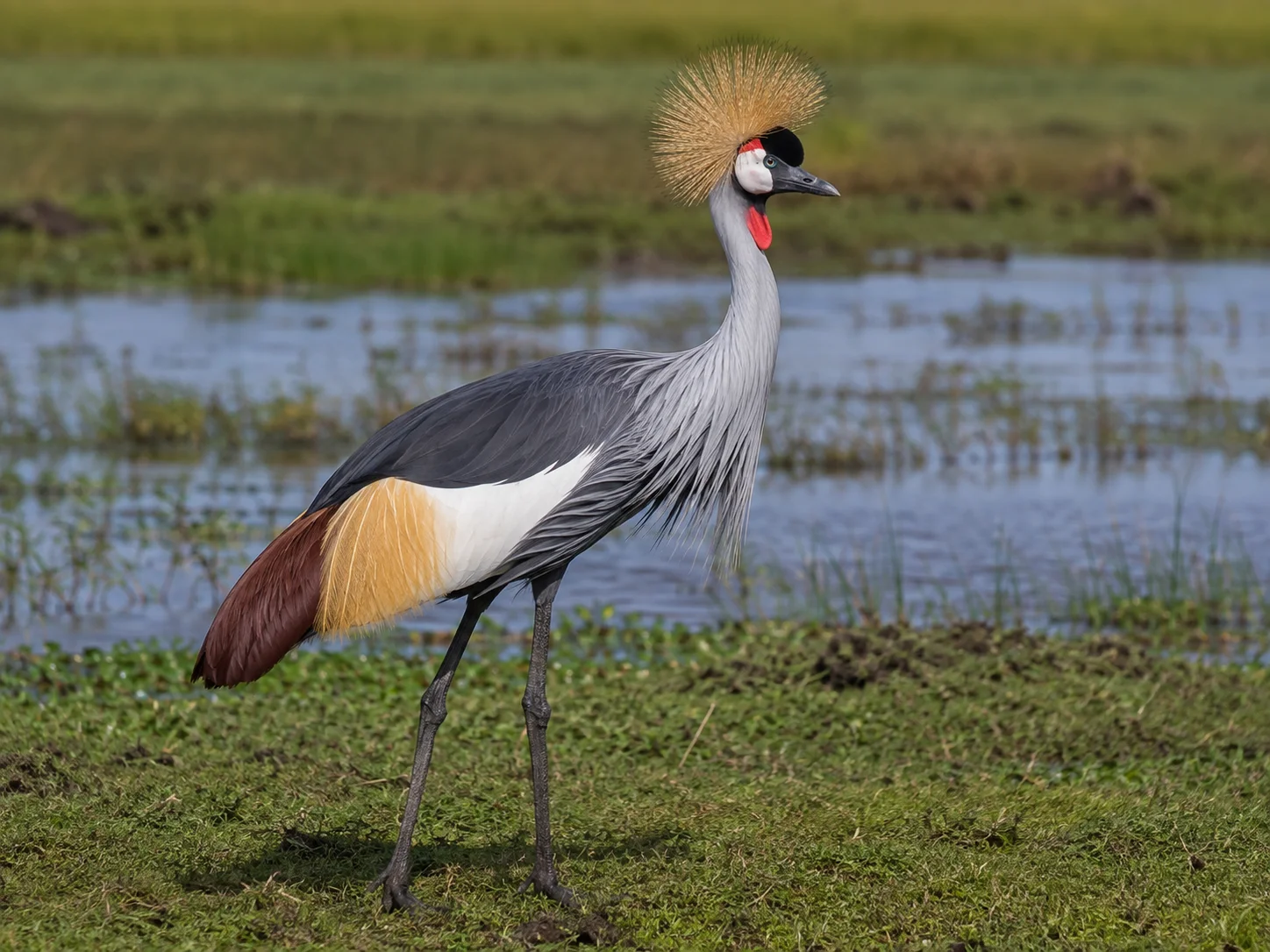
Grey Crowned Crane
The lakeshore and papyrus swamps bring a different birding experience. Here you look for African fish eagles, malachite kingfishers, pied kingfishers, blue-headed weavers, hamerkops, herons, pelicans, cormorants, darters, yellow-billed ducks, white-winged black terns, long-tailed cormorants, greater cormorants, pink-backed pelicans, and white pelicans. Around the quieter swamp margins, birders also search for African finfoot, rufous-bellied heron, papyrus gonolek, and shoebill stork.
Rubanga Forest adds forest birding to the Mburo experience. This is the place to look for forest-dependent species and one of the best areas in the park for the red-faced barbet. Other interesting birds recorded around the park include brown parrot, black-bellied bustard, southern ground hornbill, spot-flanked barbet, black-collared barbet, white-winged warbler, Carruther’s cisticola, yellow-billed oxpecker, marabou stork, bronze-tailed starling, bee-eaters, blue-naped coucal, Nubian woodpecker, and swamp flycatcher.
Things to Do in Lake Mburo National Park
Lake Mburo is one of the best places in Uganda when you want an active safari, not just a game drive from the vehicle. Because the park is compact, open, and rich in savanna and wetland life, you can explore it by vehicle, boat, on foot, on horseback, by bicycle, and even from quiet observation points. This makes it a rewarding stop for wildlife viewing, birdwatching, cultural visits, and soft adventure between Kampala, Entebbe, and western Uganda.
Boat Cruise on Lake Mburo
A boat cruise is the activity we would not leave out of this park. The lake is the centre of life here, and once you get onto the water, you begin to see why. Hippos gather in large pods, Nile crocodiles rest along the shoreline, buffaloes and impalas come down to drink, and waterbirds move between the papyrus edges and open water. This is also one of the best ways to enjoy the park’s birdlife. Look out for African fish eagles, malachite kingfishers, pied kingfishers, blue-headed weavers, hamerkops, herons, pelicans, cormorants, black crakes, and the rare shoebill stork. Launches depart from Rwonyo Jetty, with the boat cruise costing US$30 per person for foreign non-residents. The duration can be arranged to suit your safari programme and interests.
Game Drives in Lake Mburo National Park
Game drives are the main way to cover the park’s acacia savanna, woodland, lakeshore tracks, and open grazing areas. A good 4×4 safari vehicle is recommended because the park roads pass through different habitats where wildlife movement changes through the day. On a game drive, you can see Burchell’s zebras, impalas, buffaloes, topis, elands, warthogs, waterbucks, bushbucks, Rothschild giraffes, and many birds. Leopards, hyenas, and jackals. Night drives give better chances for secretive predators. Morning game drives from about 6:00 to 10:00 AM give good light and active wildlife. Afternoon drives from about 4:00 to 7:00 PM are excellent as animals move towards water and the light softens across the savanna.
Guided Nature Walks and Foot Safaris
Lake Mburo is one of the few Ugandan parks where walking safaris are a major part of the experience. Walks are done with an armed park ranger, allowing you to step out of the vehicle and read the park at ground level. Around Rwonyo, nature walks take about 2 hours and pass through savanna grassland, acacia woodland, papyrus swamp edges, and wildlife tracks. This is a good activity when you want to understand smaller details such as animal footprints, droppings, bird calls, medicinal plants, and how different animals use the same habitat. Walks inside the park must be done in the company of an armed park official.
Horseback Riding Safaris
Horseback riding is one of Lake Mburo’s most distinctive safari experiences. The quiet movement of the horse allows you to approach the landscape in a way vehicles cannot match. Zebras, in particular, can remain calmer around horses than vehicles, giving you a different kind of wildlife encounter. Wildlife seen on horseback can include Burchell’s zebras, elands, buffaloes, warthogs, impalas, topis, duikers, bushbucks, and waterbucks. Rides range from short 2-hour experiences to longer full-day outings, depending on your comfort, riding ability, and time in the park.
Rubanga Forest Walk
Rubanga Forest is small, but it is one of the most valuable forest patches in the park. It has a closed canopy in some places and gives birders a different habitat from the open savanna and wetland edges. Arrangements are made with park management so that a ranger can accompany you. The forest contains trees such as Markhamia platycalyx, with grey-brown flaky bark, divided leaves, yellow flowers marked with red, and long pod-like fruits that can reach up to 1.3 metres. Palms, figs, Sapium trees, and the flame tree Erythrina abyssinica occur towards the swamp edge. For birders, Rubanga Forest is a key place to look for the red-faced barbet and forest species that are harder to find in the open parts of the park.
Sport Fishing on Lake Mburo
Sport fishing is available for travellers who want a slower activity beside the lake. Lake Mburo contains 6 fish species, including tilapia, lungfish, mudfish, and Haplochromines. Fishing is done from the lake shore, with birdlife, lake views, and wildlife movement around you. The shaded campsite area gives anglers a comfortable place to spend quiet hours by the water. This activity is best arranged in advance so the right fishing area, timing, and local requirements are clear before you start.
Cycling and Bicycle Safaris
Cycling in Lake Mburo National Park gives you a close, active way to enjoy the park’s open tracks and gentle terrain. With a ranger guide, you ride through acacia woodland and savanna routes where zebras, impalas, warthogs, buffaloes, and birds can be seen along the way. This is a good choice when you want more movement than a vehicle safari but still want a guided wildlife experience. The park’s compact size and open scenery make bicycle riding one of its most enjoyable low-impact activities.
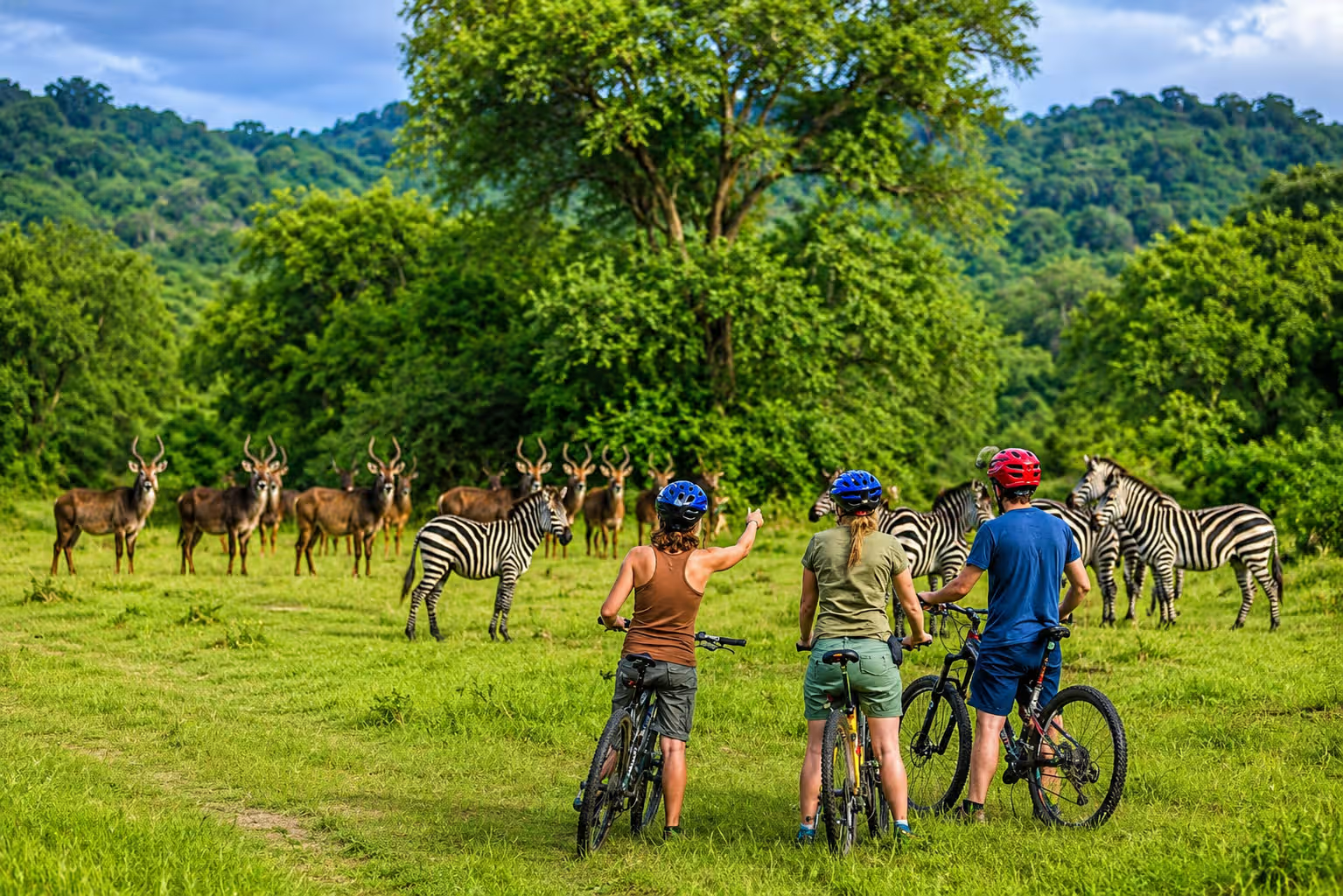
Cycling safaris in Lake Mburo National Park
Cultural Visits Around Lake Mburo
Lake Mburo sits in the Ankole sub-region, a landscape with strong pastoral history and deep cultural ties to long-horned Ankole cattle. Cultural visits around the park introduce travellers to the Bahima and wider Banyankitara communities, including the Banyankole, Bakiga, and Banyoro. A visit can include learning how Ankole cattle are reared, how milk and yoghurt are processed, and how local stories connect people to the park and surrounding grazing lands. Igongo Cultural Centre is located about 4 km from the Sanga Gates and is a good stop for travellers who want to understand western Uganda’s culture, food, dressing, cattle traditions, and local heritage. The cultural museum is locally known as Eriijukiro.
Best Time to Visit Lake Mburo National Park
Lake Mburo National Park is open throughout the year, so your timing depends on the kind of safari experience you want. For the clearest wildlife viewing, the best time to visit is during the dry seasons from June to September and December to February. During these months, the grass is lower, tracks are easier to use, and many animals gather closer to the remaining water sources around the lake, swamps, and open grazing areas.
Dry Season in Lake Mburo National Park
The dry season is the strongest time for game viewing. From June to September and again from December to February, wildlife becomes easier to spot because animals do not spread far from water. This is a good time for game drives, boat cruises, nature walks, horseback safaris, cycling, and photography because the tracks are firmer and the open savanna gives you cleaner views across the park. This is also the busier travel period, so lodges, camps, and activities need to be arranged early. The mid-year dry period from June to August or September brings the best weather, but it also attracts more visitors exploring Uganda. Rates can be higher in this season, so we advise travellers who want the best wildlife conditions to secure accommodation and activities before arrival.
Rainy Season in Lake Mburo National Park
The rainy seasons run mainly from March to May and October to November, with September sometimes acting as a changeover month. This season gives the park a greener, softer look. The valleys fill with fresh grass, the air loses much of the dry-season haze, and wildlife can be seen feeding in open valleys and grazing fields. It is also a rewarding time for birding, with strong activity around the wetlands, papyrus edges, lake shores, and woodland areas. The main thing to prepare for in the rainy season is movement on the ground. Hiking trails can become slippery, some tracks can be muddy, and steady drizzle can affect walking, cycling, and game-drive plans. For travellers who enjoy quieter parks, greener scenery, birdwatching, and lower-season lodge rates, the rainy season still gives a very good safari experience.
Where to Stay in Lake Mburo National Park
Lake Mburo has accommodation for different budgets and styles of travel, from scenic luxury lodges and comfortable mid-range stays to simple camps with a stronger outdoor feel. The best choice depends on whether you want lake views, easy access to game drives, horseback riding, boat cruises, nature walks, cultural encounters, or a quieter stay outside the busier areas. The selection below is deliberately concise, with each property included for the distinct experience it offers.
How to Get to Lake Mburo National Park
Lake Mburo National Park is one of the easiest Uganda national parks to reach by road, sitting close to the main Kampala to Mbarara highway in western Uganda. From Kampala, the drive is about 245 km and takes around 4 hours to the park headquarters and rest camp at Rwonyo. From Entebbe, the journey is about 290 km and takes around 4 hours and 20 minutes, depending on traffic, road stops, and the entry gate used.
By Road from Kampala and Entebbe
The main route follows the Kampala to Masaka to Mbarara road, a well-used tarmac highway that makes the park a good choice for travellers who want a shorter safari without driving deep into western Uganda. From Kampala, you drive southwest through roadside towns and trading centres before turning off towards the park. The turnoff to Lake Mburo is signposted along the highway, with the road continuing to Sanga and the park gate at Rweshbeshebe, about 12 km from Sanga.
From Mbarara, Lake Mburo is about 47 km to the park headquarters, making it easy to add the park before or after a night in Mbarara. A 4-wheel-drive vehicle is recommended, mainly for the internal park tracks, game-drive routes, and rainy-season access. The main approach road is manageable, but once inside the park, the experience is better with a proper safari vehicle.
For travellers who prefer to fly, the quickest option is a light aircraft from Entebbe or Kajjansi to Mbarara airstrip, taking less than one hour. From there, you continue by road to the park. This works well for travellers with limited time or those combining Lake Mburo with other western Uganda destinations.
Best Stopover Routes to Western Uganda
The drive to Lake Mburo is not only about reaching the park. It gives you a good taste of the Kampala to western Uganda route. A common stop is the Equator crossing at Kayabwe, around 76 km from Kampala, where travellers pause for photos and a short break before continuing southwest. Another worthwhile stop is Mpambire Drum Shop, about 40 km from Kampala, known for traditional handmade drums.
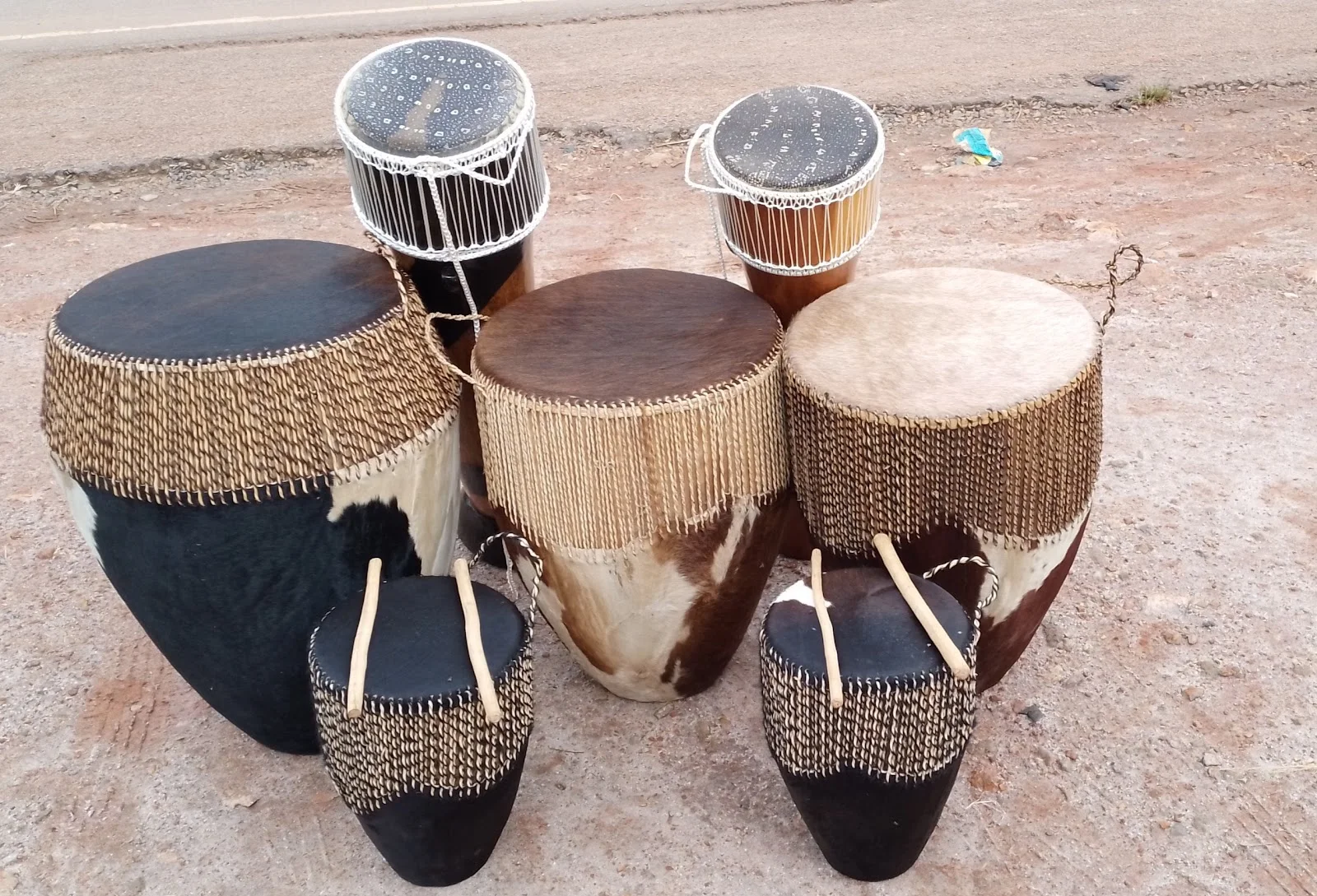
Mpambire Drum Shop
Further along the route, you pass Kinoni, known for papyrus mats, and Kyazanga, a common roadside stop for gonja, the roasted plantain many travellers enjoy on the way to western Uganda. These short stops help break the journey before you reach the open savanna, lakes, and wildlife country around Lake Mburo National Park.