
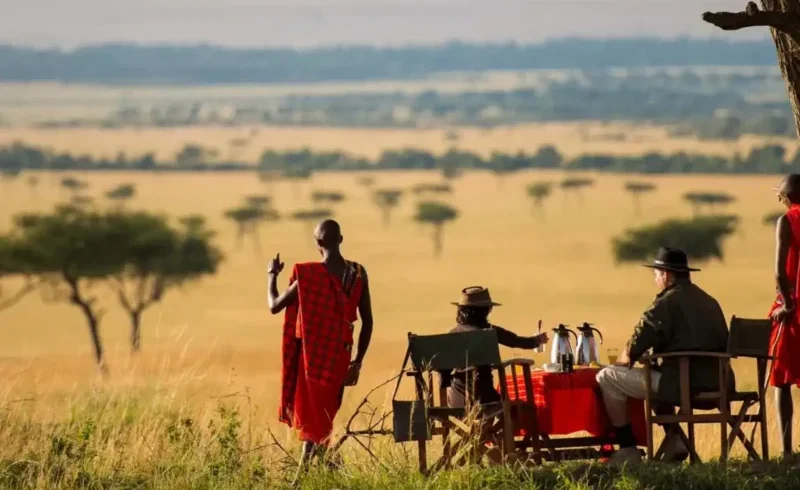
Four-day classic Masai Mara safari with three full game-drive days in Kenya's flagship Big Five reserve. The original African safari, executed perfectly.

An Exceptional Cross-Border Safari Experience by BLS Safaris Ltd The 7-Day Masai Mara & Gorilla Trekking Adventure delivers an extraordinary journey that unites Kenya’s golden savannah plains with Uganda’s misty rainforest mountains. BLS Safaris Ltd designs this immersive expedit
Ten-day Kenya safari and beach combination — five days of Big Five Mara game drives followed by four nights of pure white-sand relaxation on Diani Beach. The classic Kenya wind-down.
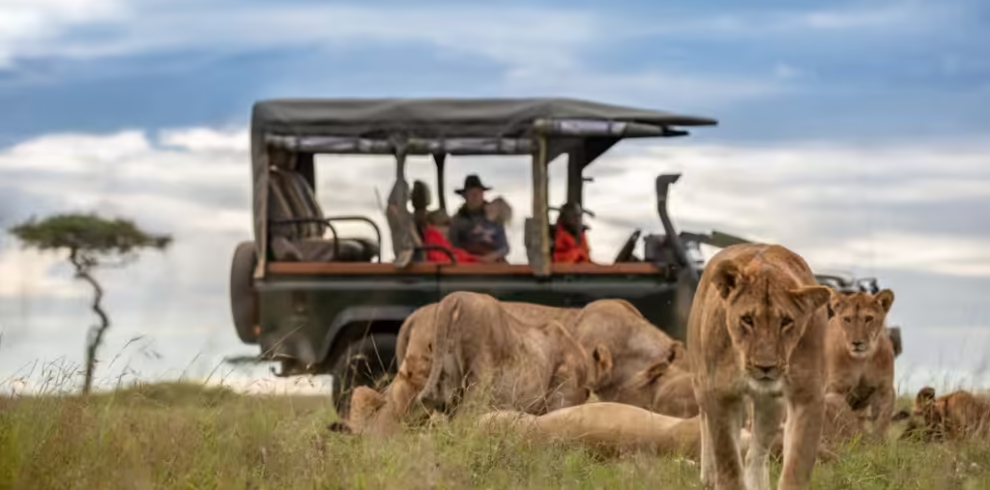
Six-day Kenya safari to two of the country's most distinctive parks — Samburu's "Special Five" desert species in the north, and Lake Nakuru's pink flamingos and rhinos. A serious wildlife experience away from the Mara crowds.
Five-day Kenya safari pairing Amboseli's legendary elephant herds (with Mt Kilimanjaro views) and the Big Five-rich Masai Mara. Two of Kenya's most photographed parks in one efficient trip.
Seven-day Migration safari timed to where the herds actually are — five days at strategically-placed camps for maximum Mara River crossing chances, plus a sunrise hot-air balloon and full-day cultural immersion.

Elephants and views of Mount Kilimanjaro in Amboseli
Why Kenya Is One of Africa’s Strongest Safari Destinations
A Kenya safari gives travellers more variety in one trip. You can spend the morning tracking lions and cheetahs in the Mara, watch elephants crossing the plains in Amboseli, look for Grevy’s zebra and gerenuk in Samburu, then finish with a beach stay on the Indian Ocean coast. Few safari destinations combine wildlife, culture, lakes, mountains, conservancies, and beaches as seamlessly as Kenya.
Kenya also works well for different budgets. Travellers can choose budget camps, midrange lodges, luxury tented camps, private conservancy stays or beach resorts after safari. The route can be built for families, honeymooners, photographers, first-time travellers, birders or guests who want a private guide and vehicle.
Safety is also part of the experience when the safari is properly arranged. Game drives are handled by trained guides, parks and reserves are managed and you are advised to follow normal safety rules, avoid walking alone at night, keep valuables private, and listen to the guide’s instructions in the game viewing area
Types of Kenya Safari Tours
Kenya safari tours can be arranged in very different ways depending on your budget, travel time, preferred level of comfort and the kind of trip you are planning. Some travellers prefer the flexibility of a private safari, while others prioritise comfortable mid-range lodges, small luxury camps or shorter fly-in journeys that reduce time on the road.
Families and honeymoon couples also need different itineraries, while travellers visiting during the Masai Mara Migration season will normally give more time to that region. Longer trips can combine wildlife areas with several days on the Kenyan coast. These safari styles can overlap, so a trip might be private and mid-range, luxury and fly-in, or combine a Great Migration safari with a beach stay. The options below explain the main ways we can structure a Kenya safari around your time and travel preferences.
Private Kenya Safaris
A private Kenya safari gives you your own safari vehicle and driver-guide rather than joining travellers on a fixed group departure. This gives you more control over the route, daily departure times and how long you spend at wildlife sightings, which is valuable for couples, families, photographers and small groups. Private safaris can be arranged across the Masai Mara, Amboseli, Samburu, Lake Nakuru, Tsavo and other major wildlife areas, with accommodation ranging from comfortable lodges to luxury tented camps and private conservancies. The itinerary can also be adjusted around your available time, preferred destinations and interests, whether that means concentrating on big cats in the Mara, elephants in Amboseli or combining several parks on a longer Kenya safari.
Kenya Safari and Beach Holidays
A Kenya safari can be combined easily with several days on the Indian Ocean coast, giving you time to slow down after game drives and road transfers. Diani Beach is one of the main choices for this type of itinerary, with a long sandy coastline and easy connections from Nairobi and Kenya’s safari regions. Watamu offers another option further north, combining beach time with marine activities and a quieter coastal setting. There are several ways to build Kenya safari and beach holidays. A Masai Mara safari can finish with a flight towards the coast, while Tsavo fits naturally into an overland itinerary because the parks lie between Nairobi and the coastal region. This combination works particularly well on longer Kenya safari tours where you want the first part of the trip centred on wildlife and the final days set aside for the coast, rather than trying to fit another safari destination into an already full itinerary.

Diani Sea Resort Hotel
Family Kenya Safaris
Kenya works particularly well for a family safari because routes can be adjusted around the ages of the children, the amount of driving and the type of accommodation your family prefers. Private safaris give families their own vehicle and driver-guide, making it easier to slow down, stop when needed and keep game drives at a comfortable pace. Amboseli and the Masai Mara are strong choices for a first family safari because wildlife sightings can be rewarding without building an overly complicated route. Families with more time can add Lake Naivasha, Laikipia or a few days on the coast. Accommodation also matters. Some Kenya safari lodges and tented camps offer family rooms, interconnected units or private houses, while age restrictions can apply to activities such as walking safaris and certain conservancy experiences. We therefore match the itinerary to the children’s ages rather than simply using an adult safari route for the whole family.
Honeymoon Safaris in Kenya
A Kenya honeymoon safari can combine private wildlife viewing, small tented camps and time at the Indian Ocean coast within one itinerary. Private safaris work particularly well for couples because you travel with your own driver-guide, giving you more freedom over game-drive times, stops and the overall pace of the trip. The Masai Mara is a natural choice for big cats, open plains and intimate tented camps, while Amboseli adds elephant viewing and Mount Kilimanjaro scenery. Couples looking for quieter safari areas can also include Laikipia or private conservancies, where smaller camps and fewer vehicles create a more secluded stay. A honeymoon does not need to cover as many parks as possible. Spending 2 or 3 nights in carefully chosen safari areas usually gives you more time to enjoy each place without turning the trip into a series of transfers. Many Kenya honeymoon safaris finish with several nights at Diani or another part of the coast, combining wildlife viewing with a slower beach stay before travelling home.
Luxury Kenya Safaris
Luxury Kenya safaris combine excellent wildlife areas with smaller camps, more personalised service and itineraries designed to reduce unnecessary travelling between destinations. The experience can range from an intimate tented camp in the Masai Mara to a private conservancy stay in Laikipia, with fly-in transfers added where they make the route more comfortable. The biggest difference is not simply having a more expensive room. Private conservancies can offer quieter wildlife viewing, smaller camps and activities such as guided walks or night drives where permitted. Private vehicles and dedicated guiding can also give you more control over how each safari day is spent. A luxury itinerary can combine the Masai Mara, Amboseli, Laikipia or Samburu, depending on the time available and the type of wildlife experience you prefer. Longer trips can also finish on the Kenyan coast, bringing safari and beach into one journey without adding too many road transfers.
Mid-Range Kenya Safaris
Mid-range Kenya safaris are a good fit when you want comfortable accommodation and a well-paced itinerary without moving into the highest luxury category. These trips normally use established safari lodges and tented camps with private rooms, good meals and easy access to the wildlife areas included in your route. A mid-range safari can cover the Masai Mara, Amboseli, Lake Nakuru, Samburu and other major destinations, with the itinerary adjusted around the number of days you have rather than trying to fit too many parks into one trip. Road travel is common, although domestic flights can be added where they save useful travelling time. The biggest advantage is balance. You can spend more on locations or experiences that matter most to you while choosing comfortable mid-range accommodation elsewhere. This makes it possible to build a strong Kenya safari around wildlife, good guiding and sensible travel times without paying for luxury features you may not need.
Fly-In Kenya Safaris
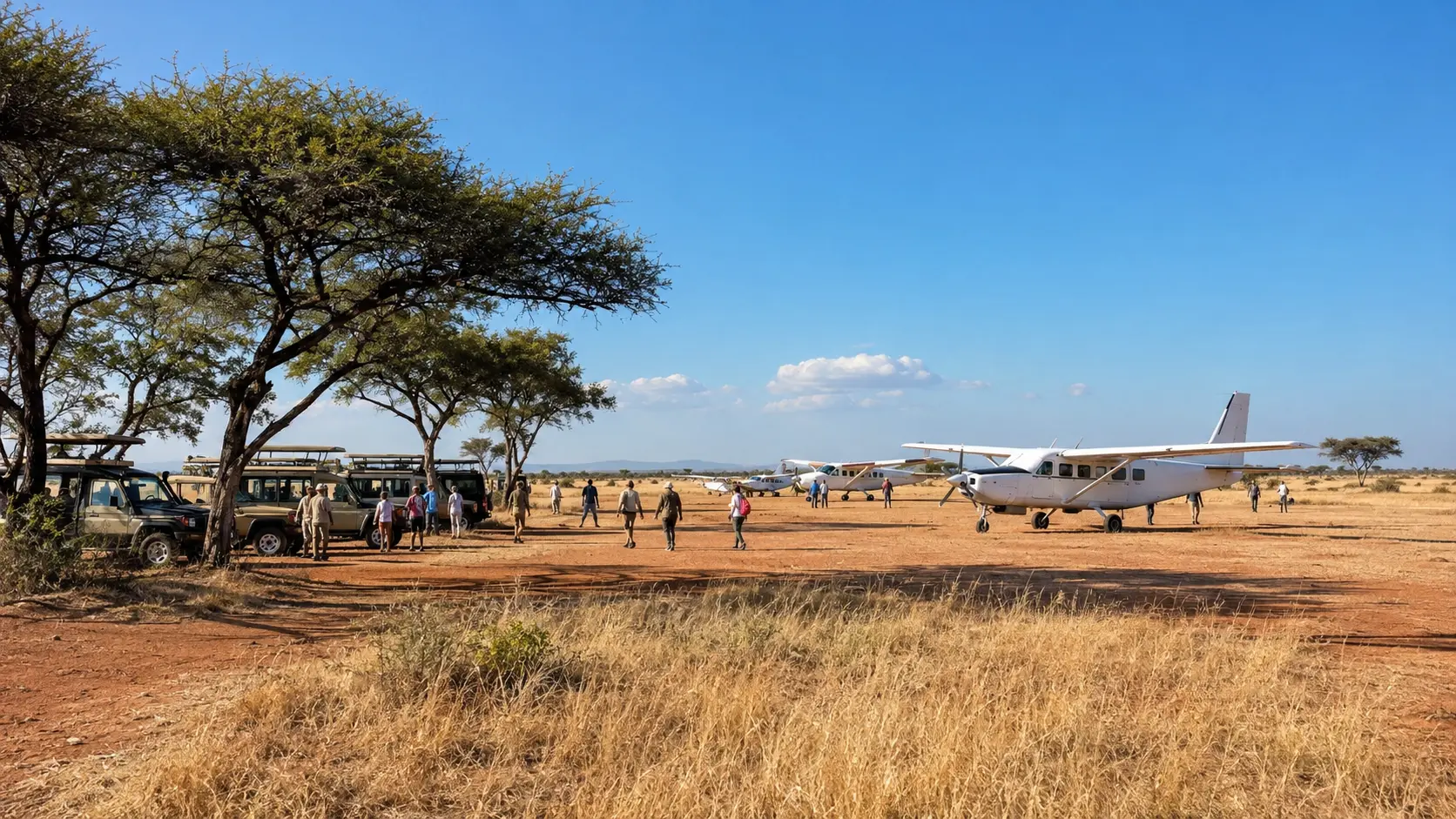
Fly-in Kenya safaris reduce long road transfers and give you more time in the wildlife areas, making them particularly useful for shorter trips and itineraries covering distant destinations. Scheduled flights connect Nairobi with areas such as the Masai Mara, Samburu and Laikipia, where your lodge or camp normally handles transfers and game drives after landing. Fly-in travel can be combined with mid-range or luxury accommodation and does not have to be used for the entire trip. Many Kenya itineraries mix road and air travel, using flights where they save the most time.

Safari aircraft landing on a remote bush airstrip during a fly-in Kenya safari
Great Migration Safaris in Kenya
Great Migration safaris in Kenya are centred on the Masai Mara during the months when large wildebeest and zebra herds move north from the Serengeti into the Mara ecosystem. The main Kenya season generally falls between July and October, although the exact movement of the herds changes from year to year. A good Migration safari is therefore built around time in the Mara rather than a promise of a particular river crossing. Spending several nights in the area gives you more flexibility to follow wildlife movement and enjoy the wider game viewing, including the lions, leopards and cheetahs that make the Mara rewarding even when the herds are away from the river. Accommodation location also matters during this period. Some camps give easier access to particular parts of the reserve or surrounding conservancies, so Great Migration safaris in Kenya should be planned around your travel dates, available camps and the amount of time you want to spend in the Mara.
Best Kenya Safari Destinations
Kenya’s safari destinations offer very different experiences, so choosing where to go should depend on the wildlife you want to see, the number of days you have, and how you want to travel. The Masai Mara is the natural choice for big cats and the Great Migration season, while Amboseli is known for large elephant herds and views towards Mount Kilimanjaro. Samburu and Laikipia bring a different side of Kenya, with drier northern landscapes, distinctive wildlife and smaller conservancy-based safari areas.
Lake Nakuru and Ol Pejeta add strong rhino viewing to a longer itinerary, while Tsavo works particularly well when combining a safari with the Kenyan coast. Lake Naivasha, Aberdare and Nairobi National Park can also fit naturally into routes starting or ending in Nairobi. Most Kenya safari tours combine 2 or 3 destinations rather than trying to cover the whole country. Below, we break down the main safari areas, what each is known for and where each one fits best within a Kenya itinerary.
Masai Mara Safari, Big Cats and the Great Migration
The Masai Mara is one of Kenya’s best-known safari destinations and a strong choice for a first Kenya safari. Its open grasslands support excellent populations of lions, leopards and cheetahs, alongside elephants, buffalo, giraffes, zebras, wildebeest and other plains wildlife. Game viewing remains rewarding throughout the year, so the Mara does not need to be visited only during the Migration season. From roughly July to October, large herds of wildebeest and zebra move into the Mara from the Serengeti during the Great Migration. River crossings can take place during this period, but their timing depends on the movement of the herds and cannot be guaranteed on a particular day. Most visitors explore the Mara on game drives, with hot-air balloon safaris available for a different view over the plains. The surrounding private conservancies can also add quieter game viewing and activities not permitted in every part of the main reserve. For a deeper look at where to stay, when to visit and the different areas of the reserve, see our Masai Mara National Reserve guide.
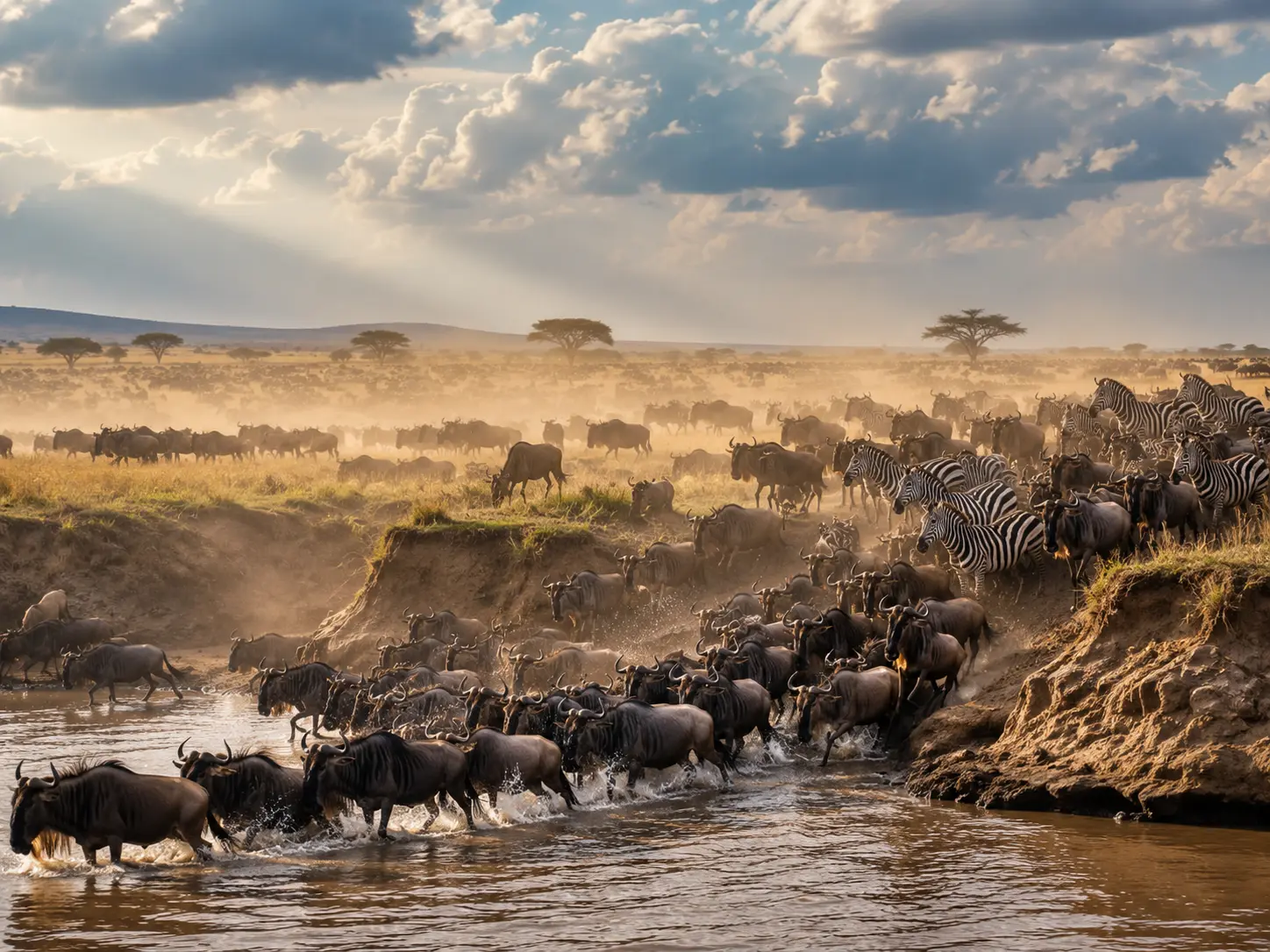
The Great Wildebeest Migration in the Masai Mara
Amboseli Safari for Elephants and Kilimanjaro Views
Amboseli is one of Kenya’s best safari destinations for seeing elephants at close range, including large family herds moving between its open plains and wetlands. Lions, buffalo, giraffes, zebras and wildebeest are also seen here, but elephants are the experience that gives Amboseli its particular character. On clear days, Mount Kilimanjaro rises beyond the plains across the border in Tanzania, creating one of Kenya’s most recognisable safari settings. Early mornings can be particularly rewarding for clear mountain views and wildlife photography. Amboseli also fits easily into a wider Kenya safari. It can be reached from Nairobi and combined with Tsavo, the Masai Mara or a longer safari ending on the Kenyan coast. See our Amboseli National Park guide for accommodation, activities, the best time to visit and more detailed travel information.
Samburu Safari and Northern Kenya Wildlife
Samburu takes you into a drier and more rugged part of northern Kenya, where the landscape and wildlife feel noticeably different from the country’s southern safari areas. The Ewaso Nyiro River runs through the reserve and draws elephants, antelope and predators towards its riverine woodland during the drier periods. Samburu is particularly known for the Samburu Special Five: Grevy’s zebra, reticulated giraffe, gerenuk, Beisa oryx and Somali ostrich. Elephants are also a major part of the experience, while lions, leopards and cheetahs add to the predator viewing. For a longer northern Kenya safari, Samburu combines naturally with neighbouring wildlife areas and can continue towards Laikipia, Lewa or Ol Pejeta. This makes it a good addition when you want your Kenya safari to go beyond the more familiar southern circuit. See our Samburu National Reserve guide for accommodation, activities and detailed travel information.
Aberdare National Park, Highland Forests and Mountain Wildlife
Aberdare is different from the open savannah parks. It is a cool highland and forest safari area on the Aberdare Mountain range with thick forest, bamboo, moorland, waterfalls, misty valleys and rugged mountain scenery. It is better for travellers who want forest wildlife, walking, hiking, waterfalls and a quieter safari experience. Wildlife here can include black rhinos, leopards, lions, small antelopes, duikers, reedbucks, giant forest hogs, mongooses, black and white colobus monkeys, golden monkeys and the rare African golden cat.
The park is also associated with forest antelopes such as the eastern bongo, plus rare sightings of black leopard and black serval. Rhinos and leopards can be present but are not always easy to see because of the dense vegetation. Aberdare is also good for nature walks, mountain hiking, camping, waterfalls, scenic volcano ranges, forest trails and sport fishing. It is located in the central highlands of Kenya about 150 kilometres east of Nairobi and is usually accessed by road through Nyeri or Naro Moru. Travellers using air transport can use airstrips near Mweiga and Nyeri
Tsavo East and Tsavo West Safaris
Tsavo gives you a much larger and wilder-feeling safari landscape than many of Kenya’s more compact reserves. Tsavo East National Park is known for its broad semi-arid plains, the Yatta Plateau and elephants whose skin takes on the red colour of the park’s dust. Its open country makes the scale of the landscape as much a part of the safari as the wildlife. Tsavo West National Park is more varied in terrain, with volcanic landscapes, the Shetani Lava Flows and Mzima Springs adding a different character to the safari. Elephants and other big game are found across both parks, but each side of Tsavo gives you a noticeably different setting. Tsavo is particularly useful when combining wildlife viewing with the Kenyan coast. It can be built into routes through Amboseli before continuing towards Diani, Mombasa or other coastal areas, making it one of the strongest options for a Kenya safari and beach holiday.
Laikipia Safaris and Private Conservancies
Laikipia brings a different style of safari to northern Kenya, with large private conservancies, working ranches and wildlife areas where conservation and tourism operate side by side. The region is important for black rhinos and Grevy’s zebras, while elephants, lions, leopards and other wildlife move across its broad landscapes. One of Laikipia’s biggest advantages is the range of experiences available beyond a standard game drive. Depending on the conservancy, your safari can include guided walks, horseback riding and more private wildlife viewing with fewer vehicles around sightings. Laikipia also fits naturally into longer northern Kenya itineraries that combine Samburu National Reserve, Ol Pejeta Conservancy and other wildlife areas around Mount Kenya. Its combination of private conservancies, distinctive accommodation and conservation-focused safari experiences makes it particularly worthwhile when you have more time to explore Kenya beyond the main southern circuit.
Best Time for a Kenya Safari and the Great Migration
Kenya is open for safari throughout the year, but the best time depends on what you want to see. For general wildlife viewing, the strongest months are January to March and June to October. These are the drier months; the tracks are easier for safari vehicles, the grass is shorter, and animals gather around rivers, waterholes and open plains. January to March is also a good time for travellers who want to see baby animals, especially after the migration herds have settled and many animals begin calving. This period can be rewarding for visitors interested in young wildebeests, zebras, antelopes, and the predator activity that follows them.
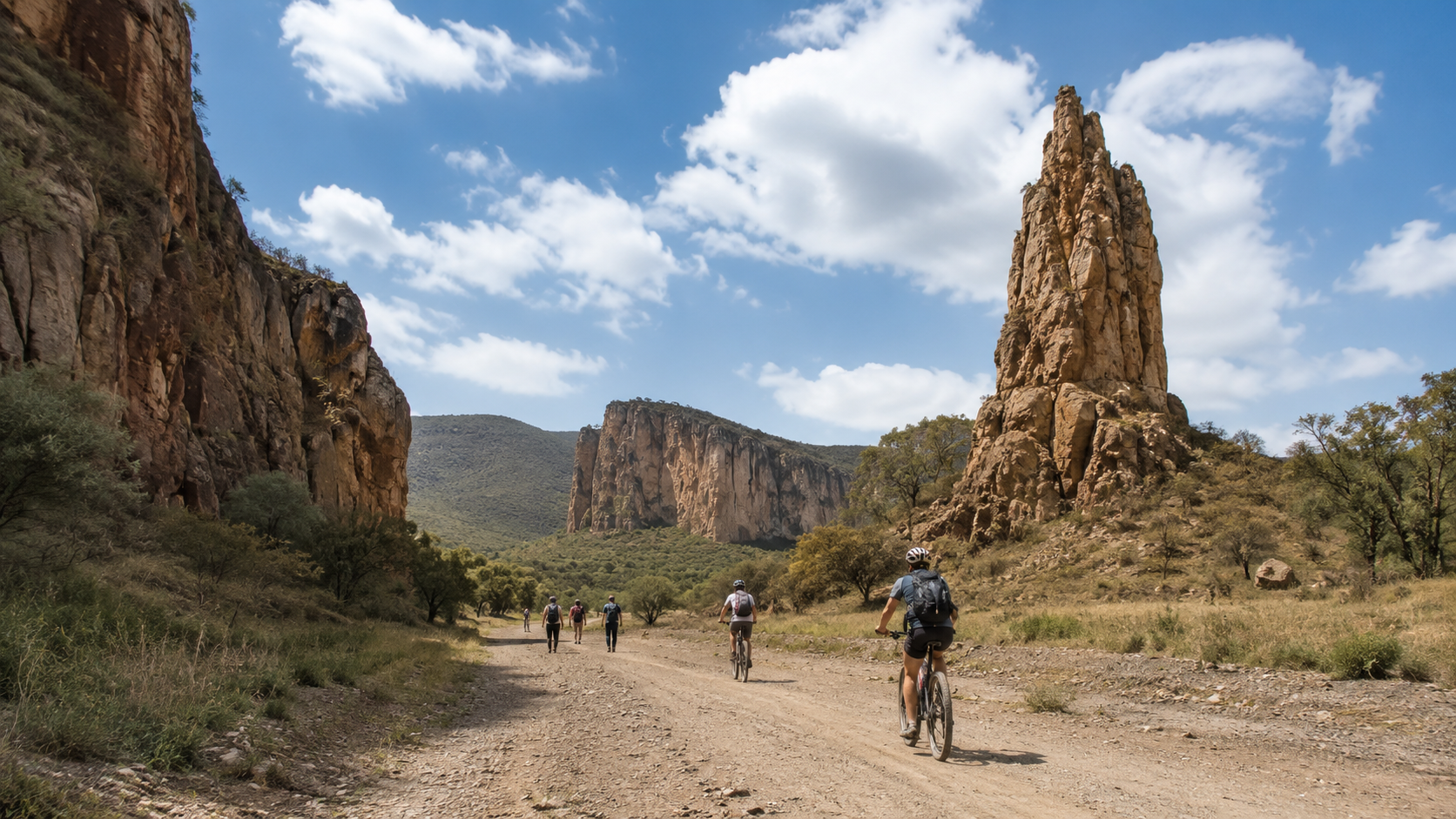
For the Great Wildebeest Migration in the Masai Mara, plan around July to October. This is when wildebeests, zebras, elands, and gazelles move through the Serengeti Mara ecosystem in search of fresh grazing. The most dramatic moments happen around the Mara River, where herds try to cross while crocodiles wait in the water and predators follow the movement across the plains.
March to May is the wet season in many parts of Kenya. Some safari tracks can become muddy or flooded, especially in parks with black cotton soil or remote routes. Long rains can make travel slower, and some lodges or camps may close for maintenance during this period. But this is an off-peak season that can suit travellers looking for fewer vehicles, lush green scenery, and softer photographic light and lower accommodation rates.
Birding can also be rewarding, and the landscapes are often fresh and beautiful. The challenge is access. Some game drives may be limited by rain, and the coast can feel humid or affected by wet weather. For a first-time Kenya safari, March to May is not the easiest choice. For repeat travellers, photographers, birders, or budget-conscious travellers, it can still work if the route is planned carefully
Where to Stay on Safari in Kenya
Where you stay on a Kenya safari depends on the route, the season and the level of comfort you want. Kenya has everything from public campsites and simple budget camps to mid-range lodges, luxury tented camps, private villas and high-end conservancy camps. The Masai Mara offers the widest choice of safari accommodation, especially for travellers visiting between July and October to see the wildebeest migration. Amboseli is better for lodges with Mount Kilimanjaro views, Samburu gives a quieter northern Kenya setting, while Diani and the coast work well after the safari for beach relaxation. For July to October migration safaris, book Masai Mara camps early, ideally 12 to 18 months ahead for the best-positioned camps. Also confirm whether park fees, conservancy fees, game drives, domestic flights, and vehicle-sharing policies are included in the quoted price. This avoids surprises and helps match the lodge to the exact safari experience the traveller expects
How Much Does a Kenya Safari Cost?
There is no single price for a Kenya safari because the final cost depends on how long you travel, the parks you visit, your accommodation level, the season, and whether your safari is private or shared. Road-based trips using comfortable lodges generally cost less than itineraries combining luxury camps, private conservancies and domestic flights. Budget safaris keep costs lower through simpler accommodation and shared services, while mid-range trips balance comfort with a more flexible safari experience. Luxury Kenya safaris can cost considerably more when they include small high-end camps, private guiding, fly-in transfers and exclusive conservancy experiences.
Park and conservancy fees, accommodation, safari transport and optional activities also contribute to the final price. Travelling during the busiest months, particularly around the Masai Mara Migration season, can increase accommodation costs. For a fuller breakdown of safari prices, the factors that affect your budget and what different travel styles include, see our Kenya Safari Cost Guide.
Road Safaris vs Fly-In Safaris in Kenya
How you travel between Kenya’s safari destinations has a big effect on the pace of your trip. Most Kenya safari tours use either a private 4×4 safari vehicle, scheduled light aircraft, or a combination of the two. Road travel gives you more time to see the countryside between parks, while flying cuts down long transfers and gives you more time inside the wildlife areas. Your best choice depends on how many days you have, the parks included in your itinerary, and how much time you are comfortable spending on the road.
Kenya Road Safaris
A road safari is one of the best ways to experience Kenya when your itinerary covers several parks over 5 days or longer. You normally travel in the same 4×4 safari vehicle with your driver-guide, which means the vehicle used for transfers also becomes your game-drive vehicle once you enter the parks. From Nairobi, Amboseli can be reached comfortably by road, while the drive to the Masai Mara takes longer and normally occupies a good part of the day. Routes connecting Nairobi, Amboseli, Lake Naivasha, Lake Nakuru and the Masai Mara work particularly well by road because each destination can form part of one continuous safari circuit.
Road travel also gives you a better feel for the country outside the parks. You pass towns, farmland, highlands and changing landscapes that you would miss from the air. On some routes, the final sections leading into reserves and conservancies are unpaved, so a proper safari vehicle is important for comfort and access. For couples, families and small groups travelling together, road safaris also give you greater flexibility with stops, departure times and luggage.
Fly-In Safaris in Kenya
Fly-in safaris are a strong choice when you have limited time or want to reduce the number of hours spent travelling between distant safari areas. Scheduled light aircraft leave mainly from Wilson Airport in Nairobi and serve airstrips in the Masai Mara, Amboseli, Samburu, Laikipia and several private conservancies. A flight from Nairobi to the Masai Mara is roughly an hour, depending on the service and number of stops. Once you land at the bush airstrip, your camp or lodge normally arranges the transfer and game drives in a safari vehicle.
Flying works particularly well for shorter Kenya safaris, honeymoon trips, luxury itineraries and journeys that include remote areas where driving would take up a large part of the day. It is also worth considering when your priority is spending as much time as possible on game drives rather than travelling between destinations. One detail to remember is that domestic safari flights generally have stricter luggage limits than international flights, with soft-sided bags preferred on many services. We take this into account when arranging a fly-in itinerary.
Combining Road and Air Travel on a Kenya Safari
You do not have to choose one transport style for the entire safari. Some of the most comfortable Kenya safari itineraries combine road travel with a domestic flight. For example, you can travel by road through Amboseli, Lake Naivasha or Lake Nakuru and then fly from the Masai Mara back to Nairobi instead of repeating a long road transfer. A flight also works well at the end of a Masai Mara safari when continuing to Diani Beach or another part of the Kenyan coast.
This combination gives you the scenery and flexibility of a road safari while using flights where they save the most time. If your international flight arrives at Jomo Kenyatta International Airport and your safari flight leaves from Wilson Airport, remember that these are separate airports. A road transfer is required between them, and enough connection time should be allowed for Nairobi traffic.
Which Is Better, a Road Safari or Fly-In Safari?
Choose a road safari when you have more time, want to visit several destinations in sequence, and prefer travelling with the same driver-guide throughout the journey. Choose a fly-in safari when your trip is shorter, your safari areas are far apart, or you want to spend less time transferring between parks. For many Kenya safari tours, the strongest itinerary uses both. The important thing is not simply choosing the fastest form of transport, but designing the route so that your travelling time does not take away from the safari itself.