

A five-day Rwanda primate safari combining gorilla trekking in Volcanoes National Park with golden monkey tracking and scenic Virunga views.
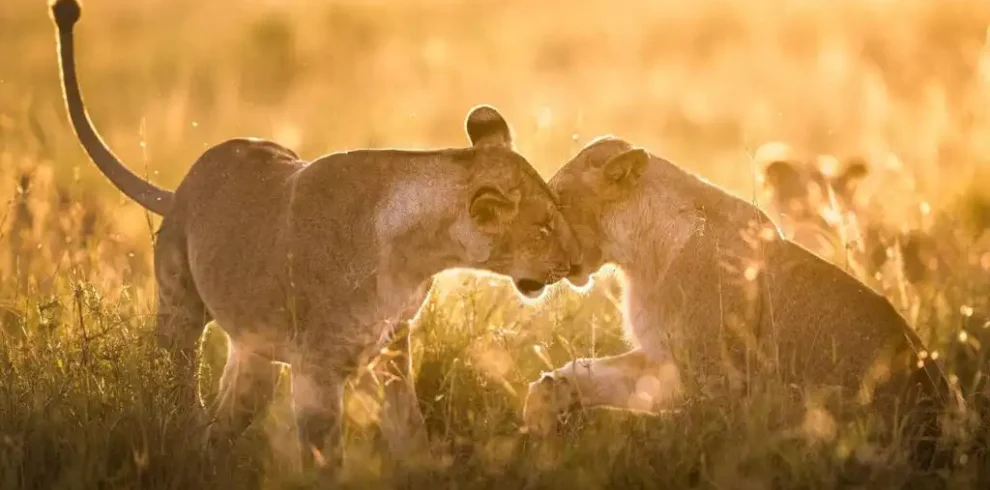
Four-day relaxed luxury escape on Lake Kivu — Rwanda's serene volcanic-shore lake — combined with award-winning coffee-estate tours. Perfect honeymoon or post-gorilla-trek wind-down.
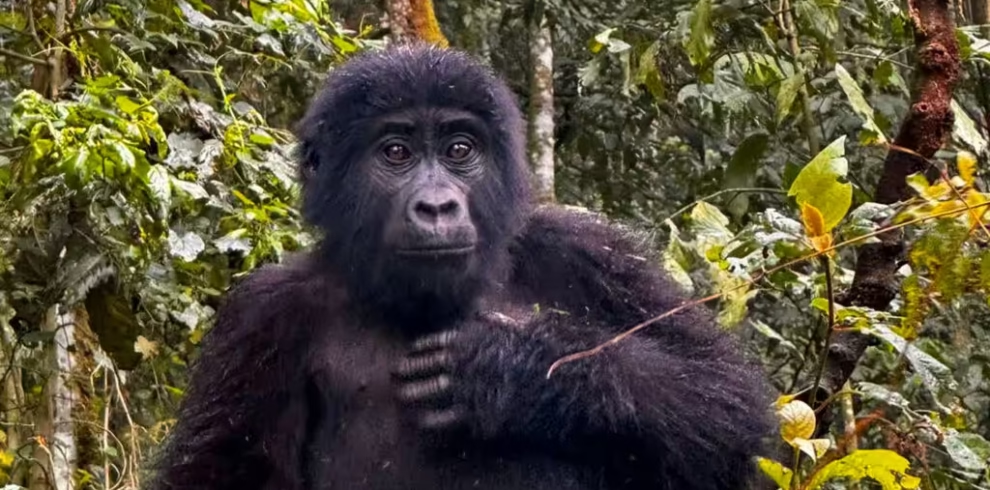
Three-day premium gorilla trekking safari to Volcanoes National Park, Rwanda — fly in to Kigali, drive 90 minutes north, and spend an unforgettable hour with a habituated mountain gorilla family. Permit, luxury lodge and private guide included.
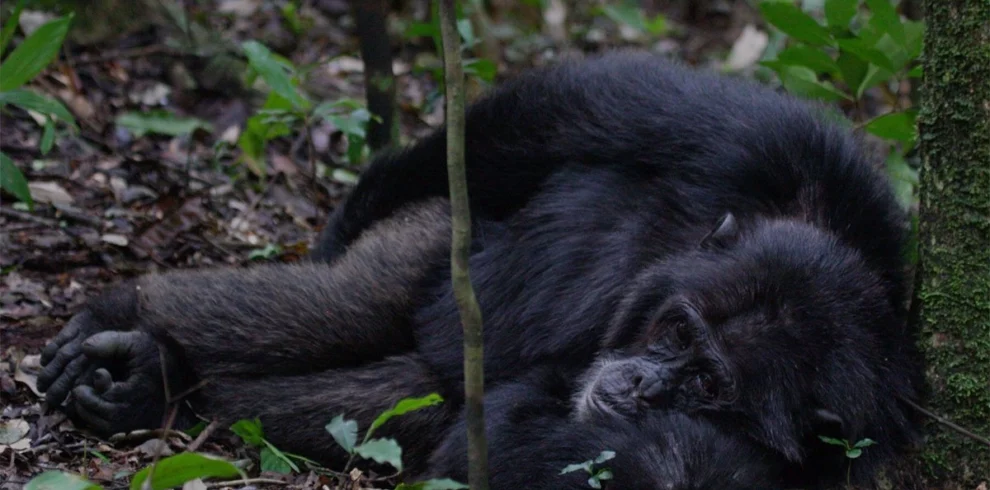
Four-day Nyungwe Forest chimpanzee tracking safari with the famous canopy walkway and 13 primate species in Africa's oldest montane rainforest.
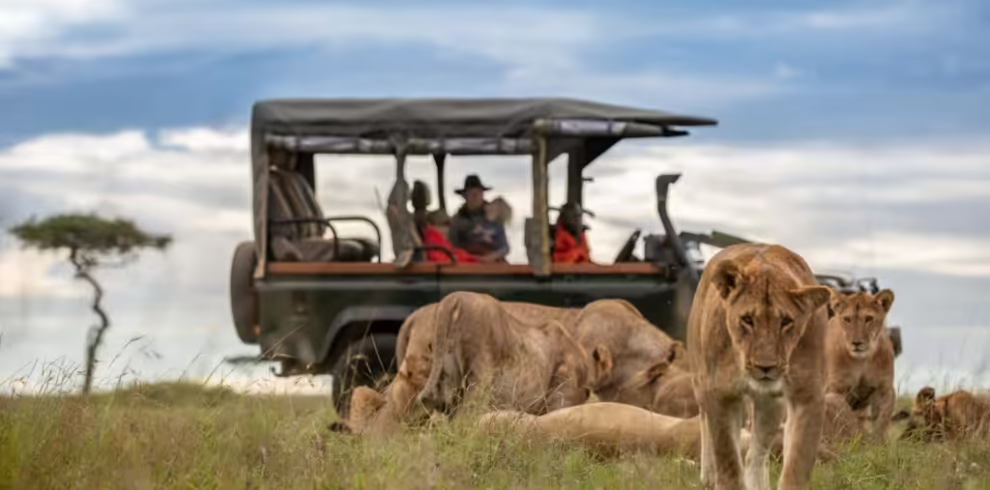
Three-day Akagera National Park safari — Rwanda's only Big Five park, dramatically rewilded with reintroduced lions (2015) and rhinos (2017). Game drives, a Lake Ihema boat cruise and savannah landscapes within easy reach of Kigali.
Eight-day grand tour of Rwanda — Volcanoes gorillas, Nyungwe chimpanzees, Akagera Big Five and Lake Kivu in one comprehensive trip. The complete Rwanda experience.
Best Places to Visit on a Rwanda Safari
The main places to visit on a Rwanda safari each offer a different experience. Volcanoes National Park is the centre of mountain gorilla trekking and golden monkey tracking, with the Virunga volcanoes also providing some of Rwanda’s most rewarding hiking routes. Akagera National Park adds the classic savannah side of the safari, with Big Five game drives, giraffes, hippos, antelopes, birdlife and boat safaris on Lake Ihema. In the southwest, Nyungwe National Park is the main destination for chimpanzee tracking, colobus monkeys, forest walks and the canopy walkway. Lake Kivu is an easy addition after Volcanoes or Nyungwe for travellers who want a quieter end to the journey. At the same time, Kigali is the usual arrival and departure point and can be included for city and historical visits. Gishwati-Mukura National Park can also fit into longer itineraries that place more emphasis on forests, primates and birding.
Rwanda Safari Route and National Parks Map
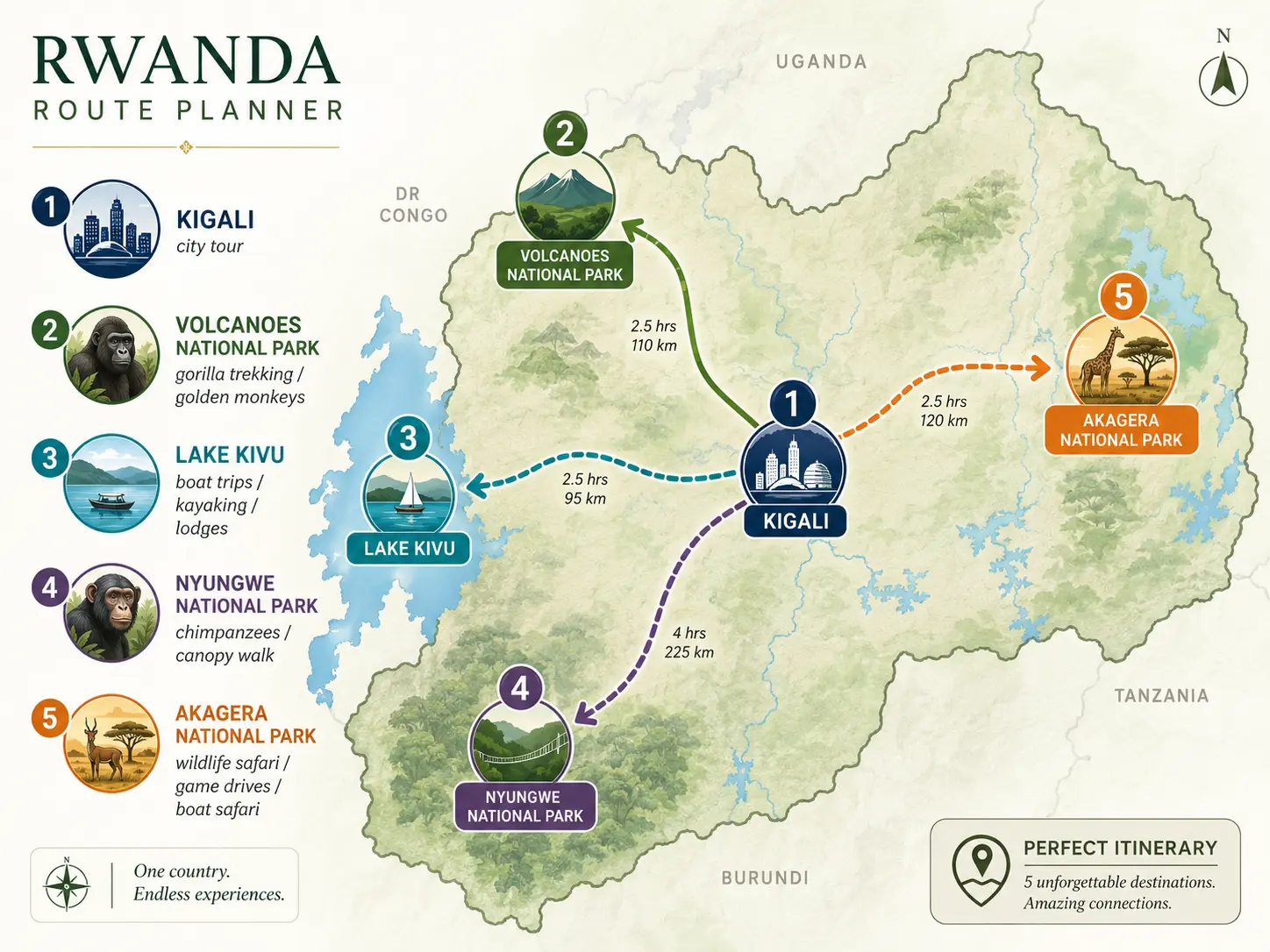
Rwanda’s main safari destinations and how they connect from Kigali
Rwanda’s compact size makes it possible to combine several of these destinations without losing large parts of the trip to road transfers. A shorter safari can focus on Kigali and Volcanoes National Park, while adding Akagera creates a strong gorilla and Big Five combination. Travellers with more time can continue to Nyungwe and Lake Kivu for a broader journey covering gorillas, savannah wildlife, chimpanzees, forest experiences and lakeside relaxation.
Kigali, Gateway to Rwanda Safaris
Kigali is the main arrival and departure point for most Rwanda safaris, with Kigali International Airport providing convenient access to the country’s major safari destinations. Depending on your flight schedule, you can continue directly to Volcanoes National Park or Akagera National Park, or spend your first night in the capital before beginning the journey the following morning. An overnight stay is particularly useful after a long international flight, allowing you to start the safari rested rather than going straight into a road transfer. If your itinerary allows, a half-day or full-day Kigali tour can include the Kigali Genocide Memorial, local markets, craft centres and some of the city’s neighbourhoods. The visit adds important historical and cultural context before travelling into Rwanda’s national parks, while Kigali also makes a convenient final stop before your flight home.
Volcanoes National Park for Gorilla Trekking in Rwanda
Volcanoes National Park is Rwanda’s main mountain gorilla trekking destination and one of the most important stops on a Rwanda safari. The park lies in the northwest near Musanze and protects Rwanda’s side of the Virunga Mountains, where bamboo forest, montane vegetation and volcanic slopes provide habitat for mountain gorillas and golden monkeys. Travellers can also include birding, volcano hikes and visits connected with the history of Dian Fossey and mountain gorilla conservation.
Gorilla trekking begins with a morning briefing before visitors enter the forest with ranger guides to locate their assigned gorilla family. The terrain can be steep, muddy, and uneven, and the length of the trek changes depending on where the gorillas are moving or feeding that day. Some groups are reached relatively quickly, while other treks require several hours through the forest. Once the gorillas are located, visitors spend one regulated hour observing them at close range.
Volcanoes National Park also deserves consideration beyond the gorilla trek itself. Golden monkey tracking offers another primate experience in the bamboo forest, while Mount Bisoke and Mount Karisimbi provide more demanding hiking for active travellers. The Dian Fossey trail adds another dimension to the visit by introducing the history of gorilla research and conservation in the Virunga Mountains.
Travellers focusing only on gorilla trekking can keep the Volcanoes section of their itinerary relatively short, while those adding golden monkeys, hiking or conservation-focused visits should allow additional time in the area. Volcanoes National Park also combines naturally with Akagera for a gorilla and Big Five safari, or with Nyungwe for a broader primate itinerary covering both mountain gorillas and chimpanzees.
Akagera National Park for Big Five Safaris in Rwanda
Akagera National Park is Rwanda’s main savannah wildlife destination and the country’s only Big Five national park. Located in eastern Rwanda near the Tanzania border, the park is very different from the mountain and rainforest landscapes of Volcanoes and Nyungwe. Its rolling highlands, open plains, woodland, papyrus wetlands and swamp-fringed lakes support lions, leopards, elephants, buffaloes, black and white rhinos, together with giraffes, zebras, hippos, antelopes and other savannah wildlife.
Game drives are the main way to explore Akagera, with different habitats offering changing wildlife and birding opportunities throughout the day. The park has also become an important birding destination, with around 500 bird species recorded across its savannah, woodland and wetland habitats.
A boat safari on Lake Ihema adds a different side to the wildlife experience. From the water, travellers can look for hippos, Nile crocodiles and waterbirds while also watching animals that come to the shoreline to drink. It combines particularly well with a morning or afternoon game drive and gives visitors time in Akagera’s extensive lake and wetland system rather than seeing the park only from the road.
Akagera can be visited from Kigali, but travellers wanting a fuller safari should consider spending at least 2 nights in or near the park. This allows more time for game drives, a Lake Ihema boat safari and different sections of the reserve without trying to fit everything into one rushed day. For a broader Rwanda itinerary, Akagera combines particularly well with Volcanoes National Park, bringing Big Five wildlife and mountain gorilla trekking together in one safari.
Nyungwe National Park for Chimpanzee Tracking in Rwanda
Nyungwe National Park is Rwanda’s main destination for chimpanzee tracking and one of the most biologically important Afromontane forests in Africa. Located in southwestern Rwanda, the park forms part of the Albertine Rift and was inscribed as a UNESCO World Heritage Site in 2023. Its montane forest, bamboo, wetlands and highland habitats support 13 primate species, with chimpanzees, black-and-white colobus monkeys, L’Hoest’s monkeys and blue monkeys among those travellers can encounter.
Chimpanzee tracking starts early, with visitors entering the forest alongside trackers to search for one of Nyungwe’s semi-habituated chimpanzee communities. The park currently has tracking around the Cyamudongo, Mayebe and Gisovu communities. Chimpanzees move quickly through the forest, so the experience can involve steep ground, uneven trails and periods of walking as trackers follow their calls and signs through the vegetation. It is a more active forest experience than a vehicle-based wildlife safari and should be approached with suitable footwear and a reasonable level of fitness.
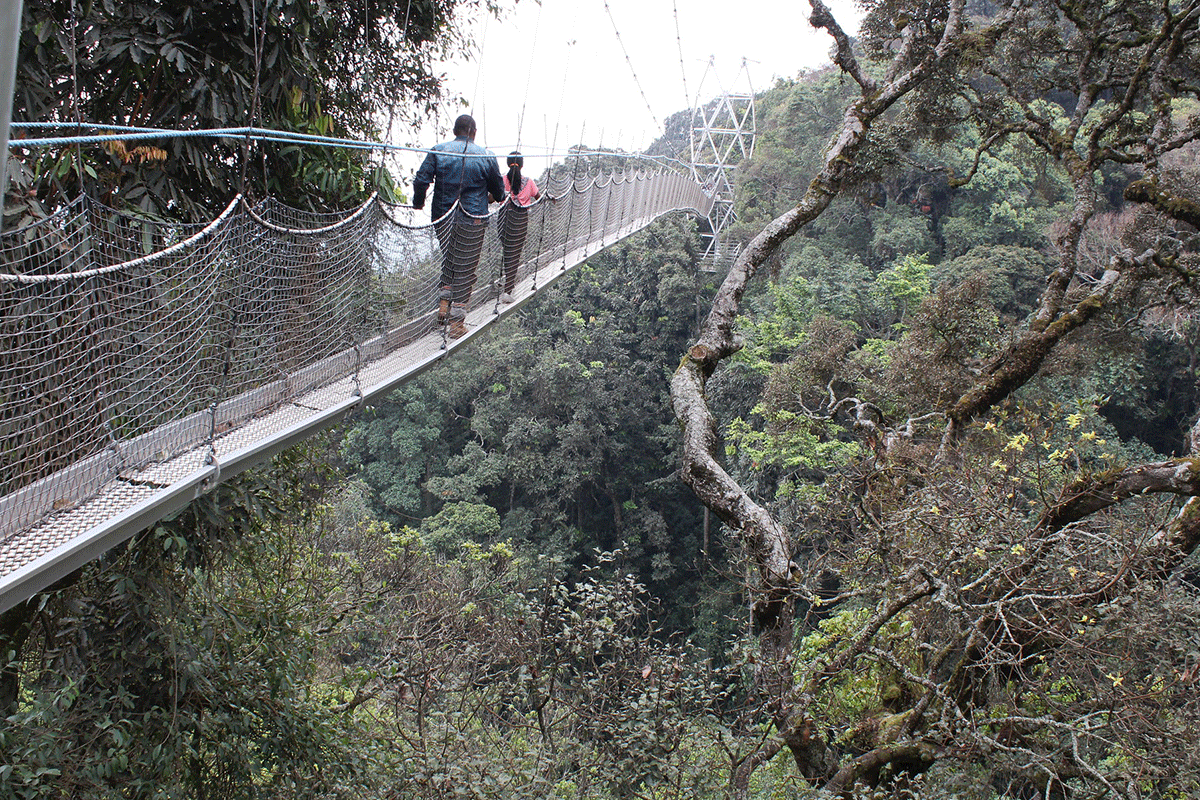
Nyungwe canopy walkway
The canopy walkway adds another perspective to Nyungwe. Reached from the Uwinka area, the suspended walkway takes visitors above part of the forest canopy, opening views across the surrounding montane landscape. Nyungwe also has an extensive network of hiking trails and particularly strong birding, with more than 300 bird species recorded, including many associated with the Albertine Rift.
Nyungwe fits particularly well into longer Rwanda safari itineraries. It can be combined with Volcanoes National Park for travellers who want both mountain gorillas and chimpanzees, while Lake Kivu can be added between or after the forest destinations to break up the road journey. Allowing at least 2 nights in the Nyungwe area gives more flexibility for chimpanzee tracking and another forest activity without compressing the visit into a single day.
Gishwati-Mukura National Park for Chimpanzees and Forest Walks
Gishwati-Mukura National Park protects two separate montane forests, Gishwati and Mukura, within Rwanda’s western Albertine Rift landscape. Established as Rwanda’s fourth national park, the area has undergone extensive forest restoration after decades of habitat loss and pressure on the surrounding land. The wider Gishwati-Mukura Landscape was designated a UNESCO Biosphere Reserve in 2020, recognising both its biodiversity and the conservation work taking place across the forest and surrounding communities.
Chimpanzees are one of the park’s main wildlife attractions, alongside golden monkeys, other primates and forest birdlife. Visits can include primate tracking, guided forest walks, birding and opportunities to learn more about forest restoration and conservation. Compared with Rwanda’s larger and more established safari destinations, Gishwati-Mukura receives fewer visitors and offers a more intimate forest experience.
For travellers building a longer Rwanda safari, Gishwati-Mukura can be included between the Volcanoes National Park area and Lake Kivu. It suits itineraries with a strong interest in primates, birding, forest conservation and walking rather than travellers trying to cover Rwanda’s principal parks in only a few days. Visits and primate activities should be arranged in advance as part of the safari itinerary.
Lake Kivu for Safari Extensions and Lakeside Relaxation
Lake Kivu adds a slower lakeside experience to a Rwanda safari and fits naturally between the country’s forest and wildlife destinations. The lake runs along western Rwanda, with Rubavu in the north and Karongi farther south among the main places used for safari stays. Rubavu, formerly known as Gisenyi, is about an hour from Volcanoes National Park, making it particularly convenient after gorilla trekking or golden monkey tracking.
Time at Lake Kivu can be spent kayaking, taking boat trips, walking along the lakeshore or visiting coffee-growing areas and washing stations around the surrounding hills. Karongi, formerly known as Kibuye, provides another attractive base for exploring the lake, while travellers wanting a more active extension can walk or cycle sections of the Congo Nile Trail, which follows approximately 227 kilometres of Rwanda’s western lakeshore.
Lake Kivu is also useful when connecting Volcanoes National Park with Nyungwe National Park. Rather than completing the western route in one continuous road journey, travellers can include a night or two beside the lake before continuing south. This is particularly appealing after physically demanding trekking days and for couples, families or anyone wanting some quieter time within a longer Rwanda itinerary.
For shorter safaris, a stay around Rubavu can follow Volcanoes National Park before returning to Kigali. Longer itineraries can continue through the Lake Kivu region toward Nyungwe, combining mountain gorillas, lakeside scenery and chimpanzee tracking within the same western Rwanda route.
How to Combine Rwanda Safari Destinations by Trip Length
For a 3 to 4-day Rwanda safari, concentrate on Kigali and Volcanoes National Park. This gives enough time for mountain gorilla trekking, with golden monkey tracking or a Kigali city visit added when the flight schedule and itinerary allow. With 5 to 6 days, Volcanoes National Park and Akagera National Park make one of the strongest Rwanda safari combinations. The route brings together mountain gorilla trekking in the Virunga Mountains with Big Five game drives and a Lake Ihema boat safari in Akagera.
For 7 to 10 days, the itinerary can extend to Nyungwe National Park and Lake Kivu. This creates a broader journey combining gorillas, savannah wildlife, chimpanzee tracking, forest experiences and time beside the lake. The exact route should depend on how many trekking activities you want to include and how much time you prefer to spend in each destination. Gishwati-Mukura National Park is better suited to longer or more specialised Rwanda itineraries, particularly for travellers interested in primates, birding, forest walks and conservation. It can be included between the Volcanoes area and Lake Kivu without making it a compulsory stop on every Rwanda safari.
Top Rwanda Safari Experiences
Rwanda safari experiences range from mountain gorilla and chimpanzee tracking to Big Five game drives, golden monkey tracking, boat safaris, forest walks and volcano hiking. The activities you include will depend on the length of your trip, the destinations in your route and whether you want to focus on primates, wildlife, walking or a broader combination of experiences. A well-paced itinerary can combine several of these activities without trying to fit everything into the same trip. Shorter safaris can concentrate on one or two major experiences, while longer Rwanda itineraries allow time for gorillas, savannah wildlife, chimpanzees and quieter activities around Lake Kivu.
Gorilla Trekking in Rwanda’s Volcanoes National Park
Gorilla trekking in Rwanda takes place in Volcanoes National Park on the forested slopes of the Virunga Mountains in the northwest of the country. The park is around three hours by road from Kigali, allowing travellers to reach the gorilla trekking region without spending several days travelling across the country. Most visitors stay around Musanze or Kinigi the night before the trek so they can reach the park headquarters in good time the following morning.
The trekking day begins at 7 am at the Volcanoes National Park headquarters in Kinigi. After registration and briefing, visitors are allocated to a habituated gorilla family and introduced to the ranger guides who will lead the trek. Group allocation takes factors such as fitness into account. From the trailhead, the walk can pass through bamboo, montane forest and steep volcanic terrain as trackers and guides follow signs of the gorillas’ movements.
Volcanoes National Park currently has 12 fully habituated gorilla families available for tourism. A maximum of eight visitors can trek each family per day, providing up to 96 gorilla trekking permits daily. Once your assigned family is located, you are allowed one regulated hour with the gorillas. During this time, you may watch them feeding, resting, grooming, moving through the vegetation, and interacting within the family group.
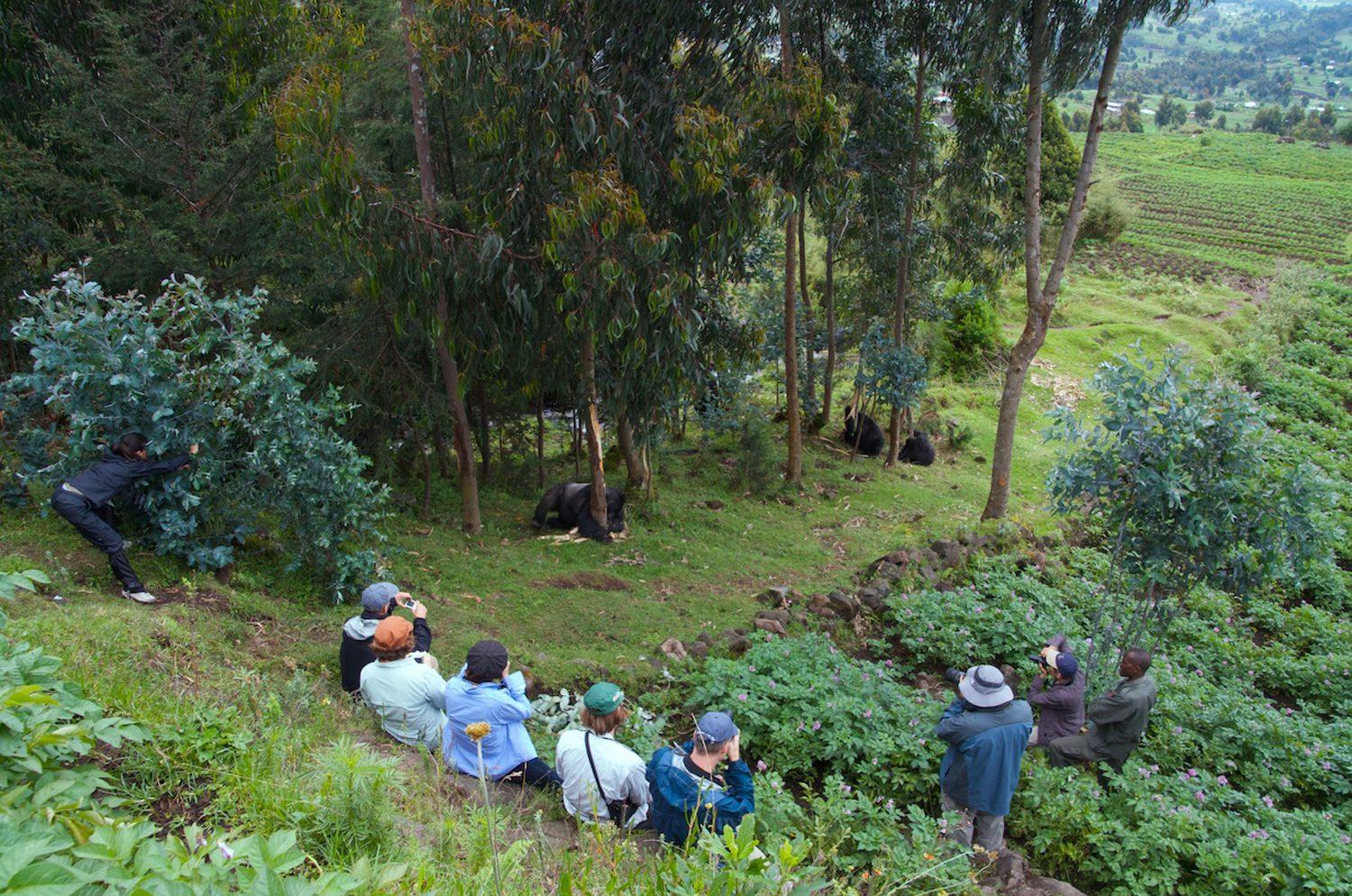
Gorilla trekking Volcanoes National Park , Rwanda
The standard Rwanda gorilla permit for international visitors costs US$1,500 per person, and the minimum trekking age is 15 years. Trekking time varies according to the location and movement of the assigned gorilla family, the terrain and the pace of the group. Some families can be reached relatively quickly, while others require several hours of walking before the encounter.
Sturdy hiking boots, long trousers, protective gloves, gaiters and a lightweight waterproof jacket are useful because conditions can be muddy, slippery and wet even outside the main rainy periods. Carry enough drinking water for the trek and consider hiring a local porter, particularly if you are carrying camera equipment or would appreciate assistance on steeper sections. Gorilla permits are limited, so they should be secured well in advance once your travel dates are confirmed.
Golden Monkey Tracking in Rwanda’s Volcanoes National Park
Golden monkey tracking in Volcanoes National Park offers a different primate experience from mountain gorilla trekking. The monkeys spend much of their time in the bamboo forest on the lower slopes of the Virunga Mountains, where visitors follow them with park guides as they move through the vegetation, feed and interact within their groups. Their quick movements and distinctive golden-orange colouring make the encounter particularly rewarding for travellers interested in primates and wildlife photography.
Volcanoes National Park currently has two golden monkey groups available for tracking, one associated with the slopes of Mount Karisimbi and the other with the bamboo forest around Mount Sabyinyo. Visitors report at the park registration centre at 7 am before setting out with their guides. The minimum tracking age is 12 years, and visitor numbers are controlled, with a maximum of 16 people permitted per golden monkey group.
Golden monkey tracking can be booked as its own primate experience, but it is particularly easy to include when spending two or more nights around Volcanoes National Park. Travellers can trek mountain gorillas on one day and golden monkeys on another, leaving additional time for activities such as volcano hiking, birding or the Dian Fossey trail. This gives a longer stay in the Virunga Mountains more variety without repeating the gorilla trekking experience.
Big Five Game Drives in Akagera National Park
Akagera National Park is Rwanda’s only Big Five national park and the main destination for traditional savannah game drives. The protected area covers 1,122 square kilometres in eastern Rwanda, where open plains, woodland, wetlands and lake systems support lions, leopards, elephants, buffaloes and both black and white rhinos. Giraffes, zebras, hippos, warthogs and several antelope species add considerably more variety beyond the Big Five.
Game drives take you through changing habitats, so wildlife sightings vary as you move between open grassland, wooded areas, lakeshores and wetter sections of the park. Morning and afternoon drives give time to search for large mammals and predators while also stopping for smaller wildlife and birdlife that can easily be missed when the safari is rushed. Sightings are never guaranteed, and the route on the day should respond to recent animal movements and information from guides in the park.
Travellers who want more than a quick introduction to Akagera should consider at least two nights in or near the park. This creates time for more than one game drive, different sections of the reserve and a Lake Ihema boat safari without trying to cover everything in a single day from Kigali.
Guided night drives add another side to Akagera after sunset. With a park guide, the focus shifts to nocturnal wildlife that is harder to encounter during daytime drives, including animals such as leopards, civets, genets and bushbabies. For travellers combining Rwanda’s major wildlife experiences, Akagera’s game drives provide the savannah contrast to gorilla trekking in Volcanoes National Park and chimpanzee tracking in Nyungwe.
Boat Safaris on Lake Ihema in Akagera National Park
A boat safari on Lake Ihema gives you a different view of Akagera National Park from the game-drive tracks. The lake lies within Akagera’s extensive wetland system, where boats can approach areas used by hippos, Nile crocodiles and large numbers of waterbirds. Wildlife also comes to the shoreline, giving the trip a quieter water-based contrast to searching for animals from a safari vehicle.
Hippos are one of the main attractions, with groups frequently seen in the water, while Nile crocodiles can be found along the lake margins. Birders can watch for waterbirds around the shoreline, wetlands and islands, but the experience is equally worthwhile for travellers who simply want to see another side of Akagera’s wildlife and landscape.
Lake Ihema boat safaris are easy to combine with a game drive during a stay in Akagera National Park. A morning or afternoon on the road can be paired with time on the lake, while a sunset boat trip gives the day a different finish. Including both activities provides a more complete view of Akagera’s savannah, wetland and freshwater habitats without adding another destination to the itinerary.
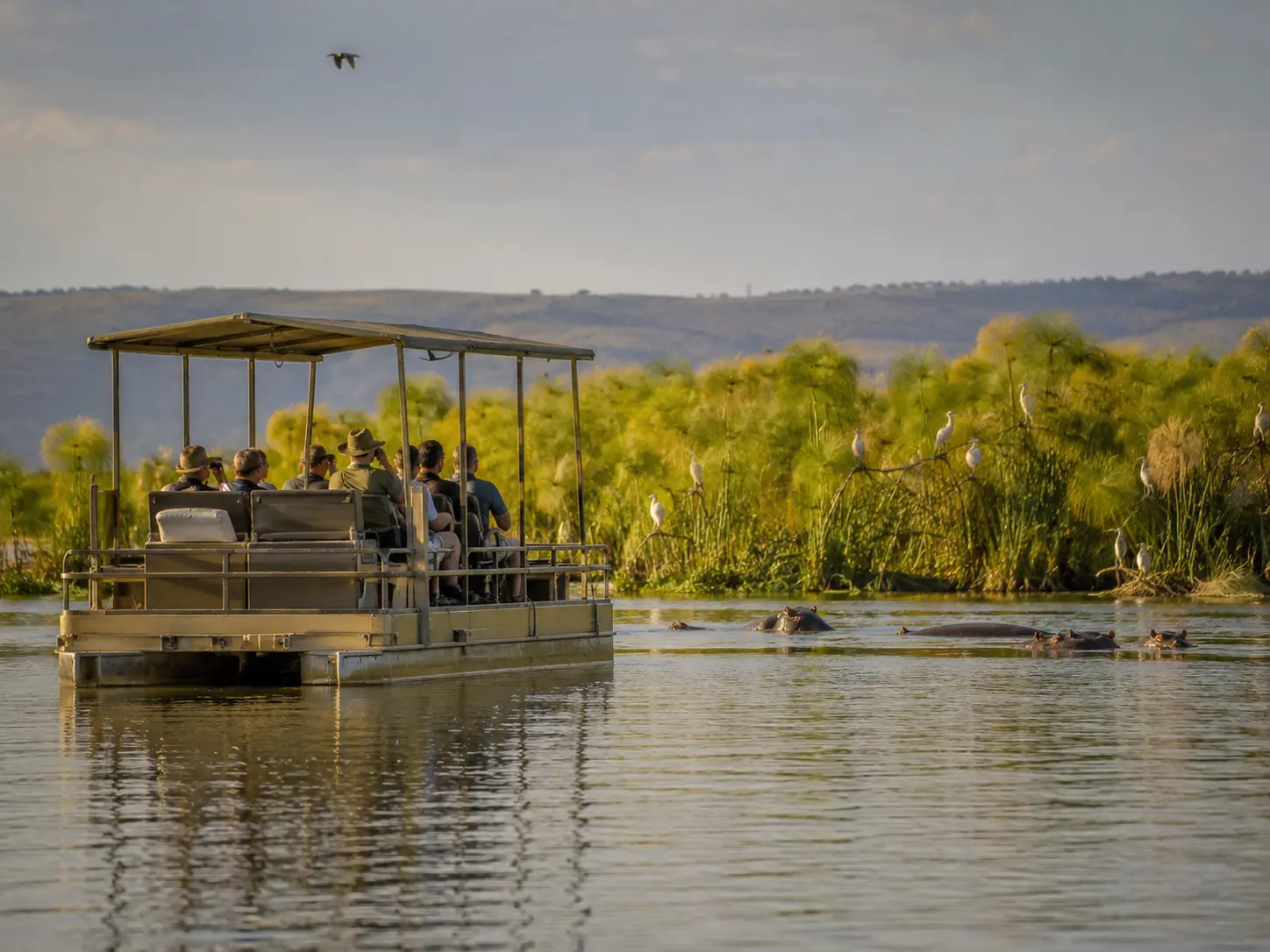
Boat cruise on Lake Ihema
Chimpanzee Tracking in Rwanda’s Nyungwe National Park
Chimpanzee tracking is one of the main primate experiences in Nyungwe National Park, home to 13 primate species including eastern chimpanzees, black-and-white colobus monkeys, L’Hoest’s monkeys and owl-faced monkeys. The park currently has three semi-habituated chimpanzee communities available for tracking around Cyamudongo, Mayebe and Gisovu, with a maximum of eight visitors assigned to each community per day.
Tracking starts early, around 5:30 am, when chimpanzees are active and moving through the forest in search of food. Unlike mountain gorillas, chimpanzees can travel quickly, call loudly between group members, and spend considerable time high in the canopy. You may hear their calls before seeing them, and the trackers use these sounds, nests and other signs to follow their movements through the forest. The trek can last from around an hour to several hours depending on the location of the chimpanzees. Once they are found, visitors are allowed a maximum of one hour with the group.
Nyungwe’s mountainous terrain can be steep, muddy and slippery, so sturdy hiking boots, long trousers and a lightweight waterproof jacket are important. A reasonable level of fitness also helps, particularly when the chimpanzees are moving through steeper sections of the forest. The minimum age for chimpanzee tracking is 15 years.
The current chimpanzee tracking fee is US$150 per person for international and African visitors, US$75 for international visitors resident in Rwanda or the EAC, and RWF 25,000 for Rwanda and EAC citizens. The chimpanzee tracking fee is charged separately from Nyungwe National Park entry. Because park rates can change, the applicable fee should be confirmed when securing the activity for your travel dates.
Nyungwe Canopy Walk and Hiking Trails
The Nyungwe canopy walk gives travellers an elevated view across the montane rainforest rather than seeing the forest only from ground level. The suspension walkway is approximately 160 metres long and reaches about 70 metres above the ravine, opening wide views across the forest canopy and surrounding highlands.
The experience starts from Uwinka Visitor Centre and includes a guided walk through the forest before reaching the suspension bridges. The Igishigishigi Trail is the main access route, while the canopy walkway can also be incorporated into longer hikes such as the Imbaraga and Umuyove trails. The approach takes around an hour on foot, with opportunities to see orchids, butterflies and forest birds along the way.
Trail conditions can become muddy and slippery after rain, so sturdy walking shoes and a lightweight waterproof jacket are useful throughout the year. Primate encounters are possible because Nyungwe supports 13 primate species, but the canopy walk should be enjoyed primarily for the forest scenery, birdlife and the perspective it gives from above the trees rather than as a dedicated wildlife-tracking activity.
The current canopy walk fee is US$40 per person for international and African visitors, US$20 for international visitors resident in Rwanda or the EAC, and RWF 5,000 for Rwanda and EAC citizens. The activity fee is charged separately from Nyungwe National Park entry and includes guiding. Current rates should be confirmed when arranging the activity for your travel dates. Travellers spending at least two nights around Nyungwe can combine the canopy walk with chimpanzee tracking or another guided forest trail without trying to fit every activity into one day.
Birding Safaris in Rwanda
Rwanda has more than 700 recorded bird species across montane rainforest, savannah, wetlands, lakes and high-altitude habitats, making birding easy to combine with a wider wildlife and primate safari. The country’s position within the Albertine Rift is particularly important for birders looking for range-restricted forest species, while Akagera National Park adds a completely different mix of savannah and wetland birds.
Nyungwe National Park is the main forest birding destination, with 322 recorded species and 30 Albertine Rift endemics. Guided walks through the montane forest can produce species such as the Rwenzori turaco, red-collared babbler, handsome francolin, Rwenzori nightjar, Grauer’s warbler and several colourful sunbirds. The extensive trail network allows serious birders to spend several days exploring different elevations and forest habitats.
Akagera National Park adds more than 490 recorded species across grassland, woodland, papyrus wetlands and lakes. Shoebill, papyrus gonolek, red-faced barbet, grey-crowned crane and numerous raptors and waterbirds are among the species birders can search for. Game drives can be combined with a Lake Ihema boat safari, giving access to both terrestrial and wetland birdlife within the same park.
Volcanoes National Park has around 200 recorded bird species, including 17 Albertine Rift endemics. Birding here can be combined with gorilla trekking, golden monkey tracking or hiking, with the forested slopes of the Virunga Mountains supporting species that are very different from those encountered in Akagera.
Birding can therefore be built into almost any Rwanda safari, whether you want a few guided bird walks alongside gorilla and wildlife activities or a more specialised itinerary linking Nyungwe, Volcanoes and Akagera. Lake Kivu and selected wetlands around Kigali can also add useful birding stops between the country’s main national parks.
Cultural and Historical Experiences in Kigali
A Kigali city tour can add valuable historical and cultural context at the beginning or end of a Rwanda safari. One of the most significant places to visit is the Kigali Genocide Memorial at Gisozi, the final resting place for more than 250,000 victims of the 1994 Genocide against the Tutsi. Its exhibitions and memorial gardens help visitors understand the events that led to the genocide, its consequences and Rwanda’s subsequent journey of remembrance and reconciliation.
The Gisozi memorial is also one of four Rwandan genocide memorial sites inscribed on the UNESCO World Heritage List in 2023, together with Nyamata, Murambi and Bisesero. The other sites lie outside central Kigali and are better included separately when the wider safari route allows rather than treated as stops on a standard city tour.
Away from the memorial, time in Kigali can include Kimironko Market, locally made crafts, art spaces, coffee tasting and visits through different parts of the capital. These experiences give travellers a broader view of contemporary Rwanda before continuing to Volcanoes National Park, Akagera or Nyungwe. A half-day or full-day city visit can normally be fitted around an arrival or departure night without taking significant time away from the national parks.
Rwanda Cultural and Community Experiences
Cultural and community experiences can be included alongside Rwanda’s wildlife and primate safaris, giving travellers time to learn about local traditions, crafts, food, music and daily life in the areas surrounding the national parks. Visits vary by destination and can include Intore dance performances, storytelling, traditional crafts and guided community walks when these are organised through established local programmes.
Around Volcanoes National Park, Gorilla Guardians Village in Musanze, formerly known as Iby’Iwacu Cultural Village, is one of the better-known cultural stops. Visits can introduce aspects of traditional Rwandan music, dance and community life while adding a different experience to a stay otherwise centred on gorilla trekking, golden monkeys and the Virunga Mountains.
Community activities should be selected carefully rather than added simply to fill an itinerary. The strongest visits are those organised with local participation, where travellers have time to engage respectfully and where tourism contributes directly to the people involved. These experiences can be included around Volcanoes, Nyungwe and other parts of Rwanda according to the route and the communities or projects available at the time.
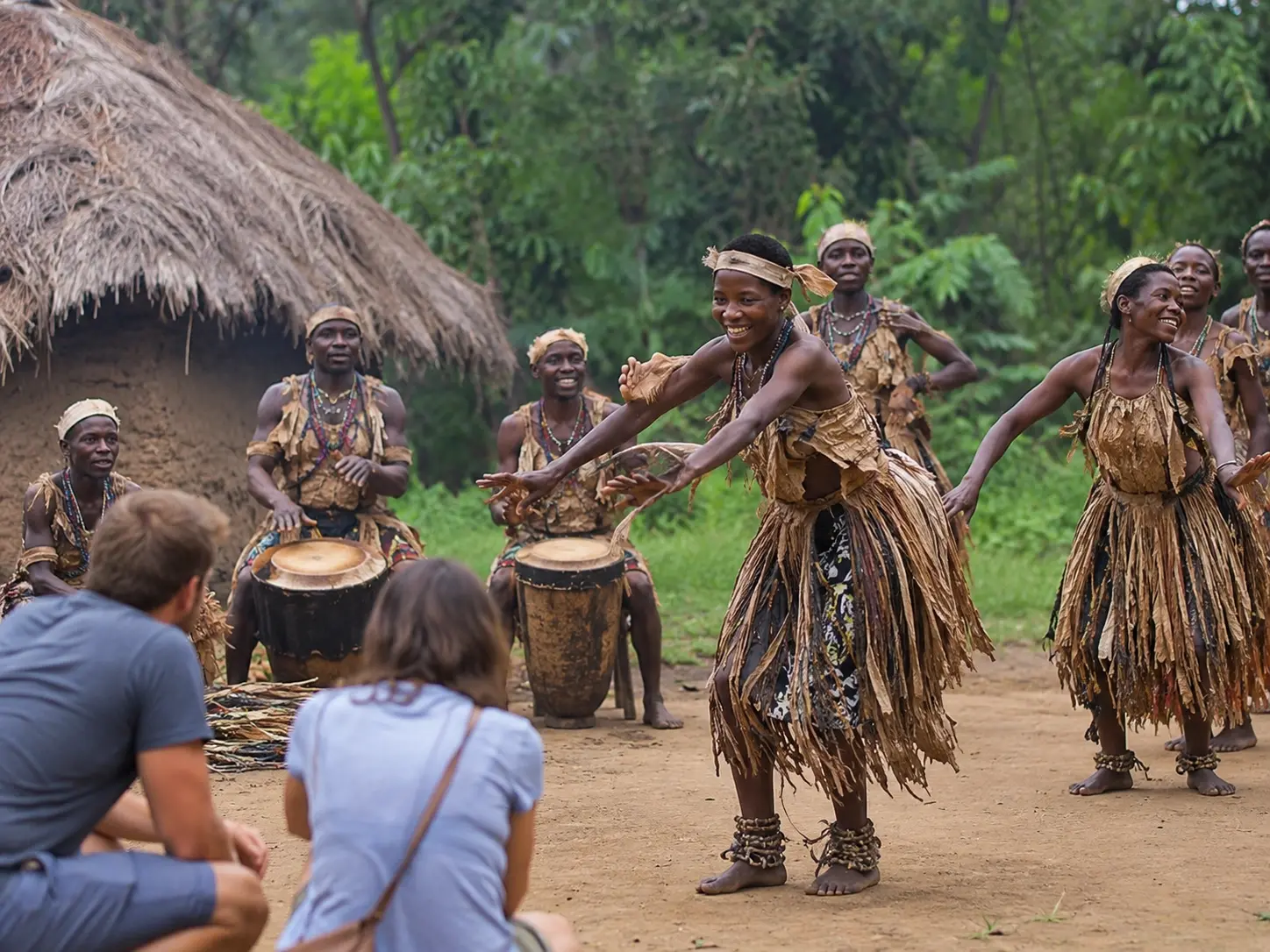
Batwa cultural performance during tourists’ visit
Volcano Hiking in Rwanda’s Virunga Mountains
Volcano hiking in Rwanda takes place in and around Volcanoes National Park, where the Virunga Mountains rise along the country’s northwestern border. Rwanda’s section of the range includes Karisimbi, Bisoke, Sabyinyo, Gahinga and Muhabura, with hikes varying considerably in length, altitude and difficulty.
Mount Karisimbi is Rwanda’s highest point at 4,507 metres and the most demanding of the main hikes. The standard ascent takes two days, with an overnight camp before continuing towards the summit. Mount Bisoke, at approximately 3,711 metres, can be climbed as a day hike and is known for the crater lake at its summit. Both routes pass through changing vegetation zones, with steep and sometimes muddy terrain becoming more demanding as altitude increases.
These hikes require a reasonable level of fitness, sturdy hiking boots, rain protection and enough time in the itinerary to recover. Karisimbi in particular should be treated as a serious mountain hike rather than a short activity added between safari days. If you also intend to trek mountain gorillas, it is better to allow enough time between demanding activities rather than scheduling a strenuous climb immediately before or after the gorilla trek. For travellers spending several nights around Volcanoes National Park, volcano hiking adds a completely different experience to gorilla and golden monkey tracking and gives more reason to explore the Virunga Mountains beyond the primate trails.
Congo Nile Trail, Cycling and Lake Kivu Activities
The Congo Nile Trail is Rwanda’s main long-distance hiking and cycling route along Lake Kivu. It extends for approximately 227 kilometres from Rubavu in the north to Rusizi in the south, passing through hills, villages, coffee-growing areas and sections of the lakeshore. The complete route takes about five days by bicycle or around ten days on foot, although travellers with less time can include individual stages rather than completing the entire trail.
Cycling suits travellers who want a more active extension to their Rwanda safari, but the terrain should not be underestimated. Rwanda’s western landscape is hilly, and some sections involve sustained climbs rather than easy recreational riding. Shorter rides can also be arranged around Rubavu, Musanze and other parts of the Lake Kivu region without committing to a multi-day journey.
Lake Kivu adds several gentler activities alongside the trail. Travellers can kayak along parts of the shoreline, take boat trips, visit islands and coffee-growing communities, or simply spend time walking beside the lake. Rubavu, formerly known as Gisenyi, is particularly convenient after Volcanoes National Park, while Karongi, formerly Kibuye, can be incorporated farther south when travelling towards Nyungwe National Park.
These activities allow a Rwanda itinerary to change pace after gorilla trekking, chimpanzee tracking or more demanding hiking. A short Lake Kivu stay can provide one or two quieter days, while the Congo Nile Trail can become a major part of the itinerary for travellers whose main interest is cycling or walking.
Best Time for a Rwanda Safari
Rwanda safaris can be planned throughout the year, but the weather affects trekking conditions, wildlife viewing and how easily you move between destinations. The main dry season runs from June to mid-September, followed by a shorter drier period from around mid-December to early February. These months generally bring firmer forest trails and easier road conditions, which is useful for gorilla trekking in Volcanoes National Park, chimpanzee tracking in Nyungwe and game drives in Akagera.
The wetter periods normally fall from mid-February to May and from mid-September to mid-December. Rain can make forest trails muddier and more demanding, particularly in Volcanoes and Nyungwe, although showers are possible at any time of year in Rwanda’s highland and forest regions. The wetter months also bring greener landscapes and strong birding conditions, so they should not automatically be ruled out.
Conditions also vary between safari areas. Volcanoes National Park is cooler because of its altitude, while Nyungwe National Park remains cool and wet for much of the year. Akagera National Park lies lower in eastern Rwanda and is generally warmer, with seasonal changes more noticeable across its savannah and wetland habitats.
The best month for your Rwanda safari therefore depends on what you want to prioritise. Travellers focused on easier trekking conditions often favour the drier months, while birders, photographers and visitors comfortable with occasional rain can travel successfully during the greener periods.
Where to Stay on a Rwanda Safari
Where you stay on a Rwanda safari should be planned around the route and the activities you have booked. Kigali is the usual base for the first or final night, while gorilla trekking requires accommodation with convenient access to the Volcanoes National Park headquarters at Kinigi. In Akagera, staying in or close to the park gives you more useful time for game drives and Lake Ihema boat safaris, while accommodation around Nyungwe should be chosen with early chimpanzee tracking starts and access to the forest in mind.
Lake Kivu adds a different style of stay, with lakeside hotels and lodges around areas such as Rubavu and Karongi fitting naturally between Volcanoes and Nyungwe or at the end of a longer Rwanda itinerary. The right property therefore depends on more than room category. Location, driving time, activity starting points, meal arrangements and the number of nights in each destination all affect how comfortably the safari runs.
Rwanda offers accommodation ranging from high-end safari lodges and private retreats to comfortable mid-range hotels, tented camps and simpler value options. Luxury properties place greater emphasis on privacy, setting and high levels of service, while well-chosen mid-range accommodation can still provide comfortable rooms, full-board arrangements and convenient access to the parks. The sections below compare the main accommodation areas so you can choose where to stay according to your route and preferred level of comfort.
Where to Stay in Kigali on a Rwanda Safari
Most Rwanda safaris include at least one night in Kigali, either after arriving at Kigali International Airport or before the flight home. Staying overnight is particularly useful after a long international journey, allowing you to rest before continuing by road to Volcanoes National Park, Akagera or Nyungwe the following morning. Travellers including a Kigali city tour can also use the capital as a two-night base before moving into the national parks.
For a high-comfort city stay, Kigali Marriott Hotel, Kigali Serena Hotel and Radisson Blu Hotel & Convention Centre are established options with restaurants, larger rooms and facilities suited to travellers beginning or ending a safari. Hôtel des Mille Collines offers a more historic central Kigali setting and can suit travellers who want convenient access to the city centre.
For a smaller boutique-style stay, Heaven Boutique Hotel and Hemingways Retreat Kigali provide a more intimate alternative to the larger city hotels. Hemingways Retreat Kigali is particularly suited to travellers looking for privacy, wellness facilities and a quieter base in the Kiyovu area before or after the safari.
The best Kigali hotel should be chosen around your flight times and what you intend to do in the city. Airport convenience matters for a short overnight stay, while a more central or boutique property can make more sense when you have time for the Kigali Genocide Memorial, markets, galleries or other city experiences.
Where to Stay near Volcanoes National Park for Gorilla Trekking
Accommodation around Volcanoes National Park should be chosen with the trekking morning in mind. Gorilla and golden monkey activities begin with an early briefing in the Kinigi area, so staying nearby reduces the amount of driving before you enter the forest. Musanze also has a wider range of hotels and lodges, making it useful for travellers who want comfortable accommodation without staying at the highest-end properties.
Luxury
Volcanoes National Park has some of Rwanda’s most distinctive luxury safari lodges. Wilderness Bisate combines six private forest villas with views towards the Virunga volcanoes and a strong reforestation programme. Singita Kwitonda Lodge lies close to the park and offers spacious suites with private heated plunge pools, while the neighbouring Kataza House is an exclusive-use four-bedroom villa suited to families or small private groups.
One&Only Gorilla’s Nest provides another high-end option on the edge of the Volcanoes area, with private suites and treehouse-style accommodation set among eucalyptus forest. Sabyinyo Silverback Lodge is particularly convenient for trekking, sitting around 10 minutes from the park headquarters, while Virunga Lodge offers a different setting on a ridge overlooking the Virunga Mountains and the twin lakes of Burera and Ruhondo.
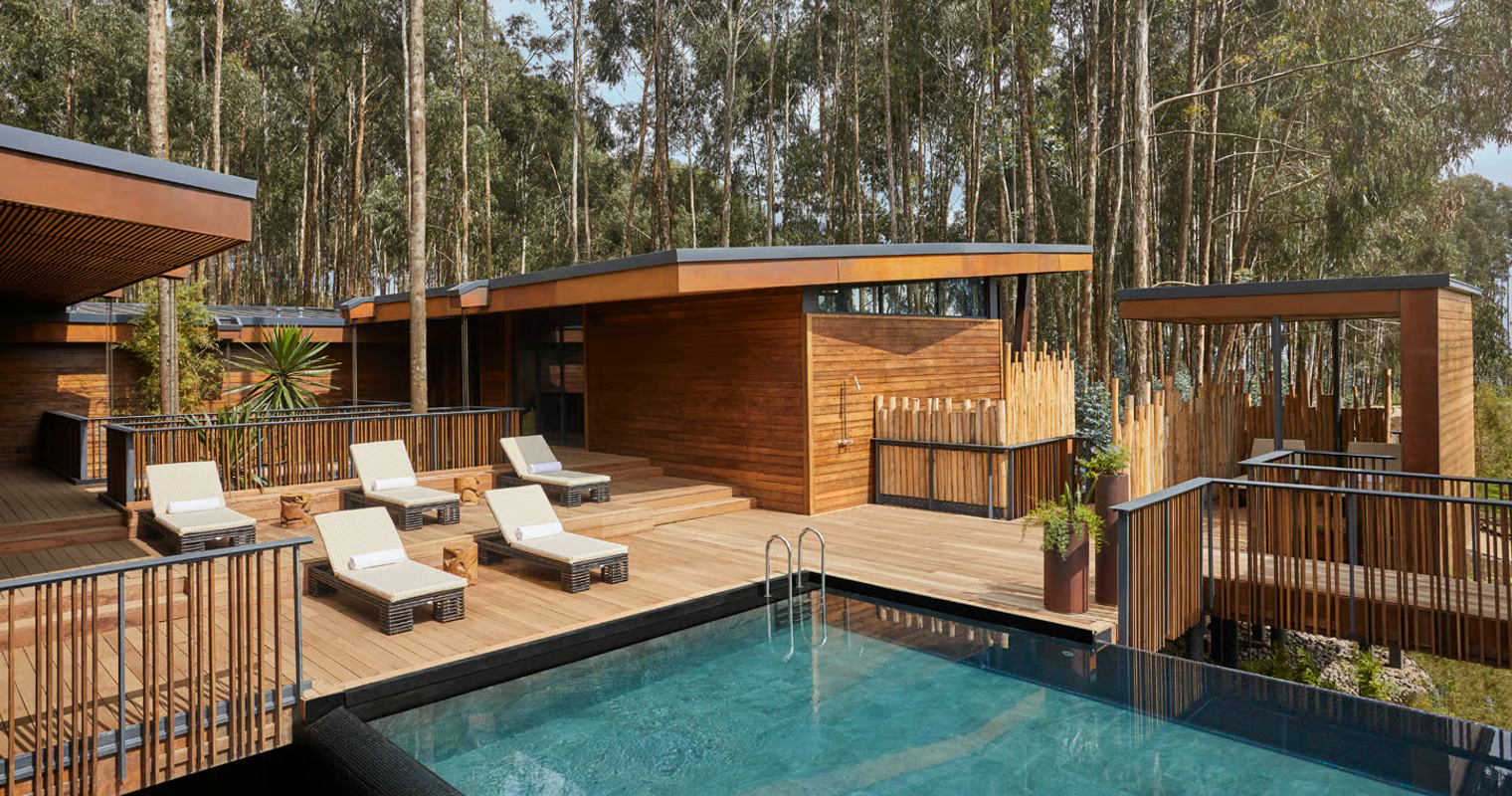
One&Only Gorilla’s Nest Lodge poolside
Mid-range
Travellers looking for comfortable accommodation at a lower level than the premium lodges have several options around Kinigi and Musanze. Five Volcanoes Boutique Hotel, Mountain Gorilla View Lodge, The Bishop’s House and Amakoro Songa Lodge are among the properties that can fit well into mid-range Rwanda safari itineraries. When comparing these lodges, location should come before room style alone. A property closer to Kinigi can make the gorilla trekking morning easier, while accommodation in Musanze may provide more access to the town and a wider choice of services.
Where to Stay near Nyungwe National Park for Chimpanzee Tracking
Accommodation around Nyungwe National Park should be chosen around the activities in your itinerary, particularly chimpanzee tracking, which starts very early in the morning. Staying close to the relevant park access area reduces the amount of driving before the trek and makes it easier to combine chimpanzees with the canopy walk, birding or another guided forest activity during the same stay.
Luxury
One&Only Nyungwe House is the principal high-end option beside Nyungwe National Park. The property sits between the forest and a working tea plantation, with suites and villas overlooking the surrounding greenery. It suits travellers who want the accommodation itself to be part of the Nyungwe experience, with a high level of comfort between chimpanzee tracking, forest walks and other activities.
Mid-range
Nyungwe Top View Hill Hotel provides a more moderate alternative near the park. Its hillside position overlooks tea plantations and the wider Nyungwe landscape, while the location gives travellers a convenient base for chimpanzee tracking, the canopy walk and guided forest activities. For most mid-range travellers, proximity to the correct activity starting point matters more than choosing a property simply because it is described as being in the wider Nyungwe region.
Southern Nyungwe and Rusizi
Travellers using the southern side of the park or continuing towards Rusizi and the southern end of Lake Kivu can also consider accommodation around Kamembe and Rusizi. Mantis Kivu Marina Bay Hotel provides a higher-comfort lakeside option near Kamembe Airport, while Emeraude Kivu Resort is another property on the Rusizi side of Lake Kivu. These southern properties can make sense when the safari route continues towards Rusizi or uses nearby forest access areas, but they should not automatically replace accommodation closer to Nyungwe when an early forest activity is scheduled.
Where to Stay on Lake Kivu
Lake Kivu accommodation should be chosen according to where the lake fits into your Rwanda safari. Rubavu in the north is particularly convenient after Volcanoes National Park, Karongi sits naturally on longer western Rwanda routes, and Rusizi can be used when travelling between the southern end of Lake Kivu and Nyungwe National Park.
Rubavu: Lake Kivu Serena Hotel is one of the established high-comfort properties on the northern lakeshore. The hotel sits directly beside Lake Kivu and offers rooms and suites, gardens, a swimming pool, water activities and access to the lake. Rubavu is a useful choice after gorilla trekking because it can be reached relatively easily from the Volcanoes National Park area.
Karongi: Karongi is a strong option for travellers who want a quieter lakeside stay or are continuing south towards Nyungwe. LUX* Lake Kivu is a five-star property overlooking the lake in Karongi, with suites and villas designed around lake views, outdoor activities and longer leisure stays. Karongi also has smaller hotels and lodges for travellers who do not need a full luxury resort but still want direct access to boat trips, kayaking and the surrounding hills.
Rusizi: Rusizi suits itineraries linking Lake Kivu with the southern side of Nyungwe National Park. Mantis Kivu Marina Bay Hotel overlooks the lake near Kamembe and can be useful before or after forest activities, while other smaller properties around Rusizi provide simpler alternatives. The best Lake Kivu base therefore depends on the direction of the safari. Rubavu fits naturally after Volcanoes National Park, Karongi is useful on the central western route, and Rusizi is better positioned when the journey continues towards Nyungwe.
Rwanda Safari Travel and Transfers
Most Rwanda safaris begin in Kigali and continue by road to Volcanoes National Park, Akagera National Park, Nyungwe National Park and Lake Kivu. The country’s compact size allows these destinations to be combined within one overland itinerary without relying on domestic flights between every stop. Private safari vehicles with a driver-guide are commonly used for transfers and game-viewing routes, giving travellers more flexibility around lodge check-ins, trekking times and park activities. Flights can still be included on selected longer routes when reducing road time is a priority.
Arriving in Rwanda Through Kigali International Airport
Most Rwanda safaris begin at Kigali International Airport (KGL), around 10 kilometres from central Kigali. Depending on your arrival time, you can transfer to a city hotel or continue directly towards your first safari destination. Volcanoes National Park and Akagera National Park are both reachable by road from Kigali, while Nyungwe requires a considerably longer transfer. Travellers arriving late or after a long international flight are generally better off spending the first night in Kigali before beginning the safari the following morning. For journeys towards Nyungwe and southern Lake Kivu, flights to Kamembe can also reduce road time when they fit the itinerary.
Rwanda Safari Road Transfers and Driving Times
Road travel is the standard way to connect Rwanda’s main safari destinations, with private itineraries commonly using a safari vehicle and driver-guide. Most major routes use paved roads between towns, with rougher tracks encountered inside parks and on some lodge approaches. From Kigali, allow roughly 2.5 to 3 hours to Volcanoes National Park and around 2.5 hours to Akagera National Park. Nyungwe National Park requires a longer journey of approximately 5 to 6 hours, depending on the route and final accommodation. These driving times should be considered when building the itinerary, particularly when an early gorilla or chimpanzee trek is scheduled for the following morning.
When to Choose a Fly-In Rwanda Safari
Most Rwanda safaris can be completed comfortably by road, but flying can reduce transfer time on selected routes. For Nyungwe National Park and southern Lake Kivu, a domestic flight between Kigali and Kamembe can replace part of the longer road journey, followed by a vehicle transfer to the lodge or park. Charter and helicopter transfers can also be considered on tailor-made itineraries where saving travel time is a priority. Fly-in options are most useful for shorter trips, luxury safaris or travellers who prefer to minimise long road transfers. Flight availability should be confirmed for the actual safari dates.
Combining Rwanda With Uganda, Kenya and Tanzania
Rwanda can be combined with Uganda, Kenya or Tanzania for travellers who want a broader East Africa safari. Uganda is the easiest overland extension, with road routes linking Volcanoes National Park to southwestern Uganda for Bwindi, Mgahinga, Lake Bunyonyi and other safari areas. Kenya and Tanzania are more commonly added by air through Kigali. Flights to Nairobi make it possible to continue into Kenya’s major wildlife areas, while connections to Dar es Salaam can lead into Tanzania safari or coastal itineraries. Travellers combining Rwanda, Uganda and Kenya can also consider the East Africa Tourist Visa, which covers all three countries for 90 days. Tanzania is not included and requires its own applicable entry arrangements.