

Embarking on the 9 Days Uganda Wildlife and Gorillas Adventure Tour offers an unparalleled opportunity to immerse yourself in the stunning landscapes and vibrant wildlife of Uganda, famously dubbed the “Pearl of Africa” by Winston Churchill. This expedition encompasses an array o
Eleven-day Tanzania safari and Zanzibar beach combination — full Northern Circuit game drives followed by four nights on Zanzibar. The complete Tanzania experience.
An Exceptional Wildlife Journey Crafted by BLS Safaris Ltd The 10 Days Uganda Safari: The Big Five, Forest And Lakes Safari introduces travelers to Uganda’s most iconic wildlife destinations while revealing breathtaking forests, savannahs, lakes, and vibrant cultures. This extrao
Five-day Kenya safari pairing Amboseli's legendary elephant herds (with Mt Kilimanjaro views) and the Big Five-rich Masai Mara. Two of Kenya's most photographed parks in one efficient trip.
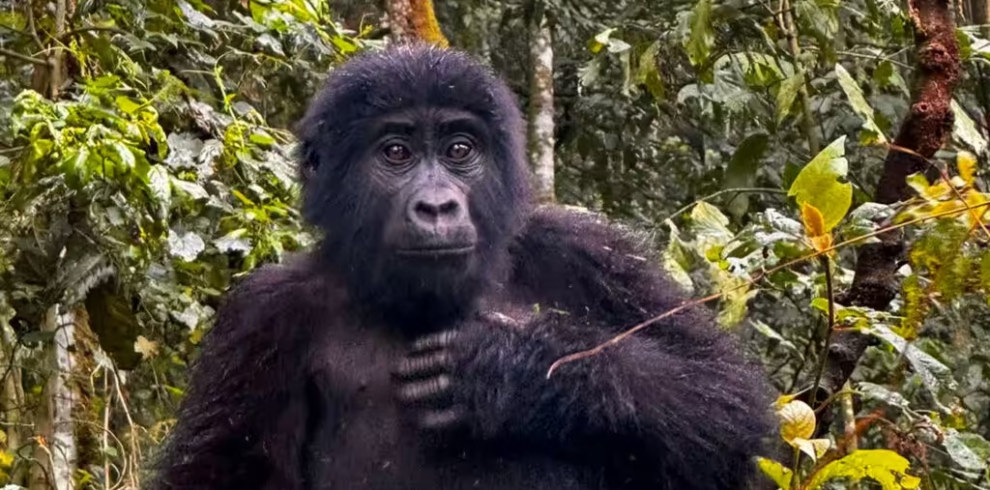
Eight-day grand tour of Rwanda — Volcanoes gorillas, Nyungwe chimpanzees, Akagera Big Five and Lake Kivu in one comprehensive trip. The complete Rwanda experience.
Four-day Tanzania short safari — the world's largest unbroken caldera at Ngorongoro, plus Tarangire's iconic baobabs and giant elephant herds. Big Five virtually guaranteed.
The 7-Day Uganda Safari is an unforgettable journey through the “Pearl of Africa,” combining thrilling wildlife encounters, breathtaking landscapes, and rich cultural experiences. This carefully designed Uganda safari takes you to some of the country’s most iconic destinations, i
Eight-day classic Tanzania Northern Circuit covering all four iconic parks — Tarangire, Lake Manyara, Serengeti and Ngorongoro Crater. The complete Tanzanian safari in one comprehensive trip.
Kenya Big Five Safaris
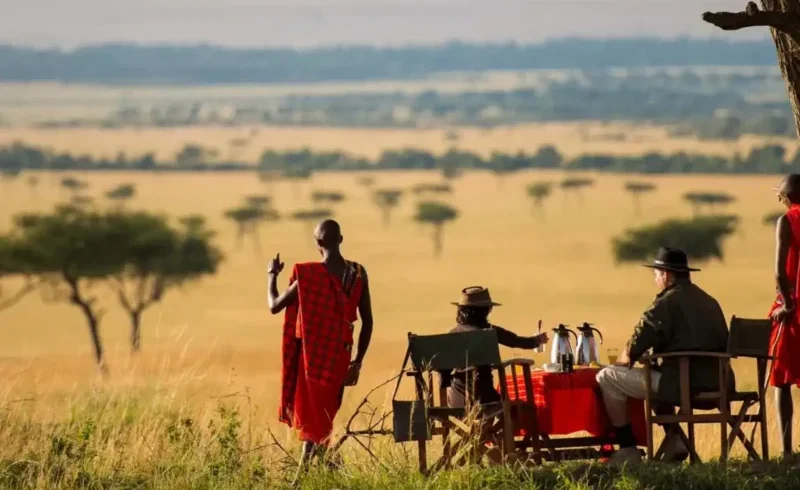
Kenya Big Five safaris can combine the open plains of the Masai Mara with rhino viewing in Lake Nakuru or Lewa Conservancy. In the Masai Mara National Reserve, look for lions, leopards, elephants and buffalo, with further game-viewing opportunities in nearby conservancies such as Mara Naboisho. The Great Migration adds wildebeest and zebra herds alongside predator activity. Black rhinos are also present, including in the Mara Triangle, but they are harder to find. If rhinos are a priority, include Lake Nakuru National Park in your itinerary rather than relying entirely on sightings in the Mara. Both black and white rhinos occur here, alongside giraffes, baboons, flamingos and other birdlife. Give this stop a clear place in your route when comparing safari packages. Amboseli National Park adds large elephant herds and views of Mount Kilimanjaro. For a stronger conservation focus, consider the Laikipia Plateau and Lewa Conservancy, which also offer rhino experiences. Build your route around the wildlife you most want to see, with each destination contributing something distinct to the safari.
Tanzania Big Five Safaris
Tanzania Big Five safaris work well around Serengeti National Park and Ngorongoro Crater on the northern safari circuit. Serengeti offers wide plains for full-day game drives, with lions, leopards, elephants and buffalo among the animals to look for. The wildebeest migration adds another wildlife experience, including river crossings on the Grumeti and Mara Rivers. Pair Serengeti with Ngorongoro for concentrated wildlife viewing and the chance to see black rhinos. Lions, elephants and buffalo are also part of the crater’s appeal. Leopards are harder to find here, so include time to search wooded habitats in Serengeti’s Seronera region. Each destination contributes something different, with Ngorongoro providing a focused game-viewing area and Serengeti offering wider landscapes and more time to search for big cats. If your priority is seeing all five animals, give this northern combination the main place in your itinerary. Ruaha and Selous also offer wilderness safaris, but the Serengeti and Ngorongoro pairing keeps the route focused on the wildlife experiences outlined above.
Uganda Big Five Safaris
Uganda Big Five safaris combine game drives in Murchison Falls National Park with rhino tracking at Ziwa Rhino Sanctuary. Murchison Falls is home to lions, leopards, elephants and buffalo, with the northern sector a key area for early morning wildlife viewing. Ziwa, in Nakasongola along the route to Murchison Falls, adds the chance to track rhinos on foot before or after your park visit. The Victoria Nile brings another way to watch wildlife. Take a boat trip to the foot of Murchison Falls to look for hippos and crocodiles, with opportunities to spot elephants and buffalo along the riverbanks in the afternoon. Giraffes also add to the park’s game-drive sightings, giving you more to enjoy beyond the Big Five. Kidepo Valley National Park offers a more remote safari in the Karamoja subregion. Its wilderness setting and big cats provide a different experience, although cheetah sightings are rare. For a route combining savanna game drives, river wildlife and a dedicated rhino activity, keep Murchison Falls and Ziwa together in your plans.
Rwanda Big Five Safaris
Rwanda Big Five safaris centre on Akagera National Park in eastern Rwanda, about a 3-hour drive from Kigali. Here, you can search for lions, leopards, elephants, buffalo and both black and white rhinos on game drives. The park’s wildlife recovery following years of poaching and conflict has restored its place as a Big Five destination. Explore the northern sector on early morning and afternoon game drives, looking for giraffes, eland, topi, warthogs and zebras alongside the Big Five. If you want to search for nocturnal wildlife, a night game drive can be arranged in advance. These activities give you different ways to experience Akagera’s savanna wildlife. For a trip combining game drives with mountain gorillas, include Akagera and Volcanoes National Park in the same Rwanda itinerary. You can experience both savanna wildlife and gorilla trekking without crossing into another country.
Which Animals Are the Big Five?
The Big Five are lion, leopard, African elephant, Cape buffalo and rhinoceros. Each offers a different viewing experience, from elephants feeding or bathing in family groups to leopards that take patience and sharp eyes to find.
Lion
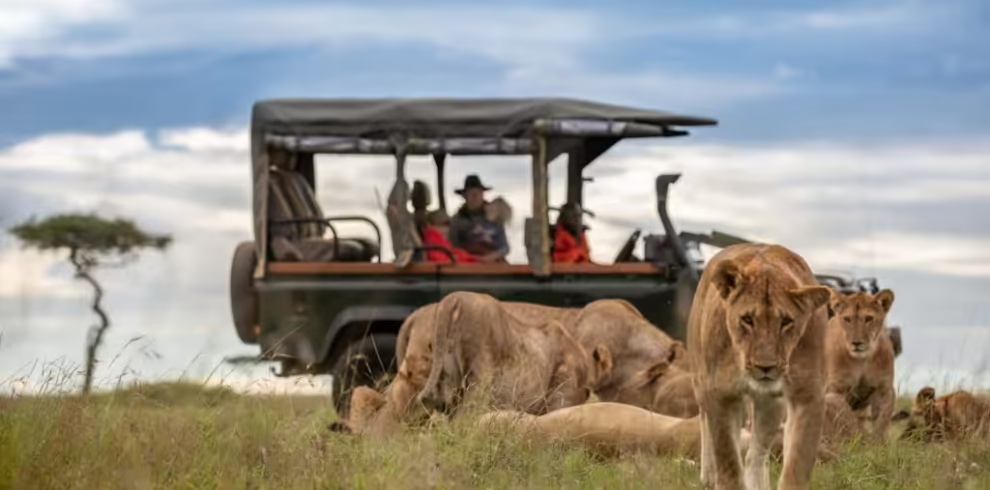
Lions live in prides made up of related females, cubs and adult males. Look for them in the morning, late afternoon or around sunset when they are more active. During the heat of the day, watch for lions resting in shade or lying in the grass. Places to look for lions include Serengeti in Tanzania, Masai Mara and Laikipia in Kenya, and the Ishasha sector of Queen Elizabeth National Park in Uganda. Ishasha adds the distinctive sight of lions resting in trees.
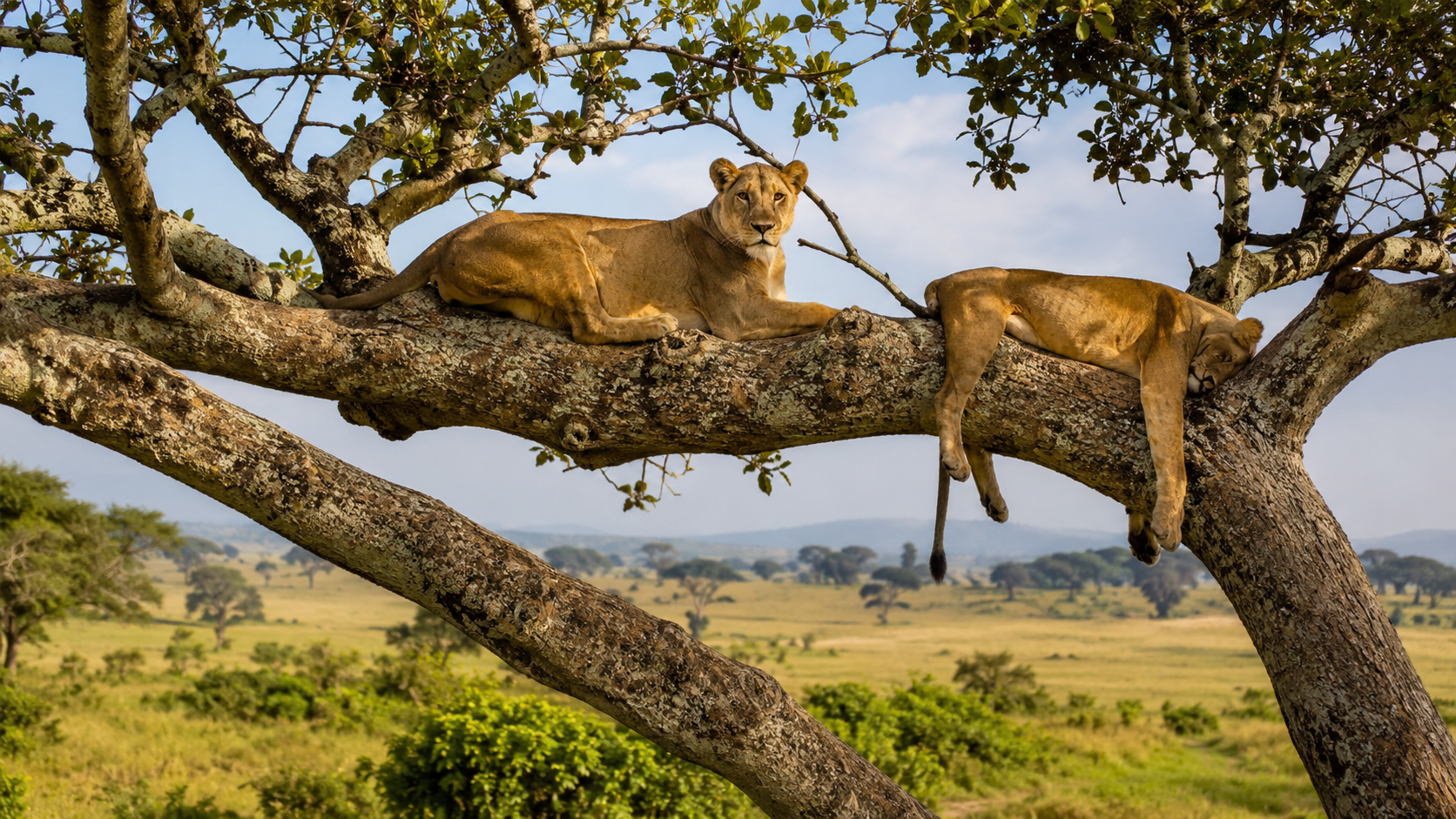
Ishasha tree-climbing lions Queen Elizabeth
Leopard
Leopards are solitary and elusive, so finding one takes patience. Look into acacia and sausage trees, around rocky outcrops and through thick cover. You could spot a leopard resting on a branch or feeding on prey carried into a tree, away from lions and hyenas. Its rosette-shaped markings help distinguish it from a cheetah. Places to search include Masai Mara and Serengeti, along with Lake Mburo and Murchison Falls National Parks in Uganda. If a leopard sighting is a priority, tell your guide early, so your game drives can focus on suitable habitats. Take time to scan shaded branches and wooded areas, where a leopard can be difficult to notice even nearby.
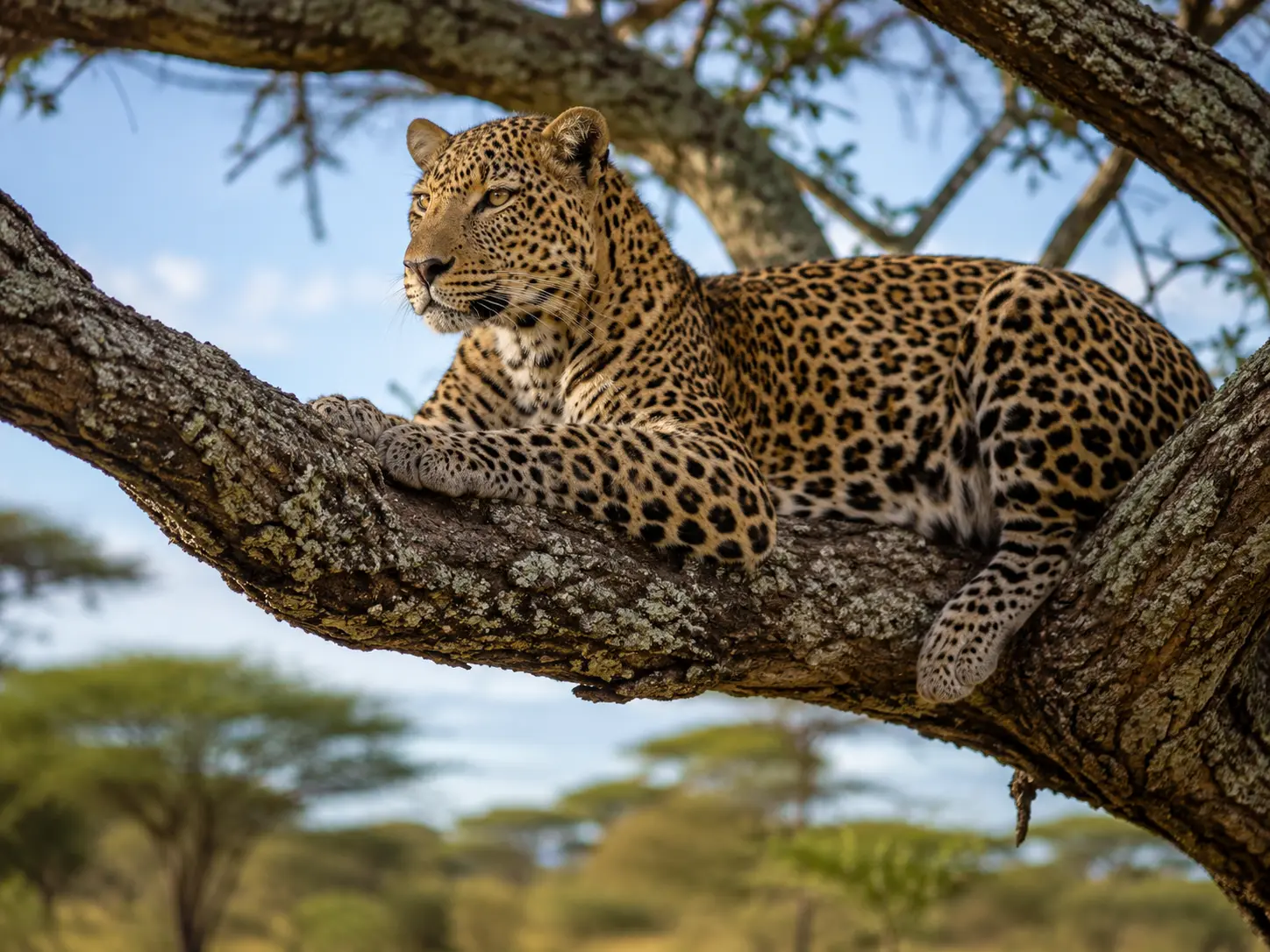
Leopard
African Elephant
The African savanna elephant is the world’s largest land animal. Females and calves live in family groups, while older males can travel alone or in bachelor herds. On game drives, watch elephants feeding, crossing tracks, bathing in rivers and protecting their calves. Listen for the low rumbles they use to communicate. Their feeding and movements also shape the landscape by opening woodland and spreading seeds. Elephant-viewing destinations include Samburu and Amboseli in Kenya, Ngorongoro, Tarangire and Katavi in Tanzania, Queen Elizabeth and Murchison Falls in Uganda, and Akagera National Park in Rwanda. Beyond their size, take time to observe how family members interact as they feed, move and care for their young.
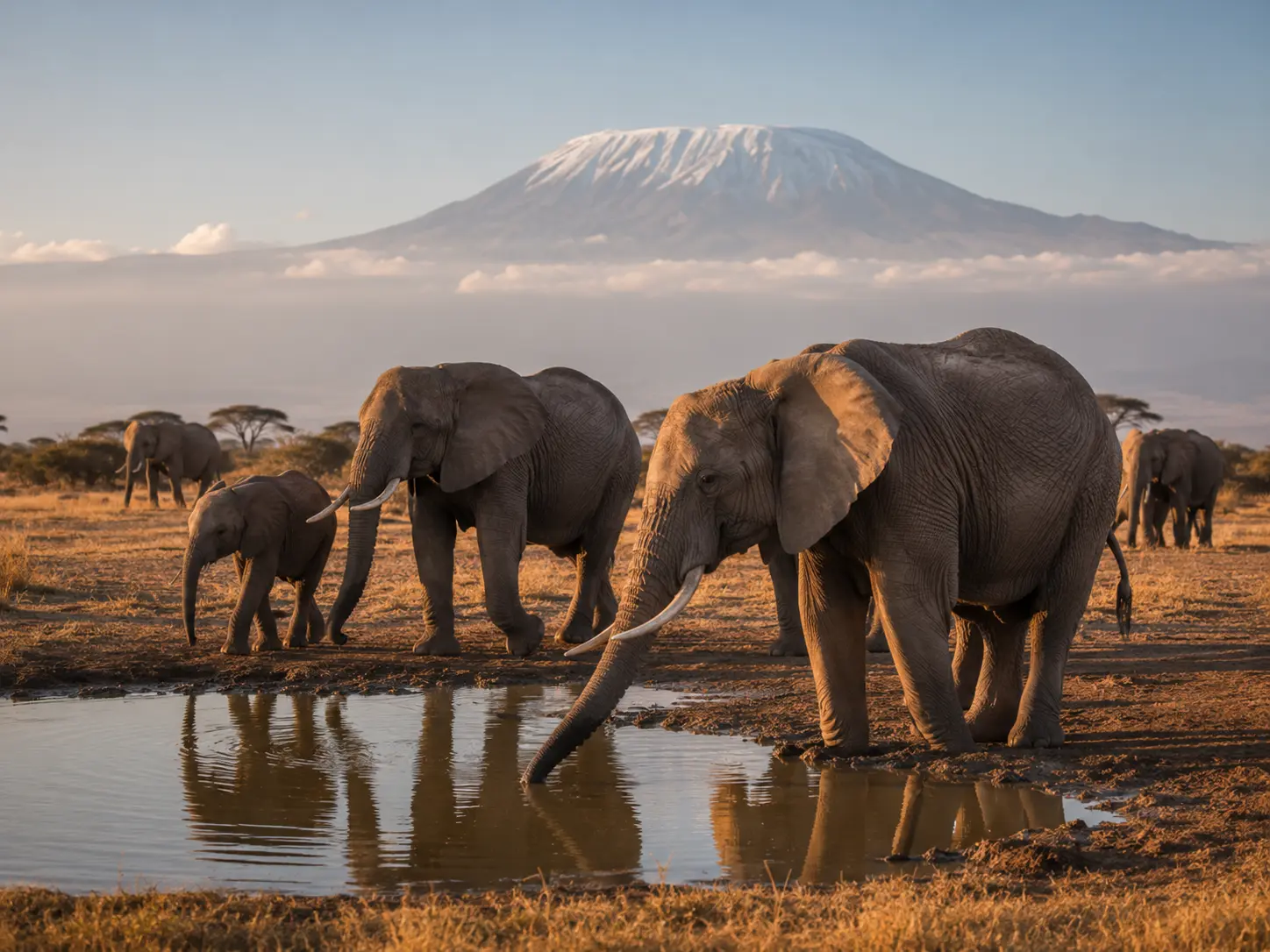
Elephants with views of Mount Kilimanjaro in Amboseli National Park, Kenya
Cape Buffalo
Cape buffalo gather in large herds across the savanna, with smaller groups found near forests and thicker cover. Both males and females have horns. On mature bulls, look for the heavy shield across the top of the head, known as a boss. From a distance, a herd can resemble a dark patch spread across the grassland. Buffalo are powerful and unpredictable, particularly when wounded or separated from the herd. Lions are among their predators, but buffalo can defend one another, chase attackers and force a pride to retreat.
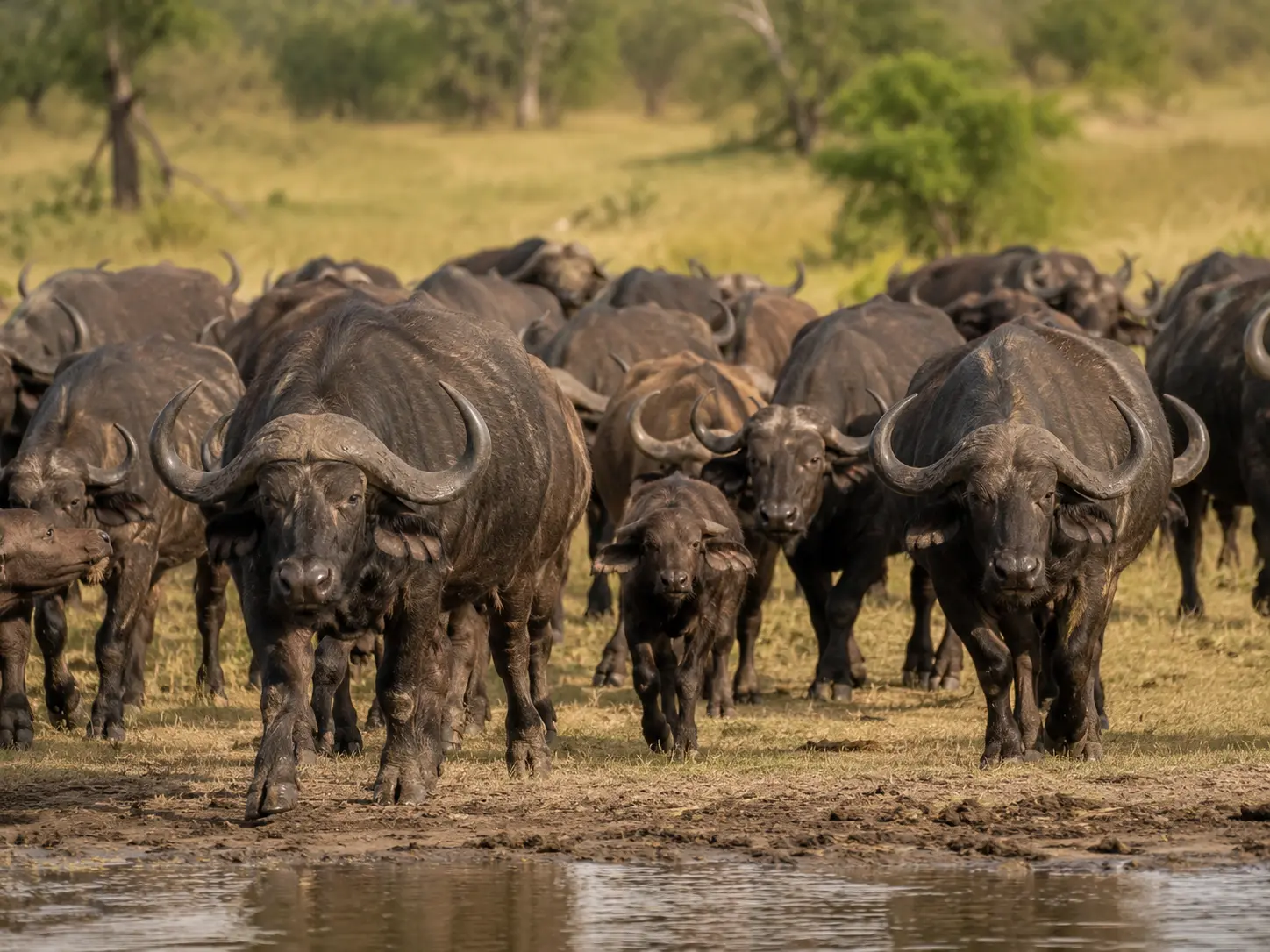
African Buffalo
Rhinoceros
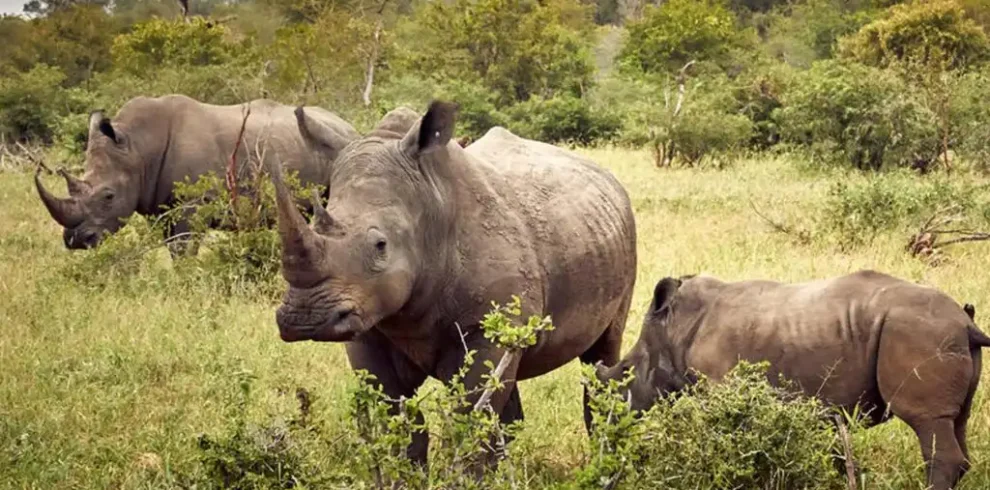
Africa’s two rhino species are the black rhino and white rhino. Look at the mouth to tell them apart. Black rhinos have a hooked upper lip for browsing, while white rhinos have a broad, square upper lip for grazing. Their names do not refer to their colour. Rhinos have poor eyesight but strong hearing and smell, so guides take care during walking safaris and conservation visits. Poaching has reduced rhino numbers, making protected habitats central to their survival. In East Africa, viewing destinations include Ziwa Rhino Sanctuary in Uganda, Ol Pejeta Conservancy in Kenya and Ngorongoro Conservation Area in Tanzania. Include a suitable rhino destination when planning your Big Five safari, as rhinos are not found in every national park.
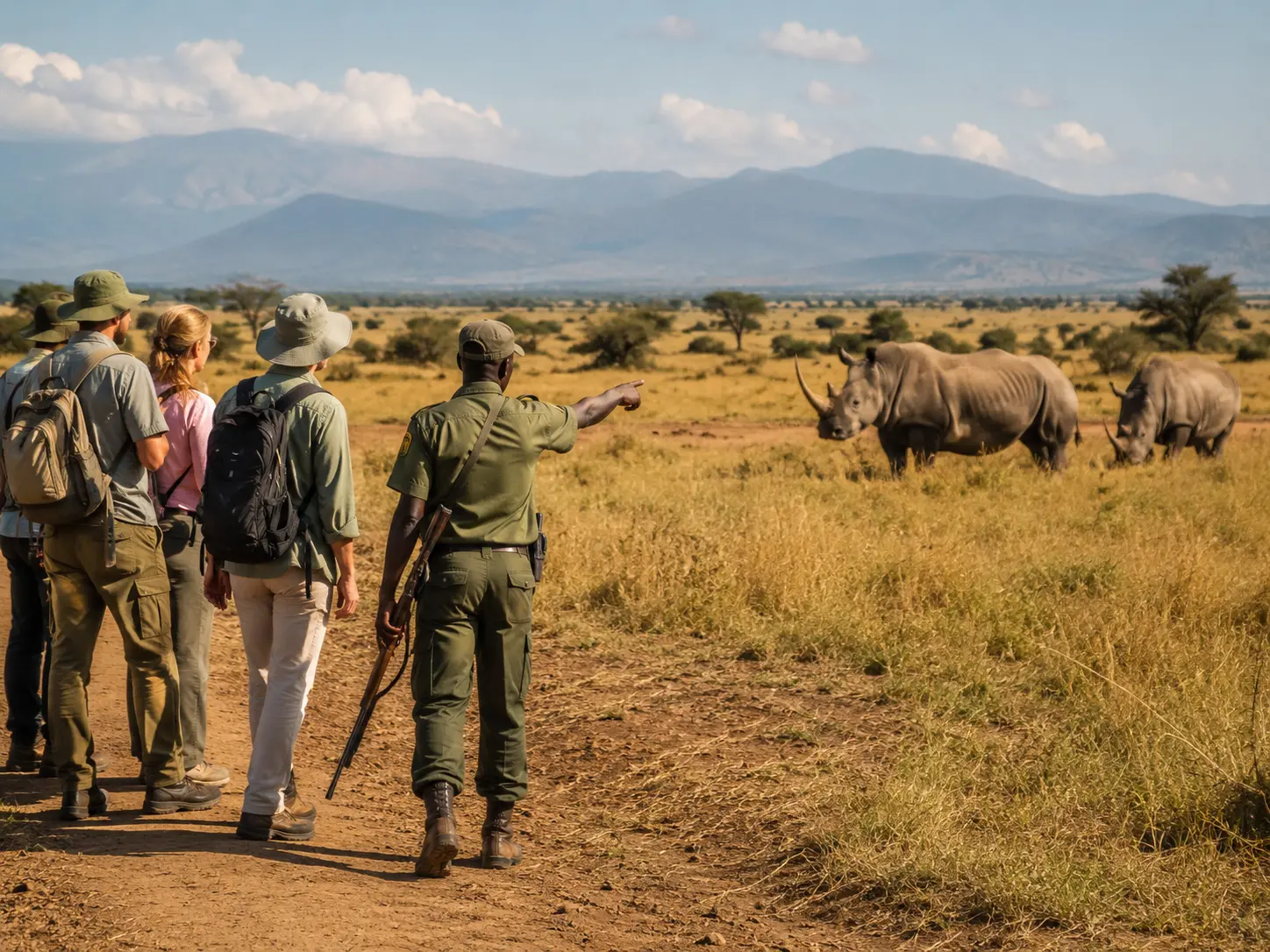
Rhinos
Best Time for a Big Five Safari in East Africa
Big Five safaris run throughout the year. Drier conditions make wildlife easier to spot, while wetter periods bring greener scenery, birdwatching and opportunities for quieter trips. Match your dates to the parks you want to visit and the wildlife experiences that matter most to you.
Dry-Season Wildlife Viewing
June to October is a useful starting point when planning for drier safari conditions, although timing differs between destinations. Shorter grass and thinner vegetation improve visibility, while animals gather around rivers, waterholes and remaining grazing areas. These conditions can help you make more of your game drives on a shorter trip. In Kenya’s Masai Mara, late June to October offers rewarding wildlife viewing. For a trip combining the Big Five with migration activity, consider late August to early October, while keeping expectations flexible around herd movements. January and February also offer good game-viewing conditions in Kenya. In Tanzania’s Serengeti, January and February bring the added interest of wildebeest calving and associated predator activity. Treat this as a distinct seasonal attraction when planning your dates, rather than assuming the same dry-season pattern applies throughout East Africa.
Wet-Season Wildlife Viewing
Wetter months bring green landscapes, rewarding birdwatching and softer light for photography. You can also find quieter parks and lower rates at some lodges. March to May brings heavier rain in many destinations, although conditions differ across East Africa. Around Ngorongoro, April and May can suit travellers seeking fewer crowds, provided they are comfortable with rain affecting road conditions. Wildlife viewing continues, but allow more time to search. With water available across a wider area, animals are less concentrated around individual waterholes. Taller grass can make them harder to spot, while muddy tracks affect where you can drive. Keep your route flexible and allow time for longer game drives rather than expecting the same visibility as during drier months.