
Ruaha National Park covers about 20,226 km² in central Tanzania, roughly 130 km west of Iringa. It is Tanzania’s second-largest national park after Nyerere, yet vehicle numbers remain low compared with the northern safari circuit. Long game drives can pass through woodland, river country and open plains without meeting another vehicle, giving you time to stay with a sighting and watch the animals settle.
Baobabs, acacias, miombo woodland, grassland, granite kopjes, escarpments and river valleys shape the landscape. More than 1,650 plant species grow across the park. Hills in the south and west rise towards 1,800 metres, while broad plains and seasonal watercourses open between the higher areas. Ruaha expanded in 2008 when the former Usangu Game Reserve and its wetlands were added, protecting a much wider section of the ecosystem.
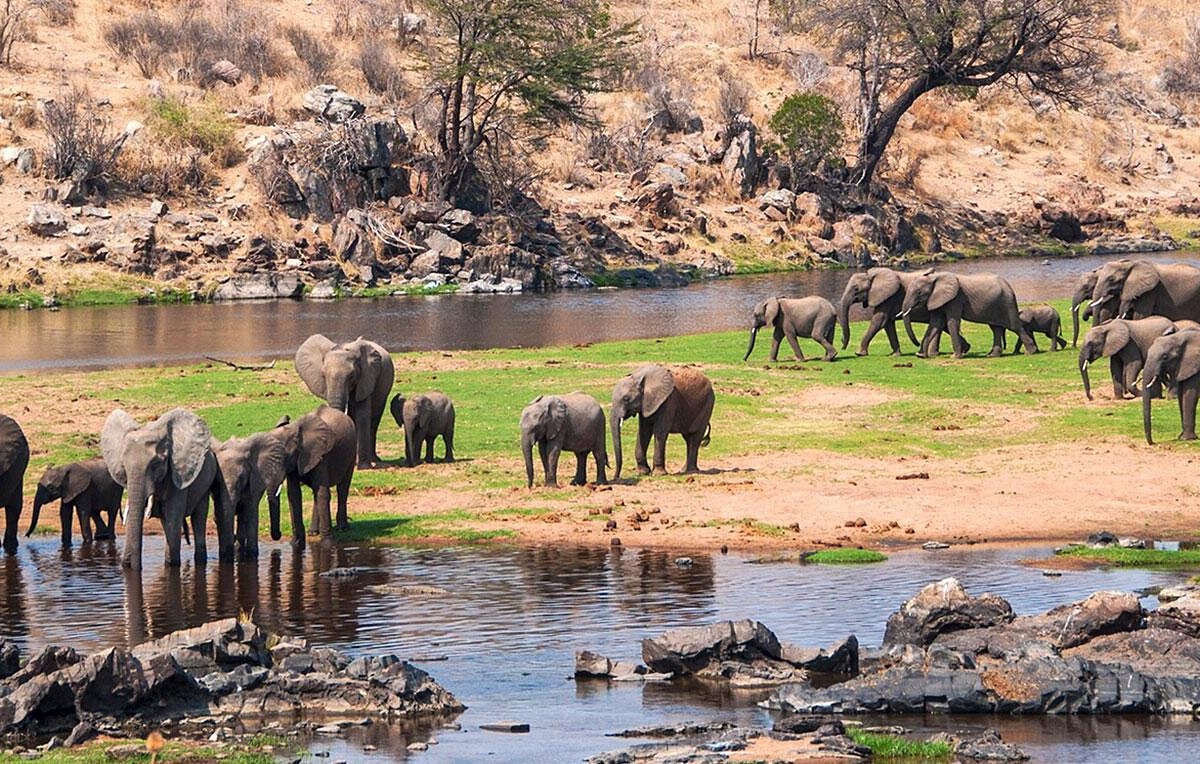
The Great Ruaha River is the park’s defining feature and the source of its name. It crosses the southeastern safari area before joining the Kilombero to form the Rufiji system farther downstream. During the dry months, seasonal rivers and waterholes shrink or disappear below the sand. Elephants, buffaloes, antelopes and predators then return to the Great Ruaha and its remaining pools.
Ruaha is one of Tanzania’s strongest predator destinations. Large lion prides use the river, plains, and woodlands, while leopards, spotted hyenas, cheetahs, and African wild dogs add variety. Ruaha is also one of Tanzania’s great elephant landscapes, with herds moving between the Great Ruaha River, seasonal watercourses and extensive miombo woodland. Greater kudus, lesser kudus, sable antelopes and roan antelopes give the park a distinctive mixture of East and southern African wildlife.
Attractions in Ruaha National Park
Ruaha’s attractions form part of the landscape rather than a series of fenced viewpoints. The Great Ruaha River, predator-rich plains, old baobabs, miombo woodland and granite kopjes change the scenery from one drive to the next. Wildlife concentrates around water in the dry season, while greener months open the experience across the wider park.
Great Ruaha River
The Great Ruaha River is the main focus of game viewing in the southeastern sector. As the dry season advances, elephants, buffaloes, giraffes and antelopes return to its pools and shaded banks. Lions follow prey along the riverbed, leopards use the trees and thickets, and crocodiles occupy deeper water. The river corridor stays greener than the surrounding plains, creating a sharp ribbon of palms, acacias and riverine vegetation through dusty country. Early morning and late afternoon bring cooler temperatures, active wildlife and softer light. During the late dry season, patience beside a productive pool can be more rewarding than covering long distances.
Large Predators Around Ruaha
Lions are Ruaha’s leading predator attraction. Prides move between open plains, woodland and the Great Ruaha River, while coalitions of males patrol large territories. Buffalo herds provide demanding prey, and a prolonged sighting can reveal hunting, feeding and pride behaviour that a rushed drive misses. Leopards favour riverine cover and rocky ground. Cheetahs use more open areas, while spotted hyenas and jackals range widely. African wild dogs travel across large territories and require patient tracking. One drive can cross several habitats, giving the guide different signs and opportunities to work with rather than relying on a single predator area.
Baobabs, Miombo Woodlands and Granite Kopjes
Baobabs stand across rocky hills and open country, their swollen trunks storing water through the dry months. Elephants strip bark, and fruit attracts animals and birds. The trees also create some of Ruaha’s strongest landscape photographs, particularly in the low light of morning and evening. Miombo woodland covers large sections away from the river. Visibility is lower here, but the habitat supports elephants, sable antelopes, greater kudus, wild dogs and woodland birds. Granite kopjes rise above the trees and grassland, providing shade, den sites and lookout points for predators. Moving between these habitats gives Ruaha much of its character.
Wildlife in Ruaha National Park
Ruaha’s wildlife spreads across a vast area rather than gathering on every plain. Elephants and antelopes range through woodland, while lions, leopards, cheetahs and wild dogs follow prey between river valleys and open ground. The strongest dry-season concentrations form around the Great Ruaha River and permanent pools.
Predators
The greater Ruaha landscape supports one of Africa’s most important lion populations. Large prides occur within the park, though pride size changes as animals split, reunite and move across their territory. June to October provides clearer views as vegetation thins and prey gathers near permanent water. Leopards live across the park but remain secretive in riverine woodland and rocky country. Cheetahs prefer open plains where they can use speed, while spotted hyenas and jackals patrol a wide range of habitats. African wild dogs are endangered and cannot be promised, but Ruaha remains an important stronghold. Guides search for tracks, fresh movement and information from other vehicles rather than heading to one fixed location.
Ruaha’s Large Mammals
Elephants define much of the Ruaha experience. Herds move through the wider Ruaha-Rungwa ecosystem according to water and fresh vegetation. During the rains, they spread into green woodland and the Usangu wetlands. As conditions dry, more animals return to the Great Ruaha River, where they drink, bathe and cross between feeding areas. Buffaloes form substantial herds, while giraffes, zebras, elands, impalas, hartebeests and defassa waterbucks occur in suitable habitat. Greater and lesser kudus live here together, joined by sable and roan antelopes. This overlap between East African and southern species is one reason experienced safari travellers value Ruaha.
African Wild Dogs and Smaller Mammals
African wild dogs range over large territories, and packs can cover long distances between sightings. Finding them can take several drives, but their social behaviour and coordinated movement reward the search. Denning temporarily limits pack movement, while pups remain sensitive to disturbance and must be viewed at a respectful distance. Pangolins occur but are among the park’s rarest sightings. Genets, white-tailed mongooses, bat-eared foxes, jackals and aardwolves add interest beyond the large predators. Several are most active at night or in low light, so sightings during normal game drives remain fortunate rather than expected.
Primates, Reptiles and Amphibians
Yellow baboons and vervet monkeys are the most visible primates around woodland and riverine areas. Bushbabies emerge after dark. Colobus monkeys are not a main Ruaha sighting and should not be presented as dependable here. Nile crocodiles occupy suitable stretches of the Great Ruaha River. Monitor lizards, agamas, frogs and both venomous and non-venomous snakes also form part of the ecosystem. These smaller animals are easiest to notice when the vehicle slows near rocky ground, woodland edges and water rather than concentrating only on mammals.
Birds in Ruaha National Park
More than 570 bird species have been recorded in Ruaha. River, miombo woodland, grassland, rocky hills and seasonal wetlands support different communities throughout the year. Crested barbets, pale-billed hornbills, racket-tailed rollers, green wood-hoopoes, sunbirds and bee-eaters occur in the woodland, while herons, egrets, pelicans, ibises and kingfishers gather around water. Secretary birds and raptors use open country. Migrants arrive from about October to April, and breeding plumage becomes stronger as the landscape turns green. December to March gives birdwatchers the richest combination of migrants, resident species and fresh vegetation, with February a rewarding month for activity.
Things to Do in Ruaha National Park
Game drives cover the main wildlife areas, but walking, photography and balloon flights give different views of the landscape. Ruaha’s long distances favour a stay of several nights, particularly when you want to explore beyond the river corridor.
Game Drives in Ruaha National Park
Four-wheel-drive game drives follow the Great Ruaha River, seasonal watercourses, plains, kopjes and miombo woodland. Early mornings and late afternoons bring cooler temperatures and active predators. During the dry season, guides spend more time near permanent water where elephants, buffaloes and antelopes gather. Wildlife remains spread across a large park, so some species require several hours of tracking. Sable and roan antelopes, greater kudus, lesser kudus and wild dogs are genuine possibilities rather than guaranteed sightings. Low traffic allows the guide to stay longer when an animal is relaxed and the position is good.
Walking Safaris and Day Walks
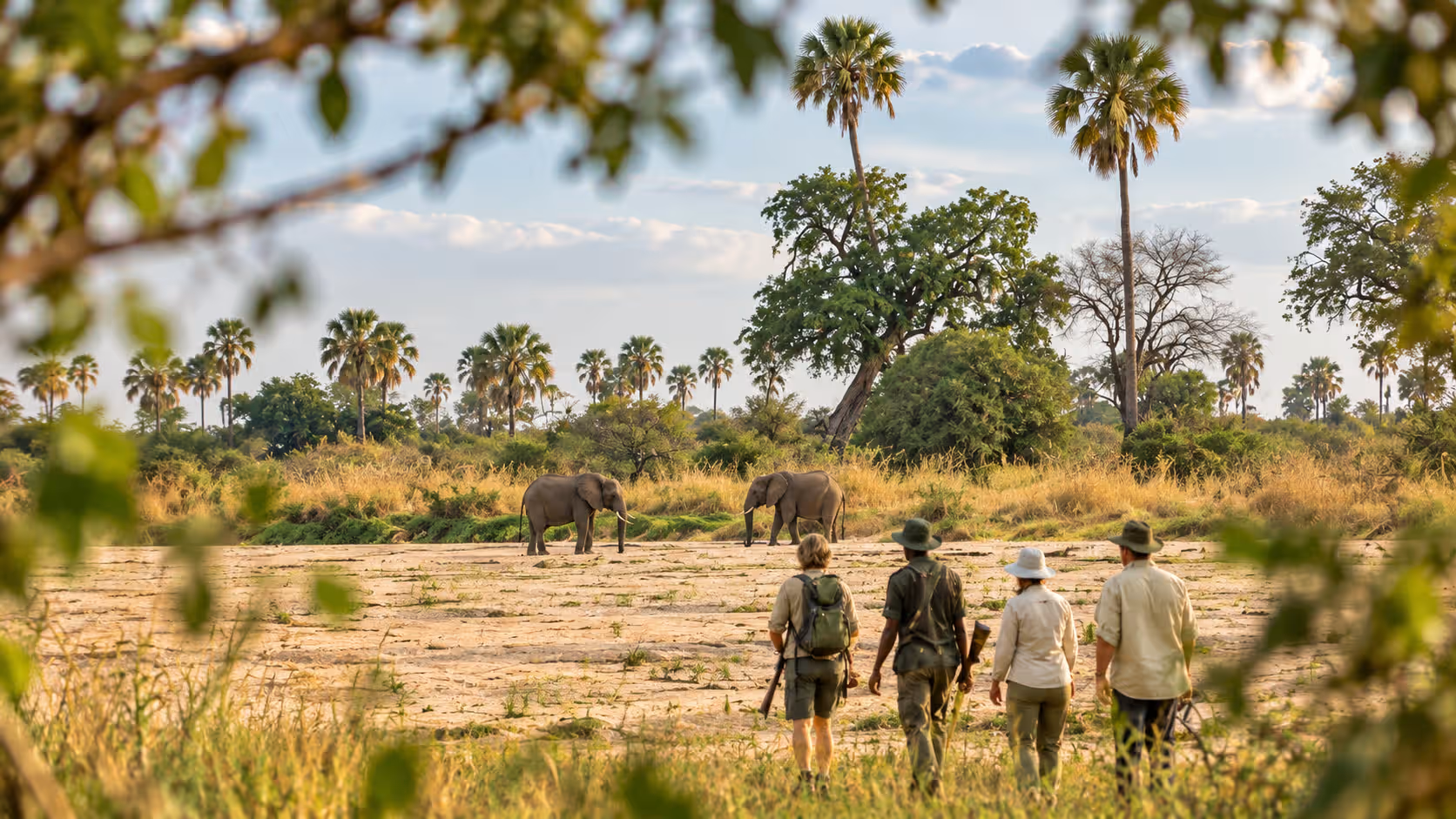
Walking safaris operate with a qualified guide and armed park ranger. Routes focus on tracks, plants, insects, birds, dung and the way animals use the landscape. The exact programme depends on the camp, season and wildlife around the area. Some locations restrict walking when elephant activity is high. Short walks fit into a standard safari day, while fly-camping programmes spend a night away from the main lodge in a lightweight bush camp. These longer experiences require advance planning and clear safety arrangements. If walking matters to you, select a camp that runs it regularly rather than assuming every property offers the activity.
Walking Safaris and Day Walks in Ruaha National Park
Landscape Photography
The Great Ruaha River, elephant herds, predators, baobabs, kopjes and open plains provide varied photographic backgrounds. Vehicle numbers remain low enough for photographers to wait for behaviour and changing light without a crowd forming at every sighting. Dry-season dust produces warm evening colour, while the green season brings dramatic skies, fresh vegetation and breeding birds. A private vehicle gives the greatest control over position and time, but even shared drives benefit from discussing photographic priorities with the guide before departure.
Hot-Air Balloon Safaris
Balloon flights lift off around sunrise from selected areas, revealing the scale of the river, woodland and plains. Wildlife sightings depend on the flight path, wind and vegetation, while the wider landscape remains the central attraction. Balloon operations run on set dates and from limited sectors, so camp transfers, minimum passenger numbers and seasonal availability should be confirmed in advance. Travellers spending time in Iringa can also visit Isimila Stone Age Site outside the park. Its eroded sandstone pillars and archaeological deposits include stone tools found during excavations in the twentieth century. Treat it as a separate Iringa excursion rather than part of a Ruaha game drive.
Best Time to Visit Ruaha National Park
Ruaha stays open throughout the year, but the experience changes sharply between dry and green months. June to October brings the strongest wildlife concentration around water. November to March offers fresh scenery, migrant birds and fewer vehicles. Heavy rain is more likely from March into May and can limit road access in some sections.
Dry Season in Ruaha
June to October is the main wildlife season. Smaller water sources contract, vegetation thins and animals return to the Great Ruaha River and remaining pools. Elephants, buffaloes, antelopes and predators become easier to locate, particularly from August through October. Mornings can be cool in June and July, so carry a light jacket for early drives. September and October become hotter and dustier before the rains. Even in these stronger viewing months, Ruaha’s scale and low traffic protect the quiet atmosphere that separates it from busier parks.
Wet and Green Season in Ruaha
Short rains can begin in November, followed by greener conditions through the first months of the year. The heaviest rain falls mainly from March into May. Water spreads across the park and wildlife disperses, so guides work harder to locate animals away from the main river. December to March is strong for birding, with migrants, breeding activity and fresh woodland growth. Storm clouds and green plains also suit landscape photography. Some remote roads become difficult during heavy rain, and camp schedules can change, so confirm accommodation and flight operations for April and May
How to Get to Ruaha National Park
Iringa is the main road gateway, while scheduled light aircraft connect Ruaha with Dar es Salaam, Zanzibar and other safari areas. The right option depends on time, the camp sector and whether the wider itinerary follows the southern circuit by road or air.
By Road from Iringa
The drive from Iringa to the Msembe area covers about 130 km and takes roughly 3 to 4 hours. The final section uses unsealed roads, and rain, roadworks or stops can extend the journey. A four-wheel-drive vehicle is the best choice for both the transfer and roads inside the park. Ruaha can form part of an overland southern circuit with Mikumi and the Udzungwa Mountains, but transfer times depend on the exact route and overnight stop. Do not treat either connection as a fixed 5-hour drive without checking current road conditions. Nyerere lies much farther away, so a light-aircraft connection protects more safari time.
Flying to Msembe and Jongomero Airstrips
Scheduled and charter flights connect Ruaha with Dar es Salaam, Zanzibar, Nyerere, Mikumi and selected safari hubs. Services from Arusha, Katavi or western Tanzania can involve intermediate stops or operate only on certain days. Msembe Airstrip serves camps around the main eastern and river safari area. Jongomero Airstrip serves the more remote southern sector. The camp should confirm the correct landing point before tickets are issued because driving between sectors can take several hours. Flying is the clearest choice for a short stay or a safari paired with Zanzibar or Nyerere.
Where to Stay in Ruaha National Park
Ruaha has fewer camps than Tanzania’s northern parks, with options ranging from established river lodges to small high-end bush camps. Location matters as much as room style. A property near the Great Ruaha River gives easier access to the main dry-season wildlife area, while Jongomero and other remote sectors offer greater seclusion and longer transfers