
Top Birds to See on a Uganda Birding Safari
Uganda’s birdlife is rich, colourful and wonderfully varied. Some birds are famous because they are rare. Others stand out because of their beauty, sound, behaviour or strong connection to a particular habitat. These are some of the key birds many travellers hope to see on a Uganda birding safari.
Shoebill Stork
The Shoebill Stork is the bird many travellers dream of seeing in Uganda. It is tall, prehistoric-looking and unforgettable, with a massive shoe-shaped bill and a quiet hunting style. A Shoebill sighting does not feel rushed. You move slowly through papyrus, keep your voice low, and watch the reeds until the bird appears like something from another age. The best-known place to search for it is Mabamba Swamp, where canoe trips move quietly through papyrus channels. You can also look for it around the Nile Delta in Murchison Falls National Park, which makes it a strong addition to a Uganda birding and wildlife safari.
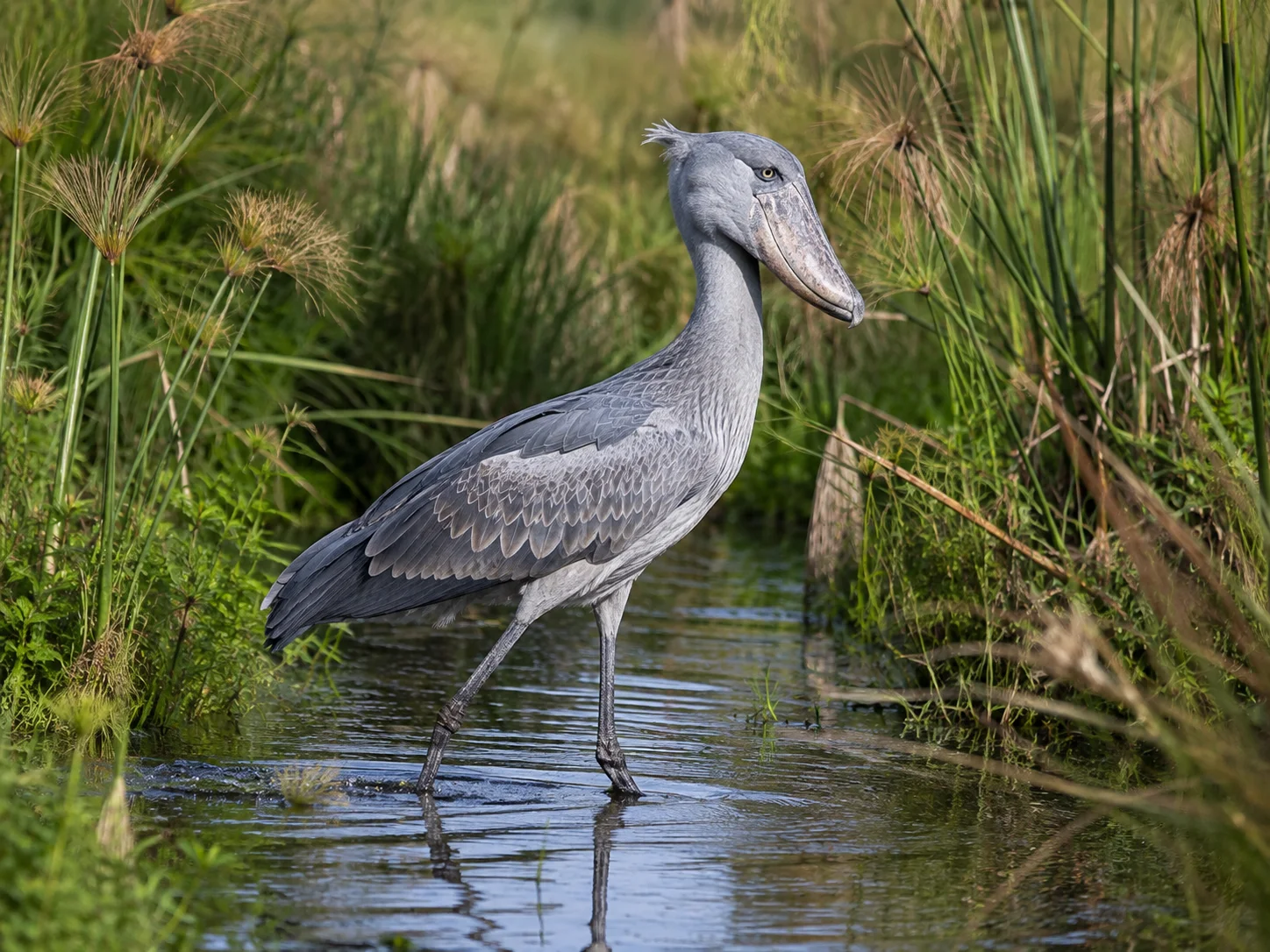
Shoebill Stork in Mabamba Swamp
African Green Broadbill
The African Green Broadbill is one of Uganda’s finest forest birds and one of the biggest reasons serious birders travel to Bwindi Impenetrable Forest. This is not a bird you rush. We walk slowly, listen carefully, and let the forest reveal itself. The Ruhija side of Bwindi, around the high forest and Mubwindi Swamp, is one of the key areas for this species. Seeing the African Green Broadbill in misty montane forest gives your Uganda birding safari a special kind of depth.
Great Blue Turaco
The Great Blue Turaco is one of Uganda’s most beautiful forest birds. It is large, colourful and full of character, with blue-green feathers and loud calls that bring life to the forest canopy. Even travellers who are not specialist birders stop when this bird moves through the trees. You can look for it in Kibale Forest, Bwindi Impenetrable Forest, Mabira Forest and forested areas close to wetlands and river systems.
Grey Crowned Crane
The Grey Crowned Crane is Uganda’s national bird and one of the easiest birds to recognise. Its golden crown, elegant shape and graceful display make it a favourite for many visitors. You see it in open grasslands, wetlands and cultivated countryside near protected areas. It fits well into birding routes through Queen Elizabeth National Park, Lake Mburo National Park and wetland areas across Uganda. For many travellers, this is one of the birds that gives the country its character.
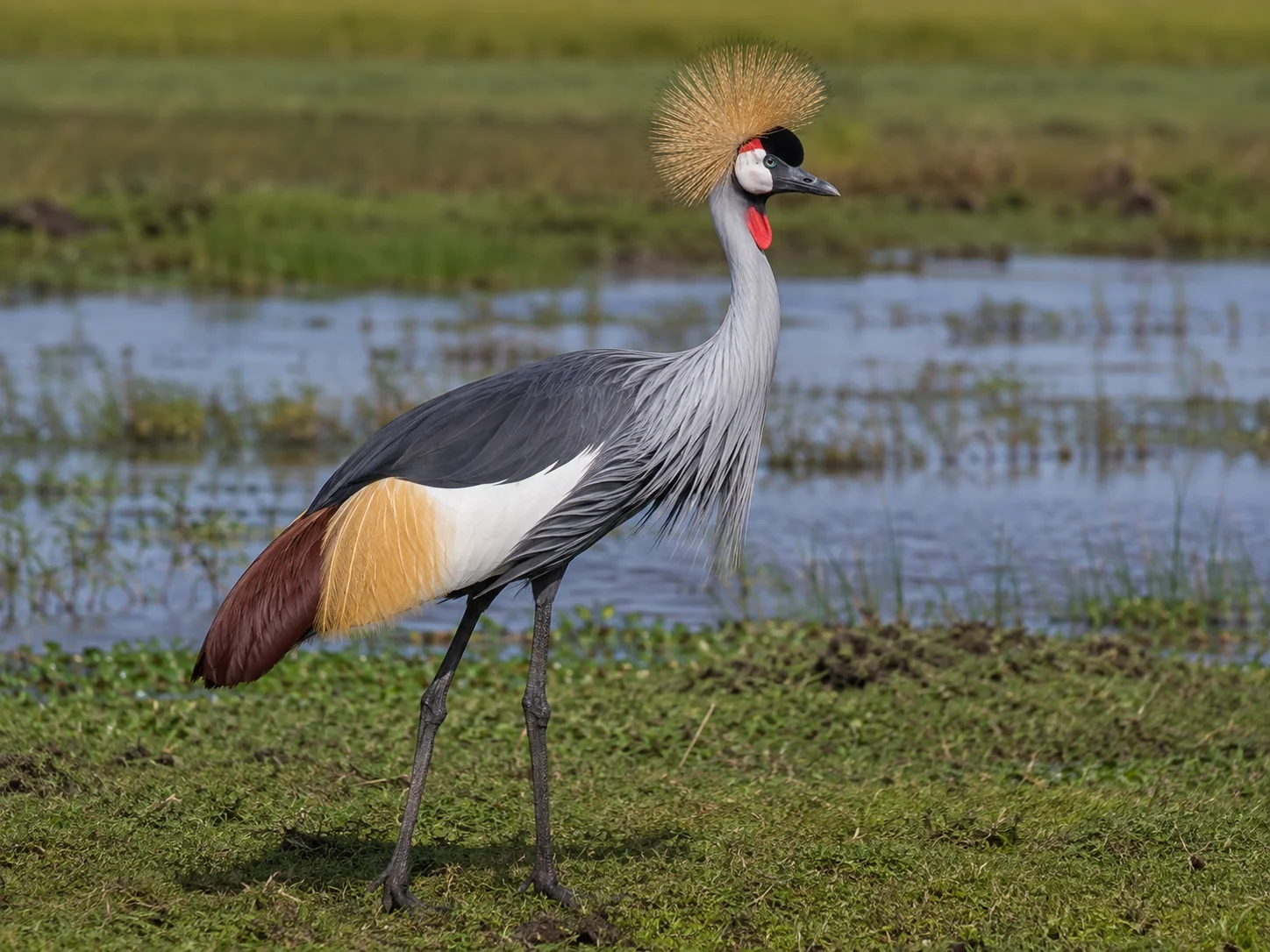
Grey Crowned Crane
Green-breasted Pitta
The Green-breasted Pitta is one of Uganda’s most sought-after forest birds. It is small, colourful, secretive and best searched for in Kibale Forest National Park. This is where experienced birding guides matter because they know the calls, forest trails and movement patterns that improve your chances. A morning search for the Green-breasted Pitta is quiet and focused. When it finally appears, the whole forest walk feels worth it.
African Finfoot
The African Finfoot is a shy waterbird of quiet rivers, forested channels and lake edges. We search for it slowly by boat or canoe, keeping close to calm water where overhanging vegetation gives it cover. Good areas include Lake Mburo National Park, sections of the Nile system and other quiet wetland habitats. It is not loud or showy, and that is part of the excitement. You scan the shaded waterline carefully, then suddenly it slips into view.
Fox’s Weaver
Fox’s Weaver is Uganda’s only endemic bird, which gives it a very special place on any serious Uganda birding safari. It is found in eastern Uganda’s wetland and savannah-edge habitats, with Lake Bisina and Lake Opeta among the key areas birders target. If you want a deeper birding route beyond the classic parks, Fox’s Weaver helps make your itinerary more complete.
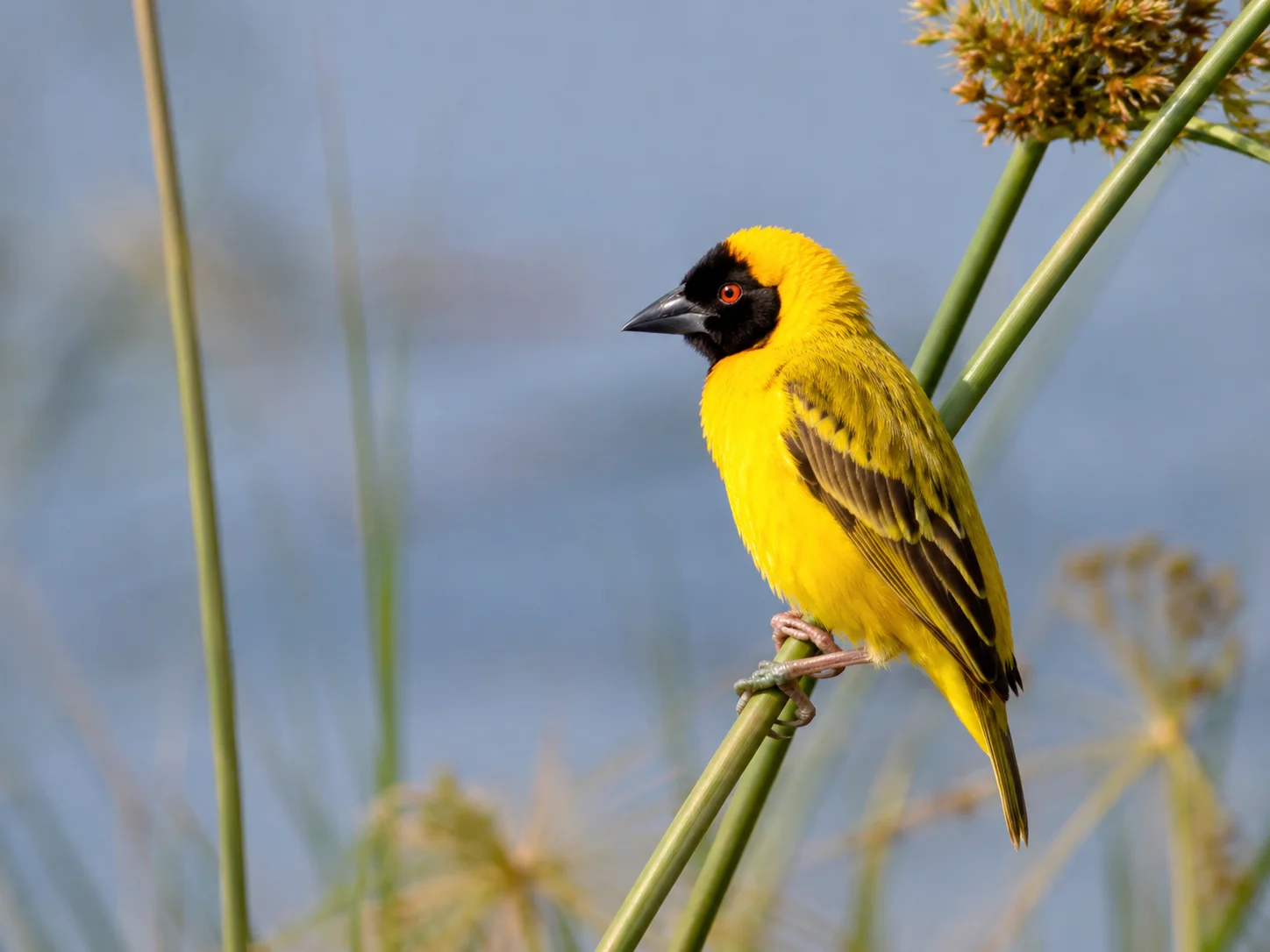
Fox’s Weaver
Best Birding Destinations in Uganda
Mabamba Swamp
Mabamba Swamp is the first place many birders think of when planning a Uganda birding safari because it gives one of the strongest chances of seeing the Shoebill Stork. The wetland sits on the northern shores of Lake Victoria and is recognised as both a Ramsar wetland and an Important Bird Area. It has more than 300 bird species.
Birding here is done by motorised wooden boat through papyrus channels, open marsh and thick wetland edges. Key birds include Shoebill Stork, Papyrus Gonolek, Blue-cheeked Bee-eater, Malachite Kingfisher, Swamp Flycatcher, African Fish Eagle, Goliath Heron, Saddle-billed Stork, African Pygmy Goose and Great Blue Turaco.
Bwindi Impenetrable Forest
Bwindi Impenetrable Forest is one of Uganda’s strongest forest birding destinations, with more than 350 bird species and 23 Albertine Rift endemics. This is the place for serious forest birding, slow walking, patient listening and expert local guiding. The Ruhija side is strong for the African Green Broadbill around Mubwindi Swamp, while Buhoma works well for forest trails such as the waterfall trail.
Birds to target include African Green Broadbill, Shelley’s Crimsonwing, Rwenzori Batis, Handsome Francolin, Black Bee-eater, White-tailed Crested Flycatcher, Yellow-eyed Black Flycatcher, Red-faced Woodland Warbler, Bar-tailed Trogon and Great Blue Turaco. Bwindi also works beautifully when you want to combine birding with mountain gorilla trekking.
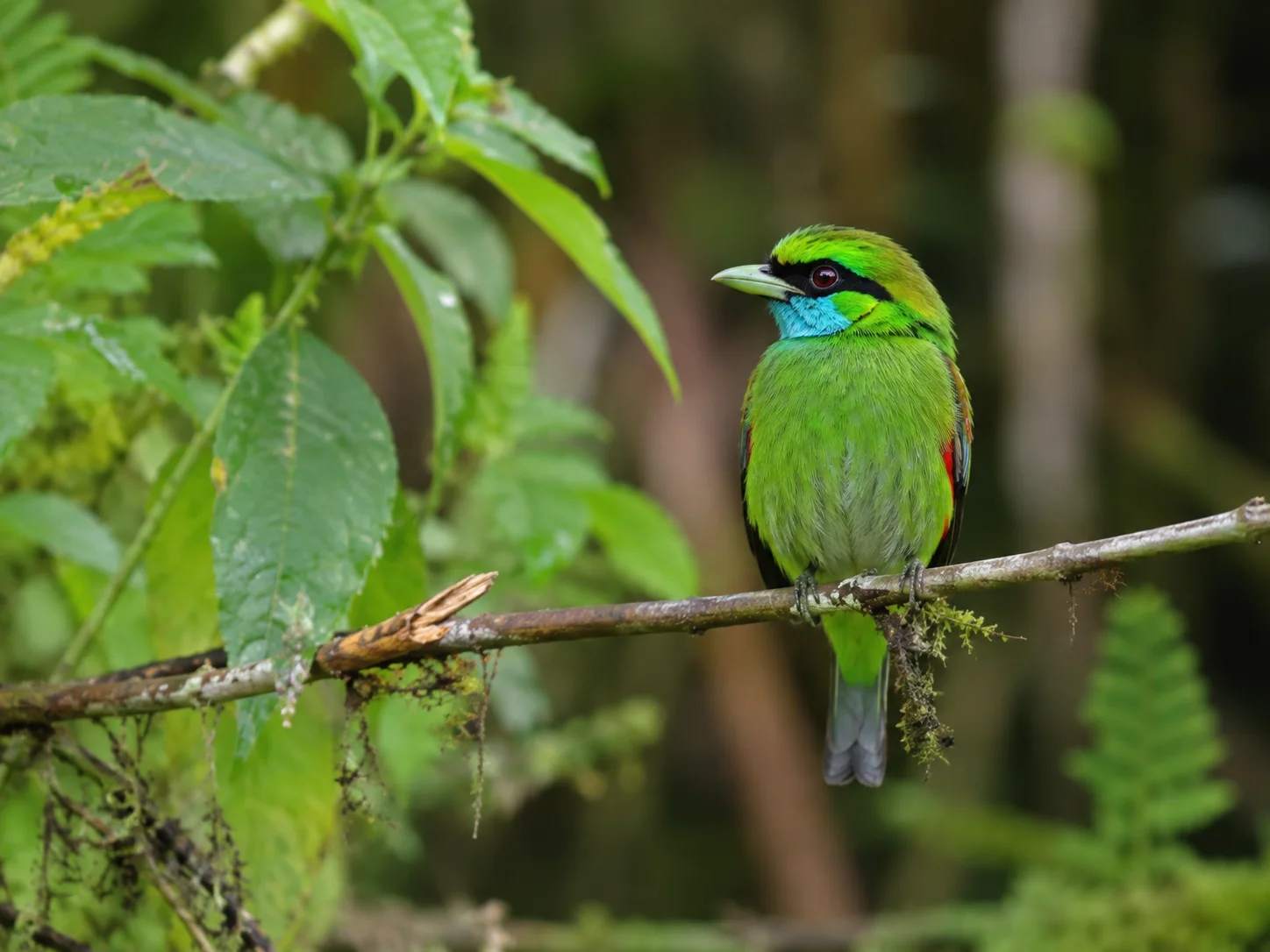
the African Green Broadbill
Queen Elizabeth National Park
Queen Elizabeth National Park is one of Uganda’s richest birding areas, with more than 600 bird species across savannah, wetlands, crater lakes, forests and the Kazinga Channel. It is a strong destination when you want birding with elephants, buffaloes, hippos, Uganda kobs and the tree-climbing lions of Ishasha. Good birding areas include the Mweya Peninsula, Kasenyi Plains, Katwe area, Maramagambo Forest, Lake Kikorongo, Ishasha sector, Kazinga Channel and Katunguru Bridge.
Birds to look for include African Skimmer, Papyrus Gonolek, White-tailed Lark, Pink-backed Pelican, Martial Eagle, Black Bee-eater, African Wattled Plover, Black-bellied Bustard, Blue-naped Mousebird, Pygmy Kingfisher, African Fish Eagle, Shoebill Stork, flamingos and other waterbirds along the channel.
Murchison Falls National Park
Murchison Falls National Park gives birders a wide mix of savannah, woodland, riverine forest and Nile Delta birding, with 556 bird species recorded. The park sits about 305 km north of Kampala, and birding works well around the Nile, the boat route to the bottom of the falls, Budongo Forest, Kaniyo Pabidi, game drive tracks and the Nile Delta. This is one of Uganda’s best places to combine birding with big wildlife, waterfalls, boat safaris and open savannah. Key birds include Shoebill Stork, Goliath Heron, African Darter, Grey-headed Kingfisher, Long-toed Plover, Silver Bird, Pied Kingfisher, Martial Eagle, Yellow-billed Stork, Secretary Bird, African Jacana, Swamp Flycatcher and Blue-headed Coucal.
Kibale Forest National Park
Kibale Forest National Park is known for primates, but it is also a strong forest birding destination with about 370 bird species. The forest is one of the best places to search for the Green-breasted Pitta, one of the most wanted birds on a Uganda birding safari. Birding works well inside the forest and around Bigodi Wetland Sanctuary, where boardwalks, swamp edges and community trails add more species to your day. Key birds include Green-breasted Pitta, Cassin’s Spinetail, Blue-headed Bee-eater, Masked Apalis, Nahan’s Francolin, Black Bee-eater, Great Blue Turaco, Grey-throated Tit-Flycatcher, White-spotted Flufftail, Western Nicator, Yellow-spotted Barbet and Papyrus Gonolek around the wetlands.
Lake Mburo National Park
Lake Mburo National Park is a rewarding birding stop because it combines acacia woodland, papyrus swamp, lakes, rocky outcrops and open savannah in a compact area. The park has more than 315 bird species, and wetlands cover 20% of the park’s surface. It forms part of a 50 km-long wetland system, with five lakes inside the park. Good birding areas include Rwonyo, Rubanga Forest, Miriti Valley, Warukiri Valley, lakeshore edges, salt lick areas and boat routes. Birds to look for include African Finfoot, Papyrus Gonolek, Black-bellied Bustard, Bare-faced Go-away-bird, Rüppell’s Starling, Southern Ground Hornbill, Black-throated Barbet, African Fish Eagle, Red-faced Barbet, Ross’s Turaco and Grey Crowned Crane.
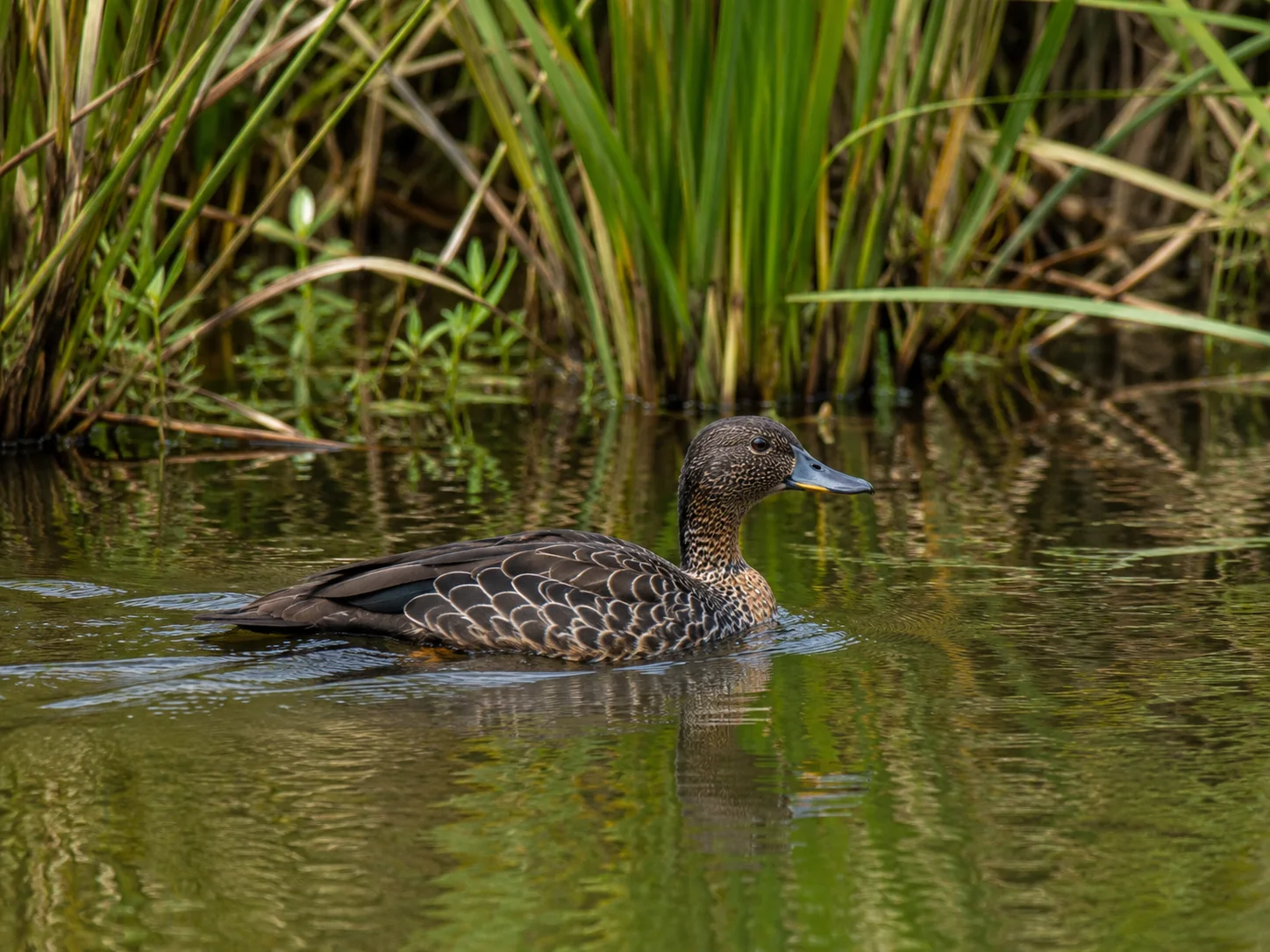
African Finfoot
Semuliki National Park
Semuliki National Park is the place to add when you want Uganda birding with a Central African forest feel. It protects East Africa’s only true lowland tropical rainforest and has more than 435 recorded bird species, including 35 Guinea-Congo forest biome species, rare raptors and restricted-range birds. The forest sits on the western side of the Rwenzori Mountains, close to the Democratic Republic of Congo, with the Semuliki River forming part of that border zone. Birding areas include Sempaya, Ntandi, Kirumia Trail and the River Semuliki corridor. Birds to look for include Spot-breasted Ibis, Congo Serpent Eagle, Hartlaub’s Duck, Chestnut-flanked Goshawk, Yellow-throated Cuckoo, Red-rumped Tinkerbird, White-tailed Hornbill, Black Dwarf Hornbill, African Piculet, Blue-billed Malimbe and Capuchin Babbler.
Kidepo Valley National Park
Kidepo Valley National Park gives Uganda birding a remote dry-country character that feels very different from the forests and wetlands of the west. The park has 476 bird species and more than 77 mammal species, with strong birding around Apoka, Narus Valley, Namamukweny Valley, waterholes, open grasslands and dry riverbeds. This is one of Uganda’s best parks for raptors and dry-country specials. Birds to look for include Ostrich, Secretary Bird, Abyssinian Ground Hornbill, Golden Pipit, Pygmy Falcon, Fox Kestrel, Kori Bustard, Four-banded Sandgrouse, Little Green Bee-eater, Standard-winged Nightjar, Red-fronted Barbet, Superb Starling and Karamoja Apalis.
Mgahinga Gorilla National Park
Mgahinga Gorilla National Park is small, but it gives you very strong Albertine Rift birding in the Virunga Mountains. The park has more than 180 bird species, including 14 Albertine Rift endemics. It works well when you want birding, mountain gorilla trekking, golden monkey tracking and highland scenery in one place. Birding trails move through bamboo, montane forest and the gorge trail between Mount Gahinga and Mount Sabyinyo. Birds to look for include Rwenzori Turaco, Kivu Ground Thrush, Rwenzori Batis, Handsome Francolin, Regal Sunbird, Bronze Sunbird, Dusky Crimsonwing, Rwenzori Nightjar, Western Green Tinkerbird, Alpine Chat, Paradise Flycatcher and Double-collared Sunbird.
Mount Elgon National Park
Mount Elgon National Park brings a highland birding angle to a Uganda birding safari, with more than 300 bird species recorded across montane forest, bamboo, moorland, river valleys, caves and high slopes. It is a good choice when you want birding with scenery, walking trails, waterfalls and mountain habitats in eastern Uganda. Key birds include Lammergeyer or Bearded Vulture, Tacazze Sunbird, Jackson’s Francolin, Cinnamon-chested Bee-eater, Black-shouldered Kite, Ross’s Turaco, Red-chested Cuckoo, Moorland Francolin, Moustached Green Tinkerbird and Alpine Chat.
Uganda’s Birding Habitats and Ecosystems
Uganda is such a rewarding birding country because the habitats change fast. In one itinerary, we can move from papyrus swamps on Lake Victoria to rainforest trails in the Albertine Rift, savannah plains along the Nile, crater lakes, woodland valleys, mountain forests and highland escarpments. That range of habitats is the reason Uganda supports more than 1,073 recorded bird species, including Shoebill Stork, African Green Broadbill, Great Blue Turaco, Green-breasted Pitta, Grey Crowned Crane, African Finfoot and Fox’s Weaver.
Wetlands and Papyrus Swamps
Uganda’s wetlands are some of the best places to search for rare waterbirds, papyrus specialists and migratory species. Mabamba Swamp on the northern shores of Lake Victoria is the classic place to look for the Shoebill Stork. We move quietly by motorised wooden boat through papyrus channels and marsh edges, listening carefully and scanning ahead. Mabamba has more than 300 bird species, including Papyrus Gonolek, Blue-cheeked Bee-eater, Malachite Kingfisher, African Pygmy Goose, Goliath Heron, Swamp Flycatcher, Saddle-billed Stork and African Fish Eagle.
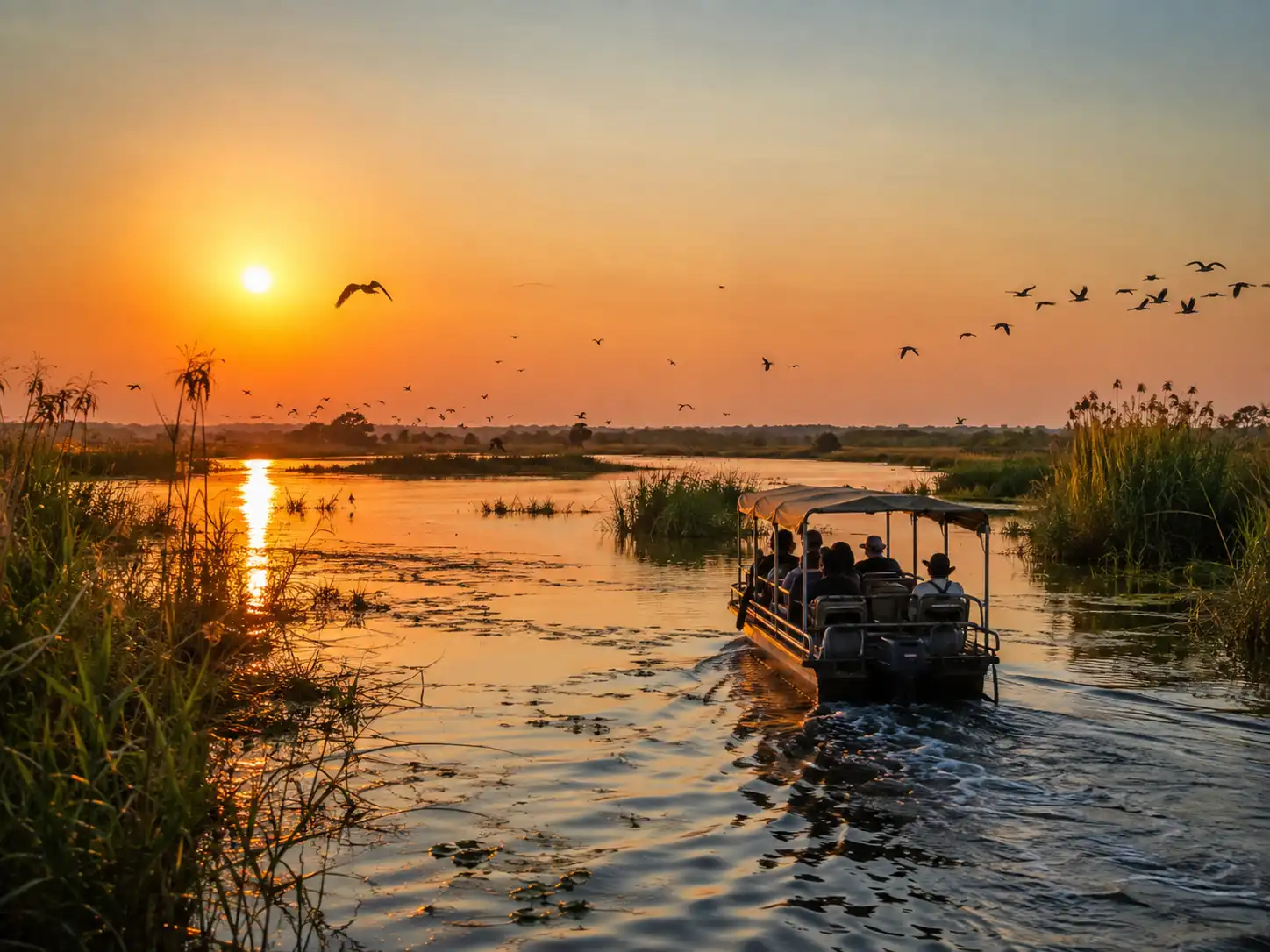
Nile Delta in Murchison Falls National Park
The wetland experience continues along the Kazinga Channel in Queen Elizabeth National Park, the Nile Delta in Murchison Falls National Park and the lake systems of Lake Mburo National Park. These areas bring herons, egrets, kingfishers, pelicans, storks, jacanas, fish eagles, skimmers and seasonal migrants. For birders, the beauty of Uganda’s wetlands is that you are not just viewing birds from far away. You move through the habitat itself, with calls coming from the reeds while hippos, crocodiles and water-loving antelopes complete the scene.
Rainforests and Montane Forests
Uganda’s forests hold some of East Africa’s most wanted birds. Bwindi Impenetrable Forest, Kibale Forest, Semuliki, Mgahinga and Mount Elgon give birders access to rainforest, bamboo, montane forest and highland zones where rare species live. Bwindi alone has more than 350 bird species and is one of the best places for Albertine Rift endemics, including African Green Broadbill, Shelley’s Crimsonwing, Rwenzori Batis, Handsome Francolin, Yellow-eyed Black Flycatcher, Red-faced Woodland Warbler and Kivu Ground Thrush.
Kibale Forest adds a strong forest birding experience with about 370 bird species, including Green-breasted Pitta, Cassin’s Spinetail, Blue-headed Bee-eater, Masked Apalis, Black Bee-eater and Great Blue Turaco. Semuliki brings a different feel because it carries the character of the Guinea-Congo forest biome, with more than 435 recorded bird species. Specials here include Congo Serpent Eagle, Spot-breasted Ibis, White-tailed Hornbill, Capuchin Babbler, Blue-billed Malimbe and Black Dwarf Hornbill. These forests are best explored slowly, with quiet walking, sharp listening and a guide who knows the calls, feeding trees and trail corners where shy birds show themselves.
Savannah and Woodland Habitats
Uganda’s savannah and woodland habitats give birding a strong safari feel because birds and big wildlife share the same routes. Queen Elizabeth National Park, Murchison Falls National Park, Lake Mburo National Park and Kidepo Valley National Park all combine birding with open plains, acacia woodland, river valleys, grasslands and game drives.
Queen Elizabeth has more than 600 bird species, with sites such as Kasenyi Plains, Mweya Peninsula, Lake Kikorongo, Maramagambo Forest, Ishasha, Katunguru Bridge and the Kazinga Channel. Murchison Falls has 556 bird species across savannah, woodland, riverine forest, Budongo, Kaniyo Pabidi, wetlands and the Nile Delta.
Kidepo Valley has 476 bird species, with strong raptor viewing, ostriches, Kori Bustard, Abyssinian Ground Hornbill, Golden Pipit, Pygmy Falcon, Fox Kestrel, Secretary Bird and Karamoja Apalis. Lake Mburo’s acacia woodland and wetland edges support more than 315 bird species, including African Finfoot, Bare-faced Go-away-bird, Red-faced Barbet, Papyrus Gonolek, Black-bellied Bustard and Grey Crowned Crane.
Lakes, Rivers and Rift Valley Escarpments
Uganda’s lakes, rivers and escarpments create some of the most rewarding birding routes because they bring together waterbirds, raptors, forest-edge birds and open-country species. Lake Victoria feeds major birding areas such as Mabamba Swamp. The Victoria Nile creates strong birding corridors through Murchison Falls National Park. The Kazinga Channel in Queen Elizabeth National Park is one of the easiest places to see large numbers of waterbirds in a short time.
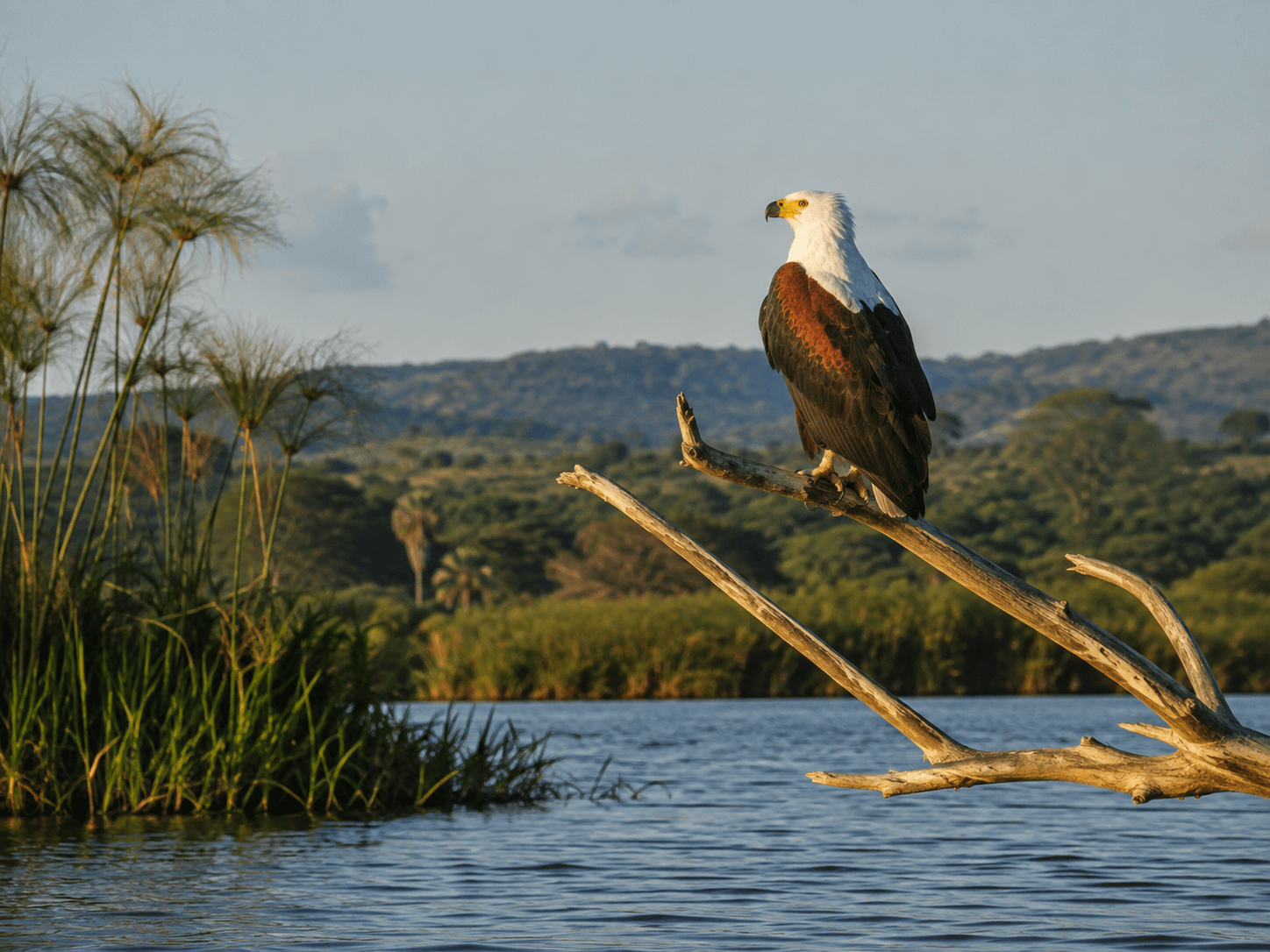
African fish eagle perched above the Kazinga Channel in Queen Elizabeth National Park
Here, you can watch pelicans, storks, cormorants, skimmers, kingfishers, herons, egrets and fish eagles working the shoreline. The Albertine Rift adds the rare-species value that makes Uganda birding stand out internationally. Bwindi, Mgahinga, Semuliki, Kibale, Queen Elizabeth and the Rwenzori region sit within or near this rich western belt. That is why a Uganda birding safari works so well as a complete journey: wetlands for Shoebill, forests for Albertine Rift endemics, savannahs for raptors and open-country species, and lakes and rivers for waterbirds, all within one country.
Albertine Rift Endemics and Congo Biome Species
Uganda stands out in African birding because it gives you a real chance to search for two very rewarding bird groups in one trip: 24 Albertine Rift endemics and 46 Congo Biome species. These are the birds that turn a good safari into a serious birding journey. They draw birders into forests, swamps, valleys and mountain slopes where every quiet trail holds the possibility of something special.
24 Albertine Rift Endemics
The Albertine Rift runs along western Uganda and gives the country some of its most sought-after birds. This is where we look for species such as African Green Broadbill, Rwenzori Turaco, Regal Sunbird, Shelley’s Crimsonwing, Kivu Ground Thrush, Handsome Francolin, Red-faced Woodland Warbler, Archer’s Robin-Chat and Yellow-eyed Black Flycatcher. The strongest Albertine Rift birding areas include Bwindi Impenetrable National Park, Mgahinga Gorilla National Park, Kibale Forest and the wider western highlands.
Bwindi is the headline site, with birding in Buhoma, Ruhija, Mubwindi Swamp trail and the bamboo zone. Mgahinga adds a beautiful montane setting in the Virunga range, while Kibale and nearby forest habitats strengthen the chances of adding more forest specials to your safari. If you want a Uganda birding trip built around rare endemics, western Uganda is the core region to focus on.
46 Congo Biome Species
Uganda is also one of the finest places in East Africa to search for 46 Congo Biome species, a group tied to the great Guinea-Congo forest belt. These birds give western Uganda a very different character from the country’s savannah and wetland birding zones. The forest feels deeper, darker and richer, and the birdlife changes with it.
This is where birders look for White-crested Hornbill, Black Dwarf Hornbill, Blue-billed Malimbe, Capuchin Babbler, Lyre-tailed Honeyguide, Red-rumped Tinkerbird, Black-throated Coucal and Spot-breasted Ibis. The key stronghold is Semuliki National Park, set in the western arm of the Rift Valley on the border with the Democratic Republic of Congo.
Birding around the River Semuliki, Sempaya, Ntandi and Kirumia Trail gives a very different feel from Uganda’s montane forests. It is lowland, humid and full of birds that many travellers struggle to find elsewhere in East Africa. For birders who want more than the headline species, this side of Uganda gives the journey real depth.
Best Time for Bird Watching in Uganda
Uganda is rewarding for birding throughout the year, but the experience changes with the seasons. The drier months make it easier to move through forests, wetlands, savannah tracks and mountain trails. The wetter months bring fresh greenery, breeding activity and migratory birds. For many birders, the strongest windows are June to August, December to February, and November to April for migrants, depending on the birds you want to see.
Year-Round Birding
Bird watching in Uganda can be done in every month because the country has such a wide mix of habitats. You are not limited to one short birding season. Papyrus swamps, lakeshores, rainforests, montane forests, savannahs, rift valley escarpments and high-altitude grasslands all give you different birding conditions at different times of year.
The dry seasons, December to February and June to August, are easier for many travellers. There is less rainfall, forest paths are more comfortable, park tracks are easier to use and birds are easier to see when vegetation is less dense. December, January and February also bring good visibility for canopy species because some trees shed leaves. This helps when searching for birds such as the Ituri Batis and Uganda Woodland Warbler.
Migratory Birds from November to April
Uganda becomes even richer between November and April, when migratory birds move into the country. During this period, you can see species arriving from Europe, Northern Asia and other parts of Africa. These months add strong value because resident birds are joined by seasonal visitors.
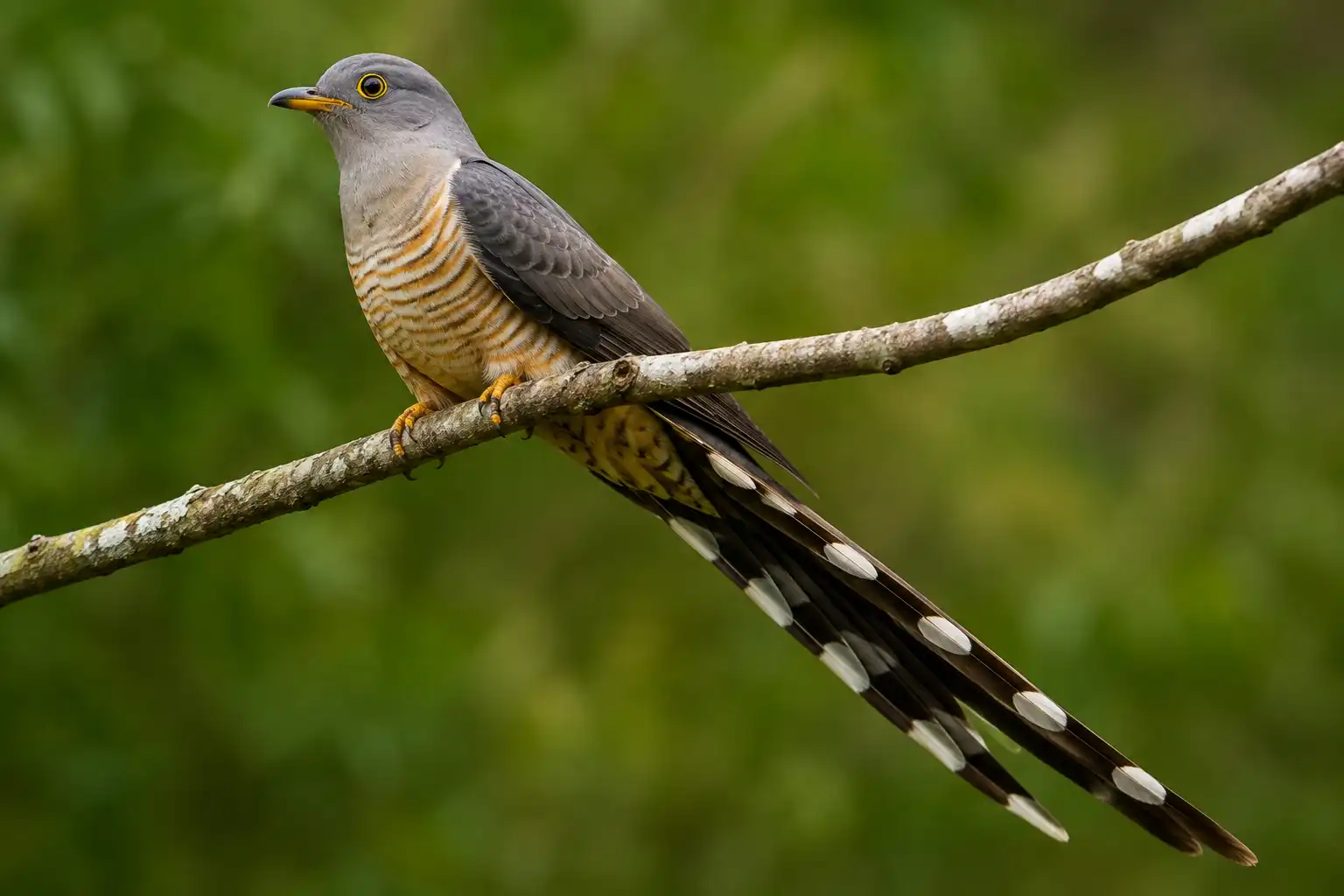
Barred Long-tailed Cuckoo
Intra-African migrants also move into Uganda from southern Africa. Some arrive from July and August through September, including cuckoos that forage at lower levels and call from the canopy. The Barred Long-tailed Cuckoo is one of the interesting species to listen for. The globally threatened Blue Swallow is tied to high-altitude grasslands and breeds in parts of southern Africa, including South Africa, southern Tanzania, Zimbabwe and Malawi.
Best Months for Forest and Wetland Birding
For forest birding, June to September is one of the strongest periods, with July and August standing out as peak birding months. This is a very good time to search for the African Green Broadbill, also known as Grauer’s Broadbill, in Mubwindi Swamp in Bwindi Impenetrable National Park. The bird has been known to nest from late May, though nesting behaviour shifts, so experienced local birding guides use calls, feeding behaviour and mixed-flock movement to improve your chances.
The Green-breasted Pitta is another major target for serious birders. Early starts matter here. The bird’s activity can begin around 6:00 am, with display calls commonly heard between 6:15 am and 7:15 am. In some months, including March and April, calls can also be heard later in the morning, around 10:45 am.
Wetland birding is also excellent during the wetter and migrant months. Papyrus swamps, lake edges and river channels attract Shoebill Stork, African Finfoot, Papyrus Gonolek, kingfishers, herons, eagles and other waterbirds. Even during the rainy seasons of March to May and September to November, birding remains rewarding because the landscape is greener, birds are active, and many habitats are full of calls, movement and breeding behaviour.
Birding Safaris with Gorillas, Chimpanzees and Wildlife
A Uganda birding safari becomes much stronger when we combine it with the country’s major wildlife experiences. This is where Uganda stands apart. You can spend the morning listening for forest birds in the Albertine Rift, track mountain gorillas in Bwindi or Mgahinga, follow chimpanzees through Kibale Forest, then continue to savannah parks for game drives, boat safaris and wetland birding. For travellers who want more than bird names on a checklist, this gives the journey real depth.
Birding and Gorilla Trekking in Bwindi or Mgahinga
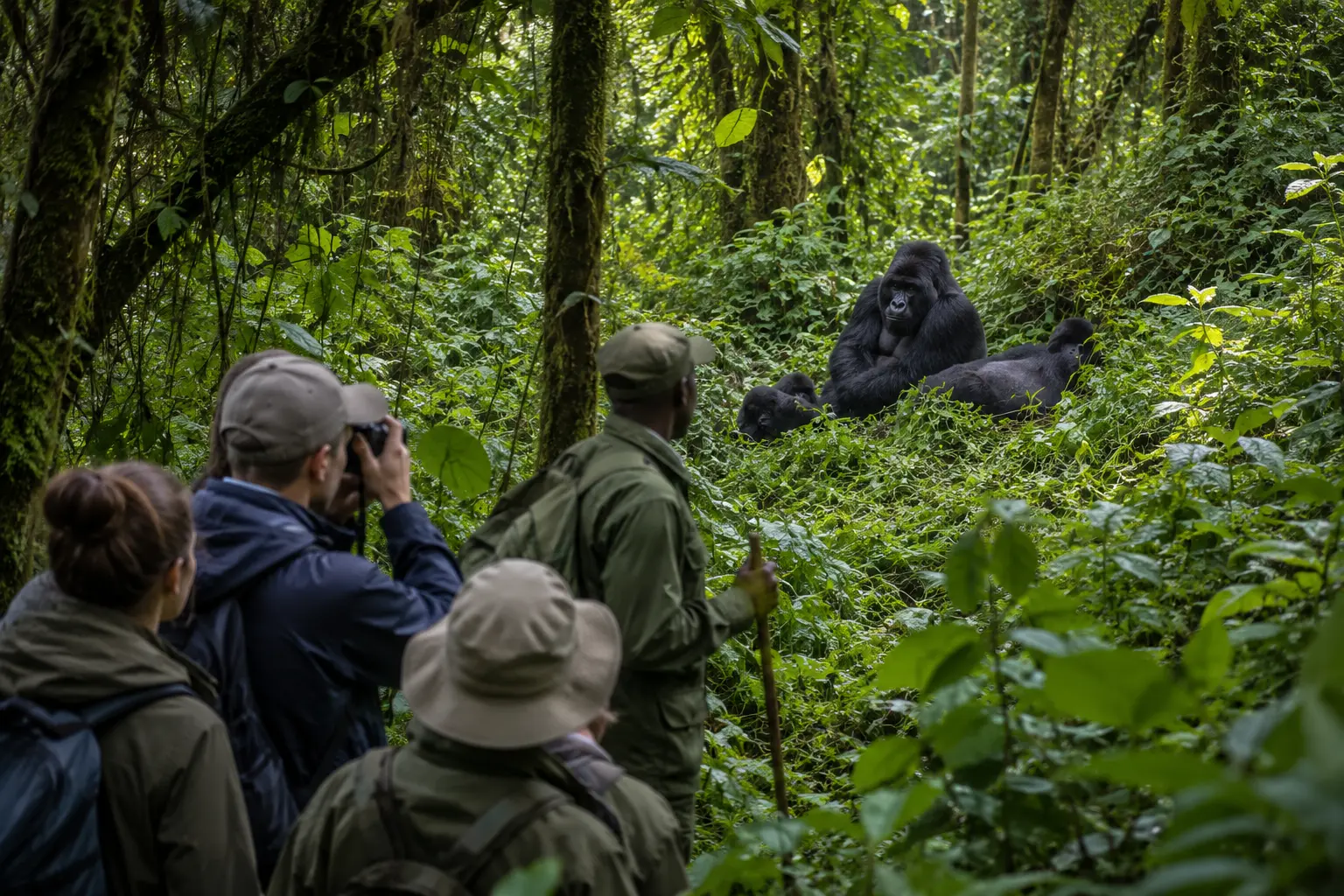
Bwindi Impenetrable Forest and Mgahinga Gorilla National Park are two of the best places to combine Uganda birding with mountain gorilla trekking. Bwindi sits in south-western Uganda and is one of the richest forest birding areas in the country, with more than 350 bird species and some of the finest Albertine Rift specials. The forest trails around Buhoma, Ruhija, Mubwindi Swamp, the waterfall trail and the bamboo zone give you a strong chance of finding African Green Broadbill, Handsome Francolin, Rwenzori Batis, Black Bee-eater, Regal Sunbird, Kivu Ground Thrush and Great Blue Turaco.
The beauty of Bwindi is that the birding does not feel separate from the gorilla experience. You move through the same old forest, listening to calls from the canopy while your ranger team follows signs of gorillas. A day here can begin with bird calls in the mist, build into a gorilla trek and end with more birding around the lodge or forest edge.
Bwindi Gorilla Trekking
Mgahinga adds a different feel. Set in Kisoro District within the Virunga ranges, it combines montane forest, bamboo, volcanic slopes, mountain gorillas, golden monkeys and more than 180 bird species. The Gorge Trail between Mount Gahinga and Mount Sabyinyo, the bamboo trail and the montane forest zone are strong areas for Rwenzori Turaco, Cape Robin-Chat, Rwenzori Batis, Dusky Crimsonwing, Bronze Sunbird and Kivu Ground Thrush. For a traveller who wants gorillas, golden monkeys and Albertine Rift birding in one compact mountain setting, Mgahinga works beautifully.
Birding and Chimpanzee Tracking in Kibale
Kibale Forest is one of Uganda’s most rewarding places to combine birding with chimpanzee tracking. The park lies in western Uganda, about 5 to 6 hours’ drive from Entebbe, and is known for its high primate diversity, with 13 primate species and around 1,500 chimpanzees. For birders, Kibale also carries serious weight, with about 370 bird species and important forest specials that make it worth more than a quick chimpanzee stop.
The main target for many serious birders is the Green-breasted Pitta. Kibale also gives chances for Black Bee-eater, Grey-winged Robin, Blue-headed Bee-eater, White-collared Oliveback, Yellow-spotted Barbet, Speckled Tinkerbird, Little Greenbul, Black-billed Turaco, Brown-throated Wattle-eye and White-tailed Ant-thrush.
A good Kibale day starts early. The forest is alive before the sun is high, and that is when bird calls, chimpanzee movement and guide experience matter most. After chimpanzee tracking, we can continue to Bigodi Wetland Sanctuary, where the boardwalk, papyrus, swamp edges and community trails add another habitat to the day. This gives you forest birds, wetland birds, primates, butterflies and village-edge scenery in one well-balanced stop.
Birding, Game Drives and Boat Safaris
Uganda’s savannah parks bring a different side of birding, where birds, big mammals, rivers, lakes and open plains all sit together. Queen Elizabeth National Park is one of the strongest examples, with more than 600 bird species recorded across Mweya Peninsula, Kasenyi Plains, Katwe area, Maramagambo Forest, Lake Kikorongo, Ishasha, Kazinga Channel and Katunguru Bridge. A birding day here can include African Skimmer, Pink-backed Pelican, Papyrus Gonolek, Martial Eagle, Black Bee-eater, White-winged Warbler, African Wattled Plover, Black Crake and Shoebill. Game drives add elephants, buffaloes, antelopes, hippos, crocodiles and the tree-climbing lions of Ishasha.
Murchison Falls National Park is another excellent choice for birding with wildlife and boat safaris. The park sits along the Victoria Nile and supports 556 bird species across savannah, riverine woodland, wetlands, Budongo Forest, Kaniyo Pabidi, the Nile Delta and the river stretch towards the bottom of the falls. Birders look for Shoebill, Goliath Heron, African Darter, Pied Kingfisher, Grey-headed Kingfisher, Yellow-billed Stork, Secretary Bird, Swamp Flycatcher, African Jacana and African Fish Eagle. The boat safari adds extra value because you watch birds from the river while hippos, crocodiles, elephants, buffaloes and giraffes move along the banks.
Lake Mburo National Park is smaller, but it fits very well into a Uganda birding route. Its acacia woodland, wetlands, salt lick, Miriti Valley, Rubanga Forest, Warukiri Valley and Rwonyo tracks support more than 315 bird species. This is a good place for African Finfoot, Papyrus Gonolek, Ross’s Turaco, Red-faced Barbet, Bare-faced Go-away-bird, African Fish Eagle, Grey Crowned Crane and Black-bellied Bustard. It also gives you a softer safari pace, with game drives, boat trips, nature walks, zebras, impalas, buffaloes, hippos, crocodiles and elands adding wildlife interest between birding stops.
What to Pack for a Uganda Birding Safari
A well-packed bag makes a big difference on a Uganda birding safari. You will move through papyrus swamps, forest trails, open savannah, boat landings, crater areas and highland paths, sometimes within the same trip. Early mornings can feel cool, midday can turn warm, and sudden rain can catch you deep in the field. Pack light, but pack well. You want to stay comfortable and ready when the Shoebill rises from the reeds or a Green-breasted Pitta calls from the forest floor.
Binoculars and Field Guide
Your binoculars are the one item you will use from the first morning to the last evening. A good pair in the 8×42 or 10×42 range works very well in Uganda. It gives you a clear view in forests, wetlands and open country without becoming too heavy on long walks. Carry them in a case with a comfortable neck strap or harness, since hours in the field can become tiring if they keep bouncing on your chest.
A field guide is just as useful. It helps you follow what your guide is showing you and makes the trip more rewarding when you can check markings, habitat and range for yourself. If you use a birding app, download it offline before arrival. A small notebook and pen also help when you want to record species, behaviour, call notes and the exact place where you found a target bird.
Camera and Lenses
If you enjoy bird photography, carry a camera you can handle quickly. Birds do not wait. A lens in the 300mm to 600mm range gives you strong reach for forest clearings, wetland birds and species seen from a boat or safari vehicle. A second shorter lens helps with landscapes, mammals and wider habitat scenes because Uganda birding trips are never only about birds.
Bring extra memory cards, spare batteries, a charger and a dry bag or padded camera cover. Power cuts happen in some safari areas, and a long day in the field drains batteries faster than many travellers expect. A lens cloth is worth carrying too, since mist, dust, rain and spray from boat trips can quickly affect your view and your images.
Waterproof Clothing and Walking Shoes
Dress in quiet colours such as green, brown, grey or khaki so you blend into the environment and move through birding areas without drawing too much attention. A light waterproof jacket is a must, and a small poncho also helps during sudden rain. Long-sleeved shirts and lightweight long trousers give good cover in forests, swamps and grassy areas. A hat protects you during birding in open savannah parks. Good walking shoes matter more than many travellers think.
You need footwear that grips well on muddy trails, wet boardwalks, rocky slopes and uneven ground. Waterproof hiking shoes or light boots are the best choice for most trips. Add a few pairs of comfortable socks, and if your route includes forest birding or swamp edges, gaiters help keep out mud, moisture and grass seeds. A small daypack, refillable water bottle, sunscreen and insect repellent round out the essentials and leave you ready for long, rewarding days in the field.