
Kibale National Park is one of Uganda’s best forest safari destinations. You come here for chimpanzees, primates, deep rainforest, birds, butterflies, swamp walks, and that cool western Uganda forest feeling that stays with you after the trek. The park sits in western Uganda, about 26 km southeast of Fort Portal, spanning Kabarole, Kamwenge, Kyenjojo, and Kasese districts. It covers about 766 square kilometres, with altitude ranging from roughly 1,100 metres to 1,600 metres above sea level.
When you arrive in Kibale, you are entering a living rainforest. Tall trees rise above you, vines twist through the canopy, shaded trails run through the forest, and the air carries calls from monkeys, birds and chimpanzees. Around the forest, you also find swamp edges, grassland pockets, rivers, lakes and papyrus wetlands. To the west, the Rwenzori Mountains rise as the old Mountains of the Moon. To the south, the grasslands and lakes of Queen Elizabeth National Park stretch away into the western Uganda safari route.
Kibale was first gazetted in 1932 and formally established as a national park in 1993. Its value is not only in its beauty. The park protects both lowland and montane forest, making it one of the last major pre-montane forest blocks in eastern Africa. The park also connects with Queen Elizabeth National Park through a 180 km wildlife corridor, allowing animals such as forest elephants to move between the two landscapes. That is why it feels bigger than one forest walk. It is part of a wider wilderness in western Uganda.
For most travellers, Kibale’s strongest pull is its primates. The park is widely known as the primate capital of the world, with 13 primate species living here. On a good forest walk, you can look for red colobus, black-and-white colobus, L’Hoest’s monkey, grey-cheeked mangabey, Uganda mangabey, blue monkey, olive baboons and chimpanzees.
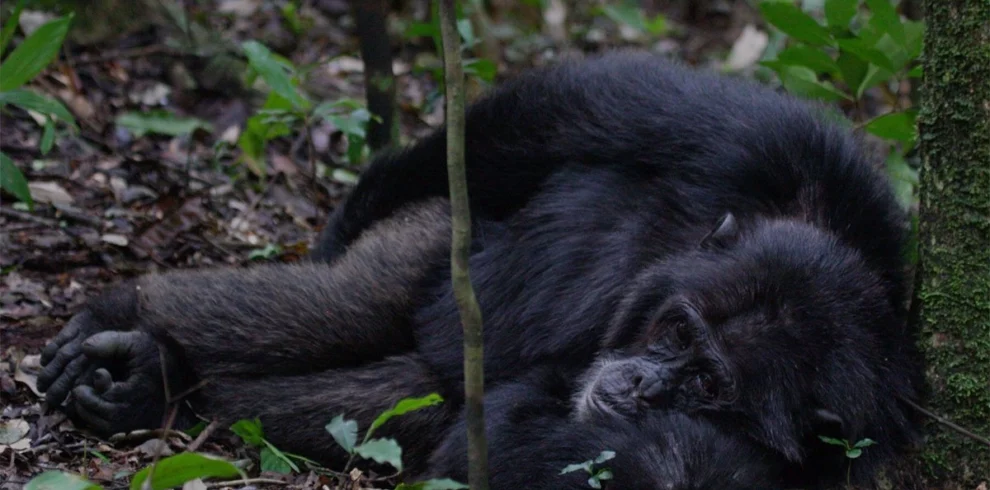
Kibale supports one of Uganda’s largest wild chimpanzee populations, estimated at over 1,500 chimpanzees across at least 12 communities. Four communities are habituated for tourism and research, with the Kanyanchu chimpanzee community open for visitor tracking since 1993. The Kanyanchu Primate Walk is the main experience in the park. Guided chimpanzee tracking departures are at 8:00 am, 11:00 am and 2:00 pm from Kanyanchu Visitor Centre.
Treks take around 2 to 5 hours, depending on chimpanzee movement, weather and forest conditions. Once you find the chimpanzees, you spend one hour watching them feed, groom, call, climb and move through the trees. Each tracking group is limited to 6 people, and guests must be at least 15 years old. Booking is important because Kibale is one of Uganda’s most popular chimpanzee tracking areas. Beyond chimpanzees, Kibale also holds more than 120 mammal species and about 370 bird species, including Nahan’s francolin, Cassin’s spinetail, blue-headed bee-eater and lowland masked apalis.
Wildlife in Kibale National Park
Primates in Kibale National Park
The real pride of Kibale is its primates. This forest has one of the highest concentrations of monkeys and apes in Africa, with 13 primate species living inside the park. Chimpanzees are the main highlight, but as you walk through the forest, you also look out for red colobus monkeys, black-and-white colobus monkeys, red-tailed monkeys, blue monkeys, olive baboons, grey-cheeked mangabeys, vervet monkeys, L’Hoest’s monkeys, bush babies and pottos.
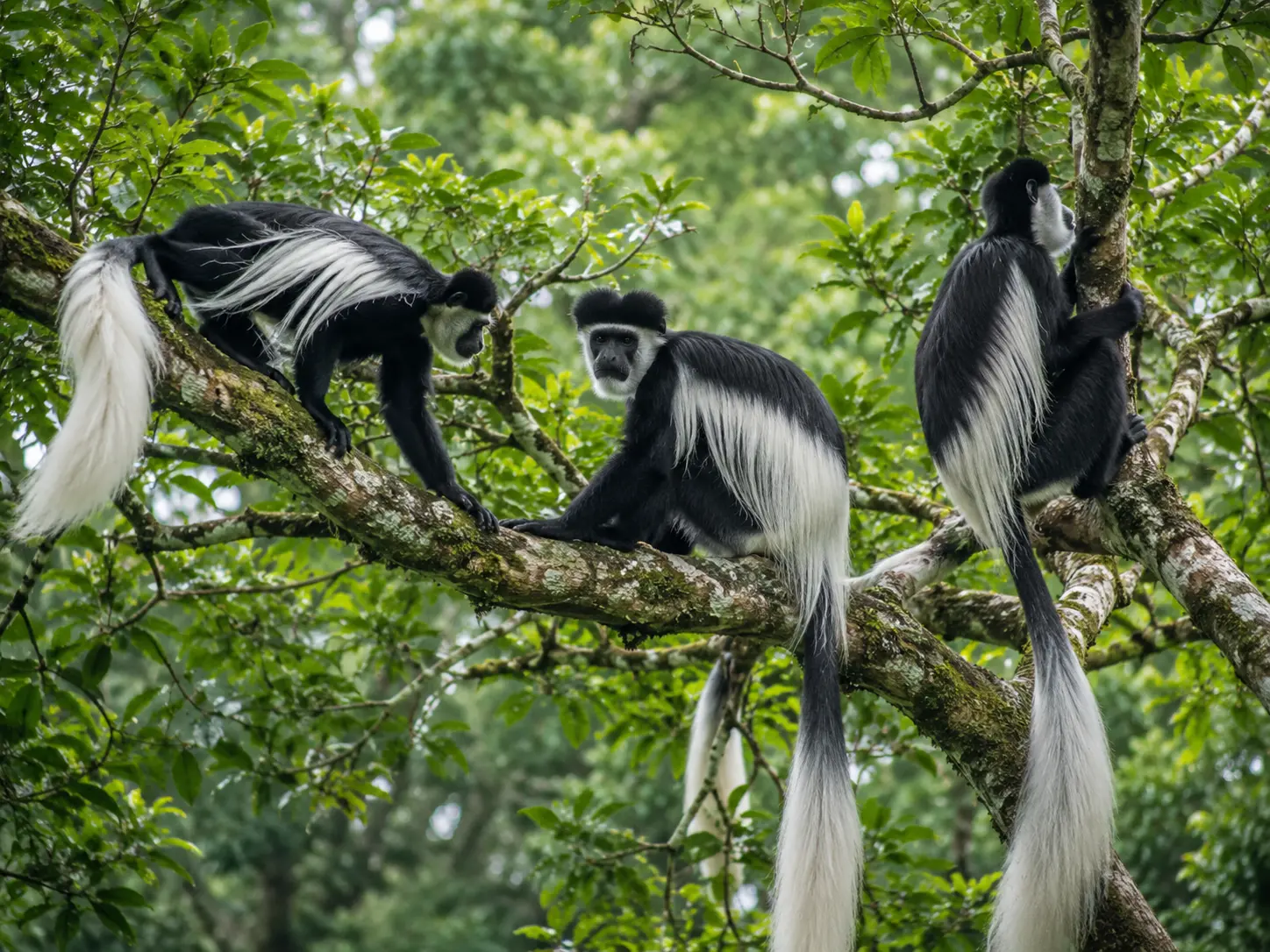
Black-and-White Colobus Monkeys
Chimpanzee tracking is the main wildlife experience in Kibale. The Kanyanchu area has been known for chimpanzee viewing since 1993. That long history of monitoring and habituation gives you a strong chance of seeing chimpanzees feeding, calling, grooming, climbing or moving through the trees. The moment you hear the first loud pant-hoots echoing through the forest, the walk changes. You stop moving like a visitor and start listening like someone inside the forest world.
For guests who want more time with chimpanzees, Kibale also offers the Chimpanzee Habituation Experience. This gives you a deeper forest day, following a semi-habituated chimpanzee group as they move, feed, rest and interact. It is slower and more patient than normal tracking, but it gives you a stronger understanding of chimpanzee behaviour.
Mammals in Kibale Forest
Kibale’s mammals are not as easy to see as wildlife in open savannah parks, but that is part of the forest experience. The thick vegetation provides animals with cover, so sightings feel more private and rewarding when they occur. The park’s mammal life includes forest elephants, forest buffaloes, bush pigs, warthogs, bushbucks, sitatungas, red and blue duikers, giant forest hogs, leopards, servals, African golden cats, different mongooses and two species of otter.
Forest elephants move between Kibale and Queen Elizabeth National Park through the 180 km wildlife corridor connecting the two protected areas. These elephants are shy forest animals, so we look for signs first: footprints, dung, broken branches and feeding paths. Buffaloes, bush pigs and duikers stay in thicker cover. Leopards and golden cats are among Kibale’s most secretive forest residents.
Birds in Kibale National Park
Kibale is a strong birding destination, with around 370 bird species in and around the forest. The park has forest birds, edge species and Albertine Rift specials, making it very rewarding for birders on Uganda’s western safari circuit. Birding here works best when we slow down. You spend time along forest trails, swamp edges and fruiting trees, watching for movement in the canopy.
Key birds to look for include green-breasted pitta, Nahan’s francolin, Cassin’s spinetail, blue-headed bee-eater, lowland masked apalis, red-chested owlet, purple-breasted sunbird, African grey parrot, blue-breasted kingfisher, crowned eagle, little greenbul, black bee-eater and white-naped pigeon. Other strong species include scaly-breasted illadopsis, western bronze-naped pigeon, yellow-throated nicator, white-headed wood-hoopoe, red-headed malimbe, yellow-spotted barbet, dusky-blue flycatcher, olive long-tailed cuckoo, western tinkerbird, African pitta, grey parrot and the Kibale ground thrush.
Butterflies, Reptiles and Smaller Forest Life
Kibale is not only about chimpanzees and birds. The forest is full of smaller life that gives every walk colour and movement. More than 250 butterfly species are found here. You see them along sunny gaps, damp patches, trail edges and flowering plants as we move through the forest. Reptiles and amphibians also live in the forest, though you need a sharper eye to see them. Frogs call from wet places, lizards flash across warm patches, and the forest floor carries signs of life that rushed visitors miss. This is why Kibale rewards those who take their time. The deeper you look, the more the forest gives back.
Why Kibale’s Wildlife Feels Different
Kibale is a forest park, not an open plains safari destination. The wildlife experience here is more intimate, more focused and guided by sound, movement and patience. You come for chimpanzees and primates, but you leave remembering the whole forest. The calls above you. The butterflies along the trail. The sudden wingbeat of a turaco. The fresh elephant tracks in the mud. The feeling that the forest is alive on every side.
Best Time to Visit Kibale National Park
Kibale National Park is open for chimpanzee tracking, forest walks, birding and primate viewing throughout the year. The best time to visit is during the drier months of June, July, August, September, December, January, and February. During these months, the forest trails are drier, the undergrowth is lighter, and chimpanzee viewing is smoother. This is the best season if you want a more comfortable trek with less mud on the trails.
Best Months for Chimpanzee Tracking in Kibale
For chimpanzee tracking, we normally look at June to September and December to February first. These months have lower rainfall, better walking conditions, and more passable forest paths around Kanyanchu. You still need proper walking shoes because Kibale is a rainforest, but the trek feels easier when the trails are not too slippery.
The morning chimpanzee tracking session is the better choice when you have flexibility. Afternoon weather in Kibale changes quickly, and rain is common later in the day. A morning start gives you cooler walking conditions, cleaner forest light and more time to enjoy the chimpanzees, monkeys, birds and forest sounds without rushing.
Wet Season Forest Experience
Kibale receives rain year-round because it is a tropical rainforest, so carry a light rain jacket even in the dry season. The wetter months bring heavier forest conditions, with muddy tracks, slippery sections and thicker vegetation. This makes chimpanzee tracking harder, but it also gives the forest a fresh, green and alive feeling.
For travellers who enjoy quiet forest walks, the wet season is still rewarding. The forest feels rich, the trees are full of life, and there are fewer people on the trails. You just need to come prepared for rain, mud and slower walking. Porters are worth using in these conditions because they help with balance, carry your daypack, and make the trek easier through wet forest paths.
Best Time for Birding in Kibale
Birding in Kibale is good year-round, but the wetter months bring a very active forest. This is when calls, movement, and feeding activity can be excellent along forest edges, swampy areas, and quieter trails. Kibale is home to hundreds of bird species, so birders should give themselves enough time instead of rushing the park in one short visit. If chimpanzee tracking is your main interest, choose the drier months. If you want a deeper forest experience with birds, butterflies, primates and fewer people, the wet season gives Kibale a strong reason to visit.
Things to Do in Kibale National Park
Chimpanzee Tracking in Kibale Forest
Chimpanzee tracking is the main activity in Kibale National Park and the reason many travellers come to this forest. The walks start from Kanyanchu Visitor Centre, with tracking sessions at 8:00 am and at 2:00 pm. The trek takes around 2 to 4 hours, depending on where the chimpanzees are feeding, how far they have moved and the pace of the group. Once we find the chimpanzees, you spend one hour with them. This is the moment most guests remember: standing quietly under the forest canopy as the chimps feed, call, groom, play, hunt and move through the trees.
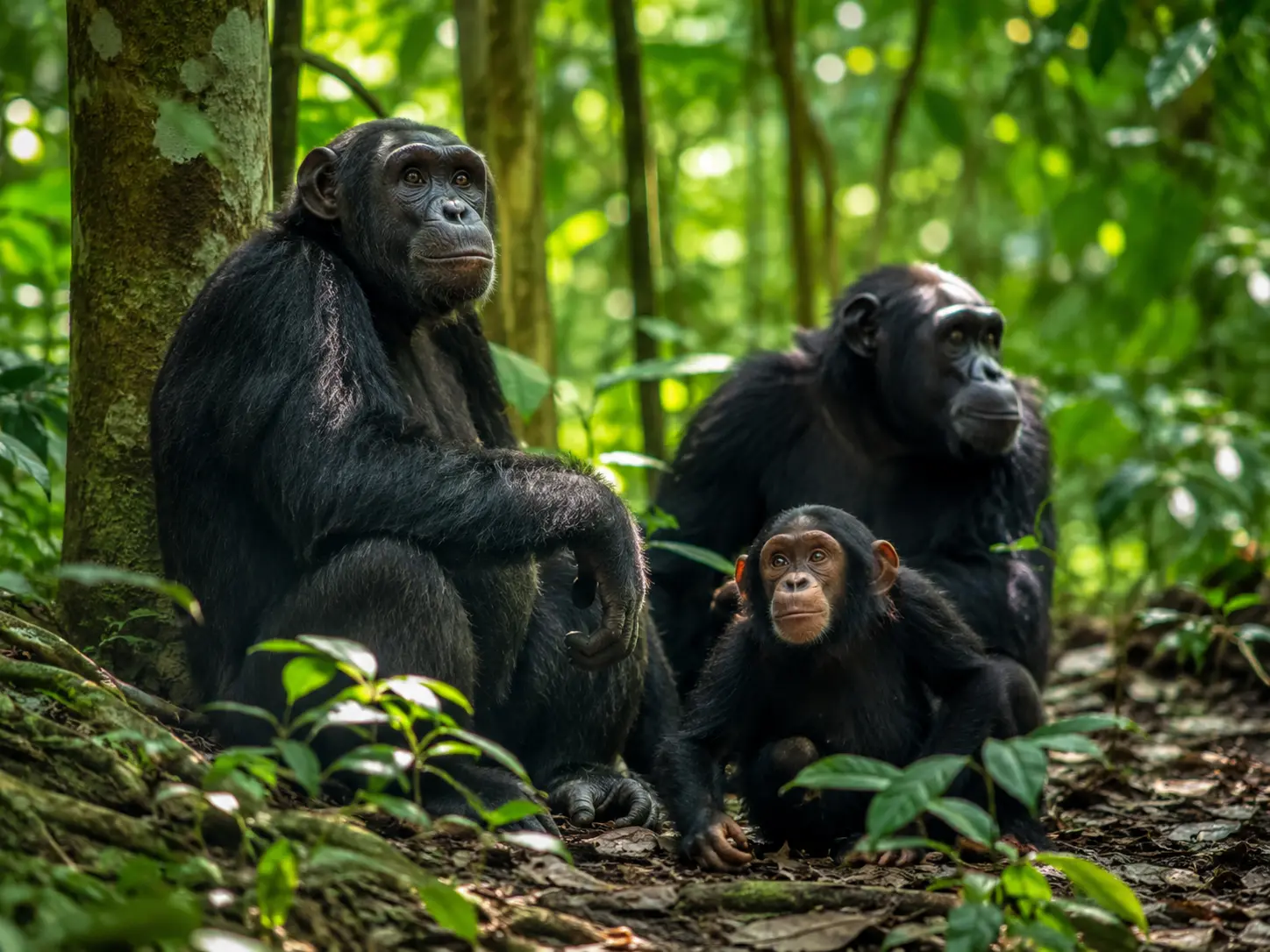
kibale forest Chimpanzee tracking
Kibale has 13 primate species, so even before reaching the chimpanzees, you can see red colobus monkeys, black-and-white colobus monkeys, red-tailed monkeys, grey-cheeked mangabeys, L’Hoest’s monkeys, olive baboons, blue monkeys, vervet monkeys, pottos and bush babies. Chimpanzee tracking permits cost US$300 per visitor, including entrance fees
Chimpanzee Habituation Experience in Kibale
The Chimpanzee Habituation Experience gives you longer and deeper time with the chimpanzees than the standard one-hour tracking visit. Instead of joining only for the final viewing hour, you follow a semi-habituated chimpanzee community with researchers and rangers as the chimps move through their full day. The experience starts very early, around 5:30 am to 6:00 am, before the chimps leave their night nests.
You watch them de-nesting, feeding, travelling, resting, socialising and later preparing to nest again in the evening between about 6:30 pm and 7:30 pm. It is slower, more patient and more demanding than normal chimp tracking, but it gives you a much stronger understanding of chimpanzee behaviour. The activity costs US$400 per person.
Guided Forest Nature Walks
A guided forest walk is one of the best ways to understand Kibale beyond the chimpanzees. The classic forest hike covers about 12 kilometres and crosses different habitats, including tropical rainforest, riverine forest, swamp, grassland and open forest sections. This walk runs mainly in the drier seasons, from mid-November to February and June to September, when the trails are easier to use.
The walk starts at around 8:00 am and reaches the elephant wallow around 2:00 pm, so carry drinking water, snacks or a packed lunch. Along the trail, we look for primates, forest birds, butterflies, trees and signs of forest elephants moving through the vegetation. It is a good activity when you want to feel the depth of Kibale instead of entering the forest only for chimpanzee tracking.
Primate Walks Around Kanyanchu
The primate walk begins from Kanyanchu River Camp and is commonly arranged at 8:00 am or 3:00 pm. It lasts about 2 to 4 hours and focuses on Kibale’s monkeys, plants, birds, and forest life. Group sizes are kept small, with around 6 people per group, making the walk easier to manage inside the forest. This is a good choice if you want a shorter forest activity with strong chances of seeing several primate species. You can see black-and-white colobus, red colobus, red-tailed monkeys, grey-cheeked mangabeys, blue monkeys, olive baboons and other forest species moving through the canopy.
Bird Watching in Kibale and Bigodi Wetland
Bird watching in Kibale is rewarding inside the forest and around Bigodi Wetland Sanctuary. Bigodi lies close to the park, within Magombe Swamp, and is one of the best places to combine birding, community experience and a relaxed guided walk. The wetland has about 138 bird species, many seen along papyrus, palms, swamp edges and village paths. Birding activities can start as early as 7:00 am, when the forest and wetland are most active.
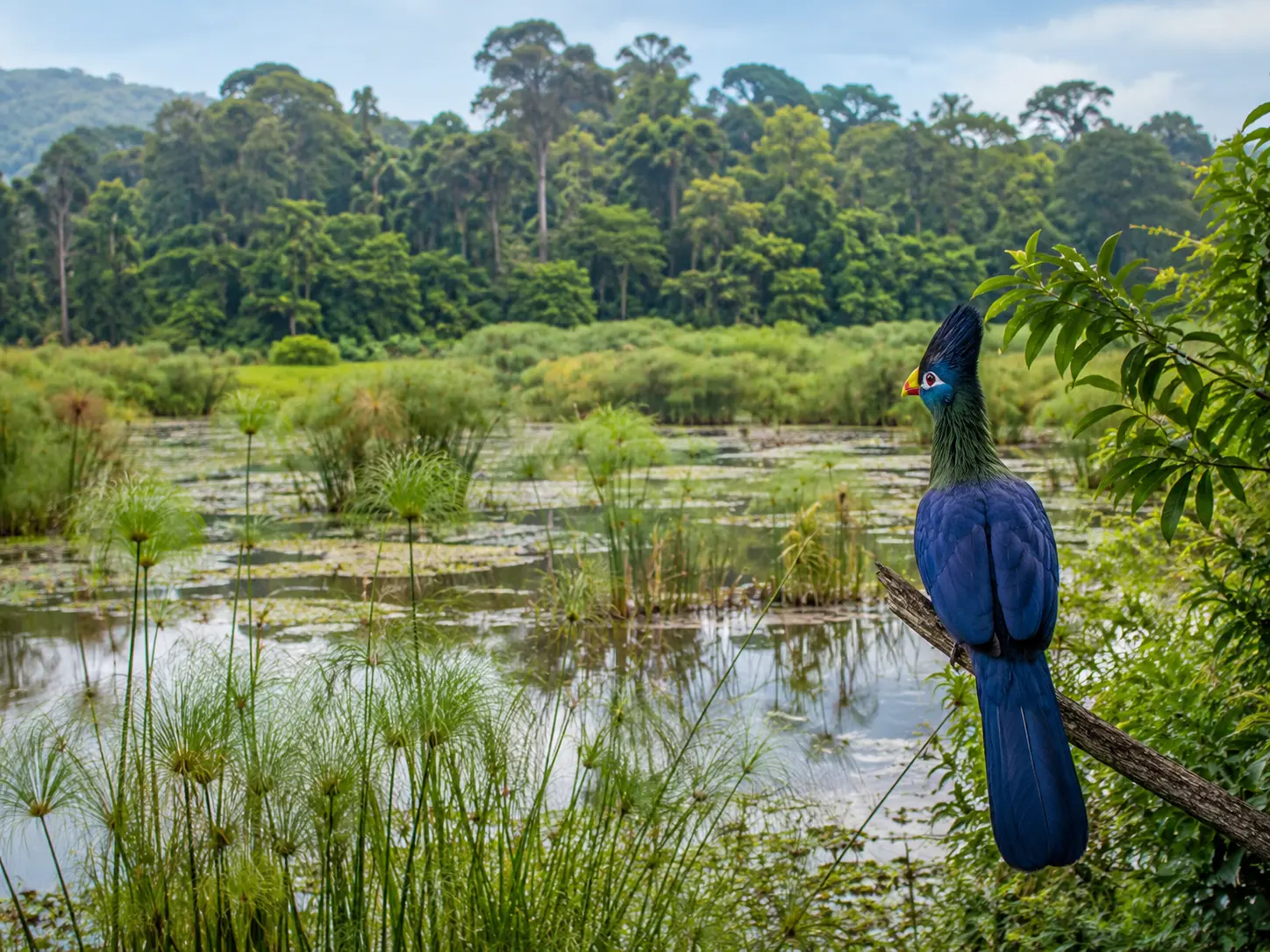
Great blue turaco perched near Bigodi Wetland in Kibale National Park, Uganda,
Key birds to look for include Papyrus Gonolek, White-winged Warbler, White-collared Oliveback, Papyrus Canary, Yellow-billed Barbet, White-tailed Ant-thrush, Brown-backed Scrub-robin, Black Bishop, Brown-throated Wattle-eye, White-spotted Flufftail, Hairy-breasted Barbet, Western Nicator, Grey-winged Robin-chat, Black-and-white Shrike-flycatcher, Superb Sunbird, Brown-crowned Tchagra, Bocage’s Bush-shrike, White-breasted Negrofinch and Black-crowned Waxbill.
Bigodi Wetland Walk
The Bigodi Wetland Walk is one of the easiest activities to add before or after chimpanzee tracking. The walk takes about 2 to 3 hours and moves through a community-run wetland rich in papyrus reeds, palms, orchids, birds, monkeys and swamp wildlife. It is located about 6 kilometres from Kibale park headquarters, making it a good add-on when you are staying near Kanyanchu. During the walk, you can see red-tailed monkeys, black-and-white colobus monkeys, red colobus monkeys, bushbucks, mongooses, sitatungas and many wetland birds. It also gives you a closer look at local community conservation work around Kibale.
Night Forest Walk
The night forest walk begins around 7:30 pm and lasts roughly 1.5 to 2 hours with a ranger or forest guide. This is not chimpanzee tracking. It is a different way to experience Kibale after dark, when the forest sounds change completely. You move with torches through the dark forest looking for pottos, bush babies, nightjars, civets, serval cats, crickets, chameleons, insects and the tree hyrax, whose sharp night call is one of the unforgettable sounds of Kibale. This is a strong option if you want to experience the forest beyond the daytime trails.
Long Distance Forest Walk
For travellers who want a deeper forest journey, Kibale offers a 64-kilometre guided forest walk starting from either Kanyanchu or Sebitoli. The walk takes 2 to 6 days, depending on the route and pace. It passes through different habitats, forest zones and nearby communities. The route starts and ends at either site and includes nights at community-run campsites near villages such as Kikoni, Nyaibanda and Nyakalongo. This walk gives you time to meet local communities, including the Batooro and Bakiga, while exploring forest trails that short-stay visitors never reach.
Children’s Forest Activities
Children below the chimpanzee tracking age can still enjoy Kibale while parents take part in the chimpanzee trek. Guided children’s activities introduce them to the forest safely, with options such as batik-making, pond dipping, photography, cyanotype, short nature activities, and learning about the forest ecosystem with a guide. This makes Kibale easier for families because younger children still have meaningful activities while adults go tracking. It also helps children understand the forest through simple hands-on experiences.
Amabere Ga Nyina Mwiru Caves
Amabere Ga Nyina Mwiru is a cultural and natural site near Nyakasura School, about 5 kilometres from Fort Portal town. The caves are strongly connected to Batooro culture and local storytelling. A site guide takes you through the history, myths, caves, waterfalls and nearby trails. The walk to the caves is short but slippery in places, so proper walking shoes help. There are hills close to the caves where you can hike for views across the crater lakes, making this a good half-day addition before or after visiting Kibale.
Ndali-Kasenda Crater Lakes Tour
The crater lakes around Fort Portal, and the Ndali-Kasenda area add a beautiful scenic extension to a Kibale safari. This region has more than 50 crater lakes, many enclosed by steep volcanic slopes, rolling hills, tea estates, forest patches and quiet rural landscapes. The crater lakes tour works well when you want a slower day between forest activities. You can hike up volcanic slopes, look across the lake-filled landscape, visit nearby viewpoints and enjoy a different side of western Uganda outside the thick rainforest.
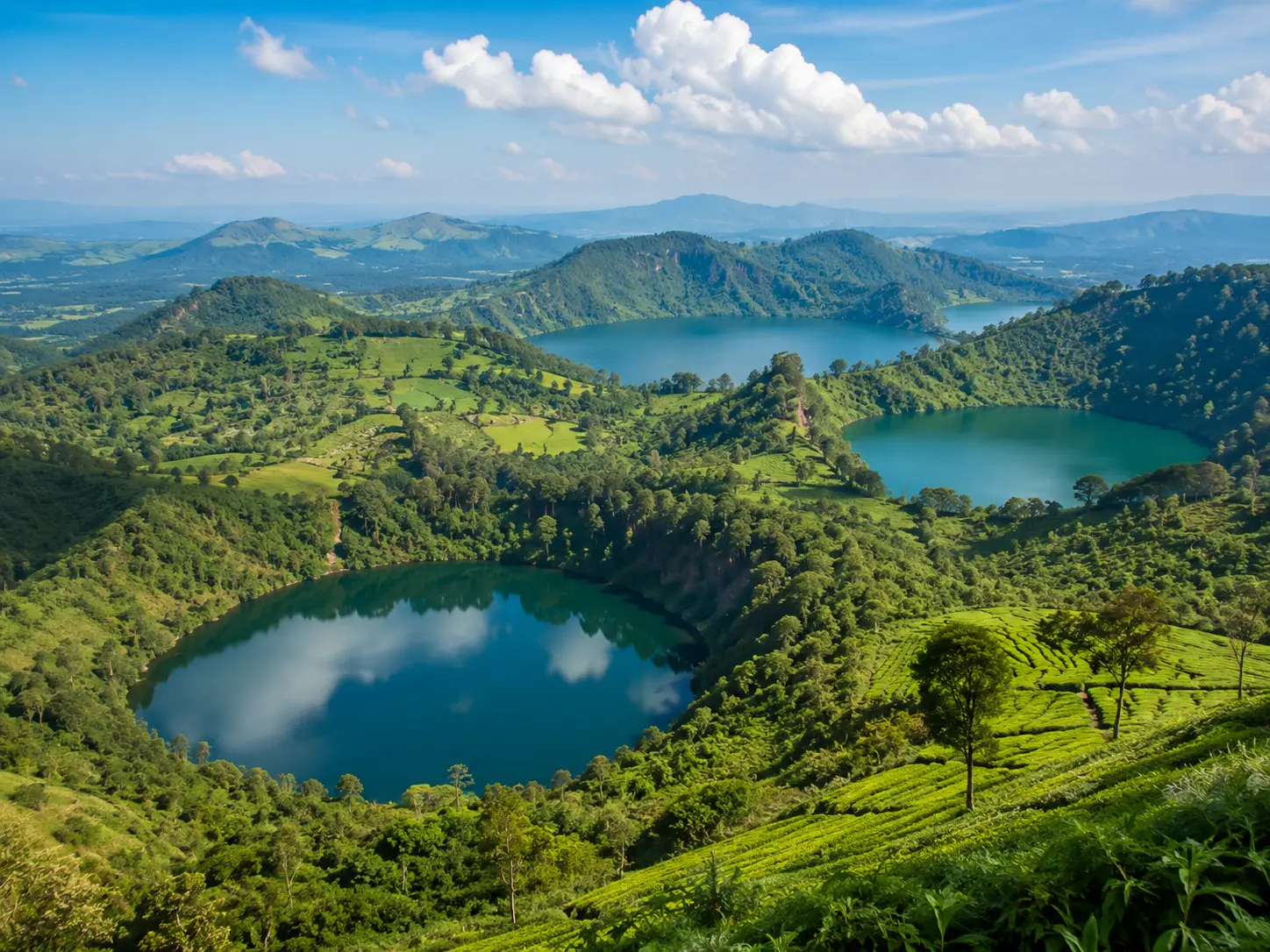
Ndali-Kasenda Crater Lakes
5-Day Uganda Safari with Gorilla Trekking and Chimpanzee Tracking Experience Embark on an unforgettable 5-Day Uganda Safari that promises an exhilarating blend of gorilla trekking and chimpanzee tracking. Uganda, known as the “Pearl of Africa,” offers stunning landscapes, diverse
An Exceptional Wildlife Journey Crafted by BLS Safaris Ltd The 10 Days Uganda Safari: The Big Five, Forest And Lakes Safari introduces travelers to Uganda’s most iconic wildlife destinations while revealing breathtaking forests, savannahs, lakes, and vibrant cultures. This extrao

The 7-Day Uganda Safari is an unforgettable journey through the “Pearl of Africa,” combining thrilling wildlife encounters, breathtaking landscapes, and rich cultural experiences. This carefully designed Uganda safari takes you to some of the country’s most iconic destinations, i
Embarking on the 9 Days Uganda Wildlife and Gorillas Adventure Tour offers an unparalleled opportunity to immerse yourself in the stunning landscapes and vibrant wildlife of Uganda, famously dubbed the “Pearl of Africa” by Winston Churchill. This expedition encompasses an array o