
Seven-day premium Tanzania fly-in safari with mobile luxury camps that follow the Migration through the Serengeti. Light-aircraft transfers, hot-air balloon, exclusive private guiding.
Eleven-day Tanzania safari and Zanzibar beach combination — full Northern Circuit game drives followed by four nights on Zanzibar. The complete Tanzania experience.
Five-day Zanzibar escape — Stone Town heritage, spice plantations, dolphin tours and four nights of pure white-sand beach. Honeymoon-friendly pacing.
Eight-day classic Tanzania Northern Circuit covering all four iconic parks — Tarangire, Lake Manyara, Serengeti and Ngorongoro Crater. The complete Tanzanian safari in one comprehensive trip.
Six-day Tanzania safari following the Great Migration through the Serengeti — five game-drive days timed to where the herds actually are, plus the Ngorongoro Crater for Big Five close-outs.
Six-day Kenya safari to two of the country's most distinctive parks — Samburu's "Special Five" desert species in the north, and Lake Nakuru's pink flamingos and rhinos. A serious wildlife experience away from the Mara crowds.
Four-day Tanzania short safari — the world's largest unbroken caldera at Ngorongoro, plus Tarangire's iconic baobabs and giant elephant herds. Big Five virtually guaranteed.
This 12-day East Africa safari tour takes you through Kenya, Tanzania, Rwanda, and Uganda, offering an unforgettable journey across the region’s most iconic wildlife destinations. From Big Five game drives in the Serengeti and Maasai Mara to gorilla trekking in Uganda, this safar
Tanzania Safari Circuits and Destinations
Tanzania’s safari destinations are generally divided into northern, southern and western regions, each offering a different style of journey. The northern circuit combines the Serengeti, Ngorongoro, Tarangire and Lake Manyara and is the main route for many first-time Tanzania safaris.
Southern Tanzania, centred on Ruaha and Nyerere, offers larger wilderness areas, walking and boat safaris, and generally fewer safari vehicles. Western Tanzania is more specialised, combining remote wildlife areas with chimpanzee trekking around Lake Tanganyika. Zanzibar and the coast can then be added for a beach stay before or after the safari.
Northern Tanzania Safari Circuit
The Northern Tanzania Safari Circuit is the main route for many first-time safaris, usually beginning around Arusha and combining the Serengeti, Ngorongoro Crater, Tarangire and Lake Manyara. These destinations can be linked comfortably by road, with domestic flights also available for travellers who want to reduce longer transfers into or out of the Serengeti.
Serengeti National Park: The Serengeti is the centrepiece of most northern Tanzania itineraries, particularly for travellers interested in the Great Migration and big-cat viewing. Where you stay should follow the season. The southern Serengeti and Ndutu area are important during the calving period, while the western and northern sectors become more relevant as the herds move towards the Grumeti and Mara river systems. River crossings are natural events and cannot be guaranteed for a particular day.
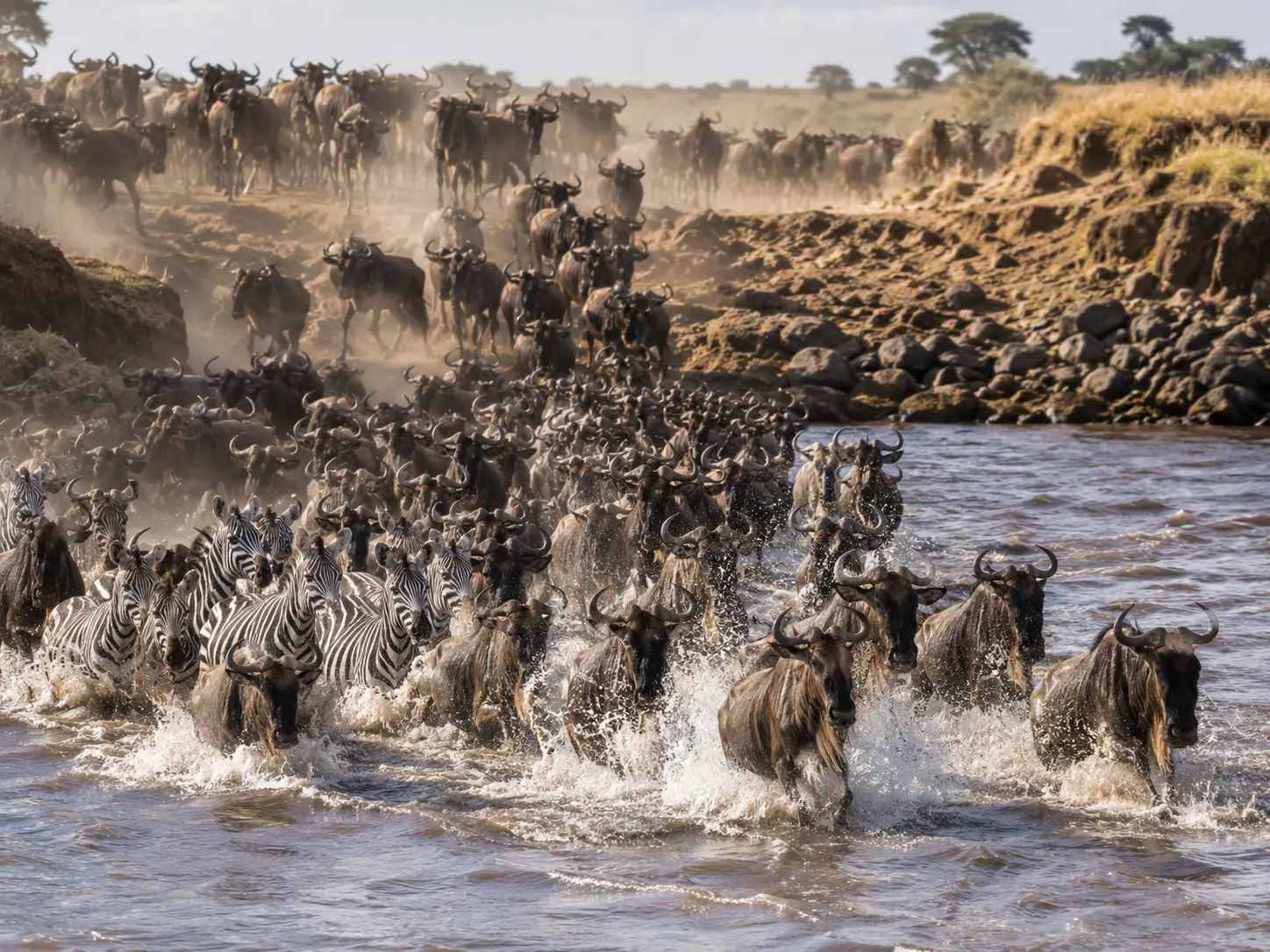
Wildebeest Great Migration Mara River Crossing
Ngorongoro Crater: Ngorongoro adds a very different wildlife experience, with a high concentration of animals living across the crater floor and strong opportunities to look for lions, buffaloes, elephants and black rhinos. The wider Ngorongoro Conservation Area is also a UNESCO World Heritage Site and includes Olduvai Gorge, one of East Africa’s important sites for understanding human evolution.
Tarangire National Park: Tarangire is particularly rewarding for elephants, baobab landscapes and dry-season wildlife concentrations around the Tarangire River. It fits naturally between Arusha and the Ngorongoro highlands and gives the northern circuit a landscape and wildlife experience that feels noticeably different from the Serengeti.
Lake Manyara National Park: Lake Manyara is a compact Rift Valley park with groundwater forest, elephants, baboons, more than 400 recorded bird species and seasonal flamingos around the soda lake. The park is also known for its tree-climbing lions, although sightings depend on wildlife movement and conditions on the day. For most travellers, the strongest northern circuit gives the greatest amount of time to the Serengeti and then uses Ngorongoro, Tarangire and Lake Manyara according to the number of days available and the season of travel.
Southern Tanzania Safari Circuit
Southern Tanzania offers a different style of safari from the better-known northern circuit. Ruaha and Nyerere cover vast wilderness areas with generally fewer safari vehicles, and itineraries can combine traditional game drives with walking and boat safaris. Because the distances are longer, fly-in routes are common, particularly for travellers with limited time.
Ruaha National Park: Ruaha is Tanzania’s second-largest national park and one of the main wildlife areas in the south. The Great Ruaha River, baobab woodland, and open plains support large elephant and buffalo populations, along with lions, leopards, cheetahs, African wild dogs, and both greater and lesser kudu. Lower vehicle numbers also make Ruaha particularly appealing to travellers who prefer longer wildlife sightings with less traffic around them.
Nyerere National Park: Nyerere combines extensive miombo woodland and floodplains with the Rufiji River, giving travellers experiences that are difficult to replicate on the northern circuit. Game drives can be combined with guided walking and boat safaris, with hippos, Nile crocodiles and waterbirds common around the river system. The park also supports elephants, buffaloes, lions, leopards and important populations of African wild dogs. Southern Tanzania is best considered when you want more time in fewer parks, lower vehicle density and a safari that includes activities beyond vehicle-based game drives.
Western Tanzania Safari Circuit
Western Tanzania is a more specialised safari region, with longer travel times and many itineraries relying on scheduled or charter flights. The main attractions are chimpanzee trekking around Lake Tanganyika and remote wildlife viewing in Katavi.
Mahale Mountains National Park: Mahale combines guided chimpanzee trekking with forested mountains and the eastern shoreline of Lake Tanganyika. Visitors can also include hiking, kayaking and boat activities, making it very different from Tanzania’s savannah circuits.
Gombe National Park: Gombe is closely associated with Jane Goodall’s long-term chimpanzee research, which began in 1960. Today, visitors explore the forest on guided chimpanzee treks and hikes, with Lake Tanganyika forming an important part of the setting.
Katavi National Park: Katavi provides the classic wildlife element of western Tanzania. During the dry season, animals gather around shrinking rivers and pools, with buffaloes, elephants, hippos, crocodiles and predators among the main attractions. Visitor numbers remain low compared with Tanzania’s better-known safari regions
Tanzania Safari and Zanzibar Beach Extensions
Zanzibar is the most popular beach extension after a Tanzania safari, combining Indian Ocean beaches with Stone Town, Swahili culture and easy flight connections from the main safari gateways. It can be added after a northern circuit safari through the Serengeti and Ngorongoro or after a southern Tanzania itinerary. Travellers can choose the northern beaches around Nungwi and Kendwa, the east coast around Paje and Jambiani, or combine a beach stay with time in historic Stone Town. Mafia Island offers a quieter alternative for travellers looking beyond Zanzibar. A safari and beach itinerary normally works best when the wildlife portion is completed first, followed by several slower days on the coast before the international flight home.
Top Tanzania Safari Experiences
Tanzania safari experiences range from Serengeti game drives and Great Migration viewing to walking safaris, boat trips, hot-air balloon flights and chimpanzee trekking. Longer itineraries can also include Kilimanjaro hiking, cultural visits or a Zanzibar beach extension. The experiences you choose should depend on the safari circuit, season and number of days available, rather than trying to fit every activity into one trip.
Game Drives and Big Five Wildlife in Tanzania
Game drives are the main wildlife activity on most Tanzania safaris, with private itineraries commonly using a 4WD safari vehicle and driver-guide. Early morning and later afternoon drives are particularly useful because temperatures are cooler and wildlife can be more active, although sightings always depend on animal movement and conditions on the day.
The Serengeti, Ngorongoro, Tarangire and Lake Manyara form the principal game-drive destinations on the northern circuit, while Ruaha and Nyerere provide a different experience in southern Tanzania with generally fewer vehicles and larger wilderness areas. Tanzania offers opportunities to look for lions, leopards, elephants, buffaloes and rhinos alongside cheetahs, giraffes, zebras, wildebeest and many other species. Longer stays allow more time to explore different habitats rather than trying to cover a park in one rushed drive.
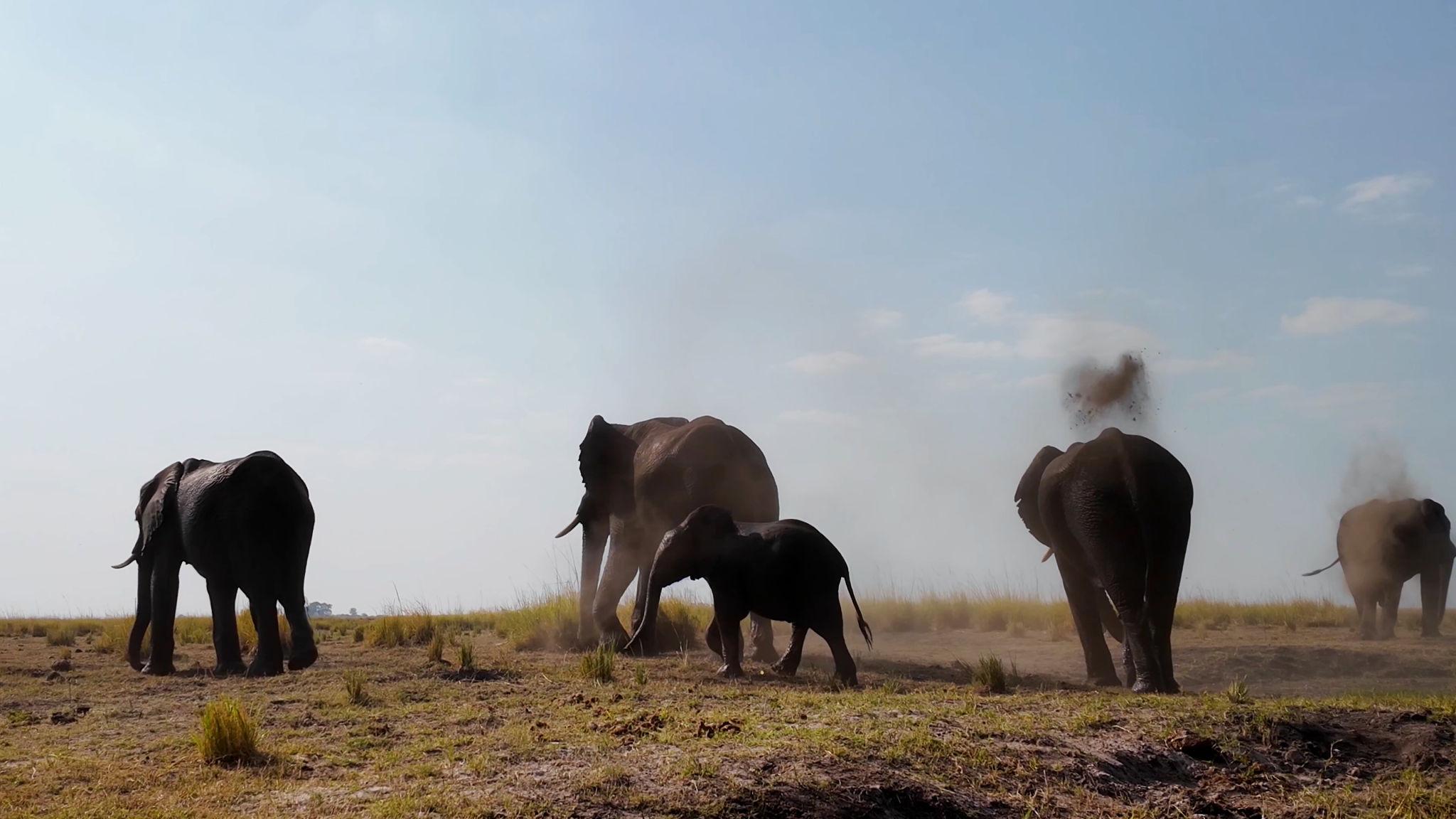
Elephant herd seen in Tarangire National Park, Tanzania
Walking Safaris in Tanzania
Walking safaris offer a slower, more detailed way to experience Tanzania’s wildlife areas. Instead of concentrating only on large animals, the focus shifts to tracks, plants, birds, animal signs and the smaller details that are easily missed from a safari vehicle. Ruaha and Nyerere are particularly well suited to guided walking as part of a southern Tanzania itinerary. Walks are led under the required park arrangements and take place only in permitted areas, with the length depending on the route, conditions and fitness of the group. Walking is best used alongside game drives rather than as a replacement for them, giving travellers a different perspective on the same landscape.
Boat Safaris in Southern Tanzania
Boat safaris add a different wildlife experience to Tanzania’s mainly vehicle-based safari routes. Nyerere National Park is the principal destination, where guided trips on the Rufiji River and its channels can bring visitors close to hippos, Nile crocodiles, waterbirds and wildlife using the riverbanks. Boat safaris combine naturally with game drives and walking in Nyerere, making the southern circuit particularly varied. Saadani National Park also offers boat trips on the Wami River, while canoeing can be arranged in selected parks such as Lake Manyara where current conditions and park arrangements allow.
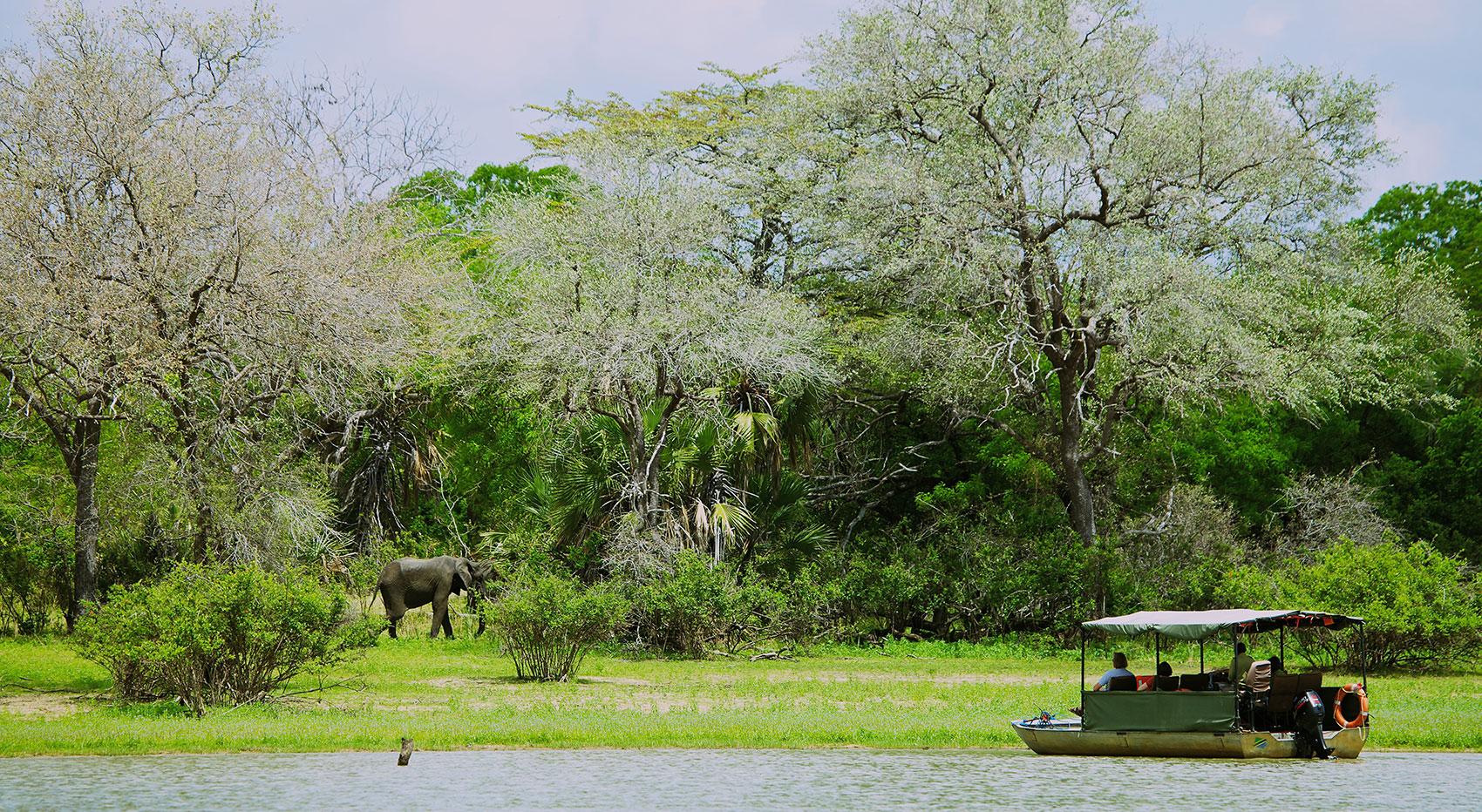
Boat safaris in Nyerere National Park
Birding Safaris in Tanzania
Tanzania’s varied habitats make birding easy to combine with a wider wildlife safari, from Rift Valley lakes and Serengeti grasslands to Tarangire woodland and the rivers and wetlands of southern Tanzania. Lake Manyara is particularly rewarding for waterbirds and seasonal flamingos, while Tarangire, Serengeti and Nyerere add a broad mix of savannah, woodland and wetland species. Travellers with a stronger birding interest can build more time into selected parks with a specialist guide, while general safari itineraries still provide plenty of opportunities for birdwatching and wildlife photography.
Mount Kilimanjaro and Safari Extensions
Mount Kilimanjaro rises to 5,895 metres at Uhuru Peak and can be combined with a northern Tanzania safari for travellers who want both trekking and wildlife. The climb is a separate multi-day expedition rather than a short safari activity, with the number of days depending on the chosen route and acclimatisation plan. Most travellers complete the Kilimanjaro climb before or after their safari, using the Arusha and Moshi area to connect with the northern circuit. Detailed route choices, climbing preparation and mountain logistics are better planned separately from the wildlife itinerary.
Hot-Air Balloon Safaris in the Serengeti
Hot-air balloon safaris offer an early-morning view across the Serengeti plains before the day’s game drives begin. Flights operate in selected areas of the park, with the most suitable location depending on the traveller’s camp, season and current operator schedule. From the air, you can see the scale of the grasslands, river systems and wildlife moving across the landscape, although specific animal sightings and Great Migration views cannot be guaranteed. Ballooning is best planned in advance because departure points and early collection times need to fit the accommodation used that night.
Chimpanzee Trekking in Western Tanzania
Chimpanzee trekking adds a primate experience to Tanzania safaris that extend into the western part of the country. Mahale Mountains National Park combines guided chimpanzee treks with forested mountains and the shores of Lake Tanganyika, while Gombe National Park is closely associated with the long-term chimpanzee research begun by Jane Goodall. Both destinations require more travel planning than Tanzania’s main northern circuit, so they are better suited to longer or specialist itineraries. Chimpanzee trekking can also be combined with Katavi for travellers wanting both primates and remote wildlife viewing in western Tanzania.
Cultural and Community Experiences in Tanzania
Cultural and community visits can add another dimension to a Tanzania safari, particularly around the northern circuit. Around Ngorongoro, travellers can include locally organised Maasai visits that introduce aspects of pastoral life, traditions and the relationship between communities, livestock and surrounding wildlife areas.
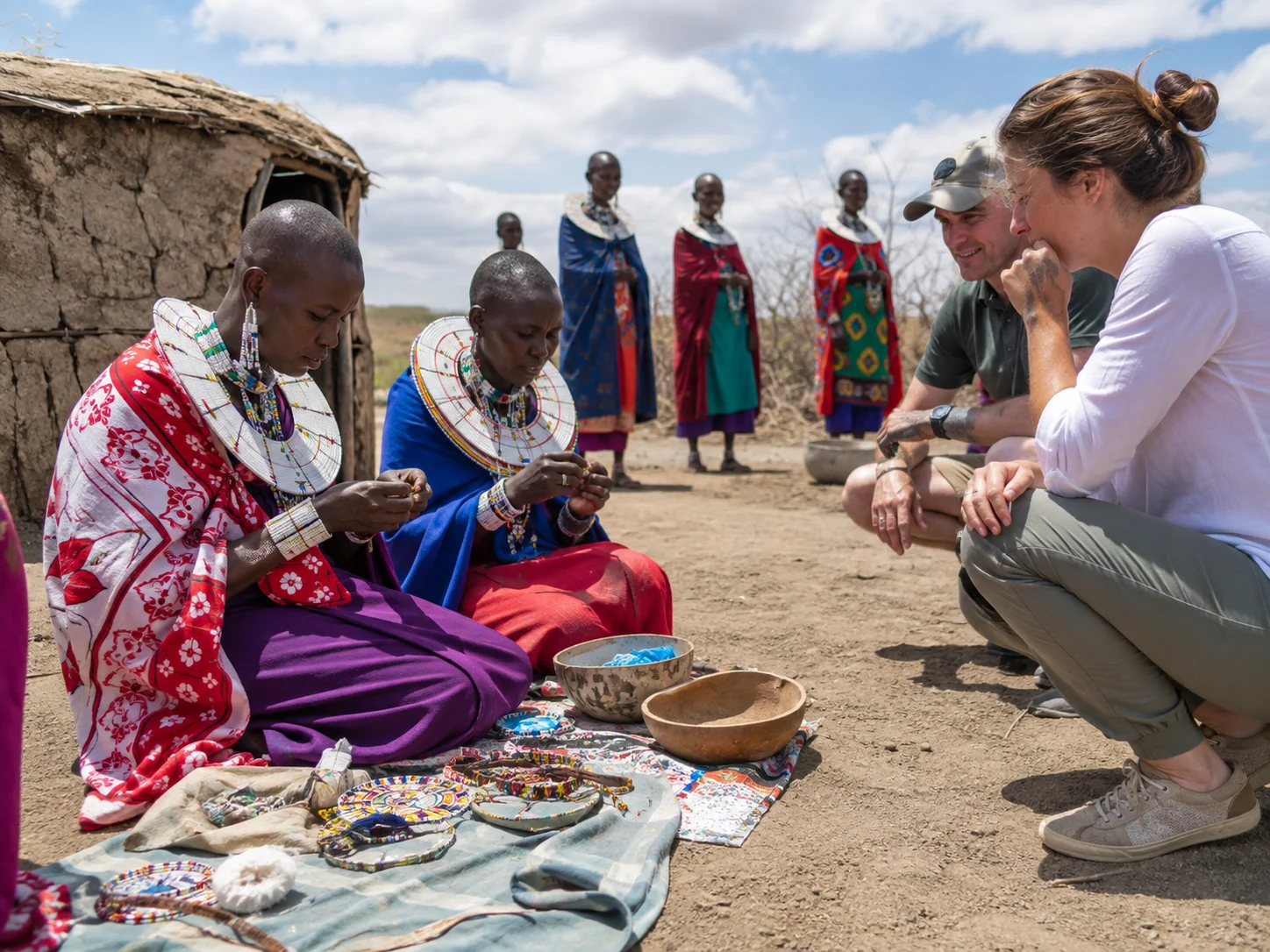
Maasai village visits
Lake Eyasi is known for community experiences involving the Hadzabe and Datoga, while Mto wa Mbu offers guided village visits, local food, farming and craft experiences between Lake Manyara and the Ngorongoro highlands. These visits should be arranged through established local programmes, with enough time for genuine interaction and direct benefit to the participating communities rather than treating culture as a short staged stop.
Tanzania Safari Types and Travel Styles
Tanzania safaris can be arranged in very different ways depending on your budget, travel dates and the type of experience you want. Some travellers prefer a fully private safari with their own vehicle and guide, while others prioritise luxury camps, the Great Migration or a wildlife and Zanzibar combination.
Best Time for a Tanzania Safari
Tanzania can be visited throughout the year, but the best time for your safari depends on the wildlife experience you want. June to October is the main dry season, with easier wildlife spotting around water sources and generally firmer roads and tracks. The wetter months bring greener landscapes, migratory birds and fewer visitors in many areas.
Great Migration and Calving Season: Great Migration safaris need to follow the movement of the herds rather than one fixed Serengeti location. January to March is associated with calving on the southern plains, including the Ndutu region, before the herds gradually move west and north as seasonal conditions change. The northern Serengeti becomes particularly important later in the dry season when herds reach the Mara River area. River crossings can occur during this period, but they are natural events and cannot be guaranteed for a particular day.
June to October Dry Season: June to October is the most straightforward period for classic wildlife safaris. Vegetation becomes drier, animals concentrate more around permanent water, and conditions are generally good for game drives. This period is also important for Ruaha, Nyerere and Katavi, where dry-season water sources influence wildlife movement. It is also peak travel season in many popular safari areas, so well-positioned camps and lodges should be reserved early.
Green Season and Rainy Months: The short rains generally fall around November and December, while the longer rains are mainly from March to May. Landscapes become greener, birding improves, and visitor numbers can be lower, although some roads become muddy and selected seasonal camps may close. These months can still produce rewarding safaris for travellers comfortable with changing weather and more variable road conditions.
Where to Stay on a Tanzania Safari
Accommodation on a Tanzania safari should be chosen around the route, season and activities rather than room category alone. A well-positioned lodge or tented camp can reduce unnecessary driving, give easier access to wildlife areas and make early departures more manageable. Location matters particularly in the Serengeti, where the most useful area to stay can change with the season and the movement of the Great Migration. Around Ngorongoro, Tarangire and Lake Manyara, the choice between properties inside the wildlife area and those in nearby towns or highlands should be based on the following day’s route. Southern Tanzania has fewer properties but includes distinctive camps in Ruaha and Nyerere, while the northern circuit offers the widest range of accommodation from comfortable mid-range lodges to high-end safari camps.
Where to Stay in the Serengeti
Where you stay in the Serengeti should be planned around the season and the part of the park you want to explore. The park is vast, and choosing the wrong area can add several hours of unnecessary driving between camp and the wildlife you came to see. Northern Serengeti, particularly around Kogatende and the Mara River, becomes important during the later stages of the Great Migration. Lodges such as Sayari Camp and Lamai Serengeti place you in the northern region for seasonal migration viewing, although river crossings remain natural events and cannot be guaranteed.
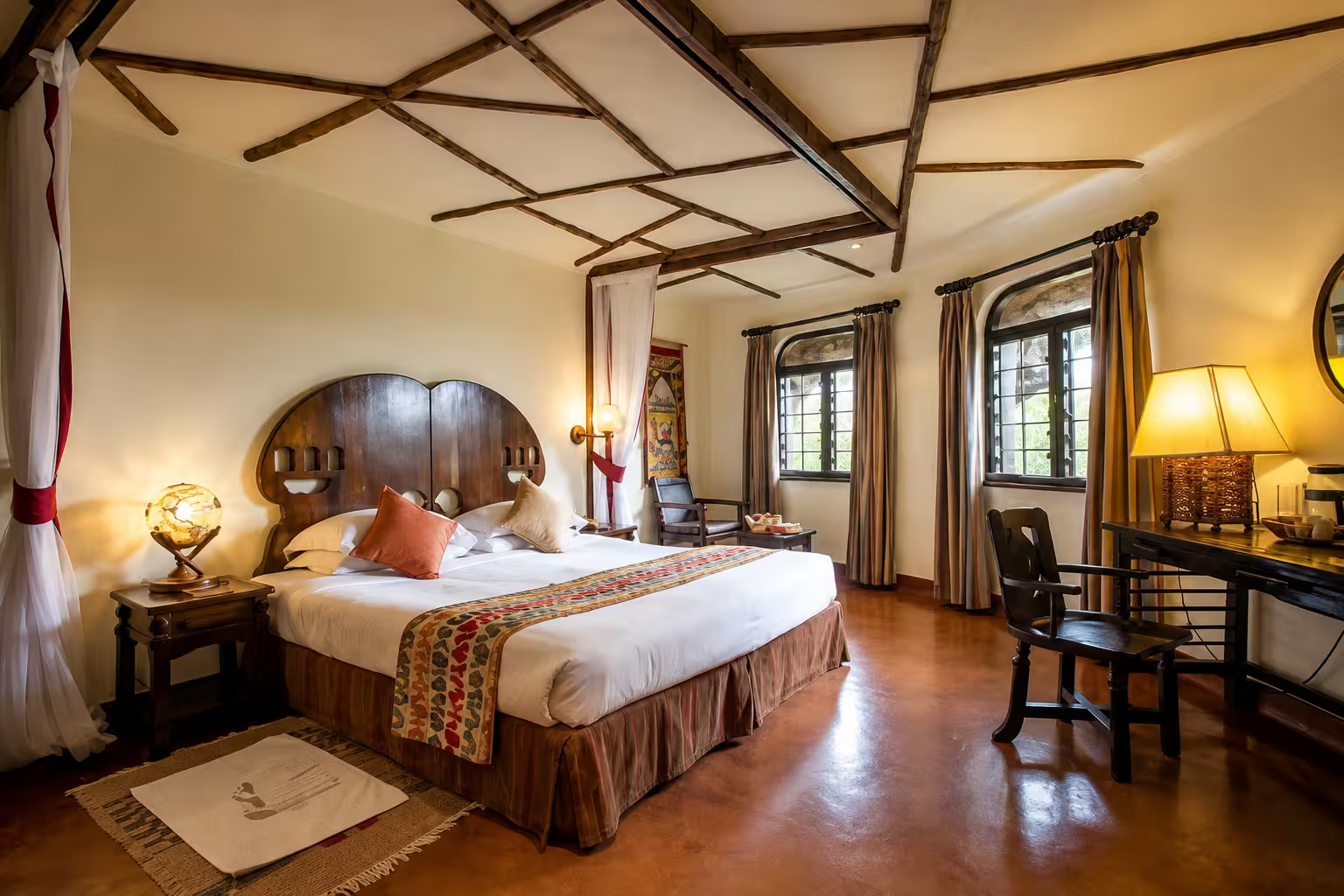
Serengeti Serena Safari Lodge room interior
Central Serengeti around Seronera is a strong year-round base for general wildlife viewing and offers one of the widest accommodation choices. Kubu Kubu Tented Lodge and Serengeti Serena Safari Lodge are established options in the central Serengeti, giving access to the surrounding plains and major game-viewing areas. Southern Serengeti and Ndutu become particularly important from roughly December to March during the calving period. Ndutu Safari Lodge is one of the long-established properties in this area, while seasonal tented camps also move into the wider Ndutu region to position travellers closer to the migration. For Serengeti accommodation, location and season should come before lodge name alone.
Where to Stay near Ngorongoro Crater
Accommodation around Ngorongoro should be chosen according to how quickly you want to reach the Crater and how the wider northern circuit is routed. Staying on or close to the Crater rim reduces the morning transfer and gives easier access for an early descent. Ngorongoro Serena Safari Lodge is an established rim property overlooking the Crater, while Rhino Lodge provides a simpler option within the Ngorongoro Conservation Area.
Lemala Osonjoi is another high-comfort choice for travellers prioritising the Crater, while The Highlands sits farther away near Olmoti Crater and suits itineraries that also include walking and the wider Ngorongoro highlands. Travellers staying around Karatu have a wider choice of properties, including Gibb’s Farm, but should allow additional driving time before the Crater visit
Where to Stay in Tarangire and Lake Manyara
In Tarangire, accommodation can be chosen inside the national park or in private areas close to its boundaries. Tarangire Sopa Lodge provides an established inside-park base, while Lemala Mpingo Ridge Lodge offers a higher-comfort option overlooking the surrounding landscape. Tarangire Treetops sits in a private reserve outside the park and can suit travellers who want a more secluded lodge setting.
Lake Manyara is often included as part of a wider northern circuit rather than a long standalone stay. &Beyond Lake Manyara Tree Lodge is the only permanent lodge inside the national park, while travellers can also stay around Mto wa Mbu or Karatu when the itinerary continues towards Ngorongoro. The right choice should follow the next day’s route rather than lodge category alone, particularly when Tarangire, Lake Manyara and Ngorongoro are being combined within a short northern Tanzania itinerary.
Where to Stay in Ruaha and Nyerere National Parks
Accommodation in southern Tanzania is generally centred on smaller safari camps and lodges, with many itineraries using scheduled or charter flights because of the longer distances involved. In Ruaha National Park, established options include Jongomero Camp, while Jabali Private House provides an exclusive-use stay for families or small private groups travelling with their own guide and vehicle. Camp location matters in Ruaha because the park is vast, so it is better to choose accommodation around the areas you intend to explore rather than lodge style alone.
In Nyerere National Park, accommodation should give convenient access to both land and river activities. Selous River Camp sits beside the Rufiji River on the edge of the park and can be used for itineraries combining game drives with boat safaris. Camps located deeper within the reserve offer another option for travellers prioritising a more fully immersed wilderness stay. For southern Tanzania, camp location, guiding and the activities included should carry more weight than simply choosing accommodation by price category.
Tanzania Safari Travel and Transfers
How you travel between Tanzania safari destinations depends mainly on the circuit. Northern Tanzania is commonly explored by private safari vehicle from Arusha, linking parks such as Tarangire, Ngorongoro and the Serengeti, with domestic flights available when reducing road time is useful.
Southern and western Tanzania involve longer distances, so scheduled or charter flights are more commonly built into itineraries for Ruaha, Nyerere, Katavi and the Lake Tanganyika region. Kilimanjaro International Airport is the main international gateway for Arusha and northern Tanzania safaris, while Julius Nyerere International Airport in Dar es Salaam is particularly useful for southern Tanzania and coastal routes.
Tanzania Safari Road Transfers and 4WD Vehicles
Road travel is the standard way to connect most destinations on Tanzania’s northern safari circuit. Private itineraries commonly use 4WD safari vehicles with raised or pop-up roofs for wildlife viewing, allowing the same vehicle to handle transfers and game drives. From Arusha, allow roughly 2 hours to Tarangire, about 2 hours to the Lake Manyara area, and around 3 to 4 hours to the Ngorongoro highlands, depending on traffic, road conditions and stops.
Travelling onward into the Serengeti takes longer and should be planned around the final camp location. Reaching Naabi Hill Gate is only part of the journey, particularly when accommodation is in the central, western or northern Serengeti. A private safari vehicle also gives greater flexibility around departure times, photography stops and how long you spend at wildlife sightings.
Domestic Flights and Fly-In Safaris
Domestic flights are commonly used when a Tanzania safari includes remote parks or when reducing long road transfers is a priority. They are particularly useful for routes into Ruaha, Nyerere, Katavi and Mahale, as well as direct connections between Arusha, the Serengeti and Zanzibar.
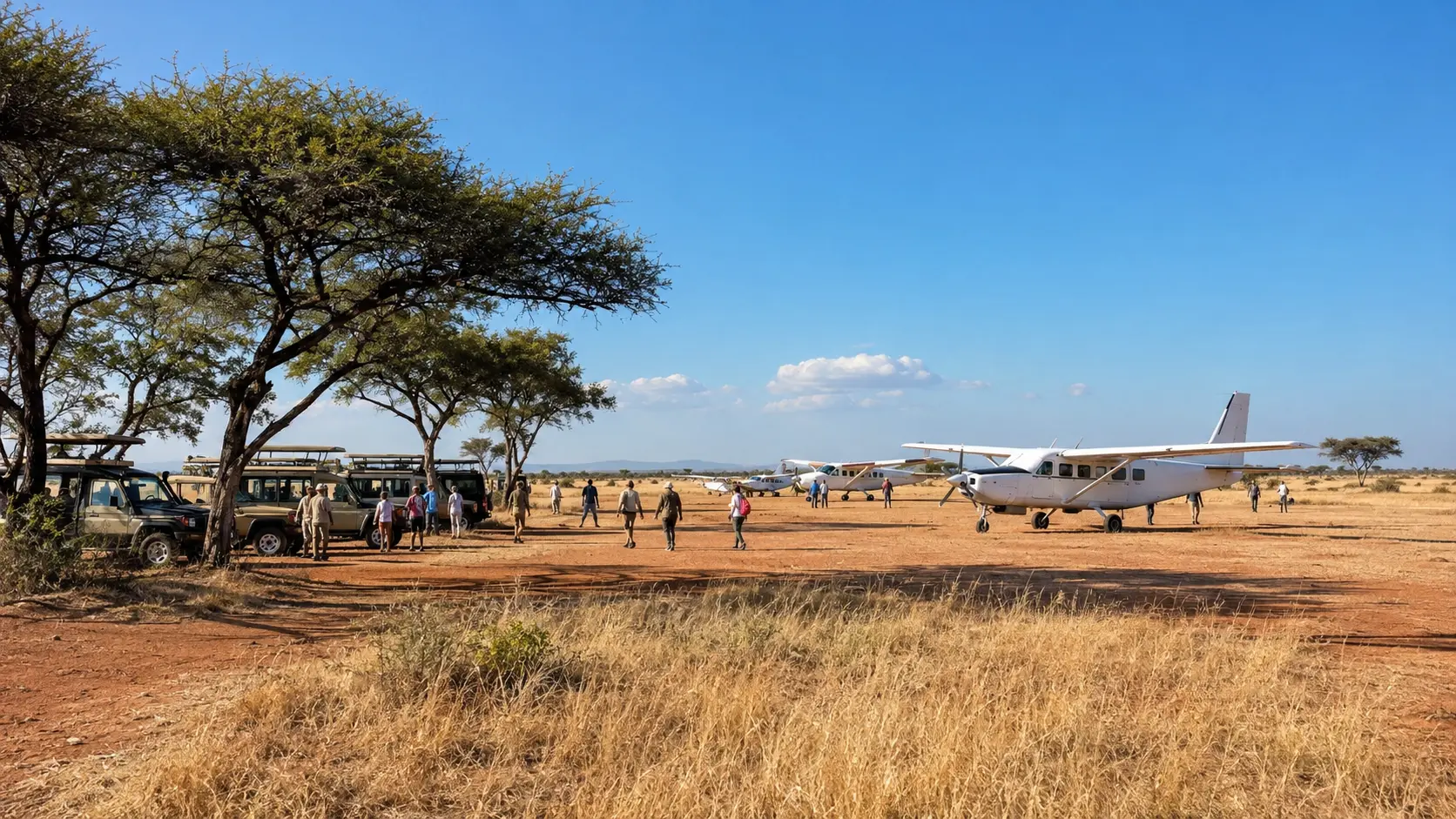
Lake Manyara Airport
Most safari flights use smaller aircraft and regional airstrips close to camps and lodges, allowing travellers to move between distant wildlife areas without returning to the main cities. Flight schedules can include intermediate stops, so journey times vary according to the route. Fly-in safaris suit shorter itineraries, remote circuits and travellers who prefer to spend more of the trip inside the parks. Baggage allowances on small aircraft should be checked when the itinerary is booked.
Getting to Zanzibar After Safari
Zanzibar can be added easily after a Tanzania safari, with scheduled and charter flights connecting the island with Arusha, Dar es Salaam and selected safari airstrips. Flying directly from the safari circuit is particularly useful when you want to avoid returning to a major city before beginning the beach stay. Travellers already in Dar es Salaam can also reach Zanzibar by passenger ferry, with regular services operating between the mainland and the island. The best connection should be chosen around your final safari destination, baggage arrangements and international flight schedule.
Tanzania Visa and Zanzibar Entry Requirements
Visa requirements for Tanzania depend on your nationality, so travellers should confirm the current rules before departure. Tanzania’s official electronic visa system covers travel to both mainland Tanzania and Zanzibar, with the standard Ordinary Visa currently priced at US$50 for eligible visitors.
Travellers continuing to Zanzibar should also check the island’s separate entry requirements. Zanzibar currently requires foreign visitors to obtain mandatory inbound travel insurance, even when they already hold another travel or medical insurance policy. For a safari involving remote parks or domestic flights, broader travel insurance covering medical emergencies, evacuation and travel disruption is also advisable.
Tanzania Safari Questions Answered