
Lake Manyara National Park is one of the easiest and most scenic parks to add to a northern Tanzania safari. It sits between the shallow lake and the Great Rift Valley escarpment, within the Arusha and Manyara regions. From Arusha, the park is about 126 km southwest, taking roughly 1.5 to 2.5 hours by road, depending on traffic, stops and your lodge location. That makes it a good first safari stop before Tarangire, Ngorongoro or Serengeti.
The park covers about 325 km², with close to 230 km² taken up by the lake surface. Water shapes much of the scenery here, and you feel that as soon as you move from the forested entrance towards the open lake edge. This is a compact park, but it gives you a rich safari day. One drive can take you through groundwater forest, acacia woodland, grassy floodplains, rocky escarpment slopes, savannah, marshes and the shallow alkaline lake.
That mix is what gives Manyara its character. You come here for tree-climbing lions, elephants with long tusks, giraffes, buffaloes, zebras, wildebeest, hippos in the mud and wide Rift Valley views rising above the water. Birding is one of the strongest reasons to visit. More than 350 bird species have been recorded around the lake and nearby habitats, including pelicans, storks, herons, egrets and seasonal gatherings of greater and lesser flamingos. From November to April, the wet season brings more water and stronger feeding activity around the lake edge. In good conditions, flamingos can form a pink moving line across the shallows.
The park also sits within a wider wildlife landscape. The Kwa Kuchinja wildlife migration corridor helps animals move between Tarangire, Manyara and the Engaruka Basin. South of the park, Marang Forest Reserve covers 35,399 hectares on the escarpment, while Manyara Ranch, a former livestock ranch managed for conservation since 2001, covers 45,000 acres. That is why this park works as more than a quick stop. It connects lake, forest, escarpment, wildlife corridors, birds, and the main northern Tanzania safari route in one easy-to-reach place.
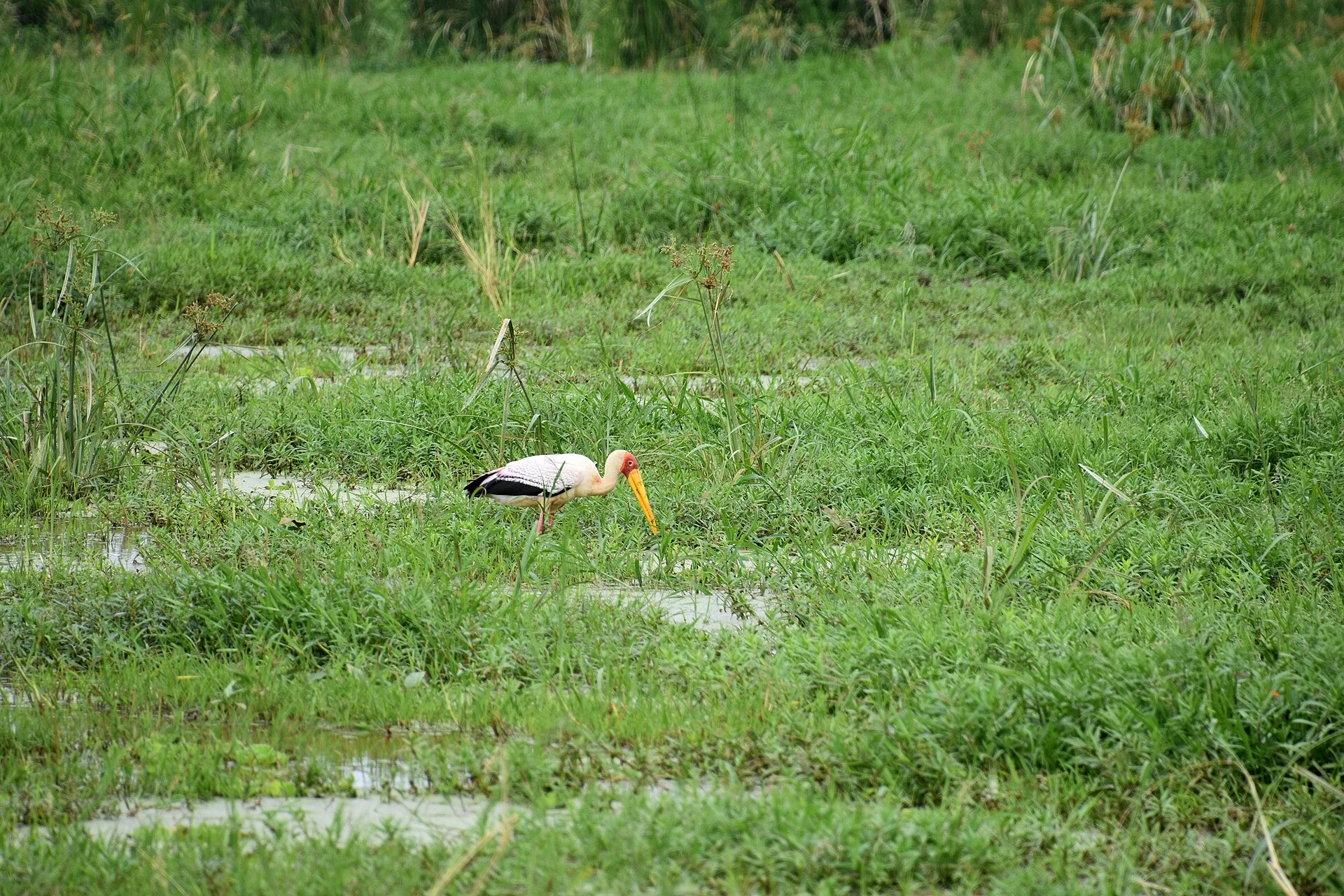
Yellow-billed stork, Lake_Manyara National Park
Why Visit Lake Manyara National Park
Lake Manyara gives you one of the most rewarding introductions to a northern Tanzania safari. The park is small enough to explore without long drives, but varied enough to feel full. Water, escarpment, forest, floodplain and open ground all sit close together, so your safari changes quickly from one habitat to the next.
Shallow Alkaline Lake and Rift Valley Views
The heart of the park is the shallow alkaline lake lying below the western wall of the Great Rift Valley escarpment. At certain times of year, the lake edge becomes busy with flamingos, pelicans, storks, herons, egrets and other waterbirds. With more than 350 bird species recorded, this is one of northern Tanzania’s strongest birding stops. This is also a beautiful park when you enjoy scenery as much as wildlife. Within a short drive, you move from groundwater forest into acacia woodland, grassy floodplains, marshes and rocky escarpment country.
Around the deeper water, hippos rest while egrets sit on their backs. On the plains and woodland edges, you look for elephants, buffaloes, giraffes, zebras, wildebeest and the famous tree-climbing lions. The park also forms part of the wider Lake Manyara Biosphere Reserve, and the lake, park, nearby Marang Forest Reserve and surrounding areas fall within the Lake Manyara Important Bird Area. That gives the area real ecological value, not just scenic beauty.
Easy Access from Arusha
Manyara is one of the easiest parks to reach from Arusha. The drive is short enough for a first safari day, a family trip, a birding stop or a short northern Tanzania itinerary. You can leave Arusha in the morning and still enjoy a rewarding game drive without spending the whole day on the road. The park is also close to Lake Manyara Airport, which gives fly-in travellers a smooth arrival point. From Babati, the capital of Manyara Region, the park is also accessible by road. Because the park is compact, you can enjoy a good safari even with limited time. A game drive can take you through forest, lakeshore, woodland and floodplain habitats in one outing. That variety is what makes the park feel bigger than its size on paper.
Good Route with Tarangire, Ngorongoro and Serengeti
Lake Manyara fits naturally into the main northern Tanzania safari route. It sits well between Arusha, Tarangire National Park, Ngorongoro Crater and Serengeti National Park, so it works as a strong first or middle stop on a longer safari. To the east, the Kwa Kuchinja Wildlife Migration Corridor supports wildlife movement between Tarangire, Manyara and the wider Engaruka Basin. The nearby 45,000-acre Manyara Ranch, managed by the Tanzania Land Conservation Trust since 2001, also helps keep this movement route open. For travellers, that means the park adds more than scenery. It brings forest, lake, wildlife movement, birds and easy access into one northern circuit safari.
Wildlife in Lake Manyara National Park
Lake Manyara gives you a rich wildlife experience in a small and changing landscape. In one game drive, you can move from groundwater forest to acacia woodland, savannah grassland, floodplains, lakeshore and the rocky base of the Rift Valley escarpment. That mix of habitats supports tree-climbing lions, elephants, buffaloes, giraffes, zebras, wildebeest, hippos, monkeys, baboons and many smaller animals.
Tree-Climbing Lions
The park is best known for its tree-climbing lions. These lions are sometimes seen resting high in the branches of sausage trees, away from heat, insects and movement on the ground. Seeing a lion stretched across a tree branch is not something every safari destination can offer, and that gives Manyara a very clear identity on the northern Tanzania route. For another chance to see tree-climbing lions, Queen Elizabeth National Park’s Ishasha Sector in Uganda is a strong alternative. The lions are not the only predators to look for. Depending on the season and movement of prey, you can also search for leopards and hyenas around woodland edges, open plains and thicker cover near the forest.
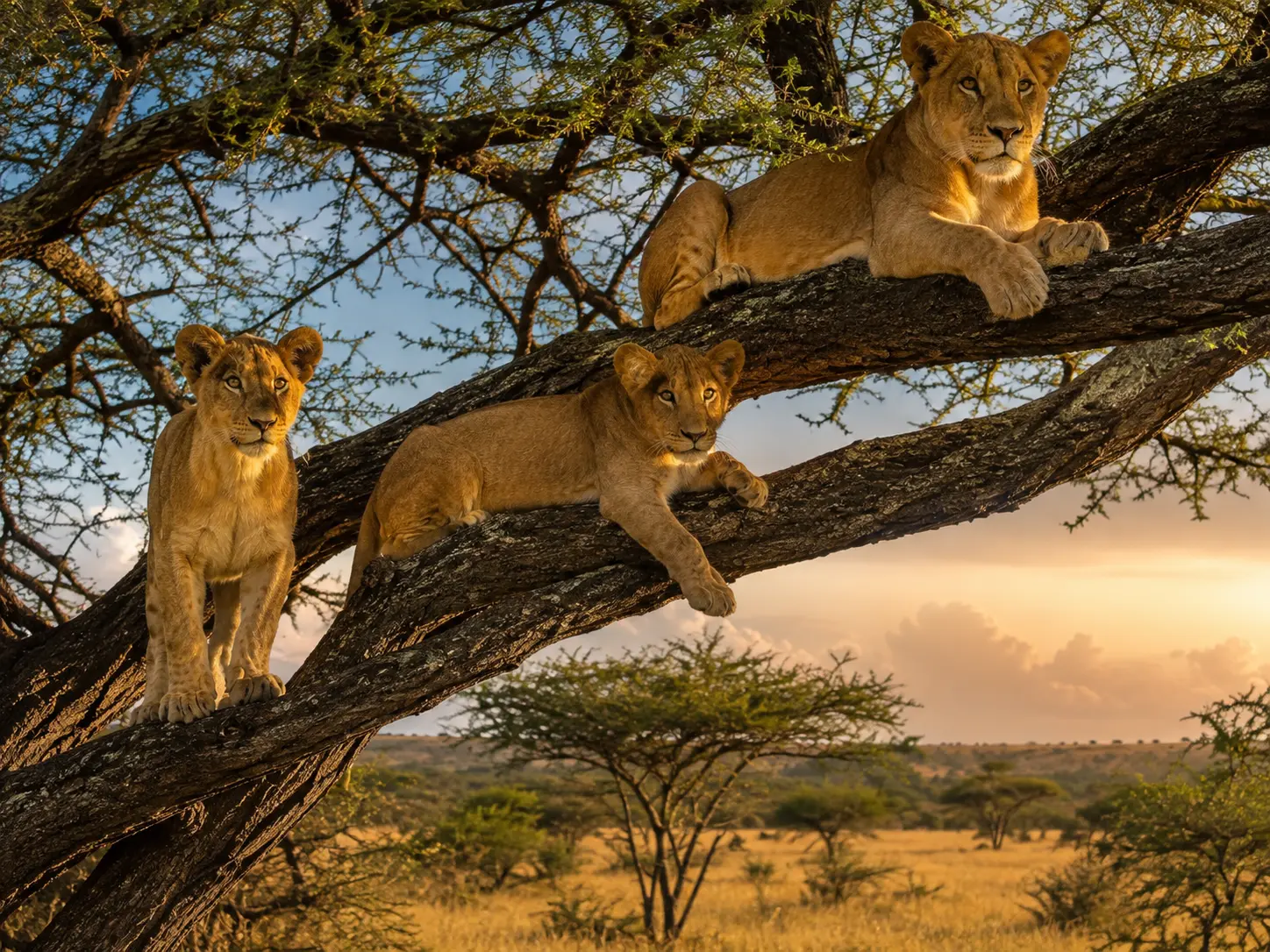
Lake Manyara Tree-Climbing Lions
Elephants, Giraffes, Buffaloes, Zebras and Wildebeest
Manyara is also a strong place for elephant viewing. The park is known for large elephant herds moving through woodland, forest edges and open feeding areas. In some places, you can watch them feeding quietly beneath the escarpment or crossing the tracks in family groups. The open and wooded sections also give you good chances of seeing buffaloes, giraffes, zebras, wildebeest and smaller antelopes. Olive baboons are common in large troops, while blue monkeys are seen around the greener forested parts of the park. This keeps the drive lively even when the big cats are resting out of sight.
Hippos Around the Lake and Marshes
The lake and marsh areas add another layer to your wildlife experience. Hippos gather in deeper water and muddy edges, with egrets and other birds resting around them. These wetland zones also attract grazing animals, waterbirds and predators moving near the edge of the floodplain. Because this is a shallow alkaline lake, water levels change through the year. When the lake edge is active, it becomes one of the best places to slow down, scan the shore and enjoy hippos, birds and plains wildlife in one view.
Bird Watching in Lake Manyara National Park
Birding is one of the park’s strongest safari experiences. More than 350 bird species have been recorded around the lake and surrounding habitats. The variety comes from the mix of lakeshore, marshes, groundwater forest, acacia woodland, savannah and escarpment habitats. For travellers who enjoy birds, Manyara adds real value before or after Tarangire, Ngorongoro or Serengeti.
Flamingos on the Lake
Flamingos are one of the signature sights here. In good seasons, large numbers gather along the alkaline shallows, turning parts of the lake edge pink. The wet season, from around November to April, is a strong time for bird activity, and flamingos can create one of the most memorable scenes in the park. The lake also draws many other waterbirds, so the birding experience is not only about flamingos. The shoreline changes with water levels, rainfall and bird movement, which means each visit can feel different.
Pelicans, Storks, Herons, Egrets and Hornbills
Around the lake and marshes, you can look for white pelicans, storks, herons, egrets and other waterbirds feeding in the shallows. In the woodland and forested sections, keep an eye out for bee-eaters, silvery-cheeked hornbills and other colourful species moving between the trees. This is what makes the park such a good birding stop. You are not driving through one single habitat. You pass through forest, lakeshore, woodland and open ground in a short distance, giving you several birding environments in one park.
Lake Manyara Important Bird Area
The lake, national park, surrounding areas and Marang Forest Reserve are included within the Lake Manyara Important Bird Area. For travellers, that means bird watching here is not an add-on activity. It is one of the main reasons to visit. Between the flamingos, pelicans, storks, herons, egrets, hornbills, bee-eaters and rich wetland life, Manyara stands out as one of the best birding stops on a northern Tanzania safari.
Things to Do in Lake Manyara National Park
Lake Manyara gives you more than a short wildlife stop between Arusha, Tarangire, Ngorongoro and Serengeti. The park is compact, scenic and full of changing habitats, from groundwater forest and dense woodland to open savannah, lakeshore, hot springs, marshes, pools and the Rift Valley escarpment. That mix gives you a good place for game drives, birding, canoeing, walking safaris, night drives, cultural visits, biking and canopy walks.
Game Drives
Game drives are the main way to explore the park. A full-day drive gives you time to move through different sections, from the forested entrance area to the savannah plains, pools, lakeshore, hot spring area and wildlife feeding zones near the water. This is where you look for tree-climbing lions, elephants, buffaloes, giraffes, zebras, warthogs, gazelles, antelopes, klipspringers and monkeys. Morning game drives work well because many animals are active before the heat builds. Elephants move through the woodland, baboons gather along the tracks, and plains animals feed in the open areas. Afternoon drives feel slower and more scenic, with animals resting in shade, birds moving around the lake and the escarpment giving the park that strong Rift Valley backdrop.
Birding Safaris
Birding is one of the best safari experiences here. The lakeshore, marshes, forest and woodland attract both resident and migratory birds, giving bird lovers a very rewarding day in the park. The lake area is known for flamingos, pelicans, storks, herons, egrets and grey-crowned cranes. The forest and woodland areas bring hornbills, turacos, bee-eaters, babblers, rufous-tailed weavers, ashy starlings, black-collared lovebirds, ostriches and black-faced sandgrouse. Birding around the lake is not only about ticking species. It is about watching how water changes the whole safari scene. When seasons and water levels are right, the shore becomes busy with feeding birds, hippos, grazing animals and predators using the edge of the wetlands.
Night Game Drives
Night game drives give the park a different feeling from the daytime safari. After dark, you go out with ranger guides and use spotlights to look for nocturnal wildlife. Civets, porcupines, genets, bush babies, leopards, hyenas and hunting predators become the focus once day visitors have left. A night drive works well when you want a fuller safari experience beyond the standard daytime game drive. The forest sounds change, the air cools, and the park feels more alive in a quieter, more watchful way.
Canoeing and Lake Activities
Canoeing takes place on the lake when water levels allow. From the canoe, you see the park from a lower and quieter angle, with the Rift Valley escarpment behind you and the lake opening out in front. Hippos, waterbirds and grazing animals such as buffaloes and giraffes can be seen around the water edges. This activity is best planned with flexibility because lake conditions change through the seasons. When available, canoeing adds a soft, scenic break from vehicle-based game viewing and gives you a closer look at the water, birds and open lake environment.
Treetop Canopy Walkway and Nature Walks
The treetop walkway is one of the park’s unique activities. It runs through the forest on connected suspension bridges, giving you a raised view across the canopy. From above the ground, you can look for monkeys, birds, forest plants and glimpses of the lake and woodland beyond the trees. The walkway is about 370 metres long and gives a different view of the park’s mahogany forest. Nature walks also take you into areas vehicles cannot reach. Ranger-guided trails bring you closer to the vegetation, smaller animals, birds and forest life. Walks can last from about 1 to 4 hours, depending on the route, pace and trail selected. The Majimoto trail and forest trails give you a slower way to understand the park beyond the main game drive tracks.
Cultural Visits Near Lake Manyara
Cultural visits around Lake Manyara are centred around Mto wa Mbu, a lively town close to the park. This area is known for cultural diversity, local markets, farms, craft shops, schools and village life. You can meet Maasai communities in the neighbouring areas, visit traditional homesteads known as manyattas, and learn about pastoral life, cattle, sheep, goats and enclosed kraals. During a Maasai visit, you can see traditional dances where warriors jump and chant, learn about shukas in colours such as red, blue and black, and see beadwork made by women, including necklaces, earrings and anklets. A guided walk through Mto wa Mbu also gives you a better feel for the people, farming, food and daily life around the park.

Maasai village visits
Biking Around Mto wa Mbu and Lake Manyara
Biking is a good add-on before or after visiting the park. The routes around Mto wa Mbu take you through farms, schools, shops, churches, village roads and scenic areas near the park. It is a good way to see the local side of Manyara without rushing from one safari stop to another. For travellers spending more than one night in the area, biking, cultural visits and the treetop walkway combine well with a game drive. This gives the experience more depth than wildlife viewing alone.
Best Time to Visit Lake Manyara National Park
Lake Manyara National Park is open throughout the year, and wildlife viewing remains good in every season. The best time depends on what you want from the safari. For easier animal spotting, the dry season from July to October works well because vegetation is thinner, days are mostly sunny, and wildlife is easier to find around permanent water sources. For softer scenery, bird watching, flamingos and a quieter safari feel, the wet season from November to May gives the park its most beautiful colours. Vegetation turns lush, seasonal waterfalls improve the escarpment scenery, and migratory birds arrive around the lake and wetlands.
Dry Season for Wildlife Viewing
The dry season runs mainly from July to October. This is the best period when you want clearer wildlife sightings because grass and bush cover are lower, making animals easier to spot from the game drive tracks. Elephants, buffaloes, giraffes, zebras, wildebeest, baboons, monkeys and antelopes are easier to follow as they move between woodland, open areas, marshes and water sources. Days are sunny during this period, but early mornings can feel cold, so carry a warm layer for morning game drives. This is also one of the busiest travel periods on the northern Tanzania safari circuit, so accommodation near Lake Manyara, Karatu and Mto wa Mbu is better secured in advance.
Wet Season for Flamingos and Birding
The wet season runs from November to May, with March and April bringing the heaviest rains. This period gives the park a fresh, green look, with lush vegetation, fuller water areas and stronger scenery along the Rift Valley escarpment. It is a beautiful time for photography, birding and a quieter park experience. Bird watching is at its best during this season as migratory birds arrive and the lake attracts flamingos, pelicans, storks, herons, egrets and other waterbirds. The park is also quieter, and accommodation rates are generally lower compared to the dry-season months. For travellers who dislike heavy rain, March and April need careful timing, but November to February can give a very rewarding balance of birdlife, greenery and good safari viewing.
How to Get to Lake Manyara National Park
Lake Manyara National Park sits in northern Tanzania, southwest of Arusha, close to the busy safari town of Mto wa Mbu. It is one of the easiest parks to reach on the northern Tanzania safari route, making it a good first stop before continuing to Tarangire, Ngorongoro or Serengeti. You can reach the park by road or by air, depending on your safari schedule, budget and where the journey begins.
Driving from Arusha
The road journey from Arusha is straightforward and takes about 2 to 2.5 hours, depending on traffic, stops and the exact lodge location. The park lies about 126 km, or 78 miles, southwest of Arusha. The drive passes through open countryside before reaching Mto wa Mbu, the main gateway town near the park entrance. This route works very well for travellers starting from Arusha or Kilimanjaro. You can leave Arusha after breakfast and still arrive in time for an afternoon game drive, or continue towards Karatu and Ngorongoro after visiting the park. Road access also makes Manyara a flexible stop for short safaris, family trips, birding tours and northern circuit itineraries.
Access from Babati and Manyara Region
The park can also be reached from Babati, the capital of Manyara Region. This route is useful for travellers coming from central Tanzania or combining the park with areas around the wider Manyara corridor. The location between the lake and the Great Rift Valley escarpment gives this area strong road connections within northern Tanzania. From the road, the scenery changes quickly, with escarpment views, village life around Mto wa Mbu, farmland and the lake basin all forming part of the arrival experience. This is one reason the park works well as both a wildlife stop and a scenic travel break between bigger safari destinations.
Lake Manyara Airport
Travellers who want to save driving time can fly into Lake Manyara Airport, also called Manyara Airstrip. Small aircraft and charter flights connect the airstrip with Arusha Airport and Kilimanjaro International Airport, making it convenient for fly-in safaris or tighter itineraries. On arrival, a driver-guide transfers you from the airstrip to your lodge or to the park gate for safari activities. Flying works well when combining Manyara with more distant safari areas, while driving is better when you want to enjoy the landscape, stop in Mto wa Mbu and follow the classic northern Tanzania road safari route.
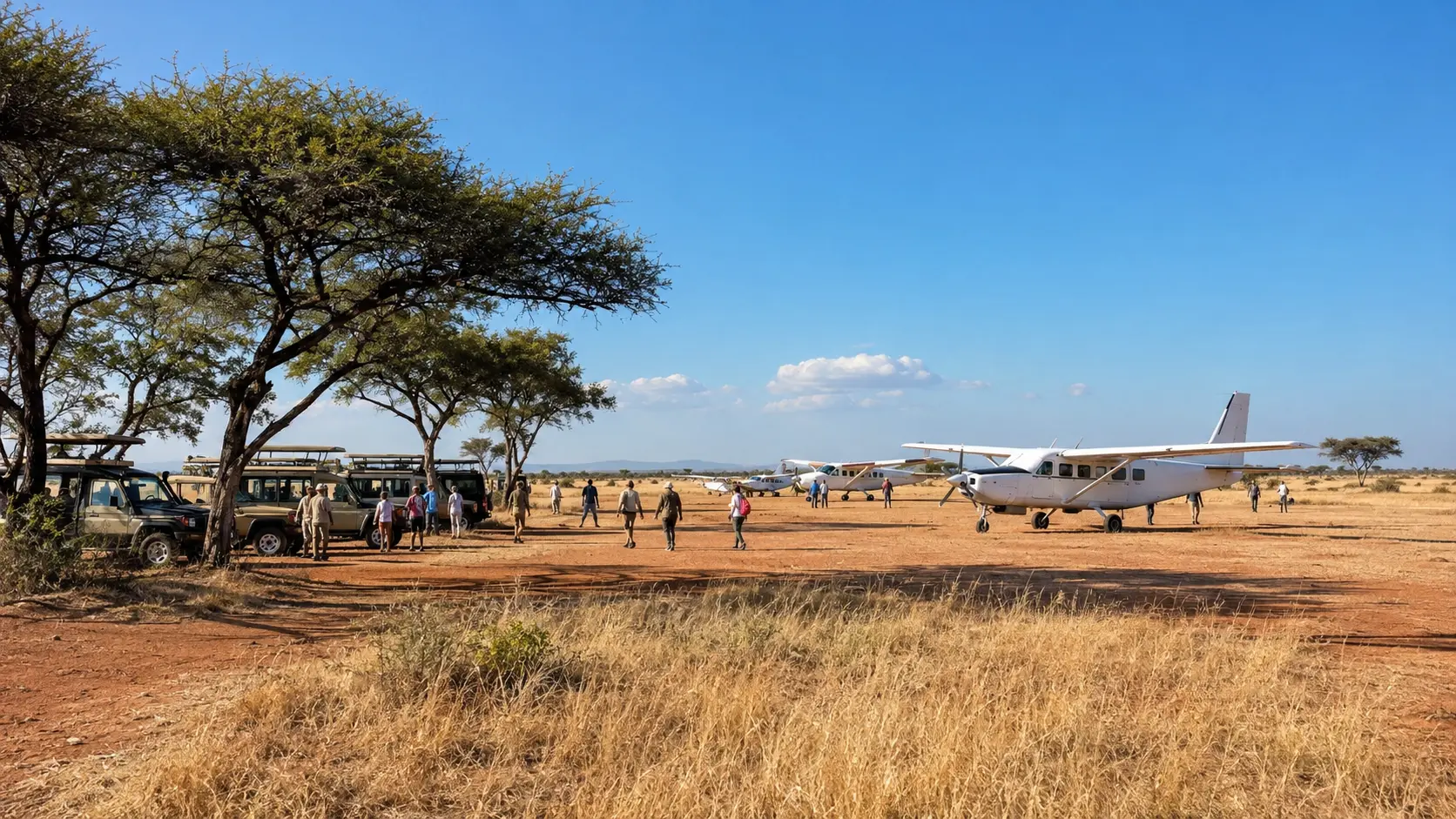
Lake Manyara Airport
Where to Stay in Lake Manyara National Park
Accommodation around Lake Manyara National Park is available both inside and outside the park, giving you a good choice of luxury, mid-range and budget places to stay. The best choice depends on how you want your safari to flow. Staying close to the park works well when you want an early game drive, birding around the lake or a relaxed stop between Tarangire, Ngorongoro and Arusha.
Luxury lodges around Manyara give you stronger views, quieter settings, better dining and easy access to the park gate or escarpment area. Mid-range lodges and tented camps are a good fit when you want comfort without pushing the budget too high. Budget stays are also available around the wider area, including towns near the park.