

Why Visit Ngorongoro Crater on a Tanzania Safari
Ngorongoro Crater is one of those places we position carefully in a Northern Tanzania safari because it gives you a lot in a short time. You do not need many days to feel its strength. One good crater descent can give you big wildlife, rare rhino chances, dramatic scenery, and a completely different safari mood from the Serengeti.
Big Five Safari in One Natural Basin
If you want a strong chance of seeing the Big Five in Tanzania, Ngorongoro Crater is one of the best places to begin. The crater floor holds lion, leopard, elephant, buffalo and the critically endangered black rhino within a compact area. That compact setting makes game viewing very rewarding. We are not covering huge distances looking for wildlife. We are moving through a natural basin where permanent water, short grasslands, swamps and forest patches keep animals close. The black rhino is the prize sighting here. Your guide scans the open plains carefully, looking for that heavy dark shape standing alone or walking slowly across the crater floor. Alongside the Big Five, you also have hyena, cheetah, jackal, serval cat, bat-eared fox, wildebeest, zebra, eland, Grant’s gazelle, Thomson’s gazelle and large tusker elephants.
High Wildlife Concentration
Ngorongoro is famous because so much wildlife lives inside one contained landscape. The crater supports about 25,000 to 30,000 animals at a time, and that makes your game drive feel active from the moment we leave the rim and reach the floor. The grasslands attract grazers. The swamps hold buffalo and hippo. The forests shelter elephants and leopards. Lake Magadi brings in flamingos and other waterbirds. This is not only a Big Five stop. It is also a strong place for birders, photographers and first-time safari guests who want wildlife against a dramatic volcanic setting.
Crater Scenery and Rim Viewpoints
The first view from the crater rim is part of the reason Ngorongoro stays with people. From more than 2,200 metres above sea level, you look down into a vast green and gold bowl where animals move across the floor below. The air is cooler on the rim, especially at night. Clouds sit around the rocky edges on many days, and early mornings can feel fresh before the sun rises over the crater. The scenery changes as we descend. You move from rim forest into open grassland, then across swamps, springs and the Lake Magadi area fed by the Munge River. This mix of habitats keeps the crater productive throughout the year and gives you one of Tanzania’s most varied game drives without long travel distances.
Best for Short Northern Tanzania Safaris
Ngorongoro Crater works very well for short Northern Tanzania safaris because it delivers strong wildlife viewing in a compact area. A 1-night stay gives you enough time for a crater descent. 2-nights give you a calmer pace and time to combine the crater floor with nearby places such as Olduvai Gorge, Olmoti Crater, Empakai Crater, Lake Manyara, Tarangire or the Serengeti. We normally treat Ngorongoro as a powerful highlight, not the whole safari. The crater is busy during popular months, so it becomes even better when combined with the wider Serengeti ecosystem for a fuller Tanzania safari.
Ngorongoro Crater Wildlife
Ngorongoro Crater gives you one of the most concentrated wildlife experiences in Tanzania. The crater floor supports around 25,000 to 30,000 animals, while the wider conservation area protects thousands of large grazing animals. Within one game drive, we move through short grass plains, swamps, freshwater pools, forest patches and the soda waters of Lake Magadi, all held inside the walls of a vast volcanic caldera.
Black Rhino in Ngorongoro Crater
The black rhino is the animal many travellers hope to see here, and Ngorongoro remains one of Tanzania’s strongest places for this rare sighting. The crater gives rhinos open grassland, water, protection and enough feeding space. That is why they remain one of the most important wildlife highlights in this natural basin. You need patience when searching for black rhino because they are fewer than other large animals and keep their distance. On a clear morning, your guide scans the open plains and grass edges carefully. Seeing one here feels special because you are watching one of Africa’s most threatened animals in a landscape that still gives it a fighting chance.

Black Rhino in Ngorongoro Crater
Lions, Leopards and Hyenas
Ngorongoro has strong predator life because the prey base is so rich. Lions are the easiest big cats to see, and the crater is known for powerful prides and dark-maned males resting on the open plains. With zebras, wildebeest, gazelles, buffalo and eland spread across the floor, the cats do not need to move far to find food. That gives the crater a real predator feel, especially in the early morning. Spotted hyenas are also common and play a major role in the crater’s food chain. You can see them moving across the grasslands, trailing lion kills, resting near dens or watching herds from a distance. Leopards live here too, but they need sharper eyes. We look for them around forested areas and thicker vegetation, where they stay hidden before moving out at dawn or late afternoon.
Elephants and Buffalo
Elephants in Ngorongoro are not normally seen in huge breeding herds like in some East African parks. Here, the stand-out sightings are the older bulls, including impressive tuskers moving between Lerai Forest, swamp edges and open feeding areas. These big males give the crater a strong old-Africa feeling, especially when you see them walking below the rim with the forest behind them. Cape buffalo are much more visible and are among the animals you can expect to find around the crater floor. They graze in open areas, gather close to water, and attract attention from lions. Hippos also live in the permanent pools and swamp areas, where they spend the day half-submerged before feeding at night.
Wildebeest, Zebra, Eland and Gazelles.
The crater floor is excellent for plains game. Wildebeest, zebra, eland, Thomson’s gazelles and Grant’s gazelles feed across the open grasslands, giving the crater constant movement and energy. These animals are the reason predators remain so active here. They also make the crater feel full even before you find the Big Five. The wider Ngorongoro Conservation Area forms part of the Serengeti ecosystem. During the migration cycle, more than 1.5 million wildebeest, around 72,000 zebras and about 350,000 Thomson’s and Grant’s gazelles move through the wider property and calve on the short-grass plains around the Ngorongoro and Serengeti boundary. That migration story belongs more to Ndutu and the northern plains than the crater floor itself, but it is an important part of Ngorongoro’s wider wildlife value.
Cheetah, Jackal, Serval Cat and Bat-Eared Fox
Cheetahs live in the crater and the wider conservation area, but they are more selective about where they hunt. They prefer open ground where they can use speed, so we scan the plains for a slim shape sitting upright, watching gazelles or moving through the grass in the cooler hours. Serval cats are another rewarding sighting if you enjoy smaller predators. They hunt in grass and wetland edges, using their long legs to move through cover while searching for rodents and birds. Jackals and bat-eared foxes add more life to the dry edges and open plains. The wider conservation area also protects rarer carnivores such as wild hunting dogs and golden cats.
Birdlife Around Lake Magadi and the Crater Rim
Ngorongoro is also a strong birding destination, with more than 400 bird species recorded across the conservation area. Lake Magadi on the crater floor is one of the main birding points, drawing flamingos and other waterbirds to its soda waters. The swamps, grasslands, forests and crater rim add more variety, so birding works well even when your main interest is big mammals. Look out for ostriches, kori bustards, secretary birds, crowned cranes, pelicans, ibises, ducks, hamerkops, vultures, sunbirds and ground hornbills. Empakai Crater, Olmoti Crater, Ndutu Marsh and Olkarien Gorge also add strong birding interest within the wider area. Olkarien Gorge is known as an important vulture breeding site.
Things to Do in Ngorongoro Crater
Activities inside Ngorongoro Crater itself are mainly centred on game drives. Walking away from the vehicle on the crater floor is restricted to designated picnic and rest areas, which helps protect this delicate wildlife basin. Once we move beyond the crater floor into the wider Ngorongoro Conservation Area, the experience opens up. You can add crater rim walks, Maasai boma visits, Olduvai Gorge, Lake Magadi, Olmoti Crater, Empakai Crater and highland hiking routes with big views across northern Tanzania.
Crater Floor Game Drives
A game drive on the crater floor is the main activity in Ngorongoro Crater. This is the reason most travellers come here. We descend from the rim into a natural volcanic bowl where grasslands, swamps, forests, freshwater pools and Lake Magadi sit close together. This mix of habitats keeps wildlife concentrated, so the game viewing feels full from the moment you reach the floor. The best game drives are done in the morning or afternoon. In the dry months, from December to March and June to September, the grass is shorter, the crater floor is less muddy and wildlife gathers around the remaining water sources. In the green months, the crater becomes lush, scenic and excellent for bird watching, with fewer vehicles on some days. You should still expect other safari vehicles because Ngorongoro is famous, but the reward is strong wildlife viewing in one of Africa’s most dramatic natural settings.
Rhino Tracking by Vehicle
Ngorongoro Crater is one of the best places in Tanzania to look for black rhino from a safari vehicle. Rhinos are not tracked on foot here. We search for them across the open crater floor with your driver-guide, scanning the grasslands and quieter sections where they feed and move. The crater’s steep walls, permanent water and protected landscape create one of the safest strongholds for this endangered species. Sightings still need patience, but your chances are better here than in many other safari areas in northern Tanzania. A rhino sighting in Ngorongoro feels special because it completes the Big Five story in one natural basin.
Bird Watching
Ngorongoro is excellent for bird watching, both inside the crater and across the wider conservation area. Lake Magadi, the central soda lake on the crater floor, attracts flamingos and other wading birds. The swamps and freshwater pools bring in pelicans and waterbirds. The grasslands are good for ostriches, secretary birds, kori bustards and raptors. The highland forests and crater rim add a different birding experience, with species such as olive sunbird, cinnamon-chested bee-eater, European roller, white-eyed slaty flycatcher and Livingstone’s turaco. With more than 400 bird species across the wider conservation area, birders can combine crater floor game drives with rim walks, Lake Magadi, Empakai Crater and forested highland routes.
Maasai Cultural Visits
The Maasai are part of the living character of Ngorongoro Conservation Area. Around 40,000 Maasai pastoralists live in the wider conservation landscape, grazing cattle around the plains, woodlands and crater rim. A visit to a Maasai boma gives you time to understand how cattle, family life, dress, beadwork, songs and settlement patterns shape daily life in this highland region. These visits are best done with respect and proper local arrangement. Some bomas sit along the road towards the Serengeti, while others are closer to lodge areas. A good visit gives you time to meet people, see how the homes are built, learn about cattle-herding traditions and support the local community directly.

Olduvai Gorge Visit
Olduvai Gorge, also called Oldupai Gorge, is one of the most important archaeological sites in East Africa. It is known as the Cradle of Mankind because early hominin remains and ancient tools were discovered in this dry ravine between Ngorongoro and the Serengeti plains. The gorge is about 14 km long and has helped scientists understand early human evolution. A stop here works well when travelling between Ngorongoro and Serengeti. The museum gives you context before you look across the exposed layers of earth where discoveries dating back more than 2 million years have been made. If you enjoy deeper history, this can also connect with Laetoli, where ancient hominin footprints dating back more than 3 million years were preserved in volcanic ash.
Olmoti Crater Hike
Olmoti is one of the best short hikes in the Ngorongoro Highlands. The walk follows an old Maasai cattle trail through mountain forest, grassland and rocky outcrops before reaching views over the crater. The hike takes about 2 to 3 hours and is done with a ranger. It works well when you are spending more than one night around Ngorongoro. The route has flowers, butterflies and highland scenery. Wildlife such as buffalo, zebra, bushbuck, hyena, leopard and elephants can be seen in the area. It is a good activity on arrival day if you reach the lodge before 3 pm, or after a full crater day when you still want to stretch your legs.
Empakai Crater Hike
Empakai Crater lies about 40 km north-east of Ngorongoro Crater and gives you one of the finest walking experiences in the wider conservation area. The drive can pass through the Bulbul Depression before you reach the crater rim. From there, views open towards Empakai, Oldoinyo Lengai and, on clear days, distant highland country. The descent into Empakai takes about 30 to 45 minutes with a ranger. At the bottom, an alkaline lake fills much of the crater floor and attracts flamingos. Buffalo, hyena, bushbuck, waterbuck, blue monkeys and elephants can be found around the crater edges. The walk back up takes about 1 hour 30 minutes, so it suits travellers with a fair level of fitness and a love for scenery away from the busy crater floor.
Where to Stay in Ngorongoro Crater
Where you stay around Ngorongoro shapes your crater day. The closest lodges sit on or near the crater rim, giving you fast access for early morning game drives and beautiful views over the caldera. These are the best choices when you want to descend into the crater before the day becomes busy. Karatu sits a little farther away, but it gives you better value, smaller lodge settings and a quieter highland atmosphere. It also works well if you want coffee estate stays, village walks, mountain biking, guided walks and a softer pace before or after the crater. The safari experience inside Ngorongoro remains strong whether you sleep on the rim or in Karatu, as long as the route and timing are planned well.
How Many Days to Spend in Ngorongoro Crater
Ngorongoro Crater works best as a short, powerful stop in a Northern Tanzania safari rather than a long stand-alone stay. The crater floor gives you one of the highest wildlife concentrations in Africa, with Big Five viewing, black rhino chances, large elephant bulls, lions, hyenas, buffalo, wildebeest, zebra, gazelles, hippos, flamingos and predator action in one natural basin. Because the crater is world-famous and vehicle numbers build up during busy months, your timing and number of nights make a big difference.
1-Night Stay
A one-night stay works well when Ngorongoro is part of a wider route between Arusha, Lake Manyara, Tarangire and the Serengeti. You arrive in the afternoon, sleep on the crater rim, in Karatu or within the wider conservation area, then descend early the next morning for a crater floor game drive. This gives you enough time to see the main crater highlights without feeling too heavy. This option is best for travellers with limited time, short Northern Tanzania safaris, or itineraries where the Serengeti is the main focus. The key is to sleep close enough to the entrance so we reach the crater floor early, before the day becomes busier. After the game drive, you continue towards Karatu, Lake Manyara, Arusha or the Serengeti, depending on your route.
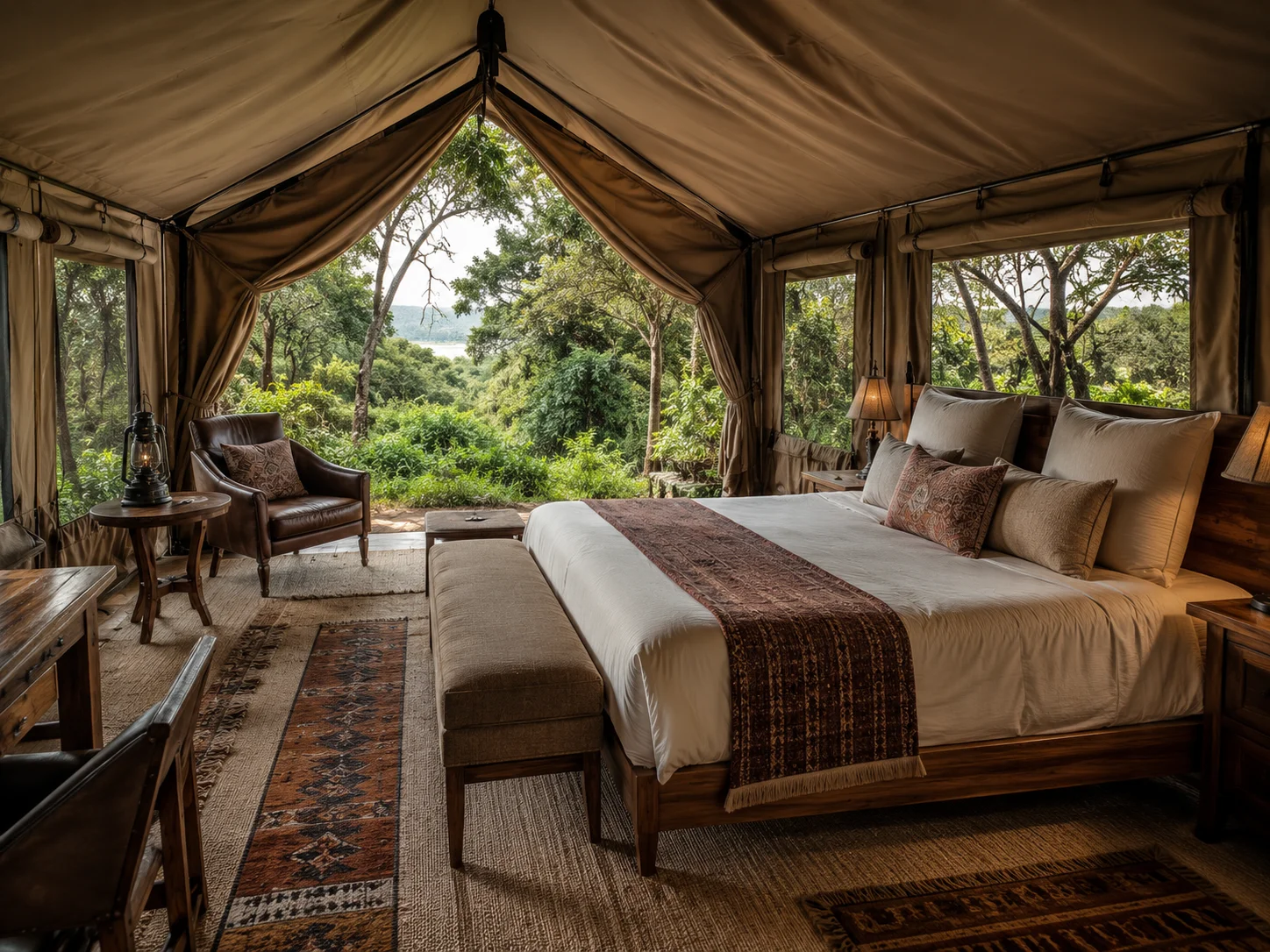
Ngorongoro Crater Camp
2-Night Stay
A two-night stay gives Ngorongoro more breathing room. You get one full day for the crater floor and a second day for the wider conservation area. That second day can include Maasai cultural visits, Olduvai Gorge, Lake Magadi bird watching, Olmoti Crater, Empakai Crater, highland walks or time around Karatu. Two nights also remove pressure from the itinerary. You do not need to rush from Arusha, descend into the crater and move again on the same day. You can arrive, settle in, start early the next morning and still have time for viewpoints, cultural stops or highland scenery. For photographers, families and slower-paced safari travellers, this is the stronger option.
Combining Ngorongoro With Serengeti
Ngorongoro combines beautifully with Serengeti because the two areas give very different safari experiences. Ngorongoro is compact, dramatic and highly concentrated. Serengeti gives you wider plains, longer game drives, quieter wildlife areas and a stronger sense of space. A good route gives Ngorongoro one or two nights, then continues into Serengeti for a deeper wildlife safari. This combination also helps balance the busy crater experience. You get Ngorongoro’s best wildlife in a short, focused stay, then the Serengeti opens the journey with longer, more private game viewing. For most travellers, the strongest plan is one night in Ngorongoro for a fast route, or two nights if you want crater wildlife, Maasai culture, Olduvai Gorge, Empakai or Olmoti included before heading north-west into the Serengeti.
Ngorongoro or Nearby Safari Areas: What to Choose
Ngorongoro works best for concentrated wildlife viewing, but nearby areas offer stronger options for migration safaris, walking, archaeology and landscape photography.