
Lake Nakuru National Park Kenya
Lake Nakuru National Park is one of the easiest Kenya safari parks to reach from Nairobi, yet once you enter the gate, the scenery changes completely. You leave the city behind and find yourself in the Great Rift Valley, surrounded by lake views, acacia woodland, euphorbia forest, open grassland, rocky escarpments and quiet viewpoints. The park sits about 160 km northwest of Nairobi, and the drive takes roughly 3 hours. It is built around Lake Nakuru, a shallow soda lake framed by woodland, savannah, cliffs, viewpoints and the southern stretch towards Makalia Falls.
Lake Nakuru is compact, covering about 188 km². That smaller size works in your favour. Wildlife is easier to find, game drives feel focused, and we can explore several habitats in one circuit without spending the whole day driving long distances. The park has three main gates: the Main Gate near Nakuru town, Lanet Gate, and the quieter Nderit Gate.
Lake Nakuru is one of Kenya’s important protected areas. It forms part of the UNESCO World Heritage-listed Lake System of the Rift Valley and is recognised for wetland and endangered species conservation. The park was gazetted as a national park in 1968, later expanded to protect more land around the lake, and in 1987 became Kenya’s first rhino sanctuary. Today, Lake Nakuru protects both black and white rhinos, together with Rothschild’s giraffes, buffaloes, waterbucks, lions, leopards, cheetahs, hippos, warthogs, Thomson’s gazelles and many other mammals.
For years, Lake Nakuru was famous for huge flamingo gatherings, at times numbering more than one million birds along the lake edge. Rising water levels and flooding have changed the feeding and breeding areas, so the flamingo spectacle is not as constant as it was before 2014. Even so, the park remains one of Kenya’s rewarding birding destinations, with more than 450 bird species. Add the rhinos, lake views, Baboon Cliff, Out of Africa Lookout, Makalia Falls, around 550 plant species, and one of Africa’s largest euphorbia forests, Lake Nakuru becomes far more than a stopover. It is a scenic, wildlife-rich park that gives you a strong Kenya safari experience in a short time.
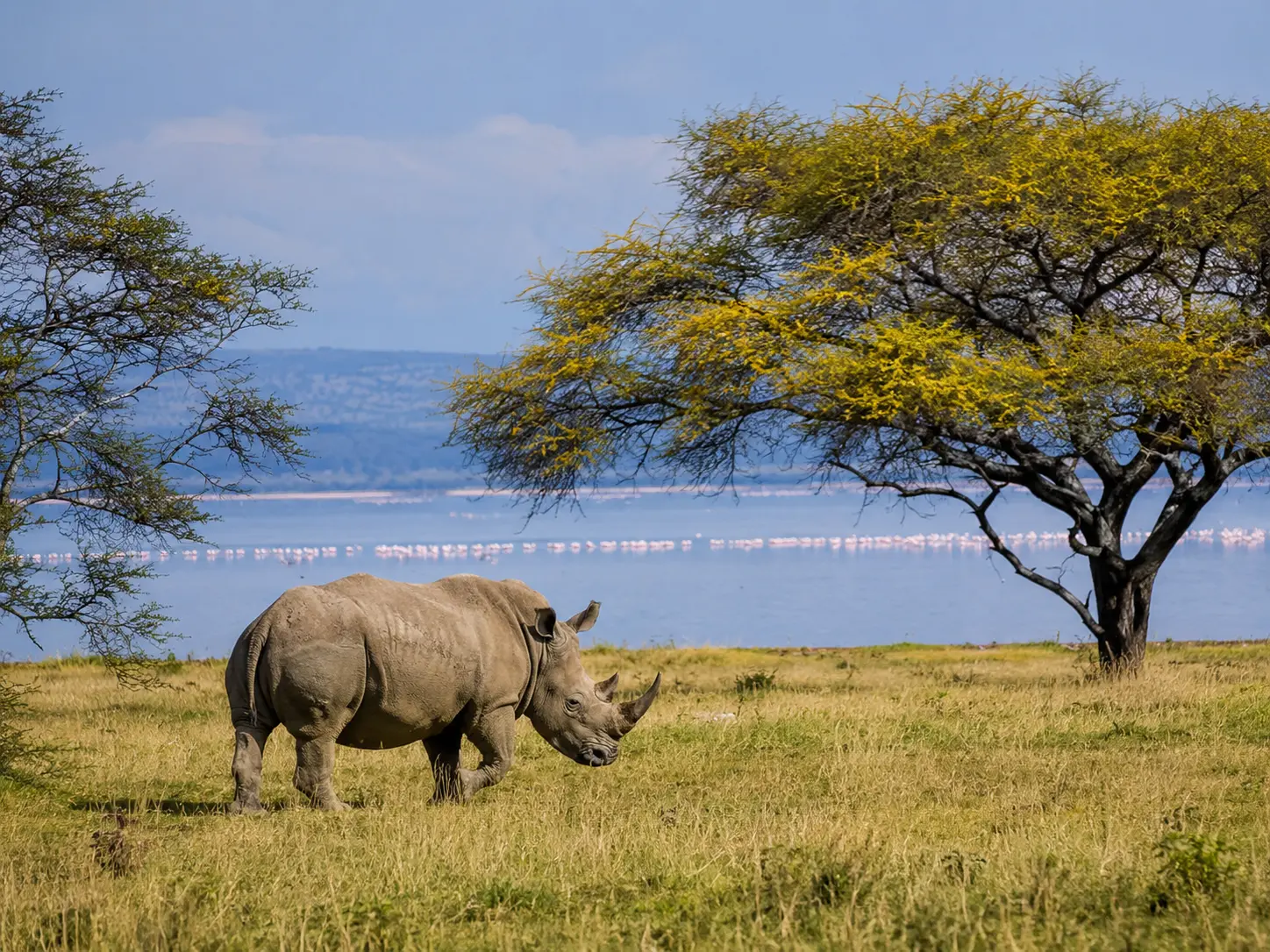
Lake Nakuru National Park: White Rhino feeding along the lakeshore
Top Attractions in Lake Nakuru National Park
Lake Nakuru is small compared with Kenya’s larger safari parks, but that is exactly what makes it rewarding. You get lake scenery, rhino country, birding areas, wooded plains, viewpoints, waterfalls, acacia woodland and rocky escarpments in one compact safari area. You do not spend the whole day driving between distant sightings. Here, the wildlife is concentrated, the scenery changes quickly, and every turn gives you a fresh view of the lake, cliffs, forest or open grassland.
Lake Nakuru Wildlife and Rhino Sanctuary
Wildlife is one of the main reasons to visit Lake Nakuru National Park. More than 50 mammal species live around the savannah, woodland, lake edges, bushy plains and forested areas. On a good game drive, we look for waterbucks, Cape buffaloes, plains zebras, impalas, gazelles, warthogs, hippos, olive baboons, vervet monkeys, colobus monkeys, spotted hyenas, lions, leopards, cheetahs and Rothschild’s giraffes.
Lake Nakuru is best known as one of Kenya’s most reliable rhino-viewing areas. The park became a rhino sanctuary in 1987, giving extra protection to endangered black rhinos and white rhinos. Today, it protects roughly 150 rhinos. For you on safari, this means you have a very good chance of seeing rhinos without needing several days in the bush. Black rhinos are more secretive, while white rhinos are easier to see in open areas. The park’s compact size also helps us cover the best wildlife zones efficiently.
Lake Nakuru and the Flamingo Shoreline
Lake Nakuru itself is the heart of the park. It is a shallow soda lake in the Great Rift Valley, sitting about 1,754 metres above sea level. Its alkaline waters and algae-rich edges have long attracted flamingos. When the birds gather in good numbers, the shoreline takes on that famous pink colour that made Lake Nakuru known around the world. Both lesser and greater flamingos are seen here, together with pelicans and many other waterbirds.
The best views of the lake come from raised points such as Baboon Cliff and Lion Hill, where you can look down across the water, shoreline, surrounding woodland and wildlife below. Flamingo numbers change with lake water levels, alkalinity and algae availability. In some seasons, the lake holds large flocks. In high-water years, many birds shift to other Rift Valley lakes such as Lake Bogoria. Even when flamingos are fewer, Lake Nakuru still gives you a beautiful lake-based safari because the birdlife, rhinos, scenery and game viewing all sit close together.
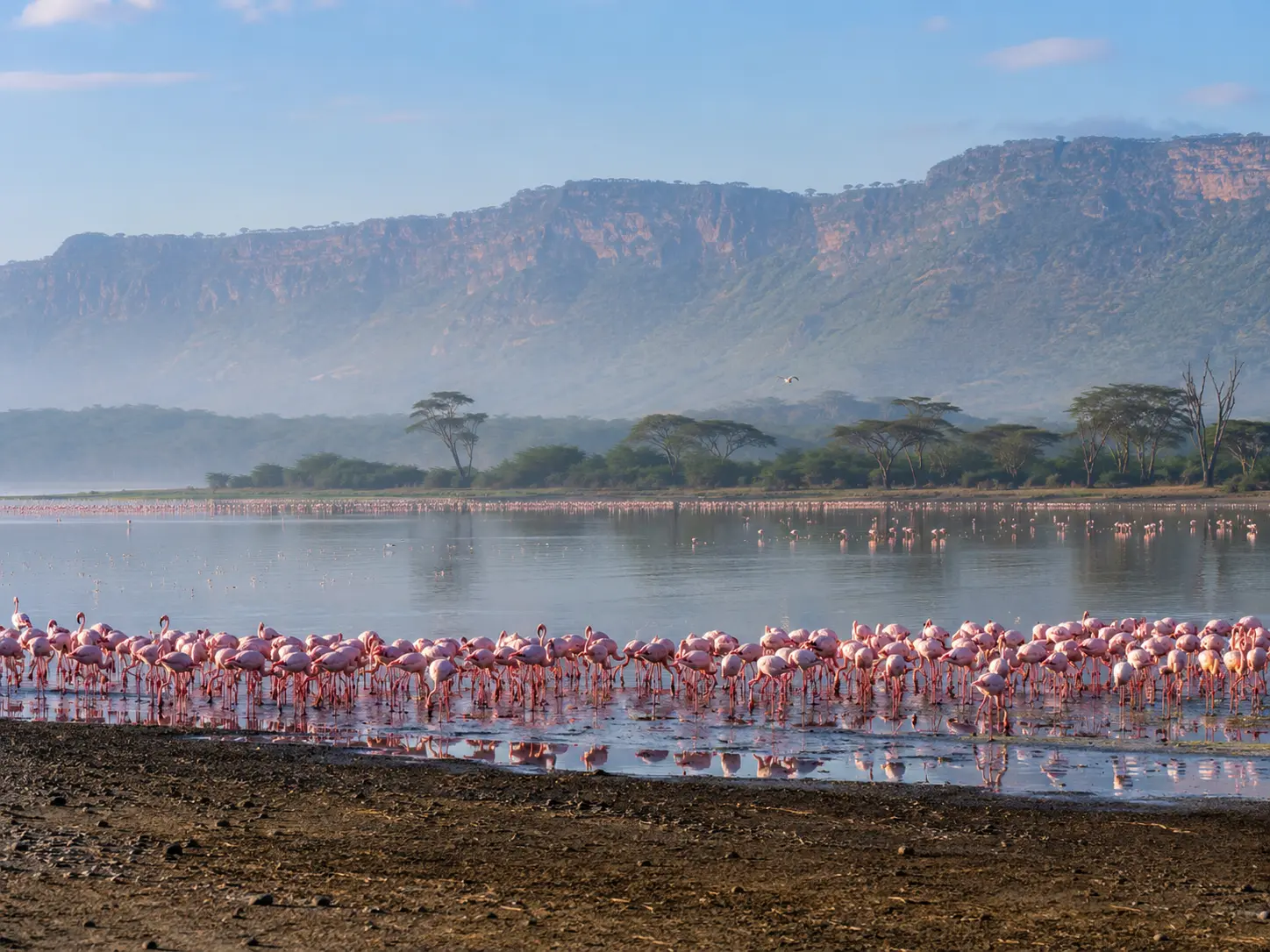
Flamingos feeding along the shallow lakeshore with Rift Valley cliffs in the background
Birdlife in Lake Nakuru National Park
Lake Nakuru is one of Kenya’s top birding parks, with more than 450 bird species across the lake, woodland, grassland, cliffs and swampy edges. Migratory birds arrive between November and April, adding more variety to the resident birdlife. Flamingos remain the best-known bird attraction, but the park offers far more than flamingos. Around the lake and wetland areas, look for great white pelicans, African fish eagles, marabou storks, hamerkops, grey crowned cranes, herons, cormorants and sacred ibis.
Away from the water, the woodland and grassland areas bring species such as Abyssinian ground thrush, arrow-marked babbler, black-winged lapwing, brimstone canary, European roller, grey-headed woodpecker, Hildebrandt’s starling, Kenya rufous sparrow, lesser kestrel, long-tailed widowbird, montane white-eye, pallid harrier, shining sunbird, Rüppell’s vulture, Speke’s weaver and white-fronted bee-eater. For birdwatchers, the lake edge, Baboon Cliff area, woodlands, grasslands and Makalia side give the best mix of species.
Baboon Cliff, Lion Hill and Out of Africa Viewpoints
Lake Nakuru has a hilly landscape, and the viewpoints help you understand the park properly. Baboon Cliff, Lion Hill and Out of Africa Viewpoint give wide views over the lake, escarpments, woodland, open plains and Nakuru town in the distance. These stops are excellent during a game drive. You step out, stretch your legs, scan the lake with binoculars, watch birds along the shoreline and look for animals feeding below. On clear days, the contrast between the blue-grey lake, green woodland and golden grassland gives Lake Nakuru a beautiful photographic character. Baboon Cliff is the best-known viewpoint, while Lion Hill and Out of Africa Viewpoint give quieter angles over the park.
Makalia Falls
Makalia Falls sits toward the southern side of Lake Nakuru National Park and gives the safari a different feeling. After time around the lake, rhino areas and open plains, the falls bring you into a more enclosed, rocky and refreshing part of the park. You hear the water before you settle in, and the breeze around the falls makes it a good picnic and photography stop. Makalia Falls works well as part of a longer game drive route, where we combine wildlife viewing, birding, scenery and a waterfall stop in one day.
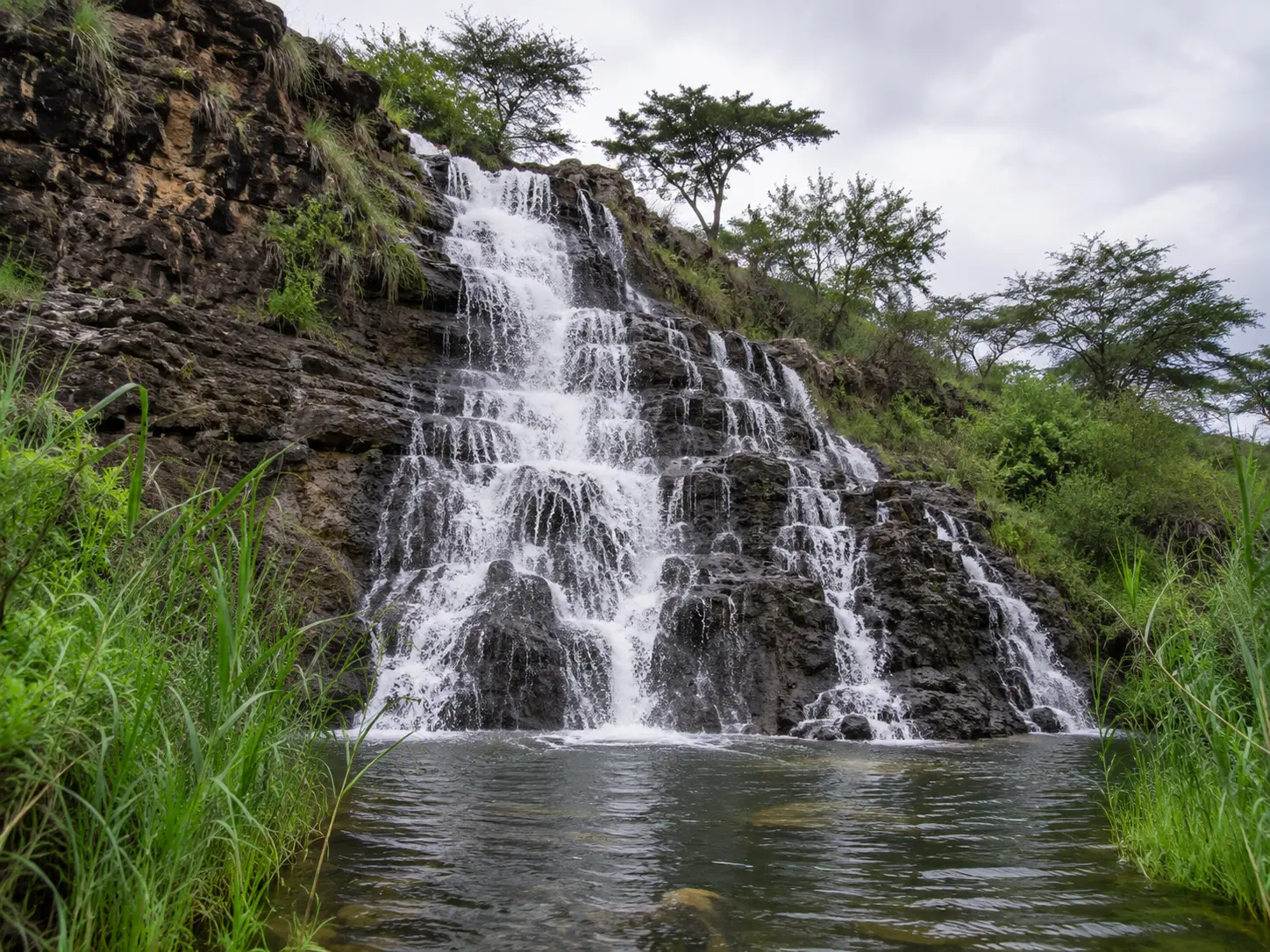
Makalia Falls in Lake Nakuru National Park
Euphorbia Forest, Acacia Woodlands and Rocky Escarpments
Lake Nakuru is not just a lake park. Its habitats change quickly from alkaline shoreline to acacia woodland, savannah grassland, bushy plains, riverine forest, euphorbia forest, rocky escarpments and hilly ridges. This variety is the reason such a small park supports good wildlife numbers. The euphorbia forest is one of the park’s most distinctive habitats and one of the largest of its kind in Africa. The acacia woodlands provide cover for leopards, lions, baboons, monkeys and giraffes. The grasslands support grazers such as buffaloes, zebras, waterbucks, impalas and gazelles. Python Forest adds another unusual attraction. Pythons are sometimes seen in the woodland zones, together with Nile monitors, tortoises and different lizards. These habitat changes keep the game drive interesting. In a short drive, you move from lake views to woodland shade, from cliffs to waterfalls, and from rhino country to birding ground.
Lake Nakuru National Park Conservation Importance
Kenya’s First Rhino Sanctuary
Lake Nakuru became Kenya’s first national rhino sanctuary in 1987, and that changed the park’s role completely. The sanctuary was created to protect endangered rhinos, allowing both black rhinos and white rhinos to recover inside a safer, closely managed environment. Today, the park protects roughly 150 rhinos, making it one of Kenya’s most reliable rhino-viewing areas. The fence around the park is not just a boundary. It is part of the conservation system. It helps protect rhinos from poaching, keeps them within safer breeding areas and reduces conflict with surrounding communities.
This same protection also supports Rothschild’s giraffes, buffaloes, waterbucks, zebras, lions, leopards, hyenas, baboons, monkeys and smaller species using the woodlands, grasslands and lake-edge habitats. For travellers, this makes Lake Nakuru a powerful safari stop. You are not only coming to see rhinos. You are visiting one of Kenya’s clearest examples of how a small protected area can become a serious survival ground for endangered wildlife.
UNESCO Rift Valley Lake System
Lake Nakuru forms part of the UNESCO World Heritage-listed Lake System of the Rift Valley, a chain of alkaline lakes recognised for its ecological value. This status matters because the lake is part of a wider wetland network used by flamingos, pelicans, migratory birds and other water-dependent species moving through the Rift Valley. The lake sits about 1,754 metres above sea level and forms the centre of the national park. Its alkaline waters support algae, which attract flamingos when conditions are right.
In years when water levels rise or lake chemistry changes, flamingo numbers shift, and many birds move to other Rift Valley lakes such as Lake Bogoria. Flamingos are not guaranteed in huge numbers every day of the year, but the lake remains one of Kenya’s key bird habitats. The UNESCO status strengthens the park’s conservation identity. Lake Nakuru protects an active Rift Valley wetland system where water, birds, wildlife, vegetation and surrounding land all depend on careful management.
Wetland and Endangered Species Protection
Lake Nakuru’s wetland, woodland and grassland habitats support a wide range of wildlife in a small area. The park has more than 450 bird species, including lesser and greater flamingos, great white pelicans, African fish eagles, grey crowned cranes, hamerkops, herons, cormorants, sacred ibis, marabou storks and migratory species that arrive between November and April. The lake and surrounding habitats also protect endangered and threatened species. Black rhinos, white rhinos and Rothschild’s giraffes are the headline conservation species, but many other animals depend on the park’s protected setting.
Leopards use the woodlands. Lions move through the grasslands and acacia zones. Hippos use river and lagoon areas. Pythons live in forest sections such as Python Forest. This is why Lake Nakuru works so well as a conservation-focused safari destination. The park is compact, fenced and closely managed, but it still feels wild. From Baboon Cliff, you can look across the lake and see the whole system working together: rhinos grazing below, birds feeding along the shoreline, forests holding predators and primates, and Rift Valley escarpments framing the scene.
Things to Do in Lake Nakuru National Park
Lake Nakuru National Park gives you a full safari day without needing to cover huge distances. You can start with a game drive around the lake shore, move through acacia woodland and euphorbia forest, stop at Baboon Cliff or Lion Hill, then continue south towards Makalia Falls for a quieter break. This is one of the best parks in Kenya for guests who want wildlife, birding, photography, viewpoints and short nature stops in the same place.
Game Drives in Lake Nakuru National Park
Game drives are the main activity in Lake Nakuru National Park. The park is known for reliable wildlife viewing, with chances to see white rhinos, black rhinos, buffaloes, lions, leopards, zebras, impalas, waterbucks, baboons, giraffes and hippos. Because the park is not too large, game drives feel focused and rewarding. We spend less time covering empty distances and more time moving between good wildlife areas.
Morning and late afternoon drives give you cooler conditions, softer light and better chances of seeing animals active. Around the open plains, we look for grazers and rhinos. In the woodland and forested areas, we keep watch for leopards, monkeys and birdlife. Near the lake edges and wetland zones, you get waterbirds, hippos and wide views across the alkaline lake.
Bird Watching Around Lake Nakuru
Lake Nakuru is one of Kenya’s strongest birding destinations, with about 450 bird species recorded across the park. The lake attracts waterbirds, while the forests, grasslands and escarpments bring in a wide variety of other species. Flamingos remain one of the park’s most famous bird highlights, although their numbers change with lake levels, alkalinity and algae availability.
Birders can look for lesser and greater flamingos, great white pelicans, African fish eagles, Egyptian geese, grey crowned cranes, hamerkops, herons, cormorants, marabou storks, sacred ibis and many migratory birds. Other species include Abyssinian ground thrush, arrow-marked babbler, black-tailed godwit, black-winged lapwing, brimstone canary, crab plover, European roller, grey-headed woodpecker, Hildebrandt’s starling, Kenya rufous sparrow, Rüppell’s vulture and white-fronted bee-eater.
Visit Baboon Cliff
Baboon Cliff is one of the best viewpoints in Lake Nakuru National Park. From the top, you get a wide aerial view over the lake, surrounding woodland, Rift Valley floor and open country. It is a good stop during a game drive because it gives you a clear sense of how the whole landscape fits together. The cliff gets its name from the baboons that move around the area.
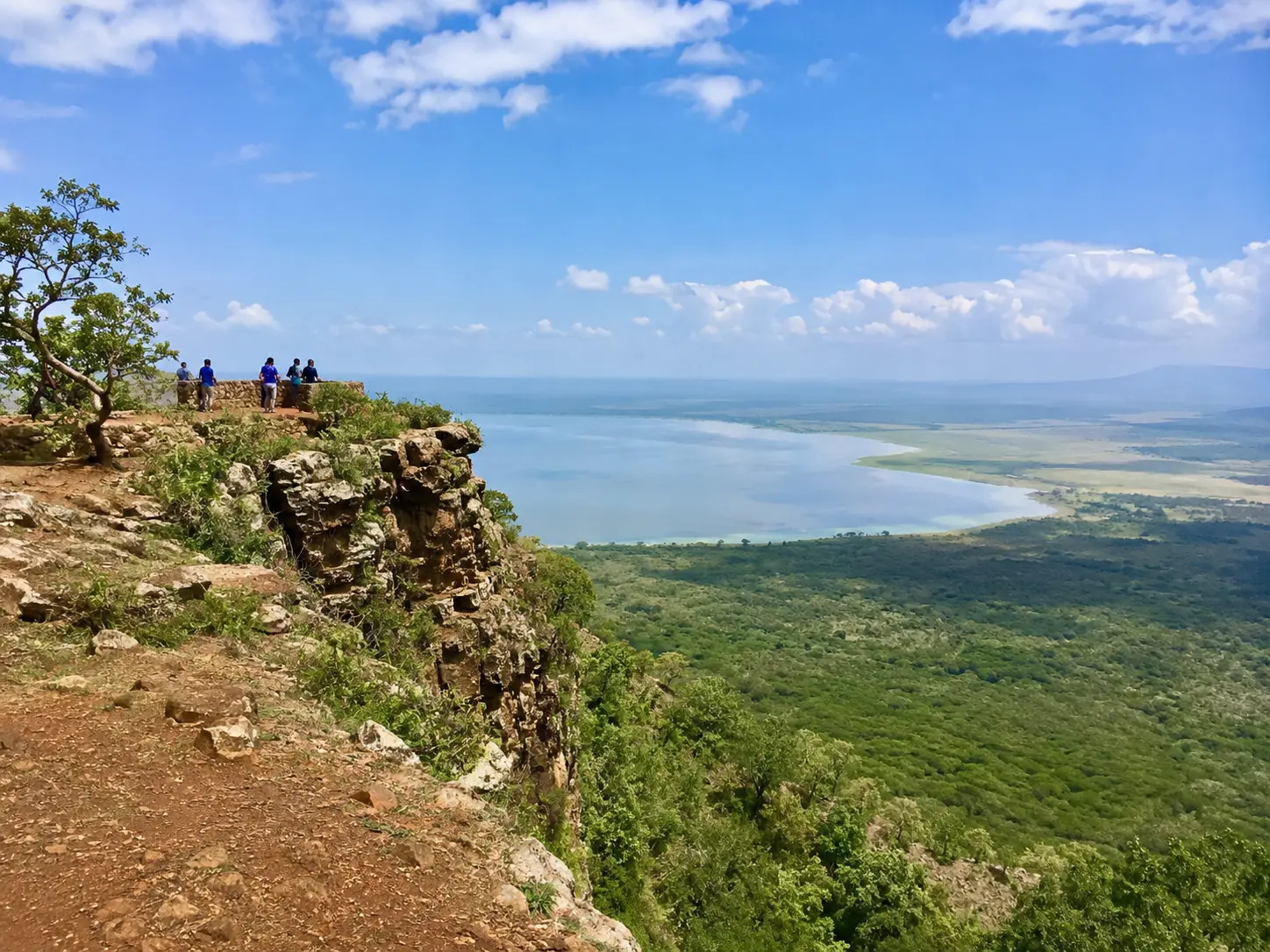
Baboon Cliff Lake Nakuru National Park
You can see them feeding, grooming, playing, and walking along the road edges. The young ones are entertaining to watch, but keep food safely inside the vehicle because baboons are quick and confident around picnic areas. Baboon Cliff is also a good photography stop in the morning when the light is clean across the lake. The viewpoint is accessible by vehicle and works well as a short break between game drive circuits.
Lion Hill and Out of Africa Viewpoint
Lion Hill and Out of Africa Viewpoint add more scenic value to your Lake Nakuru safari. These raised points give you beautiful views across the lake, woodland, grassland and escarpment. They are useful stops when you want landscape photography, wider park views and a better understanding of Lake Nakuru’s shape. They also help break up the game drive. Instead of staying in the vehicle the whole time, you get a moment to pause, look across the valley and enjoy the park from above.
Explore Makalia Falls
Makalia Falls sits in the southern part of Lake Nakuru National Park and is one of the best short stops away from the main lake shore. The falls are fed by the Makalia River and drop about 10 metres. The flow changes with the season, so the falls are stronger after rains and quieter in drier months. This area works well for a short walk, photography stop or relaxed picnic during a full-day visit. It also gives your safari a different feeling because you move from lake views and wildlife plains into a more enclosed river setting.
Picnicking in Lake Nakuru National Park
Picnicking is simple, relaxed, and enjoyable in Lake Nakuru, especially around selected viewpoints and rest areas. Baboon Cliff is one of the best-known picnic stops because it gives wide views across the park. The setting is beautiful, but food must be handled carefully because baboons move around the area and grab anything left open. A picnic works well between morning and afternoon game drives. You enjoy the views, take photos, and then continue towards the lake shore, Lion Hill, Out of Africa Viewpoint or Makalia Falls depending on the route.
Photography in Lake Nakuru
Lake Nakuru is a strong photography destination because the park gives you wildlife, lake reflections, birds, cliffs, forest and open grassland in a small area. You can photograph rhinos on the plains, flamingos and pelicans near the water, buffaloes in the grassland, baboons around the cliffs and wide Rift Valley views from the viewpoints. The best photography moments are early morning and late afternoon when the light is softer. Baboon Cliff, Lion Hill, Out of Africa Viewpoint, the lake shore and Makalia Falls all give different angles, so a full-day visit gives you a good mix of wildlife and landscape images.
Camping in Lake Nakuru National Park
Camping gives you a slower way to experience Lake Nakuru. The park has 7 active camping sites spread across the northern and southern areas. Camping gives you more time inside the park, mild night-time temperatures, quiet surroundings and the chance to enjoy the area beyond a quick day visit. For guests who like simple outdoor stays, camping adds atmosphere to the safari. You wake up inside the protected area, continue with an early game drive and enjoy the park before day visitors become more active.
Arrange My Lake Nakuru Game Drive
Best Time to Visit Lake Nakuru National Park
Lake Nakuru National Park is open throughout the year, but the best time for wildlife viewing is during the drier months, from June to February. July to October stands out as the strongest game-viewing period. During these months, the roads are easier to use, the grass is lower, and animals are easier to spot around the lake shore, woodland edges, open plains and permanent water areas.
For birdwatchers, January and February are rewarding months, with good chances of seeing flamingos, pelicans and other waterbirds around the lake when conditions are right. Lake Nakuru’s birdlife changes with water levels, lake alkalinity and algae growth, so flamingo numbers are not fixed throughout the year. Even when the famous pink gatherings are smaller, the park still offers excellent birding with hundreds of recorded species.
Dry Season Wildlife Viewing
The dry season is the best time for game drives in Lake Nakuru National Park. From June through October, wildlife is easier to locate because animals gather closer to water sources and visibility improves across the grasslands. This is a good period for seeing rhinos, buffaloes, zebras, impalas, waterbucks, baboons, giraffes and predators such as lions and leopards.
This season also suits guests who want smoother driving conditions and focused wildlife viewing. The park gets busier in the drier months because sightings are more reliable, but Lake Nakuru’s compact size still works in your favour. A good game drive can take you from the lake shore to Baboon Cliff, Lion Hill, woodland areas and the southern section towards Makalia Falls in one rewarding circuit.
Wet Season Birding and Scenery
The wetter months bring a different beauty to Lake Nakuru. April and May receive heavier rains, while November can bring short rains. During this period, the park becomes greener, the scenery feels fresh, and the Rift Valley views look beautiful after rain. This is a strong time for photography, landscape lovers and birdwatchers who enjoy softer light, green backdrops and fewer vehicles in the park.
Game drives still run in the wet season, but some tracks become muddy, and animals spread out because water is available in more areas. The reward is a quieter safari atmosphere, richer scenery and good bird activity around the lake, wetlands, grasslands and wooded sections. For guests who are not only chasing big wildlife sightings, the wet season gives Lake Nakuru a calm, scenic and rewarding feel.
Where to Stay in Lake Nakuru National Park
Lake Nakuru offers a good range of places to stay, from comfortable lodges and tented camps to public campsites, bandas, and simple backpacker-style options. This makes the park easy to fit into different safari budgets, whether you want lake views, quick access to game drives, a quieter bush setting, or a simple overnight base close to the main attractions. The best accommodation depends on how you want to experience the park. Guests seeking comfort can stay in lodges and tented camps with lake views, restaurants, swimming pools, furnished tents, and private verandas. Budget travellers can use campsites such as Makalia, Rhino, Naishi and Soyambu, while those who want simple park accommodation can look at Naishi bandas or Makalia backpackers.
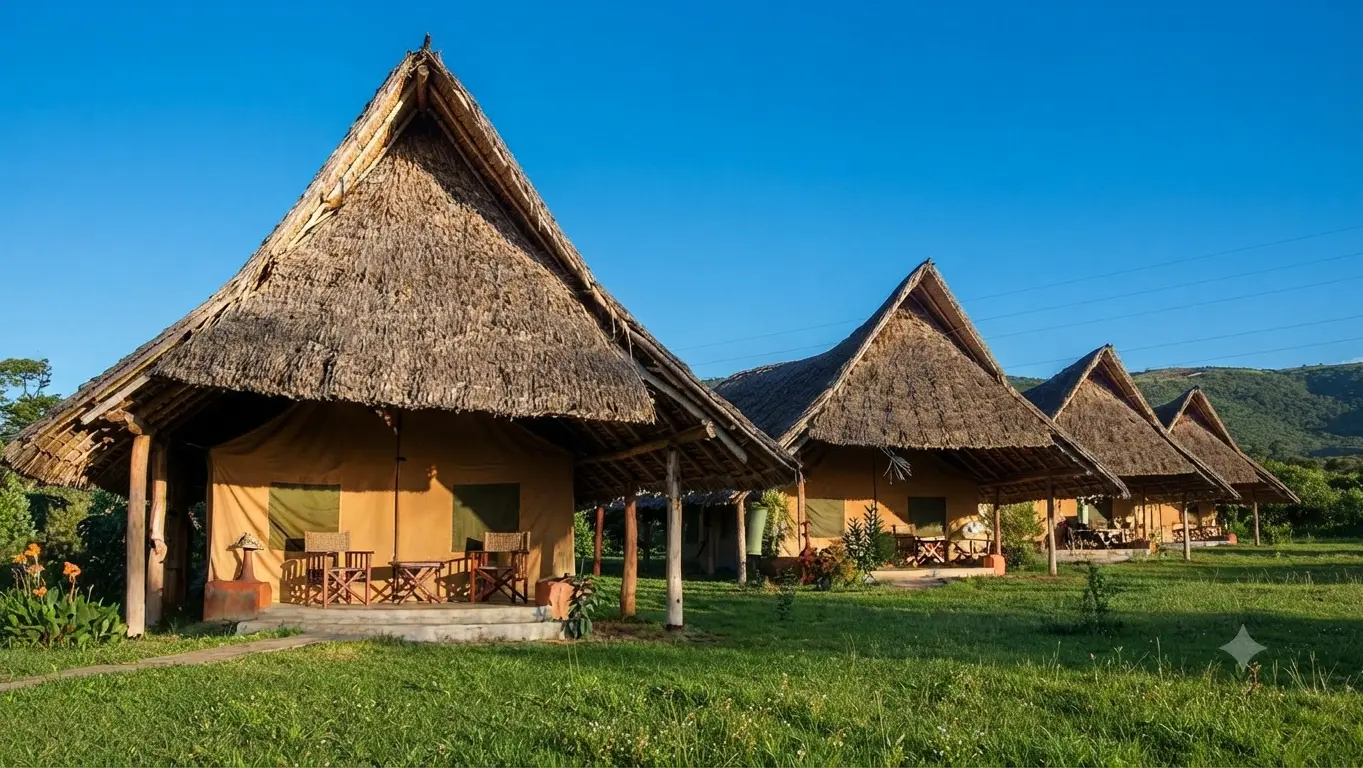
Flamingo Hill Tented Camp
Location
North of the park
Key Details
25 furnished tents, views over Lake Nakuru, en-suite showers,
private verandas and two four-poster beds in each tent
Best For
A classic tented camp with lake and plains views
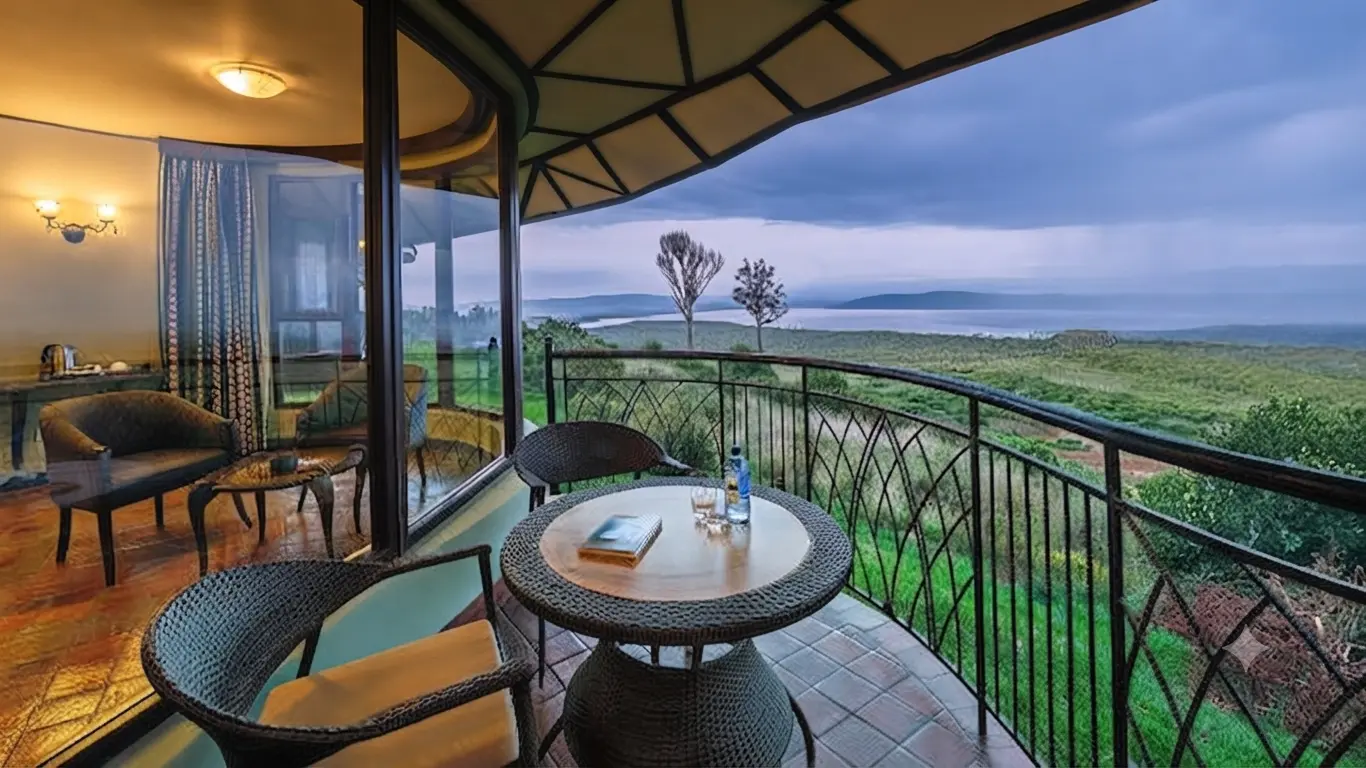
Lake Nakuru Lodge
Location
Inside the park area
Key Details
Eco-friendly lodge with sweeping countryside views around the
lake and a restaurant serving Indian, African and American dishes
Best For
Comfort, easy park access and relaxed lodge stays
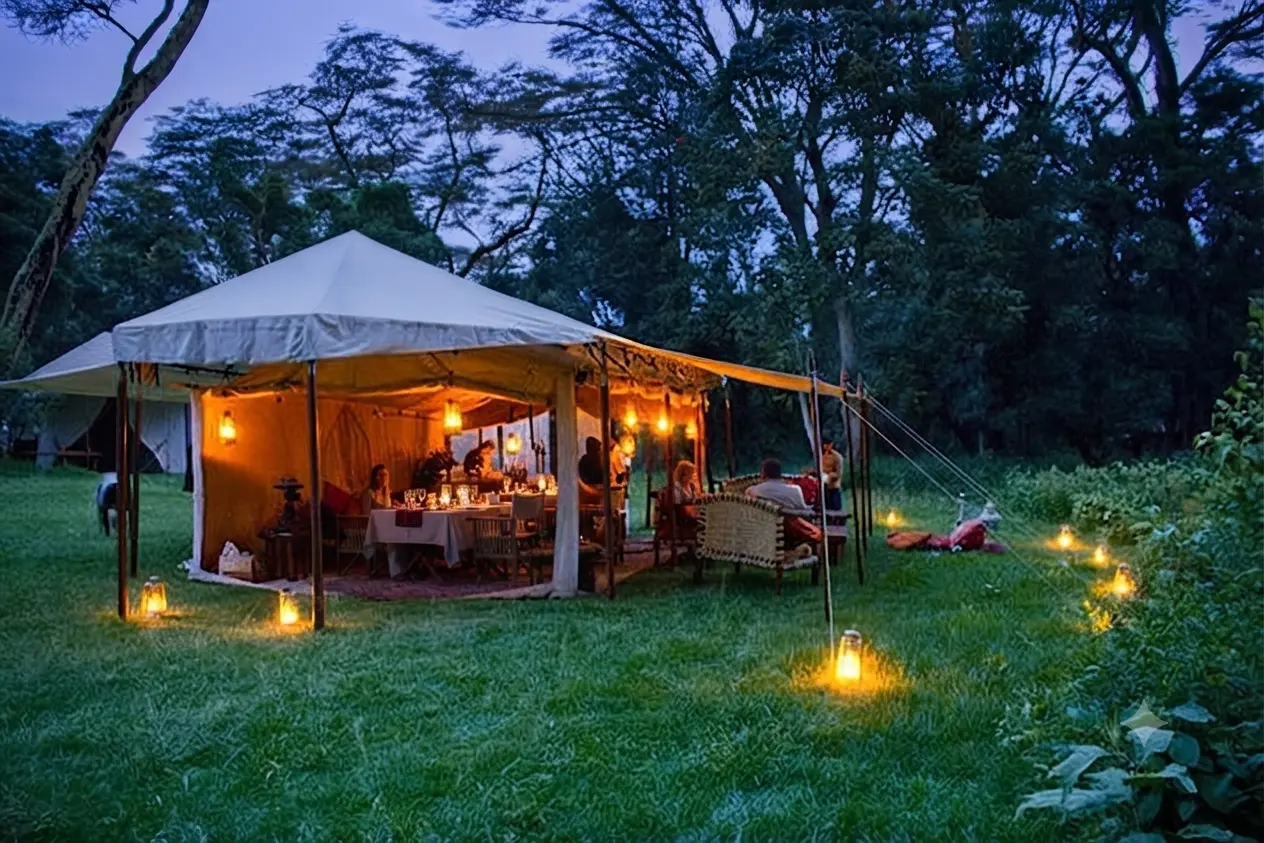
Lakira Camp Nakuru
Location
Within the park’s trees and foliage
Key Details
Quiet, intimate camp with lake views and a classic bush-camp feel
Best For
A quieter stay close to wildlife

Mbweha Camp
Location
Southern border of the park
Key Details
10 rustic thatched cottages, swimming pool, acacia setting,
thick vegetation and bush lunch options
Best For
Comfort with a quieter setting outside the busiest areas
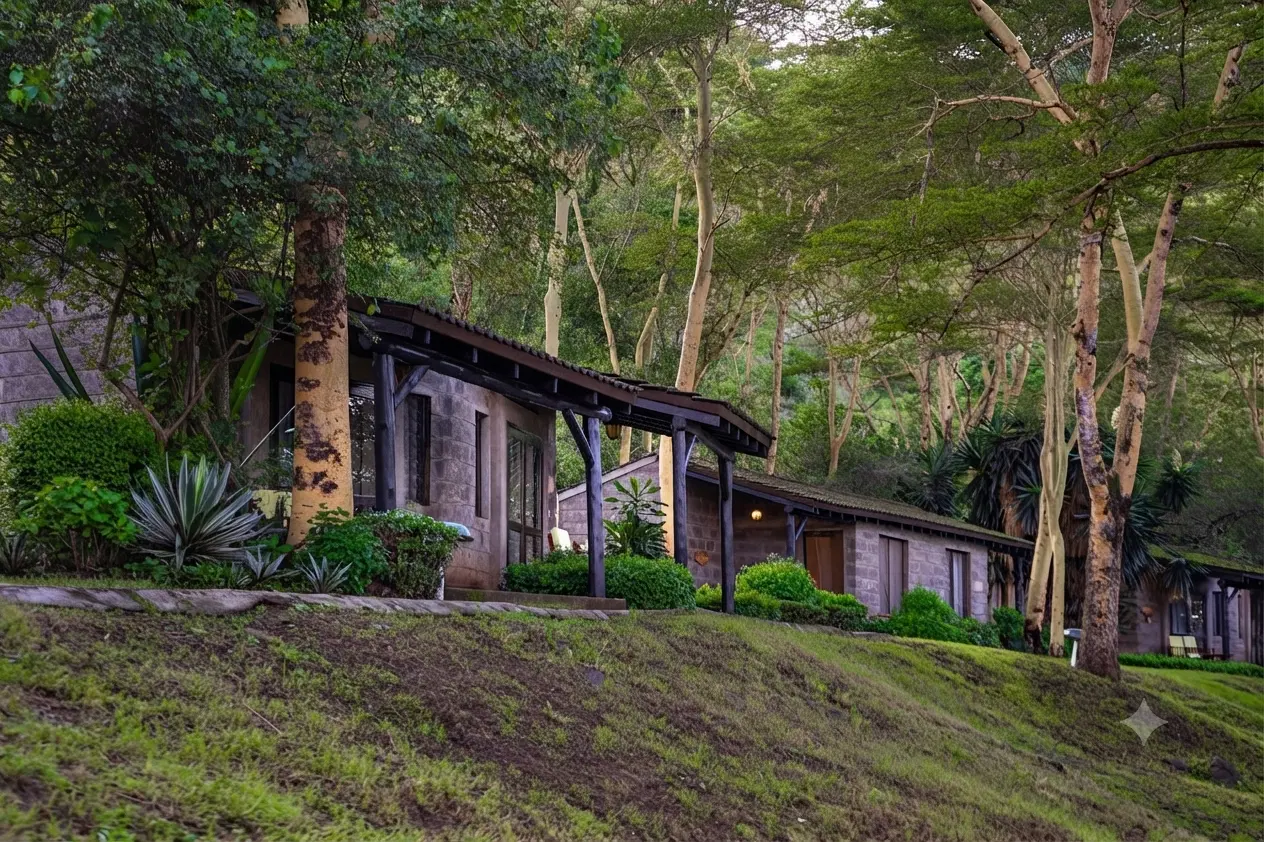
Sarova Lion Hill Lodge
Location
Lake Nakuru area
Key Details
Lodge-style accommodation close to the park experience
Best For
A recognised lodge option near the main safari circuit
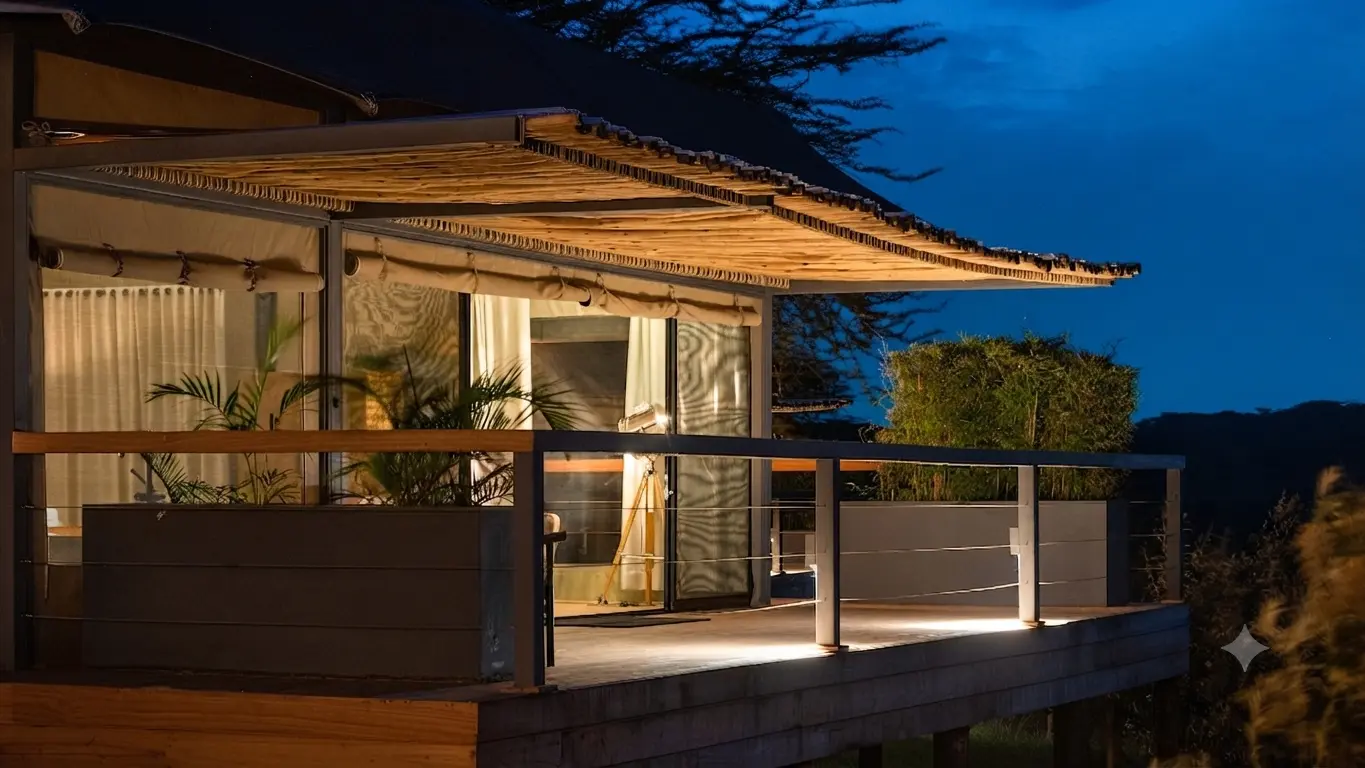
The Cliff Tented Camp
Location
Lake Nakuru area
Key Details
Tented camp option with a stronger comfort focus
Best For
A more polished stay
How to Get to Lake Nakuru National Park
Lake Nakuru National Park is one of the easiest Kenya safari parks to reach from Nairobi. The park sits about 156 km northwest of Nairobi, close to Nakuru town, and the main entrance is only about 4 km from the town centre. The park opens at 7:00 am, so an early start gives you enough time for the drive, entry formalities, viewpoints, wildlife sightings and a relaxed game drive around the lake.
Getting to Lake Nakuru National Park by Road
From Nairobi, you drive along the Nairobi-Nakuru Highway, a scenic route through the Great Rift Valley. The drive takes around 3.5 hours, depending on traffic and road conditions. About 30 minutes out of Nairobi, the road reaches a high Rift Valley lookout point at around 2,200 metres, or 7,200 feet, above sea level. From here, you can look across the escarpment and see volcanic landmarks such as Mount Suswa and Mount Longonot on a clear day.
This route is not just a transfer. It is part of the journey. The rocky escarpments, open valley views, roadside craft shops and changing highland scenery make the drive enjoyable before you reach the park. For a full-day visit, leave Nairobi early and aim to enter the park between 7:00 am and 9:00 am. That gives you enough time to explore the park.
The roads inside the park are generally good, and many sections can be driven in a 2-wheel-drive vehicle during fair weather. A 4-wheel-drive vehicle is still the better choice if you want to reach quieter tracks, viewpoint hills or less-travelled areas where wildlife viewing feels more rewarding.
Lake Nakuru National Park Gates
Lake Nakuru has three main gates. The Main Gate is the most commonly used entrance and sits close to Nakuru town, about 4 km away. Lanet Gate also connects well with the Nairobi-Nakuru Highway and works well when coming from Nairobi. Nderit Gate is on the western side of the park and is mainly useful when arriving from Maasai Mara, Elementaita or the wider Rift Valley route.
Choosing the right gate saves time and helps you enter from the most convenient side for your itinerary. For most Nairobi departures, the Main Gate or Lanet Gate works best. For safaris combining Lake Nakuru with Maasai Mara, Nderit Gate can make the routing smoother.
Getting to Lake Nakuru National Park by Air
Travellers who prefer to fly can use Naishi Airstrip, located inside Lake Nakuru National Park. Flights from Nairobi to Naishi Airstrip take about 25 minutes, making this the quickest way to reach the park. Most guests fly through Nairobi’s main aviation hubs, including Jomo Kenyatta International Airport, before connecting by light aircraft.
Flying works well for high-end safaris, short itineraries or guests connecting Lake Nakuru with other Kenya safari destinations. Once you land at Naishi Airstrip, your safari vehicle meets you inside the park, and we move straight into the game-viewing experience without the longer road transfer.
Start Planning My Lake Nakuru Safari