
Wildlife in Amboseli National Park
Amboseli is one of Kenya’s strongest parks for clear wildlife sightings. The park is compact, open and easy to read, which means you do not spend the whole drive searching through thick bush. You see movement across the plains, then we follow slowly and position the vehicle for the best view. The park covers 392 km², but it sits inside a wider 8,000 km² ecosystem across Kenya and Tanzania. This landscape includes grassland, acacia woodland, thorn bush, marshes, swamps and the dried bed of ancient Lake Amboseli.
The beauty of wildlife viewing here is visibility. The open plains make animals easier to spot, while the permanent swamps keep wildlife close even during dry months. Underground water from Kilimanjaro feeds the marshes, and that is why elephants, buffaloes, hippos, birds and plains game gather in reliable areas. For first-time safari guests, photographers, birders and families, Amboseli gives a rewarding introduction to East African wildlife without feeling too large or complicated.
Elephants in Amboseli National Park
Elephants are the heart of Amboseli. This is one of the best places in Africa to watch large elephant herds at close range. You see mothers leading calves through the marshes, young elephants playing in the mud, and old bulls crossing the dusty plains with Kilimanjaro behind them. Amboseli is known for African bush elephants, including impressive large-tusked bulls that move through the wider southern Kenya landscape.
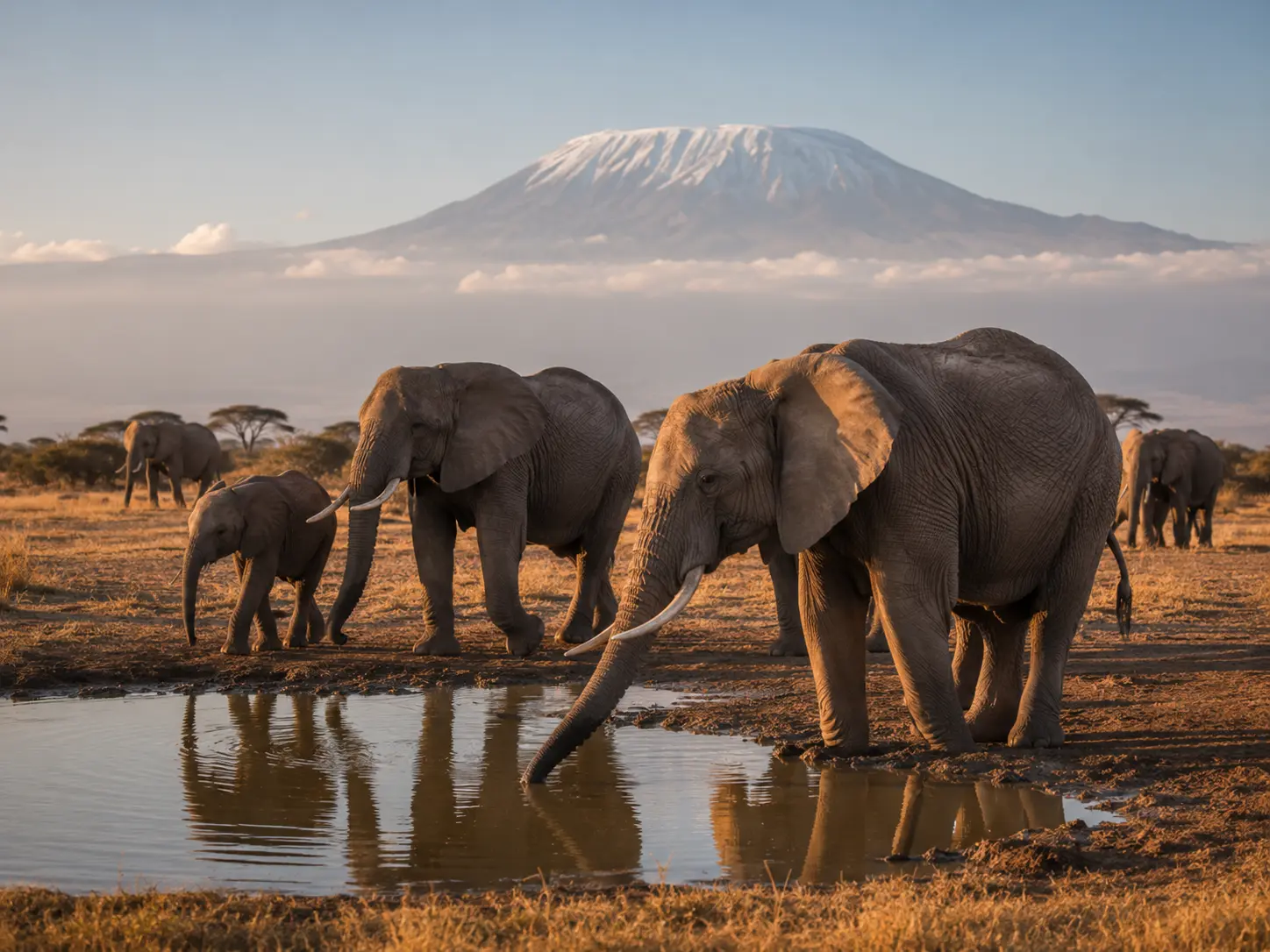
Elephants with views of Mount Kilimanjaro in Amboseli National Park, Kenya
The elephants here have also been studied for a long time. Research began in 1972 under Cynthia Moss, making Amboseli one of Africa’s most important elephant research areas. The park was also home to Echo, one of the world’s most researched elephants. She was followed for almost four decades before she died in 2009 at about 60 years old. For you on safari, this long history matters because elephant behaviour is easy to observe here.
You can sit quietly and watch families feeding, drinking, bathing, greeting each other and moving across open country in a calm, natural way. The marshes are the best places to look for elephants during the day, while the dry plains give you those classic wide-angle safari scenes in the early morning and late afternoon.
Big Cats and Predators in Amboseli
Amboseli is not only an elephant park. The open grasslands support lions, cheetahs, spotted hyenas and leopards. Lions are seen across the plains and around areas where zebra, wildebeest, buffalo and antelope gather. Cheetahs do well in the open country, and you can see them using termite mounds as lookout points while scanning for prey. Spotted hyenas are part of the park’s natural clean-up crew and move around the plains, water points and carcass sites. Leopards are more secretive, so we look for them around thicker bush and woodland edges rather than out in the open plains. The best predator drives in Amboseli are slow and patient. We spend time around grazing herds, watch how animals behave, and let the cats reveal themselves through movement, alarm calls and changes in the plains.
Plains Game, Buffaloes, Hippos and Giraffes
Amboseli has about 80 mammal species, so every game drive gives you more than elephants. You can expect Cape buffaloes, impalas, Grant’s zebras, eastern white-bearded wildebeest, yellow baboons, Masai giraffes and other open-country wildlife. Gerenuk, the long-necked browsing antelope, is also seen in the drier bush areas. Buffaloes are found year-round, with strong numbers around the marshes. Hippos are best watched in the wetter swamp zones, with Enkongo Narok and the central swamp areas standing out for good sightings. This contrast between dry plains and green marshes is one of Amboseli’s strongest wildlife features. One minute we are watching dust rise behind zebra and wildebeest. A few minutes later, we are looking at hippos, herons, egrets and elephants in wetland habitat.
Bird Watching in Amboseli National Park
Amboseli is a rewarding birding destination, with more than 400 bird species. The park has water birds, raptors, grassland birds and wetland specialists, and it is recognised among Kenya’s Important Bird Areas. Around the swamps and lake basin, look for pelicans, kingfishers, hamerkop, herons, egrets, cranes and other wading birds. The open plains support about 47 raptor species, making Amboseli good for eagles, hawks, kestrels and vultures riding the warm air above the plains.
During the long rains between March and April, parts of the dry plains can turn into shallow seasonal water. This brings in more wading birds and gives photographers beautiful wetland scenes. Birding here works well alongside normal game drives because the habitats sit close together. In one drive, we move from marshland to dry bush, then into open grassland, giving you a wide birding experience without needing a separate full-day birding route.
Wildlife Photography in Amboseli
Amboseli is one of Kenya’s best safari parks for photography because the landscape gives you space, clean backgrounds and dramatic light. The famous image is elephants walking across open plains with Mount Kilimanjaro behind them, but the park gives you far more than that. Dusty tracks, green marshes, acacia woodland, big skies and low morning light all work beautifully for wildlife images. Cheetahs on termite mounds, elephants in the swamps, buffaloes in the reeds, giraffes crossing the plains and birds rising from shallow water all create strong photo moments. Clear sightlines also make Amboseli a very good park if you are new to safari photography because animals are easier to frame than in thick bush country.
Maasai Culture and the Wildlife Landscape
The local people around Amboseli are mainly Maasai, and their presence is part of the wider story of the park. Amboseli sits in a landscape where wildlife, livestock, water and grazing land have long shared the same space. Visits to Maasai manyattas and cultural centres add depth to your safari when arranged respectfully. You get time to understand pastoral life, beadwork, traditional homesteads, cattle culture and the relationship between people, land and wildlife around the park. This cultural setting also matters for conservation. Amboseli wildlife moves beyond the park boundary, so the relationship between the park, the Maasai community and the wider ecosystem is important for elephants, predators, birds and grazing wildlife.

Maasai Cultural Visits
Things to Do in Amboseli National Park
Amboseli is one of the easiest Kenya safari parks to enjoy because the landscape is open, the wildlife is visible, and the scenery changes quickly. You move between dry plains, acacia woodland, marshes, swamps and the old Lake Amboseli basin in a short time. The park is small enough to explore well in a short stay, but rich enough to keep every game drive interesting. Most people come for elephants and Mount Kilimanjaro views, but Amboseli also gives you strong birding, cultural visits, photography, wetland viewing and relaxed wildlife drives.
Game Drives in Amboseli National Park
Game drives are the main activity in Amboseli, and this is where the park really comes alive. The open plains make it easy to scan for elephants, lions, cheetahs, hyenas, buffaloes, zebras, wildebeest, impalas, giraffes and baboons. Because Amboseli has clear sightlines, we do not spend the whole drive pushing through thick bush. We see movement from a distance, follow the tracks slowly and read the behaviour of animals as we go.
Morning game drives are excellent for soft light, cooler temperatures and views of Mount Kilimanjaro before cloud builds around the summit. Late-afternoon drives are also rewarding, with elephants moving out of the marshes, predators becoming active, and the plains taking on that golden Amboseli colour. For a strong safari experience, allow at least two game drives. That gives us enough time to cover the marshes, open plains, lake basin and woodland edges without rushing.
Bird Watching in Amboseli National Park
Amboseli is a strong birding destination with more than 400 bird species, including water birds, grassland birds, raptors and wetland species. The swamps and marshes attract pelicans, kingfishers, herons, egrets, cranes, hamerkops and other wading birds. The open plains are good for birds of prey, with 47 raptor species in the wider Amboseli birdlife. Birding fits naturally into your game drive. In one outing, we can move from wetland birds in the marshes to raptors over the plains and smaller birds around acacia woodland. During wetter months, parts of the dry lake bed hold shallow water, attracting more waders and creating excellent bird-photography scenes.
Visit Observation Hill
Observation Hill, also known as Nomatior, is one of the best viewpoints in Amboseli. From the top, you get a wide view over the plains, swamps, elephant herds and a Mount Kilimanjaro backdrop. This is a good place to understand how Amboseli works. You can see clearly how the wetland areas support wildlife in an otherwise dry landscape. It is also a useful stop for photography, a short rest and orientation during a game drive. From the hill, your guide can point out the main wildlife zones and explain why animals gather in certain areas at different times of day.

Observation Hill Amboseli Kenya
Explore the Swamps and Lake Amboseli Basin
The swamps are the life of Amboseli. Underground water from Mount Kilimanjaro feeds these wet areas, keeping parts of the park green even when the surrounding plains are dry. This is where we look for elephants, hippos, buffaloes, waterbirds and plains game coming in to drink and feed. The Lake Amboseli basin gives you a different feeling. At times, it is dry, dusty and open. After rains, sections turn into shallow water that attracts flamingoes and other wading birds. This contrast between dry lake bed and green marsh is one of the reasons Amboseli feels so different from many other Kenya parks.
Maasai Cultural Visits Around Amboseli
A Maasai cultural visit adds a human layer to your Amboseli safari when it is arranged respectfully. Visits to Maasai manyattas and cultural centres introduce you to pastoral life, beadwork, traditional homesteads, livestock culture and the close relationship between people, land and wildlife around the park. This experience fits well after a morning game drive or on the way to or from your lodge. It should never feel rushed or staged. The best visits give you time to ask questions, listen, understand the Maasai way of life and see how communities around Amboseli remain part of the wider conservation story.
Nature Walks Around Amboseli
Walking is not done freely inside the main national park in the same way as game drives, but guided nature walks are arranged in selected areas around lodges, community land and conservancy zones outside the main park boundary. These walks give you a slower way to understand the Amboseli landscape beyond vehicle-based wildlife viewing. On a good walk, you learn about tracks, plants, birds, insects, animal signs, grazing patterns and the dryland environment around the park. This works well when you want more than game drives, and it is also a good lighter activity for families between morning and afternoon safari drives.
Amboseli Photography Safaris
Amboseli is one of Kenya’s strongest parks for safari photography. The mountain backdrop, wide plains, dust, elephants, marshes and big skies work together beautifully. Few safari scenes are as powerful as elephants crossing the plains with Kilimanjaro rising behind them. The best photography times are early morning and late afternoon. Morning gives you the best chance of a clear Kilimanjaro view, while evening gives warm light over the plains and marshes. Cheetahs on termite mounds, elephants in the swamp, buffaloes in the reeds and birds lifting from shallow water all give strong photo moments.
Best Time to Visit Amboseli National Park
Amboseli National Park is open throughout the year, but the best time for general wildlife viewing is during the dry months from June to October and January to March. During this period, the grass is shorter, the plains are more open and animals stay close to the swamps and permanent water sources. This makes game drives easier and more rewarding, with good chances of seeing elephants, buffaloes, giraffes, zebras, wildebeest, lions, cheetahs, hyenas and many resident birds.
Amboseli is strong for elephants in every season because the swamps keep water and grazing available even when the surrounding country is dry. That is why elephant viewing remains one of the most reliable experiences in the park. Morning drives are the best time to look for clear views of Mount Kilimanjaro before cloud builds around the mountain.
Dry Season in Amboseli, June to October and January to March
The dry season is the best time for classic Amboseli game viewing. From June to October, the park enters its main safari season, with mostly sunny days, little rain and excellent visibility across the open plains. Wildlife gathers around the marshes, swamps and permanent water points, so your guide reads the movement of animals more easily and positions the vehicle well for sightings. This is also a good period for a first Kenya safari because Amboseli is compact, open and easy to understand.
You can cover the main wildlife areas without long drives, and the chances of seeing elephants at close range are very strong. The park gets busier in these months, and lodge rates are higher, so accommodation needs to be secured early. The second dry window runs from January to March. This is another good time for game drives, elephant photography, predator sightings and short Kenya safari extensions from Nairobi. The weather is generally clear and warm, and wildlife remains concentrated around water.
Green and Rainy Season in Amboseli, November to May
The green season runs from November to May, with short rains around November and heavier long rains in April and May. During this time, Amboseli changes character. The plains turn greener, the light softens, and the dust settles, giving photographers beautiful colours and cleaner views of Mount Kilimanjaro.
This is one of the best periods for scenery, bird watching, and a quieter safari. Migratory birds arrive, wetlands become more active, and the swamps attract a wide range of waterbirds. Since Amboseli already has more than 400 bird species, this season adds even more movement, colour and variety. The Lake Amboseli basin also holds shallow water after rains, attracting waders and creating a completely different scene from the dry-season plains.
The main challenge comes in April and May, when heavier rains make some tracks wet and slower to drive. Some lodges reduce rates during this period, and the park receives fewer guests, giving you a quieter safari feel. For the best balance, choose June to October or January to March for wildlife viewing. Choose November to May for green scenery, bird watching, lower rates, and clearer Kilimanjaro views after the rains clean the air.
Where to Stay in Amboseli National Park
Where you stay in Amboseli shapes the whole safari. Some camps sit close to the national park gates, giving you quick access to morning and evening game drives. Others sit in private conservancy areas outside the park, where you get a quieter setting, walking safaris, night drives, cultural visits, bush dining and a more private feel after the main park hours. For classic Amboseli views, choose a lodge or tented camp with open views towards Mount Kilimanjaro, easy access to the swamps and strong guiding for elephants, big cats, birds and the dry lake-bed areas. If you are visiting in the high season, secure your lodge early because the better camps fill quickly and rates rise during the busiest safari months.

Amboseli Serena Safari Lodge