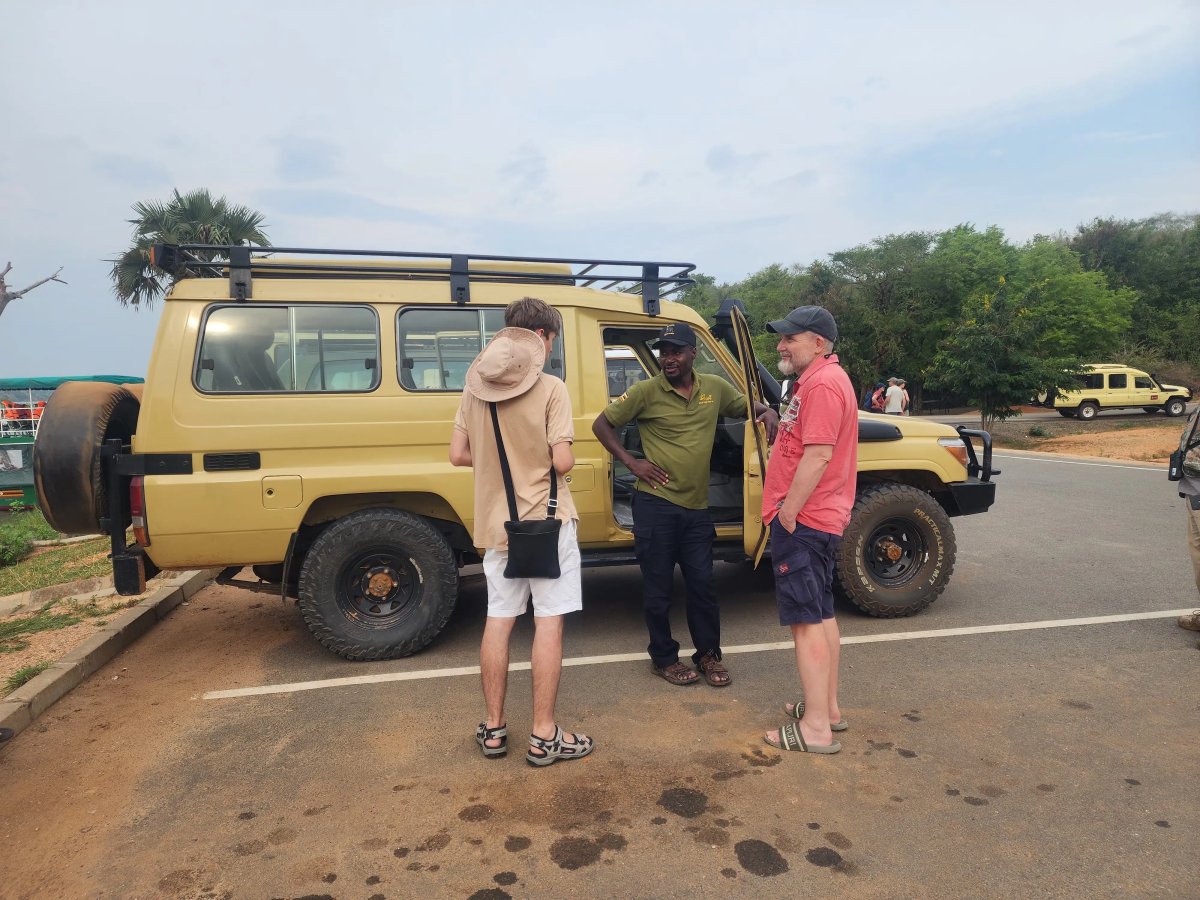
The booking route that looks cheaper isn’t automatically the one that costs less. When comparing safaribookings vs direct booking with a local safari operator, remember that agents are compensated through commission included in the booking rate, rather than added on top. Booking directly can make planning more straightforward when one local operator can arrange your safari within a single destination.
It’s reasonable to compare both routes. An agent may help coordinate a more complex itinerary, while direct contact can simplify planning with one operator. The right fit depends on how your trip is structured and the kind of support you want.
This article explains how agent commissions affect booking rates, what an agent can coordinate, and when booking directly makes sense. It also offers a practical comparison to help you choose the booking route that fits your itinerary and travel preferences.
Key Takeaways
- Agent commission is included in the booking rate rather than added on top, so compare what each itinerary covers, not just the headline price.
- A safari agent can help coordinate a trip that combines multiple countries or safari travel with beach, city, or cultural experiences.
- Direct booking can be a straightforward fit when one local operator can plan your safari within a single region.
- Use reviews as one guide when comparing operators, alongside how clearly each option matches your itinerary and planning needs.
- Explore East Africa Safaris, or focus your plans on Uganda, Kenya, or Tanzania, to shape a safari around the region you want to visit.
Agent commissions and customer pricing
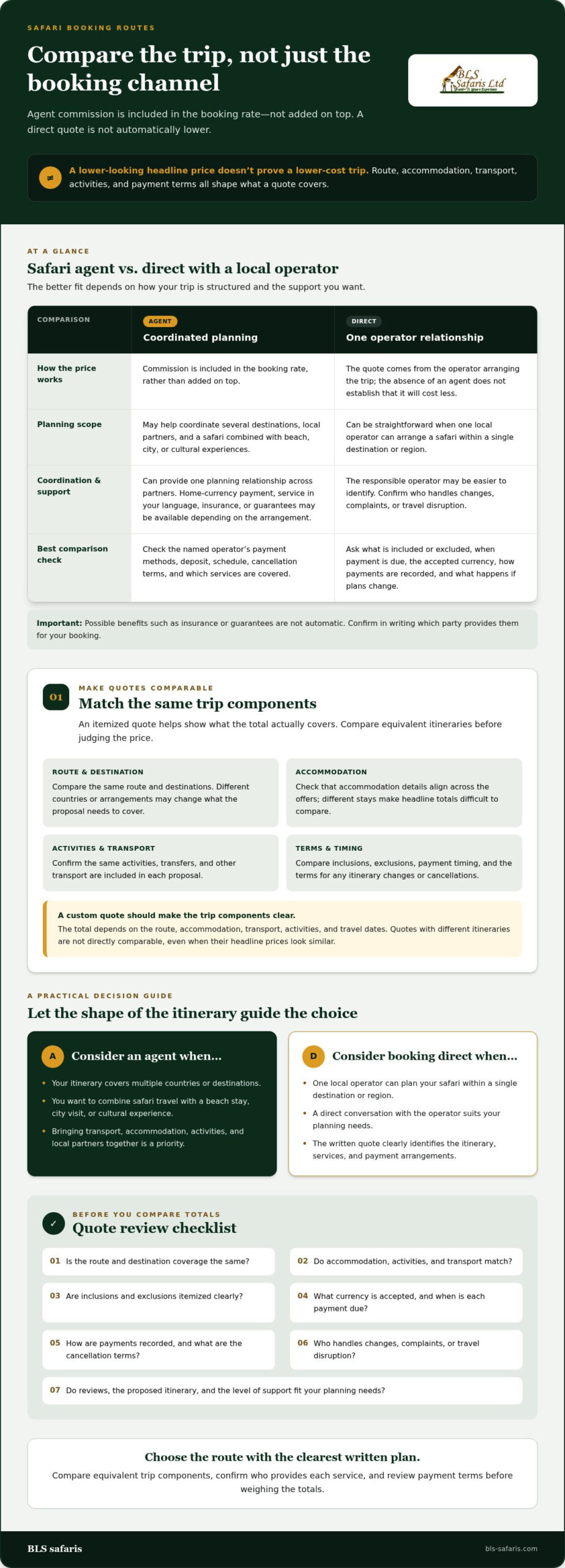
Safari agents are compensated through commission included in the booking rate, rather than added on top. To compare agent and direct bookings fairly, assess the same route, accommodation, activities, transport, and payment terms.
A quoted total reflects more than the sales channel. Two itineraries, for example, may differ in accommodation, transfers, included activities, or the number of countries covered. Ask for an itemized quote, then compare equivalent trip components. The price depends on the route, accommodation, transport, activities, and travel dates, and is provided after a quote request.
Pricing Transparency and Custom Quotes
A custom quote outlines the trip components selected for a traveler rather than relying only on a broad advertised rate. Check that it clearly identifies inclusions, exclusions, and payment timing. When comparing safari bookings, match these details across offers before judging the total. Quotes with different routes or accommodation are not directly comparable, even if their headline prices look similar.
Direct Sales-Channel Pricing
A direct booking quote comes from the safari operator arranging the trip, rather than through an agent. An agent’s commission is included in the booking rate, but that alone doesn’t establish whether a direct quote will be lower. Compare the itineraries and included services, then check how payments are scheduled and which trip components they cover.
Destination choices can also change what a custom quote needs to cover. For instance, Uganda and Rwanda gorilla trekking can involve different routes and arrangements, so compare the details behind each proposal rather than treating the destination names as equivalent. A guide to Uganda and Rwanda gorilla trekking can help frame that comparison.
Questions Before Paying an Operator
Before paying a local safari operator, ask what the quoted total includes, which services are excluded, and when each payment is due. Check the accepted currency, how payments are recorded, and what happens if you request an itinerary change. These questions clarify the payment process and make the quote easier to compare with an agent’s proposal.
| Booking option | Commission treatment | Quote comparison | Payment detail |
|---|---|---|---|
| Safari agent | Commission is included in the booking rate | Compare itinerary and inclusions | Ask about currency and schedule |
| Direct with operator | No agent is between traveler and operator | Compare the same route and services | Ask when and how payment is made |
Choose the booking route whose written quote makes the itinerary, inclusions, and payment steps clearest.
Benefits of booking through a safari agent
Destination requirements and booking arrangements vary by country and park. An agent can coordinate with local partners and bring those details together, especially for an itinerary covering several destinations.
The main benefit is having one planning relationship for a trip with multiple moving parts. An agent, for example, may help connect a safari with a beach stay or combine wildlife travel with city and cultural experiences. This coordination can reduce the work of aligning transport, accommodation, and activities across separate legs.
An agent or tour operator may also let travelers pay in their home currency and access customer service in their own language. Depending on the booking arrangement, travel insurance or guarantees may be available too. These are possible benefits, not automatic features of every listing or itinerary, so identify which party provides each one before paying.
Payment Methods and Cancellation Policies
For a SafariBookings option, confirm the payment methods, deposit amount, payment schedule, and cancellation terms with the operator named for that trip. Details can differ between operators, so don’t assume one platform-wide policy applies to every safari. Ask for the terms in writing, including how a cancellation affects each booked service.
This matters when an itinerary combines countries such as Kenya and Tanzania. Different operators or trip components may have separate payment arrangements, so keep the terms with your booking records.
Customer Protections and Support
Support and protections depend on the booking arrangement, including who handles changes, complaints, and travel disruption. Before committing, identify the contact responsible for each issue and ask whether insurance or a guarantee applies to your booking. A listing alone does not establish that these protections are included.
An agent can offer a clear coordination point across local partners, while direct arrangements may make the responsible operator easier to identify. Keep written confirmations, payment records, and the agreed itinerary together so you can refer to the same details if plans change.
For a multi-country safari, an agent’s coordination can help bring separate routes, accommodation, and local partners together. For a trip within one destination, compare the support and terms available through each booking route. Travelers considering Uganda and Rwanda can also use their itinerary needs to guide the comparison, since these affect which partners and arrangements are involved.
To compare a safari plan with a local operator, share your preferred destinations and trip priorities and review the proposed route and terms.
Connecting travelers with local safari professionals
SafariBookings helps travelers find and compare safari operators and trip options. Use its listings and reviews to build a shortlist, then assess which operator best fits your route and planning needs.
SafariBookings Services
SafariBookings connects people researching safaris with local operators offering trips. Travelers can compare itineraries and operator information before deciding whom to contact. The platform’s role differs from the operator’s: the operator plans or runs the safari, while the listing helps travelers discover potential partners.
Someone considering a wildlife trip, for example, can review different operators’ proposed routes and trip details. Treat each listing as a starting point for comparison, then read the itinerary and booking terms for the specific trip. The platform helps with discovery, but the local operator remains central to the safari arrangements.
Verifying Local Operator Credentials
Check credentials for the destination where the safari takes place. For Tanzania, travelers are advised to check tour operators’ TALA licenses. A license for one country does not establish credentials for another destination, particularly when an itinerary crosses borders.
Reviews can flag possible strengths or concerns, but they work best alongside direct questions and a close review of the proposed itinerary. Ask who operates each trip segment, how guests travel between locations, and what safety procedures apply to activities and transfers. These details reveal more than a rating alone.
Start your comparison with a shortlist. Contact five or six tour operators, then compare their responses using the same route, travel dates, accommodation preferences, and activities. This makes differences easier to spot: one proposal may focus on wildlife drives, while another includes cultural visits or longer transfers.
Keep the details together as you evaluate each operator. Record the company name, destination, relevant license information, review patterns, and answers about safety arrangements. If a trip covers Tanzania and another country, assess the operators responsible for each part instead of treating the itinerary as one service.
Use reviews to guide further checks, not to make the decision on their own. Look for specific comments about communication, delivery of the itinerary, and how an operator handled a problem. Compare those accounts with the written plan and direct answers. This turns online research into a clearer, destination-specific choice.
A forum participant advised travelers to use reviews to identify potential problems or good tour operators, rather than relying on them alone. Treat a review as a prompt for a question, not a verdict: note what the reviewer describes, identify which part of the trip it concerns, and ask the operator for a clear explanation if it matters to your plans. This keeps reviews in perspective.
Give greater weight to details that show whether a proposal suits your needs, and keep unresolved concerns visible as you compare options. A positive account can point to a strength worth asking about; a concern can show where you need clarification. Consider the operator’s reply alongside the itinerary and terms, and choose once the information you need is clear. Reviews can inform your judgment, but should not replace it.
Travel agents, tour operators, and destination management companies
These roles can overlap, but they describe different parts of planning a safari. Knowing who arranges the itinerary, operates it, and coordinates local services helps clarify responsibilities before booking.
A travel agent typically helps a traveler compare and arrange a trip. For a safari, this may mean shaping an itinerary from available options and coordinating travel with other holiday plans. An agent can connect a safari with a beach stay, city visit, or cultural experience, which can help when you want one planning conversation for several parts of a journey.
A tour operator organizes or delivers the safari itinerary. The operator may coordinate transport, accommodation, activities, and local arrangements in a destination. Depending on the trip, one operator might handle the full route, while another is responsible for a particular portion. The itinerary should make these responsibilities clear.
A destination management company, often called a DMC, focuses on arranging travel services in a particular destination. It can coordinate local suppliers and practical logistics for an agent or another tour operator. For example, an agent planning a safari and beach stay may work with destination-based professionals to arrange the safari and connect it with the wider trip.
For multi-country travel, this division can make coordination especially important. A traveler moving between Uganda and Kenya may encounter different operators, transport arrangements, and local partners. An agent may bring the itinerary together, while destination professionals handle arrangements within their areas. Identify who is responsible for each segment, including transfers between destinations.
- Travel agent: helps plan and arrange the traveler’s overall trip.
- Tour operator: organizes or operates the safari itinerary.
- Destination management company: coordinates local arrangements within a destination.
A trusted safari agent or tour operator can allow customers to pay in their home currency and access travel insurance, guarantees, or customer service in their own language. These options depend on the booking arrangement, so distinguish what the agent handles from what the operator or another party provides. This matters if a change affects both safari travel and a separate beach or city stay.
To compare these roles, map each component of one example itinerary to the responsible party. A route combining wildlife viewing, cultural visits, and a beach extension may need more coordination than a safari within one destination. Ask who plans each leg, who provides support during it, and where to direct questions about changes. Clear responsibilities help you choose an arrangement that fits your trip.
A forum participant recommended contacting five or six shortlisted tour operators before choosing, giving travelers several options to consider.
When booking directly with a local safari operator makes sense
Direct booking can be a streamlined choice when one operator plans a safari within one destination. You communicate with the party arranging the trip, making itinerary details easier to discuss together. A traveler focused on wildlife, for example, may prefer a direct conversation about the route, accommodation, and activities. The safaribookings vs direct booking with local safari operator decision often comes down to how much coordination the itinerary needs.
Direct booking also suits travelers with clear priorities and a focused destination. If you already know which country you want to visit and what experiences matter most, share those preferences with the operator. This gives the planning discussion a practical starting point without requiring coordination across several trip providers.
Cancellation and refund policies vary by operator and booking terms. Read the written policy for deadlines, cancellation charges, and how refunds are handled for each trip component, such as accommodation or transport. Ask how a change to one part of a Kenya itinerary affects the rest of the booking.
Availability and response times depend on the operator’s trip arrangements and enquiry process. A direct enquiry goes to the operator, while a platform enquiry follows that platform’s communication route. Either way, ask about your specific dates and itinerary, since availability can depend on the accommodation and activities included.
Direct booking is useful when you want to discuss practical choices with the person arranging your safari. Share your preferred travel dates, destination, activities, and accommodation style. Then review the proposed route and terms before deciding. This keeps the discussion focused on your actual trip, not broad options.
Consider direct booking if:
- Your itinerary stays within one region or one operator’s planned route.
- You have clear priorities, such as wildlife viewing in Uganda or Tanzania.
- You want to discuss route details with the operator arranging the trip.
- You’re comfortable reviewing payment, cancellation, and itinerary terms directly.
The safaribookings vs direct booking with local safari operator comparison favors an agent when a journey combines countries, safari travel with a beach stay, or several separate providers. Direct booking is a good fit when the itinerary is focused and one local operator can coordinate its main parts. Compare who plans each segment, how clearly the terms are written, and how well the arrangement fits your travel style.
BLS safaris: East Africa Safaris
BLS safaris can turn a regional plan into a tailor-made safari, with local guidance, clear routing, and transparent pricing. Its East Africa Safaris can suit travelers comparing destinations or building a journey across the region, while Uganda Safaris, Kenya Safaris, and Tanzania Safaris focus on individual countries.
Turn to BLS safaris when you want help shaping your route, matching experiences to your priorities, and coordinating safari arrangements from enquiry through travel. Handpicked lodges are part of safari planning, not a standalone lodge booking. Share the destinations and experiences you have in mind to start a focused conversation about your itinerary.
You’re welcome to explore East Africa safari planning or visit bls-safaris.com to get in touch.
Shape a safari around your priorities
The safaribookings vs direct booking with local safari operator decision is also a chance to clarify what you want your journey to feel like. Before moving ahead, note your preferred pace, the experiences that matter most, and whether you want to connect destinations. These priorities give your planning conversation a useful starting point, whichever booking route you choose.
BLS safaris can shape East Africa Safaris, Uganda Safaris, and Kenya Safaris around your travel priorities. Consider which destination fits your interests, then share the experiences you hope to include. A clear starting point helps develop a route that feels personal and practical.
When you’re ready, take the next step with your destination ideas and trip preferences in hand.
Your journey can begin with a simple conversation and take shape from there.
Frequently Asked Questions
Booking a Safari: Agent or Direct – What’s Best for You?
The best option depends on your itinerary and how you prefer to plan. In the safaribookings vs direct booking with local safari operator comparison, direct booking often suits a focused safari arranged by one operator, while an agent can coordinate separate destinations or trip elements. If your plans include safari travel and a beach stay, consider which arrangement best connects the two.
So does that mean you should book direct?
Not necessarily. Choose direct booking when you want to plan with the operator arranging a focused safari. The safaribookings vs direct booking with local safari operator choice also depends on whether you need help connecting separate providers or holiday plans. If you already have a destination and activity in mind, a direct discussion can help shape the itinerary around your priorities.
So why use an agent?
An agent can help coordinate a holiday that combines a safari with other travel, bringing together wildlife activities, a city stay, and beach time under one planning arrangement. Depending on the booking, an agent or tour operator may also offer payment in your home currency or customer support in your language. Review the specific arrangements to understand which party handles each part.
Are safari tour prices lower when booking directly with local operators?
Not automatically. Compare equivalent itineraries, since accommodation, transport, activities, and included services affect the total. An offer with fewer transfers or different lodging, for example, is not directly comparable to a fuller itinerary. Review the written details and payment terms together, then decide which option best fits your planned route and preferences.