Your route should fit your interests, not the other way around. A tailor-made East Africa safari brings together the destinations, wildlife experiences, cultural visits, beach time, and stays that match your priorities. It can focus on Uganda, Kenya, Tanzania, or Rwanda, or combine destinations in one itinerary.
It’s natural to want a trip that feels personal and works in practice. Planning means matching what you want to see with a realistic route, the time available, and the kinds of stays you prefer.
This guide explains how a custom itinerary takes shape, what to consider when choosing destinations and lodges, and how travel time and priorities affect the plan. You’ll also learn how an enquiry leads into itinerary planning, so you can approach your trip with a clearer idea of the decisions ahead.
Key Takeaways
- Shape your itinerary around the wildlife, cultural experiences, and time away that matter most to you.
- Compare Uganda, Kenya, Tanzania, and Rwanda by the experiences you want, then build a route that connects them sensibly.
- Choose between lodges, tented camps, and other stays based on location, comfort, and how each stop supports your plans.
- Prepare for itinerary planning by sharing your travel priorities, dates, pace, and preferred style of stay in your enquiry.
- See how BLS safaris can help plan East Africa, Uganda, Kenya, and Tanzania safari journeys around your interests.
What is a tailor-made African safari?
A tailor-made safari brings your interests together with destinations, wildlife experiences, travel time, and stays in a considered route. It can focus on one country or combine East African destinations , with beach time where it fits the journey.
Destination and Wildlife Experiences
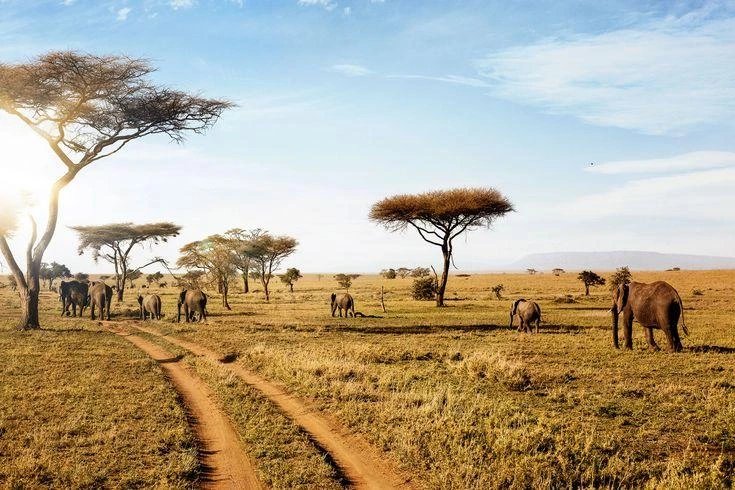
Start with the wildlife and experiences that matter most to you. Kenya’s Masai Mara and Amboseli, Tanzania’s Serengeti, and Uganda’s forests offer different settings for game drives, migration viewing, and primate experiences. Rwanda can also feature in a journey centered on gorilla trekking. Each choice shapes the route, pace, and type of stay that makes sense between activities.
The Great Wildebeest Migration is a moving wildlife event, so planning around it means considering where you want to travel and how much flexibility your itinerary allows. A safari can also combine wildlife viewing with cultural experiences or a beach stay. Reviewed itineraries illustrate the range: one Kenya anniversary trip covered Nairobi and the Masai Mara in 7 days , while another combined a Kenya safari with Zanzibar. These examples show possible structures, not a fixed template.
Safari reviews can help you understand how a plan felt in practice. Look for details about the journey’s pace, accommodation changes, and experiences that mattered to travelers, rather than relying on broad praise alone. One reviewed Masai Mara trip split its stay between two camps, with 4 nights at each, while a Rwanda and Kenya trip took place in August and September 2025.
Local Expertise and Travel Support
Local expertise helps turn a list of destinations into a workable journey. Consider how each stop connects to the next, which experiences fit together and where overnight stays support the planned activities. When comparing operators, look for clear routing, transparent inclusions, relevant local knowledge, and a defined support process. An operator’s founding year and experience can provide context, while specific reviews can show how planning and travel support worked for past guests.
How do I choose a reputable tailor-made East Africa safari operator? Look for documented credentials, clear itineraries, transparent pricing, and reviews that describe real trip details. Local knowledge and a clear plan for support during travel also matter.
What are the visa, vaccination, and entry requirements for East African safari countries? Requirements depend on your passport, destinations, transit route, and health circumstances and differ between countries. The** CDC** notes that immunocompromised travelers may not be able to receive live vaccines such as the yellow fever vaccine, which may mean changing an itinerary, altering activities, or deferring travel.
What should I pack for an East Africa safari? Pack practical layers, comfortable walking shoes, sun protection, insect repellent, and any personal medication. Match clothing and equipment to your planned activities, from vehicle-based wildlife viewing to forest trekking.
What are the risks and safety precautions for East Africa safaris? Follow your guide’s instructions around wildlife, stay in designated areas, and take care during road and walking activities. Share relevant health needs before travel and follow local guidance at each stop.
Custom safari itinerary planning
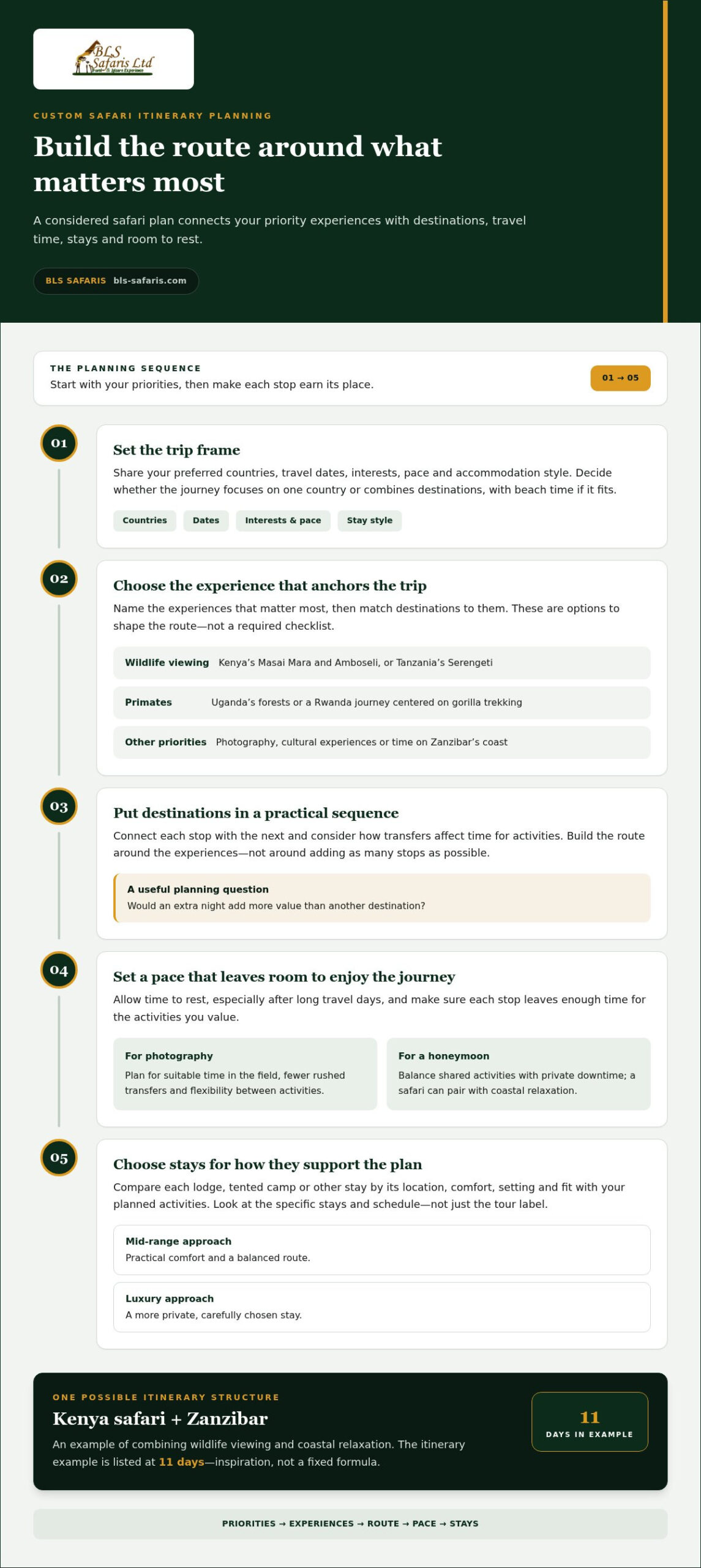
A custom itinerary turns your priorities into a route, balancing wildlife activities, travel time, accommodation style, and time to rest. Start with the experience that matters most, then build the journey around it.
Custom Itinerary Design
Share your preferred countries, travel dates, interests, and pace. Then decide which experiences should anchor the trip, such as game drives, gorilla trekking, photography, or time on Zanzibar’s coast. A Kenya and Zanzibar honeymoon itinerary, for example, is listed at 11 days, showing how a safari and beach stay can fit into one journey.
Next, arrange destinations in a practical sequence. Consider how each transfer affects activity time, and avoid adding stops just to make the itinerary look fuller. Leave room to rest, especially after long travel days, and decide where an extra night would add more value than another destination.
How do I plan a tailor-made East Africa safari itinerary? Start with your dates, priority experiences, preferred pace, and accommodation style. Use those choices to shape the route, then consider how travel between stops affects time for each activity.
Mid-Range and Luxury Tours
Mid-range and luxury tours can follow similar routes but differ in accommodation and travel arrangements. Compare each proposed stay by location, comfort, setting, and how well it supports your planned activities. A luxury safari might prioritize a more private, carefully chosen stay, while a mid-range plan can focus on practical comfort and a balanced route.
Look beyond the label. Ask how the specific stays fit together, what the trip plan includes, and whether each location leaves enough time for the experiences you value. “Exclusive” describes a feeling, not a useful planning detail by itself. The setting and schedule matter more.
Photography and Honeymoon Priorities
For photography, tell the planner what you want to photograph, from wildlife behavior to landscapes. Build the schedule around suitable times in the field, with fewer rushed transfers and flexibility between activities. A photographer’s needs may differ from those of travelers who prefer a broader mix of stops.
For a honeymoon, decide how you want to balance shared activities with private downtime. A Kenya safari followed by a beach can combine wildlife viewing and coastal relaxation, while the 11-day itinerary example offers one possible trip length. Use it as inspiration, not a fixed formula.
Once you’ve identified your priorities, you can share your safari itinerary preferences to begin shaping a route around them.
Safari enquiry and planning process
A clear enquiry gives the itinerary planner the details needed to shape a practical route. Dates, priorities, pace, and preferred stays help turn an idea into a trip plan.
Safari Enquiry and Booking Process
Start by sharing your travel window, group needs, preferred countries, and essential experiences. Mention whether you’re planning a honeymoon, wildlife-focused adventure, or gorilla trekking trip, and note any fixed arrival or departure dates. These details help define the route before stays and transfers are arranged.
Review the proposed itinerary for travel days, activity time, accommodation locations, and what each day includes. Ask for revisions if the pace or route doesn’t match your priorities, then read the final arrangements carefully before booking. A useful plan makes the sequence clear, from arrival in Nairobi to time in the Masai Mara or another destination.
Trip Planning and Operator Support
An operator’s regional knowledge can help determine whether a route fits the time available. For example, combining trekking in Uganda with wildlife viewing elsewhere adds connections that need to fit alongside activity days. Share your preferences early, then use the itinerary discussion to resolve route order, overnight stops, and the balance between guided activities and free time.
Look for clear explanations of what the itinerary covers and how the travel arrangements connect. If a proposed change adds a destination, consider how it affects transfer time and the activities you might need to shorten. This practical review helps keep a bespoke African safari focused on your interests, rather than simply adding more stops.
Planning and Travel Timing
Book safari travel 6-12 months in advance, especially for travel from June through October. That planning window gives you time to compare routes and organize stays around your preferred dates. Seasonal wildlife priorities also matter: a Great Migration-focused trip to the Masai Mara needs to account for the movement of wildlife, while a honeymoon may give equal weight to safari and relaxation.
How many days should an East Africa safari take? It depends on the countries, activities, and travel connections in your plan. Examples include a 7-day Great Migration safari, a 13-day East Africa highlights tour across Kenya and Tanzania, and a two-week Kenya safari, so choose a duration that allows enough time for your priorities without crowding the route.
Before confirming a booking, compare the daily pace with your travel style. A compact itinerary may suit travelers focused on one main experience, while a multi-country route needs time for connections and adjustment. Adding trekking to a wildlife itinerary, for example, changes how activity days and transfers fit together.
East African destinations, including Kenya, Tanzania, Rwanda and Uganda
Choosing a destination means matching its landscapes and wildlife experiences to your interests. Kenya, Tanzania, Rwanda and Uganda each offer a different foundation for an itinerary.
Choosing an African Safari Destination
Start with the experience you most want to shape the trip. Kenya and Tanzania suit itineraries focused on savannah wildlife and the Great Wildebeest Migration, while Uganda and Rwanda are known for forest-based primate experiences. Consider whether you prefer open plains, forest walks, cultural visits or a mix, then think about how much travel between these settings your plans allow.
Kenya and Tanzania can work well together if you want to connect the Masai Mara with the Serengeti. Uganda and Rwanda can suit a plan centered on gorilla trekking, with wildlife viewing or cultural experiences added where the route allows. Guides familiar with each destination can explain how its activities, landscape and travel connections fit your priorities.
Safari Destinations and National Parks
National parks and protected areas provide the main settings for safari activities. Kenya’s Masai Mara and Tanzania’s Serengeti National Park are associated with open-country wildlife viewing. Ngorongoro offers a different landscape in Tanzania, while Uganda’s Bwindi Impenetrable National Park and Rwanda’s Volcanoes National Park provide forest settings for gorilla trekking.
East and Southern Africa are distinct regions, not interchangeable labels for one route. Southern African destinations such as Botswana, Namibia and South Africa may appeal for their different landscapes and wildlife experiences, but combining them with East Africa changes the journey’s geography and logistics. Keep the itinerary focused on the destinations that best match your interests.
Use a practical comparison before choosing. Note each destination’s main experience, landscape, preferred activity and connection to the next stop. For example, a Serengeti visit might anchor a Tanzania wildlife route, while Bwindi could be central to a Uganda trekking journey. This helps distinguish a trip built around one park from a broader circuit across countries.
Consider the balance between wildlife and other interests, too. A Kenya itinerary can pair the Masai Mara with coastal time, while Tanzania can combine the Serengeti and Ngorongoro. Uganda offers forest and wildlife settings, and Rwanda can add a gorilla trekking focus. Choosing fewer, well-connected destinations often gives each stop more room in the schedule.
Let the route follow the experiences you want, rather than a checklist of famous names. Compare travel connections, activity types and the time you want in each setting. This helps turn Kenya, Tanzania, Rwanda or Uganda into a coherent safari plan instead of a rushed collection of destinations.
Luxury lodges, tented camps, and private reserves
Accommodation shapes the rhythm of a safari, from where you wake to how easily you reach activities. Compare lodges, tented camps and reserve locations against your route, comfort preferences and wildlife priorities.
A lodge may suit travelers who value a permanent base, while a tented camp brings accommodation closer to the landscape. Neither category determines the safari’s quality by itself. Compare each property’s location, facilities, dining arrangements and distance from planned activities. For a gorilla trek in Uganda, the setting near the forest matters differently than a camp chosen for game drives in Kenya’s Masai Mara.
Private reserves and conservancies can offer a different setting from public national parks. One reviewed safari focused on the Masai Mara Conservancies, showing how a trip can center on a particular area rather than several regions. When comparing a reserve stay, consider which experiences it supports and how it connects with the rest of your itinerary. The location should serve your plans, not simply add another name.
What are the differences between private, group, and luxury East Africa safaris? A private safari is arranged for your own traveling party, while a group safari shares the journey with other guests. Luxury describes the accommodation and travel style, so a private or group itinerary can also include luxury stays.
Assess luxury features in practical detail. Compare room privacy, shared spaces, meals, service arrangements and the time needed to reach activities. Check how accommodation changes between stops, too. A luxury lodge may suit a longer stay, while a tented camp may place you closer to a particular wildlife area.
Flights can also shape a luxury safari. A listed luxury flying safari in Kenya lasts 8 days, an example of an itinerary using air travel between locations. Consider whether flights simplify the route enough to justify choosing them over road transfers. The right option depends on the destinations, travel pace and activities you want to prioritize.
For a balanced choice, consider the stay and transport together. A remote lodge may affect the transfer plan, while a camp near a planned activity may reduce time spent moving between locations. Match each accommodation choice to the experience you want, whether that’s a quiet stay after wildlife viewing or a comfortable base before gorilla trekking.
Use these details to describe the kind of stay and travel rhythm you want. That gives the planning conversation a clear starting point.
BLS safaris: East Africa Safaris
BLS safaris brings your safari priorities together in a clear, workable itinerary. Its East Africa Safaris can include wildlife, cultural experiences, gorilla trekking and beach time, with options focused on Uganda , Kenya or Tanzania.
Turn to BLS safaris when you want guidance connecting destinations, travel arrangements and handpicked lodges into one journey. Local knowledge helps shape the route, while transparent pricing and support from enquiry through travel make the planning steps easier to follow. The focus is a complete safari itinerary, rather than a standalone lodge booking.
To begin, share your preferred destinations, travel dates, activities and accommodation style. BLS safaris can use those details to guide the planning conversation and develop a safari around your interests.
Contact BLS safaris to discuss your East Africa safari plans.
Make your safari plans a starting point
Your first itinerary doesn’t need to settle every detail. Use it to identify what matters most, then consider the trade-offs that will shape the journey: more time in one wildlife area, an added destination or a slower pace between activities. Keeping one priority at the center can make decisions about route and accommodation easier.
BLS safaris can help turn those priorities into East Africa Safaris, Uganda Safaris or Kenya Safaris. Share the experiences you’re drawn to and the kind of trip you have in mind, then use the planning conversation to shape a route that fits. Your preferences are a useful starting point, even if some itinerary choices are still open.
A tailor-made East Africa safari takes shape one considered choice at a time. Start with what you most hope to experience, and build the next planning step from there.
Frequently Asked Questions
How far in advance should I book?
Plan to book 6-12 months ahead, especially for travel from June through October. Starting early gives you more room to settle on dates, route, and preferred accommodation before making the itinerary final. If your dates are fixed, share them at the start of the planning conversation. If they’re flexible, discuss how shifting your travel window could affect the destinations and experiences you prioritize.
How do I plan a luxury safari?
Define what luxury means for your trip before selecting stays. You might prioritize privacy, a particular camp setting, easier transfers or more time at each stop. Then compare the specific accommodation and travel arrangements with those preferences. For example, a flying safari can reduce road travel between locations, while a lodge-based plan may suit travelers who prefer a settled base for wildlife activities.
How does the design process work?
Begin with a short list of must-haves, such as a particular park, gorilla trekking or beach time. Share your dates, group needs and preferred pace so the proposed route reflects your priorities. Review the itinerary day by day, paying attention to travel connections and activity time. Give clear feedback on what you’d change, then assess the revised plan before booking.
What can be customised on a bespoke safari?
You can shape the route, activities, accommodation style, travel pace and balance between safari and relaxation. A photography-focused trip, for instance, might allow more time for wildlife viewing, while a honeymoon itinerary could include quieter stays between active days. You can also choose whether to focus on one country or connect several. These choices work best when they support a clear priority.
Which countries are best for a private safari?
Kenya and Tanzania suit travelers drawn to savannah wildlife and parks such as the Masai Mara and Serengeti. Uganda and Rwanda are strong choices for itineraries centered on forest experiences and gorilla trekking. The best fit depends on your main activity, preferred landscape and willingness to connect destinations by road or air. A private itinerary lets your group’s priorities guide those choices.
What countries are included in an East Africa safari?
East Africa safari itineraries commonly include Uganda, Kenya, Tanzania and Rwanda. A journey may focus on one country or connect several, depending on the experiences you want and the time available. For example, a route might combine wildlife viewing in Kenya and Tanzania, or pair Uganda and Rwanda for forest-based experiences. Choose countries based on activities and practical connections, not simply the number of borders crossed.
What are the best East Africa safari destinations and parks?
Strong choices include Kenya’s Masai Mara, Tanzania’s Serengeti and Ngorongoro, Uganda’s Bwindi Impenetrable National Park, and Rwanda’s Volcanoes National Park. Each offers a different setting, so match the park to your priority: savannah wildlife, varied landscapes or gorilla trekking. A focused itinerary can give one area more time, while a multi-park route offers variety but needs careful planning between stops.
What is the best time of year for an East Africa safari?
The best travel window depends on your priority, destination, and planned activities. If the Great Wildebeest Migration is central to your trip, choose dates and locations around that goal rather than treating every park as interchangeable. Gorilla trekking and a beach stay may shape the calendar differently. One reviewed Rwanda-and-Kenya trip took place in August and September 2025, illustrating one possible travel window, not a universal rule.