A guided Uganda and Rwanda safari is a practical way to connect park visits, wildlife experiences, and cross-border travel in one clear itinerary. You won’t have to plan every route and activity on your own.
It’s understandable to wonder whether a guide is necessary, especially when you’re combining gorilla trekking with game drives and travel between two countries. The value goes beyond having someone accompany you: careful planning helps the days fit together and makes the logistics easier to follow.
This guide explains what shapes safari costs, which parks and primate experiences you can consider, and how a 14-day itinerary might flow. You’ll also find practical context on packages and guided travel, so you can compare the kind of experience you want and see how the pieces can come together.
Key Takeaways
- Compare safari costs by looking at what shapes the itinerary, including primate permits, park visits, accommodation, and transport.
- Choose between Bwindi and Volcanoes National Parks with your gorilla trekking plans and cross-border route in mind.
- Balance game viewing in Queen Elizabeth National Park with a visit to Ishasha, known for its tree-climbing lions.
- Decide whether Kibale or Nyungwe best fits your chimpanzee-tracking plans and the rest of your route.
- See how a 14-day journey can connect Uganda’s wildlife and primate experiences with Rwanda’s parks and travel logistics.
How Much Does a Uganda & Rwanda Safari Cost?
The total trip cost also depends on the route, accommodation, transport, park activities, and number of travel days.
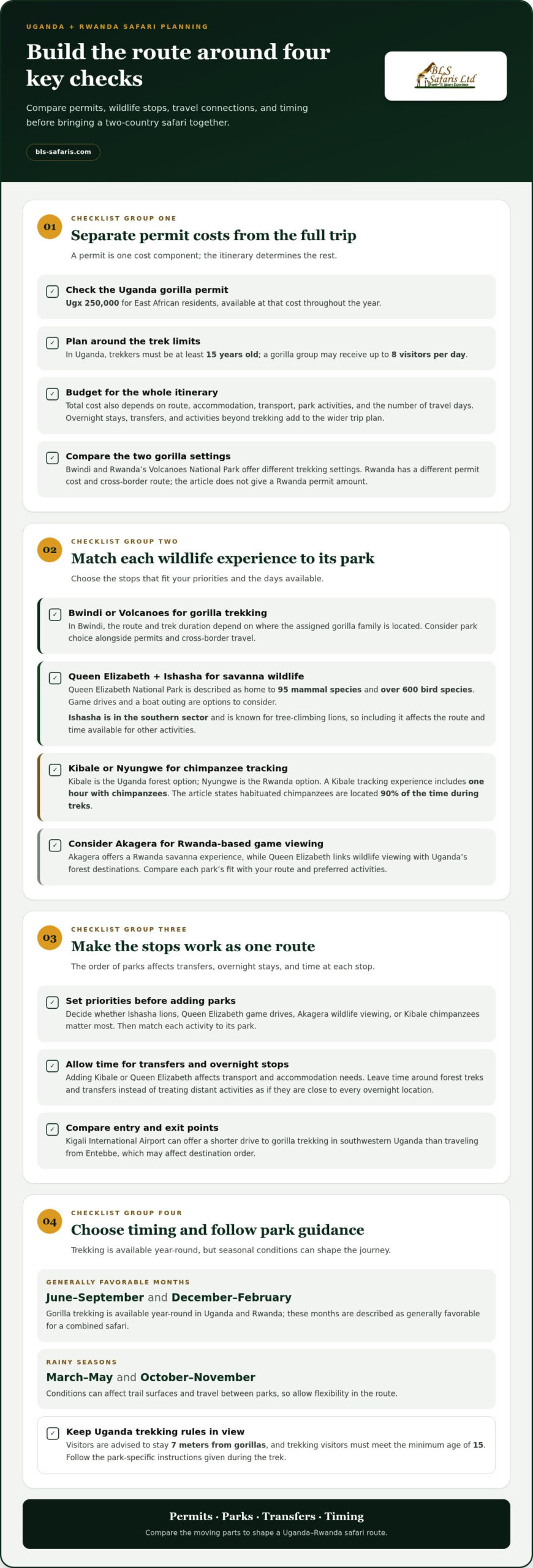
For Uganda, the gorilla trekking permit costs Ugx 250,000 for East African residents throughout the year. In Uganda, trekkers must be at least 15 years old, and a gorilla group may receive up to 8 visitors per day. These limits affect how a trek is arranged, while the number of nights and locations shape the wider itinerary.
In Bwindi Impenetrable National Park, the route and trek duration depend on where the assigned gorilla family is located. Rwanda’s Volcanoes National Park provides another mountain gorilla trekking setting, with a different permit cost and cross-border route. Comparing Uganda and Rwanda gorilla trekking means weighing permit costs alongside travel time, park choice, and the wildlife experiences you want.
Combined Wildlife and Primate Trips
A combined itinerary can pair gorilla trekking in Bwindi or Volcanoes National Park with chimpanzee tracking and savanna game viewing. Consider how the destinations connect, how much time the route allows at each park, and which activities are included. Adding Kibale or Queen Elizabeth National Park brings different primate and wildlife experiences but also affects transport and accommodation needs.
For a realistic estimate, separate the permit cost from the rest of the trip. Then factor in overnight stays near each park, road transfers between Uganda and Rwanda, and activities beyond trekking. The quoted cost of a tailor-made trip depends on its route, accommodation, transport, permits, and activities. You’ll receive a price after requesting a quote.
Seasonal Timing
Gorilla trekking is available year-round in Uganda and Rwanda. June through September and December through February are generally favorable months for a combined safari, while March through May and October through November are rainy seasons. Conditions can affect trail surfaces and travel between parks, so allow flexibility in your route.
Rules and practical guidance differ by destination. In Uganda, visitors are advised to stay 7 meters from gorillas; trekking visitors must also meet the minimum age of 15. Keep your plans focused on park-specific instructions, and follow the guidance given during the trek rather than treating wildlife viewing like a game drive.
Wildlife beyond mountain gorillas can shape the value of the trip. Queen Elizabeth National Park is described as home to 95 mammal species and over 600 bird species, while combined itineraries may include chimpanzees and Big Five game viewing. Choose experiences that matter most to you, then compare the permits, park stops, and transfers needed to include them.
Queen Elizabeth National Park and Ishasha tree-climbing lions
Queen Elizabeth National Park adds savanna wildlife viewing to a Uganda and Rwanda itinerary. Its game drives can complement forest experiences, while Ishasha offers a chance to look for its tree-climbing lions. The park is also described as having 95 mammal species and over 600 bird species, giving wildlife-focused travelers several reasons to include it.
Plan game drives around the park’s different areas rather than treating the visit as a single stop. Ishasha is in the southern sector, so including it affects the route and the time available for other activities. Consider whether you want more time for drives, a boat outing, or both when planning your days here.
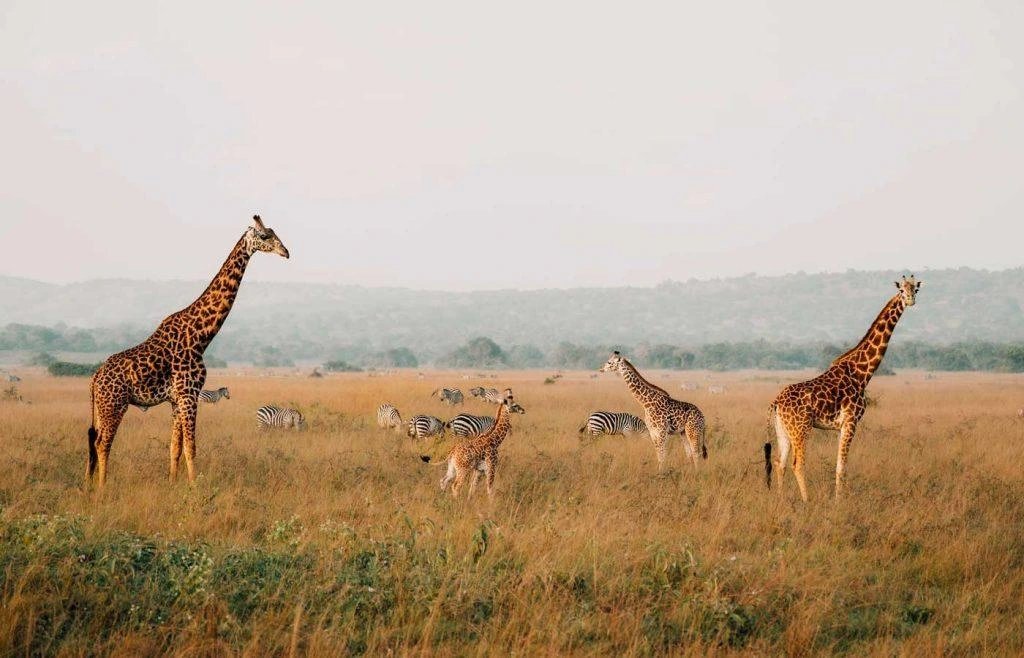
Queen Elizabeth’s wildlife drives and game drives in Rwanda’s Akagera National Park can play different roles in a combined trip. Akagera offers a Rwanda-based savanna experience, while Queen Elizabeth links wildlife viewing with Uganda’s forest destinations. Compare how each park fits your entry and exit points, overnight stops, and preferred activities. Kigali International Airport can offer a shorter drive to gorilla trekking in southwestern Uganda than traveling from Entebbe, which may affect the order of destinations.
Kibale National Park brings chimpanzee trekking into the Uganda portion of the route. A trek includes an hour with chimpanzees, and the itinerary states Kibale’s habituated chimpanzees are located 90% of the time during treks. You can pair this forest experience with Queen Elizabeth’s game drives, but account for the transfer between the parks when arranging overnight stays and departure times. Kibale chimpanzee tracking is a useful fit for travelers who want both primates and savanna wildlife.
To make the route work, set your priorities first: Ishasha lions, Queen Elizabeth game drives, Akagera wildlife viewing, or Kibale chimpanzees. Match each activity to its park, then plan transfers around those stops. This avoids treating a long drive or forest trek as if it were close to every overnight location.
- For tree-climbing lions: include Ishasha in the Queen Elizabeth section of the route.
- For chimpanzees: reserve time for Kibale Forest and its trek experience.
- For Rwanda wildlife: consider Akagera alongside Uganda’s savanna park.
Chimpanzee tracking in Kibale and Nyungwe
Kibale Forest in Uganda and Nyungwe Forest National Park in Rwanda bring chimpanzee tracking into a two-country itinerary. The forests create a different pace from savanna game drives, with time spent walking through forest habitat and watching primates. Choose between visiting one forest or including both, based on the route and the days available for transfers and activities.
In Kibale, a chimpanzee tracking experience includes an hour with the chimpanzees. The itinerary states that habituated chimpanzees are located 90% of the time during treks. That makes Kibale a clear choice for travelers prioritizing chimpanzees in Uganda. Leave time around the trek for the journey to and from the forest, rather than planning another distant activity on the same day.
Nyungwe offers a Rwanda-based forest option for travelers who want to add chimpanzee tracking across the border. Pairing Nyungwe with Volcanoes National Park or Kigali involves a different route from linking Kibale with Queen Elizabeth National Park. Compare the order of overnight stops, border crossing, and park visits before choosing both forests. The Kibale chimpanzee tracking experience gives a useful reference point for planning the Uganda portion.
Golden monkey trekking can complement chimpanzee tracking during a visit to Rwanda. Consider Volcanoes National Park for golden monkeys, or add Mgahinga Gorilla National Park as another Uganda stop for primate-focused travel. If you plan to see both chimpanzees and golden monkeys, first match each activity to its park. Then arrange the driving sequence and overnight stays around those locations.
For a combined itinerary, decide which primate experience matters most before adding extra forest days. Kibale suits a Uganda-centered chimpanzee visit; Nyungwe fits a Rwanda route that already includes its forests. Visiting both broadens the trip, but transfers between destinations also take up time. A balanced plan leaves enough time for each trek instead of rushing from one park to another.
Before setting the route, group activities by location: chimpanzees in Kibale, chimpanzees in Nyungwe, and golden monkeys near Rwanda’s Volcanoes National Park or Uganda’s Mgahinga. Then factor Kigali or your Uganda entry point into the journey, and see how each transfer affects arrival and departure days. This simple sequence keeps forest treks distinct from the longer drives between national parks.
14-Day Uganda and Rwanda safari itinerary
A 14-day route can connect Uganda’s forests and wildlife parks with Rwanda’s gorilla country and Kigali. The balance depends on how much time you give to transfers, trekking, and accommodation.
Fourteen-Day Safari Route
One itinerary places Kibale, Queen Elizabeth National Park, Volcanoes National Park, and Kigali in the same adventure. Its listed accommodation includes 2 nights at Ndali Lodge in Kibale, 3 nights at Kyambura Gorge Lodge near Queen Elizabeth, 3 nights at Virunga Lodge, and 1 night in Kigali. Those stays leave room for additional route stops and travel days.
Allow for the longer drives between parks. The journey from Murchison Falls to Kibale is assigned 5-7 hours, excluding game drives. The itinerary allocates 3 hours to reach Queen Elizabeth National Park, excluding game drives, and 6 hours to Nyungwe Forest National Park. Treat driving estimates as part of each day’s plan, not as time available for activities.
Eight-Day Uganda-to-Rwanda Route
An eight-day option can focus on fewer stops, such as gorilla trekking, chimpanzees, and Big Five wildlife. A listed Uganda and Rwanda tour combines these experiences within eight days, so the key decision is which park visits matter most. Fewer destinations help keep transfers manageable, while adding Nyungwe or extra game drives means taking time from another part of the itinerary.
Build the route around the main trek first, then plan wildlife drives and overnight stays nearby. This connects each day’s activities to their locations and avoids treating a long transfer as spare time. Compare the eight-day plan with a longer route if you want more time in Queen Elizabeth National Park or Rwanda.
Cross-Border Travel
Travel between Uganda and Rwanda can be arranged by road, with the border crossing included in the route between park stays. Kigali International Airport can offer a shorter drive to gorilla trekking in southwestern Uganda than traveling from Entebbe.
For a smoother crossing, keep your travel documents accessible and allow time for border formalities. Plan arrival and departure days around the distance to your first or final park instead of scheduling a trek immediately after a long transfer. Follow park staff instructions during wildlife activities, and keep the day’s driving and accommodation details together.
Before choosing an itinerary, list your priority experiences: gorillas, chimpanzees, savanna drives, or time in Kigali. Then make sure each park visit has a suitable overnight stop and that transfers fit the available days. A well-paced African safari connects destinations in a clear sequence, adding Queen Elizabeth National Park or Nyungwe when the route allows. Choose from the BLS Safaris itineraries or customize to your interests.
Uganda and Rwanda safari packages
Packages differ most in how they balance mountain gorillas, wildlife parks, chimpanzees, and travel time. Compare destinations and inclusions before focusing on the number of days: a shorter route may center on one primate encounter, while a longer trip can connect several parks across Uganda and Rwanda.
A 16-day Uganda and Rwanda safari itinerary is one option for travelers wanting a broader route. A 13-day package is another example, while a 9-day tour combines wildlife and trekking experiences. These durations help frame the decision, but the useful comparison is the actual sequence of parks, activities, overnight stays, and transfers.
For a gorilla-focused visit, a 2-day Bwindi safari starts and ends in Kigali. That route can suit travelers who want to reach Uganda’s gorilla habitat from Rwanda without adding a long Uganda circuit. A 3-day Bwindi habituation tour in Rushaga offers a 4-hour gorilla-watching experience. Compare these focused trips with packages that add other parks and activities.
Broader packages can combine Uganda gorilla tracking and chimpanzee tracking permits with wildlife drives. Check whether the itinerary names the parks and explains how activities fit together. For example, a route that includes Queen Elizabeth National Park adds savanna wildlife viewing, while Volcanoes National Park is a Rwanda stop for mountain gorilla trekking. Virunga Lodge is included for 3 nights in one itinerary, alongside stays in Uganda and Kigali.
Meal and accommodation details also help distinguish packages. One listed safari includes 13 breakfasts and 13 dinners, with 1 night in a guesthouse and 12 nights in lodges. Compare these inclusions against the trip length and daily route so you understand where nights are spent and which meals are planned. Accommodation near a trekking destination can also shape how the activity fits into the travel day.
Use this checklist when comparing package structures:
- Primate permits: identify whether gorilla and chimpanzee permits are included.
- Park mix: note whether the route covers Bwindi, Volcanoes, or Queen Elizabeth National Park.
- Trip rhythm: compare trekking days, game drives, transfers, and nights in each location.
- Included arrangements: review meals, accommodation, and transfers together.
The clearest package is one that matches your priority encounter and allows enough time at each park. Start with gorillas, chimpanzees, or wildlife drives, then choose a route that connects those experiences without adding stops you don’t need.
BLS safaris: East Africa Safaris
BLS safaris can bring your Uganda and Rwanda route together, from park choices and transfers to accommodation planning. Turn to the team when you’ve chosen your priorities and want a clearer sequence for gorilla trekking, chimpanzee experiences, and wildlife viewing.
BLS safaris’ East Africa Safaris and Uganda Safaris can help shape a journey around the places and activities you want to include. Kenya Safaris and Tanzania Safaris are also available if you’re considering a wider regional trip. Planning includes local guidance, clear routing, handpicked lodges, transparent pricing, and support from enquiry through travel.
Share your preferred destinations and experiences with BLS safaris to start shaping your itinerary. Contact BLS safaris or visit bls-safaris.com.
Shape a Journey That Fits Your Priorities
A useful next step is to decide what you want the journey to feel like. Perhaps mountain forests and primate encounters matter most, or you’d rather balance them with wildlife viewing and quieter time between destinations. That choice can guide your route, pace, and time at each stop.
A Uganda and Rwanda safari doesn’t need to include every park to feel complete. Start with the experiences you value most, then build a practical sequence around them. BLS safaris can help plan a journey around your priorities, whether you’re considering a focused visit or a wider East African adventure.
With your priorities in view, the next steps become clearer and more personal. Take your time choosing the experiences that matter to you, then look forward to a journey shaped around them.
Frequently Asked Questions
Do I need a tour guide while on a Ugandan safari?
A guide isn’t essential for every road transfer, but guided support is useful for park visits and wildlife activities. For example, a guide can help coordinate a Queen Elizabeth game drive with onward travel toward Kibale. Plan transport separately from park activities, since the support you need depends on what you’ll do at each stop and how independently you want to travel.
Where can I do gorilla trekking in Uganda?
Uganda’s gorilla trekking destinations are Bwindi Impenetrable National Park and Mgahinga Gorilla National Park. Bwindi has several trekking sectors, while Mgahinga offers a different setting within the Virunga range. Compare each park’s location with your wider route: a trekking stop should fit naturally with your other destinations and overnight plans, not create an unnecessary detour.
Are Gorilla sightings guaranteed on a gorilla trek?
No, gorilla sightings aren’t guaranteed. The trek follows a route through forest habitat, and the group’s location can affect how the day unfolds. Keep your schedule flexible afterward, especially if you’re continuing to another park or taking a long transfer. Follow the trek leader’s instructions throughout, and treat the encounter as a wildlife experience rather than a fixed appointment.
Can I get a visa to Uganda and Rwanda on arrival?
That regional visa is different from assuming every traveler can obtain any visa on arrival. Your passport and visa type determine the relevant entry process, so plan visa arrangements before setting border-crossing dates or booking tightly timed connections.
How Long Do Gorilla Treks Take?
Gorilla treks in Uganda and Rwanda can take 2 to 8 hours, depending on where the gorillas are and how they move. The walking time can therefore vary on the day. Leave room in your schedule afterward instead of planning a fixed-time transfer immediately following the trek. In Bwindi or Volcanoes National Park, follow the trek leader’s directions on pace and route.
How Long Do I Spend with the Gorillas?
The forest walk takes longer than the gorilla viewing encounter, and the trek’s total duration depends on the group’s location and movement. Plan for the full outing, not just the time spent near the animals. This is especially important if your itinerary includes a drive to another park, a border crossing, or a scheduled departure after visiting Bwindi or Volcanoes National Park.
Is it safe and advisable to travel to Uganda at any time of the year?
Uganda can be visited year-round, and gorilla trekking operates throughout the year in Uganda and Rwanda. Trail and road conditions vary by season, so factor them into your dates and transfers. June to August and December to February are generally favorable months for a combined safari. Leave flexibility around forest activities, use planned transport between parks, and follow local guidance during visits.
What are the best safari destinations in Uganda and Rwanda?
The best destinations depend on the experiences you want. Choose Bwindi or Mgahinga for gorilla trekking in Uganda, Kibale for chimpanzees, and Queen Elizabeth National Park for wildlife drives. In Rwanda, consider Volcanoes National Park for mountain gorillas, Nyungwe for forest experiences, and Akagera for savanna wildlife. Select parks that fit your priorities, then arrange the route around their locations.