What if a three-country safari felt less like a race and more like a carefully paced journey? A Uganda, Kenya, Tanzania safari can bring together Uganda’s gorilla trekking, Kenya’s savanna wildlife, and Tanzania’s game-viewing experiences, but fitting them into one trip takes thoughtful routing. Border crossings and transfers can take time away from the experiences you came for, so they need to be part of the plan from the start.
The key is to shape the route around your priorities, not simply add destinations to the itinerary. This guide explains what each country can add, how to balance gorilla trekking with time on the savanna, and how to plan realistic travel days. You’ll also learn how season, preferred pace, and interest in culture or beach time can influence your route, along with what to share Kenyawhen requesting a tailor-made itinerary. With clear planning and local guidance, the three countries can come together as one journey without trying to do everything at once.
Key Takeaways
- Start by deciding whether gorilla trekking, savanna wildlife, or a balanced mix matters most to you.
- Compare what Uganda, Kenya, and Tanzania each add before choosing which experiences belong in your route.
- A Uganda, Kenya, Tanzania safari works best when the country sequence reflects your priorities and travel arrangements.
- Share your dates, preferred pace, accommodation style and wildlife or cultural interests to shape a useful itinerary brief.
- Local guidance, clear routing, and handpicked lodges can help bring a tailor-made three-country journey together.
Is a Uganda Kenya Tanzania Safari Right for Your Trip?
Start with the experience you most want to make room for: gorilla trekking, savanna wildlife, or a balanced combination. A Uganda Kenya Tanzania safari can offer a wider mix of landscapes and activities, but each added stop also needs time for travel and settling in. The aim isn’t to visit every country at any cost. Choose a scope that leaves room to enjoy the journey between experiences.
A multi-country route may suit you if variety matters and your dates allow for several stops. If you have limited time, focusing on one or two countries can make it easier to explore at a steadier pace, with fewer transitions. Neither approach is automatically better. Think of the traditional East African safari as a journey shaped by wildlife, landscapes, and how you move through them, rather than a checklist of borders crossed.
What does each country add to a combined safari?
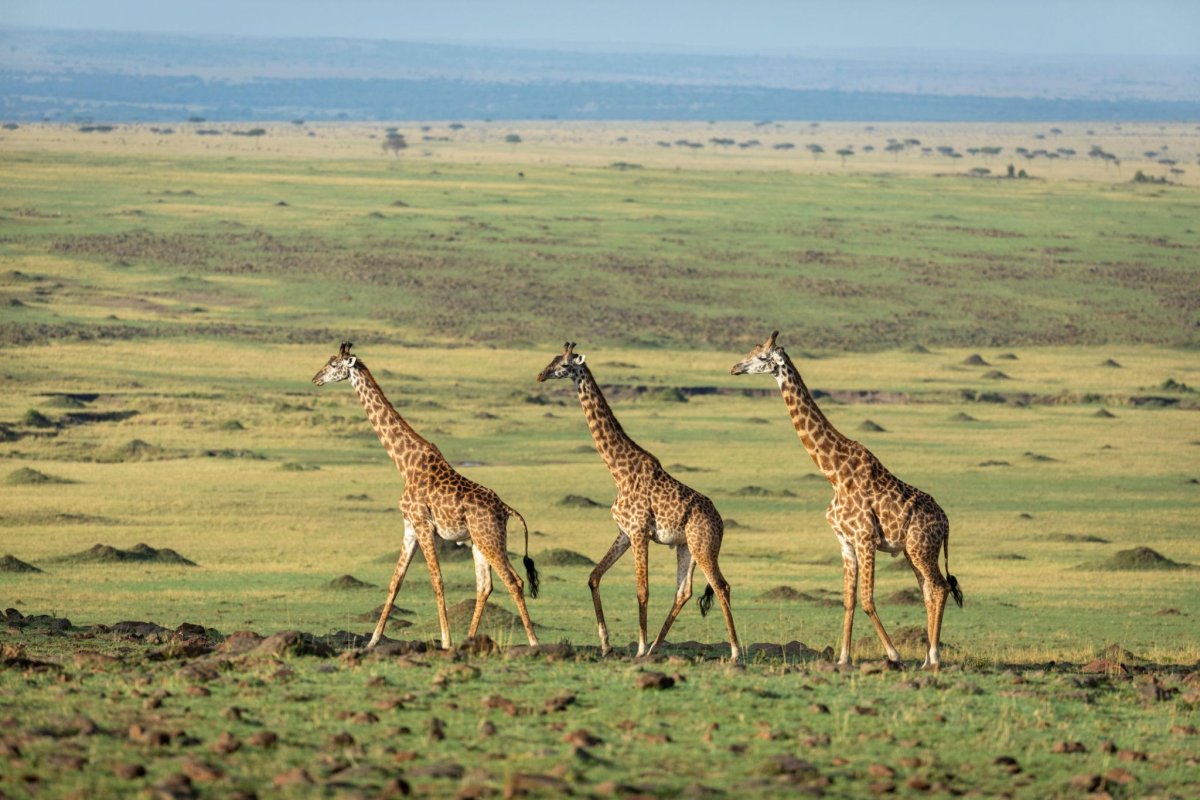
Uganda brings the possibility of gorilla trekking alongside other wildlife, cultural experiences, and safari activities. Kenya and Tanzania offer the seasonal great migration and complementary settings for wildlife-focused safaris, each contributing a different part of a broader East African journey. The choice is less about ranking countries and more about matching their different strengths to what you hope to experience.
In short: Uganda adds primate encounters and cultural variety; Kenya and Tanzania deepen the savanna wildlife focus. That’s a starting point, not a fixed formula. Your preferred balance might include all three, or it may make more sense to spend longer in fewer places.
Who benefits most from including all three countries?
Including all three may suit travellers who value a varied itinerary and have flexibility for multiple stops. It can be especially appealing if gorilla trekking is a priority and you also want time for wildlife-focused experiences in Kenya and Tanzania. Before considering route details, rank the experiences that matter most, then decide which are essential and which would be welcome extras.
Travellers with a tighter schedule may find that fewer countries allow for deeper exploration and a less hurried rhythm. Use these questions to clarify your preference:
- Is gorilla trekking a must-have, or one of several interests?
- Would you rather spend more time on savanna wildlife experiences, or include a broader mix of activities?
- How much of your trip are you comfortable allocating to travel between stops?
- Would you prefer a varied itinerary or fewer transitions and more time in each destination?
Your answers help define the right scope before any route is built. Once your priorities are clear, it becomes easier to decide whether all three countries belong in the journey or whether a more focused safari will suit you better.
What Uganda, Kenya, and Tanzania Offer on Safari
Think of the three countries as different parts of one travel story, not interchangeable stops. Uganda offers primate encounters and a broad mix of wildlife and cultural experiences; Kenya and Tanzania add complementary savanna settings for wildlife-focused safaris. This distinction can help you decide what deserves the most time, then shape a route around your interests instead of trying to include every possible experience.
For a Uganda Kenya Tanzania safari, the value of combining countries lies in contrast. A day focused on forest trekking has a different rhythm from a savanna game drive, and cultural activities can add another perspective to the journey. The mix can be rewarding, provided the itinerary gives each experience enough breathing room instead of treating transfers as invisible.
Uganda: gorilla trekking and more varied experiences
Gorilla trekking can anchor the Uganda portion for travellers who place a close wildlife encounter high on their list. It gives the trip a clear focus, while other wildlife activities can broaden the experience without making every day feel the same. Cultural experiences may also be included, depending on what you’d like to learn and how much time you want to set aside beyond wildlife.
Consider whether Uganda is the main reason for your journey or one part of a wider safari. If trekking is the priority, let it shape how much time you give this portion and what you add around it. For travel that includes Uganda and Kenya, consult the official East Africa Tourist Visa requirements as part of your document planning. Permit guidance and trekking preparation are separate practical details to address when building the itinerary.
Kenya and Tanzania: wildlife priorities and complementary choices
Kenya and Tanzania can both support a wildlife-led part of the journey, but you don’t need to treat them as identical experiences. Think first about the pace you prefer: would you like to settle into fewer safari stops, or include a wider range of settings? Your answer helps determine whether both countries add enough value to your trip, or whether concentrating on one gives you more time to explore at a comfortable rhythm.
The Great Migration may also influence your preferred travel window. It is a seasonal movement across the wider ecosystem that spans Kenya and Tanzania, so travellers interested in following it can consider timing as part of their planning. Animal movements vary, however, and no itinerary can promise a particular sighting. Build the safari around the experience of being in the landscape, with migration interest guiding choices rather than becoming the sole measure of success.
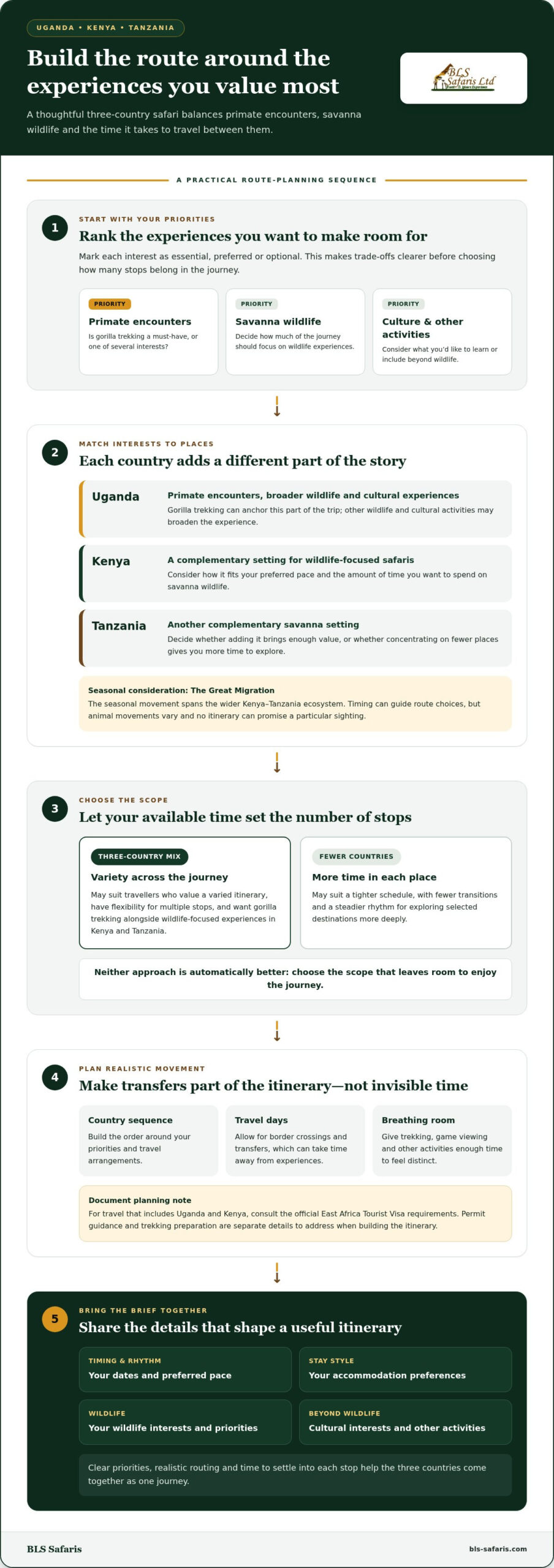
To compare the countries in practical terms, list your priorities under three headings: primate encounters, savanna wildlife, and culture or other activities. Mark each as essential, preferred or optional. This makes trade-offs easier to see before you decide how many stops to include. If you’d like help turning those priorities into a coherent route, explore tailor-made safari planning with BLS safaris.
How to Sequence a Uganda Kenya Tanzania Safari
There isn’t one correct order for a three-country journey. Build the sequence around your must-have experience, then consider your arrival and departure arrangements and the practical connections available for your dates. A Uganda, Kenya, Tanzania safari should feel like a considered progression, not a collection of stops added simply to include three countries.
Choose the route order around your must-have experience
If gorilla trekking is central to your plans, an illustrative route might begin in Uganda, then continue to wildlife-focused experiences in Kenya and Tanzania. A wildlife-first traveller might prefer to begin in either Kenya or Tanzania, with Uganda later in the journey. These examples show the planning logic, not fixed schedules: arrival and departure points, dates and workable connections all shape the final order.
Seasonal interests can also affect the sequence. If the Great Migration is a priority, consider how your dates relate to the wider ecosystem across the two countries. UNESCO’s Serengeti National Park World Heritage site information provides context for the ecological landscape, but animal movements aren’t guaranteed to follow a precise itinerary. Keep the route flexible enough to reflect your priorities without making one hoped-for sighting the sole purpose of the trip.
| Route logic | Best-fit priority | Pacing trade-off |
|---|---|---|
| Uganda first, then Kenya and Tanzania | Make gorilla trekking the opening focus | Front-loads a distinct experience, then shifts to savanna wildlife |
| Kenya or Tanzania first, then Uganda | Begin with wildlife-focused safari experiences | Places trekking later, so consider how you want the trip to build |
| Two countries rather than three | Spend more time exploring fewer destinations | Offers less variety across countries but fewer transitions |
Balance travel days with time in each destination
Count each transfer as part of the itinerary, not as a sightseeing day. A travel day can involve packing, waiting, and getting settled, so avoid filling it with plans that assume you’ll have a full day to explore. When reviewing a proposed route, look at the actual rhythm: experience days, transfer days, and space to rest or adjust.
Adding another stop can increase variety, but it also means another transition and less time available elsewhere. Sometimes a longer stay in fewer places gives you a more rewarding pace than squeezing in one more destination. There’s no universal trip length that suits every route; the right balance depends on your dates, preferred activities, and comfort with moving between countries.
Share your priorities and travel arrangements with a local planner to shape a clear route around them. BLS safaris creates tailor-made East African safari journeys with local guidance and considered routing, helping you weigh variety against time to explore.
What to Plan Before Combining Three Safari Countries
A clear brief helps turn a collection of interests into a manageable route. Before choosing stops, decide what matters most, what pace suits you and which practical details could shape the journey. A useful multi-country safari brief is a short account of your priorities, dates, budget range and preferred travel style. It gives your planner a clear basis for building the route.
Create a clear brief for your safari planner
Start with your must-have experiences, then separate them from the extras. BLS safaris uses your priorities to shape tailor-made journeys across Uganda, Kenya and Tanzania, with local guidance, clear routing and handpicked lodges as practical parts of planning. Share what you’re hoping to experience, as well as the pace and accommodation style that will help you enjoy it.
Use this sequence to prepare a useful planning brief:
- Rank your experiences. Put gorilla trekking, wildlife, culture, beaches and downtime in order of importance. Mark each as essential, preferred or optional.
- Set your date range. Note your preferred travel dates and how flexible they are. Dates can affect which experiences make sense to prioritise and how the route is arranged.
- Describe your pace. Say whether you’re comfortable moving between several stops or would rather spend longer in fewer places. Include how much downtime you’d like.
- Outline your accommodation preferences. Mention the style of lodges or other accommodation you prefer, along with any practical needs that could affect your stay.
- Share your budget range. A broad range helps guide choices about the overall shape of the journey without needing to settle every detail at the start.
- Note your travel arrangements. Include your expected arrival and departure plans, if known, so the route can be considered in context.
Plan practical details without overloading the itinerary
Once your priorities are clear, give practical planning its own place. Permit requirements and entry arrangements can change, so use current official guidance for the relevant countries and your circumstances. Build those considerations into the route rather than leaving them until the final stage. A well-planned itinerary also allows realistic connections between countries without assuming that every travel day can double as a full day of activities.
For each experience, ask yourself: would I be disappointed to leave it out, or is it simply a welcome possibility? That distinction can prevent an itinerary from becoming overloaded. If a route only works by removing rest time or squeezing several major experiences into consecutive travel days, consider dropping an optional stop or allowing more space between activities.
For a Uganda, Kenya, Tanzania safari, your brief doesn’t need to solve every routing question. It needs to make your priorities easy to understand. Share your safari priorities with BLS safaris to begin shaping a tailor-made journey around your interests, preferred pace, and practical arrangements.
Plan Your Tailor-Made Uganda, Kenya, Tanzania Safari with BLS Safaris
A three-country itinerary works best when every stop has a purpose. BLS safaris is a Uganda-based operator that plans tailor-made journeys across Uganda, Kenya and Tanzania, bringing local guidance to the decisions that shape your route. Rather than starting with a fixed sequence, planning can begin with what you most want from the trip, then consider how the countries, experiences and travel days can fit together.
This approach is useful when your priorities span different kinds of travel. You might want gorilla trekking to be a central experience, make room for wildlife viewing in Kenya and Tanzania, or balance safari activities with culture, beach time and downtime. Route and lodge choices can be shaped around those preferences, with clear routing helping you understand how the journey is assembled. Transparent pricing also makes the proposed arrangements easier to review as you plan.
What a collaborative planning process can shape
Your stated priorities guide the itinerary, from which countries to include to how much time to give each experience. BLS safaris brings local knowledge to route planning and handpicks lodges to support the shape of the journey. The aim is a coherent trip that reflects your interests and preferred pace, rather than adding stops simply to fill a schedule.
Useful details to share at the beginning include:
- Your preferred countries and any experiences you consider essential
- Your travel dates, including how flexible they are
- The pace you enjoy, such as fewer stops or a broader mix of experiences
- Your accommodation preferences and budget range
- Any interests in wildlife, gorilla trekking, culture, beaches, or time to rest
You don’t need to arrive with a finished itinerary. A short list of must-haves and nice-to-haves gives the planning conversation a practical starting point. It also helps identify where a compromise might improve the overall rhythm, such as allowing more room for a priority experience rather than squeezing in another destination.
Take the next step with a clear travel brief
BLS safaris supports travellers from enquiry through travel, with local guidance to help bring the details together. The company holds Uganda Tourism Board license UTB/RTT/TT/2025/101532 and is a member of AUTO, UTB and UWA. These details sit alongside a planning approach focused on three promises we never break , including clear routing and transparent pricing.
Share your preferred countries, dates, priorities and travel pace with BLS safaris to begin discussing a tailor-made journey. Your plans can take shape through a straightforward exchange about what matters most, what you’d like to include, and how you want the trip to feel. Begin planning your tailor-made safari when you’re ready.
Let Your Priorities Shape the Journey Ahead
A memorable Uganda, Kenya, Tanzania safari doesn’t need to include every possible stop. It needs to reflect what you value most, with enough room to experience each part of the journey at a comfortable pace. As you move from ideas to a travel brief, choose one experience you most want to build around, then note what would make the rest of the trip feel balanced, whether that’s more time outdoors, cultural encounters, or space to unwind.
You don’t need to have every detail decided before taking the next step. Your preferred dates, a few must-haves and an honest sense of your travel pace are enough to begin shaping possibilities. BLS Safaris can work with those priorities to develop a tailor-made East African journey across Uganda, Kenya and Tanzania, with the route designed around your interests.
Start planning your tailor-made East African safari and take the first step toward a journey that feels thoughtfully your own.
Frequently Asked Questions
Can you visit Uganda, Kenya, and Tanzania on one safari?
Yes, one safari can include all three countries, with the route built around your travel dates and priorities. A Uganda, Kenya, Tanzania safari might pair a gorilla trek with wildlife-focused experiences, but each country change adds a transition to plan. If your leave dates are fixed, decide which experience you most want to protect before adding optional stops. That makes it easier to adjust the itinerary without losing sight of the trip’s main purpose.
How many days do you need for a Uganda, Kenya, and Tanzania safari?
There’s no set number of days that suits every three-country itinerary. The time needed depends on your chosen activities, the connections between stops, and how much time you want to spend in each place. If your available dates are limited, you might focus on one main experience in each country or leave one country for another trip. A planner can map travel days alongside activity days so the schedule reflects the time you actually have.
Which country should you visit first on a Uganda, Kenya, and Tanzania safari?
The best starting country depends on your travel arrangements and the experience you want to shape the journey around. You might place Uganda first if gorilla trekking is the central reason for travelling, or begin in Kenya or Tanzania if you want wildlife experiences to open the trip. Share your arrival and departure details when discussing the route. They can affect which sequence makes practical sense, so sample itineraries are starting points rather than rules.
Is gorilla trekking included in a Uganda, Kenya, and Tanzania safari?
Gorilla trekking can be included in the Uganda portion of a multi-country safari, but it needs to be planned as a distinct activity rather than treated like a regular game drive. If it’s a priority, mention it early so the route can be organized around the experience. Permit conditions and other requirements can change, so consult current official guidance before finalizing arrangements. This is especially helpful if you’re coordinating travel dates with other travellers.
Can you combine the Great Migration with gorilla trekking?
It may be possible to plan for both, depending on your dates, route, and current wildlife conditions. Since migration movements are seasonal and natural, sightings can’t be promised for a particular day or location. If your dates are fixed, decide whether gorilla trekking or migration-related wildlife viewing is the experience you most want to prioritize. Then treat the other as an additional possibility, rather than building the entire journey around two outcomes that depend on nature.
What should I decide before planning a three-country safari?
Decide which experiences are non-negotiable, then note your dates, preferred pace, accommodation style and budget range. It can also help to record who’s travelling and whether anyone has needs that affect activity choices or rest time. For example, a group with different interests might rank gorilla trekking, wildlife viewing and cultural activities separately before agreeing on the route. That gives a safari planner a clearer picture of where preferences align and where you may need to make trade-offs.