What if your Uganda safari were planned around the experiences you care about, rather than a fixed route you have to fit? A tailor-made Uganda safari can bring together gorilla trekking, wildlife viewing, and cultural experiences at a pace that suits your travel days. To decide what belongs in the itinerary, start with your priorities, then consider how much time you have and how you want each day to feel.
This guide explains what you can shape, which decisions to make first, and how your interests, dates, and budget can guide a practical itinerary. You’ll find ways to balance time in the forest with wildlife experiences, choose a comfortable pace, and prepare for a planning conversation. BLS Safaris plans tailor-made trips with local guidance, clear routing, and handpicked lodges, shaping the journey around your destinations, dates, and budget.
Key Takeaways
- A tailor-made Uganda safari is shaped around your priorities, with choices about experiences, pace, accommodation, and routing.
- Choose a mix of primate encounters, wildlife, culture, and time in nature based on your interests and available travel days, not a checklist.
- Compare flexible and fixed itineraries by how much planning input and room for changing priorities you want.
- Before planning, note your dates, group needs, and preferred pace, then separate must-have experiences from optional interests.
- Sharing these details with BLS Safaris gives the planning conversation a clear starting point.
What Makes a Tailor-Made Uganda Safari Different?
A tailor-made Uganda safari is planned around what you want from the journey, rather than built from a fixed template. Your priorities, travel dates, and budget guide the combination of experiences, accommodation choices, route, and pace. This means considering not only what you hope to see, but also how you want the days to flow.
Personalization goes beyond selecting a package from a list. It means shaping the combination and order of experiences around the travelers. A wildlife-focused trip may give more space to savannah experiences, while a primate-focused journey can place greater emphasis on time in forest settings. The goal is a coherent itinerary, not a checklist of stops.
Uganda offers a contrast between open landscapes and forest environments, with cultural experiences adding another dimension. Start with the interests that matter most to you, then build the trip around them. Local guidance, handpicked lodges, and considered routing help bring those choices together into a well-organized journey.
What can be tailored in a Uganda safari?
Begin with the details that shape the whole trip: your interests, dates, group, and preferred pace. Group composition matters too. Travellers with different interests may want a mix of activities and breathing room, while a group with one shared focus may choose to give that experience more time.
The mix of experiences and accommodation helps set the trip’s character. You might prioritize gorilla trekking, add wildlife viewing and bird watching , or include cultural experiences alongside time in nature. These choices need to work with your dates and route, rather than being treated as separate add-ons. Share what is essential, what is optional, and what kind of day feels comfortable to help create a balanced plan.
Why does Uganda suit more than one kind of safari?
Uganda brings together savannah wildlife viewing and forest-based primate experiences, so a safari can be shaped around different interests. Some travelers put gorilla trekking at the center of their plans; others want wildlife viewing to lead or hope to make cultural experiences a meaningful part of the journey. The right combination depends on the time available and the pace you prefer.
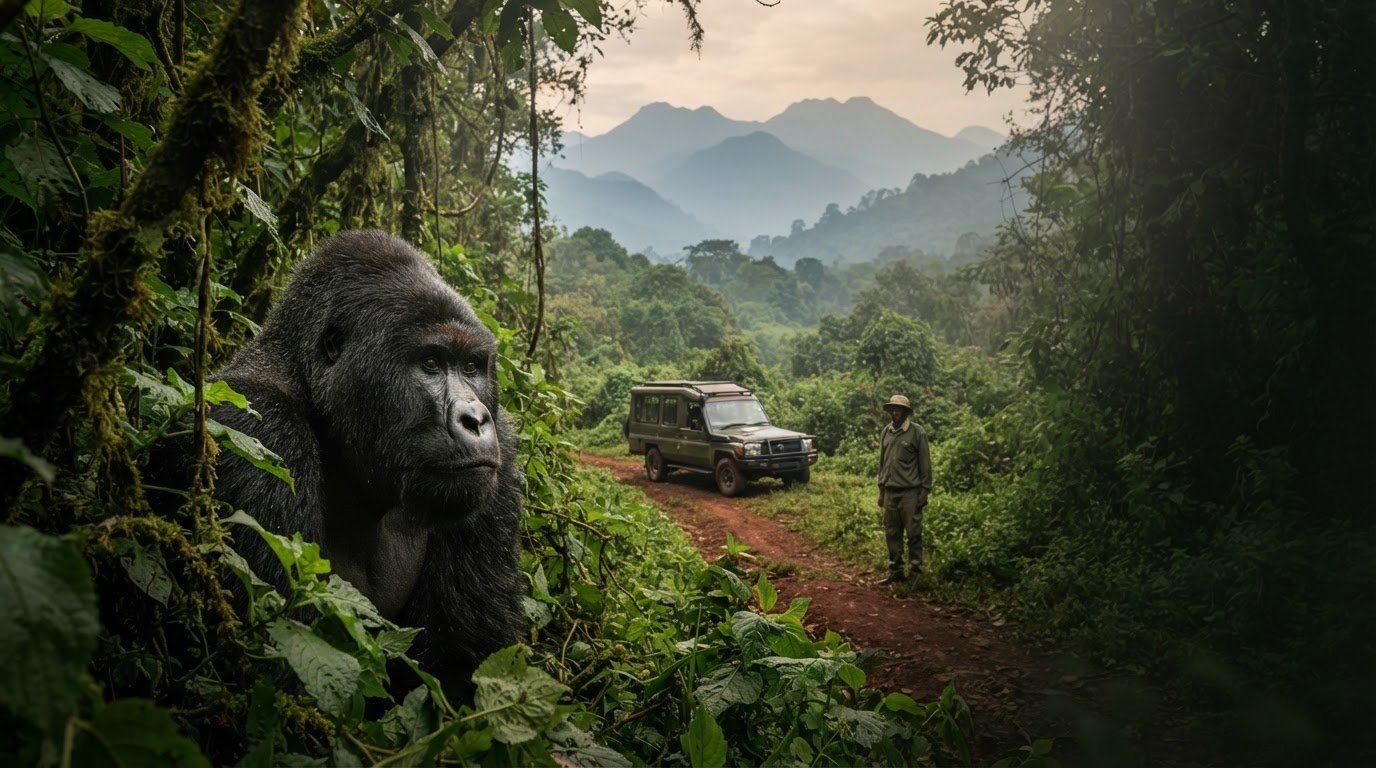
Forest settings such as Bwindi Impenetrable National Park offer a different experience from open savannah, which is one reason a thoughtful mix matters. Rather than trying to include everything, decide what you most want to remember. That priority gives the itinerary a clear focus and helps avoid rushing between contrasting experiences.
Which Experiences Can Shape Your Tailor-Made Uganda Safari?
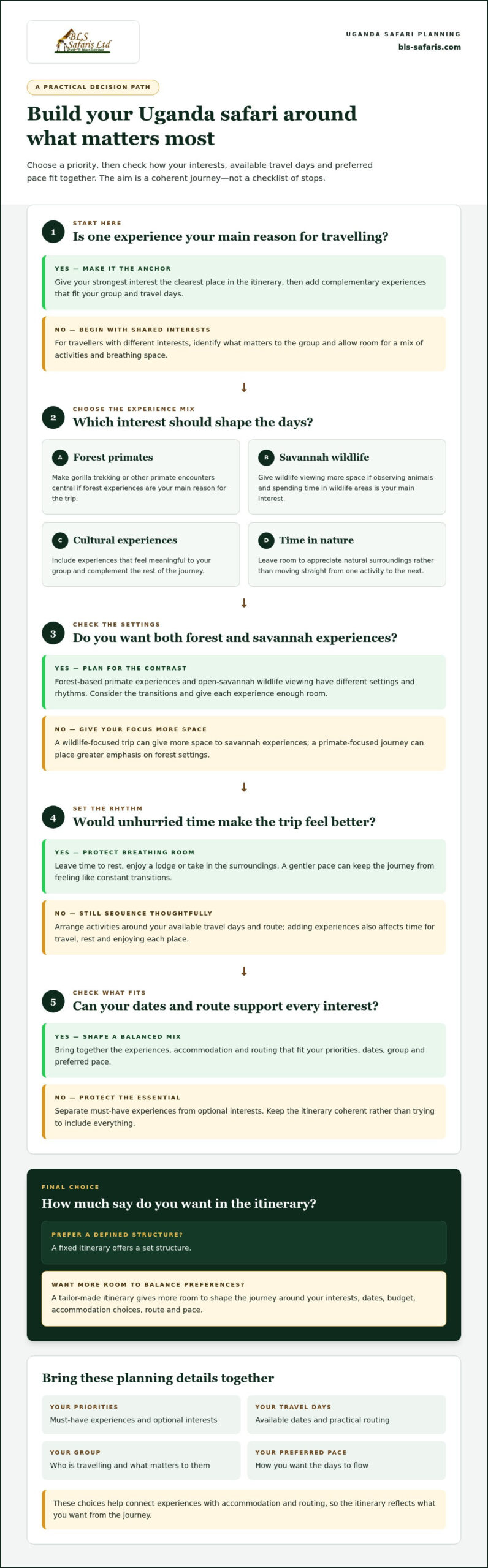
A good experience mix starts with what matters most to you, not with how many activities can fit into a schedule. For a tailor-made Uganda safari, consider four broad interests: forest primates, savannah wildlife, cultural experiences, and quieter time in nature. You can combine them, but every addition affects the time available for travel, rest, and enjoying the places you visit.
Prioritising a few interests can make a safari feel more coherent because each experience has room to shape the days around it. Choose your main interest as the anchor, then add complementary experiences that fit your group and available travel days. This keeps planning focused without ruling out variety.
- Primates: Make gorilla trekking or other primate experiences a central focus if forest encounters are your main reason for travelling.
- Wildlife: Give the savannah more viewing space if you’re most interested in observing animals and spending time in wildlife areas.
- Culture: Include cultural experiences that feel meaningful to your group and complement the rest of the journey.
- Time in nature: Leave room for a gentler rhythm, with time to appreciate natural surroundings rather than moving straight between activities.
The Uganda Wildlife Authority provides official information about Uganda’s protected areas and wildlife experiences. Use it as a reference while deciding which interests to make central to your plans.
How should travelers prioritize wildlife and primate experiences?
Start by naming your strongest interest. If gorilla trekking is the experience you most want, let it guide the broader design, including the time you reserve for forest-based activities and the transitions around them. Wildlife viewing has a different rhythm and setting, so combining both calls for considered pacing rather than simply adding one activity after another.
As you compare options, consider how much time you want to give each experience and how your group feels about travelling between different settings. BLS Safaris can connect those priorities with your dates and practical routing, helping shape an itinerary that feels balanced rather than compressed.
Can culture and quieter experiences belong in the plan?
Yes. Cultural experiences can add context and connection to a wildlife-focused journey, especially when they reflect your group’s interests. Discuss what kind of engagement appeals to you, then make it a meaningful part of the trip rather than a stop added only to fill a gap.
Balance planned activities with unhurried time. A schedule with space to rest, take in the surroundings, or enjoy a lodge can feel more rewarding than one packed with constant transitions. If you’re weighing several interests, share your priorities with BLS Safaris’ local safari planners to shape a mix that suits your dates and preferred pace.
Tailor-Made or Fixed Uganda Safari: Which Fits Your Travel Style?
Both trip styles can lead to a rewarding Uganda safari. The difference is how much the itinerary is shaped around your preferences. A fixed itinerary offers a defined structure, while a tailor-made Uganda safari gives you more room to balance interests, travel pace, and group needs. Neither is automatically better. The right fit depends on how clearly you know what you want and how much you’d like to shape the plan.
Use these points to compare the planning experience:
| Consideration | Fixed itinerary | Tailor-made itinerary |
|---|---|---|
| Flexibility | Follows a set sequence and structure. | Can be shaped around selected priorities and preferred pace. |
| Planning input | Usually suits travelers who are comfortable choosing from a defined plan. | Travellers share their interests, dates, and group needs to guide the design. |
| Itinerary structure | Activities and transitions are arranged in advance. | The experience mix and routing are organized around the trip’s priorities. |
| Changing priorities | Best suited to plans travellers are happy to keep as presented. | Useful when different interests or needs must be balanced during planning. |
Customization doesn’t have to mean endless decisions. A clear brief narrows the choices: name your main interest, the experiences you’d like to add, your dates, and the pace that feels comfortable. Then planning can focus on a practical combination instead of every possible option. Separate what matters most from what would simply be a welcome extra.
When is a fixed safari itinerary a sensible choice?
A fixed itinerary can be a good fit if you already know which experiences appeal to you and are comfortable with the planned sequence. Its defined structure makes it easier to understand what the journey involves without shaping each element yourself. For travellers with clear preferences and little need for changes, a set plan can feel straightforward and still offer a satisfying safari.
When does a tailor-made safari offer more useful flexibility?
Tailored planning is especially useful when your group has different interests, a particular preferred pace or several priorities to balance. You might want primate experiences and wildlife viewing while also leaving breathing room between activities. A focused planning brief helps turn those needs into clear choices. BLS Safaris plans Uganda safaris around your destinations, dates, and budget, with local guidance and considered routing.
To decide, ask yourselves whether you’re happy with a prepared structure or need the experience mix to reflect your group more closely. If a set sequence feels right, a fixed itinerary may be enough. If your priorities call for a different balance, a tailored plan gives you room to shape the trip while keeping decisions organised.
How to Prepare for Planning a Tailor-Made Uganda Safari
A little preparation makes it easier to turn broad ideas into a useful safari plan. You don’t need to decide every stop in advance. Gather the details that shape the trip, then work with your planner to balance them into a practical structure.
What should you decide before discussing the itinerary?
Start with your strongest interests and any experiences that feel essential. Then note when you hope to travel, who is coming and what pace feels comfortable for your group. These details give BLS Safaris a practical starting point for shaping your tailor made Uganda safari.
- Set your priorities. List your main interests, such as gorilla trekking, wildlife viewing, cultural experiences or time in nature. Mark which experiences are must-haves and which are optional.
- Share your dates. Give your preferred travel period and explain how flexible it is. Your dates help guide the planning conversation and the options considered.
- Describe your group. Include who is travelling and any needs or preferences that could affect the daily rhythm, accommodation choices or activities.
- Choose a comfortable pace. Say whether you’d enjoy full days of activity or prefer space to rest and take in your surroundings. There’s no single right answer.
Keep the list realistic rather than ambitious. If every interest is labelled essential, it becomes harder to see what can be balanced. Separate the experiences you’d be disappointed to miss from those you’d enjoy if they fit naturally.
Allow realistic time for transitions between activities and places. An itinerary can look appealing on paper but feel hurried if it leaves too little room for travel, rest or changes in daily rhythm. You don’t need to map every transfer yourself. Tell your planner whether you prefer fewer transitions and a steadier pace, or are comfortable with a more active itinerary.
How can you make the first planning conversation productive?
Share your priorities in order, then explain what is flexible. For example, you might say that a primate experience is essential, wildlife viewing is a strong preference and cultural activities are welcome if they fit the overall flow. Add your dates, group composition and budget, and mention anything that would make the trip feel too rushed. Clear preferences help focus the conversation on a coherent structure rather than endless choices.
If this is your first safari, it can also help to read a Uganda safari for first-timers planning guide before settling on details. Bring questions as well as preferences. The conversation is a chance to work through what matters and shape a plan together.
Share your safari priorities with BLS Safaris to begin a focused planning conversation.
How BLS Safaris Plans a Tailor-Made Uganda Safari With You
Planning a tailor-made Uganda safari with BLS Safaris starts with your priorities, destinations, travel dates and budget. These details guide the trip’s overall structure, from the experiences you want to include to the pace and routing that bring them together. Local guidance helps clarify the choices, while handpicked lodges form part of a considered itinerary.
A clear route matters because the journey between experiences affects how the days flow. BLS Safaris considers routing alongside your interests to connect the different parts of the trip in a practical way. Transparent pricing helps you make informed decisions as the plan takes shape, and support continues from enquiry through travel.
What does local planning support look like?
It’s a collaborative process: you share what matters, and local guidance helps turn those preferences into a clear safari structure. If gorilla trekking is central, for example, that priority can guide how other experiences and transitions are considered. Accommodation choices and routing are part of the same conversation, so the plan reflects how you want to travel as well as what you hope to experience.
This approach keeps the focus on decisions that affect your trip, without asking you to map every detail alone. Explain what’s essential, what’s flexible and what kind of pace feels right. BLS Safaris then shapes the itinerary around your destinations, dates and budget, with handpicked lodges and clear routing included in the planning.
How does BLS Safaris demonstrate trust and accountability?
Clear communication is an important part of planning. Transparent pricing helps you understand the proposed trip, while support from enquiry through travel gives you a point of contact as the journey develops. BLS Safaris lists UTB License UTB/RTT/TT/2025/101532 and memberships in AUTO, UTB and UWA.
When reviewing a safari plan, look for clear information about how your priorities inform the itinerary and how the proposed routing and accommodation fit together. A useful planning conversation should make the next decisions easier to understand, not leave you with a long list of disconnected options. This is also a helpful lens for reading a guide to choosing a trusted Uganda safari operator.
Begin planning your Uganda safari with BLS Safaris by sharing your preferred dates, key interests and travel pace.
Take the First Step Toward Your Uganda Journey
You don’t need to have every detail settled before planning begins. Start with one clear thought: what would make this journey meaningful to you? Pair that priority with your preferred dates and a note about what you’re open to adjusting. This gives your first conversation a useful focus and helps turn the idea of a tailor made Uganda safari into a plan that can develop with confidence.
As the details take shape, keep your must-haves in view while allowing room for practical guidance. A thoughtful journey isn’t about fitting in everything. It’s about making choices that feel right for you and your fellow travellers.
Start planning your tailor-made Uganda safari with BLS Safaris and take the next step toward a journey shaped around what matters to you.
Frequently Asked Questions
Is a tailor-made Uganda safari suitable for a first-time visitor?
Yes, it can suit first-time visitors who want guidance shaping their trip without needing to know every detail in advance. Start with a preference, such as seeing wildlife or spending time in a forest, and build your plan from there. Mention what you’re unsure about, such as how active the days might feel, so those questions can be included in the planning.
Can I choose not to include gorilla trekking in my Uganda safari?
Yes. Gorilla trekking is an option, not a requirement for a Uganda safari. If it isn’t a priority, your trip can focus on other interests, such as wildlife viewing, cultural experiences or time in nature. Share that preference at the outset so the planning conversation can focus on experiences that suit your interests and comfort.
How can a tailor-made safari balance different interests within one travel group?
Begin by finding the interests the group shares, then identify where preferences differ. One traveller might be most interested in wildlife while another hopes for cultural experiences. You could agree on a main focus and treat the other interest as a complementary choice, rather than expecting every day to satisfy everyone equally. Mentioning mobility needs, activity preferences and quiet-time preferences can also help clarify the balance.
Do I need to know my exact itinerary before contacting a safari planner?
No, you can begin with broad preferences rather than a finished itinerary. Share your likely travel dates, group size, budget and the experiences you care about most. It’s also useful to explain what you’d rather avoid, such as frequent transitions or an overly full schedule. BLS Safaris can use those details to shape a suitable structure with you, then refine the plan as your priorities become clearer.
Can I adjust the pace of a tailor-made Uganda safari?
Yes. Tell your planner whether you prefer active days, a slower rhythm or a mix of both. For example, you might want a lighter day after a demanding activity, or more time at selected stops instead of adding another excursion. The pace also depends on how experiences connect across the itinerary, so sharing what feels comfortable early can guide those choices.
What does a local safari planner contribute to a Uganda trip?
A local planner can connect your interests with practical decisions about the trip, including the sequence of experiences, routing and accommodation. This is useful when you’re weighing options but aren’t sure how they fit together. Discuss how you want the days to flow, then use local guidance to shape a plan that works as a whole rather than as a collection of separate activities.
How are gorilla trekking permits handled when planning a Uganda safari?
Permit planning should be addressed early if gorilla trekking is part of your trip. Uganda Wildlife Authority guidance says foreign non-residents book through registered, licensed Ugandan tour operators, and permits require full payment when booked. A safari planner can coordinate permit arrangements as part of the wider itinerary, but permit availability isn’t guaranteed. Check current requirements and fees with the Uganda Wildlife Authority before finalising plans.