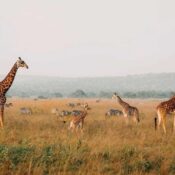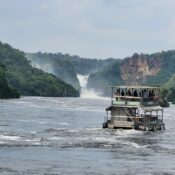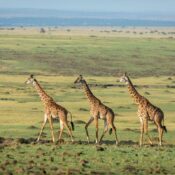
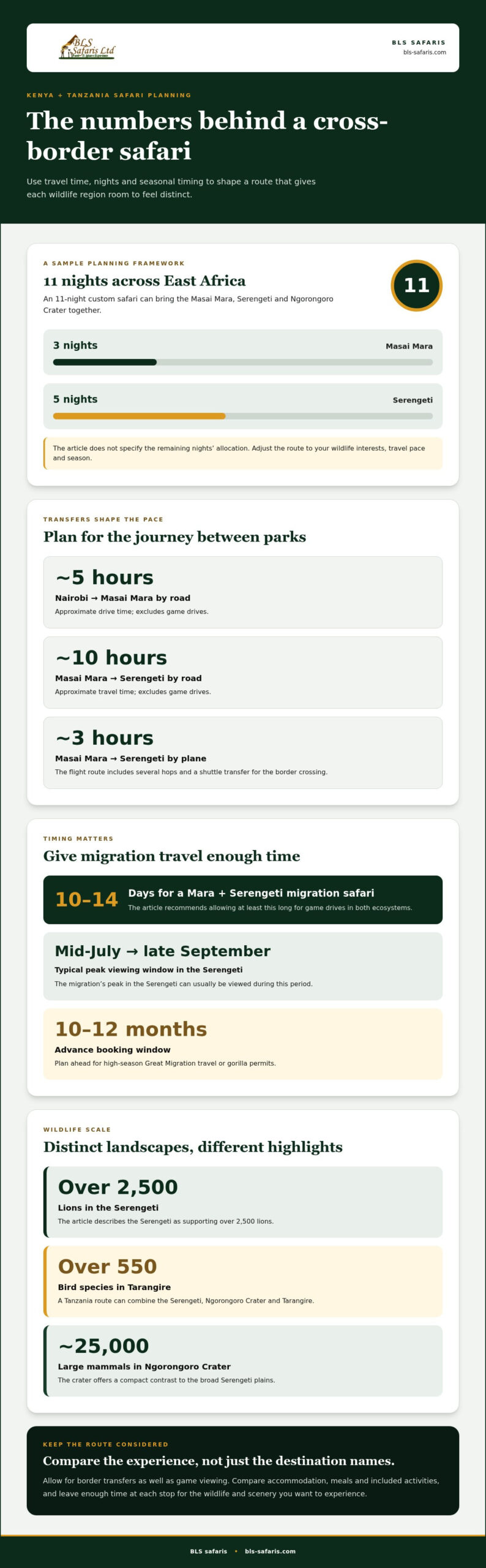
The best Kenya and Tanzania safari gives the Masai Mara , Serengeti and Ngorongoro Crater enough time to feel distinct, rather than rushing from stop to stop. An 11-night custom East Africa safari itinerary can bring these highlights together, with three nights in the Masai Mara and five nights in the Serengeti. The right balance depends on your wildlife interests, travel pace, and the season.
It’s natural to wonder whether the two countries fit comfortably into one trip and how the route, stays, and transfers work together. This guide explains how to choose an itinerary, what a safari may include, and how an 11-night journey can be arranged. You’ll also see what to consider when comparing destinations and planning the practical details, so you can shape a trip that feels considered from the first game drive to the final stop.
Key Takeaways
- Match Kenya’s wildlife destinations and activities to the experiences you most want, then shape the route around them.
- Consider how travel time between Nairobi, the Masai Mara, the Serengeti , and Ngorongoro affects the pace of your safari.
- Decide whether to focus on wildlife or leave room for a Zanzibar or Swahili Coast extension.
- Compare accommodation, meals, and included activities so you understand how each part of the trip fits together.
- Use the 11-night route as a planning framework, adjusting its destinations and timing to suit your priorities.
Why Go on Safari in Kenya and Tanzania?
The Kenya and Tanzania pair offers open savannahs, varied wildlife, and distinct landscapes, with routes shaped around your interests. Compare the time spent in each reserve, the activities on offer, and the transfers between stops.
Kenya Safari Destinations and Activities
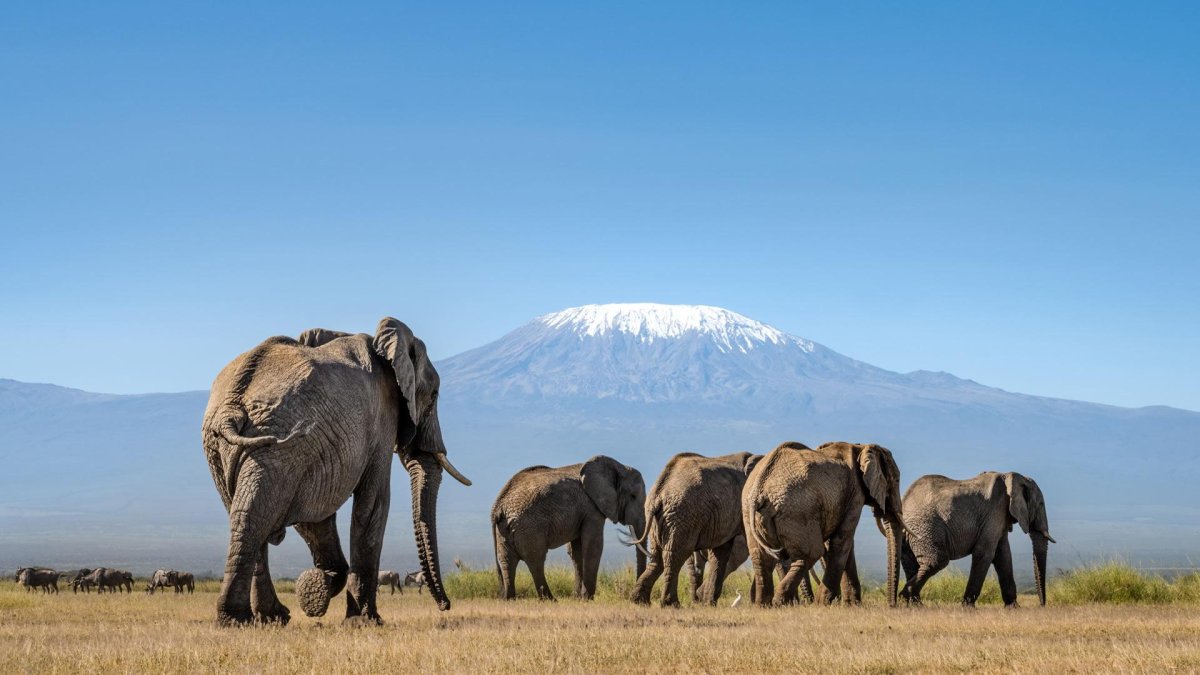
Kenya’s best-known safari route often combines the Masai Mara National Reserve with Amboseli National Park. The Mara suits game drives across open grassland, while Amboseli adds views of Mount Kilimanjaro and wildlife around its wetlands. A 5-day Amboseli and Maasai Mara itinerary is one way to focus on both. Look at the mix of habitats and the time available for drives before adding other stops.
Lesser-Known Reserves and Conservancies
Kenya’s safari options extend beyond its best-known parks. Conservancies and less-visited reserves can add different landscapes and activities to your route. Ask what each stop contributes: a contrasting habitat, a quieter pace, or a particular experience. This keeps the itinerary focused, rather than adding destinations simply to increase the number of stops.
Cross-Border Safari Itineraries
A Kenya and Tanzania route can link the Masai Mara with the Serengeti, then continue to the Ngorongoro Crater . An eight-day luxury safari across Kenya and Tanzania offers a shorter framework, while a 13-day itinerary can add Zanzibar for a safari-and-coast combination. Build in time for the border transfer as well as game viewing; the journey from the Mara to the Serengeti takes about 10 hours by road or 3 hours by plane, excluding game drives.
For high-season Great Migration travel or gorilla permits, plan to book 10-12 months ahead. Kenya and Tanzania offer the Masai Mara, Amboseli, Serengeti, and Ngorongoro for wildlife drives; Uganda and Rwanda are well suited to itineraries centered on gorilla trekking.
Wildlife, Scenery, and Cost Comparisons
Kenya and Tanzania both offer wildlife-rich savannah, but the scenery and route differ by destination. The Mara and Amboseli make a varied Kenya-focused journey; Tanzania can combine the Serengeti, Ngorongoro Crater, and Tarangire. The Serengeti is described as supporting over 2,500 lions, while Tarangire has over 550 bird species. Choose by the wildlife and landscapes you most want to experience, then allow enough time at each stop.
Cost depends on the route, accommodation, season, transport, and time in each park. Compare what the itinerary includes, not just the destination names.
Why visit the Masai Mara?
The Masai Mara is a strong starting point for a Kenya and Tanzania safari, combining open plains, wildlife viewing, and cross-border routing. Consider how Nairobi, the Mara, Serengeti, and Ngorongoro Crater fit together, including transfer times and the number of nights at each stop.
From Nairobi, the drive to the Masai Mara National Reserve takes about 5 hours, excluding game drives. After time in the Mara, continuing to the Serengeti means planning a border crossing: travel takes about 10 hours by road or 3 hours by plane, excluding game drives. The flight route includes several hops and a shuttle transfer for the border crossing, so the transport choice affects the day’s schedule.
Allow enough time for the wildlife experience you want. A Serengeti and Maasai Mara migration safari should allow at least 10 to 14 days, leaving room for game drives in both ecosystems instead of treating either as a brief stop. The Serengeti’s western corridor offers a different viewing area; Grumeti Serengeti River Lodge sits beside a tributary of the Grumeti River. The migration’s peak in the Serengeti can usually be viewed between mid-July and late September.
Serengeti game drives can be paired with an optional balloon safari, adding an aerial perspective to time on the ground. Choose this around your priorities and daily pace, then keep enough space for the drive itself. For a wider Tanzania route, an 11-day Serengeti, Ruaha , and Nyerere wildlife safari trades a Kenya crossing for additional regions within Tanzania. A Northern Circuit journey typically takes 7 to 9 days to cover Serengeti, Ngorongoro Crater, and Tarangire.
Ngorongoro Crater adds a compact setting to a longer route. An estimated 25,000 large mammals reside within the crater, making it a distinct contrast to the broad Serengeti plains. Consider the crater alongside the Mara and Serengeti, rather than as a substitute for time in either region.
Plan for practical risks as well as wildlife viewing: follow your guide’s directions near animals, and take care on uneven ground and during long transfers. Pack personal medication and sun protection, and plan meals and rest around travel days.
For a Kenya-focused alternative, compare the route and transfer style of a Masai Mara Fly-in Safari with a cross-border plan. The right choice depends on whether you want more time in the famous Mara, Serengeti game drives, or a broader Tanzania circuit.
What Is the Best East Africa Safari?
The best route depends on whether you want more time for wildlife, a coastal finish, or both. A Kenya and Tanzania safari can also include Zanzibar or another Swahili Coast stop.
Choosing a Safari Style
A private guide can coordinate game drives, transfers, and stops such as Ngorongoro Crater. A lodge-based safari lets you choose accommodation near the wildlife areas you want to explore, while a self-drive trip leaves route planning and driving to you. Before choosing, consider how much independence and day-to-day coordination you want.
For a coastal finish, decide what you want to do after your safari days. Stone Town offers historic streets and cultural visits, while Zanzibar’s northern beaches offer a different pace after time in the parks. A conservation-focused route can prioritize wildlife areas before adding beach days; a luxury itinerary may emphasize lodge stays and private transfers. Consider how an extra stop affects travel time, not just how many places appear on the map.
Pack for both settings: breathable clothing and comfortable walking shoes for game drives, plus beachwear for Zanzibar. Camera gear might include a telephoto lens, spare batteries, and dust protection. Keep essentials accessible during transfers, especially if your route includes a light aircraft flight.
Itinerary Length and Route Connections
Let the route determine the trip length. A 14-day Kenya and Tanzania safari can include Zanzibar at the end, giving the wildlife portion and the coast separate time. For a shorter trip, prioritize fewer parks rather than squeezing in the Serengeti, Ngorongoro Crater, and remote beach areas. An optional Zanzibar extension makes sense when the coast is a priority, not simply an extra name to add.
Major connections need planning. Travel from the Masai Mara to the Serengeti takes about 10 hours by road or 3 hours by plane, excluding game drives. The transfer includes several flight hops and a shuttle transfer for the border crossing. A flight connection also shapes the schedule, so leave room for transfers between safari areas and the airport.
Most travelers need a single-entry visa for Kenya and Tanzania, costing $50 per person. American citizens are described as needing a multiple-entry visa costing $100 per person; apply for an e-visa about 1 to 2 months before the trip. Vaccination and entry requirements depend on the countries and transit points in your route, so plan health preparation around your full itinerary and current entry rules.
Compare private-guide, lodge-based, and self-drive options by the support and independence each offers. Then balance parks, flights, and time in Zanzibar around your priorities.
Accommodation, meals, and included activities
Accommodation shapes how each safari day begins and ends, while meals and activities affect time on the road. Compare each overnight stop with its destination, planned drives, and included experiences.
Lodge Accommodation
Lodges and tented camps offer different ways to stay near wildlife areas. Compare their locations, room styles, and fit with your route. For example, Grumeti Serengeti River Lodge is in the western part of Serengeti National Park, beside a tributary of the Grumeti River. Consider how its setting balances scenic surroundings with transfer time to other areas.
When reviewing a custom route, consider whether each stay supports the experience you want. A lodge near the plains may suit early game drives, while a more remote property may offer a quieter stop between destinations. Review the itinerary’s daily sequence, not just the lodge names, and note how check-in and onward travel affect time for wildlife viewing.
Overnight Stops
Plan overnight stops around the route’s geography. One itinerary includes a night in Nairobi and two nights at Ngorongoro Crater, combining a city arrival stop with a longer stay near a major wildlife destination. Use this pattern to assess whether your plan allows enough time in each area without unnecessary backtracking.
Map each night against the next day’s drive or flight. Even a scenic route can feel tiring if a long transfer follows a full day of game drives. Keep arrival and departure logistics in view, especially when Nairobi starts the trip or a Tanzania park is the final safari stop.
Meals and Included Activities
Check the meal plan for each destination and travel day. The Serengeti Western Corridor itinerary segment includes breakfast, lunch and dinner, an example of full-day meal coverage during a stay. Compare it with other parts of the route to see how meals fit around lodge stays, drives and transfers.
Activities vary by stop, too. Distinguish scheduled game drives from optional experiences, such as a balloon safari in the Serengeti, and note how each affects the day. Review accommodation, meals, transfers and activities together before finalizing the route. This helps you see what is included and whether more time or a different overnight stop would improve the flow.
For a stay at Ngorongoro Crater, confirm which accommodation is planned before treating the overnight choice as settled. Ngorongoro Crater Lodge was scheduled to be under renovation in 2025, with Nomad Entamanu or Lemala Osonjoi offered as alternative accommodation. Keep these alternatives visible while comparing the itinerary, rather than assuming the named lodge will be available.
Consider how each accommodation option fits the planned arrival, departure and activities, and whether a change would affect the day’s schedule. Comparing accommodation with the route makes the overnight plan easier to understand before you commit. If a particular property matters to you, make that preference clear when discussing your stay. This keeps accommodation connected to the wider safari rather than treating it as a separate detail.
11-Night East Africa safari itinerary
An 11-night route can combine Nairobi, the Masai Mara, five Serengeti nights and Ngorongoro Crater. Its value lies in giving the migration-focused areas time, while keeping the transfer sequence clear. The example below places the Mara first, crosses into Tanzania, then ends near Ngorongoro before departure on day 12.
- Night 1, Nairobi: Begin with an overnight stop in Nairobi. This gives the route a clear arrival point before the drive or onward connection to the Masai Mara.
- Nights 2-4, Masai Mara: Three nights allow time for game drives across the reserve. The Nairobi drive takes about 5 hours, excluding game drives, so account for the transfer when planning the first day.
- Nights 5-6, Northern Serengeti: Continue into Tanzania for two nights around Klein’s Camp. The Mara-to-Serengeti transfer takes about 10 hours by road or 3 hours by plane, excluding game drives.
- Nights 7-9, Serengeti: Spend three nights at Serengeti Under Canvas. Together with the northern stay, this creates five Serengeti nights across different parts of the park.
- Nights 10-11, Ngorongoro Crater: Finish with two nights near the crater, then schedule departure for day 12. This leaves the final safari area at the end of the route rather than adding another cross-country transfer.
This route suits travelers who want to visit the Masai Mara and Serengeti in one journey. The peak of the wildebeest migration in the Serengeti can usually be viewed between mid-July and late September. Seasonal movement matters, so align your time in each area with the wildlife experience you want to prioritize rather than assuming animals stay in one place.
Plan around transfer days as well as nights in the parks. Road travel between the Mara and Serengeti takes substantially longer than flying. The flight option involves several hops and a shuttle transfer for the border crossing. These differences affect how much time remains for game drives and rest.
This itinerary prioritizes savannah wildlife and migration viewing. It does not include a forest visit, so travelers seeking a forest-focused experience or endangered primates would need to reconsider the route’s destinations and time allocation. Keep the 11-night framework flexible: protect the five Serengeti nights, three Mara nights and two Ngorongoro nights if those are your priorities, then adjust the arrival and transfer plan.
Another tour itinerary places Ngorongoro Crater on days 1-2, the Serengeti Western Corridor on days 3-4 and the Masai Mara on days 5-7. Lake Nakuru is described as a habitat for a shifting population of over one million flamingos. The Tanzania north and south itinerary includes 3 destinations, while the western Tanzania Katavi and Mahale fly-in itinerary includes 3 destinations, offering distinct alternatives.
BLS safaris: East Africa Safaris
BLS safaris can help shape a Kenya and Tanzania journey around your wildlife priorities, preferred pace and travel dates. Our East Africa Safaris bring together local guidance, clear routing and handpicked lodges, with support from enquiry through travel. If you’re considering a custom East Africa safari itinerary, share which destinations matter most, whether you’d like to include a coast extension, and how many nights you have. BLS safaris also offers Kenya Safaris , Tanzania Safaris and Uganda Safaris for travelers building a broader regional trip. The next step is to get in touch with your priorities and preferred travel period. You’re welcome to contact BLS safaris or visit bls-safaris.com.
Shape the Safari Around What Matters Most
The next step is to turn your priorities into a route that suits you. Decide which wildlife experiences matter most, how you want to travel between destinations and whether you’d like to finish on the coast. These choices shape a custom East Africa safari itinerary, while leaving room to adjust the pace and details.
BLS safaris plans tailor-made journeys across East Africa, including Uganda and Kenya safaris. Share your preferred travel period, the places you’re drawn to and the kind of experience you have in mind. You can then start a clear conversation about how your safari could come together.
Contact BLS safaris to plan your safari
Your journey starts with the ideas you bring. When you’re ready, share your priorities with BLS safaris and take the first step toward planning a personal, well-considered safari.
Frequently Asked Questions
When should I visit Tanzania?
For the Serengeti’s migration peak, plan travel between mid-July and late September, when it can usually be viewed. Outside that window, choose Tanzania’s parks according to the wildlife and landscapes you want to prioritize, rather than planning around one migration event. Start with your travel dates, then arrange the park order and overnight stops around seasonal wildlife movements and the time needed to travel between destinations.
Why visit the Ngorongoro Crater?
Visit Ngorongoro Crater for a distinct wildlife landscape and a chance to see varied animals within the crater setting. The area became a UNESCO World Heritage Site in 1979. The crater is also associated with an estimated 6,000 wildebeest and around 70 lions. Include it if you want a different setting from the Serengeti’s broad plains, and allow time for the descent, wildlife viewing and return journey.
Which East African countries are best for a custom safari itinerary?
Kenya and Tanzania suit travelers focused on savannah wildlife, with destinations such as the Masai Mara and Serengeti. Uganda and Rwanda are well suited to itineraries centered on gorilla trekking and forest experiences. A custom East Africa safari itinerary can combine countries when your interests, travel time and route connections fit together. Choose destinations by the experiences you value most, and avoid adding countries if that leaves too little time at each stop.
What is the best time of year for an East Africa safari and the Great Migration?
The best timing depends on the wildlife experience you want and the parks on your route. The Serengeti’s migration peak can usually be viewed between mid-July and late September, but migration wildlife moves across a wide region. If this is your main priority, plan your Serengeti dates around that period and keep the route focused. For a broader safari, choose travel dates based on your selected parks and interests.