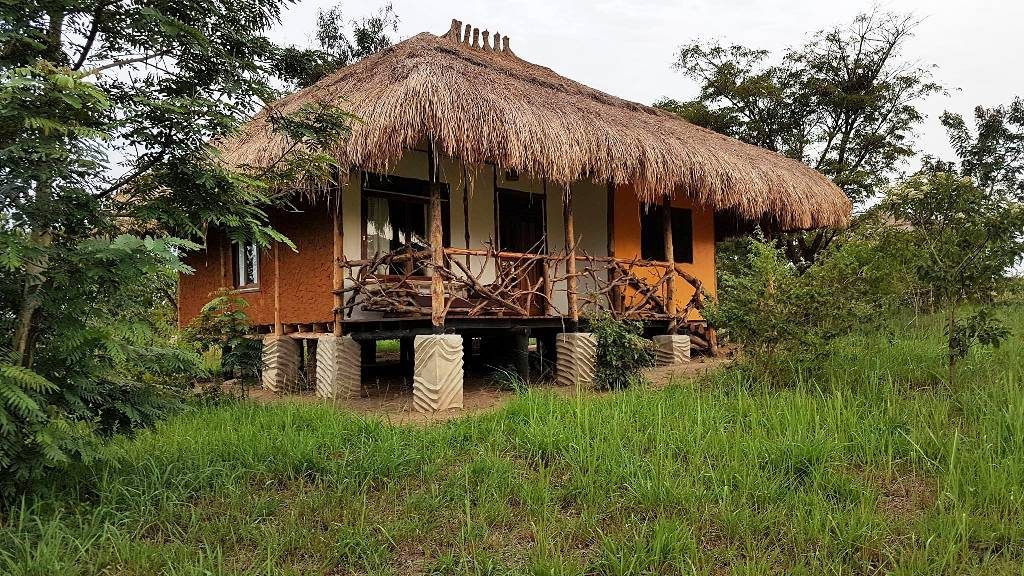
Welcome to Uganda, famously dubbed the “Pearl of Africa,” where lush landscapes, diverse wildlife, and vibrant cultures await. This 5-Day Uganda Experiential Safari offers an exhilarating journey through some of the country’s most iconic national parks, including Lake Mburo and B
Embarking on the 9 Days Uganda Wildlife and Gorillas Adventure Tour offers an unparalleled opportunity to immerse yourself in the stunning landscapes and vibrant wildlife of Uganda, famously dubbed the “Pearl of Africa” by Winston Churchill. This expedition encompasses an array o

Uganda, famously known as the Pearl of Africa, offers one of the most extraordinary safari experiences on the continent. This 6-Day Uganda Gorilla Trekking & Wildlife Safari takes you deep into the heart of East Africa, combining thrilling wildlife encounters with unforgettable g
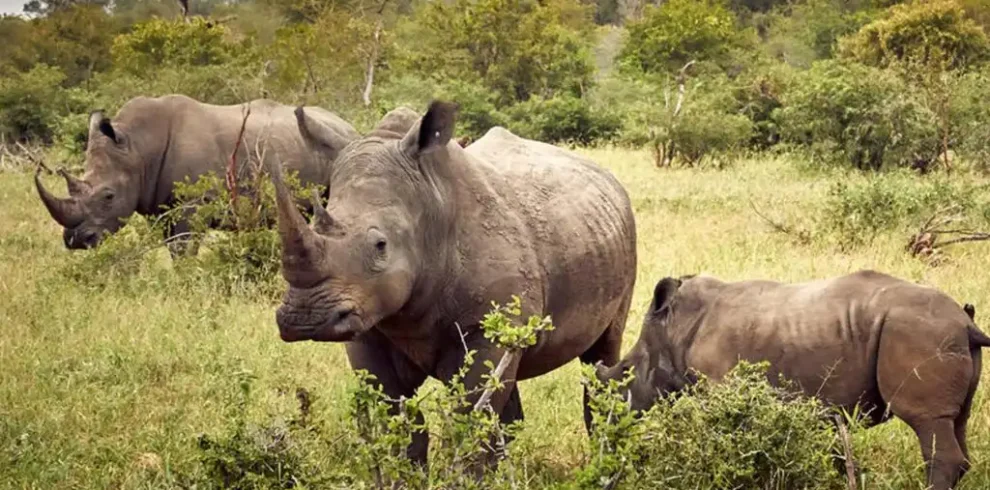
An Exceptional Wildlife Journey Crafted by BLS Safaris Ltd The 10 Days Uganda Safari: The Big Five, Forest And Lakes Safari introduces travelers to Uganda’s most iconic wildlife destinations while revealing breathtaking forests, savannahs, lakes, and vibrant cultures. This extrao
Queen Elizabeth National Park Wildlife and Habitats
Queen Elizabeth National Park is one of Uganda’s richest wildlife areas, not only because of the number of animals but also because of the habitats packed into a single landscape. Around 57 vegetation types have been recorded here, grouped into five main habitats: forest, grassland, bushy grassland, acacia woodland, and lake shore or swamp vegetation. That variety is what makes the park so rewarding. You can spend the morning on the Kasenyi plains, take a boat along the Kazinga Channel in the afternoon, then step into the cooler forest world of Kyambura Gorge or Maramagambo Forest.
Big Game, Elephants, Buffaloes and Hippos
Queen Elizabeth is a strong big game destination. The grasslands, wetlands, and lake shores support hippos, elephants, Cape buffaloes, Uganda kobs, waterbucks, warthogs, giant forest hogs, lions, leopards, and hyenas. The Kazinga Channel supports one of Africa’s highest concentrations of hippos in its water. Buffaloes are seen along the shoreline, while elephants move between the channel, woodland, and open savannah, especially in the hotter hours when they come to drink and bathe. A mature elephant can stand up to about 3.5 metres and weigh up to 6,000 kg. Family groups of 10 to 15 elephants are seen feeding, crossing swampy ground, or moving quietly through the woodland. These are the moments that make Queen Elizabeth feel alive, because wildlife is not limited to one area. It moves naturally between water, plains, and forest.
Tree-Climbing Lions in Ishasha and Other Predators
The Ishasha sector is the place to look for Queen Elizabeth’s famous tree-climbing lions. They are often found resting in large fig trees above the plains, sometimes watching Uganda kobs grazing below. No one can say with complete certainty why they climb, but local guides link the behaviour to cooling off, escaping tsetse flies, avoiding ground heat or getting a better view of prey. The park also has ground-dwelling lions, leopards, spotted hyenas, side-striped jackals, serval cats, and African civets. Leopards are shy and mostly active at night, so sightings are never guaranteed. Your best chance is usually during an early-morning or late-evening game drive, when the park is quieter and predators are still active.
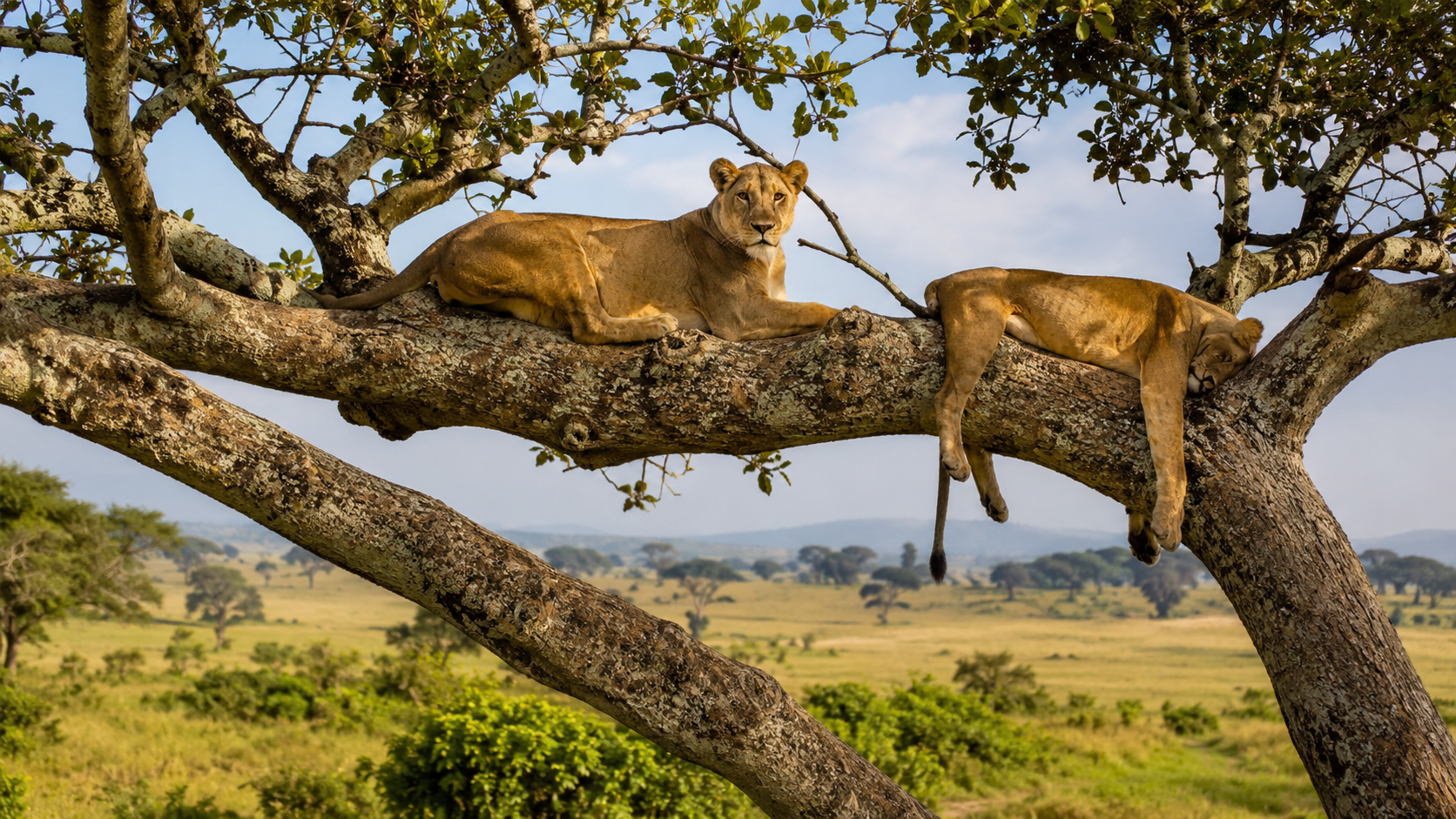
Ishasha tree-climbing lions at Queen Elizabeth National Park
Birds, Primates, and Forest Wildlife
The Park is also one of Uganda’s finest birding destinations, with more than 612 recorded bird species. It attracts serious birders, but you do not need to be an expert to enjoy it. Along the Kazinga Channel, you will see pelicans, herons, egrets, cormorants, kingfishers, bee-eaters, and African fish eagles. The wider park also supports species like martial eagle, black-rumped buttonquail, African skimmer, Chapin’s flycatcher, pink-backed pelican, white-winged warbler, papyrus gonolek, papyrus canary, corncrake, lesser flamingo, greater flamingo and shoebill stork. Kyambura Gorge and Maramagambo Forest bring a different side of the park. Chimpanzees are the main primate attraction in Kyambura Gorge, but you may also see black-and-white colobus monkeys, red-tailed monkeys, blue monkeys, L’Hoest’s monkeys, vervet monkeys, olive baboons, bushbabies and potto.
Things to Do in Queen Elizabeth National Park
Queen Elizabeth National Park works well if you want a varied safari without moving between too many destinations. In one park, you can enjoy game drives, a boat cruise, chimpanzee tracking, lion tracking, bird watching, mongoose tracking, crater scenery, nature walks, and cultural visits. The park also combines easily with Bwindi Impenetrable National Park, making it a practical wildlife stop before or after gorilla trekking.
Game Drives in Queen Elizabeth National Park
Game drives are the main way to explore the open savannah areas of the park. The best drives start early in the morning or late in the afternoon, when wildlife is more active and the light is softer. Kasenyi Plains is the most rewarding area for classic game viewing, with good chances of seeing Uganda kobs, buffaloes, elephants, warthogs, waterbucks, hippos returning from grazing, and predators such as lions, leopards, and hyenas. In the southern part of the park, Ishasha gives you a more remote game drive experience and the chance to search for tree-climbing lions. You can also explore the Mweya area, the Channel Drive circuit and the crater drive circuit, each offering a different mix of open plains, lakeshore wildlife and volcanic scenery.
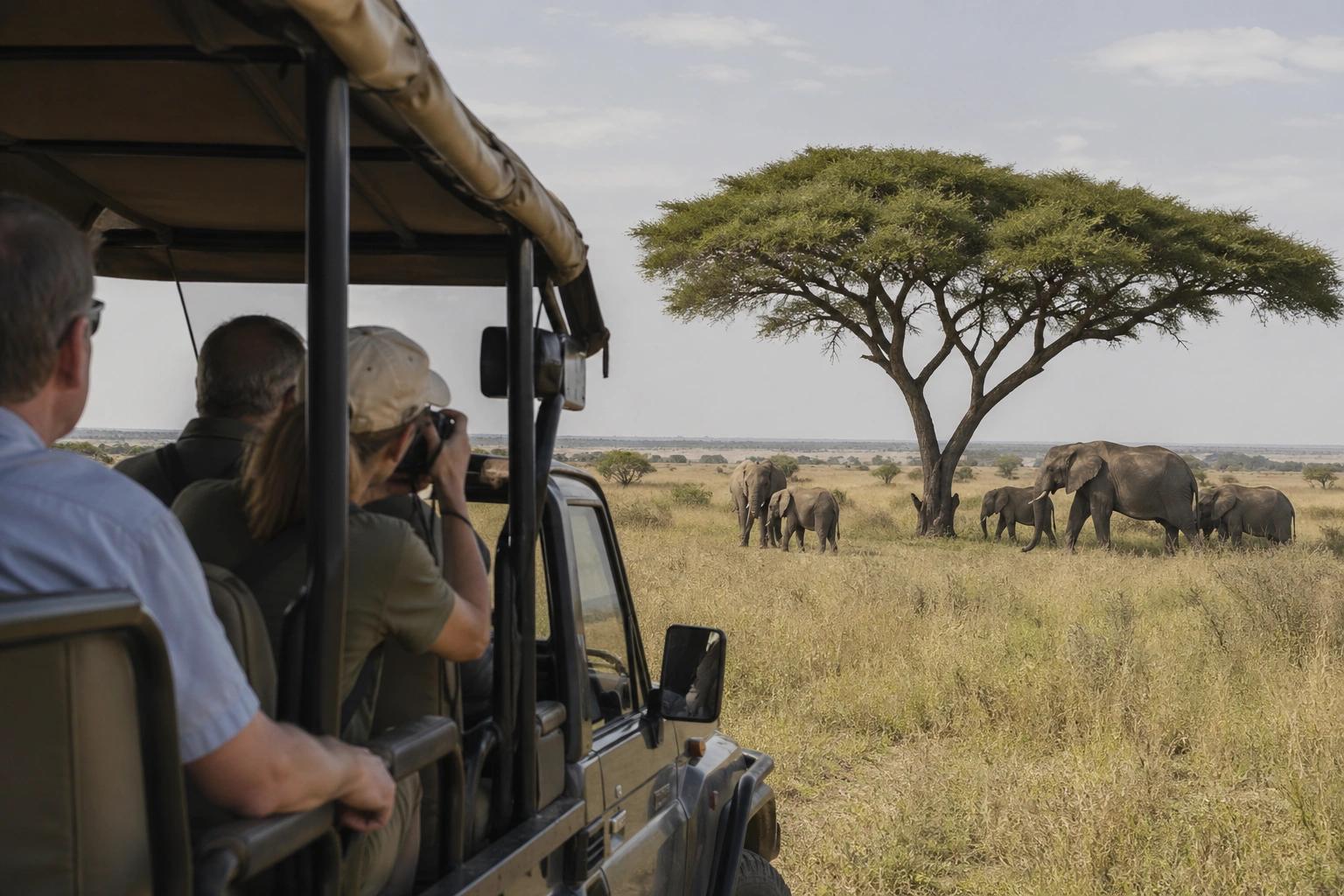
Kazinga Channel Boat Cruise
A boat cruise on the Kazinga Channel is one of the strongest activities in Queen Elizabeth National Park. The channel is about 40 km long and links Lake Edward with Lake George, creating a rich waterway where hippos, crocodiles, elephants, buffaloes, waterbucks, and many birds gather along the banks. The boat cruise is operated twice daily, with a morning trip starting from 11:00 am to 1:00 pm and an afternoon trip from 3:00 pm to 5:00 pm. In peak seasons, extra departures are added starting from 9:00 am and 5:00 pm, depending on availability. This is a very good activity if you enjoy photography, relaxed wildlife viewing or travelling with family, because animals often come right down to the water’s edge.
Chimpanzee Tracking in Kyambura Gorge
Chimpanzee tracking takes place in Kyambura Gorge, a deep rainforest valley cutting through a savannah landscape on the eastern side of the park. The gorge is often called the Valley of Apes, and once you descend into it, the atmosphere changes completely. The air becomes cooler, the forest closes around you, and you begin listening for chimpanzee calls echoing through the trees. Chimpanzees here are seen feeding, grooming, moving through the branches, or walking on the ground, depending on where the group is found. You may also see black-and-white colobus monkeys, red-tailed monkeys, olive baboons and forest birds. Kalinzu Forest in the southeast of Queen Elizabeth is another strong chimpanzee tracking option, with about 300 chimpanzees, including a habituated community of around 40 individuals with a sighting rate of about 90%.
Lion Tracking Research in Kasenyi Plains
Lion tracking in Kasenyi Plains gives you a deeper predator experience than a normal game drive. The activity is done alongside research and conservation work, using radio-collar technology to help locate specific lions. Instead of simply driving around and hoping to find them, you learn how lions move, rest, hunt, interact and use their territory across the plains. The activity is guided by professional researchers and is limited to a small number of participants to minimise disturbance to the lions and ensure a high-quality experience. Lion tracking requires a separate permit, which should be booked in advance as spaces are limited each day. It is an excellent choice for travellers who want more than a traditional game drive and would like a deeper understanding of the behaviour, movements, and conservation of Queen Elizabeth National Park’s famous tree-climbing lions.
Bird Watching in Queen Elizabeth National Park
With more than 612 recorded bird species, Queen Elizabeth National Park is one of the best birding destinations in Uganda and East Africa. The park’s strength comes from its wide range of habitats, including savannah, acacia woodland, papyrus wetlands, crater lakes, the Kazinga Channel, tropical forest and nearby forest reserves such as Maramagambo and Kalinzu. The Kazinga Channel is one of the easiest birding spots for waterbirds. From the boat, you can see cormorants, kingfishers, African fish eagles, pelicans, herons, egrets, and bee-eaters along the shoreline. Away from the water, birding can be added to game drives, community walks, guided nature walks, and forest trails.
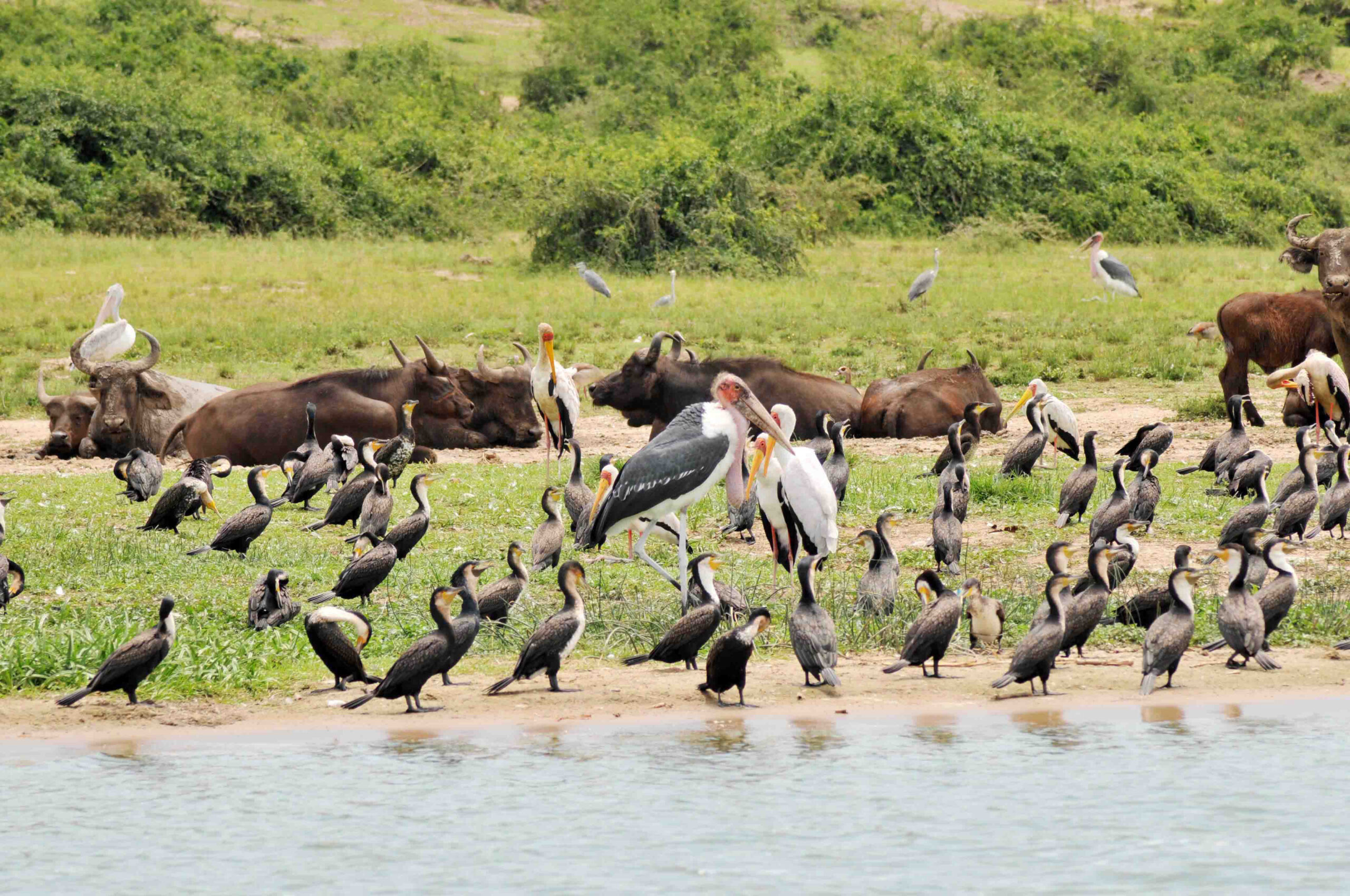
birds and resting buffaloes along Kazinga Channel
Mongoose Tracking on the Mweya Peninsula
Mongoose tracking is one of the park’s most unusual wildlife experiences and takes place around the Mweya Peninsula. The activity focuses on habituated banded mongooses that have been studied for decades through an ongoing behavioural research project. Around 400 mongooses, living in roughly a dozen social groups, are accustomed to researchers and guests. With a trained guide, you follow a mongoose troop on foot and learn about their feeding habits, social structure, communication, breeding behaviour, and daily survival. It is a rewarding activity if you enjoy smaller wildlife and want to understand the park beyond elephants, lions, and buffaloes.
Hiking, Nature Walks and Crater Lakes
Queen Elizabeth also offers scenic walks and nature experiences around the crater lakes, Kyambura Gorge, Maramagambo Forest and Kalinzu Forest Reserve. The Katwe crater drive, about 27 km long, is one of the most scenic routes, with rolling hills, wide savannah views, and excellent views towards the Rwenzori Mountains. Maramagambo Forest gives you a shaded walking experience with birds, primates and forest trails. The famous bat cave area was formerly closed after the Marburg incident, but a viewing shelter was later created so you can observe safely without direct contact. These walks are ideal when you want to slow down and notice the smaller details of the park, from butterflies and insects to plants, reptiles, amphibians, and forest birds.
Katwe Salt Lake and Cultural Community Visits
A visit to Katwe Salt Lake adds a strong cultural and historical side to your safari. Here, you learn how local people have mined salt around the acidic lake for generations. It is a worthwhile stop if you want to understand the human life around the park, not only the wildlife. Community visits include visiting the Businga Village near Lake George, communities around the Equator, fishing villages and cultural experiences in the surrounding areas. The region is home to communities such as the Banyabindi, Bakonzo and Basongora, each with its own heritage and way of life. Depending on the visit, you will experience traditional music and dance, storytelling, craft demonstrations, fishing village tours, boat racing, sport fishing or freshly prepared fish from lakeside communities. Done responsibly, these visits support local livelihoods and help you understand the close relationship between the park, its wildlife and the people who live around it.
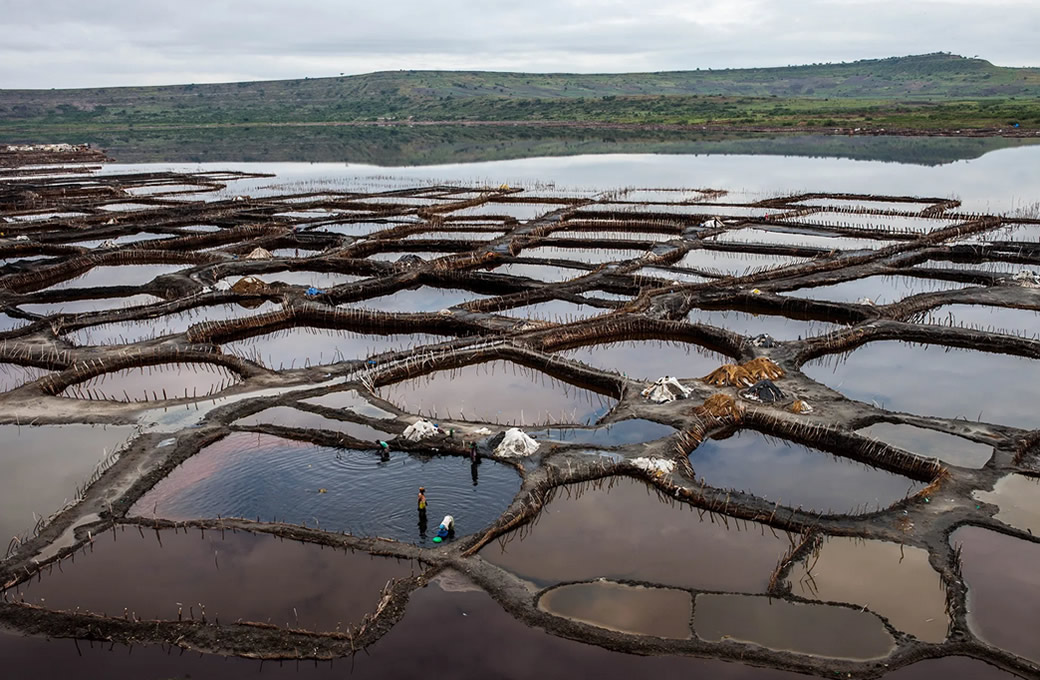
Katwe Salt Lake salt mining works in Queen Elizabeth National Park
Where to Stay in Queen Elizabeth National Park
Where you stay in Queen Elizabeth National Park shapes the kind of safari you have. Lodges around Mweya Peninsula put you close to the Kazinga Channel, Lake Edward, Lake George and the northern game drive routes. Properties near Kasenyi Plains work well for classic game drives, especially if you are focused on lions, Uganda kobs, elephants and buffaloes. The Kichwamba Escarpment gives wide views over the rift valley and savannah, while Ishasha is best if you want a quieter wilderness base near the tree-climbing lion area. Around Kyambura Gorge, you are well placed for chimpanzee tracking, nature walks and the eastern side of the park.
Luxury Accommodation in Queen Elizabeth National Park
Luxury accommodation suits you if you want strong locations, polished service and a comfortable base after long safari days. Mweya Safari Lodge is one of the main luxury options, set on the Mweya Peninsula between the Kazinga Channel and Lake Edward. It is well positioned for boat cruises, Kasenyi game drives and views across the channel, with spacious rooms, a swimming pool, lounge areas and easy access to the park’s busiest safari routes.
For a more intimate high-end stay, Kyambura Gorge Lodge sits near the edge of Kyambura Gorge and works well if you are combining game drives with chimpanzee tracking. The lodge has 8 bandas, including 4 deluxe bandas, with some looking towards the gorge and across the savannah plains. One banda is arranged as a family suite, 2 have double beds, and the remaining 5 have twin beds. Units include a fan, digital safe, sitting area, private outdoor deck, indoor and outdoor showers, and twin vanities.
Other luxury-style choices include Ishasha Wilderness Camp, a strong option if you want to stay deeper in the southern Ishasha sector. The camp has 10 tented rooms on raised platforms, with mosquito nets, ensuite bathrooms, bucket showers and eco-friendly toilets. Jacana Safari Lodge is another characterful option, set beside Lake Nyamasingiri, the largest crater lake in the park, with 10 chalets built using local materials in a forested setting
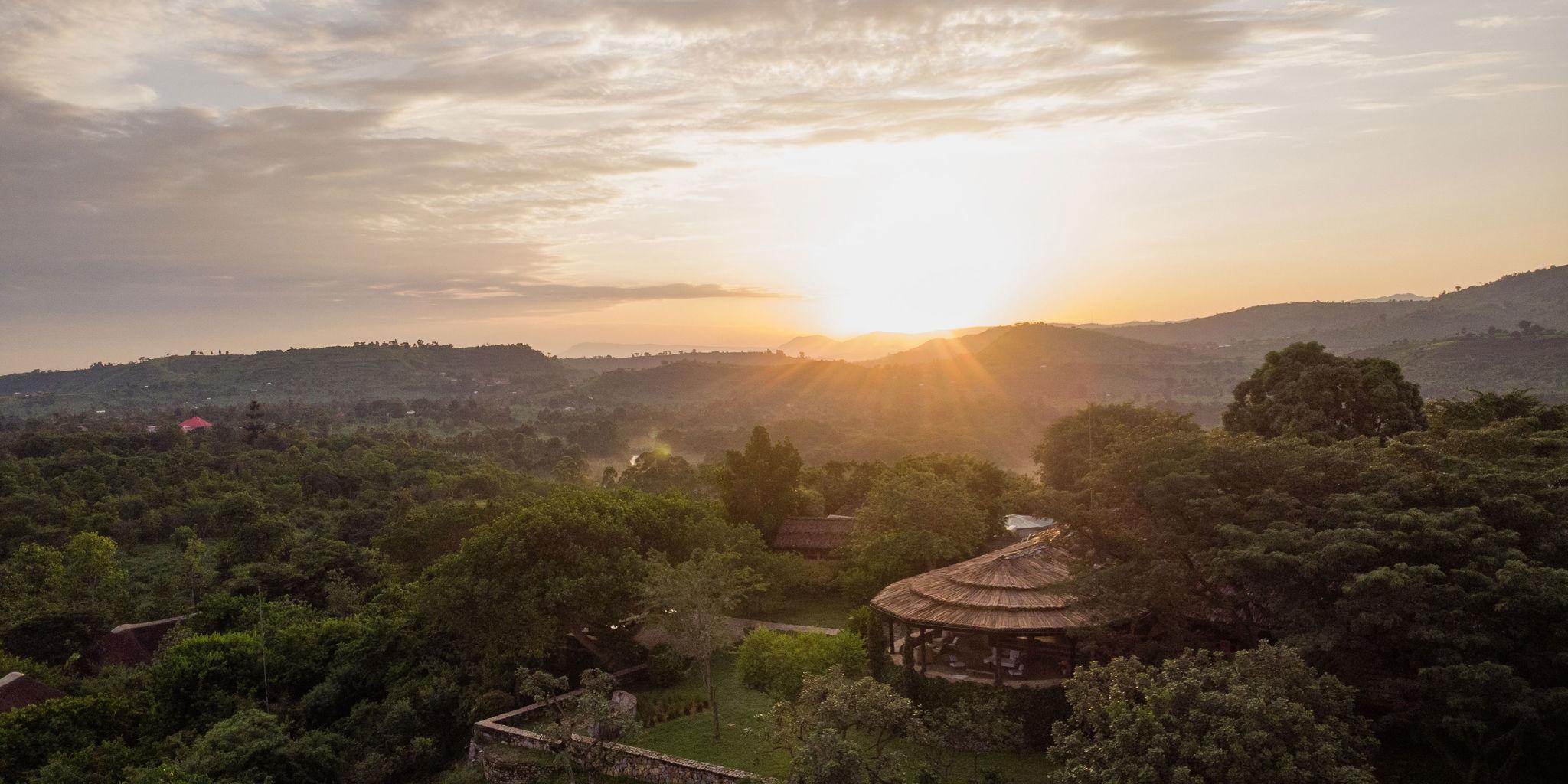
Kyambura Gorge Lodge
Mid-Range Accommodation in Queen Elizabeth National Park
Mid-range accommodation gives you a good balance of comfort, location, and value. These lodges are simpler than luxury properties, but many still offer private rooms, ensuite bathrooms, good meals and easy access to activities. Good mid-range areas include the Kichwamba Escarpment, Kyambura, Lake George, Kasenyi and the wider eastern side of the park.
Enganzi Game Lodge is a strong option near the Kichwamba Rift Valley Escarpment. Built on a hill bordering the park, it looks out over open bush and savannah woodland. With only 5 cottages, it gives you a quieter atmosphere and broad views over the park.
Ihamba Lakeside Safari Lodge sits on the shores of Lake George in Muhokya sub-county, near Kahendero Fishing Village. It works well if you prefer lakeside calm, birdlife, fishing village scenery and a softer setting away from the busier safari hubs. Other good mid-range options include Queen Elizabeth Bush Lodge, Kingfisher Lodge, Ishasha Jungle Lodge, Baboon Safari Resort, Enjojo Lodge and Marafiki Safari Lodge.
Budget Accommodation in Queen Elizabeth National Park
Budget accommodation works well if you want to spend more on activities and less on the room, while still staying close enough for game drives, boat cruises, chimpanzee tracking and nature walks. These options are simpler, but many still offer clean rooms, meals, basic comfort, and friendly service.
Pumba Safari Cottages is positioned in Kyambura on the eastern side of the park. It offers budget accommodation in 3 cosy cottages, each with two comfortable beds, a bathroom with a shower, solar-heated warm water, plus a restaurant and bar. It is a practical base for Kyambura Gorge, chimpanzee tracking and eastern park routes.
Other budget-friendly options are Kazinga Channel Resort, Mweya Hostel, Simba Safari Camp, Kasenyi Safari Camp, Queen Elizabeth Bush Lodge and Ishasha Safari Camp. These properties are useful if you want simple accommodation within reach of early morning and late afternoon game drives. During peak travel months, especially June to September and December to February, it is better to secure accommodation early, particularly for lodges in strategic locatition.