
Mount Kenya National Park protects the slopes and high peaks of Africa’s second-highest mountain. Batian rises to 5,199 metres, followed by Nelion at 5,188 metres and Point Lenana at 4,985 metres. Point Lenana is the main summit for trekkers; Batian and Nelion require technical rock-climbing skills and equipment.
Mount Kenya is an extinct volcano that was active about 3.1 to 2.6 million years ago and once rose to roughly 6,500 metres. Glacial erosion shaped its sharp peaks, U-shaped valleys and high tarns. Twelve remnant glaciers still cling to the upper mountain, while about 20 glacial tarns lie between 3,950 and 4,800 metres. Below them, the landscape changes through montane forest, bamboo, heath, moorland, alpine vegetation and bare rock.
The national park covers about 715 square kilometres and was established in 1949. Mount Kenya National Park and the surrounding natural forest joined the UNESCO World Heritage List in 1997; the World Heritage property was extended northwards in 2013 to include Lewa Wildlife Conservancy and Ngare Ndare Forest Reserve. This wider landscape protects an important water catchment and a 9.8-kilometre corridor used by elephants moving between the mountain and the northern lowlands.
Mount Kenya lies close to the Equator in central Kenya, roughly 193 kilometres northeast of Nairobi. Travellers come for trekking, technical climbing, forest walks, birding and quiet mountain stays. The mountain also has deep cultural meaning for the Kikuyu and Meru communities, who regard it as a sacred home of Ngai.
Mount Kenya Trekking and Climbing
The three main trekking approaches are Sirimon, Naro Moru and Chogoria. Sirimon gives you a gradual ascent and good acclimatisation, Naro Moru is the most direct, and Chogoria offers the widest range of scenery. Many itineraries combine two routes, climbing on one side and descending on another rather than retracing the same trail. Allow four to six days for a comfortable Point Lenana trek. A faster ascent is possible, particularly on Naro Moru, but the mountain rises quickly and extra time helps your body adjust. Cold, rain and strong sun can occur on the same day, so warm layers, waterproof clothing, gloves, a hat, sun protection and sturdy boots are essential throughout the year.
Sirimon Route
The Sirimon Route approaches from the northwest through Nanyuki. Sirimon Gate stands at about 2,650 metres, and the trail continues through forest before opening onto drier moorland on the mountain’s northern side. Old Moses Camp, at roughly 3,300 metres, is the usual first overnight stop. The route then follows the Mackinder Valley towards Shipton’s Camp at about 4,200 metres, below the main peaks. Sirimon gives trekkers a steady gradient, broad mountain views and more time to settle into the altitude. The approach from the gate to Point Lenana is roughly 26 kilometres, although the complete walking distance changes when acclimatisation walks and the descent route are included. 4 or 5 days work well when Sirimon is paired with Chogoria or Naro Moru for the descent.
Naro Moru Route
The Naro Moru Route starts on the western side of the mountain and offers the shortest approach to Point Lenana. The park gate is about 17 kilometres from Naro Moru town, and vehicles can continue towards the Met Station in suitable conditions. Met Station, at about 3,050 metres, and Mackinder’s Camp, around 4,200 metres, are the main overnight points. The route passes through the Teleki Valley with views towards the Lewis and Tyndall glacier area. Its best-known challenge is the Vertical Bog, a steep, marshy section that becomes slippery and tiring after rain. Naro Moru suits strong trekkers with limited time, but a short route does not remove the need to acclimatise. A 4-day itinerary is more comfortable than attempting the mountain in 3 days.
Chogoria Route
Chogoria approaches from the east and gives you the most varied scenery of the three main routes. From Chogoria town, the road climbs roughly 9 kilometres to the forest boundary and continues for about 22 kilometres to Chogoria Gate and the park bandas. Road conditions deteriorate in wet weather, and a four-wheel-drive vehicle is the practical choice for the upper section. The trail passes forest, open moorland, Lake Ellis at about 3,455 metres, Nithi Falls, the Gorges Valley, Hall Tarns and views over Lake Michaelson. Mintos, at roughly 4,200 metres, is a common high camp before the summit approach. 5 to 6 days allows time to enjoy these features and acclimatise properly. Chogoria is especially rewarding as a descent after climbing through Sirimon because the landscape continues changing all the way down.
Technical Climbing on Batian and Nelion
Batian and Nelion are technical climbing peaks, not trekking summits. Both require ropes, helmets, harnesses, rock-climbing hardware, strong mountaineering experience and specialist support. Route choice also depends on the season because the north and south faces have different climbing windows. Point Lenana is the right objective for most walkers. It delivers a high-altitude summit experience without technical rock climbing, although reaching 4,985 metres still demands fitness, acclimatisation and proper mountain clothing. Experienced climbers attempting Batian or Nelion need additional days for approach, acclimatisation, weather delays and the climb itself.
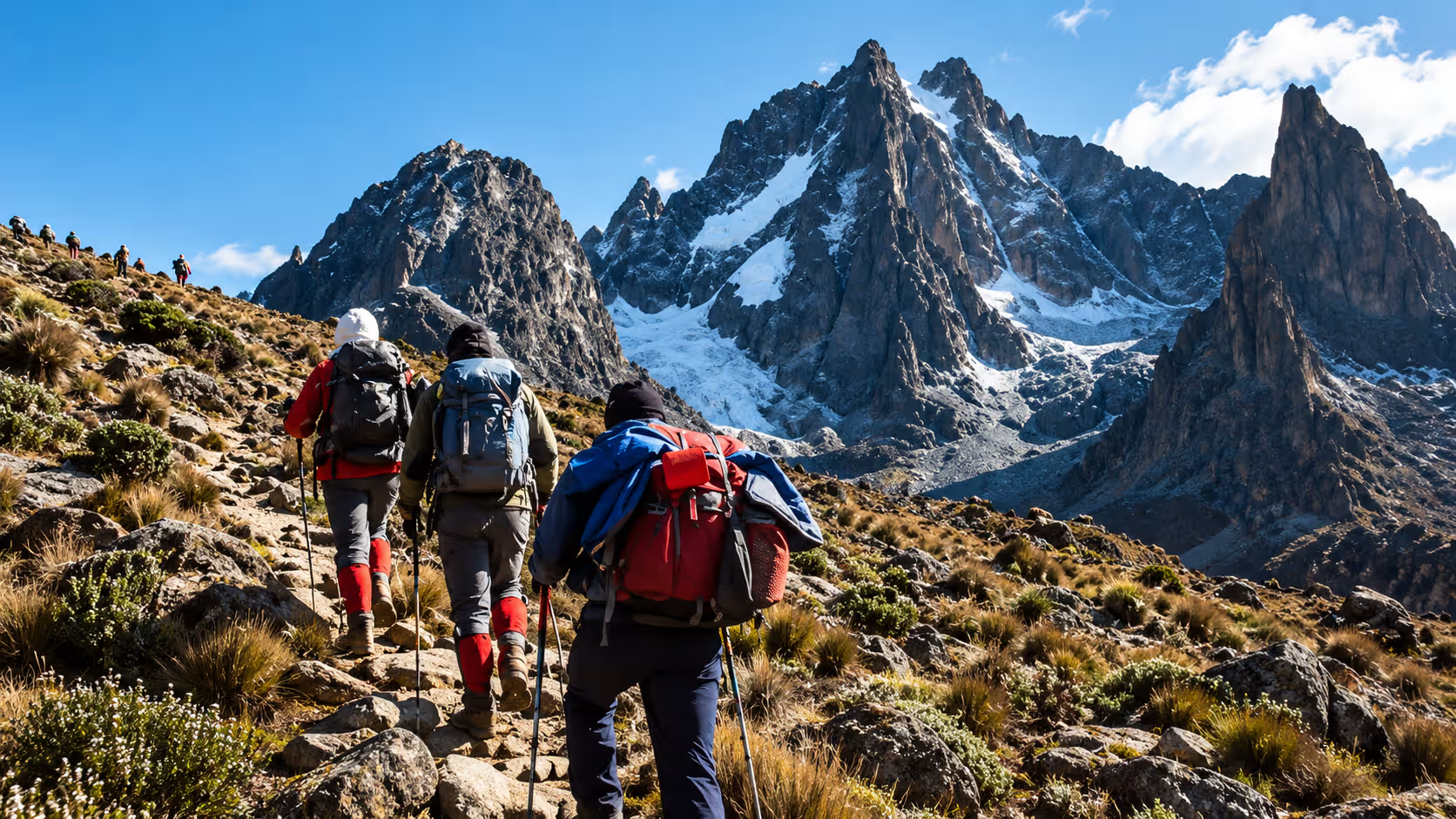
Climbing Mount Kenya
Wildlife in Mount Kenya National Park
Wildlife is concentrated mainly in the forest, bamboo, open glades and lower moorland rather than around the rocky summit. Sightings are quieter and less predictable than in an open savannah park because animals move through thick vegetation. Early morning and late afternoon are the best times to watch forest edges, waterholes and clearings.
Large Mammals in the Forest and Bamboo Zones
Elephants and Cape buffalo move through the lower forest and bamboo zones, while bushbuck, waterbuck, eland, suni and black-fronted duiker use the glades and forest margins. Giant forest hogs, bongos and leopards also occur here but are difficult to see. Dense cover can hide even a large animal at close range, which is why quiet movement and an experienced local guide make a difference. Black rhinos occur within the wider World Heritage landscape, particularly in the lower northern conservation areas, but they are not a dependable sight on an ordinary mountain trek. Travellers whose priority is viewing rhinos or Grevy’s zebras should combine Mount Kenya with the lower conservancy country rather than expect to see these animals on the summit routes.
Primates, Hyraxes and Smaller Wildlife
Black-and-white colobus and Sykes’ monkeys are often easier to find than the larger forest mammals. Listen for movement and calls in the canopy, especially in the cooler hours. Tree hyraxes, white-tailed mongooses, and porcupines also live on the wooded slopes, while rock hyraxes become more noticeable on rocky ground higher up the mountain. The endemic Mount Kenya mole-rat occurs on the northern slopes and in the Hinder Valley at elevations reaching about 4,000 metres. These smaller species show how the wildlife changes with altitude, from forest animals near the gates to cold-adapted mammals among moorland, tussock grass and rock.
Birdlife on Mount Kenya
Mount Kenya supports more than 130 bird species across its forests, bamboo, moorland, streams and alpine zones. Look for Jackson’s francolin, scaly francolin, Abbott’s starling, olive ibis, alpine swift, scarce swift, Abyssinian crimsonwing, sunbirds and raptors. The scarlet-tufted malachite sunbird is a memorable high-altitude species, often feeding among giant lobelias in the moorland. Birding works naturally alongside a forest stay or trek. Start early, walk slowly and pause along forest edges where light enters the canopy. Binoculars are useful in the tall forest, while the open moorland gives clearer views of birds moving between flowering plants and rocky slopes.
Reptiles, Amphibians and High-Altitude Specialists
Skinks, lizards, snakes and amphibians occupy damp forest, streams, moorland and rocky areas across the mountain. They are less obvious than the birds and mammals, particularly in cold or wet conditions. A local guide can help identify suitable habitat without disturbing the animals or approaching snakes too closely. High-altitude life is often seen in small details: insects sheltered among giant groundsels, amphibians near cold streams and reptiles warming briefly in the sun. These sightings add depth to a trek because they reveal how species survive as temperature, vegetation and oxygen levels change
Other Activities in Mount Kenya National Park
You do not need to climb Point Lenana to enjoy Mount Kenya. Forest walks, cave visits, birding, wildlife viewing and camping all work on the lower slopes. These activities suit travellers who want a gentler mountain visit or an extra day before or after a longer trek.
Cave Exploration on Mount Kenya
The Mau Mau Caves are associated with fighters who used parts of the Mount Kenya forest during resistance to colonial rule. A guided visit combines a forest walk with local history and the mountain’s volcanic geology. Paths can be muddy and cave floors uneven, so closed shoes and a torch are useful even on a short outing. Shipton’s Cave lies much higher on the Sirimon approach, close to Shipton’s Camp, and is reached as part of a mountain trek rather than a casual lower-slope excursion. The two cave experiences should not be confused when arranging the itinerary: one is a historical forest visit, while the other sits deep inside the high-altitude route.
Camping in Mount Kenya National Park
Camping is part of most multi-day treks, particularly where a route or overnight plan does not use huts. Old Moses, Shipton’s, Mackinder’s and Mintos are among the familiar overnight areas, depending on the chosen route. Facilities are basic, temperatures fall sharply after sunset, and water may need to be treated before drinking. Carry a warm sleeping system suited to sub-zero mountain nights, even when Nairobi and the lower slopes feel warm. Porters normally carry shared equipment and food, but pack weights and personal luggage limits should be agreed before departure. Keeping one dry set of clothing for camp makes the evenings far more comfortable.
Bird Watching in Mount Kenya Park
The lower montane forest offers the strongest birding, with additional high-altitude species appearing as you move into heath and moorland. Quiet trails, forest edges and streams are productive soon after sunrise. Black-throated wattle-eye, mountain yellow warbler, brown-hooded kingfisher, Abyssinian crimsonwing and alpine swift may be included in a wider Mount Kenya birding list. A dedicated birding morning near a forest lodge usually produces more than trying to identify every species while keeping pace on a summit trek. Tell your guide which birds interest you so the route and walking speed can be adjusted around the right habitat.
Wildlife Viewing on the Lower Slopes
The lower slopes give you the best chance of seeing elephants, buffalo, colobus monkeys, Sykes’ monkeys, bushbuck, waterbuck and smaller forest animals. Wildlife can appear around open glades, salt licks, waterholes and lodge clearings, but the forest rarely offers the uninterrupted views found in Kenya’s savannah parks. Treat wildlife viewing here as part of the mountain experience. Stop, listen and scan gaps in the vegetation rather than moving quickly in search of a long species list. Leopards, bongos and giant forest hogs remain possible but rare sightings

Tree-Hyrax in Mount Kanya National Park
Cultural Significance of Mount Kenya
Mount Kenya is a sacred landmark as well as a climbing destination. Its peaks, forests, rivers and slopes have shaped the beliefs and identity of communities living around the mountain for generations. Understanding this connection changes the climb from a purely physical challenge into a journey through a living cultural landscape.
Kikuyu, Meru and the Sacred Mountain
The Kikuyu and Meru regard Mount Kenya as a holy mountain associated with Ngai, the creator. In Kikuyu tradition, the mountain is known as Kirinyaga and is linked with Ngai and Mumbi. Traditional homesteads were built with their doors facing the mountain, and prayers and rituals recognised its spiritual presence. Batian, Nelion and Lenana also carry local history through names connected with Maasai leaders. This mixture of cultural associations reflects the many communities that have known the mountain. Walk respectfully, follow local and park instructions, and allow community stories to remain part of the experience rather than treating the peaks only as elevations to conquer.
Best Time to Visit Mount Kenya National Park
Mount Kenya can be visited throughout the year, but the drier periods generally give trekkers firmer trails and clearer summit views. Weather remains changeable at altitude in every month. Clouds can build quickly, rain can fall on the lower slopes and temperatures around the summit can drop below freezing before dawn.
Dry Seasons for Trekking and Clear Mountain Views
January to February and June to September are the main trekking windows. January and February are often warmer and relatively dry, while June to September generally brings cooler conditions and reliable walking days. These periods suit summit attempts, photography and longer route combinations. Begin summit day with warm layers, gloves and a headlamp because most Point Lenana ascents start before dawn. Waterproof clothing remains necessary even in the dry season. Strong ultraviolet light at altitude also makes sunscreen, sunglasses and a brimmed hat important once the sun rises.
Wet Seasons: Green Scenery and Quieter Trails
The long rains normally fall from March to May, followed by shorter rains in November and December. Trails become muddy, the Vertical Bog on Naro Moru becomes harder, and vehicle access towards the Chogoria trailhead may slow down. Cloud can also hide the main peaks for long periods. The wetter months bring green forest, active birdlife and quieter routes. They can work for forest stays, lower-slope walks and experienced trekkers prepared for rain, but flexibility is essential. Protect clothing and electronics in dry bags and allow additional time for slippery ground and delayed road transfers.
How to Get to Mount Kenya National Park
Mount Kenya spans Nyeri, Kirinyaga, Embu, Meru and Tharaka-Nithi counties. Access depends on the route you plan to use: Nanyuki serves Sirimon, Naro Moru town serves the western route, and Chogoria town serves the eastern approach. Arrange transport around the chosen gate and finishing point, especially when ascending on one route and descending on another.
By Road from Nairobi to Mount Kenya
Nairobi to Nanyuki is about 190 kilometres and normally takes 4 to 5 hours, depending on traffic. Sirimon Gate lies approximately 25 kilometres beyond Nanyuki, including about 10 kilometres on the access track after the turn from the main road. Naro Moru is roughly 170 kilometres from Nairobi, with another 17 kilometres to the park gate. Chogoria town is about 180 kilometres from Nairobi. From town, allow for the 31-kilometre climb through the forest to the park gate; the final road section can be rough and slow after rain. Private transport is the most practical option when carrying trekking bags and meeting guides, porters or cooks. If you finish on a different side of the mountain, arrange the collection vehicle before starting the trek.
By Air to Nanyuki Airfield
Flights from Wilson Airport in Nairobi to Nanyuki take about 35 to 45 minutes. Nanyuki Airfield is convenient for Sirimon and for lodges on the mountain’s northern and western sides, but you still need a road transfer to the accommodation or trailhead. Flying saves time but works best when luggage allowances are checked in advance. Trekking equipment, duffel bags and group gear may exceed the limits on a small aircraft. Confirm both the flight allowance and the vehicle transfer before departure.
How Many Days Do You Need for Mount Kenya National Park?
1 day is enough for a forest visit or a short lower-slope walk, but comfortably reaching Point Lenana requires 4 to 6 days. The best length depends on the route, acclimatisation, and whether you want to descend on a different side of the mountain.