How Many Mountain Gorillas Are in Uganda?
How Many Mountain Gorillas Are in Uganda?
Uganda’s mountain gorillas live in Bwindi Impenetrable National Park and Mgahinga Gorilla National Park. You may have come across the figure of 459 mountain gorillas, but this number refers to the 2018 census of Bwindi and the neighbouring Sarambwe forest in DR Congo. It covers the wider forest area across the two countries, not all the mountain gorillas in Uganda. Mgahinga is home to gorillas belonging to the Virunga population, which also lives across Rwanda and DR Congo. To understand how many mountain gorillas live in Uganda, you need to look at both populations and the areas they inhabit.
Uganda’s Mountain Gorilla Population Explained
Gorilla census figures cover forest ecosystems that cross national borders. The table below separates the Bwindi-Sarambwe count from the shared Virunga population and the combined global figure.
| Population area | count | Survey year | What the figure covers |
|---|---|---|---|
| Bwindi-Sarambwe ecosystem | 459 | 2018 | Bwindi Impenetrable National Park in Uganda and neighbouring Sarambwe Nature Reserve in DR Congo. This is an ecosystem count, rather than Uganda’s complete national population. |
| Virunga Massif | 604 | 2015/2016 | The shared habitat covering Mgahinga in Uganda, Volcanoes National Park in Rwanda and the mountain gorilla habitat in Virunga National Park in DR Congo. It is not a Mgahinga-only count. |
| Combined global figure | 1,063 | Combined surveys | The total drawn from the two census figures above. It represents a historical global benchmark, rather than Uganda’s population or a new census count. |
Important distinction
Do not add the entire Virunga count to the Bwindi-Sarambwe figure and call it Uganda’s population. Both census areas cross national borders.
Has a New Gorilla Census Been Released?
As of 10 October 2026, the new mountain gorilla census for Bwindi and Sarambwe has not yet produced a confirmed population figure. The survey has collected new evidence, but the final count is still being worked out. Early findings shared on 1 October 2026 pointed to an increase in the gorilla population. However, the final results had not yet been released, and no new total was announced. For now, the 2018 census figure of at least 459 mountain gorillas in Bwindi-Sarambwe remains the latest confirmed population count to consider. It is important to keep the year alongside the figure, as the new census may provide an updated total once the results are ready.
How Mountain Gorillas Are Counted
Census teams walk through the forest searching for gorilla trails, fresh dung and sleeping nests built from leaves and branches. At nesting sites, they collect dung samples for laboratory analysis. Finding nests helps locate groups, but counting nests alone does not establish how many individual gorillas live in the forest. DNA testing helps identify individual gorillas, so samples collected from the same animal at different locations do not become separate counts. This work takes time, which explains the gap between completing forest surveys and releasing the population figure. A list of families available for trekking cannot replace a census because it excludes gorillas outside those tourism groups.
Is the Mountain Gorilla Population Growing?
Mountain gorillas have recovered over several decades, supported by habitat protection, ranger patrols, veterinary care and cooperation with neighbouring communities. However, census results are snapshots taken years apart. They do not prove that every group grows each year or that both mountain gorilla populations recover at the same rate. Mountain gorillas remain Endangered, despite moving from the Critically Endangered category in 2018. Human diseases, habitat pressure and snares continue to threaten their survival. For visitors, following the guide’s instructions, keeping the required distance and avoiding a trek when ill help protect the animals behind these population figures.
Why Not All Gorilla Groups Can Be Visited
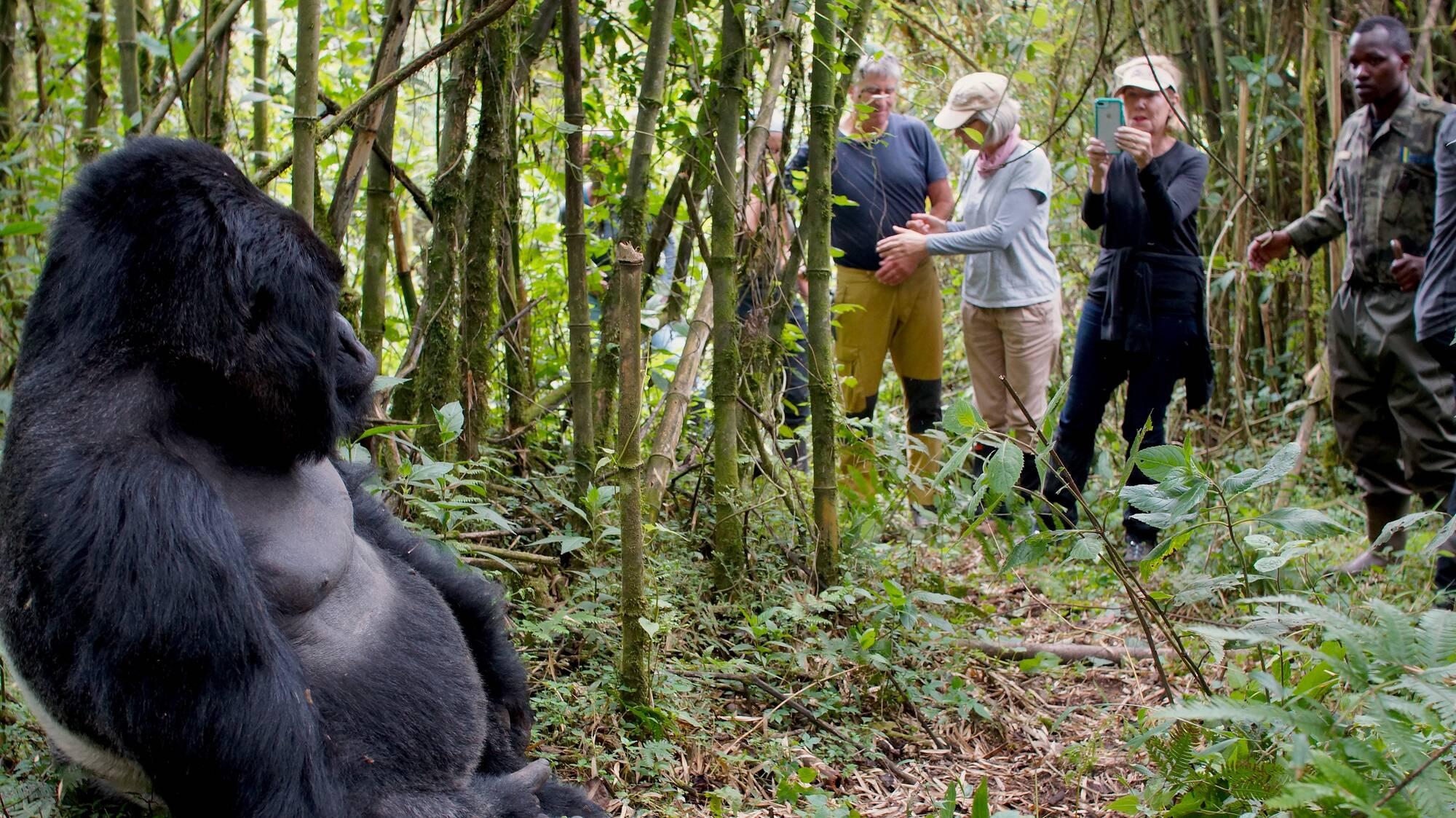
A gorilla census counts animals across the surveyed habitat, including groups that are not available for trekking. Tourism visits are limited to designated habituated groups, whose members have gradually become accustomed to the presence of guides and visitors. Habituation does not make gorillas tame. They remain wild animals. The total population therefore does not tell you how many trekking permits are available. Your visit depends on the groups open for tourism and permit availability for your date and location. For the visitor-focused breakdown, see how many gorilla families tourists can visit in Uganda.

Recent Posts
Kenya Safari Tours: 7 Essential Things to Compare Before Booking
Kenya Safari Packages: How to Choose the Right Trip for You