The lowest-priced itinerary isn’t always the best fit. The cost of Kenya safari tours depends on how long you travel, which destinations you include, the season, your accommodation and what the package covers, so comparing the full itinerary matters more than comparing a headline price alone.
It makes sense to want clear costs and dates before you commit, especially when wildlife viewing and travel conditions vary by season. This guide explains what affects Kenya safari pricing and departure dates, how seasonal wildlife viewing may shape your plans, and how destinations and cultural experiences can influence the trip you choose.
Use the seven comparisons to weigh the details side by side, from route and accommodation to included activities and the kind of experiences you want. With a clearer picture of the options, you can choose a Kenya safari that suits your travel plans and priorities.
Key Takeaways
- Compare trip length, accommodation, transport and included activities to understand what a safari price covers.
- Match your travel dates to the wildlife and seasonal conditions you most want to experience.
- Review departure dates alongside your preferred route so the schedule works for your travel plans.
- Consider how Maasai and Samburu cultural experiences fit into your itinerary, not just which wildlife areas it visits.
- Choose destinations based on the wildlife, landscapes and pace you want from your Kenya trip.
What does a Kenya safari cost?
Kenya safari costs depend on trip length, destinations, accommodation, transport and package inclusions. Compare these details together: a short reserve visit and a multi-stop adventure are different trips.
Tour Options and Trip Lengths
How many days should a Kenya safari tour last?
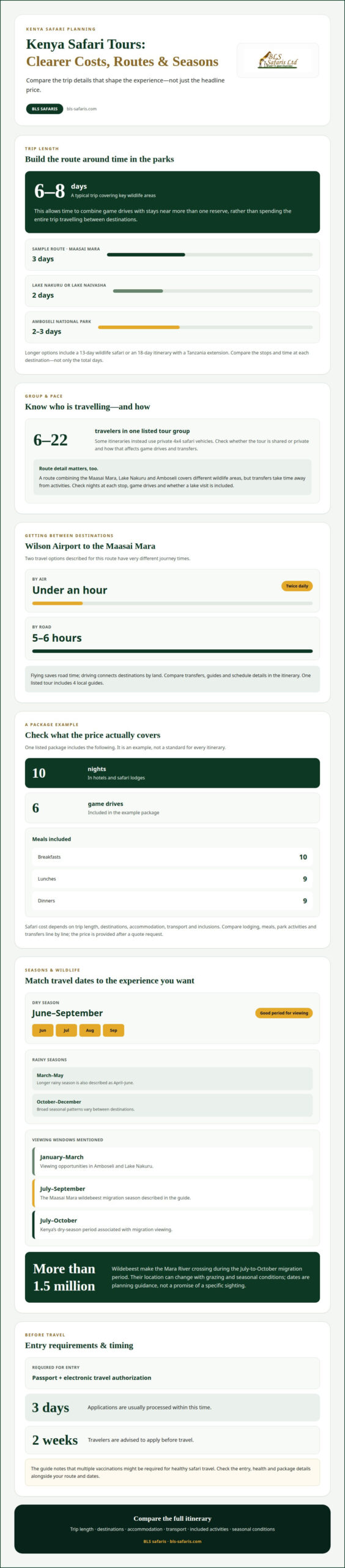
A trip covering key wildlife areas typically takes 6-8 days. That allows time to combine game drives with stays near more than one reserve, rather than spending the entire trip travelling between destinations.
A sample itinerary might include 3 days in the Maasai Mara, 2 around Lake Nakuru or Lake Naivasha, and 2-3 in Amboseli National Park. Longer options can extend the route: one wildlife safari lasts 13 days, or 18 days with a Tanzania extension. Compare the stops and time at each destination, not only the total days. The Kenya safari options range from focused wildlife itineraries to broader routes.
Group Size and Safari Itineraries
Group size affects the feel and pace of a guided safari. One Kenya safari tour group may have 6-22 travellers, while some itineraries use private 4×4 safari vehicles. Always check whether the tour is shared or private, and how that choice shapes time on game drives and travel between lodges.
Route details matter just as much. A plan combining the Maasai Mara, Lake Nakuru and Amboseli covers different wildlife areas, but transfers take time away from activities. Check the nights at each stop, the number of game drives and whether the itinerary includes a lake visit. These details help you judge whether the trip suits your pace.
Guided Tours and On-Tour Support
Tour operators coordinate the route, accommodation, ground transport and guided activities. Compare what the package lists as included, then check how transfers connect with your arrival and departure plans. For example, flights from Nairobi’s Wilson Airport to the Maasai Mara operate twice daily, and the flight takes under an hour; the road journey typically takes 5 to 6 hours.
Those routes offer different travel experiences: flying saves road time, while driving connects destinations by land. However, flying costs more than travelling by land. A Kenya safari tour may include 4 local guides, but support arrangements vary by itinerary. Look for clear details about who guides activities, which transfers are arranged, and how the schedule moves between lodges and parks.
Traveller Requirements and Package Inclusions
What are Kenya’s entry, visa, and vaccination requirements for US travellers? Travellers entering Kenya need a passport and the required electronic travel authorisation (eTA); applications are usually processed within 3 days, and travellers are advised to apply two weeks before travel. The Centers for Disease Control and Prevention notes that multiple vaccinations might be required for healthy safari travel.
What is included in a Kenya safari tour package?
A listed package can include 10 nights in hotels and safari lodges, 6 game drives, and meals comprising 10 breakfasts, 9 lunches and 9 dinners. Treat that as an example, not a standard for every itinerary. Compare accommodation, meals, park activities and transfers line by line. A safari’s price depends on its route, duration, lodging, transport and inclusions; the price is provided after a quote request.
Kenya safari seasons and migration viewing
Kenya’s seasons shape road conditions, landscapes and the wildlife you may see. Compare your travel dates with the animals and parks you most want to experience.
Climate and Rainy Seasons
Kenya’s dry season runs from June to September, while rainy seasons run from March to May and October to December. These broad patterns can help you compare travel windows, but conditions vary between destinations. A route through Amboseli and the Maasai Mara may feel different from one focused on Lake Nakuru.
Rain can turn dry landscapes greener and affect travel between parks. The longer rainy season is also described as running from April to June. If your dates fall near a seasonal transition, consider how the route balances road travel with time for game drives. June through September is identified as a good period for Kenya safari viewing.
Seasonal Wildlife Sightings
Wildlife viewing depends partly on the season and the areas in your itinerary. January to March offers viewing opportunities in Amboseli and Lake Nakuru, while the June-to-September dry season is another popular window. Compare these periods with your preferred parks rather than assuming every destination offers the same sightings at the same time.
For a practical comparison, list the animals and landscapes that interest you, then match them to the itinerary’s destinations and dates. If you want to experience different habitats, a route combining Amboseli, Lake Nakuru and the Maasai Mara can offer varied settings. The length of each stay matters too: an itinerary that allows time for repeated game drives gives you more opportunities to observe wildlife.
Kenya’s seasonal patterns can help guide your priorities, but they cannot predict every sighting. Choose dates for the overall experience you want, including scenery, park visits and travel pace, rather than relying on one expected encounter.
Great Migration Viewing
The Great Migration is a major reason travellers plan around the Maasai Mara. The wildebeest migration season there is described as running from July to September, while Kenya’s July-to-October dry-season period is also associated with migration viewing. These windows offer useful planning guidance, not a promise of a particular sighting on a specific day.
More than 1.5 million wildebeest make the Mara River crossing during the July-to-October migration period. The animals move in response to grazing and seasonal conditions, so their location can change. Compare the travel dates, time allocated to the Maasai Mara and number of game drives when considering a migration-focused itinerary.
A focused route can leave more time in the reserve, while a broader Kenya itinerary adds other landscapes and parks. For example, a seven-day Great Migration safari centres the trip on this seasonal experience. If you’re weighing dates against destinations, share your preferred season and wildlife priorities to shape a suitable route with BLS safaris.
Tour prices and departure dates
Compare Kenya safari prices by considering the itinerary, travel season and package inclusions together. A lower headline cost may reflect a shorter route or different accommodation, so compare like with like.
Safari Price Ranges
Kenya safari package prices depend on trip length, destinations, accommodation, transport and activities. A route focused on the Maasai Mara differs from one combining the Mara, Lake Nakuru and Amboseli. Compare the nights at each stop and whether the itinerary uses lodges or tented camps.
The price depends on the itinerary and is provided after a quote request. Cost factors include travel dates, route, accommodation and included activities. For a fair comparison, choose your preferred destinations first, then review what each package covers, such as transport, meals, park visits and game drives.
Budgets and Sale Discounts
Build your budget around the full trip, not one advertised feature. A Maasai Mara itinerary, for example, may differ from a route that adds Lake Nakuru, Amboseli or a beach stay. Accommodation also shapes the experience: safari stays may use lodges or tented camps, with different levels of comfort and services.
A sale discount can change a listed package price, but the discount alone does not show the overall value. Compare the itinerary, travel dates and inclusions before weighing an offer. Check whether breakfast, transfers, park activities and optional experiences are included or priced separately.
Departure Dates
Departure dates determine which seasonal conditions and wildlife-viewing opportunities fit your trip. June through September is identified as a good period for Kenya safari viewing, while the Maasai Mara wildebeest migration season is described as July to September. If migration viewing is a priority, compare those months with the time your itinerary allows in the Mara.
Packages are listed for 2026 and 2027, showing why it helps to compare the stated departure date with the route and season. September falls within both the broader dry-season viewing window and the described migration season. A five-day Amboseli and Maasai Mara itinerary is one example of a route connecting two wildlife areas. Check how the departure schedule fits your plans and the destinations you want to visit.
Before choosing, compare each option using the same details: dates, nights, accommodation, route, meals and activities. That gives you a clearer view of what the package offers, whether it includes time for an elephant sighting or other wildlife, and how the overall experience suits your budget.
Maasai and Samburu cultural experiences
A Kenya safari can combine wildlife viewing with cultural experiences, but these are distinct parts of an itinerary. Compare how a Maasai or Samburu visit fits around travel, game drives and time in each destination.
For a Maasai Mara village visit, look for a clear description of what it involves and how it fits into the day. A cultural stop should be planned as an experience in its own right, not treated as a brief add-on between drives. Consider whether the itinerary leaves time to listen, learn and engage respectfully.
Maasai and Samburu experiences are not interchangeable. They involve different communities and places, so compare what the itinerary specifically names rather than relying on a broad label such as “local culture.” A useful plan makes clear which community the experience relates to and where it takes place, without suggesting that one visit represents everyone’s way of life.
Before choosing a route, consider what you value in a cultural encounter. You might want time with local hosts, insight into daily life, or an understanding of how community experiences connect with conservation and tourism. The itinerary should describe the planned activity plainly. During a visit, follow your guide’s direction, ask before taking photographs and respect any boundaries shared by hosts.
Travel logistics shape how much room the day has for both wildlife and culture. The road trip from Nairobi to the Maasai Mara typically takes 5 to 6 hours. A flight from Nairobi to the Mara takes under an hour, offering a different way to manage travel time. Compare the arrival schedule with the first planned activity, especially if you want both a village visit and a game drive.
Game drives in the Maasai Mara commonly begin at 5:30-6:00 AM, with afternoon viewing from 3:30-6:00 PM. A cultural visit may fit between activities, but the itinerary should show how the day is arranged. During the wildebeest migration season, July to September, you may prefer more time for wildlife viewing; another schedule may leave more space for cultural experiences.
For a route pairing Samburu with another wildlife area, a Samburu and Lake Nakuru safari illustrates how destinations can be combined. Compare the route, time at each stop and named cultural activities, then choose the balance that suits your interests.
Kenya safari destinations and wildlife
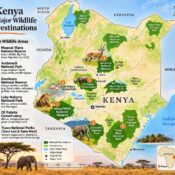
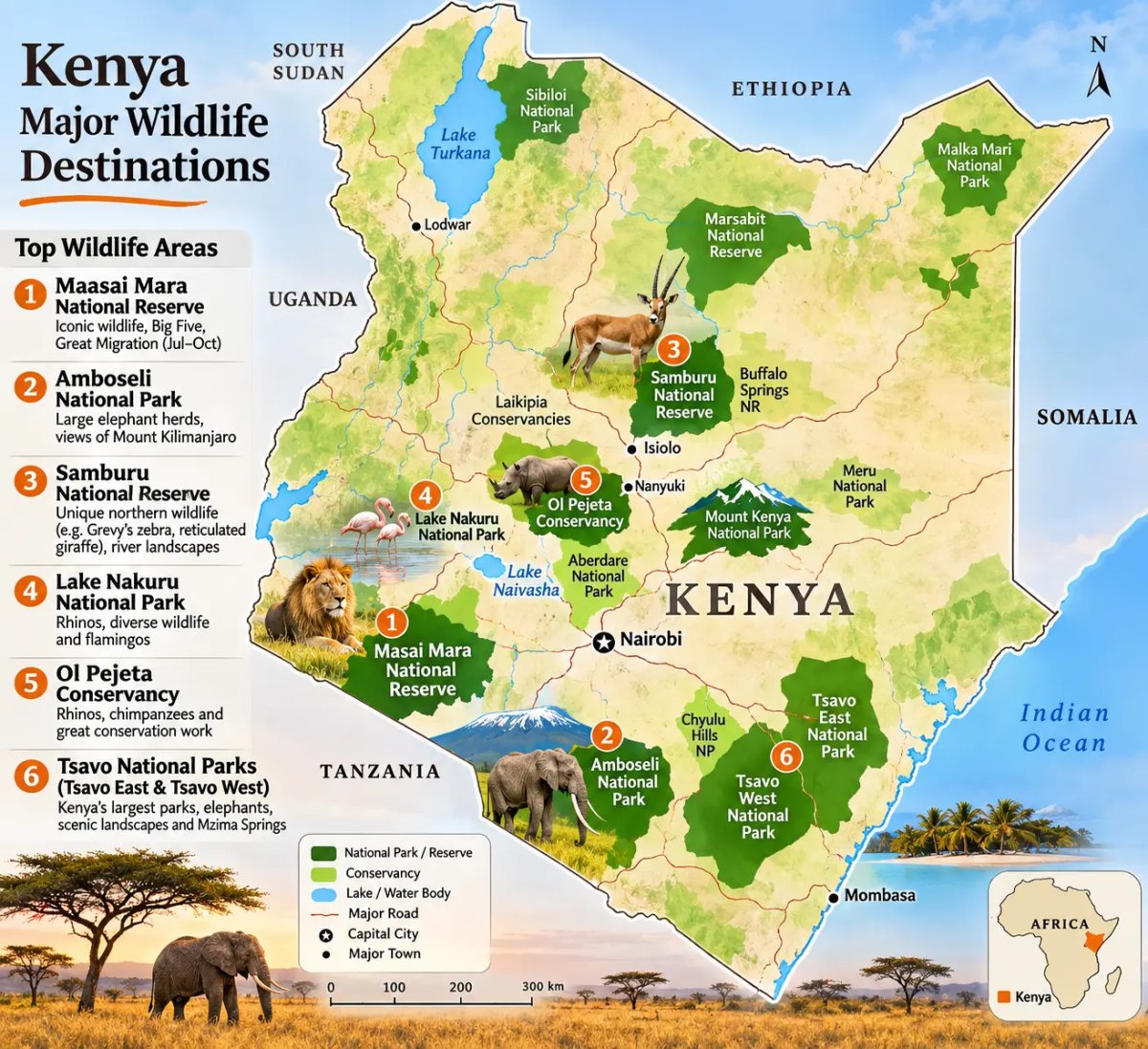
Kenya safari routes can include the Maasai Mara, Amboseli and Lake Nakuru. Compare destinations by the landscapes, wildlife and travel pace you want, then see how the route connects them.
Safari Destination Options
The Maasai Mara, Amboseli and Lake Nakuru offer different stops within a Kenya itinerary. Some routes focus on one national reserve, while others link several parks and landscapes. Compare the time assigned to each place, not just the destination names on the route.
For example, a plan linking the Maasai Mara with Amboseli and Lake Nakuru covers more ground than a Mara-focused trip. Each added stop changes the balance between travel and viewing time. Check the order of destinations and the nights assigned to each area.
An itinerary centered on the Maasai Mara National Reserve can suit travelers who want to focus their trip there. A broader route may appeal to those seeking varied landscapes. Choose based on the experience you want rather than assuming every park offers the same wildlife.
Major Attraction Highlights
The Maasai Mara is known for seasonal wildebeest migration viewing, while Amboseli and Lake Nakuru can add different settings to a safari. Compare whether your main draw is migration, a varied route or time in a particular landscape. The itinerary should make those priorities clear.
Accommodation also shapes the experience between park visits. Safari stays may combine lodges and tented camps, so consider their locations in relation to the route. Staying near a national reserve can create a different daily schedule from an itinerary with longer transfers between destinations.
Plan around the attractions that matter most. If migration viewing is central, compare how much time the itinerary allocates to the Maasai Mara. If you prefer several destinations, check how the stops fit together and whether there is enough time for game drives at each place.
Wildlife Viewing
Wildlife viewing varies by destination and season. The wildebeest migration is associated with the Maasai Mara, and Kenya’s dry-season viewing window includes July to October. For migration-focused itineraries, dates and time in the reserve are useful points of comparison.
Other wildlife interests can shape the route, too. The black rhino has been critically endangered since 1996, so travelers interested in conservation may want to consider how wildlife viewing fits into the wider trip. Compare the parks named in the itinerary and the activities planned at each stop.
Kenya’s savanna landscapes are not the only consideration. A route can combine wildlife drives with time to experience multiple destinations, but each transfer affects the day’s pace. Review the stops, overnight locations and planned drives together, then choose the balance that fits your priorities.
BLS safaris: Kenya Safaris
BLS safaris helps travelers plan Kenya safaris around their preferred destinations, travel dates and wildlife interests. When you’re ready to bring those choices together, the team can shape a clear route with local guidance, handpicked lodges and transparent, itemized pricing.
For a wider regional journey, BLS safaris also plans East Africa safaris, including trips that combine Kenya with Tanzania or Uganda. The right itinerary depends on the places and experiences you want, so let your priorities guide the planning.
Share your preferred season, destinations and cultural interests to begin planning a safari that fits your trip. Contact BLS safaris to discuss your Kenya safari plans.
Shape Your Safari Around What Matters Most
The best Kenya safari tours begin with a clear sense of what you want the journey to feel like. Before settling on an itinerary, consider the balance you’d enjoy between discovery and downtime, shared experiences and quiet moments, planned activities and room to pause. That can help turn a list of destinations into a trip that feels personal.
You don’t need to have every detail decided. A preferred travel period, a few places that interest you or a particular experience you hope to include can provide a useful starting point. BLS Safaris can build those priorities into a Kenya itinerary or explore a wider East African journey that includes Uganda.
When you’re ready, share what you’d like your trip to include and take the next step toward planning it.
Your plans can take shape one thoughtful choice at a time.
Frequently Asked Questions
When is the best time to visit Kenya?
June through September is a good period to visit Kenya for safari viewing, while January and February are also commonly recommended months. The best fit depends on whether you’re prioritizing dry-season travel, migration viewing or particular parks. A trip focused on the Maasai Mara’s wildebeest migration, for example, calls for different date planning from a visit centered on Amboseli or Lake Nakuru.
How is the wildlife viewing?
Kenya offers wildlife viewing across different landscapes and parks, including the Maasai Mara, Amboseli and Lake Nakuru. The animals you encounter depend on the destinations, season and time spent on game drives. For a varied trip, consider an itinerary that combines multiple parks. If a particular species or landscape matters most, make that a priority when planning the route.
How safe is Kenya for tourists?
Safety depends on your route and travel choices. Travelers are advised to avoid Kenya’s border areas with Somalia, and tap water is not considered safe to drink. The Centers for Disease Control and Prevention notes that multiple vaccinations might be required for healthy safari travel. Follow local guidance during your trip.
Is there tipping in Kenya?
Tipping is practiced in Kenya, but amounts can vary by service. A commonly described practice is tipping porters, restaurant staff and maids at 15%. Safari guides are often tipped at least USD $10 per person per day. You can plan for guide tips separately from your package, then carry small amounts for other service situations during your stay.
What are the best safari destinations in Kenya?
The best destination depends on the experience you want. The Maasai Mara is associated with wildebeest migration viewing, while itineraries can also include Amboseli, Lake Nakuru, Lake Naivasha and Samburu. For a northern Kenya route, Samburu can be paired with Lake Nakuru. Compare landscapes and travel times to choose a trip that suits your interests.
When is the best time to go on a Kenya safari?
For a safari centered on the Maasai Mara migration, July to September is a key viewing period. June through September is also identified as a good time for safari viewing more broadly. If your main goal is wildlife in Amboseli or Lake Nakuru, January to March offers viewing opportunities there. Choose dates based on your preferred parks and the seasonal experience you want.
How much do Kenya safari tours cost?
Costs depend on your travel dates, route, accommodation, transport and included activities. A trip with several destinations and different lodge stays will be structured differently from a focused visit to one reserve. BLS Safaris plans customized journeys around travelers’ destinations, dates and budgets, with transparent, itemized quotes covering permits, transport, lodging and meals.
What types of Kenya safari tours are available?
Options include classic wildlife itineraries, migration-focused trips, fly-in safaris, and journeys that combine wildlife with a beach stay. Examples include a 4-Day Masai Mara Classic Safari, a 7-Day Kenya Great Migration Safari, and an 11-Day Kenya Safari & Diani Beach Holiday. You can compare each by route, pace, accommodation and the experiences included in its itinerary.