
These are conservation entry fees, so vehicle charges, camping, accommodation and privately arranged activities remain separate. If Meru forms part of a longer safari, use the category shown on your identification consistently and allow time for verification at the gate.
Wildlife in Meru National Park
Meru’s wildlife is spread across several distinct habitats rather than one continuous open plain. The Rojewero, Ura and Tana river systems keep the river corridors green, while open grassland, acacia woodland, thorn bush and seasonal wetlands support different animals. This variety rewards a full day in the park because a quiet river bend can produce hippos and waterbirds while the next open stretch brings elephants, giraffes or predators.
Big Five Wildlife and Predator Sightings in Meru
Elephant, lion, leopard, buffalo and rhino all occur in Meru. Elephants and buffalo are usually the most visible large mammals, particularly near riverine vegetation, water points and woodland edges. Lions use open plains and shaded acacia country, cheetahs favour areas with longer sightlines, and leopards remain more secretive around riverine forest and thick cover. Meru’s tall grass and dense bush can hide predators even when they are close. Start early, watch for tracks and alarm calls, and give each promising area time before moving on. The quieter road network also lets you stay with a sighting without the pressure of several vehicles arriving at once.
Rhino Sanctuary and Meru’s Conservation Comeback
The 80 sq km rhino sanctuary protects eastern black rhinos and southern white rhinos within Meru National Park. It is one of the park’s strongest wildlife areas and an important part of Meru’s recovery after severe poaching losses in the 1970s and 1980s. Include the sanctuary within a wider game drive rather than treating it as a separate guaranteed sighting. Rhinos still move through natural bush, and visibility changes with vegetation, weather and time of day. A patient drive can combine them with buffalo, elephants and other wildlife while showing how closely security, monitoring and tourism support the park’s conservation work.

Northern Kenya Species in Meru National Park
Meru brings several northern Kenya species into the same safari as the Big Five. Look for the Northern Five: reticulated giraffe, Grevy’s zebra, Beisa oryx, Somali ostrich and gerenuk. Their presence gives the park a clear northern character even though its rivers and wetlands keep parts of the landscape much greener than the country farther north. Reticulated giraffes are easy to recognise by their sharply defined coat pattern. Grevy’s zebras have narrow stripes and large rounded ears, while gerenuk often stretch upright on their hind legs to browse. Beisa oryx favour open bush and grassland, and Somali ostriches stand out by their blue-grey necks and legs.
Rivers, Wetlands and Smaller Wildlife
The permanent rivers support hippos, crocodiles, freshwater turtles and dense belts of vegetation where antelopes, birds and predators find shade and water. During dry periods, these corridors become some of the most productive parts of the park, so game drives often follow river crossings and woodland margins rather than staying only on the plains. Lesser kudu, eland, waterbuck, bushpig, Bohor reedbuck, hartebeest, gazelles and plains zebra add depth beyond the headline species. Slow down around thickets, shaded bends and the edge of open grassland. These transition zones are where smaller or more secretive animals often appear.
Birding in Meru National Park
Meru supports more than 427 bird species. Rivers, swamps, doum palms, baobabs, acacia woodland and grassland place water birds, raptors and dry-country species within the same day’s drive. Peter’s finfoot and Pel’s fishing owl are among the special birds to watch for along shaded waterways. Palm-nut vultures occur around palm-lined river country, while giant kingfishers, fish eagles, bee-eaters, rollers and hornbills bring colour and movement to the riverbanks and woodland edges. Carry binoculars even when mammals are your main interest because birds remain active between the larger sightings
Things to Do in Meru National Park
Meru is best experienced over more than one drive. Its wildlife areas, rhino sanctuary, rivers, viewpoints and Born Free sites sit across a broad landscape, so allowing time for different routes gives you a better understanding of the park than rushing through a single circuit.
Game Drives in Meru National Park
Game drives are the main activity. Early morning and late afternoon offer cooler conditions and stronger chances of predator activity, while river routes remain useful through the warmer part of the day. A full-day drive can connect open plains, acacia woodland, riverine forest and the rhino sanctuary without repeating the same habitat. Elephants, buffalo, giraffes, zebras, gazelles and antelopes often provide the most reliable viewing. Hippos and crocodiles change the pace around the waterways, and fresh tracks or alarm calls can lead to lions, cheetahs or leopards. Use a proper safari vehicle, especially after rain, because some routes become muddy and slower.
Visit the Black and White Rhino Sanctuary
Set aside enough time for the 80 sq km sanctuary rather than passing through quickly. Both black and white rhinos occur here, but the vegetation still requires careful scanning. Black rhinos often favour thicker cover, while white rhinos are more closely associated with open grazing areas. The sanctuary makes Meru one of Kenya’s most important rhino conservation destinations. It also adds context to the rest of the safari because the animals visible today are part of a long recovery built on protection, monitoring and habitat management.
Tana River and River Safaris
The Tana River is Kenya’s longest river, running for more than 1,000 km from the central highlands towards the Indian Ocean. Meru’s permanent rivers and streams drain towards this system, keeping the park’s riverine corridors productive even when the surrounding bush dries out. Follow the river routes for hippos, crocodiles, elephants, buffalo and specialised birds. Adamson’s Falls adds a strong scenic stop and connects the wider conservation area with the history of George and Joy Adamson. Elsa’s grave gives the Born Free story a more personal connection inside the park.
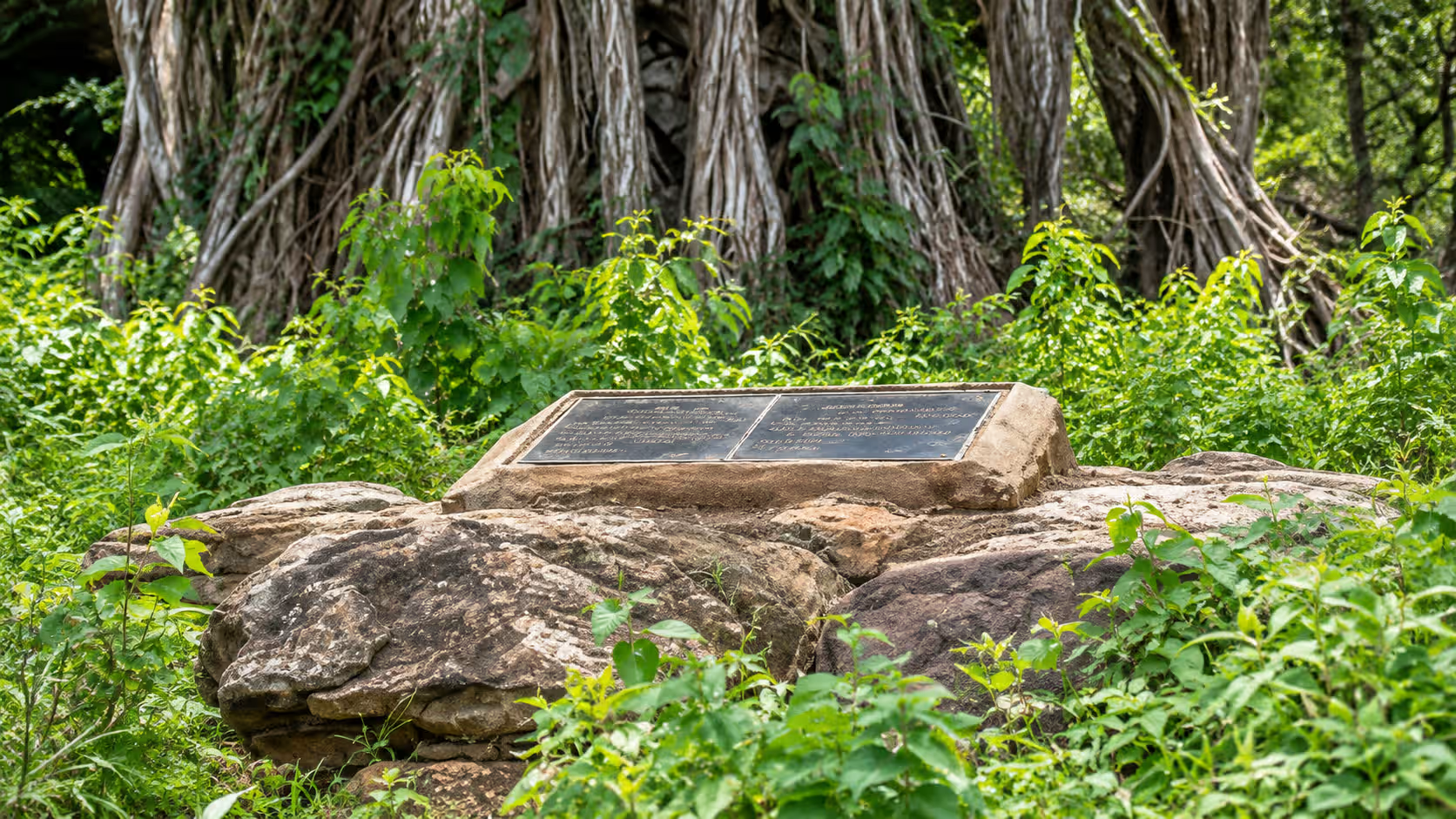
Elsa’s grave
Guided Bush Walks and Cultural Visits
Guided nature walks bring attention to tracks, plants, insects and smaller wildlife that are easy to miss from a vehicle. Walk only in approved areas with the required ranger arrangements. The Rojewero viewpoint and boardwalk provide a gentler stop with broad views over the surrounding habitat. Fishing for Barbus and catfish can be arranged in designated parts of the Tana River, subject to park guidance. Lodges can also organise picnics and sundowners at approved sites. Outside the gates, visits involving Meru, Kamba, Borana and Orma communities add local context. The Meru Cultural Centre lies outside Murera Gate, while the Malka Cultural Centre is near Bisanadi Gate
Best Time to Visit Meru National Park
Meru lies close to the equator, so temperatures change less sharply than rainfall and road conditions. The practical difference between seasons is grass height, visibility, access and the way animals distribute themselves around permanent water.
Best Dry Season Months for Meru National Park Safaris
June to September is the most dependable dry-season window for game viewing. Grass becomes shorter, roads are generally easier and wildlife gathers more frequently along rivers, streams and remaining water points. These conditions make it easier to scan for rhinos, elephants, buffalo, northern species and predators. December to March provides another useful drier period, although conditions can begin changing as the long rains approach. For a first Meru safari focused mainly on large mammals, choose either dry window and allow at least two game-drive periods rather than relying on one short outing.
Visiting Meru National Park During the Rainy Season
The longer rains usually fall from March to May, with shorter rains around October and November. The park turns green, bird activity increases and the rivers, swamps and flowering vegetation create excellent photography conditions. Visitor numbers are also usually lower. The trade-off is slower travel and reduced visibility. Tall grass and thick bush make cats and smaller animals harder to locate, while heavy rain can leave some roads muddy. Wet-season travel works well for birdwatchers, photographers and repeat safari travellers who are comfortable adjusting the day’s route around local conditions
Where to Stay in Meru National Park
Meru has a small range of accommodation inside and immediately outside the park. Choose by location as much as price because a camp near your preferred gate or wildlife area reduces transfer time at the beginning and end of each drive.