
Lake Naivasha is one of the most refreshing stops in Kenya’s Great Rift Valley. It sits about 90 kilometres northwest of Nairobi, at around 1,884 metres above sea level, just outside Naivasha town in Nakuru County. What makes this lake special is its freshwater character. Many Rift Valley lakes are alkaline, but Naivasha stays fresh through underground outflow and natural sedimentation. That freshwater setting gives the area a softer, greener feel, with papyrus edges, fish-rich waters, acacia trees, birds, hippos and open views across the Rift Valley.
The name Naivasha comes from the Maasai word Enaiposha, meaning “that which heaves” or rough water. It refers to the sudden wind-driven waves that can rise across the lake, especially when afternoon winds pick up. The lake is fed by the Malewa and Gilgil rivers. Its surface area was once about 139 square kilometres, before increased rainfall expanded it in recent years to around 198 square kilometres. The average depth is about 6 metres, with the deepest area near Crescent Island reaching around 30 metres.
For travellers, Naivasha gives a different kind of safari from Kenya’s big savannah parks. Here, the pace slows down. Instead of long game drives, you take a boat safari across calm water, watch hippos resting in the shallows, and listen for the sharp call of African fish eagles above the papyrus. Crescent Island is one of the main highlights. It gives you the rare chance to walk among zebras, giraffes, waterbuck, wildebeest and antelopes without sitting behind a vehicle window.
The lake is also one of Kenya’s rewarding birdwatching areas, with more than 400 bird species around the water, papyrus, woodland and wetland habitats. This makes Naivasha a strong choice for a soft safari break, a birding stop, a family-friendly walking safari, or a peaceful lakeside pause before continuing to Hell’s Gate, Lake Nakuru, Maasai Mara or other Kenya safari destinations.

Hippos in Lake Naivasha
Where Is Lake Naivasha Located?
Lake Naivasha is located in Nakuru County, northwest of Nairobi, in Kenya’s Great Rift Valley. Its position makes it one of the easiest Rift Valley lake destinations to reach from the capital. For your Kenya safari route, it works well as a calm lakeside stop between Nairobi, Hell’s Gate National Park, Lake Nakuru, Mount Longonot and the wider Rift Valley circuit.
Distance from Nairobi
Naivasha lies about 90 kilometres northwest of Nairobi. By road, the journey follows the Nairobi to Nakuru highway, passing through the Rift Valley escarpment before descending towards Naivasha town and the lakeshore. The drive is short compared with many safari transfers in Kenya, which is why travellers use the area for boat safaris, birdwatching, Crescent Island walks and quiet lodge stays before moving deeper into the country. It works well as a first stop after arriving in Nairobi or as a relaxing break before continuing to Lake Nakuru, Maasai Mara National Reserve or other safari destinations.
Lake Naivasha in the Great Rift Valley
This is one of the few freshwater lakes in the Great Rift Valley. The lake is fed by the Malewa and Gilgil rivers, while its freshwater character comes from underground outflow rather than a visible surface outlet. The water levels have changed over time. The normal surface area was about 139 square kilometres before 2010, then heavy rainfall expanded it to about 198 square kilometres by 2020. The average depth is around 6 metres, with deeper water near Crescent Island reaching about 30 metres. These changing water levels shape the shoreline, papyrus edges, bird habitats and wildlife movement around the lake.
Nearby Parks and Attractions
Naivasha is well placed for several nearby safari and nature experiences. Crescent Island is the main walking safari highlight, where you can walk among zebras, giraffes, waterbuck, wildebeest and antelopes with a guide. Hell’s Gate National Park sits close by, with Njorowa Gorge forming part of the wider volcanic landscape around the lake. Mount Longonot is nearby for travellers who want a short Rift Valley hike, while Lake Nakuru is easy to add for rhinos, birdlife and classic game drives. This makes the area a strong base when you want lake scenery, boat rides, walking safaris, birdwatching, hiking and traditional wildlife viewing in one easy section of Kenya
Wildlife Around Lake Naivasha
Naivasha is one of the best places in Kenya to enjoy wildlife from the water, on foot and around the lakeshore. The freshwater lake supports fish, papyrus, acacia woodland, open grazing areas and surrounding conservancies. The result is a softer safari experience than the big savannah parks, but the sightings feel close, relaxed and personal.
Hippos and Water Wildlife
Hippos are the main wildlife attraction on the lake. During a boat safari, you see them resting in the shallows with only their eyes, ears and nostrils above the water. As the day cools, they move closer to the shore before leaving the lake later to graze around the lakeside areas. Because the lake is freshwater, it holds good fish populations, including black bass, tilapia and crayfish. These fish support many fish-eating birds and keep the water full of movement. A boat ride gives you the best view of this world: hippos in the shallows, birds hunting along the reeds, and the lake opening out towards the surrounding Rift Valley scenery.
Giraffes, Zebras, Waterbuck and Antelopes
Away from the open water, Naivasha becomes a calm walking safari landscape. Crescent Island Game Sanctuary is the best-known place for this experience. It is reached by a short boat ride from the lakeshore and gives you the chance to walk among giraffes, zebras, wildebeest, waterbuck and several antelope species.
This is what makes the area different from Kenya’s classic game drive parks. You slow down, walk with a guide and watch animals feeding across open ground at eye level. Giraffes move between the acacia trees. Zebras graze in small groups. Waterbuck stay near the lake edge where the grass is greener. Around the wider Naivasha area, you can also see buffaloes, colobus monkeys and other wildlife in nearby forests, farms and conservancies.
Birds of Lake Naivasha
Lake Naivasha is one of Kenya’s rewarding birdwatching areas, with more than 400 bird species around the lake, papyrus fringes, woodland and wetlands. The African fish eagle is the bird most visitors remember. Its sharp call carries across the water, and from a boat you can watch it perched in tall trees or diving down to catch fish.
The lake also attracts kingfishers, pelicans, herons, cormorants and many other waterbirds. The papyrus along the shore creates nesting and feeding habitat, while the open water brings constant activity throughout the day. Even if you are not a serious birder, you quickly notice how alive the lake feels, with birds crossing the water, calling from the reeds and feeding along the shoreline.
Things to Do at Lake Naivasha
Lake Naivasha is one of the easiest places in Kenya to slow down between bigger safari parks. You get water-based safaris, close hippo sightings, rich birdlife, gentle walking safaris and open Rift Valley scenery without the rush of a heavy game drive day. It works well as a relaxed stop after Nairobi, before or after Maasai Mara, Lake Nakuru, Hell’s Gate or Amboseli.
Boat Safaris on Lake Naivasha
A boat safari is the main experience here. The ride is calm and slow, giving you time to watch hippos resting in the shallows, fish eagles calling from tall trees and waterbirds feeding along the papyrus edges. You are close to the water, the sky feels wide, and every turn gives you a fresh view of reeds, acacia trees, birds and wildlife along the shore.

Boat Safaris on Lake Naivasha
This is the best way to see the lake’s water life. Hippos spend much of the day partly submerged, while African fish eagles, cormorants, herons, kingfishers and pelicans work the shoreline. For photographers, the boat gives clean angles, soft reflections and strong chances of capturing birds in flight or hippos rising through the water.
Birdwatching Around the Lake
Birdwatching is strong around the lake, papyrus, woodland and wetland edges. With more than 400 bird species, this is a rewarding place whether you are a keen birder or simply enjoy watching life around the water. The African fish eagle is the headline bird. From a boat, you can watch it perch, scan the water and dive for fish. You can also look for kingfishers, pelicans, herons, cormorants and smaller waterbirds along the reeds. Mornings and late afternoons give better light, cooler conditions and more activity around the shoreline.
Hippo Viewing
Hippo viewing is one of the strongest reasons to take a boat safari. The shallow sections give good chances of seeing pods resting in the water, with their ears, eyes and nostrils just above the surface. Your boat guide keeps a safe distance while positioning you well for clear views and photos. In the evening, hippos become more active and move towards the lakeshore to graze. This is why many lakeside lodges and camps stay alert after dark. Seeing them from the water during the day is the safest and most rewarding way to enjoy them.
Photography and Lakeside Scenery
Naivasha is excellent for soft safari photography. You get reflections on freshwater, birdlife in motion, hippos in the shallows, papyrus-fringed shores, acacia trees and open Rift Valley skies. It is not the drama of big cats on the plains. It is quieter, gentler and more atmospheric. The scenes work beautifully for travellers who enjoy calm water, birds, light and open landscapes.
The area also combines well with Hell’s Gate National Park, Mount Longonot, Lake Oloiden and nearby conservancies. That makes it easy to bring together boat safaris, walking safaris, birdwatching, hiking and lakeside relaxation in one short stay.
Crescent Island Game Sanctuary on Lake Naivasha
Crescent Island Game Sanctuary is one of the best places to slow down your Naivasha safari and experience wildlife on foot. The visit starts with a boat ride across the lake, then continues with a guided walking safari on Crescent Island, a water-surrounded peninsula reached from either the east or west side of the lake. It gives you a very different safari feeling because there is no vehicle between you and the open grasslands, lake breeze, birds, and plains game.
The sanctuary is known for its high concentration of animals per hectare, making the walk rewarding even when you have limited time. As you move through the open ground, you can get close to Masai giraffes, wildebeest, Defassa waterbuck, impalas, Cape buffaloes, Burchell’s zebras, Thomson’s gazelles, Grant’s gazelles, bushbuck and hippos near the water.
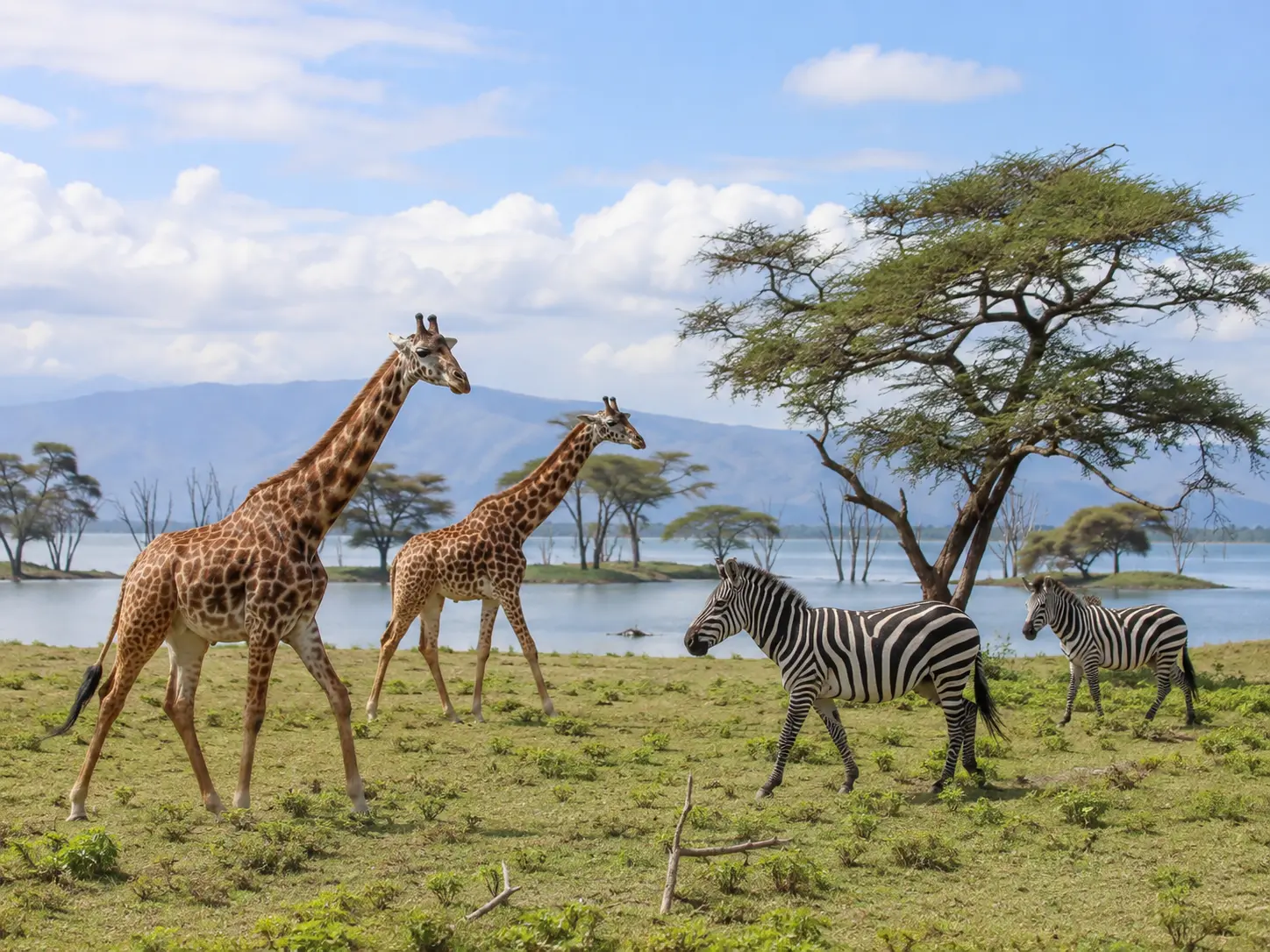
Masai giraffes on Crescent Island
Smaller and more secretive animals also live here, including bat-eared foxes, Kirk’s dik-dik, white-tailed mongoose, spring hare, vervet monkeys, silver-backed jackals and African rock pythons. Birdlife is another strong reason to visit. The shores attract pelicans, cormorants, herons, ospreys and fish-falcons, while the wider lake area supports more than 400 bird species.
Bring binoculars because the mix of open shoreline, shallow water and acacia-fringed scenery gives you excellent chances to watch birds feeding, calling, nesting and moving across the lake edge. A visit here fits well when you want more than a normal lake stop. You can enjoy walking, light hiking, birdwatching, photography, fishing, picnicking, yoga or meditation, and quiet team-building activities in a calm natural setting. For families and first-time safari travellers, Crescent Island is a gentle walking safari without the pressure of a long game drive.
Best Time to Visit Lake Naivasha
Lake Naivasha is good to visit all year, but the most comfortable months for wildlife viewing, boat safaris, birdwatching, photography and relaxed lakeside stays fall during the drier periods. The strongest window runs from June to October, when the weather is generally dry and outdoor activities are easier to enjoy. January to February also gives warm days, clearer skies and good light for photography.
During the dry months, the lake experience feels calm and easy. Boat rides are smoother on clearer days, hippos are easier to watch in the shallows, and birds stay active along the papyrus edges, acacia trees and open shoreline. This is also a good time for Crescent Island walking safaris, lakeside camping and relaxed stays before or after a Kenya safari in the Rift Valley.
Lake Naivasha Weather and Climate
Naivasha has a mild Rift Valley climate, with average temperatures ranging between 50°F and 80°F. The cooler dry months are pleasant for outdoor activities, while the warmer months bring more cloud cover and rainfall. The wetter period is mostly around November and December, with heavier long rains around April and May.
Because the lake sits close to Nairobi and has a calm freshwater setting, it works well as a short safari stop, weekend escape or soft landing between bigger wildlife parks. The surrounding area also includes fishing, horticulture and flower-growing farms, so the scenery shifts between natural lake views, papyrus-fringed shores and working farms around the basin.
Best Months to Avoid Crowds
For a quieter visit, look at late May and June, or travel later in the year around September and October. These months give you a good balance of weather, fewer visitors, and strong outdoor conditions for boat trips, photography, walking safaris, and relaxed lake stays. For travellers interested in flamingos and richer bird activity, November and May are strong months to consider. These periods fall around the short rains and long rains, when the wider Rift Valley wetlands attract more bird movement and greener scenery.
Visiting in the Green Season
The green season gives the lake a softer, quieter feel. The surrounding vegetation becomes fresher, birdlife remains rewarding, and the scenery looks more alive after rain. Some days are cloudy or wet, but this period works well for travellers who prefer fewer crowds, better value and a more relaxed time around the water.
Naivasha also offers good value because there is no general entry fee simply to visit the lake area. Its closeness to Nairobi keeps travel time lower than many other safari destinations. Boat safaris, Crescent Island, Hell’s Gate and other activities are arranged separately, but the lake itself remains one of Kenya’s easiest and most rewarding Rift Valley stops.
How to Get to Lake Naivasha
Lake Naivasha is one of the easiest Rift Valley stops to reach from Nairobi. The journey takes you out of the capital, down towards the Great Rift Valley and into a lakeside setting that works well for a day trip, overnight stay or soft break between bigger Kenya safari areas.
Nairobi to Lake Naivasha by Road
By road, Naivasha is reached from Nairobi through the Great Rift Valley route. Travel time ranges from about 1.5 hours to 2.5 hours, depending on traffic, road conditions and stops along the way. The drive is around 60 miles north of Nairobi, following the A104 and Old Naivasha Road. This is a rewarding road transfer because the route gives you classic Rift Valley viewpoints before descending towards the lake basin.
For travellers coming from Nairobi, it is short enough for a same-day visit, but an overnight stay gives you better time for a boat safari, Crescent Island, birdwatching and relaxed lakeside scenery without rushing. For guests who prefer to fly, light aircraft flights from Nairobi’s Wilson Airport to Naivasha take about 15 minutes. Flying is best for luxury itineraries, private trips or travellers connecting this area with other safari regions.
Lake Naivasha from Nakuru
Naivasha sits between Nairobi and Nakuru, making it easy to include when travelling through Kenya’s central Rift Valley. From Nakuru, the lake works well as a stop before continuing towards Nairobi, Hell’s Gate, Mount Longonot or the wider Rift Valley circuit.
This location is one of the reasons Naivasha fits so well into Kenya safari routes. You can use it as a quiet break after Lake Nakuru National Park or as a gentle first stop before heading deeper into the Rift Valley. The freshwater setting, birdlife, hippos, boat rides and nearby walking safari options make it different from the more vehicle-based wildlife parks.
Combining Naivasha with Hell’s Gate and Lake Nakuru
Naivasha combines well with Hell’s Gate National Park, Lake Nakuru National Park, Mount Longonot, Maasai Mara and Aberdare National Park. Crescent Island is on the southern side of the lake. Hell’s Gate National Park sits about 15 kilometres south of the lake, while Mount Longonot National Park is about 35 kilometres south.
Hell’s Gate is one of the best nearby additions because it changes the pace of the trip. The park covers about 68 square kilometres and allows walking and cycling through volcanic landscapes where large predators are absent. Its cliffs, gorges, Fischer’s Tower, Central Tower, Njorowa Gorge, hot springs, steam vents and rock formations give you a very different experience from a standard game drive.
Lake Nakuru National Park is another strong pairing, giving you a bigger wildlife park experience after the calm freshwater scenery of Naivasha. This combination works well when you want a balanced Rift Valley route with lakes, birdlife, boat safaris, walking, cycling, viewpoints and traditional game drives in one easy section of Kenya.
Where to Stay at Lake Naivasha
Lake Naivasha has accommodation for almost every kind of Kenya safari traveller, from simple campsites and comfortable lakeside lodges to family-friendly hotels, private houses and luxury safari camps. The best place to stay depends on how you want to experience the lake. Some travellers come for one quiet night between Nairobi and the Rift Valley parks, while others stay longer for boat safaris, Crescent Island walks, birdwatching, Hell’s Gate National Park and relaxed lakeside scenery.