
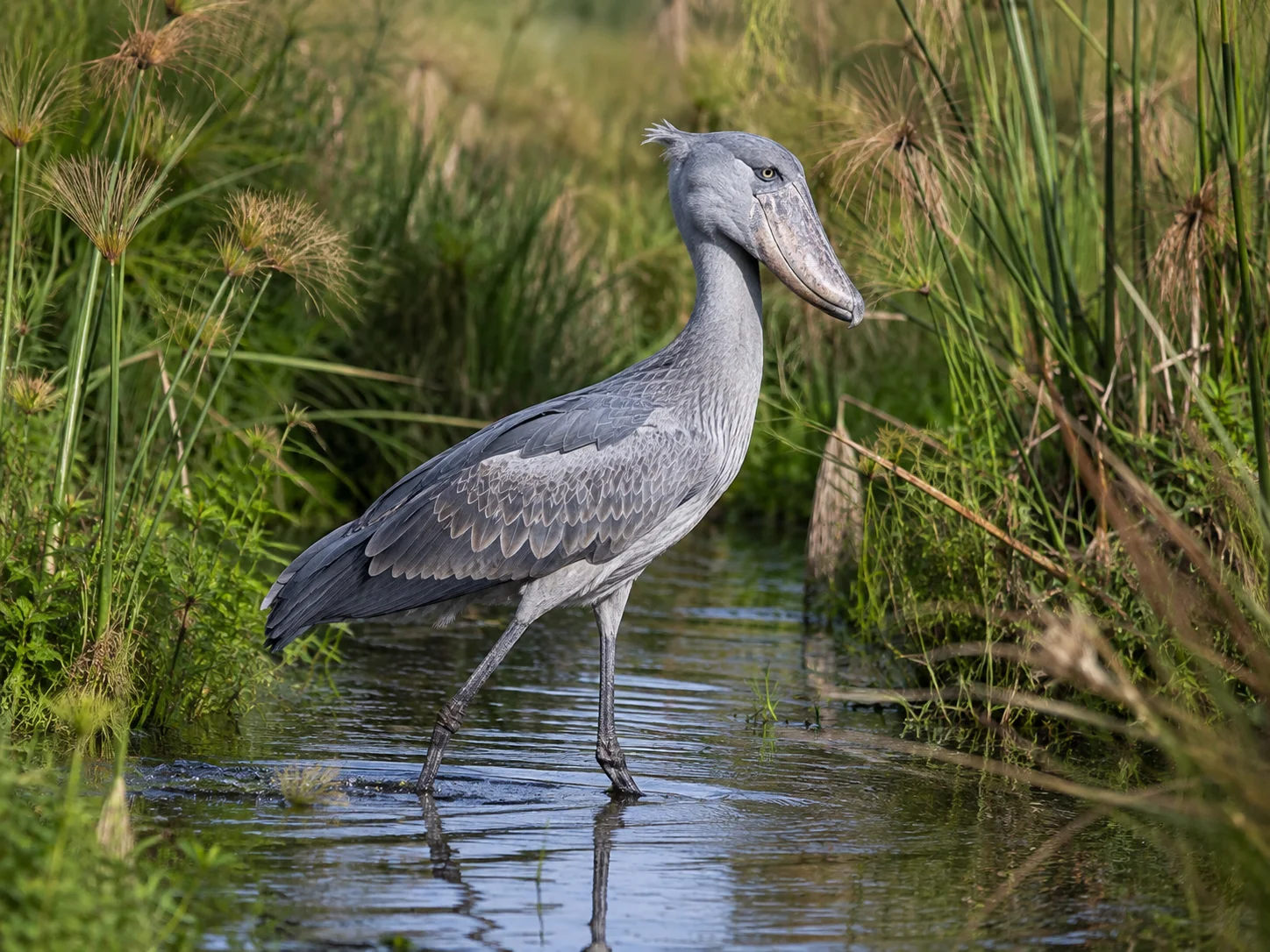
Mabamba Wetland
Search for the shoebill by canoe, explore papyrus channels with a local guide and discover Lake Victoria's wetland birdlife near Entebbe.
Plan My TripA quiet wetland excursion before or after your safari
Mabamba Bay Wetland lies west of the Entebbe Peninsula, near Kasanje on Lake Victoria. The 2,424-hectare Ramsar site brings together papyrus marsh, shallow water and open feeding areas used by shoebills and other wetland birds.
The main experience is a guided canoe search. Travel through narrow channels, scan the vegetation and wait quietly when a bird is feeding. Sightings depend on wildlife movement, water conditions and the time available for the search.
Mabamba became Ramsar Site No. 1638 in 2006 and is recognised as an Important Bird and Biodiversity Area. Fishing, guiding and local crafts connect the surrounding communities with the wetland.
Add a dedicated morning to your Uganda safari , or include Mabamba in a longer Uganda birding journey . An Entebbe overnight gives you more flexibility than a visit tied to a close flight departure.
Shoebill tracking in Mabamba Wetland
Meet your local wetland guide at the landing and board a narrow canoe. These small boats reach channels and feeding pools that larger lake boats cannot enter.
The guide checks shallow openings, floating vegetation and papyrus edges. A shoebill can stand motionless for a long time, so the search depends on careful observation. Local boatmen and fishermen also share recent sightings.
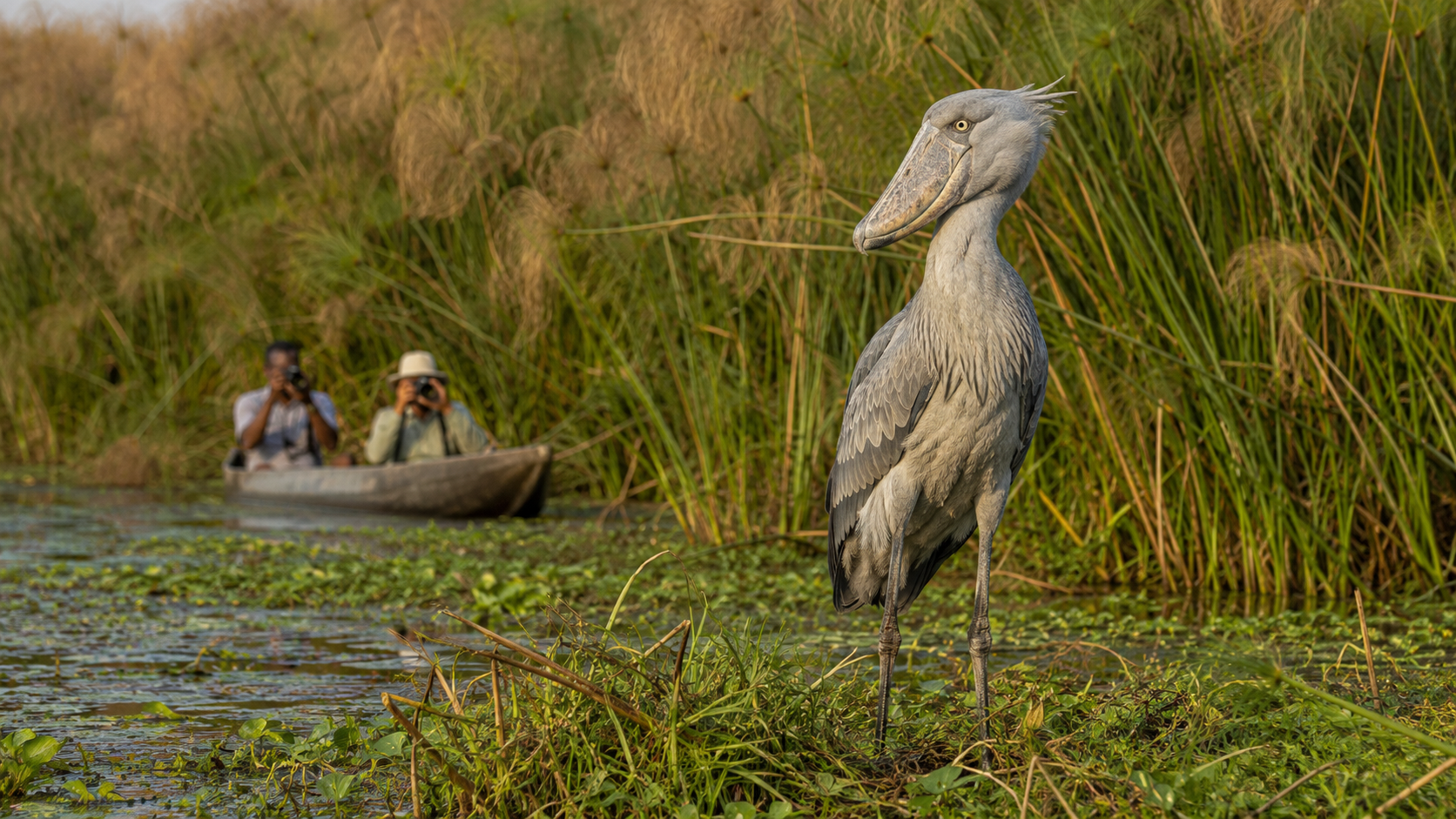
Once a bird is found, remain seated and let the guide position the canoe. Watch its slow steps, patient hunting posture and sudden strike at prey. A zoom lens brings detail without pushing the boat closer.
Allow time for the search
Reserve around 1.5 to 2.5 hours inside the wetland for a shoebill-focused visit. Some searches take longer, and sightings are never guaranteed. Transfer time is additional.
Give the bird space
Keep voices low, avoid sudden movement and follow the guide's approach. Do not ask the boatman to crowd a bird or block its feeding area for a photograph.
Birdwatching across Mabamba's habitats
Birding starts around the landing and continues through the papyrus channels and open water. Reserve a longer morning if you want to explore several habitats.
Papyrus channels
Listen for birds calling from inside the reeds and scan gaps in the vegetation. Papyrus gonolek and papyrus yellow warbler are specialist targets requiring patience and suitable habitat.
Open water and feeding edges
Watch kingfishers, herons, African jacanas and African pygmy geese around suitable pools and floating vegetation. Your guide follows activity rather than a fixed list of promised birds.
Wetland-edge paths
Add a guided walk after the canoe trip to explore shrubs, thickets and landing-area vegetation. Blue-breasted bee-eaters and swamp flycatchers add a different focus from the inner marsh.
Other experiences at Mabamba
Canoeing through the channels
Enjoy the changing landscape between tall papyrus walls, narrow passages and wider pools. Even between bird sightings, the low viewpoint reveals wetland plants, fishing activity and reflections across the water.
Fishing community visits
A local guide can introduce the landing, fishing boats and daily work around the wetland. Arrange conversations respectfully. This is a community experience, separate from a sport-fishing excursion.
Village walks and crafts
Add around 1 hour for a village walk through gardens and small trading areas. Meet craft makers where available and browse papyrus or reed products. Ask before photographing people.
Best time of day to visit Mabamba
Aim for an early canoe start, around 7 am, for cooler conditions and softer light. Your hotel pickup must be earlier to allow for the road journey or lake crossing.
Shoebills can also be found later in the day. An early visit improves comfort and leaves more search time, but does not guarantee a sighting. The guide adjusts the route to recent observations and conditions.
| Visit style | Suggested canoe start | Time at Mabamba | Best for |
|---|---|---|---|
| Shoebill-focused canoe trip | Around 7 am | 1.5 to 2.5 hours | Visitors prioritising shoebill observation and photography. |
| Extended birding morning | Early morning, with the guide's meeting time confirmed. | 3 to 4 hours | Birders adding wetland-edge paths and other habitats. |
| Canoe and community visit | Around 7 am | 3 to 4 hours | Travellers combining birding, fishing life and village crafts. |
How to get to Mabamba Wetland
Select the route around your starting point, lake conditions and onward travel. All approaches finish with the smaller wetland boat used for the search.
| Starting point | Route | Approximate travel time | Planning detail |
|---|---|---|---|
| Entebbe by boat | Motorised boat across Lake Victoria from the confirmed landing. | Around 45 to 60 minutes each way in suitable conditions. | Transfer into a smaller canoe at the wetland. Weather and vessel type affect the crossing. |
| Entebbe by road | Via Kisubi, Sisa, Nakawuka and Kasanje, according to your pickup location. | Around 1 to 1.5 hours, with longer journeys possible after rain. | Practical for luggage, equipment or an onward road journey. |
| Kampala by road | Nakawuka and Kasanje towards the wetland. | Around 1.5 to 2 hours, depending on traffic and road conditions. | Leave early enough to protect your morning birding time. |
| Western Uganda | Leave the Masaka to Kampala highway around Mpigi and continue through Kasanje. | Depends on the safari starting point and road conditions. | Plan as a separate stop with sufficient daylight, then continue to Entebbe. |
Confirm the lake landing
Boats can be arranged from the Nakiwogo area or another agreed Entebbe landing. Confirm the meeting point, boat and departure time before leaving your hotel.
Keep a road alternative
The lake crossing depends on conditions. A road transfer offers an alternative when the operator advises against travelling across open water.
Check ferry operations
The Nakiwogo to Buwaya vehicle ferry can change the road approach when operating. Use it only after confirming the day's service and allowing for waiting time.
What to carry for Mabamba Wetland
Birding equipment
Bring 8x42 or 10x42 binoculars. A camera lens around 200 mm or longer provides reach without moving the canoe too close.
Waterproof storage
Protect phones, documents, batteries and camera equipment in a dry bag. Keep the daypack compact and leave bulky luggage at your accommodation or in the vehicle.
Sun and insect protection
Pack a hat, sunscreen, insect repellent and breathable long sleeves. Much of the canoe route has little shade. Carry a light rain layer.
Grip and drinking water
Wear shoes with good grip for wet or muddy landings. Carry drinking water in a secure bottle and keep loose items inside your bag.
Wetland and wildlife safaris to pair with Mabamba
These journeys explore other birding habitats in Uganda. Request Mabamba as an additional excursion, with separate time and transfers arranged around your Entebbe stay.
 7 Days
7 Day Murchison Falls Safari
Search for shoebills at Ziwa, track rhinos, trek Budongo chimpanzees and explore Murchison Falls by vehicle and boat.
View This Safari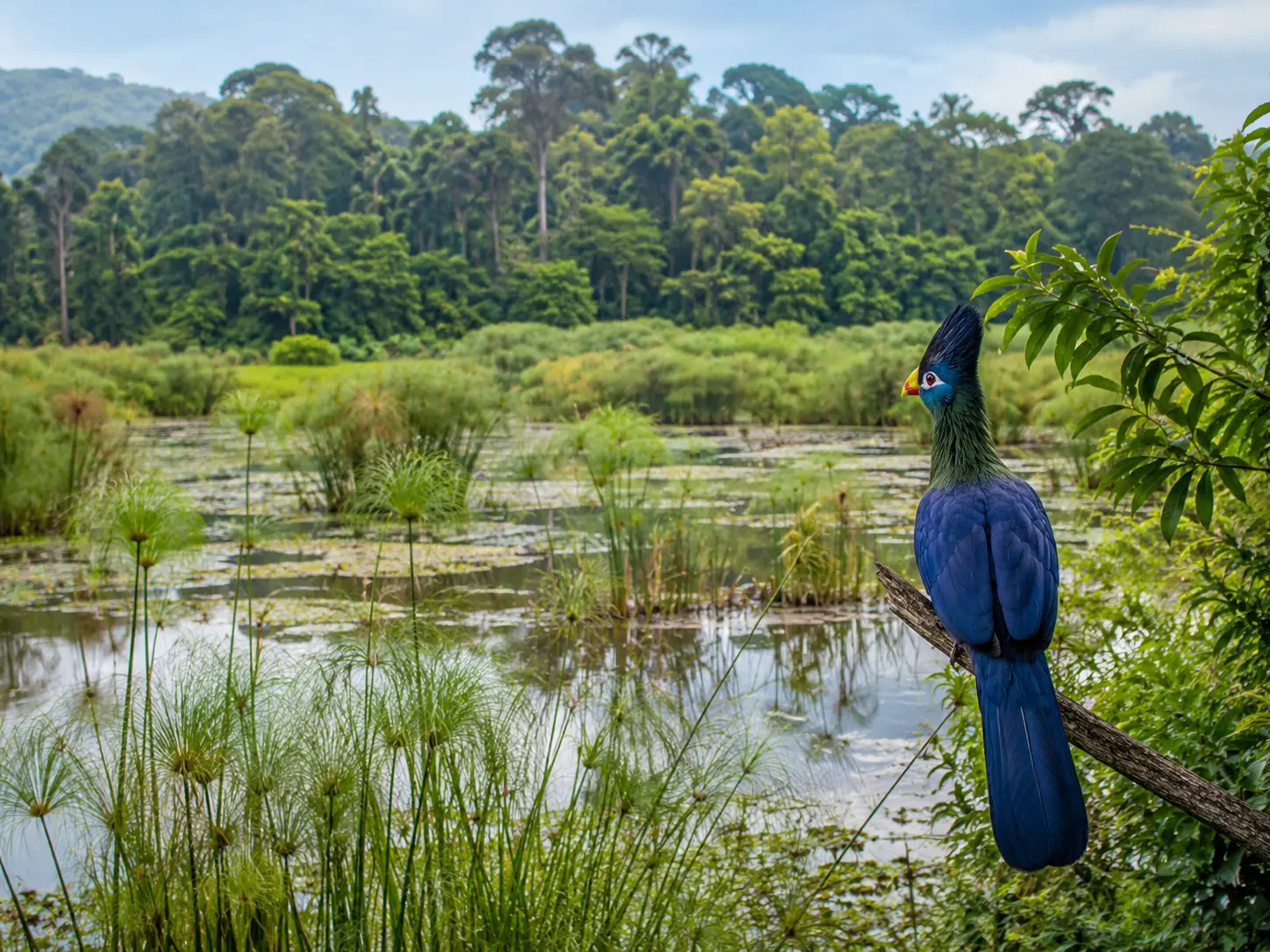 4 Days
4 Day Kibale Chimpanzee and Bigodi Wetland Safari
Combine Kibale chimpanzee tracking with a separate Bigodi Wetland walk for birds, monkeys and community conservation.
View This Safari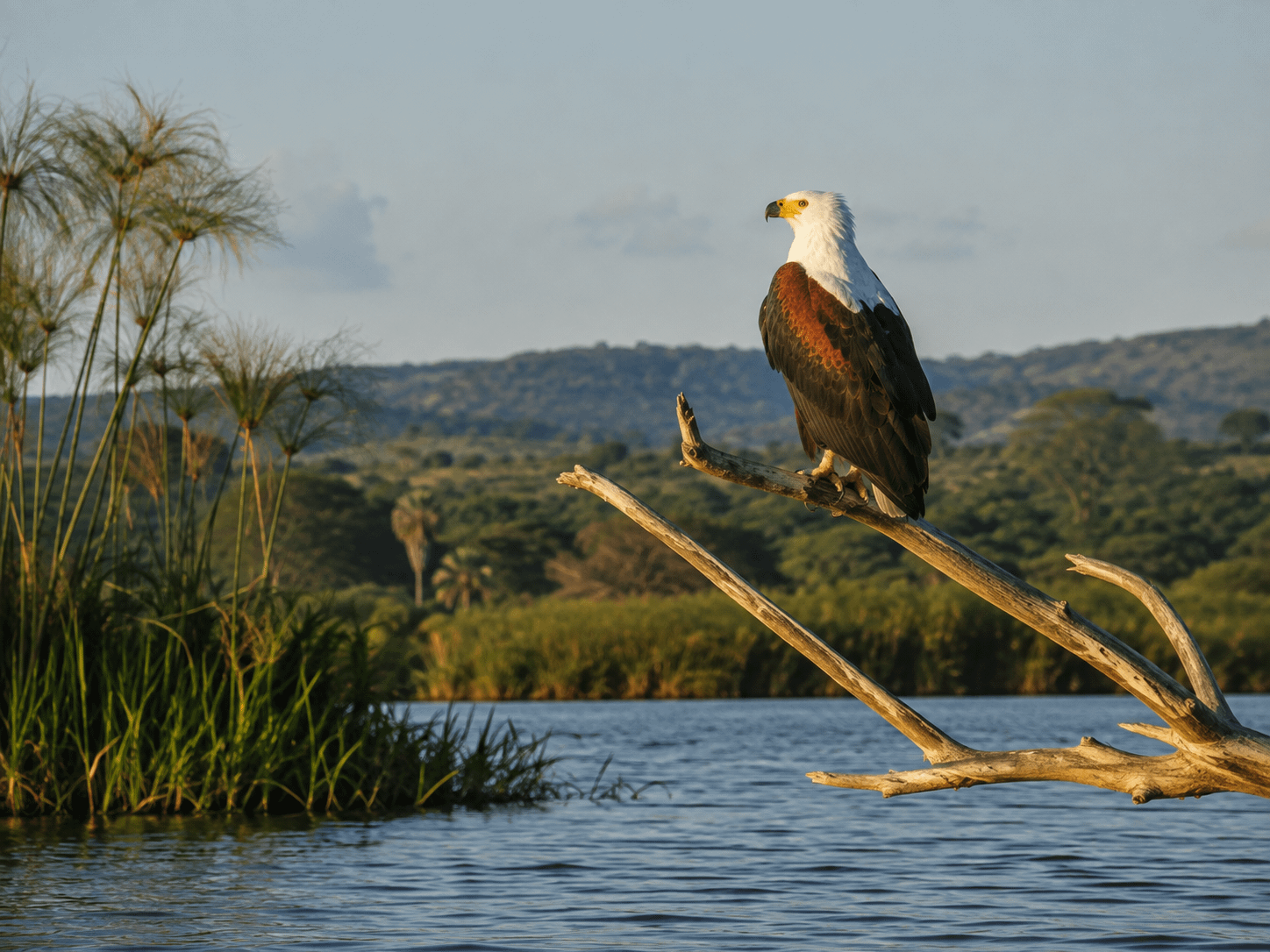 4 Days
4 Day Queen Elizabeth Safari
Explore the savannah on game drives and cruise the Kazinga Channel for shoreline wildlife and waterbirds.
View This SafariTake time for the shoebill. Explore the wetland quietly.
Share your date, group size, pickup point and birding interests with BLS Safaris. We will arrange your local guide, canoe and transfer around a practical Mabamba visit.