
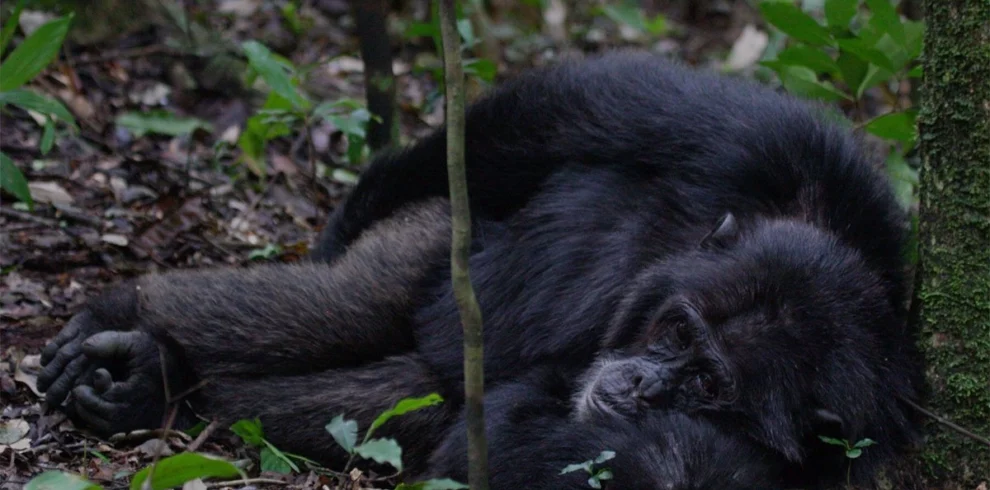
5-Day Uganda Safari with Gorilla Trekking and Chimpanzee Tracking Experience Embark on an unforgettable 5-Day Uganda Safari that promises an exhilarating blend of gorilla trekking and chimpanzee tracking. Uganda, known as the “Pearl of Africa,” offers stunning landscapes, diverse
Four-day Nyungwe Forest chimpanzee tracking safari with the famous canopy walkway and 13 primate species in Africa's oldest montane rainforest.
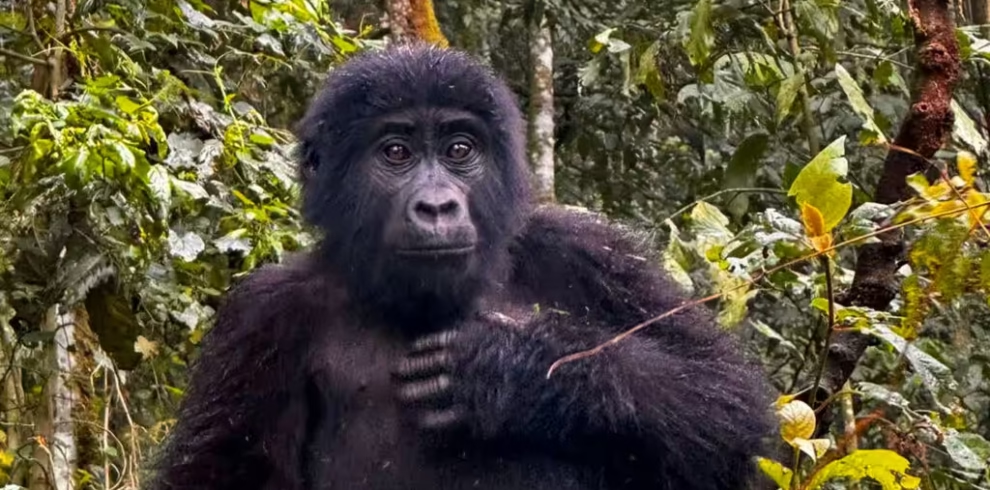
Eight-day grand tour of Rwanda — Volcanoes gorillas, Nyungwe chimpanzees, Akagera Big Five and Lake Kivu in one comprehensive trip. The complete Rwanda experience.
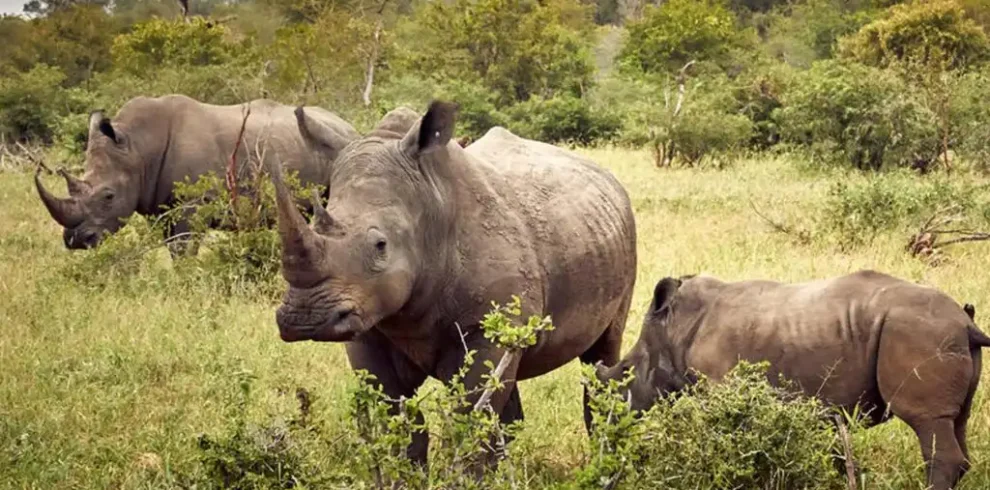
An Exceptional Wildlife Journey Crafted by BLS Safaris Ltd The 10 Days Uganda Safari: The Big Five, Forest And Lakes Safari introduces travelers to Uganda’s most iconic wildlife destinations while revealing breathtaking forests, savannahs, lakes, and vibrant cultures. This extrao
Best Places for Chimpanzee Tracking in East Africa
The chimpanzee tracking destinations depend on how you want the experience to feel. Some places are reliable and well organised, with high chances of sightings in a single morning. Others are remote, harder to reach, and better suited to travellers who want a deeper forest and lake wilderness experience. For most safari travellers, the main chimpanzee tracking sites sit in Uganda, Rwanda, and Tanzania, with Kibale Forest, Nyungwe Forest, Mahale Mountains, and Gombe Stream standing out as the strongest destinations
Chimpanzee Tracking in Kibale National Park, Uganda
Kibale National Park in western Uganda covers about 795 sq km of tropical forest, grassland and swamp and supports 13 primate species. The 2025 census recorded 1,415 chimpanzees, making Kibale one of East Africa’s most important chimpanzee habitats and a strong choice for first-time chimpanzee tracking. Most tracking is organised from the Kanyanchu area, where ranger-guided walks follow forest trails in search of habituated chimpanzee communities. A standard trek can take around 2 to 4 hours, depending on where the chimpanzees are feeding and moving that day. Once they are located, visitors spend up to one hour with them. Kibale also offers the Chimpanzee Habituation Experience, which allows up to 4 hours with a community undergoing habituation. The park combines easily with Bigodi Wetland Sanctuary, Queen Elizabeth National Park and Bwindi, making it especially practical for a wider Uganda primate and wildlife safari.
Chimpanzee Tracking in Budongo Forest, Uganda
Budongo Forest works particularly well for travellers already visiting Murchison Falls National Park who want to add chimpanzee tracking without changing the route significantly. The forest is known for its old mahogany trees and supports one of Uganda’s important chimpanzee populations. Chimpanzee tracking here has a sighting success of around 80%, lower than Kibale but still strong enough to make Budongo a worthwhile alternative on the right itinerary. Its biggest advantage is location. After tracking chimpanzees in the forest, travellers can continue into Murchison Falls for game drives, Nile boat safaris and views of the falls. Budongo is therefore best suited to travellers who want to combine forest primates and savannah wildlife within a northern Uganda safari.
Chimpanzee Tracking in Kyambura Gorge, Uganda
Kyambura Gorge is the most practical chimpanzee tracking option for travellers already visiting Queen Elizabeth National Park. Often called the Valley of Apes, the gorge forms a narrow forested valley within the park’s wider savannah landscape, giving the trek a very different setting from Kibale. Chimpanzee sightings are less reliable, generally around 50% to 60%, so Kyambura is better used as part of a wider wildlife safari rather than as the main reason for travelling to Uganda. Its strength is the combination. After tracking in the gorge, travellers can continue with game drives, a Kazinga Channel boat safari and the Ishasha sector, known for its tree-climbing lions.
Chimpanzee Tracking in Nyungwe National Park, Rwanda
Nyungwe National Park in southwestern Rwanda covers about 1,020 sq km of montane rainforest and is the country’s main chimpanzee tracking destination. The forest supports over 500 chimpanzees and about 13 primate species, with tracking organised in the main Nyungwe forest and the smaller Cyamudongo forest. Chimpanzee treks begin early, often around dawn, and the terrain is generally steeper, cooler and wetter than Kibale. The chimpanzees may be feeding high in the canopy or moving quickly through dense forest, so the walk can be physically demanding and tracking time varies from day to day. Nyungwe also works well for travellers building a wider Rwanda primate safari. After chimpanzee tracking, the park can be combined with the canopy walkway, forest hikes and onward travel to Volcanoes National Park for gorilla trekking.
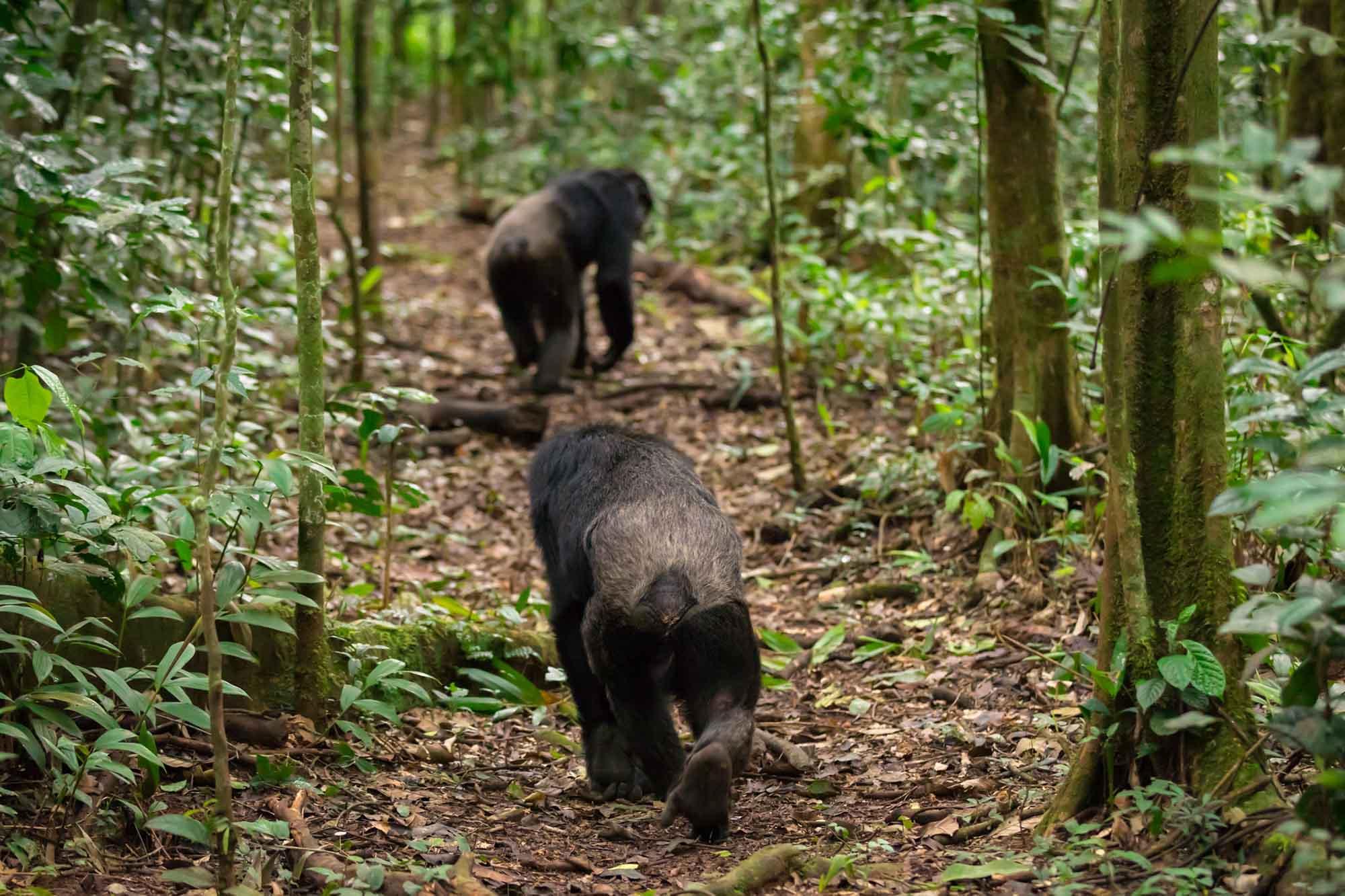
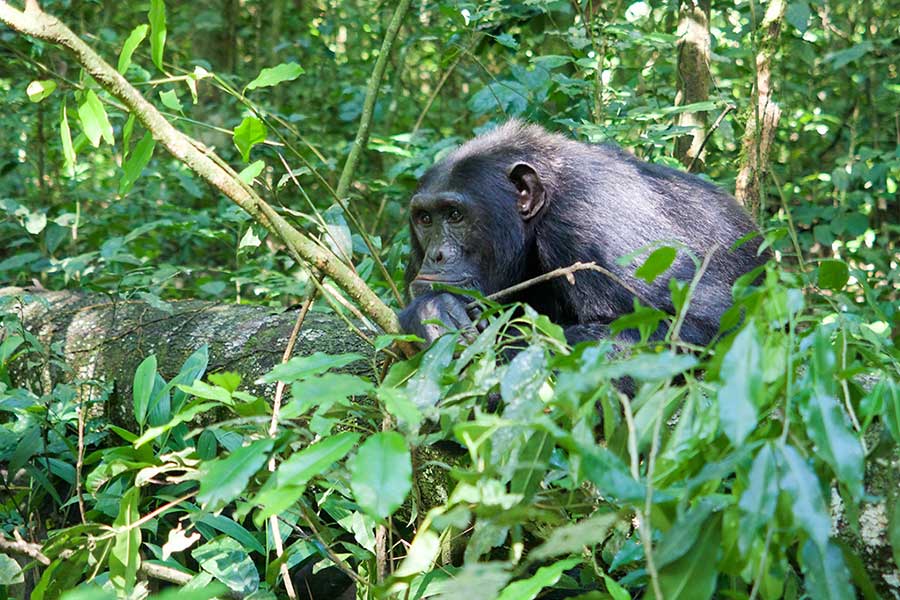
chimpanzee tracking in kibale forest national park
Chimpanzee Tracking in Mahale Mountains National Park, Tanzania
Mahale Mountains National Park covers about 1,613 sq km along the eastern shore of Lake Tanganyika in western Tanzania. It is one of East Africa’s most remote chimpanzee destinations, usually reached by air to the Mahale area or through Kigoma followed by a boat transfer along the lake. The park supports about 1,000 chimpanzees, with tracking centred on the habituated M Group. Treks climb from the lakeshore into humid mountain forest, so visitors should expect steeper and more demanding walking than in some of East Africa’s easier chimpanzee destinations. What makes Mahale particularly different is the combination of chimpanzee trekking and Lake Tanganyika. Forested mountains rise behind white-sand beaches and clear water, allowing travellers to spend time boating, kayaking, swimming or snorkelling after the forest experience. Mahale therefore suits travellers looking for a remote primate safari with genuine forest, lake and beach time in the same destination.
Chimpanzee Tracking in Gombe National Park, Tanzania
Gombe National Park lies along Lake Tanganyika in western Tanzania and is best known for the long-running chimpanzee research begun by Dr Jane Goodall in 1960. The park is compact, stretching roughly 15 km long and 3.5 km wide, but its terrain can be demanding. White-sand lakeshore beaches rise into woodland, river valleys and steep slopes along the Rift escarpment. Chimpanzee tracking therefore involves genuine hill walking rather than an easy, level forest trail, particularly when the chimpanzees move higher into the valleys and slopes. Gombe is especially well suited to travellers interested in chimpanzee behaviour, research and conservation history. Its combination of steep forest, Lake Tanganyika scenery and decades of chimpanzee study gives it a very different character from Kibale, Nyungwe and Mahale.
Best Time for Chimpanzee Tracking in East Africa
Chimpanzee tracking is possible throughout the year in Uganda, Rwanda and Tanzania, but the best conditions vary between forests. Drier months generally make trails firmer and easier to walk, while wetter periods bring muddier terrain and can change how far chimpanzee communities move in search of food. Because Kibale, Nyungwe, Mahale and Gombe have different rainfall patterns, terrain and access conditions, there is no single best month for every destination. The most useful way to plan is to look at each country separately and match the season to the kind of trekking experience and wider safari route you want.
Best Time for Chimpanzee Tracking in Uganda
Chimpanzee tracking in Uganda is possible throughout the year, particularly in Kibale National Park, but the drier periods generally make forest walking easier. June to August and December to February usually bring firmer trails and more comfortable trekking conditions, which also makes these months convenient for combining chimpanzees with gorilla trekking and wildlife safaris. In Kyambura Gorge, drier conditions also make the forest trails easier to manage, although chimpanzee sightings remain less predictable than in Kibale. The wetter periods, mainly March to May and October to November, bring muddier and more slippery trails, but tracking continues normally. Increased forest moisture and food availability can influence how far chimpanzee communities move, so a wet-season trek is not necessarily less productive. For most travellers, the drier months are easier underfoot, while the wetter periods suit those comfortable with more challenging forest conditions.
Best Time for Chimpanzee Tracking in Rwanda
Chimpanzee tracking in Nyungwe National Park is possible throughout the year, but the season has a noticeable effect on trail conditions. June to September and December to February are generally drier, making the steep forest paths easier to walk and giving travellers better conditions for combining chimpanzee tracking with the canopy walkway and other forest hikes. The wetter periods, mainly March to May and October to November, bring muddier and more slippery trails. At the same time, greater food availability in the forest can influence how far chimpanzee communities move, so some treks may involve less extensive searching. The trade-off is therefore straightforward. Drier months usually offer more comfortable walking, while wetter periods require better rain protection and footwear but can still provide productive chimpanzee tracking. For most travellers, the drier months are the easier choice, particularly when Nyungwe is part of a wider Rwanda safari.
Best Time for Chimpanzee Tracking in Tanzania
Chimpanzee tracking in Mahale Mountains National Park and Gombe National Park is possible throughout the year, but June to October generally offers the easiest trekking conditions. Trails are drier, mountain paths are more manageable and travel around Lake Tanganyika is easier to combine with the forest experience. This matters particularly in Mahale and Gombe because both parks involve steep forest terrain rather than simple level walking. Mahale’s trails climb from the lakeshore into the mountains, while Gombe includes valleys, ridges and steep slopes. The wetter periods, particularly March to May and the shorter rains around November and December, can make the trails muddy and more physically demanding. Chimpanzee tracking still takes place, but good footwear and rain protection become more important. For travellers combining chimpanzees with Lake Tanganyika beaches, boating and other lake activities, June to October is the strongest overall period.
What to Pack for Chimpanzee Tracking in East Africa
Chimpanzee tracking takes place on forest trails that can be muddy, uneven, steep and humid, so pack lightly but choose equipment that will keep you comfortable for several hours of walking. For the trek, carry:
- Sturdy hiking boots or closed walking shoes with good grip.
- Long trousers and long socks for protection from vegetation, insects and mud.
- Lightweight long-sleeved shirt that dries quickly.
- Rain jacket or poncho, even during generally drier months.
- Small daypack with drinking water and light snacks.
- Insect repellent and any personal medication you may need.
- Camera or phone with a spare battery or power bank. Keep the flash switched off around chimpanzees.
- Light gloves or gaiters if you want extra protection on wetter or rougher trails.
A walking stick can also be useful in Nyungwe, Mahale and Gombe, where steeper and more slippery terrain makes additional support valuable.
Chimpanzee Tracking Rules in East Africa
Chimpanzee tracking takes place in wild forest habitat, so park rules are designed to protect both visitors and the chimpanzees. Exact age limits, group sizes and minimum viewing distances vary between Uganda, Rwanda and Tanzania, so the instructions given during the pre-trek briefing should always take priority.
- Do not trek if you are unwell. Coughs, flu, fever and other contagious illnesses can be transmitted to chimpanzees.
- Keep the required distance. Your ranger will explain the minimum distance for that park. Do not move closer for photographs.
- Respect the viewing time. Standard chimpanzee tracking normally allows up to one hour with the habituated community once it is located.
- Do not feed, touch or chase chimpanzees. Never imitate their calls or block the direction in which they are moving.
- Do not eat, drink or smoke near the chimpanzees. Food and waste should remain packed away during the encounter.
- Keep camera flash switched off. Photography is allowed, but flash can disturb the chimpanzees.
- Stay with your ranger and remain calm. Keep voices low, avoid sudden movement and follow instructions throughout the forest walk.
Age limits, group sizes, mask requirements and minimum viewing distances should be confirmed when the permit is booked because these can differ between parks.
Chimpanzee Tracking Permit Costs in East Africa
Chimpanzee tracking fees vary considerably between Uganda, Rwanda and Tanzania, and the amount you pay depends on the destination and type of experience. Uganda has separate permits for standard tracking and habituation, while Nyungwe also prices the two experiences separately. Tanzania uses a different structure, where park entry and additional chimpanzee tracking or guiding charges may apply separately.