
Lake Bunyonyi, meaning “Place of Many Little Birds,” rests in the terraced highlands of south-western Uganda, between Kabale and Kisoro, close to the Rwanda border. This is one of those places we recommend when you want to slow down after gorilla trekking in Bwindi or Mgahinga. After a demanding forest trek, the lake gives you calm water, cool air, island views and a soft place to breathe again.
Bunyonyi sits at about 1,950 to 1,962 metres above sea level. It stretches roughly 25 km long and 7 km wide, covering about 61 square kilometres. From the ridges above the water, you look down over steep cultivated hills, morning mist, small canoes and green islands scattered across the lake. The lake is famous for its 29 islands. The best known include Akampene, also called Punishment Island, Bushara Island, Bwama and Njuyeera, also known as Sharp’s Island.
Each island carries its own story. Akampene holds one of the lake’s most painful cultural memories, connected to the old Bakiga practice of leaving unmarried pregnant girls on the island, a practice abandoned in the first half of the 20th century. Sharp’s Island is connected to English missionary Leonard Sharp, who came to the area in 1921 and established a leprosy treatment centre on Bwama Island in 1931.
Around the lake, you also meet the living cultures of the Bakiga and Batwa, with Bufuka Village standing as one of the main community centres. For travellers, Lake Bunyonyi works beautifully as a peaceful lakeside stay, a canoeing destination, a birding stop and a scenic base for cultural visits. Its waters are widely known as calm and free from crocodiles and hippos, making it one of Uganda’s most inviting places for swimming and canoe rides.
The lake’s depth is widely debated. Scientific literature gives about 44 metres, while some local guides speak of depths reaching around 900 metres, a claim that would place it among Africa’s deepest lakes. Bunyonyi also appeared on Uganda’s 5,000 shilling note from 2004 to 2009 under the title “Lake Bunyonyi and terraces.” That small detail says a lot about how strongly this lake sits in Uganda’s highland travel story.
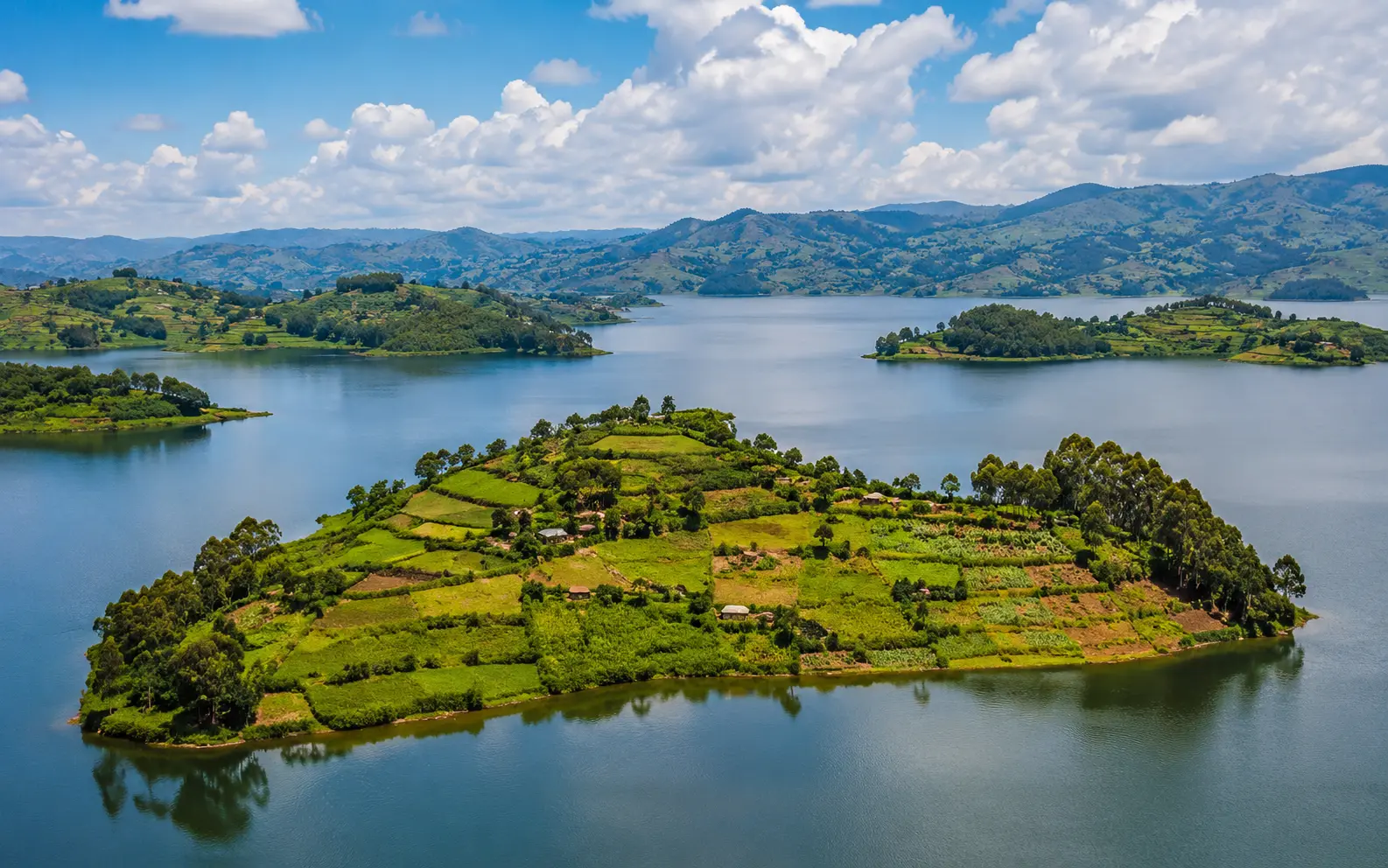
Akampene Punishment Island
Lake Bunyonyi Islands
Lake Bunyonyi has 29 islands scattered across its calm water, and each one adds a different story to the journey. Some islands are known for history. Some are known for birdlife and forest cover. Others give you quiet views of the terraced hills around Kabale and Kisoro. A boat ride across the lake is the best way to understand why Bunyonyi feels so different from many places in south-western Uganda. You are not just crossing water. You are moving through old community stories, island life, bird habitats and peaceful highland scenery.
Akampene Punishment Island
Akampene, also known as Punishment Island, is the most famous island on Lake Bunyonyi because of its difficult history. In the past, among the Bakiga, unmarried pregnant girls were taken to this small island and left there as punishment. Many died from hunger or while trying to swim back to the mainland, since swimming skills were rare in those days. There is another part of the story too. Men who did not have enough cows for bride price could go to the island and take a girl as a wife. The practice was later abandoned in the first half of the 20th century. Today, visitors come to Akampene to learn about this history with care and respect, while seeing one of the islands that shaped the lake’s cultural memory.
Bushara Island
Bushara Island is known for its forest cover and quiet lakeside setting. The island became associated with community development work, using tourism to support projects around the lake. Its forest is one of its strongest features, with eucalyptus trees standing across the island. Bushara also helps you understand the environmental changes around Bunyonyi. Many surrounding hills once carried heavier forest cover, but population pressure and farming needs led to much of it being cleared. Eucalyptus was later introduced in some areas to restore tree cover, though the tree also draws heavily from the soil. For travellers, Bushara gives a softer side of the lake, with forest walks, birds and calm water views.
Bwama and Njuyeera, Sharp’s Island
Bwama and Njuyeera Islands carry one of Lake Bunyonyi’s strongest historical stories. In 1921, Dr Leonard Sharp came to this part of Uganda. In 1931, he established a leprosy treatment centre on the then uninhabited Bwama Island. A church, patient quarters, model village homes and a medical facility were built to create a separate community for people affected by leprosy. Sharp later settled on Njuyeera Island, a name said to mean “white cottage,” connected to the doctor’s small white house. The old hospital buildings on Bwama are now used by a boarding secondary school that attracts students from the wider region. There is also a primary school, but no village settlement on the island. A visit here gives you a clear look at how the lake has served both as a place of refuge and as a living part of community history.
Kyahugye Island
Kyahugye Island is the closest island to the lake shores and covers about 74 acres. It has reed beds, papyrus, eucalyptus and pine trees, giving it a good mix of open space and tree cover. The top of the island is fairly flat, which makes it easier to explore than some of the steeper islands. Kyahugye is also known for wildlife and bird watching. It has hosted animals such as impalas, zebras, waterbucks, kobs and the Debrazza monkey, locally referred to as the “President of the Island.” Travellers visit for nature walks, birding, lake views and a quieter island experience close to the mainland
Things to Do at Lake Bunyonyi
Lake Bunyonyi is one of those places where you slow down without feeling short of things to do. After gorilla trekking in Bwindi or Mgahinga, this highland lake gives you calm water, terraced hills, small islands, bird calls, canoe rides, cultural encounters and quiet lakeside time. The lake has no hippos or crocodiles, and it is widely known as one of the few lakes in the region where visitors swim. Because of its depth, swimming is best for confident swimmers and should always be done with care.
Swimming in Lake Bunyonyi
Swimming is one of the simplest ways to enjoy Bunyonyi. The lake has no crocodiles or hippos, so the water feels more inviting than many other lakes in Uganda. It is also regarded as bilharzia-free, which is one reason many travellers choose it for a relaxed swim after days of trekking or long drives. One thing you’ll quickly notice about Lake Bunyonyi is just how deep it is. It is widely recognised as one of Africa’s deepest lakes, so if you plan to swim, it’s best to do so from your lodge’s designated swimming area or another safe access point. The water is calm and inviting, but because of the lake’s depth, swimming is best suited to confident swimmers and should always be done with care
Canoeing, Kayaking and Boat Cruises
A canoe or boat ride is the best way to feel the character of the lake. With 29 islands scattered across the water, you move slowly past terraced hills, small settlements, dugout canoes and quiet bays that make this part of south-western Uganda so memorable. You can take a motorised boat, canoe or kayak depending on how active you want the experience to feel. Canoe rides take you to different islands, where you hear local stories and get closer to daily life around the water. Evening or night canoeing has its own charm. The lake becomes still, crickets call from the edges, frogs start up in the dark, and the whole place feels quieter.
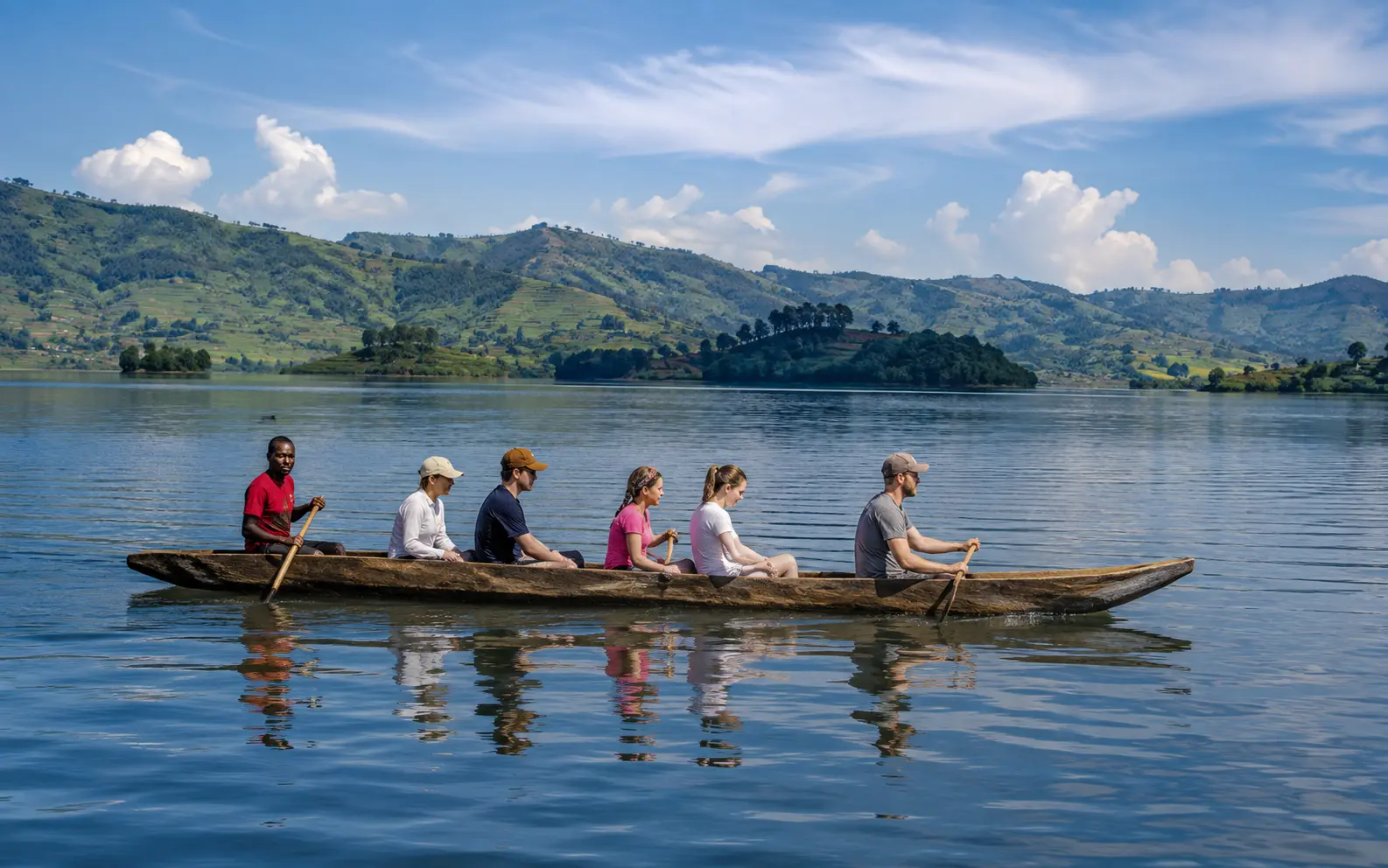
canoeing at lake bunyonyi uganda
Bird Watching Around Nyombi Swamp
The name Bunyonyi means “Place of Many Little Birds,” and bird watching is one of the strongest activities here. More than 200 bird species have been recorded around the lake, with Nyombi Swamp being one of the best places to search by boat. You can expect waterbirds, swamp birds, forest-edge species and seasonal visitors that arrive during winter in Europe. Birds to look out for include grey crowned cranes, herons, weaver birds, egrets, harrier hawks, cardinal woodpeckers, Levaillant’s cuckoo, slender-billed baglafecht and white-tailed blue monarch. A slow boat ride through the swamp gives you clean views, fewer disturbances and better angles for photography. For birders, explore our full Uganda birding safari guide
Island Visits and Viewpoints
The islands are part of what makes this lake stand out. Some are known for history, some for accommodation, and others for quiet scenery. A boat trip gives you a wider understanding of the lake, from Punishment Island to Bushara Island and the smaller islands scattered across the water. For wide views, go higher into the surrounding hills. From the slopes above the lake, you see the islands spread across the water, the green terraced hills rising behind them and the morning mist sitting low over the lake. This is one of the best ways to photograph Bunyonyi, especially at sunrise or sunset when the water and hills change colour.
Nature Walks, Cycling and Hill Trails
Lake Bunyonyi is also good for walking, jogging, cycling and light hiking. The roads and trails around the shores pass through villages, gardens, viewpoints and lakeside paths where you hear birds and feel the fresh breeze coming off the water. Cycling works well around selected sections of the lake and nearby villages. Hill walks give you stronger views over the islands. These activities are good for travellers who want something active, but not as demanding as gorilla trekking or mountain hiking.
Cultural Tours and Community Walks
The communities around the lake add a deeper side to your visit. The Bakiga and Batwa live around this area, with Bufuka Village known as one of the main centres near the lake. Cultural visits can include local homesteads, traditional dances, storytelling, craft work, farming life and community walks through the terraced hills. You can also learn about the Abaheesi, the traditional blacksmiths, and visit cultural places such as Bakora Cave. A good community visit should feel respectful, personal and locally guided, giving you time to understand the people who have shaped life around the lake.
Zip Lining and High Ropes Near Rutinda
Near Rutinda, there is a small island activity centre where visitors can try zip lining, canoeing, high ropes, bird watching and boat trips. It is a good option when you want something more active between swimming, canoeing and relaxing at the lodge. This area also works well for families, groups and travellers staying longer at the lake because it adds a more energetic activity without taking you far from the water.
Relaxing by the Lake
One of the best things to do at Lake Bunyonyi is simply slow down. Read on a veranda. Sit by the water. Watch dugout canoes crossing the lake. Take in the island views. Rest in a hammock after a long Uganda safari route. Bunyonyi works beautifully as a rest stop after gorilla trekking because it gives your body time to recover while still keeping you surrounded by scenery, culture, birds and quiet lake life.
Where to Stay at Lake Bunyonyi
Lake Bunyonyi has a wide range of accommodation, from luxury lakeside resorts to mid-range cottages, island camps and simple budget stays. The best choice depends on how you want to experience the lake. Some travellers prefer a quiet island setting reached by boat. Others want a hilltop lodge with wide views over the 29 islands. Families, groups, solo travellers, birders and guests coming from gorilla trekking in Bwindi or Mgahinga can all find a comfortable place to stay around the lake. Accommodation is spread between the mainland, the hills above the water and some of the islands. The calm setting makes this a good place to rest, swim, take canoe rides, enjoy bird watching and spend a slow evening looking over the terraced hills of Kabale and Kisoro.