
Mount Kilimanjaro National Park protects Africa’s highest mountain, rising to 5,895 metres (19,341 ft) above sea level in northern Tanzania near Moshi and the Kenyan border. Kilimanjaro rises about 4,900 metres from the surrounding plains and forms the world’s largest free-standing volcanic mass. Its three volcanic cones are Kibo, Mawenzi and Shira. Kibo carries Uhuru Peak, the highest point on the continent, while Mawenzi reaches 5,149 metres and the eroded Shira cone forms the mountain’s broad western plateau.
The park was established in 1973, opened to visitors in 1977 and inscribed as a UNESCO World Heritage Site in 1987. Its boundaries expanded in 2005 to bring the natural montane forest into the national park. The World Heritage property now covers 75,575 hectares, about 756 km², from the forest belt to the summit. These forests protect an important water catchment and support wildlife ranging from colobus monkeys and duikers to buffaloes and elephants.
The mountain changes character with every rise in altitude. A trek begins near cultivated Chagga foothills, enters montane forest, then crosses heath and moorland, alpine desert and the cold summit zone. Standard routes do not require technical climbing, but the altitude, long walking days and sharp temperature changes demand good preparation and enough time to acclimatise.
Park headquarters are at Marangu, about 44 km from Moshi. The mountain’s recorded climbing history includes missionary Johann Rebmann’s account of its snow in 1849 and the 1889 summit by Hans Meyer and Ludwig Purtscheller. Today, Kilimanjaro brings together high-altitude trekking, volcanic scenery, forest, wildlife and the farming communities of its lower slopes.
Top Attractions in Mount Kilimanjaro National Park
Kilimanjaro offers more than the summit. Its main routes cross volcanic plateaux, crater viewpoints, forest and high-altitude landmarks such as Stella Point and Gilman’s Point. Travellers with only a day can still enter the park for a forest walk, waterfall visit or short hike, while climbers see the mountain unfold over several days.
Kibo Peak and Uhuru Point on Mount Kilimanjaro
Kibo is Kilimanjaro’s highest cone and holds Uhuru Peak at 5,895 metres. Most summit itineraries approach the crater rim at Stella Point or Gilman’s Point before continuing to Uhuru Peak. Above the greener slopes, the terrain becomes open, rocky and exposed, with glaciers, scree and volcanic formations dominating the final ascent. Summit night is the hardest stage for many climbers because it combines darkness, cold, steep ground and thin air. Reaching the top depends less on speed than on steady pacing, hydration and the acclimatisation built during the preceding days.
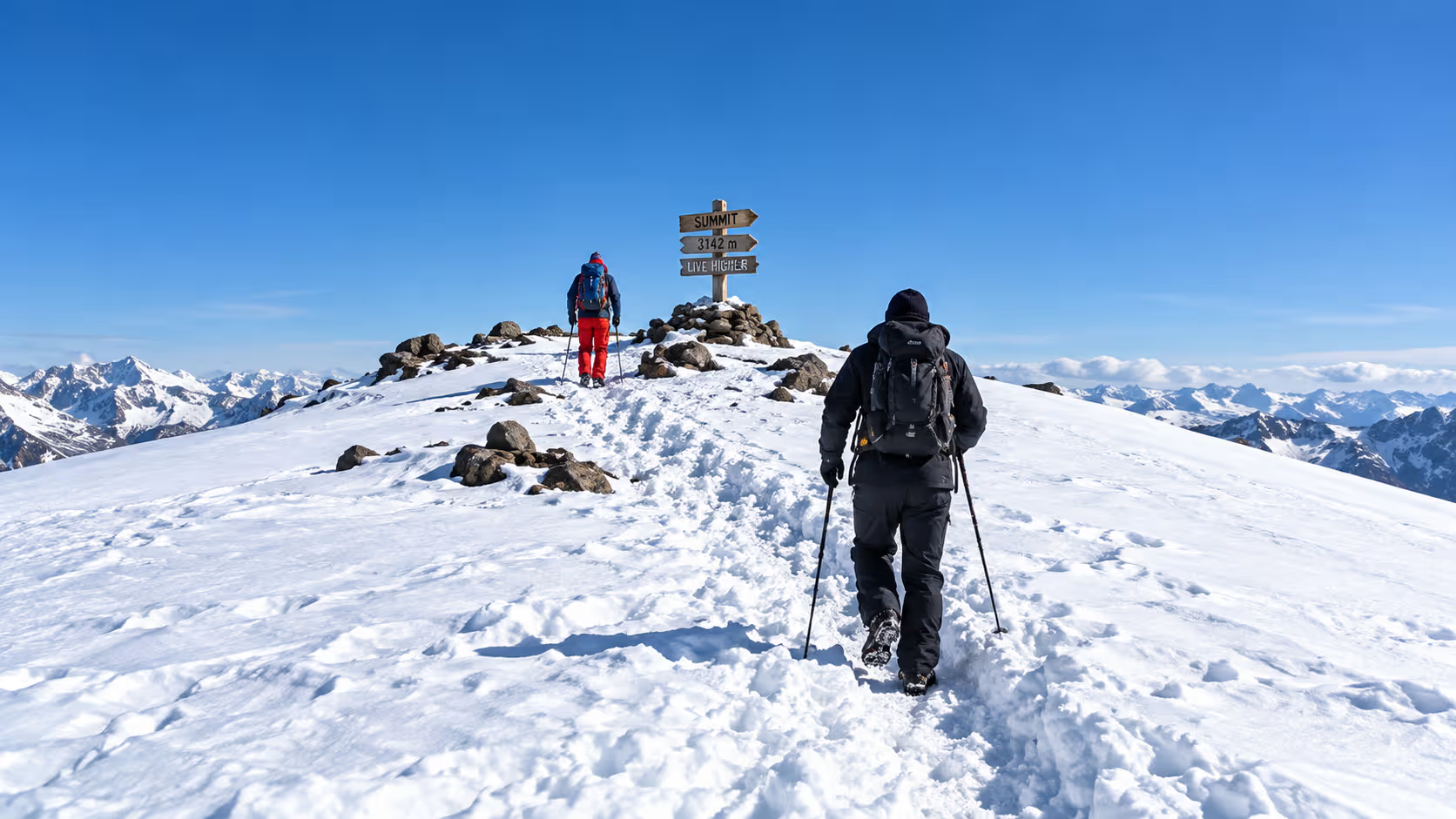
Uhuru Peak at 5,895 metres
Crater Camp and the Kilimanjaro Ash Pit
Crater Camp lies at about 5,730 metres inside Kibo’s crater, making it Kilimanjaro’s highest campsite. It is added to selected Lemosho, Machame or Northern Circuit itineraries after careful acclimatisation. From camp, climbers can visit the Reusch Crater and look into the Ash Pit, the deep central vent within Kibo. Sleeping here is far more demanding than spending a short time on the summit because the body remains at extreme altitude overnight. It suits experienced, well-acclimatised trekkers whose itinerary, health and weather conditions support the extra night.
Shira Plateau
The Shira Plateau spreads across the western side of Kilimanjaro, where an older volcanic cone collapsed and eroded long before Kibo reached its present form. Moorland, low shrubs and open volcanic ground give wide views towards Kibo and across the western slopes. Lemosho, Shira and Northern Circuit climbers cross the plateau during their approach. A vehicle-assisted visit can also bring day visitors into the Shira area for a guided walk of roughly 2 to 3 hours, subject to park arrangements and road conditions. It is one of the strongest choices for seeing Kilimanjaro’s high landscape without attempting the summit.
Maundi Crater on the Marangu Route
Maundi Crater lies about 1 km beyond Mandara Hut on the Marangu Route. A short path climbs to the rim, where clear weather opens views across northern Tanzania and towards Kenya. The crater can be included in a Marangu day hike, though the full outing from the gate generally takes most of the day once walking time, registration and stops are included. The forest approach is rich in birds and primates, then the rim provides the first broad mountain panorama. It works well for travellers who want a genuine Kilimanjaro trail experience without sleeping on the mountain.
Lauwo Waterfall and Kilimanjaro’s Montane Forest
Lauwo Waterfall sits along the lower Marangu trail, under 3 km from the gate. The guided walk passes through moist montane forest where ferns, orchids, mosses and lichens cover the understorey. Black-and-white colobus monkeys, blue monkeys and forest birds can appear along the route. Wooden steps and a boardwalk assist near the waterfall, although rain can still leave the path slippery. The outing gives non-climbers direct access to the forest that protects the lower mountain and can be combined with nearby circular paths when time and park guidance allow.
Wildlife in Mount Kilimanjaro National Park
Kilimanjaro is not a drive-through safari park. Most wildlife lives in forest and moorland, where vegetation limits long views. Sightings form part of the walk rather than the sole purpose of a visit. The best variety occurs on the lower slopes, while life becomes progressively more specialised and sparse above the tree line.
Wildlife in Kilimanjaro’s Montane Forest
The montane forest, broadly between 1,800 and 2,800 metres, offers the strongest wildlife opportunities. Black-and-white colobus monkeys are easy to recognise by their long white tails, and blue monkeys also move through the canopy. Olive baboons occur around the lower forest and cultivated edge. Elephants, buffaloes, giant forest hogs and several antelope species use the denser woodland and clearings, but encounters are less predictable. Bushbuck, grey duiker and the rare Abbott’s duiker are among the forest antelopes. Leopards, servals, African civets and white-tailed mongooses also occur, though their secretive or nocturnal behaviour keeps most sightings uncommon. Smaller animals reward a close look at the vegetation. Jackson’s three-horned chameleon and the Kilimanjaro two-horned chameleon blend into branches and leaves. Their presence, together with primates, butterflies and forest birds, adds interest to both summit approaches and shorter lower-slope walks.
Kilimanjaro’s Vegetation and High-Altitude Wildlife Zones
Kilimanjaro passes through five broad vegetation zones: cultivated lower slopes, montane forest, heath and moorland, alpine desert and the summit zone. Giant heathers, groundsels and lobelias shape the moorland. Higher up, thin soils, strong radiation, freezing nights and wind reduce plant cover to scattered grasses, mosses and lichens. Animals also become fewer, although rodents and occasional birds survive surprisingly well. The transition from humid forest to near-bare volcanic ground is one of the defining experiences of the climb.
Bird Watching on Mount Kilimanjaro
More than 170 bird species have been recorded across Kilimanjaro’s habitats. The forest holds the greatest variety, including silvery-cheeked hornbills, Hartlaub’s turacos, white-necked ravens, sunbirds and several forest robins and greenbuls. Raptors such as augur buzzards and mountain buzzards ride the air currents over more open ground. Birding is strongest during a slow forest walk, when there is time to listen and scan the canopy rather than concentrate on the pace of a summit trek.
Things to Do in Mount Kilimanjaro National Park
Summit climbing remains the main activity, but shorter forest walks, plateau hikes, cycling, waterfalls and cultural visits open the mountain to travellers with less time. Activities should match fitness, altitude experience and the conditions on the day.
Climbing and Trekking Mount Kilimanjaro
A full ascent takes about five to nine days, with longer itineraries giving more time to acclimatise. Daily walking shifts from forest paths to moorland, rocky alpine desert and loose summit scree. Altitude, not technical climbing, is the central challenge. A licensed operator arranges the guide team, park registration, porters, food and mountain accommodation. Climbers should train for consecutive walking days and choose a programme with a sensible ascent profile rather than treating the shortest option as the best value.
Mountain Biking on Kilimanjaro
Kilema is the authorised access point for mountain biking on Kilimanjaro. Riding programmes range from lower-slope trips to demanding multi-day ascents. High on the mountain, steep gradients, loose surfaces and thin air require sections of pushing or carrying, and summit attempts remain physically serious. The long descent rewards confident riders with extensive downhill terrain, but protective equipment, a qualified support team and acclimatisation are essential. Current cycling access and itinerary approval should be confirmed during booking.
Nature Walks on the Lower Slopes of Kilimanjaro
Guided lower-slope walks enter the forest without the time or altitude demands of a full climb. Routes from Marangu can include Lauwo Waterfall, Mandara Hut or Maundi Crater, depending on the planned distance. Colobus monkeys, blue monkeys, birds, chameleons and dense forest vegetation provide the detail along the way. Trails can be muddy after rain, so walking shoes with grip and a light waterproof layer remain useful even on a short visit.
Walk Across the Shira Plateau
The Shira Plateau presents Kilimanjaro on a broad scale, with open moorland, volcanic ridges and views towards Kibo. Day visitors can reach the western side by four-wheel-drive vehicle and continue on foot with a guide, subject to park access and weather. Climbers on Lemosho, Shira and the Northern Circuit spend longer crossing the plateau. Large mammals move through this western landscape, but any sighting is a bonus rather than a certainty.
Visit Lake Chala
Lake Chala lies southeast of Kilimanjaro on the Tanzania-Kenya border. The crater lake changes from deep blue to turquoise as light and weather shift across its steep walls. Guided walks explore the rim and lakeshore, while the endemic Lake Chala tilapia adds ecological interest. Lake Chala sits outside the national park, so access, water activities and safety arrangements are handled separately. Follow current local guidance before entering the water because conditions and supervision can change.
Cultural Visits Around Kilimanjaro
The Chagga communities of Kilimanjaro cultivate coffee, bananas, maize and other crops on the fertile lower slopes. Farm and village visits show how irrigation channels, home gardens and coffee production fit into daily life beneath the mountain. Around West Kilimanjaro, Maasai experiences such as Olpopongi introduce visitors to homestead design, food, livestock traditions and local history. A well-run visit keeps the exchange personal and supports the host community rather than reducing the experience to a staged stop.
Camping, Picnicking and Waterfall Visits
Short outings can combine forest walks, waterfalls and a packed lunch at approved sites. Jiwe la Mbula, Daraja Refu, Wona and Final Water are among the names used for picnic and rest points around park routes. Access varies with the trail, activity and current park arrangements, so the day’s route should be agreed with the guide at registration. These stops work well for families, photographers and travellers who want time on the mountain without a summit itinerary.
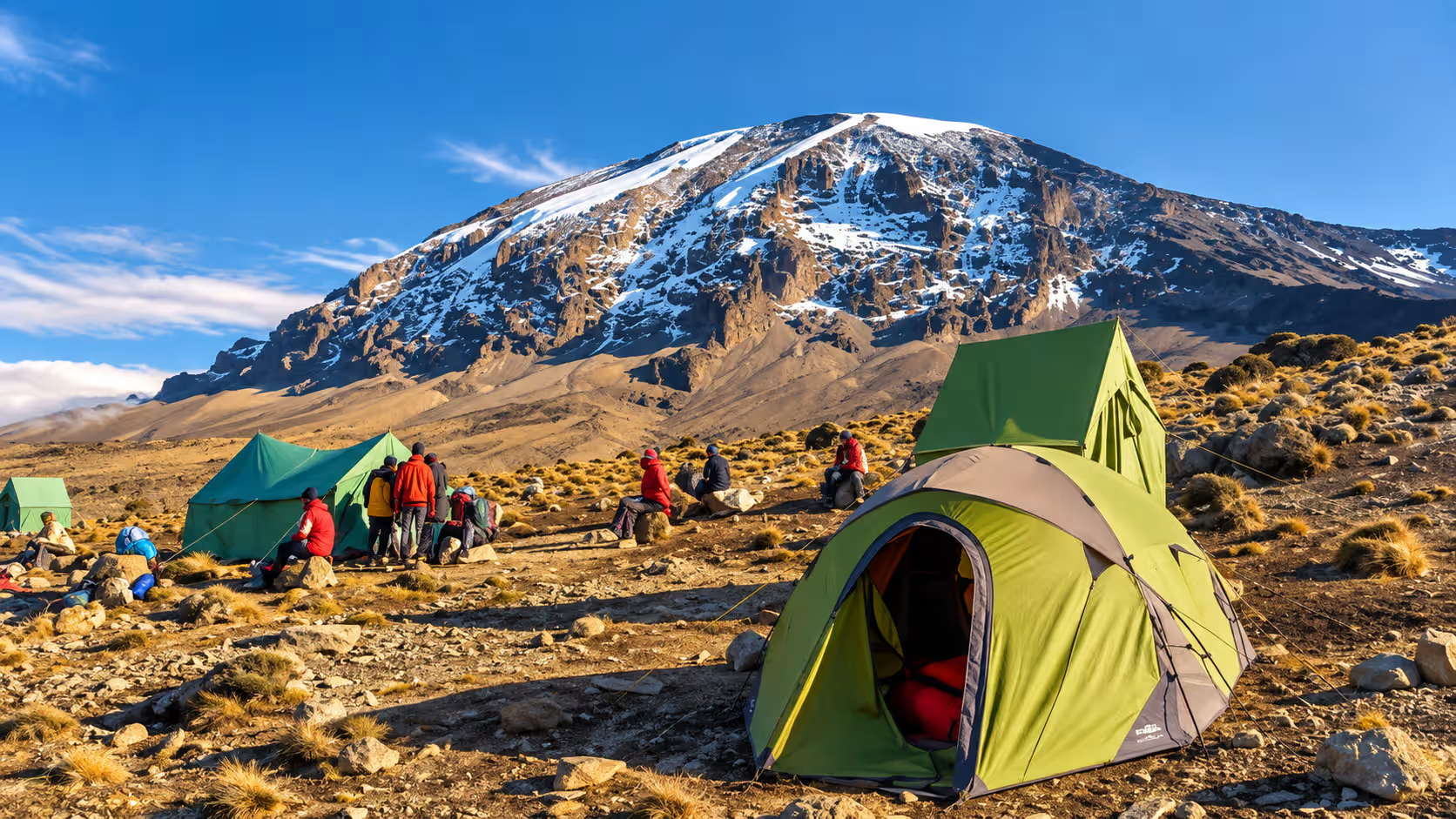
Camping on Mount Kilimanjaro
Best Time to Visit Mount Kilimanjaro National Park
Kilimanjaro is open throughout the year, but January to early March and late June to October bring the most dependable trekking conditions. Clearer mornings and drier trails improve the experience, although the mountain creates rapid changes in cloud, rain, wind and temperature in every season.
Best Months to Climb Kilimanjaro
January and February give a good balance of visibility and generally drier weather. July, August and September sit within the busiest period, when the main routes carry more groups. June and October can offer similar conditions with slightly less traffic. Full-moon summit dates also attract demand. Climbers who value quieter trails can select a longer or less heavily used route and avoid peak departure dates while keeping enough acclimatisation days.
Kilimanjaro Weather and Temperatures
Temperatures can move from roughly 21°C to 27°C on the lower slopes to well below freezing near Uhuru Peak. Summit-night wind chill can push the felt temperature far lower, and severe conditions can approach -20°C. The forest is humid and misty; the alpine desert has strong sun during the day and sharp cold after sunset. Layered clothing, rain protection, warm gloves and insulated summit gear are required regardless of travel month.
Kilimanjaro Rainy Seasons
The long rains fall from about mid-March through May, with April among the wettest months. Southern forest trails become muddy, and cloud can limit views, while snow and ice affect higher ground. Short rains arrive around November and tend to come in briefer showers. Rongai and the Northern Circuit use the drier northern side, but neither guarantees dry conditions. A wet-season climb rewards quieter trails, provided the team carries suitable waterproof equipment and allows flexibility for mountain weather.
How to Get to Mount Kilimanjaro National Park
The park lies in northeastern Tanzania beside Moshi and south of the Kenyan border. Most climbers stay in Moshi before the trek, then transfer by road to the gate serving their route. Arusha also works as a base for travellers combining Kilimanjaro with the northern safari circuit.
Getting to Kilimanjaro National Park by Air and Road
Kilimanjaro International Airport (JRO) is the closest major airport. The drive to central Moshi is about 40 km and takes roughly 45 to 60 minutes in normal traffic. Marangu Gate is about 44 km from Moshi and around 85 km from JRO, with transfers commonly taking about one hour from Moshi or one and a half to two hours from the airport. Actual time depends on traffic, the hotel and the gate. Arusha Airport handles domestic services, while JRO receives regional and international connections. Road shuttles also connect Nairobi, Arusha and Moshi. The transfer must be planned for the correct gate because western starts such as Londorossi require a different approach from Marangu, Machame or Rongai.
Mount Kilimanjaro Park Gates and the Routes They Serve
Marangu Gate on the southeastern side holds the park headquarters and starts the Marangu Route. Kilema serves authorised cycling and mountain logistics. Mweka is the main descent gate for Machame, Lemosho, Umbwe and Northern Circuit itineraries. Machame Gate starts the Machame Route, while Umbwe Gate serves the steeper Umbwe approach. Western routes complete registration through Londorossi before vehicles continue towards the Lemosho or Shira trailheads. The Northern Circuit also begins from this western side. Rongai starts from the north near the Kenyan border. Gate arrangements can change with road and park operations, so transfers should follow the route documents issued for the climb.
Accommodation in and Around Mount Kilimanjaro National Park
Moshi offers the closest broad choice of pre-climb and post-climb hotels, from simple guesthouses to full-service lodges with gardens, pools and mountain views. Arusha lies farther west but suits travellers connecting the climb with Tarangire, Ngorongoro or Serengeti. On the mountain, Machame, Lemosho, Northern Circuit, Rongai, Umbwe and Shira use tented camps. Marangu uses permanent huts.