
Birding in Budongo Forest
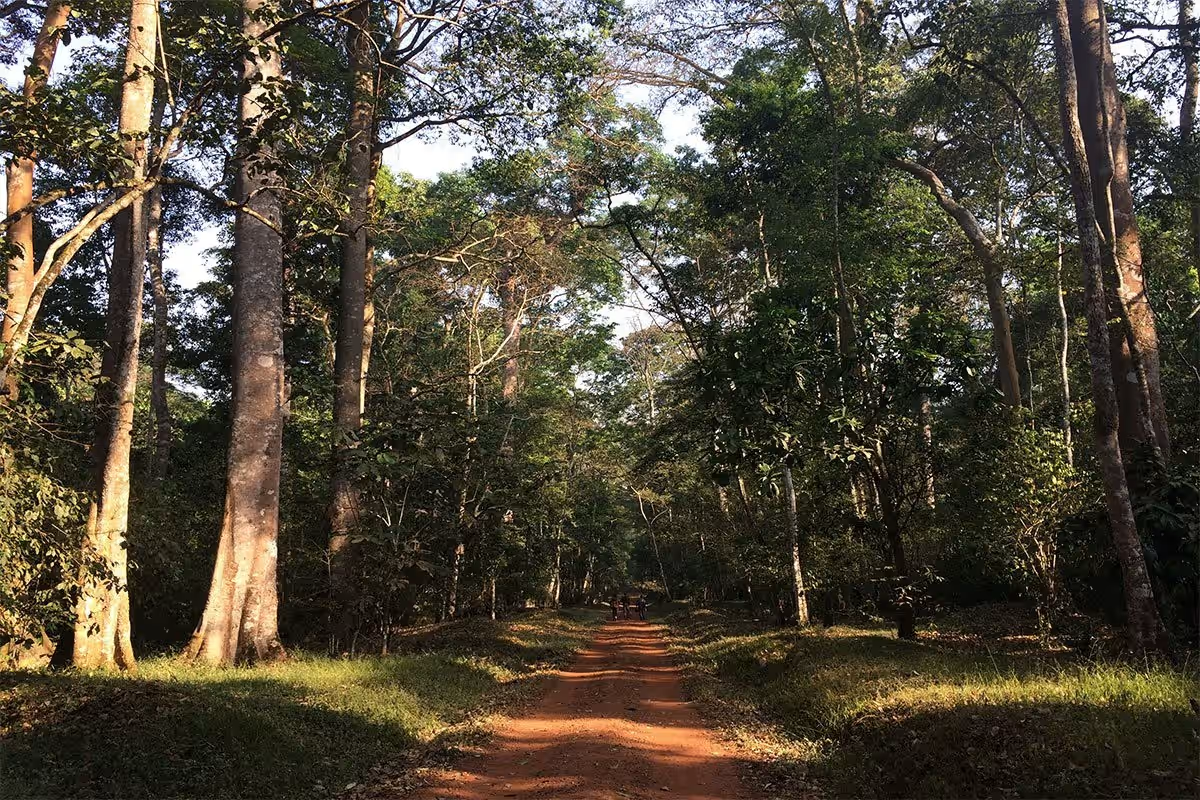
The Royal Mile opens beneath giant mahogany and ironwood trees, creating a broad avenue where you can scan the canopy, follow movement through the middle branches and still listen for birds calling near the ground.
Royal Mile, Busingiro and Kaniyo PabidiCome with time to stop.
Budongo Forest gives you one of Uganda's finest mornings for forest birding. The Royal Mile opens beneath giant mahogany and ironwood trees, creating a broad avenue where you can scan the canopy, follow movement through the middle branches and still listen for birds calling near the ground. The route feels calm and open, even though the surrounding forest is dense.
Near Masindi, Budongo forms the forested southern edge of the greater Murchison Falls landscape. It has about 435 km² of continuous forest and more than 360 bird species. It also supports about 465 plant species, 289 butterfly species, 24 mammal species and 9 primates. These figures explain its richness, but the reason birders remember Budongo is the quality of the search along the Royal Mile and the chance to work several forest levels from one route.
Come with time to stop. A guide may hold the group in one place for a soft call from the undergrowth, then turn everyone towards a hornbill crossing high above the road. Budongo works for experienced birders chasing forest targets, but it also gives first-time forest birders enough space to learn how calls, feeding flocks and canopy gaps lead to a sighting.
What Makes Budongo Different
The Royal Mile Opens the Forest
The Royal Mile is a wide forest avenue in the Busingiro area. Its name is linked to Omukama Kabalega of Bunyoro, who used the route through the forest. Today, the width of the avenue is its greatest birding advantage. You can step back for a better angle, watch several canopy levels and give each person in the group room to see the same bird.
Light reaches the road more easily than it reaches a narrow forest trail. This helps with identification and photography, while the tall trees still hold the character of mature forest. Start at dawn, work both sides of the avenue and keep checking the open sky above the canopy.
One Walk Covers Several Forest Levels
Budongo asks you to change where you look. Ground birds stay close to leaf litter and thick cover. Flycatchers and small feeding flocks use the lower and middle branches. Hornbills move through the upper canopy, while spinetails cross open sky above the trees. A productive walk depends on moving your attention between these levels rather than keeping your binoculars fixed in one direction.
The Wider Forest Adds More Than Birds
Black-and-white colobus monkeys, red-tailed monkeys, olive baboons and chimpanzees share the forest. Butterflies become active where sunlight reaches the road, and the large trees give the walk a sense of scale that is easy to miss from a vehicle. Keep mammal encounters as a welcome part of the day, while the birding guide continues to set the pace around calls and feeding activity.
Birds Worth Slowing Down For
Puvel's Illadopsis
Puvel's Illadopsis stays low in shaded cover and spends much of its time near the ground. Its voice often gives the first clue, while the bird remains hidden among stems and leaf litter. Once the guide fixes the direction, choose a clear gap, remain still and focus on the lowest growth. Walking towards the call usually makes the view harder. Birders value it in Budongo because East African sightings are concentrated in only a few forests.
Nahan's Partridge
Nahan's Partridge is a small, brown forest bird with a much stronger voice than its size suggests. It stays close to the ground and can disappear inside dense shrubs after only a brief view. Listen at first light, then watch the base of the vegetation when the call moves closer. The bird has a restricted and declining range, so seeing it in one of its main Ugandan forests carries real conservation value.
Chocolate-backed Kingfisher
The chocolate-backed kingfisher changes the way many visitors think about kingfishers. It lives inside humid forest rather than beside open water. The bird can sit still on a shaded branch, then drop to take insects or small prey below. Its clear early-morning call may travel along the avenue while the bird remains hidden. Follow the sound patiently and scan the middle canopy instead of looking for a bright bird beside a stream.
Yellow-footed Flycatcher
The yellow-footed flycatcher is quiet, small and easy to miss in the understorey. It may sit inside a dark tangle and move only when feeding, which makes a quick walk a poor way to find it. Watch for short flights from a low perch and check mixed feeding activity around the middle and lower branches. A clean view rewards careful observation rather than distance covered.
White-thighed Hornbill
White-thighed hornbills can suddenly fill the high canopy with wingbeats and calls. Their large bodies are easier to follow than the small understorey birds, but leaves can still hide them when they settle to feed. Watch fruiting trees and gaps above the road once you hear them approaching. Hornbills also move seeds across the forest, so the sighting connects the birding experience to the growth of the forest itself.
Cassin's and Sabine's Spinetails
Spinetails belong in the open sky rather than inside the leaves. Stand where the Royal Mile or a forest edge gives you a broad view above the canopy, then watch for fast, stiff-winged flight. These birds may pass quickly and return later, so keep the binoculars ready even when the trees seem quiet. They add speed and open-sky birding to a morning otherwise built around slow forest searches.
Where to Bird in Budongo
The Royal Mile, Busingiro and Kaniyo Pabidi do not offer the same experience. Match the place to the main reason for your visit and give each session enough time.
| Birding area | Walking and visibility | Experience | Best fit |
|---|---|---|---|
| Royal Mile | A broad, mostly level forest avenue with strong canopy views and room to stop. | Multi-level birding, better light and time to work specialist forest calls. | Your first full birding morning and the strongest choice when birds lead the trip. |
| Busingiro trails | Narrower shaded paths with leaf litter, roots and softer ground after rain. | Closer understorey work, shorter views and a stronger need to identify birds by sound. | A second session after the Royal Mile or a repeat search for a low forest target. |
| Kaniyo Pabidi | Enclosed forest paths with deeper shade and shorter sight lines. | Forest birding close to the main chimpanzee tracking area. | A trip where chimpanzees share priority with birds, using separate sessions for each activity. |
| Lake Kanyege and forest edge | Short stops around open forest edge and a sunny pond near the Busingiro side. | Better light, butterflies, water-edge activity and a change from closed forest. | A supporting stop after the Royal Mile, not a replacement for the main morning walk. |
How to Spend a Birding Day
Use First Light for the Royal Mile
Reach the avenue around first light and let the first hours of the morning carry the main search. Calls are easier to separate before the forest becomes warm and noisy. Work the road slowly, pause at fruiting trees and keep turning back for a new viewing angle. The same bird may show clearly from the opposite side of the avenue.
Slow Down When the Forest Becomes Quiet
Bird activity rarely stays even through the morning. A quiet stretch does not mean the walk has failed. Stop near a canopy gap, listen for a mixed flock and give hidden birds time to cross. Covering the entire road quickly can leave you with fewer good views than working one active section well.
Use the Edge Later in the Day
When the enclosed forest becomes quieter, move towards Busingiro's forest edge or Lake Kanyege. The brighter light improves photography and brings butterflies, open-country birds and water-edge activity into the day. Keep this as a shorter second session after the main Royal Mile walk.
Choose 3 Hours or a Full Day
A 3-hour walk gives a general birder time to experience the Royal Mile and learn the main forest sounds. A full day works better for a specialist list because it allows repeat searches, longer waits and a move between the avenue and neighbouring trails. Two mornings give the best balance when birds are the main reason for travelling to Budongo.
Walking Conditions and Photography
Walking ranges from easy to moderate. The Royal Mile follows a broad, fairly level avenue, while the side trails add roots, mud and leaf litter. Heat, humidity and long periods of standing create more fatigue than steep ground. Carry water, wear closed shoes with a firm grip and keep a light rain jacket within reach.
Forest photography needs quick decisions. The background is busy, light is low and a bird may remain clear for only a few seconds. Find the bird with binoculars first, then raise the camera. Use a shutter speed that can hold a moving bird, increase ISO before the action begins and protect the lens from humidity. The Royal Mile and forest edge give cleaner light than the enclosed trails.
Keep the group small and close to the guide. When everyone understands the same viewing direction, the bird is less likely to disappear before the last person sees it. Quiet movement also improves the chance of watching normal feeding behaviour rather than a bird moving away from the group.
Best Time for Birding
Budongo has resident forest birds throughout the year. The main rains fall from March to May and from September to November, with April and October often bringing the heaviest showers. These months keep the forest active, but mud, low light and rain breaks can shorten the time spent on the trail.
December to February brings the clearest dry period. June to August also gives firmer paths and comfortable access for a full morning. Migratory birds add variety from about November to April, though Budongo's main attraction remains its resident forest species.
For a first visit, arrive in the dry season and start at dawn. If your dates fall in the wetter months, keep the morning free of tight transfer plans. Rain often passes, and the walk can continue once the canopy and road settle.
Getting to Budongo Forest
By Road Through Masindi
Drive from Kampala through Masindi and allow about 3 to 4 hours before local stops and traffic. From Masindi, the Royal Mile and Busingiro area are about 30 to 40 km away. The Royal Mile lies about 15 km from the Busingiro ecotourism site, so arrange the guide and vehicle together rather than arriving in Masindi without the final forest transfer.
Public transport reaches Masindi, but it does not give you a smooth dawn start at the forest. A private vehicle or driver-guide lets you leave town before sunrise, carry water and camera equipment and continue to Kaniyo Pabidi or Murchison Falls after the walk.
By Air Through Pakuba
A flight from Entebbe to Pakuba Airstrip works when Budongo forms part of a Murchison Falls safari. Continue south by road, with the transfer arranged for your selected birding area. Kaniyo Pabidi and Busingiro require different road journeys. Confirm the pickup, birding area and overnight base before the flight.
Combining Budongo Birding With Other Experiences
Budongo combines best with activities that change the habitat and pace of the trip. Keep the main birding morning free, then give chimpanzees, savannah wildlife and the Nile their own sessions.
Chimpanzee Tracking at Kaniyo Pabidi
Kaniyo Pabidi brings forest birding and chimpanzee tracking into the same part of the journey. Set aside a morning or afternoon for the chimpanzees. The trek follows the community through the forest, and you spend 1 hour with them once they are found. Use another session for birding because a bird guide needs to stop for calls while chimpanzee tracking must follow the animals' movement.
Game Drives on the Buligi Peninsula
Continue north into Murchison Falls National Park for open savannah and long wildlife views. The Buligi Peninsula brings giraffes, elephants, buffaloes and antelopes into the journey, with lions and leopards among the predators to search for. The change from walking under a closed canopy to scanning grassland from a vehicle makes the game drive a strong follow-on experience.
Boat Cruise to the Base of Murchison Falls
The boat from Paraa travels upstream towards the base of Murchison Falls and takes about 3 hours for the return trip. Hippos, Nile crocodiles, waterbirds and animals drinking along the banks keep the river active before the boat reaches the narrow gorge below the falls. Add the Top of the Falls viewpoint by road to see the Nile force its way through the rock from above.
Nile Delta Cruise for Shoebill
The delta cruise follows a different stretch of the Nile. It travels downstream towards Lake Albert, where papyrus, shallow water and quieter channels create shoebill habitat. Plan it as a separate outing from the falls cruise. One focuses on the waterfall and riverbank wildlife, while the other gives more time to wetlands and waterbirds.
What to Carry
- 8x42 or 10x42 binoculars for both shaded understorey and high canopy views.
- An East Africa bird guide or offline birding app, plus a small notebook for calls and sightings.
- A camera and a telephoto lens you can carry easily, plus spare batteries, memory cards and a lens cloth.
- Neutral long trousers and a long-sleeved shirt for insects and forest-edge vegetation.
- Closed walking shoes with firm grip for mud, roots and wet leaf litter.
- A light rain jacket, dry bag, insect repellent and sunscreen.
- At least 1.5 litres of drinking water and a packed snack for a full morning.
- A small daypack so you can use binoculars and handle the camera without putting gear down.
Keep the load light. The Royal Mile is not steep, but several hours of standing, scanning and lifting binoculars can tire your shoulders. Carry only what you can use without slowing the group.
Birding in Budongo Forest FAQs
Where should I start birding in Budongo?
How much time should I allow for the Royal Mile?
Is the Royal Mile walk difficult?
Do I need a specialist birding guide?
Can I combine birding with chimpanzee tracking?
Is Budongo suitable for beginner birders?
Can I photograph birds in Budongo?
How does Budongo fit into a Uganda safari?
More Forest Experiences and Uganda Journeys
 Forest Guide
Nature Walks in Mabira Forest
Explore guided forest routes, birding outings and primate watching between Kampala and Jinja.
Explore Mabira Primate Guide
Chimpanzee Trekking in Uganda
Compare chimpanzee destinations and plan a separate primate experience alongside your birding sessions.
Read the Guide 9 Day Safari
Uganda Wildlife and Gorilla Safari
Explore a wider Uganda journey and request dedicated Budongo birding time when tailoring your itinerary.
Explore the SafariGive the Royal Mile the morning it deserves.
Share your dates, birding interests and preferred pace with BLS Safaris. We will help arrange your guide, transport and time in Budongo, with separate sessions for chimpanzees and Murchison Falls wildlife where requested.