
Walking Safaris in Uganda
Follow wildlife tracks across savannah, walk beneath rainforest canopies and climb towards crater lakes and waterfalls with guides who know the ground.
Wildlife walks, forest trails and highland hikesSlow down and notice what the vehicle leaves behind.
A footprint in the dust, an alarm call from a tree and a fresh feeding mark can change the direction of a walking safari. On foot, your guide helps you read these small signs and understand how wildlife uses the surrounding land.
Uganda offers several kinds of walking experience. Savannah routes focus on open-country wildlife, forest paths reveal birds and primates, and highland hikes bring waterfalls, crater views and village life. The right outing depends on what you want to see and how much effort you enjoy.
Inside wildlife areas, rangers or approved guides lead the group and manage encounters with animals. Elsewhere, local guides arrange access across community land and explain the farms, plants and stories along the route.
Walking can be the main reason for your trip or a quieter part of a wider Uganda safari . Leave room between active days so that each outing feels rewarding rather than rushed.
Best places for walking safaris in Uganda.
These destinations offer different reasons to leave the vehicle, from rhino tracking to rainforest waterfalls and coffee-growing hillsides.
Lake Mburo National Park
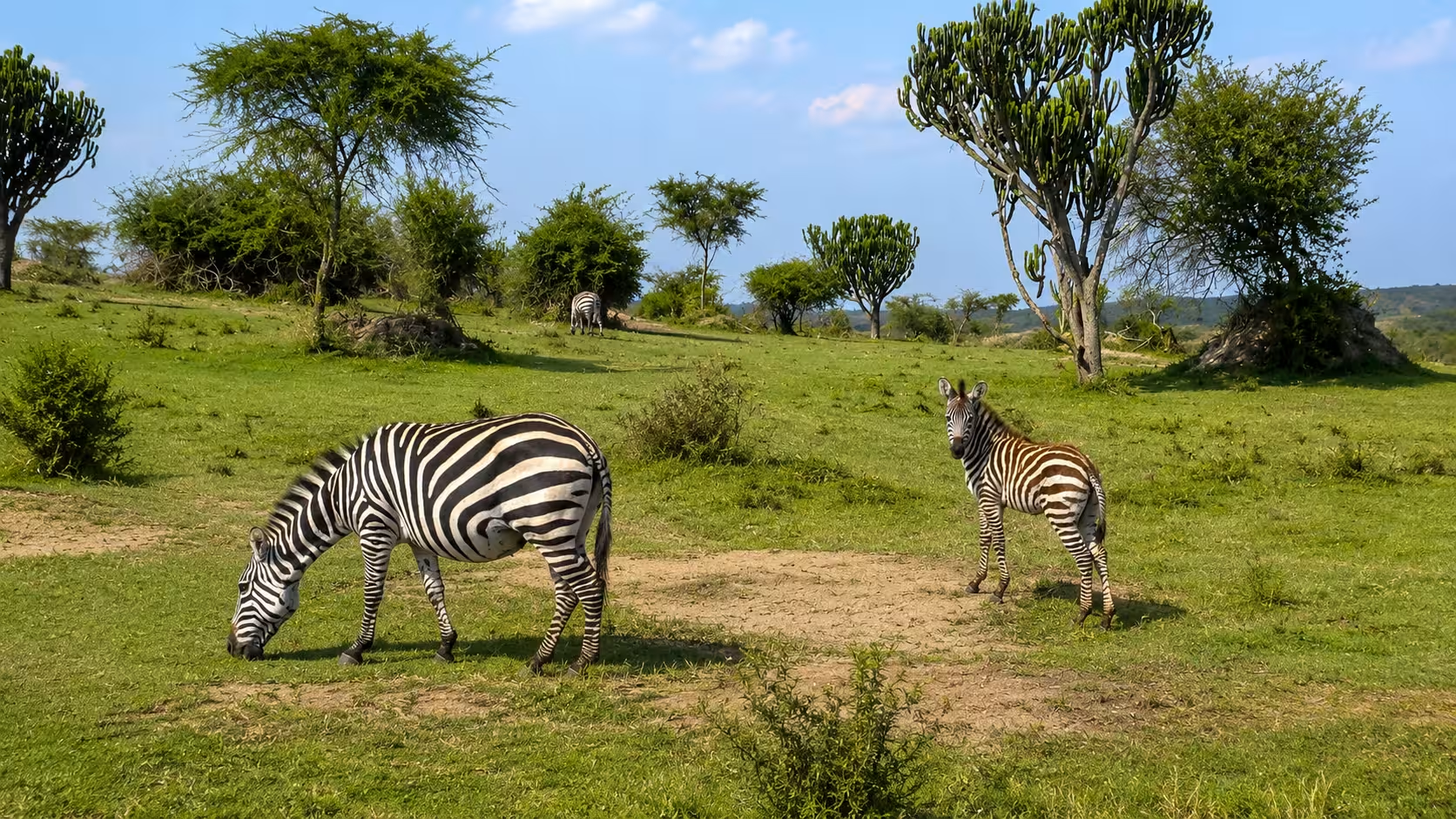
Lake Mburo National Park is a strong choice for a classic savannah walk. A ranger leads you through grassland and acacia woodland, looking for zebras, giraffes, impalas and other animals while explaining tracks and feeding signs.
Allow around 2 to 3 hours at a steady pace. The ground is generally gentler than Uganda's forest and mountain routes, although uneven grass and low ridges still require secure footwear. A game drive adds wider wildlife coverage beyond the walking area.
Ziwa Rhino Sanctuary
At Ziwa Rhino Sanctuary , rangers locate southern white rhinos before leading visitors towards them on foot. The focus is time watching the rhinos feed or rest while learning about their behaviour and protection.
Allow about 2 hours, with the walking distance shaped by the animals' location. Ground can be wet or rough, and the ranger decides where the group stands. Ziwa fits naturally into the road journey towards Murchison Falls.
Fort Portal, the crater lakes and Bigodi
Nature walks and hikes around Fort Portal connect green crater rims, farms, tea-growing hills and village paths. Amabere and Nyakasura combine local stories and a waterfall with steeper climbs to nearby viewpoints.
Bigodi adds a gentler wetland setting near Kibale, with boardwalks, monkeys and birdwatching. Allow several days when combining crater walks with chimpanzee trekking , so the forest and countryside each have enough time.
Mabira Central Forest Reserve
For a shaded outing between Kampala and Jinja, nature walks in Mabira Forest bring birds, butterflies, monkeys and tall trees into a half-day or longer guided visit. The Najjembe access lies about 54 km from Kampala and 26 km from Jinja.
Expect humid air, roots and muddy patches beneath the canopy. Agree on your starting point and route before travelling, because Najjembe and Griffin Falls use different approaches. Mabira pairs well with time beside the Nile.
Bwindi Impenetrable National Park
Nature walks in Bwindi range from shorter river outings near Buhoma to waterfall routes, ridge climbs and full-day forest crossings. Ruhija adds higher ground and focused birding around Mubwindi Swamp.
Steep slopes, roots and wet clay can make even a short route demanding. Select a trail near your accommodation sector and keep longer hikes on a separate day from gorilla trekking .
Sipi Falls and Mount Elgon
The Sipi Falls hike links 3 waterfalls through coffee farms, village paths and steep slopes. Allow about 3 to 4 hours for a direct circuit, or longer for viewpoints and relaxed stops.
Nearby Mount Elgon offers additional forest walking and longer mountain routes. Treat a summit climb as a separate trek with several days and its own preparation. Sipi suits travellers who enjoy active walking and highland scenery.
Which walking safari suits you?
| Destination | Main focus | Terrain and effort | Time to allow |
|---|---|---|---|
| Lake Mburo | Savannah wildlife and animal signs. | Mostly gentle, with uneven ground. | About 2 to 3 hours. |
| Ziwa | Rhino tracking on foot. | Variable distance across grass and woodland. | About 2 hours. |
| Fort Portal | Crater scenery, farms and wetlands. | Gentle wetland routes to steep crater climbs. | A short outing to a full day. |
| Mabira | Forest life, birds and primates. | Roots, humid conditions and muddy patches. | A few hours or a longer forest outing. |
| Bwindi | Rainforest trails, waterfalls and birding. | Often hilly, rooted and slippery. | A short walk to a full-day crossing. |
| Sipi | Waterfalls and coffee-growing countryside. | Repeated climbs and steep descents. | About 3 to 4 hours for the direct circuit. |
What to expect on a guided walk.
A briefing before departure
Your guide explains the route, expected duration and ground conditions. In wildlife areas, listen closely to instructions about spacing, animal encounters and moving together.
A pace with time to stop
You may pause to study a footprint, watch a bird or learn how a plant is used. These stops are part of the experience, so avoid judging the outing only by distance covered.
A route shaped by the day
Wildlife movements, rain and trail conditions can change the plan. Your guide may adjust the direction or shorten a section to suit the group and conditions.
Best time for walking safaris in Uganda.
Drier periods for firmer trails
June to August and December to February generally offer easier footing in many areas. These periods suit longer hikes and travellers who prefer less mud.
Start exposed savannah and crater walks early before the heat builds. Forest paths can remain wet even during a drier spell.
Wetter periods for greener scenery
Rain strengthens waterfalls and freshens forest and countryside views. It also makes roots, clay slopes and waterfall approaches more slippery.
Carry rain protection throughout the year and leave room to adjust longer routes. Mountain weather can change quickly regardless of the season.
Fitness and trail difficulty.
Many shorter outings suit travellers who can walk comfortably for a few hours over uneven ground. Crater rims, rainforest ridges and the full Sipi circuit require stronger legs.
Tell your guide about knee, back or balance concerns before selecting a route. Children and older travellers need a pace and distance matched to their ability, with any activity-specific age rules checked in advance.
For a demanding hike, practise on hills and wear your walking shoes before the trip. Begin steadily rather than using your energy on the first climb.
Safety on the trail.
- Stay with the group. Tell the guide before stopping or falling behind.
- Give wildlife space. Keep the position and distance set by your ranger.
- Follow instructions calmly. Do not run or approach animals on your own.
- Keep voices low. Quiet groups hear more and disturb wildlife less.
- Share health needs early. Explain injuries, allergies or medication needs before the walk begins.
What to wear and carry.
Walking shoes with grip
Wear comfortable footwear suited to uneven paths, roots and wet ground.
Light clothing in muted colours
Long trousers help protect your legs on forest paths and through grass.
Rain protection
Carry a light waterproof jacket and protect electronics in a dry bag.
Water and a small snack
Bring enough for the agreed route, with a packed meal for longer hikes.
A hat and sunscreen
Open savannah, farm paths and crater rims may have little shade.
Binoculars and personal essentials
Pack binoculars, prescribed medication and any blister protection you need.
Combine walking with other safari activities.
A western Uganda safari
Combine a Lake Mburo wildlife walk with Fort Portal scenery, Kibale primates and Bwindi forest time. Add game drives and a Kazinga Channel cruise for a change of pace between walking days.
A Kampala and Jinja break
Pair a Mabira forest outing with a Nile stay in Jinja. Keep enough time for the drive, your selected forest approach and any rafting or boat activity arranged separately.
A northern wildlife route
Track rhinos at Ziwa before continuing towards Murchison Falls. The sanctuary provides the focused on-foot experience, while later days add savannah wildlife and the Nile.
An eastern highlands stay
Base yourself at Sipi for waterfall and coffee experiences, then add a Mount Elgon forest outing if you want another active day. Reserve a separate trekking schedule for a summit climb.
Walking safaris in Uganda FAQs.
Where can I see wildlife on foot in Uganda?
Do I need a guide for a walking safari?
How fit do I need to be?
Can children join walking safaris?
How long does a guided walk take?
Can walking safaris go ahead in the rain?
Is gorilla trekking the same as a nature walk?
Can I include walking in a private Uganda safari?
Uganda safaris to pair with walking.
Request your preferred walks when tailoring these journeys. Extra activity time or overnight stays may be needed.
 4 Day Safari
Lake Mburo and Lake Bunyonyi Safari
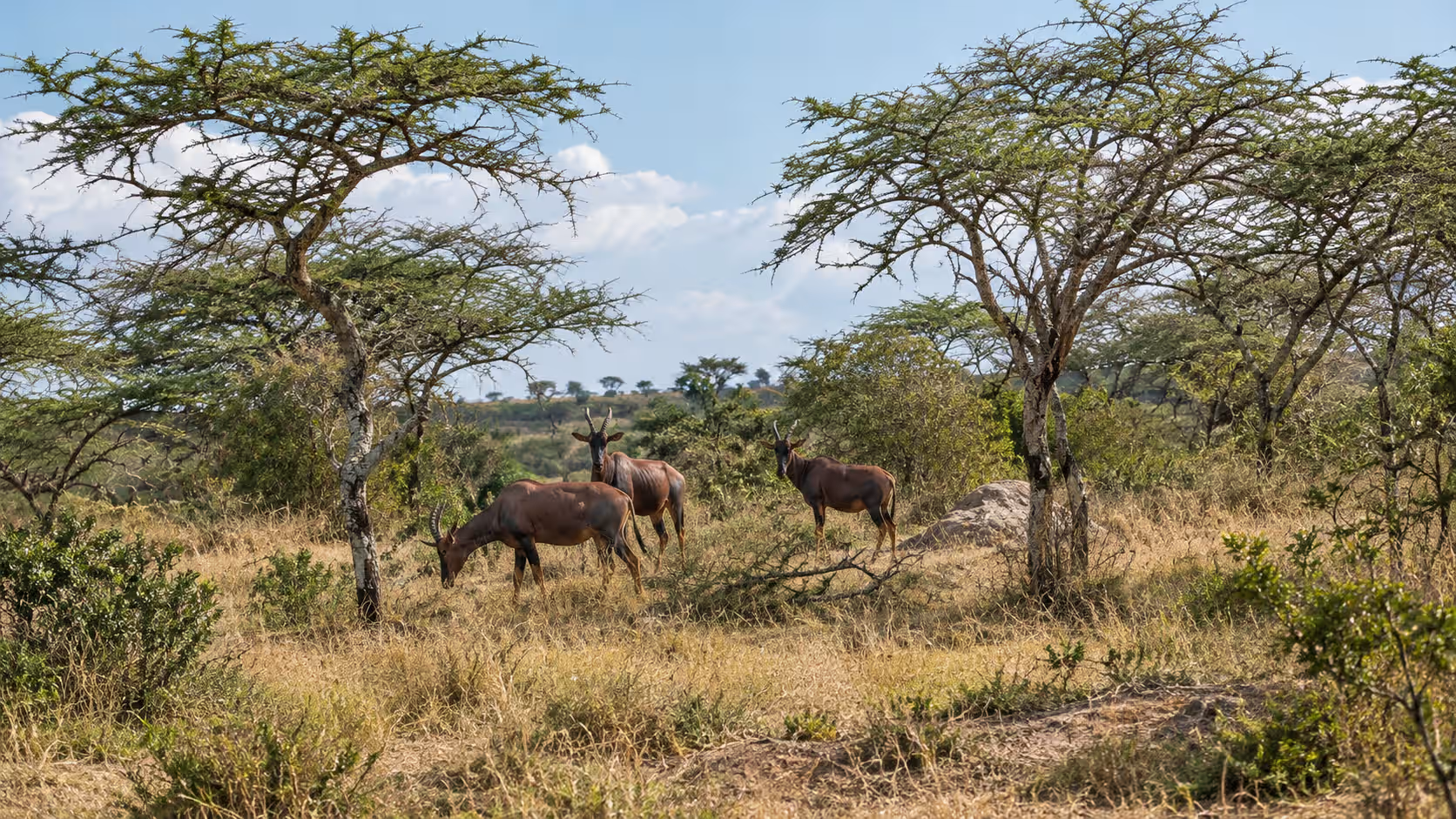
Combine savannah and highland lake scenery. Request a ranger-led Lake Mburo walk when arranging the activities.
Explore the Safari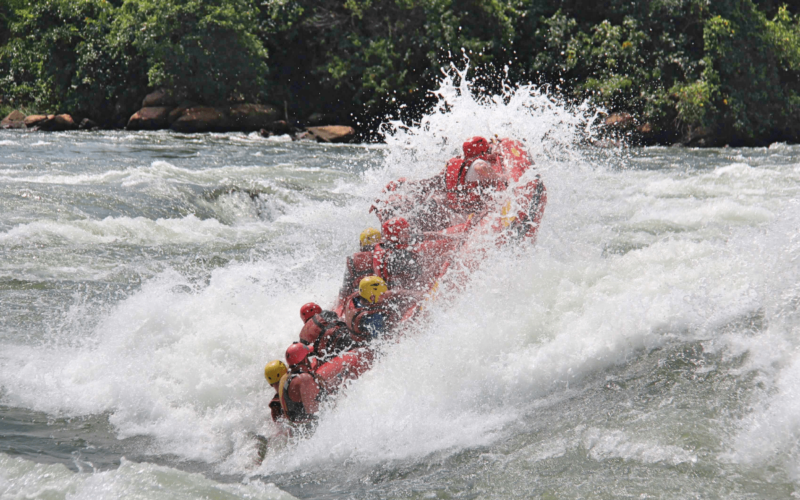 5 Day Safari
Uganda Gorilla and Jinja Adventure
Pair forest primates with time on the Nile. Discuss a Mabira stop or extra Sipi nights for a longer journey.
Explore the Safari 9 Day Safari
Uganda Wildlife and Gorilla Safari
Explore a wider wildlife circuit and request walking time around the destinations that interest you most.
Explore the SafariFind the walk that fits your Uganda journey.
Share your dates, interests and walking ability with BLS Safaris. We will help arrange suitable routes, guides and transfers, with time to enjoy each destination at your pace.