

Where to See Shoebills in Uganda
Compare the canoe channels of Mabamba and Lugogo with the wider waters of the Albert Delta and Lake Albert.
A route guide to Uganda's shoebill wetlandsStart with your route.
A shoebill may stand without moving while your boat slips through the reeds. Its grey body can disappear against the wetland until the broad bill and pale eyes come into view. The first sighting often begins with a guide pointing towards what looks like a dead tree stump. Then the bird turns its head, and the whole shape becomes clear.
Uganda gives you several ways to enjoy this search. Mabamba works well from Entebbe or Kampala. The Albert Delta fits a Murchison Falls safari. Lugogo Swamp can join a visit to Ziwa , while Lake Albert adds a quieter option to a western Uganda journey. The best choice depends on your route, the time you have and the type of boat experience you want.
For a longer journey, our Uganda birding safaris can pair a shoebill search with forest, savannah and other wetland birding.
Choose the Shoebill Trip That Fits Your Route
| Tracking area | Best starting point | Experience | Best fit |
|---|---|---|---|
| Mabamba Swamp | Entebbe or Kampala | A small canoe follows narrow papyrus channels on Lake Victoria. | A first or final morning in Uganda, including a long airport layover with enough time. |
| Albert Delta | Paraa in Murchison Falls | A launch travels down the Victoria Nile towards Lake Albert. | A wildlife safari that already includes game drives and the Nile. |
| Lugogo Swamp | Ziwa area | An early canoe trip explores a quieter swamp near the sanctuary. | Travellers staying near Ziwa before continuing north. |
| Lake Albert | Toro-Semliki and Ntoroko | A local boat crosses open lakeshore water and marsh edges. | A western Uganda birding route with time near Fort Portal. |
Mabamba Swamp for an Entebbe or Kampala Stay
Mabamba is the easiest place to add shoebill tracking near Uganda's main airport. The 2,424-hectare wetland lies west of Entebbe on the northern shore of Lake Victoria. Papyrus, floating plants and shallow feeding edges create the setting the shoebill uses for hunting. The wetland also supports fishing families, so the morning shows both birdlife and daily life on the lake.
The search begins in a narrow wooden canoe with a local guide and boat handler. You sit low on the water as the canoe moves into channels that larger boats cannot enter. The guide checks open gaps, floating vegetation and places where lungfish come close to the surface. The trip feels close and quiet, with tall papyrus sometimes blocking the view until the canoe turns into a wider pool.
Getting to Mabamba
You can drive to the Mabamba landing and spend about 1 to 2 hours on the water. This route suits travellers starting from Kampala or those who already have a vehicle in Entebbe. Another option starts at Nakiwogo in Entebbe and crosses Lake Victoria before joining the canoe search. Allow about 3 to 4 hours for the complete water journey from Nakiwogo and back.
Use Mabamba on your first or final morning when your flight time leaves a comfortable margin. Do not squeeze it between a late return and airport check-in. An early departure gives you calm water, cooler air and softer light, then brings you back with enough time for lunch or the next transfer.
Albert Delta for a Murchison Falls Safari
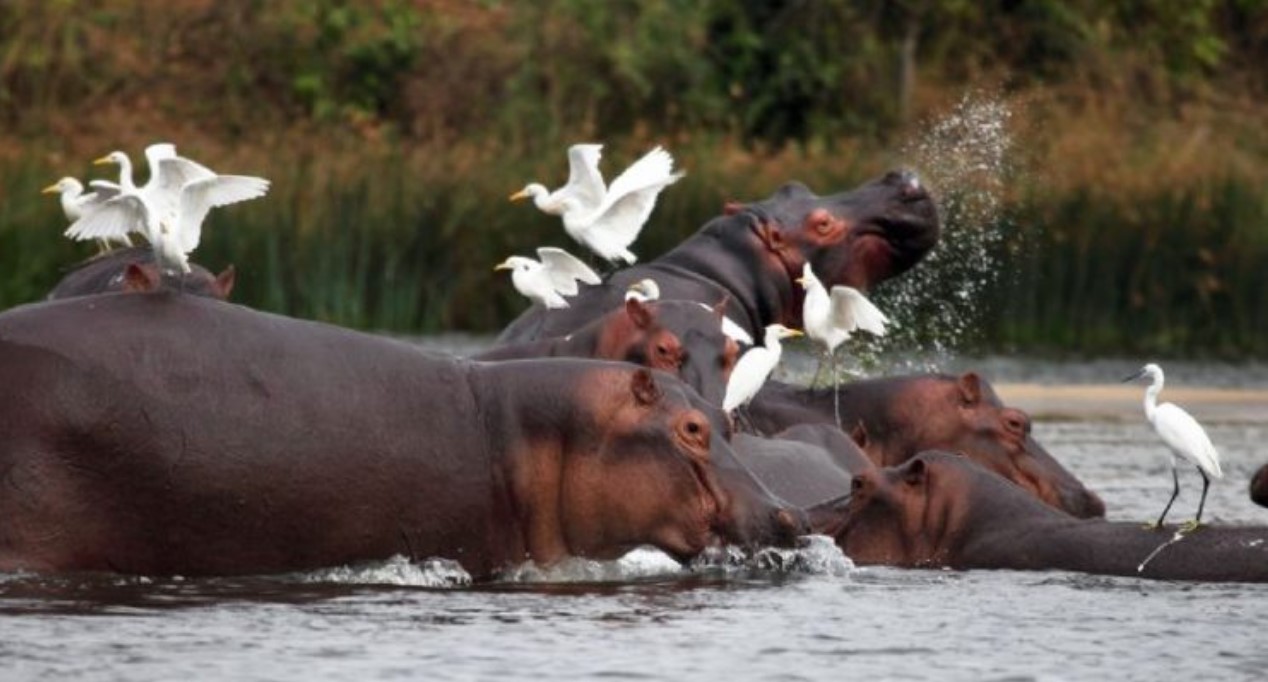
The Albert Delta gives you a broader river experience. The Victoria Nile slows as it reaches Lake Albert, creating shallow water, papyrus islands and open feeding areas. Shoebills use this quieter end of the river, while hippos, crocodiles and animals drinking along the banks keep the journey interesting between bird sightings.
The delta cruise leaves from the Paraa area and travels downstream. This is not the same boat trip as the cruise to the base of Murchison Falls, which heads upstream towards the waterfall. Allow about 4 to 5 hours for the delta outing. Give the falls cruise and the delta cruise separate space if you want both, rather than forcing them into one rushed day.
Choose the Albert Delta when Murchison Falls already forms part of your safari. It turns the shoebill search into a full morning on the Nile and needs no long detour from the park. It also suits travellers who prefer a larger launch to a narrow canoe, although you still spend several hours seated on the water.
Lugogo Swamp for a Ziwa Stop
Lugogo Swamp adds a different pace to a visit near Ziwa. The canoe goes out early, when the wetland is cool and the water is usually calmer. This is a closer, quieter outing than the Albert Delta cruise and works best when you sleep near the sanctuary instead of arriving after a long drive from Kampala.
Pair the canoe trip with rhino tracking on a well-spaced stay. Complete one activity in the afternoon and the other the next morning. This gives each experience enough time and avoids reaching Murchison Falls late in the day. Lugogo makes the most sense as part of the northern route, not as a separate return trip from Entebbe.
Lake Albert for a Western Uganda Birding Route
The marshes around Lake Albert near Toro-Semliki give experienced birders a more remote option. Boat trips leave around the Ntoroko side of the lake, where open water meets swamp, fishing areas and the wide floor of the Albertine Rift. The setting feels very different from Mabamba because the lake, escarpment and reserve create a much larger landscape.
Use this option when your route already includes Fort Portal , Semuliki or Toro-Semliki. Plan the road transfer and lake trip together, with an overnight stay near the reserve or Ntoroko. The outing combines well with a reserve game drive or the 3-hour nature walk, but it needs its own morning. It is not the strongest choice for a short Uganda visit built around Entebbe.
What Makes the Shoebill Worth Watching
A Hunter That Waits
The shoebill does not chase fish around the wetland. It stands still at the edge of floating plants and watches the water. Minutes may pass without a step. Then the bird leans forward and drives its bill into the shallows in one fast movement. That sudden change from complete stillness to a powerful strike is one of the best moments to watch.
A Bill Built for Wetland Prey
The heavy, shoe-shaped bill ends in a sharp hook. It helps the bird hold slippery prey and cut through wet vegetation during a strike. Lungfish form an important part of its diet, though it also takes other fish, frogs, water snakes and small reptiles. The bird is more closely related to pelicans.
Small Movements That Reveal Its Character
Watch more than the bill. A shoebill may blink slowly, shift its weight, raise the feathers behind its head or spread its wings before moving to another feeding place. Both adults and young birds can make a loud bill-clattering sound. An adult hunting alone usually gives you a quieter encounter, which makes every change in posture easy to notice when the boat stays still.
What a Shoebill Tracking Morning Feels Like
The outing begins with a short briefing at the landing. Step into the boat one person at a time and keep your hands free while boarding. Once everyone is seated, the guide moves towards feeding areas used in recent days. Local guides read the wetland through water depth, fish movement, open channels and the bird's preferred stands of vegetation.
The search can be slow. You may spend long periods scanning reeds that all look alike. When the guide finds a bird, use a tree, papyrus clump or patch of open water as a marker before lifting your binoculars. This makes it easier to find the same point through a narrow field of view.
Wild birds move freely, so the time needed changes from one morning to another. A patient search is part of the experience, not empty time. It allows you to understand the wetland and see how the shoebill disappears within a habitat that first looked open and simple.
Morning Light and Seasonal Conditions
Why an Early Start Works Well
Early morning brings cooler air and softer light across the wetland. The water is often calmer before wind builds over Lake Victoria or Lake Albert. Calm water makes the boat steadier and improves reflections in photographs. An early departure also leaves more time in the day if the search takes longer than expected.
Tracking Through the Year
Shoebills live in Uganda's wetlands throughout the year. Drier months usually make road travel easier, while wetter periods deepen the colour of the papyrus and can change which channels the boats can enter. Rain does not end the outing, but heavy wind and storms can delay departure. Carry light rain protection in every season.
How to Fit Shoebill Tracking Into Your Safari
At the Start or End of a Uganda Safari
Spend a night in Entebbe and visit Mabamba the following morning. This keeps the outing close to the airport and leaves the rest of the safari free for longer road journeys. On a departure day, use Mabamba only when the flight leaves late enough to allow for the lake crossing, the canoe search and possible traffic on the return.
During a Northern Wildlife Safari
Use Lugogo when you are staying near Ziwa, or continue to Murchison Falls and reserve a full morning for the Albert Delta. Lugogo suits a close canoe experience, while the delta gives you a longer launch journey through the park. Select one from your route instead of adding both simply to repeat the same target bird.
During a Western Uganda Journey
Add the Lake Albert trip when Fort Portal, Semuliki or Toro-Semliki already appears in your plans. The boat outing works well beside forest birding, a reserve walk or a game drive. Allow an overnight stay close to the departure area so the morning begins at the lake rather than on a long road transfer.
Photographing a Shoebill From the Boat
Start with a wider photograph that places the bird among papyrus, water and floating plants. This shows the habitat and gives you a sharp image before the boat moves. After that, use a longer focal length for the bill, eye and head feathers. A lens in the 300 mm to 500 mm range gives reach without pushing the boat too close.
Use a faster shutter speed when you are hand-holding a long lens from a moving canoe. Keep your elbows close to your body and wait for the boat to settle before pressing the shutter. A beanbag or folded jacket can support the lens on a larger launch, but a tripod takes too much space in a narrow canoe.
Do not wait only for flight. The strongest images may show the shoebill watching the water, leaning into a strike or standing against the morning mist. Keep some space around the bird so the bill and body do not feel trapped at the edge of the frame.
Boat Comfort and What to Carry
Mabamba and Lugogo use small boats or canoes that sit close to the water. Travellers with limited movement need help stepping down and balancing while boarding. Tell the guide before the trip if anyone needs a steady hand, a cushion or the easiest boarding point. The Albert Delta launch gives more space but still involves several hours of sitting.
- Binoculars for finding the bird before using a camera
- A long lens or a phone with a reliable optical zoom
- A small dry bag for a phone, camera batteries and travel papers
- Drinking water, a sun hat and sunscreen
- A light rain jacket that packs into a small bag
- Closed shoes or secure sandals for wet landing areas
- Neutral clothing that stays comfortable in a small boat
Keep loose items inside the bag until everyone is seated. Carry only what you can hold safely on your lap because space inside the canoe is limited.
Watching Shoebills Without Disturbing Them
Only an estimated 3,300 to 5,300 mature shoebills remain in the wild. Wetland loss, disturbance around nests, hunting and the live bird trade continue to reduce their numbers. A quiet, well-managed boat visit gives the bird room to feed while bringing income to guides and communities that live beside the wetland.
Keep your voice low and remain seated when the boat reaches a bird. Let the guide select the stopping distance and move away when the shoebill changes direction or retreats into the reeds. Keep flash off. Do not use bait or recorded calls to force a reaction. The best encounter is one in which the bird continues hunting, resting or preening as if the boat were not there.
Shoebill Tracking in Uganda FAQs
Where should I look for shoebills near Entebbe?
Is a shoebill sighting guaranteed?
How much time should I allow for Mabamba?
Is the Albert Delta cruise the same as the falls cruise?
Which option suits travellers who prefer a larger boat?
Can I visit Mabamba before an international flight?
Can shoebill tracking be combined with rhino tracking?
Can I include shoebills in a longer birding safari?
More Birding and Wildlife Experiences
 Birding Collection
Uganda Birding Safaris
Combine a shoebill search with forest, savannah and wetland birding across Uganda.
Explore Birding Safaris Wildlife Guide
Ziwa Rhino Sanctuary
Plan rhino tracking near your Lugogo canoe outing before continuing towards Murchison Falls.
Explore Ziwa Safari Activity
Game Drives in Murchison Falls
Add open-country wildlife viewing to a stay that includes a dedicated Albert Delta morning.
Explore Game DrivesFind the wetland that fits your journey.
Share your dates, overnight stops and boat preferences with BLS Safaris. We will help arrange your guide, transfers and shoebill outing around the route you are travelling.