The easier trek isn’t automatically the right choice for every traveller. In the Gorilla Trekking vs Golden Monkey Tracking comparison, golden monkey tracking is usually the gentler walk, while gorilla trekking is a more focused forest encounter. Both take you into the mountain forests of Rwanda or Uganda, but the pace and wildlife experience differ.
It’s natural to weigh the effort against what you’ll see and how each trek fits your trip. Golden monkeys bring a lively, active tracking experience in both Rwanda’s Volcanoes National Park and Uganda’s Mgahinga Gorilla National Park. Gorilla trekking on the other hand is centred around spending time with a habituated gorilla family.
This guide compares Gorilla Trekking vs Golden Monkey Tracking, including what to expect, how the physical demands and wildlife encounters differ, and how the activities can complement each other. You’ll also learn how to plan these experiences in Rwanda or Uganda, whether you choose one trek or both as part of a well-paced safari.
Key Takeaways
- Understand what golden monkeys’ social groups and lively behaviour can add to a Rwanda or Uganda safari.
- Compare Mgahinga and Volcanoes National Park to choose the setting that best fits your route.
- See how a Rwanda itinerary or cross-border journey can fit both primate experiences together.
- Plan around the different trek schedules, walking demands, and time needed for each encounter.
- Learn what to expect from a golden monkey tracking morning in Uganda’s Mgahinga Gorilla National Park.
Why Add Golden Monkeys to Your Itinerary?
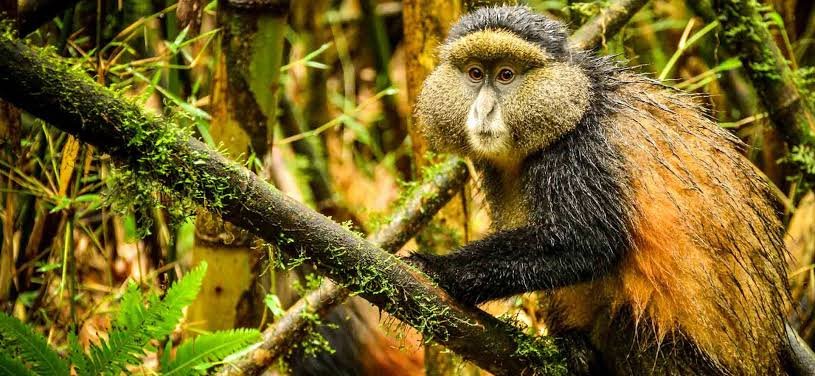
Golden monkeys offer a lively wildlife encounter in the mountain forests of Volcanoes National Park. Their bright coats and quick movements make tracking them a different experience from observing gorillas. They often feed in bamboo forests, eating shoots, fruit, and leaves, so the walk brings you into a distinctive part of the forest ecosystem.
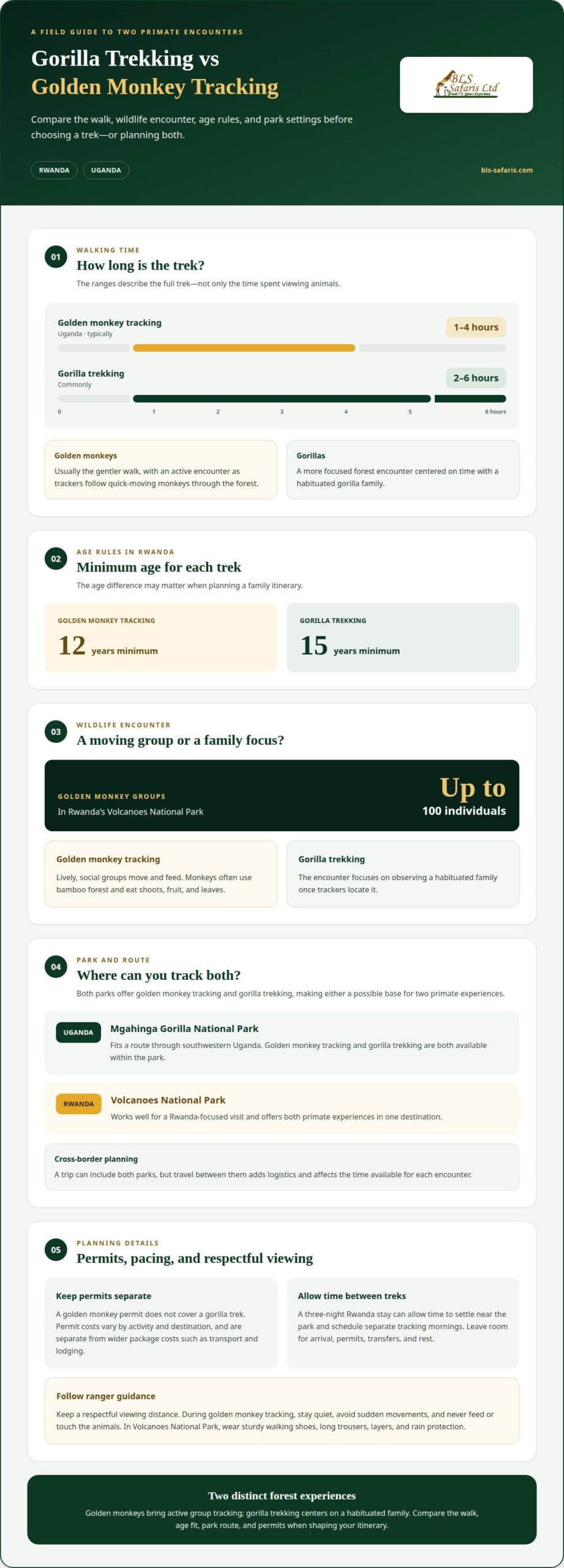
In Rwanda’s Volcanoes National Park, golden monkey groups can number up to 100 individuals. Seeing a large group can mean watching several animals move and feed at once, rather than focusing on one family at rest. Their social activity gives the encounter its own rhythm, with the group’s movement shaping how visitors observe them. This is a useful reason to include golden monkeys alongside other primate tracking.
Both golden monkey tracking and gorilla trekking in Rwanda have rules governing the viewing activity and participation. Rwanda golden monkey tracking has a minimum age of 12 years, while gorilla trekking has a minimum age of 15 years. That difference may make golden monkeys a practical option for a family whose younger members cannot join a gorilla trek. Confirming the age fit early helps keep the itinerary workable for everyone.
Package prices depend on the itinerary, accommodation, transport, and activities selected, so group size alone does not determine the total. A larger party can share some trip arrangements, but individual permits and the chosen route also affect the price. Rather than assuming a fixed group discount, compare the costs against the details of your planned journey.
For both activities, follow ranger instructions and keep a respectful viewing distance. During golden monkey tracking, stay quiet, avoid sudden movements, and never feed or touch the animals. These practices support visitor safety and wildlife conservation. In Volcanoes National Park, wear sturdy walking shoes, long trousers, and layers, and carry rain protection for changing mountain conditions.
Golden monkey tracking can add a different pace and social wildlife experience to a Rwanda itinerary. The golden monkey tracking experience pairs naturally with gorilla trekking for travellers who want to compare two primate encounters. Its active groups, bamboo habitat, and lower minimum age make it a distinct option, not simply an extra version of the gorilla trek.
Gorilla Trekking vs Golden Monkey Tracking: How the Experiences Compare
In Rwanda and Uganda, the choice affects the wildlife encounter, walking time, and route. Comparing the parks can help you match each trek to your itinerary.
Park and Destination Comparisons
Mgahinga Gorilla National Park in Uganda and Volcanoes National Park in Rwanda both offer golden monkey tracking but suit different routes. Mgahinga fits an itinerary through southwestern Uganda, while Volcanoes National Park works well for a Rwanda-focused visit. A cross-border trip can include both parks, but travel between them adds logistics and affects the time available for each encounter.
In Mgahinga, golden monkey tracking and gorilla trekking are available within the same national park. Volcanoes National Park also combines both primate experiences in one destination. This makes either park a practical base when you want two treks without changing countries. For a closer look at the Uganda setting, Mgahinga’s gorilla trekking landscape helps show how the mountain park fits into a Uganda route.
Behavioural Differences
Golden monkeys are active, quick-moving primates, while a gorilla trek focuses on observing a habituated family. That difference shapes the experience: monkeys may move through forest vegetation as trackers follow them, while gorilla viewing centres are on the family once it is located. Both encounters call for quiet attention and respect for ranger guidance.
Golden monkey tracking in Uganda typically takes 1-4 hours, while gorilla trekking commonly takes 2-6 hours. These ranges reflect the full trek, not simply time spent viewing animals. The walking effort depends on where the trackers locate the primates and the terrain along the route. Choose golden monkeys for a more active, moving encounter, or gorillas for a longer trek focused on a family.
Permit Cost Differences
Permit costs differ by activity and destination, so compare the specific golden monkey or gorilla permit needed for your itinerary. A permit is separate from the wider safari package, which can also include transport and lodging. Keeping those costs distinct makes it easier to understand what the wildlife encounter contributes to the overall trip plan.
Uganda and Rwanda have different permit arrangements, and the activity matters as much as the country. A golden monkey permit does not cover a gorilla trek, so include both activities in your route if you plan to do both. Permit availability can also affect which dates and park combinations work for your visit.
Rwanda Gorilla and Golden Monkey Tracking Itinerary
A Rwanda itinerary can include both primate treks in Volcanoes National Park, with the order planned around arrival, permits, and travel pace. Comparing gorilla trekking with golden monkey tracking helps you sequence forest days sensibly and leave enough time for transfers.
A three-night stay can give you time to settle near the park and schedule separate tracking mornings. For example, you could arrive and check in first, go gorilla trekking on the second day, and then track golden monkeys on another morning. One itinerary based around Sabyinyo scheduled the gorilla visit for day two. The sequence can vary with arrival time and permit dates.
Golden monkey tracking in Volcanoes National Park starts in the morning with a briefing at the park headquarters in Kinigi. Staying within practical reach of Kinigi helps make the early start smoother. Golden monkey tracking takes place in a bamboo forest, while gorilla tracking is a separate family encounter. If you combine both activities, allow time to rest and prepare between them.
For a Uganda-Rwanda trip, first decide whether visiting both countries adds enough to your journey. Volcanoes National Park in Rwanda and Mgahinga Gorilla National Park in Uganda both offer golden monkey tracking, while the wider route determines how much time goes to road travel. Plan border crossings and transfers around park days instead of squeezing them between early tracking starts.
Choose Volcanoes National Park if a Rwanda-focused itinerary and a briefing near Kinigi suit your plans. Choose Mgahinga if your route centres on southwestern Uganda or you want to keep your primate activities within Uganda. When weighing both countries, consider the full journey: the forest experience, transfer time, and the other communities and destinations you want to include.
The Gorilla Trekking vs Golden Monkey Tracking comparison can help you decide whether to combine both Rwanda treks or focus on one. A Rwanda gorilla and golden monkey itinerary shows how both activities can fit into a multi-day stay. For a trip through Uganda and Rwanda, use the comparison to plan around park locations and tracking days, with enough time for cross-border travel.
Trek Duration and Physical Demands
Tracking time includes more than the wildlife encounter: reaching the forest and walking back also matter. In Uganda, terrain and the primates’ location influence how demanding each outing feels.
Tracking Schedule and Duration
A tracking schedule sets the morning start and allows time for the trek, making it easier to plan rest and lodging. At Mgahinga, golden monkey tracking begins with a 7:30am briefing, followed by the trek at 8:00am. The walk can take up to 3 hours, while Uganda gorilla treks commonly take 2-6 hours. In Volcanoes National Park, visitors can watch golden monkeys for up to one hour after finding them.
Trek Difficulty and Physical Demands
Trek difficulty depends on walking conditions and where trackers find the primates, so the same route can feel different from one visit to another. Golden monkey tracking is usually easier than gorilla trekking, but it still involves walking through the park. In Uganda, trails can be slippery during March-May and September-November, making steady footing and a manageable pace important.
Good preparation can make hiking more comfortable. Wear sturdy shoes with good grip, long trousers, and layers for changing mountain weather. A walking stick can help on uneven trails, while a small daypack keeps water and rain protection close. Keep your hands free where possible, especially on steep or muddy sections. Rangers guide the group, so follow their directions and stay with your assigned party.
For a Rwanda visit, three nights of lodging can allow separate mornings for gorilla and golden monkey tracking. Staying near Volcanoes National Park reduces the transfer before an early briefing. In Uganda, choose a lodge location that suits the selected park and trekking start point, since a distant base adds road time before the hike.
Build recovery time into your itinerary rather than scheduling another demanding activity immediately after a long gorilla trek. Golden monkey tracking may involve less walking, but forest trails still take energy and attention. If you’re comparing the physical demands of different destinations, gorilla trekking fitness needs can help you assess how hiking ability affects the day. A well-paced plan leaves room for rest, meals, and the next primate encounter.
Uganda Golden Monkey Tracking in Mgahinga
Mgahinga Gorilla National Park offers Uganda visitors golden monkey tracking in the Virunga Mountains. It suits a safari route through southwestern Uganda, particularly if you want forest wildlife alongside other primate encounters. Golden monkeys live only in the Virunga range, shared by Uganda, Rwanda, and the Democratic Republic of Congo. Mgahinga and Rwanda’s Volcanoes National Park protect parts of this mountain habitat.
Plan for an early start at the park headquarters. Tracking begins with a briefing at 7:30am, and the trek starts at 8:00am. Rangers explain the route and viewing conduct before visitors enter the forest. Groups typically include up to 8 visitors, keeping the walk organized as trackers follow the monkeys through their habitat.
The hike can take up to 3 hours, depending on where the monkeys are found. Once located, visitors spend one hour with them. The trek takes place around 2,500 meters above sea level, so the altitude and changing mountain trails add effort even when the walk feels manageable. Wear sturdy shoes and bring layers and rain protection for the forest conditions.
Distance matters when choosing lodging and arranging transfers when booking through BLS safaris. Mgahinga Gorilla National Park is about 46 kilometres from nearby southern sector trailheads, and the drive usually takes around two hours each way depending on road conditions. That journey can affect whether tracking works as a day outing or fits better into a safari with an overnight stay near the park. A well-routed Uganda itinerary places the trek alongside nearby destinations rather than adding avoidable backtracking.
Visitors must keep at least 7 meters from the monkeys at Mgahinga. Stay quiet, avoid sudden movements, and never feed or touch the animals. These viewing practices help protect both wildlife and visitors during the encounter. Watching the monkeys move through the forest gives the tracking day a distinct character.
Volcanoes National Park offers the same species on Rwanda’s side of the Virunga Mountains, while Mgahinga suits a Uganda-centered route. Choose based on the countries and parks in your safari plan, not only the animal. Mgahinga lets you keep golden monkey tracking within Uganda, while a Rwanda itinerary can pair the experience with gorilla trekking in Volcanoes National Park. Plan permits and transport together so the briefing, transfer, and forest walk fit comfortably into the day.
BLS safaris
BLS safaris can turn your choice between gorilla trekking and golden monkey tracking into a clear safari route. Our local guidance and tailor-made planning bring park visits, travel connections, and lodging together in one itinerary. This is especially helpful when deciding whether to focus on Rwanda, Uganda, or both.
The best route depends on what you want your trip to include. A Rwanda-focused plan can center on Volcanoes National Park, while a Uganda itinerary can feature Mgahinga Gorilla National Park. If you want to visit both destinations, allow for the border crossing and travel time between parks. Clear routing helps keep the primate encounters central to your journey.
BLS safaris plans East Africa safaris, Uganda safaris, Kenya safaris, and Tanzania safaris . For this decision, Uganda safaris and Rwanda safaris are especially relevant. Planning can account for your preferred park, trekking interests, travel pace, and the other experiences you want to combine. This makes it easier to choose a single-country itinerary or explore a cross-border journey.
Accommodation and transport also shape how the days fit together. BLS safaris includes handpicked lodges in safari planning and considers their location when building a route. A lodge near the chosen park can make an early tracking morning more practical, while a longer transfer may affect where you stay overnight. The aim is a connected itinerary, not a collection of activities competing for time.
Transparent pricing helps you understand how your safari is put together. The route, lodging, transport, and selected activities all affect the package, so the details matter more than a generic comparison. BLS safaris provides clear, itemised pricing to show how each destination fits your priorities before you travel.
Bring your preferred dates for the best time to visit Tanzania, the countries you hope to visit, and whether gorillas, golden monkeys, or both are your priority. These choices give the planning conversation a useful starting point. BLS safaris can shape a route around your interests and the connections between parks, keeping the journey focused on the wildlife experiences you came for.
To plan a safari around these choices, contact BLS safaris and share your travel plans.
Frequently Asked Questions
Is it worth adding golden monkey tracking to your safari?
Yes, if you want a second primate encounter with a different pace and forest setting. For example, a traveler planning a gorilla trek in Rwanda can add golden monkey tracking in Volcanoes National Park without changing parks. The extra activity is most worthwhile when your schedule allows another tracking morning and time to rest between outings. It may be less suitable if your itinerary has little flexibility.
Which should you choose?
Choose gorilla trekking if your priority is observing a habituated gorilla family; choose golden monkey tracking for a lively, moving group encounter. Your route can also guide your choice: Mgahinga Gorilla National Park suits Uganda-focused plans, while Volcanoes National Park fits Rwanda itineraries. If both experiences matter and your schedule allows, include both. The right choice depends on your wildlife interests, walking plans, and preferred destinations.
How does gorilla trekking differ from golden monkey tracking?
Gorilla trekking focuses on locating and observing a habituated family, while golden monkey tracking follows active groups through forest habitat. In Uganda, gorilla trekking commonly takes 2-6 hours, compared with 1-4 hours for golden monkey tracking. The difference is not only time: golden monkeys are often moving through vegetation, while a gorilla encounter centers on the family once trackers find it. Both require following ranger guidance.
Where can you see mountain gorillas and golden monkeys in Rwanda and Uganda?
In Rwanda, Volcanoes National Park is the destination for both mountain gorillas and golden monkeys. In Uganda, visitors can track gorillas in Bwindi Impenetrable National Park or Mgahinga Gorilla National Park, and golden monkeys in Mgahinga. Both Mgahinga and Volcanoes are part of the Virunga mountain landscape. The most convenient park depends on your route, lodging, and whether your safari focuses on Uganda, Rwanda, or both.
How much do gorilla trekking and golden monkey tracking permits cost in Rwanda and Uganda?
In Rwanda, a golden monkey trekking permit costs $100 per person. Permit costs are separate from the overall safari package, which can also include transport and lodging. Your activity and residency category affect the permit amount in Uganda.
What are the age limits and permit rules for gorilla trekking and golden monkey tracking?
In Rwanda, the minimum age is 15 years for gorilla trekking and 12 years for golden monkey tracking. Each activity requires its own permit, so a traveler planning both needs permits for both treks. In Uganda, golden monkey tracking is permit-based, and gorilla permits are limited per day. Build permit dates into your itinerary early, especially when coordinating several travelers or activities.
How long do gorilla treks and golden monkey tracking excursions usually take?
In Uganda, gorilla trekking commonly takes 2-6 hours, while golden monkey tracking typically takes 1-4 hours. At Mgahinga, the hike to find golden monkeys can take up to 3 hours, followed by one hour with them. In Bwindi, the gorilla encounter includes one hour with a habituated family. These durations help you plan the day, but the walking portion varies with the animals’ location.
How close can visitors get to gorillas and golden monkeys, and how long can they observe them?
At Mgahinga, visitors are usually required to keep at least 7 meters from golden monkeys. In Volcanoes National Park, follow tracker instructions on viewing distance, remain quiet, and avoid sudden movements, feeding, or touching the animals. Golden monkey viewing in Rwanda can last up to one hour after the group is located. A Bwindi gorilla encounter includes one hour with a habituated family, with guides directing visitors throughout.