The dry season is not automatically the best time to visit Tanzania. It all depends on your interests. The dry weather makes wildlife viewing easier, and the best time to visit Tanzania is June to October. However, the right months still depend on the parks and wildlife experiences you want to include.
The dry season is a useful starting point because roads are more accessible and game viewing conditions are more favourable in many parks. Tanzania’s seasons offer different experiences and wildlife viewing opportunities. The long rains fall from March to May, while shorter rains usually fall in November and December. In the Serengeti National Park, January and February are notable for wildebeest calving, and August and September are strong months for seeing Mara River crossings in the north.
This guide explains when the rainy and dry seasons occur and how the best visiting periods vary across Tanzania’s safari circuits and national parks. Use it to match your travel dates to your priorities, whether you want dry-season game viewing, seasonal wildlife movements, or a quieter green-season safari.
Key Takeaways
- Choose your travel period around the wildlife experience you most want, since migration and calving happen in different parts of the year.
- Compare safari circuits before setting dates: the Northern Circuit can reward visits year-round, while southern and western parks follow a more seasonal pattern.
- Factor rain into your plans, especially for April and May, when heavy downpours can affect game viewing and some camps close.
- Look beyond the dry season for quieter wildlife experiences, birdwatching, and green landscapes in selected parks.
- Match park visits to their seasonal strengths, from dry-season viewing in Tarangire and Ruaha to year-round opportunities in Ngorongoro Crater.
When is the Rainy Season in Tanzania?
Tanzania’s wet season generally runs from November to May, with the heaviest long rains falling from March to May. The dry season runs from June to October and usually supports easier wildlife viewing. Each season, however, suits different safari priorities in regard to the best time to visit Tanzania.
Long Rains, Short Rains, and Green Season
Tanzania’s long rains fall from March to May, while the shorter rains usually arrive in November and December. These wetter months bring greener landscapes, and the season matters because rain can affect wildlife viewing and travel between parks. This is usually the best time to visit Tanzania for Travellers who prefer fewer crowds.
Showers outside March, April, and May are often brief, commonly falling in the afternoon or at night.
The main rains can begin in mid to late March and taper around mid-May. April downpours can make game viewing difficult, and some camps in Ruaha and Nyerere close during April and May. October can bring a transition toward the short rains, although it is often sunny and mostly dry. A cultural visit in Tanzania can also complement park time during a safari.
From June to October, thinner vegetation in Ruaha National Park makes animals easier to spot around remaining water sources. In the Serengeti, August and September are known for northern Mara River crossings, while January and February bring wildebeest calving in the south. Newborn animals also attract predators, adding another wildlife-viewing highlight.
Month-by-Month Weather and Season Ratings
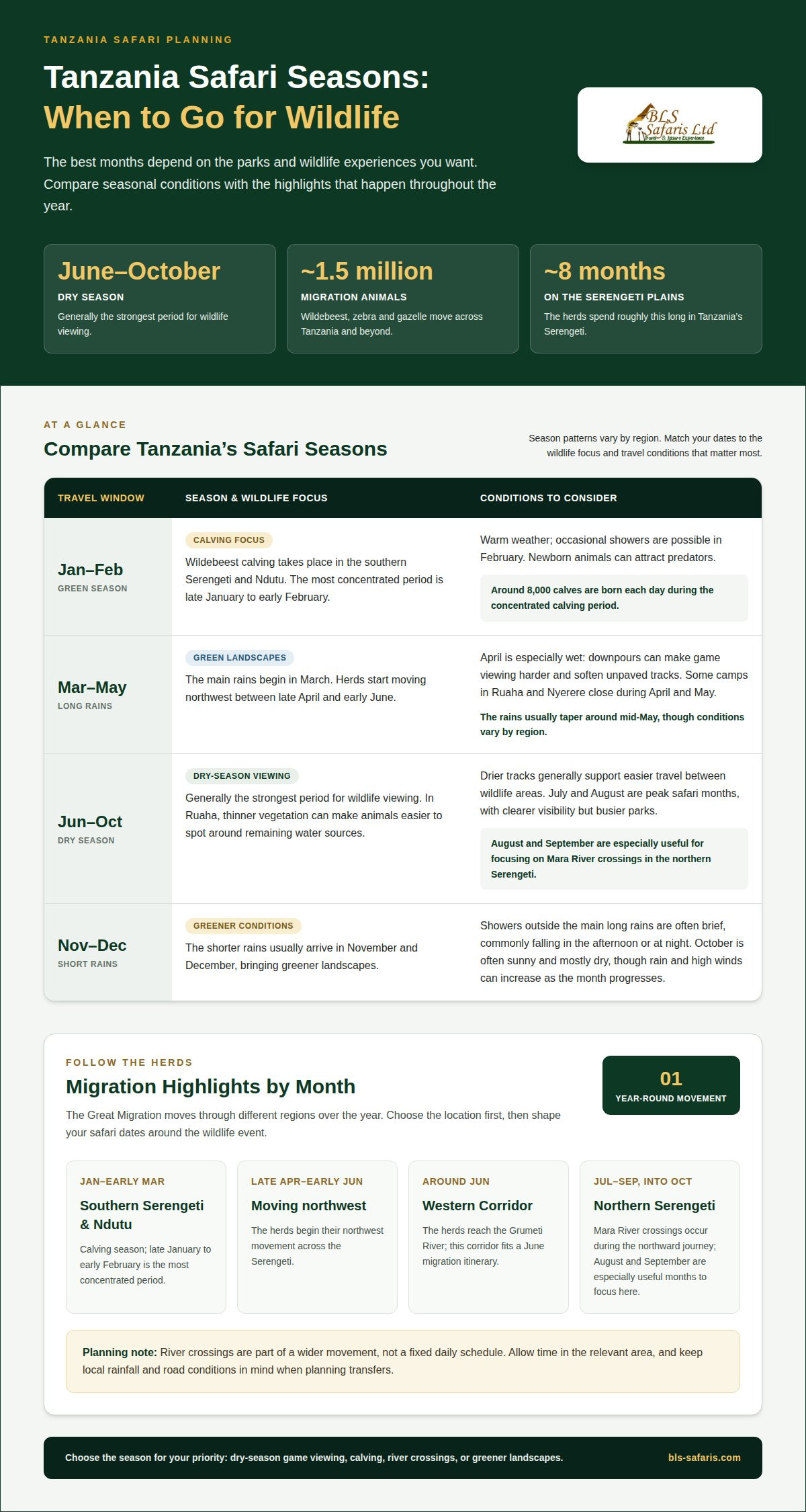
January and February are warm, with occasional showers possible in February. They also bring calving in the southern Serengeti. March marks the start of the main rains, and April is especially wet, which can make game drives harder. The rains usually taper around mid-May, though conditions vary across Tanzania’s regions.
June to October is the dry season and generally the strongest period for wildlife viewing. To most travellers, this is generally the best time to visit Tanzania. July and August are peak safari months, with clearer visibility but busier parks. October often remains mostly dry, although rain and high winds can increase as the month progresses. November and December bring short rains and the start of greener conditions.
These are broad seasonal patterns, not fixed ratings for every national park. The best time to visit Tanzania depends on the circuit, target wildlife, and your rain tolerance. January to early March can suit travelers prioritizing southern Serengeti calving in the Ndutu Conservation area , while June to October favors dry-season game viewing.
Rainy Seasons and Safari Road Conditions
Rain can soften unpaved tracks and make some park routes harder to travel, especially during April downpours. Longer drives may need more planning when conditions affect access, so the route between parks matters as much as the month. Focusing on fewer regions can reduce the need for frequent transfers.
From June to October, tracks are generally drier, and travel between wildlife areas becomes easier. In the wet season, afternoon showers outside the main rains may have less effect on daily activities. Build flexibility into a route through the Serengeti or Ruaha, where rainfall timing and local road conditions can shape each day’s travel.
Kilimanjaro has separate climbing windows: June to October or January to March receive lower rainfall. December to February is also described as a warm, dry trekking period in northern Tanzania. Consider the route and season together, since mountain weather differs from safari conditions on the plains.
When Is the Best Time to Visit Tanzania?
One of the best periods to visit Tanzania is during the Great Wildebeest Migration season. Where the herds are moving and which part of the Migration you hope to see matters. Herd locations shift throughout the year, so plan around a season and a region rather than expecting every migration highlight in one place.
Migration Timing and Location
The Great Migration is the year-round movement of about 1.5 million wildebeest, zebra, and gazelle across Tanzania and beyond. Herds spend roughly eight months on the Serengeti plains, making Tanzania a strong choice across several seasons.
From January to early March, calving takes place in the southern Serengeti and Ndutu. Between late April and early June, the herds begin moving northwest. Around June, they reach the Grumeti River in the Western Corridor, then move north from June through September toward Kenya’s Masai Mara.
This timing helps narrow down your safari route. A stay in the southern Serengeti suits January or February, while the Western Corridor fits a June migration itinerary. A Kenya and Tanzania migration safari can follow the herds along their cross-border route.
Wildebeest River Crossings
River crossings happen when herds move across rivers during the Migration’s northward journey. Mara River crossings in the northern Serengeti occur from July to September and can continue into October.
August and September are especially useful months to focus on the northern Serengeti for this event. Crossings are part of a wider movement, not a fixed daily schedule, so allow time in the relevant area. Staying near the northern route can reduce long drives between wildlife-viewing areas.
Choose the location before choosing a camp: the southern plains in January differ greatly from the northern river region in August. Seasonal camp placement and a route that allows enough time in your target area help keep daily travel focused on the Migration.
Wildebeest Calving and Migration
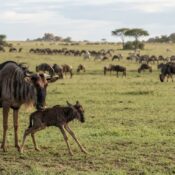
Calving gives the southern Serengeti a distinct wildlife focus from January to early March. The most concentrated period is late January to early February, when around 8,000 calves are born each day.
February is a useful month for seeing calving in the southeastern Serengeti, where newborn animals and predators are active in the same landscape. Calving continues from January into early March, so dates near either end of that period can still place your safari in the southern migration area.
Match your route to the experience: southern Serengeti and Ndutu for calving, or the northern Serengeti for river crossings. Ngorongoro Crater can add a separate wildlife setting, while Zanzibar suits travelers extending their trip to the coast. If you’re planning around a specific migration stage, shape a safari itinerary around your dates and priorities.
Best visiting periods by safari circuit
The best time to visit Tanzania depends on the circuit, your wildlife priorities, and whether you want to add time on the coast. Northern parks, southern reserves, and Zanzibar follow different seasonal patterns, so matching dates to destinations helps create a practical route.
Choose a season by safari circuit
Tanzania’s Northern Circuit includes the Serengeti, Ngorongoro, Tarangire, and Lake Manyara, and offers rewarding visits year-round. Its high season runs from July to March. February suits travelers hoping to see wildebeest calving in the southern Serengeti, while July to September is better aligned with migration viewing farther north.
The Southern and Western circuit parks have a high season from June to October, with peak conditions often from August to October. Crowd levels can vary between parks during this high season. If you prefer a quieter safari, consider timing and route together.
Value, crowds, and camp closures
April and May are Tanzania’s low season, and low-season rates often continue into the first half of June. However, heavy rains can affect travel plans, and some camps in Ruaha and Nyerere close during April and May. A low-season visit can suit flexible travelers, but may not fit an itinerary built around those parks. If you are looking at lower rates, this should be the best time to visit Tanzania for you.
August is one of Tanzania’s busiest months for parks and hotels. The Christmas and New Year holiday period, from mid-December to the first week in January, also brings temporarily higher prices. Accommodation prices remain at shoulder-season levels until 15 December, which can help travelers compare dates before the holiday period.
Peak tourism season is the busiest time for safaris, Kilimanjaro treks, and island trips, so booking in advance is essential. This matters especially if your plan combines a particular migration area with limited travel dates. Build your circuit around the main priority first, then fit other parks into the route.
Pairing a safari with the coast
Zanzibar and Tanzania’s coast are at their best from August to October and December to February. These periods pair well with a safari, but the best sequence depends on the parks you want to visit and the time available. For example, February can combine southern Serengeti calving with coast time, while August can pair northern migration viewing with Zanzibar.
Ngorongoro Crater is a useful year-round option for a Northern Circuit itinerary, including trips outside the peak migration months. If Mara River watching is your priority, plan northern Serengeti time during the migration season before adding a beach stay. For a route that balances parks, dates, and coast time, discuss your safari priorities and travel dates.
Wildlife viewing throughout the year
Tanzania offers wildlife viewing in every season, but animals and landscapes change throughout the year. The Northern Circuit is rewarding year-round, while certain months bring stronger opportunities to see elephants, migratory birds, or chimpanzees.
Monthly Wildlife Viewing
January and February bring wildebeest calving in the southern Serengeti, alongside newborn animals and active predators. From March to May, many landscapes turn green, and migratory birds remain in Tanzania through April. These months suit visitors interested in seasonal scenery and birdlife, although the heavy rains in April can make some game drives difficult.
June to October is the dry season, when wildlife can be easier to spot in parks such as Ruaha. September and October are strong months for seeing large elephant herds in Tarangire National Park. October also brings migratory birds arriving from Europe and Asia, while November marks the start of another birdwatching period.
Birdwatching is especially rewarding from November to April, when migrant species are present across the country. Chimpanzee viewing in Tanzania is recommended from July through October. These seasonal differences help you plan around the sightings that matter most, rather than treating one month as the answer for every park.
Seasonal Safari Wildlife
During the dry months, thinner bush and shrinking water sources can make animals more visible in some parks. Ruaha is an example: wildlife is easier to spot from June to October as animals gather near remaining water. In Tarangire, September and October bring large elephant herds, making these months a clear choice for visitors focused on elephants.
The green season offers a different safari experience. From November through April, migratory birds add variety to game drives, and the Serengeti’s southern plains host wildebeest calving early in the year. Ngorongoro Crater holds water permanently, so it remains a year-round wildlife-viewing option even as rainfall changes conditions in other parks.
An itinerary focused on elephants can connect Tarangire, a seasonal elephant-viewing area, with Ngorongoro, a crater known for year-round wildlife. If chimpanzees or birdlife matter more, choose dates that align with those seasonal strengths. Tanzania’s varied parks make it possible to balance wildlife priorities across the country instead of limiting a safari to one season or type of sighting.
Best visiting times for Tanzania’s national parks
The best months for Tanzania’s national parks depend on the circuit and the wildlife you want to see. Dry-season viewing suits several southern and western parks, while the Northern Circuit offers options throughout more of the year.
Tarangire National Park: Visit from June to October for dry-season game viewing. As vegetation thins and water becomes less available, animals gather around remaining sources. September and October are particularly good months for seeing large elephant herds. Tarangire is a useful choice for travelers who want to focus on elephants during a circuit safari.
Ruaha National Park: June to October is considered the best period for game viewing, when wildlife gathers near water and the bush thins. January and February bring a different experience: Ruaha’s peak green season includes newborn animals and birdlife. More than 530 bird species can be spotted during these months. Migrating birds also make November and December rewarding for birdwatching.
Serengeti National Park: The right area depends on the month and the wildlife movement you want to follow. The southern plains suit calving-season visits early in the year, while the northern Serengeti draws travelers seeking Mara River crossings later on. For broader park exploration, June to October is a strong dry-season window. Planning around a specific region helps avoid treating the Serengeti as one fixed viewing area.
Ngorongoro Crater: Permanent water makes the crater a year-round wildlife destination. It can balance an itinerary focused on a more seasonal park, such as Tarangire or Ruaha. Northern Circuit parks, including Ngorongoro, Tarangire, Lake Manyara, and the Serengeti, are rewarding year-round, though their seasonal highlights differ.
Southern and Western parks: These circuits are best visited during the dry season, from June to October, and often reach their peak from August to October. Nyerere is the park in these circuits that gets crowded during this high season. By contrast, March to May is Ruaha’s low tourism season because of heavy rainfall, and many Ruaha camps close during those months. This makes park choice especially important for travel during the long rains.
Practical takeaway: Choose the park first, then match your dates to its strongest viewing period. Tarangire and Ruaha favor dry-season game viewing; Ruaha also offers green-season birdlife, and Ngorongoro works throughout the year. November and December can suit birdwatching, while March to May may limit options in parks with camp closures.
BLS safaris: Tanzania Safaris
BLS safaris can plan a Tanzania safari around your preferred season, parks, and wildlife priorities. Turn to the team when you want to connect your dates with a practical route, whether you’re planning for the Serengeti Migration, dry-season viewing, or a mix of northern parks.
Safari planning includes local guidance, clear routing, handpicked lodges, transparent pricing, and support from enquiry through travel. If your plans extend beyond Tanzania, BLS safaris also offers East Africa Safaris, Uganda Safaris, and Kenya Safaris . The right itinerary depends on the experiences and destinations you want to bring together.
Shape Your Tanzania Safari Around What Matters Most
Choosing the best time to visit Tanzania is a starting point; the next step is deciding what you want from the journey. You might center your plans on a particular wildlife experience, make room for changing landscapes, or connect several destinations in one trip. Let those priorities guide your route and pace instead of trying to fit every highlight into one visit.
BLS Safaris plans Tanzania Safaris and can also help shape journeys through East Africa Safaris, Uganda Safaris, and Kenya Safaris. This is useful if you’re considering a broader regional itinerary alongside your Tanzania plans.
Share your preferred travel period and the experiences you have in mind. From there, you can begin shaping a safari that feels considered and personal.
Your Tanzania journey can start with one clear priority and grow from there.
Frequently Asked Questions
When is the best time to go on a safari?
For many classic wildlife itineraries, the best time to visit Tanzania is June to October, when dry conditions support game viewing across many parks. The ideal dates still depend on your main goal. A safari focused on calving calls for a different route and season than one centered on Tarangire elephants. Choose the wildlife experience first, then match your park visits and travel pace to it.
What is the best month to visit Tanzania for good weather?
The best time to visit Tanzania for generally dry weather is often September, within the June-to-October dry season. It’s also a strong month for elephant viewing in Tarangire. No single month suits every region and interest, though. If your plans include the coast, a particular park, or a specific wildlife event, compare those priorities with the seasonal conditions for each destination.
When is the dry season in Tanzania, and how does it vary by region?
Tanzania’s dry season generally runs from June to October. The Northern Circuit, including the Serengeti, Ngorongoro, Tarangire, and Lake Manyara, offers wildlife viewing year-round, though its seasonal highlights shift. Southern and Western circuit parks are best visited during the dry season. Ruaha is especially suited to June-to-October game viewing, while Ngorongoro Crater is a year-round option.
When should you visit the Serengeti for the Great Migration?
Choose January to early March for calving in the southern Serengeti and Ndutu. The herds then move northwest between late April and early June, reaching the Grumeti River around June. From June through September, they move north toward Kenya’s Masai Mara. Since the Migration shifts location, plan around a particular stage and Serengeti region instead of expecting the same sightings throughout the park.
When is the best time to see the Great Migration river crossings?
Plan for the northern Serengeti from July to September, with crossings continuing into October. August and September are particularly suitable months to focus on the Mara River area. These events are part of a moving migration, so allow time in the north rather than relying on a brief stop. A crossing-focused safari differs from a southern Serengeti calving-season visit.
When is the best time to visit Zanzibar for beaches and snorkeling?
July to September is a strong beach period, with cloudless skies and little to no rainfall. Zanzibar and Tanzania’s coast are also at their best from August to October and December to February. These windows can help coordinate beach time with a safari, but choose dates based on your priorities and route. This timing supports beach planning, but does not guarantee particular snorkeling conditions.
What are Tanzania’s peak and low tourist seasons, and how do prices compare?
April and May are low-season months, when rates are lower, and low-season rates often continue into the first half of June. The dry-season peak brings more visitors, and August is one of the busiest months for parks and hotels. Prices also rise temporarily during the Christmas and New Year period, from mid-December to the first week in January. The exact amount varies by itinerary and accommodation.
Are there seasonal travel risks or park closures in Tanzania?
Heavy rain can make game viewing difficult, especially during April downpours, and wet conditions can affect safari road travel. Some camps in Ruaha and Nyerere close during April and May, so those parks may not suit every long-rains itinerary. In Ruaha, malaria risk is highest from March to May. Seasonal park conditions can change which routes and activities fit your travel dates.