
Ndutu Conservation Area lies in northern Tanzania, within the Ngorongoro Conservation Area and on the southern edge of Serengeti National Park. On the map, it sits between two famous safari names. On the ground, it feels like one open wildlife world. This is where short grass plains, acacia woodland, marshes, granite kopjes, seasonal lakes and soda lake basins meet. Lake Ndutu is a shallow alkaline lake, with Lake Masek a short distance to the east in the same basin. The water is too salty for people to drink, but for wildlife, this area becomes one of the most important gathering points in the southern Serengeti ecosystem.
The best-known safari season in Ndutu runs from the end of December through March into April. This is when the Great Migration herds spread across the plains. Around 2 million wildebeest, zebras and gazelles move into this region to feed, settle and give birth. During the calving season, thousands of young animals are born each day. The short, nutrient-rich grass provides calves with food and visibility, while the open plains attract lions, cheetahs, leopards, hyenas, and other predators. This is why Ndutu is one of Tanzania’s finest places for migration safaris, predator action and close wildlife viewing.
Ndutu is not only for the migration months. Outside the peak season, the woodland, marshes, lakes and kopjes still hold good resident game. You can see elephants, giraffes, hyenas, antelopes, zebras, lions, leopards, cheetahs, jackals, bat-eared foxes, genets, wildcats, dik-diks, impalas and rich birdlife around the plains and lake edges. The forests and granite kopjes around Lake Ndutu give animals shade, cover and quiet resting places. The open grasslands give you rewarding game drives when the herds are present. What makes this area special is the feeling of movement. Ndutu works as a living corridor between Serengeti and Ngorongoro, shaped by rain, grass, wildlife movement and old volcanic soils.
There is also deep human history here. In 1973, an archaeological excavation site of about 140 square metres near Lake Ndutu yielded the Ndutu cranium and stone tools dating to more than 500,000 years ago. The wider area connects with Olduvai Gorge, where rock layers hold a timeline from around 2 million years ago to the present. From Arusha, Ndutu is reached by roughly a 6-hour drive or by flight to Ndutu Airstrip. Some lodges operate seasonally, mainly around November to March, and there are no public campsites in the immediate Ndutu area, so where you stay matters when planning game drives between Serengeti and Ngorongoro.
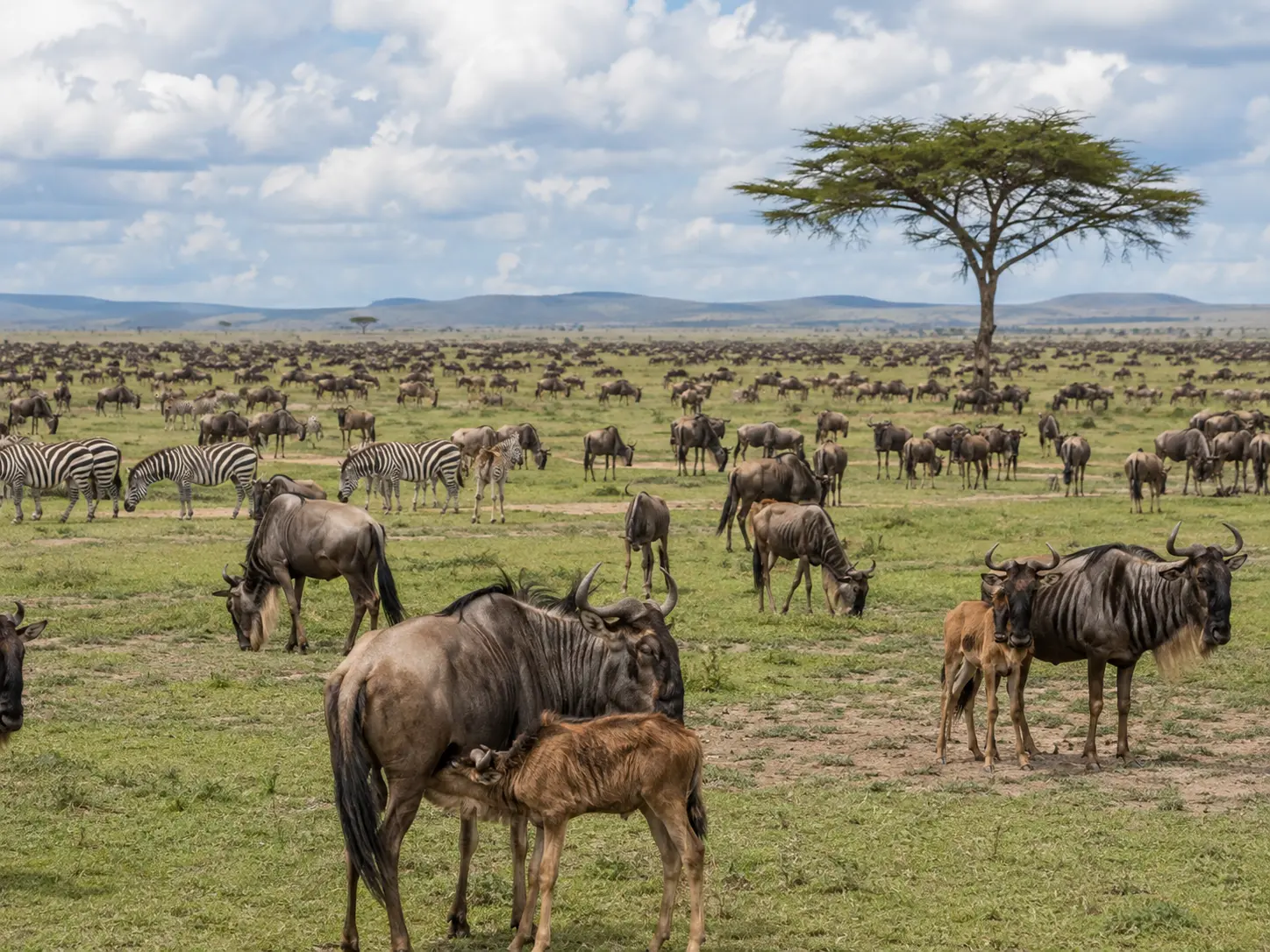
Ndutu calving season
Wildlife in Ndutu Conservation Area
Ndutu is one of the richest wildlife corners of the Ngorongoro Conservation Area because it sits where short grass plains, acacia woodland, marshes, soda lakes and granite kopjes meet. From December to May, depending on the rains, the plains fill with huge herds of wildebeest, zebra and antelope. They come to feed, calve and use the fertile grasslands. This is when Ndutu feels alive from sunrise to sunset. You hear calves calling, mothers gathering in tight groups and predators watching every movement across the open plains.
Lions, Cheetahs and Leopards
Predator viewing is one of the strongest reasons to visit Ndutu. During the calving season, lions, cheetahs, leopards and hyenas follow the herds because the young animals are easier targets. The short grass gives cheetahs room to run. The acacia woodland and kopjes give leopards cover and shade. Lions use the open plains, marsh edges and woodland pockets, so every game drive carries real excitement.
Ndutu is also one of the few safari areas where all six cat species can be found throughout the year: lion, leopard, cheetah, caracal, serval and African wildcat. This makes it a strong choice when you want more than general game viewing. We slow down, read tracks, watch behaviour and follow the story of the plains.
Elephants, Giraffes and Hyenas
Outside the migration months, Ndutu still holds good resident wildlife. The dry season changes the rhythm as the large herds move away in search of better water and grazing, but elephants, giraffes, hyenas and antelope remain around the waterholes, woodlands and lake edges. This is when a good guide matters. Wildlife spreads out, so the game drive becomes more about reading the land. Elephants move through the woodland and open areas. Giraffes browse the acacia trees. Hyenas patrol the plains and old calving grounds. During the migration months, hyenas become even more visible as they follow young wildebeest and zebra. The action feels raw, natural and completely unscripted.
Antelopes, Jackals and Bat-Eared Foxes
Ndutu is not only about the big cats and migration herds. The plains also support gazelles, impalas, dik-diks, antelopes, jackals, bat-eared foxes, genets and wildcats. These smaller animals add life to every drive, and they also help us read what is happening around us. A nervous gazelle, a jackal moving with purpose, or birds lifting suddenly from the grass can point us towards predator movement nearby. The short grass plains are important during calving because the grass is rich in nutrients for young animals. Its low height also helps adults see danger from a distance. That is why wildebeest, zebras and gazelles gather here to give birth before continuing north as the season changes.
Birdlife Around Lake Ndutu, Lake Masek and the Marshes
The birdlife around Lake Ndutu, Lake Masek, the marshes and seasonal water areas adds another strong layer to the safari. Flamingos, storks, pelicans and waterbirds gather around the lakes when conditions are right, while raptors work the open plains during the calving season. The lakes are shallow and saline, also known as soda lakes, and they create beautiful reflective scenes for photography.
Keep your binoculars and camera close because birding in Ndutu is part of the full wildlife experience. You watch birds around the water, predators across the plains, and grazing herds moving between woodland and open grassland. That mix is what makes Ndutu such a rewarding wildlife area within the southern Serengeti and Ngorongoro Conservation Area.

Birdlife Around Lake Ndutu
Best Time to Visit Ndutu Conservation Area
Ndutu is rewarding throughout the year because it has strong resident wildlife that stays even after the main migration herds move away. The lakes, marshes, woodland, short grass plains and waterholes still support giraffes, elephants, hyenas, antelope, jackals, bat-eared foxes and big cats. The best time depends on what you want to see. For the Great Migration and calving season, target the end of December to April.
Calving Season in Ndutu, December to March
The most exciting time to visit is from the end of December to March, when the Great Migration herds arrive from the north and spread across the short grass plains. This is the calving season, with wildebeest, zebras and gazelles giving birth on the open plains. February and March are the peak months, and in strong years, thousands of young animals are born each day.
This is when Ndutu becomes one of the most dramatic safari areas in northern Tanzania. The grass is fresh and rich in nutrients. The plains are open. The young animals are finding their feet. The predators are close. Lions, cheetahs, leopards and hyenas follow the herds closely, so game drives during this period carry real predator action.
If you want migration herds, newborn calves and hunting scenes, this is the season to choose. The movement of the migration follows rain, so the exact timing changes from year to year. The herds can arrive around November or December, then remain in and around Ndutu until April or May before moving north again. A strong safari plan follows this rhythm instead of treating the migration like a fixed calendar event.
Wet and Green Season in Ndutu, April to May
April and May bring the greener side of Ndutu. The plains become lush, the lakes and marshes hold more water, and the whole area takes on a softer, more photographic look. Wildlife begins to spread out as the migration herds prepare to move away, but Ndutu does not become empty. Resident animals remain around the waterholes, woodland and lake edges.
This season works well when you want a quieter safari, lower lodge rates and fewer vehicles on the tracks. The scenery is beautiful, the skies look dramatic, and birdlife around Lake Ndutu, Lake Masek and the marshes becomes very rewarding. The ground becomes softer after rain, so travel works best with a proper 4×4 and a safari plan that leaves room for weather and track conditions.
Dry Season in Ndutu, June to November
From June to November, the main migration herds have moved north towards the Serengeti, but Ndutu still has good resident game. This is the time to look for wildlife around permanent water, woodland pockets, marsh edges and open plains. The area is quieter, and game drives feel slower and more personal. The dry season is a good choice when you want fewer crowds and steady wildlife viewing without depending only on the migration.
You can still see elephants, giraffes, hyenas, antelope and cats, including lion, leopard, cheetah, serval, caracal and African wildcat. November can also mark the early return of movement towards Ndutu if the rains begin well, so it becomes an interesting shoulder month for guests watching the start of the cycle.
Things to Do in Ndutu Conservation Area
Ndutu is one of the best places in northern Tanzania for wildlife, migration action, open plains, lakes, culture, and history in one safari area. The experience changes with the season, but the main activities stay centred on the short grass plains, Lake Ndutu, Lake Masek, the woodlands, the marshes and the wider Ngorongoro Conservation Area.
Game Drives Across the Ndutu Plains
Game drives are the main activity in Ndutu, and this is where the area truly comes alive. From December to March, the Great Wildebeest Migration moves across the short grass plains, with huge numbers of wildebeest, zebras and gazelles feeding, calving and gathering in the open. Predators follow closely, so your drive can bring cheetah chases, lion hunts, hyena activity and newborn antelopes trying to find their feet. Outside the migration months, Ndutu still has strong resident wildlife. Elephants, giraffes, hyenas, antelope, jackals and big cats remain around the waterholes, lake edges, woodland and marsh areas. That keeps Ndutu rewarding even when the main herds have moved north.

Cheetah on watch across the Ndutu plains during Tanzania’s green season safari
Great Migration and Calving Season Safaris
The calving season is Ndutu’s biggest wildlife event. Between December and March, the plains become a nursery for wildebeest, zebras and gazelles. In strong seasons, thousands of calves are born each day, and the fresh short grass gives the young animals the food they need. This is also when predator action is at its highest. Lions, cheetahs, leopards and hyenas move through the plains looking for weak or young animals. For photographers, this season gives warm light, open views, short grass and dramatic wildlife movement. It is one of Tanzania’s most rewarding safari moments.
Hot Air Balloon Safaris Over Ndutu
A hot-air balloon safari offers a completely different view of Ndutu. At sunrise, the balloon rises over the plains, acacia woodland, lakes and gathering herds below. During migration season, you can float above thousands of wildebeest and zebras spread across the grasslands. After landing, balloon safaris are commonly followed by a bush breakfast in the wilderness. It is a quiet, scenic, and memorable way to understand the size of the Ndutu plains before continuing with a game drive later in the day.
Guided Nature Walks and Night Drives
Some lodges and camps in Ndutu arrange guided nature walks with local guides. These walks bring you closer to the smaller details missed from a vehicle, such as medicinal plants, termite mounds, animal tracks, footprints, dung signs and wildlife movement patterns through the bush. Night drives reveal another side of Ndutu. After dark, the plains and woodland become active with hyenas, bush babies, aardwolves, owls and other nocturnal wildlife. The whole safari rhythm changes. You listen more, move slowly and follow sounds, eyeshine and spotlight sightings through the night.
Bird Watching Around Lake Ndutu and Lake Masek
Ndutu is a rewarding birding area, with birdlife gathering around the lakes, marshes, woodlands and open plains. Lake Ndutu and nearby Lake Masek attract flamingos, storks, pelicans and other waterbirds when conditions are right. The great white pelican is one of the special birds to look for around these waters. The area also supports woodland and grassland birds, so bird watching fits naturally into normal game drives. Carry binoculars because the lake edges, acacia trees and marshy sections can give you excellent sightings between major wildlife encounters.
Visit Olduvai Gorge
Olduvai Gorge is one of the most important archaeological sites near Ndutu and adds real depth to a northern Tanzania safari. The gorge cuts through ancient rock layers that hold evidence of early human history, with discoveries dating back more than 1.75 million years. A visit here gives you a chance to connect wildlife, landscape and human history in the same journey. The site museum and guided interpretation help explain why this area is so important to the story of early mankind.
Maasai Cultural Visits
Maasai cultural visits add a human side to the Ndutu experience. The Maasai are semi-nomadic herders who have lived across this landscape for generations, moving with cattle, goats and sheep through grazing lands shared with wildlife. During a visit, you can learn about Maasai dress, beadwork, house construction, warrior songs, dances, cattle traditions and daily life near the wildlife areas. Done respectfully, this becomes more than a short cultural stop. It helps you understand how people, livestock, conservation and tourism meet in this part of Tanzania.
Ancient San Rock Art and Local History
The rocky hideaways around the wider Ndutu area hold traces of older human presence, including ancient San rock art. These paintings were made by hunter-gatherers thousands of years ago and remind us that Ndutu is not only a wildlife area. It is also a cultural landscape with deep history. This side of Ndutu works well when you want more than game drives. It brings together archaeology, rock formations, local stories and the long human connection to the plains.
Community and Conservation Experiences
A safari in Ndutu also supports local conservation and community work. Around the area, lodges, conservation groups and local partners contribute to projects connected to Maasai schools, water access and wildlife management. For travellers, this matters because every visit helps keep the area valuable for both wildlife and people. Ndutu’s future depends on healthy habitats, strong local communities and careful safari planning that respects the land.

Maasai Cultural Visits
Where to Stay in Ndutu Conservation Area
Accommodation in Ndutu is part of the safari experience, not just a place to sleep. The best places to stay are close to Lake Ndutu, Lake Masek, the short grass plains and the woodland edges where wildlife gathers. This keeps you near the action in the early morning and late afternoon, when predators are moving, wildebeest herds are active, and the light is best for photography. Ndutu does not have many budget-style places, so most accommodation falls into mid-range, luxury and mobile tented camp categories. Book early for the December to March calving season, when migration camps and lodges around the plains fill up fast. Staying within or close to Ndutu also saves you from long drives before your game drive even begins.