The best gorilla trekking safari company for you depends on the journey you want. Rwanda can suit a focused trek, while Uganda offers the opportunity to combine gorillas with a broader wildlife safari. A standard trek in both countries includes one hour with the gorillas; Uganda also offers a habituation experience with a longer viewing period. Compare the full itinerary, including the trek, travel time and other experiences, rather than judging value by the permit alone.
It’s understandable to start by choosing between Rwanda and Uganda, but the right destination also depends on how much of your trip you want to devote to gorillas and what else you hope to see. Uganda can suit a varied itinerary with wildlife experiences, while Rwanda may appeal to travellers seeking a more focused gorilla visit.
This guide compares the destinations through permits and logistics, wildlife experiences, conservation and planning flexibility. You’ll see which trade-offs matter, how to assess an operator’s arrangements, and how to choose a safari plan that fits your priorities.
Key Takeaways
- Compare Rwanda’s more focused gorilla trek with Uganda’s potential for combining gorillas and other wildlife experiences.
- Look beyond the permit to assess travel time, trek options and how smoothly each itinerary fits together.
- Consider how responsible trekking practices and community benefits contribute to conservation.
- Use your priorities, available travel time and preferred add-on experiences to shape a flexible safari plan.
- Assess reliability through practical planning details, clear communication and the way a company coordinates the journey.
Gorilla trekking permits and logistics
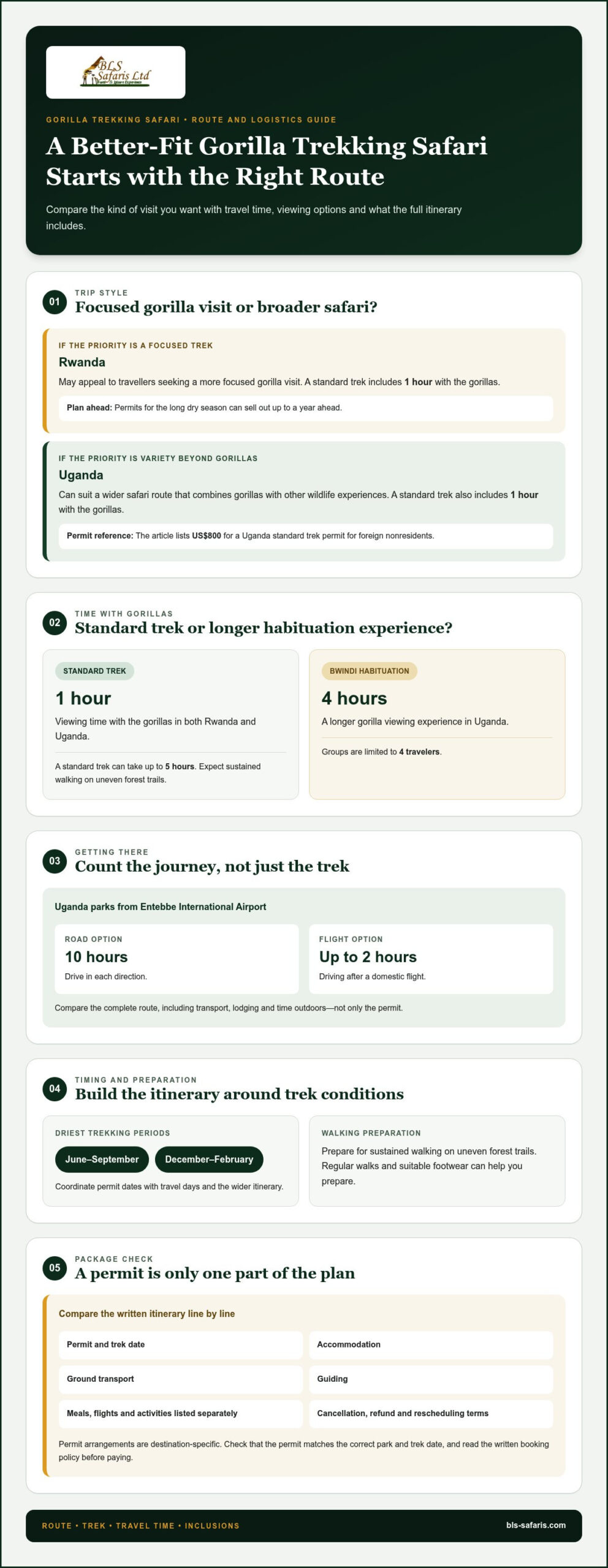
Rwanda and Uganda differ in permit fees, travel arrangements and trekking options. Compare the permit with the full itinerary, including transport, lodging and time outdoors.
Permit Handling by Safari Companies
Safari companies can coordinate permits with park authorities and arrange guides and lodges on the ground. Local operators may handle these steps directly, while other arrangements can involve more coordination across parties. A useful comparison is who secures the permit and connects it to the route and accommodation. This local versus international operator comparison explains the difference in planning approach.
Check how the safari company handles permits, lodging, transport and guiding. Rwanda and Uganda permits are destination-specific, so the itinerary needs to match the permit to the correct park and trek date. Ask for a clear breakdown of what the package includes.
| Option | Permit fee | Gorilla viewing time | Planning consideration |
|---|---|---|---|
| Rwanda standard trek | US$1,500 | 1 hour | Permits for the long dry season can sell out up to a year ahead. |
| Uganda standard trek | US$800 for foreign nonresidents | 1 hour | Travel from Entebbe involves a long drive or a domestic flight and an onwards drive. |
| Uganda habituation | US$1,500 | Up to four hours | Choose this option for a longer gorilla experience. |
Choose Rwanda for a focused gorilla visit, or Uganda if a longer habituation experience or a wider safari route better suits your plans.
Package Inclusions and Extra Costs
Package contents vary, so compare the written itinerary line by line. Check whether the permit, accommodation, ground transport and guiding are included, and note any meals, flights or activities listed separately. A clear breakdown lets you see how the permit fee fits into the overall trip. Don’t assume two packages cover the same services simply because both include a trek.
Cancellation, refund and rescheduling terms depend on the booking conditions. Read the written policy before paying, paying particular attention to deadlines, deductions and changes. Permit and accommodation arrangements can affect the options available.
A standard trek can take up to five hours, so prepare for sustained walking on uneven forest trails. Regular walks and suitable footwear can help you prepare; the effort on the day depends on trail conditions and the gorilla group’s location.
The driest trekking periods in Rwanda and Uganda are June to September and December to February. Choose dates that work with your wider itinerary, then coordinate the permit and travel days.
When assessing an operator’s licence, reviews and local credentials, match its licence details with the issuing tourism body, the Uganda Tourism Board and the Rwanda Development Board. Read patterns in recent reviews, and look for relevant local memberships. Also assess how clearly the operator explains permit coordination and arrangements on the ground.
Local expertise can help with permit coordination, route planning and support during the trek. Ask how the operator manages practical arrangements and communicates changes.
Reaching Uganda’s gorilla trekking parks from Entebbe International Airport requires a 10-hour drive in each direction, or a domestic flight followed by up to two hours’ driving. The Bwindi gorilla habituation experience limits groups to four travellers, who can spend four hours with the gorillas.
Conservation and community benefits
A responsible gorilla trek respects wildlife and the communities near protected areas. Look for clear information about visitor conduct, group limits and local benefits. These details help you assess whether conservation is considered as part of the experience, rather than simply mentioned in its description.
Responsible trekking operators follow group-size limits, minimum viewing distances, and health protocols intended to protect gorillas from human illness. In Rwanda and Uganda, trekking groups are limited to a maximum of 8 guests. Visitors should keep a respectful distance from gorillas and follow guidance during the trek. Ask how guides communicate these standards before and during the trek.
Health precautions matter because people can transmit illnesses to gorillas. A thorough briefing should explain relevant health protocols and expected visitor behaviour. Check how the operator prepares travellers to follow park staff guidance, so you know what to expect before the trek.
Community benefits are another useful comparison. At least 10% of tourism revenue from Rwanda’s Volcanoes National Park goes to community projects around the park. This gives visitors a concrete example of how tourism can support people living near a gorilla habitat. Ask how an itinerary connects visitors with local communities respectfully, without treating people or their culture as a performance.
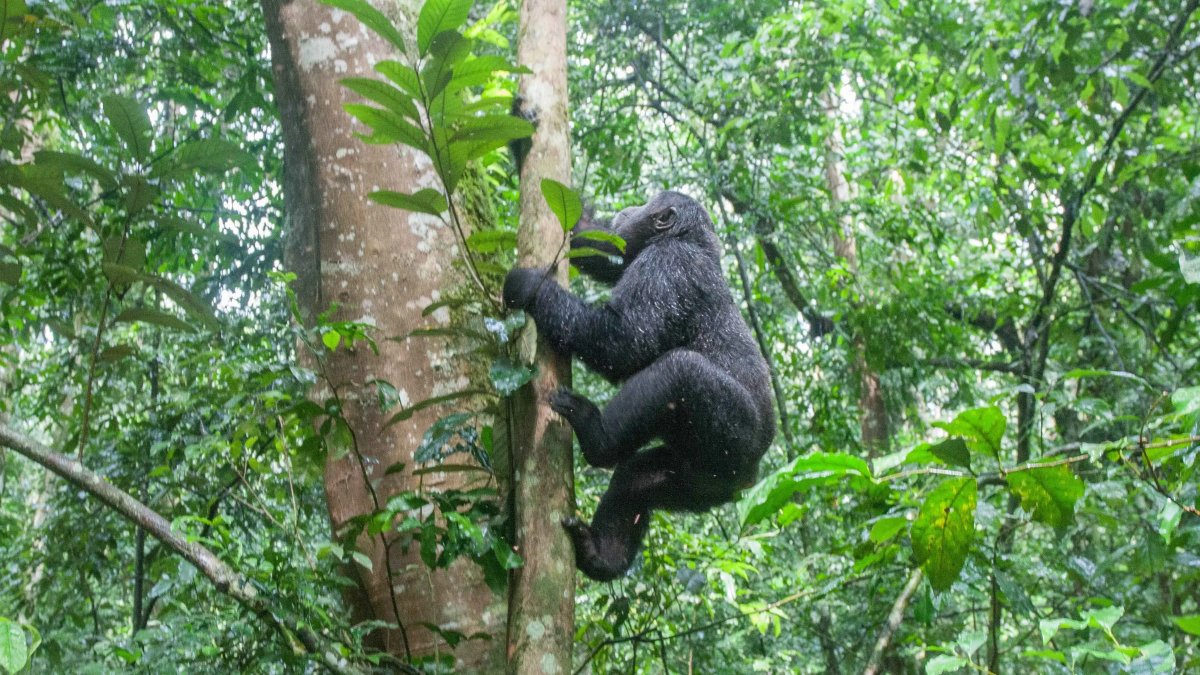
About 900 mountain gorillas remain on Earth, making careful visitor conduct especially important. Keep the encounter calm, follow guide instructions, and maintain the required distance. A gorilla trekking company’s role is to prepare guests for these responsibilities and coordinate a visit that respects wildlife rules. Avoid judging conservation claims by emotional language alone; look for clear, practical explanations.
Use these comparison points when reviewing a safari plan:
- Wildlife protection: Does the operator explain group limits, viewing distance, and health protocols?
- Guest preparation: Are visitor expectations explained before the trek?
- Community value: Does the itinerary describe how tourism supports communities near the park?
- Guided conduct: Are guests told to follow park guidance throughout the encounter?
These standards provide a grounded way to compare operators in Rwanda and Uganda. They also help distinguish meaningful conservation information from broad promises. If you’re planning a trek around these priorities, you can start shaping a responsible gorilla safari itinerary around your travel interests.
Itinerary customisation and flexibility
A well-planned itinerary connects the gorilla trek with the experiences you value most. Rwanda may suit a focused visit, while Uganda offers options to combine gorillas with wildlife and other stops. Compare the route, pace and activities together, rather than choosing by destination name alone. Choosing the best gorilla trekking safari company means finding an itinerary that fits your priorities.
Start with your main interest, then build the route around it. If primates are your priority, consider pairing gorilla trekking with chimpanzee tracking. For broader wildlife viewing, game drives may be a better fit. The best gorilla trekking safari company for your plans will help bring activities and transfers together in a coherent itinerary.
Sample itineraries show how the countries can support different trip styles. Rwanda examples include a 5-day gorilla-and-golden-monkey journey and a 6-day gorilla-and-game-drive trip. Uganda examples range from a 4-day fly-in trekking journey to an 8-day highlights trip. Use these as planning models, not fixed templates.
- Focused Rwanda visit: Pair the gorilla trek with golden monkeys and centre the route on that experience.
- Rwanda with wildlife: Add game drives to broaden the trip beyond primate viewing.
- Uganda highlights: Build a route around gorillas and other wildlife experiences.
- Fly-in Uganda plan: Consider this approach if reducing overland travel is a priority.
Flexibility works best when it serves a clear purpose. If wildlife viewing matters as much as trekking, leave room for game drives instead of filling every day with transfers. For a focused trip, limit extra stops and let the gorilla experience shape the pace. Each choice affects the balance between variety and travel time.
Compare proposed routes by checking the order of destinations, overnight stops and activity days. A gorilla trek followed by game drives creates a different rhythm from a primate-focused Rwanda visit. Consider whether each transfer supports the next activity and whether the schedule leaves time to enjoy each stop.
Before choosing, note your preferred country, the wildlife experiences you want, your available trip length and your desired pace. Then compare how each proposed itinerary brings those priorities together. A flexible plan should feel purposeful, with each destination contributing to the journey you want.
Which gorilla trekking safari companies have the best reviews and safety records?
No single review score proves that a gorilla safari company is reliable or safe. Compare recurring details in traveller reviews with the practical arrangements described for your trek. Look for consistent comments about guide communication, transport coordination and clear briefings, rather than relying on one glowing or critical account.
Safety planning has visible elements. Experienced guides, well-maintained 4×4 vehicles, professional briefings, and seamless transfers are all factors in a well-organized gorilla trek. Assess how a company explains these parts of the journey. A clear plan should connect the briefing, vehicle transfer, park arrival, and guided trek without leaving the sequence unclear.
Group size provides another concrete comparison. Trekking groups in Rwanda and Uganda are limited to a maximum of 8 guests. Congo gorilla trekking groups have a maximum of 4-6 guests. Smaller groups may appeal to travellers who prefer a more intimate outing, while the relevant destination and trek arrangements remain central to the decision.
- Reviews: Note recurring comments about punctuality, communication, and guide support.
- Briefing: Look for a clear explanation of the trek and visitor expectations.
- Transport: Compare the stated vehicle and transfer arrangements for the route.
- Group size: Match the destination’s group limit with your preferred experience.
Read reviews with their dates and trip details in mind. A comment about a delayed transfer is most relevant when it describes a similar route or travel arrangement. Repeated feedback about clear instructions or helpful guides can reveal patterns, while a single comment offers less context. Assess the overall itinerary, not just the rating.
For safety, focus on what happens before and during the trek. A professional briefing prepares guests for the experience, and experienced guides lead the outing. Well-maintained 4×4 vehicles and coordinated transfers also matter because travel to the park forms part of the safari. These are practical indicators to compare, not claims that any operator can eliminate every travel risk.
Use a simple decision process: first, compare recent review themes; next, assess the company’s stated guiding, briefing, vehicle, and transfer arrangements; then match the group-size limit to your preference. For example, a traveller prioritizing a smaller group can compare the group-size arrangements offered by different destinations. Choose the option whose documented arrangements and consistent feedback best fit your priorities.
Top Gorilla Safari Companies in Uganda, Rwanda, and DRC
Compare safari companies by the destinations and itineraries they can coordinate, not by a universal ranking. Uganda, Rwanda and the Democratic Republic of the Congo involve different planning considerations. Start with the gorilla experience you want, then consider wildlife experiences, routes and whether trekking is currently possible in the specific park.
| Destination | Planning focus | Comparison point |
|---|---|---|
| Uganda | Gorilla trekking with broader wildlife experiences | Check how the itinerary connects Bwindi with other activities. |
| Rwanda | A focused gorilla journey with optional wildlife additions | Assess whether the route matches your preferred pace. |
| DRC | Park-specific feasibility and current operating status | Virunga National Park closed in 2020. |
Uganda can suit travellers who want gorilla trekking as part of a wider wildlife trip. Bwindi Impenetrable Forest National Park has about 120 mammal species and 350 bird species. These figures help show why an itinerary may include more than the trek itself. Compare how each company arranges the route and balances forest time with other wildlife activities.
Rwanda may appeal to travellers seeking a focused gorilla visit. Companies can differ in how they arrange activities around Volcanoes National Park. Compare the sequence of stops, transfer plan and overnight stays, then decide whether a focused trek or a broader wildlife itinerary better matches your priorities.
DRC requires a different first step: assess the status of the specific park before comparing itineraries. Virunga National Park closed in 2020, so its trekking plans should not be treated as equivalent to active options in Uganda or Rwanda. The country comparison needs to distinguish park status from an operator’s general destination expertise.
Use these questions to compare safari companies across the three destinations:
- Destination fit: Does the itinerary focus on gorillas or combine trekking with other wildlife?
- Route clarity: Are park visits, transfers, and overnight stops arranged in a practical sequence?
- Activity balance: Does each added experience support your priorities, such as Bwindi birds or wider wildlife viewing?
- Park status: Is the specific destination operating, as the Virunga closure illustrates?
There is no reliable country-wide winner based on destination names alone. Compare the proposed route and park context with your priorities, then choose the company whose itinerary makes those choices clear.
BLS safaris: East Africa Safaris
BLS safaris plans tailor-made East Africa safaris around your gorilla trek and wider travel priorities. Turn to the team when you want to compare a Uganda route with a broader itinerary or bring wildlife experiences together with clear routing and local guidance. Uganda Safaris can suit plans centred on the trek, while East Africa Safaris, Kenya Safaris and Tanzania Safaris offer options for a wider regional journey.
Share your preferred destination, the experiences you want to include, and the pace you have in mind. BLS safaris can use those priorities to plan a tailored itinerary with handpicked lodges and transparent pricing, bringing the practical route and safari experiences together.
Please get in touch with BLS safaris to discuss your safari plans.
Shape a safari around what matters to you
Choosing the best gorilla trekking safari company is less about finding a universal winner and more about finding a planning partner whose route reflects your priorities.
Bring your ideas to the planning conversation: the trek you want, the wildlife experiences you’d enjoy and the pace that feels right. BLS Safaris can help shape a journey through its East Africa Safaris, Uganda Safaris and Kenya Safaris, keeping regional options open as you plan.
Start with the destinations and experiences that matter most, then consider how they fit into one connected trip. A thoughtful itinerary gives you a clear path from your first travel decision to the journey itself, without adding stops simply for variety.
Shape your next adventure one considered choice at a time. Start planning a safari that feels right for you with BLS Safaris.
Frequently Asked Questions
Rwanda or Uganda?
Choose Rwanda for a focused gorilla visit, or Uganda if you want to combine trekking with a wider wildlife itinerary. Your choice can also reflect the permit option you prefer: Uganda offers standard trekking and a habituation experience. Compare the overall route and the activities you want, rather than choosing by country alone. The best fit is the destination that matches your priorities and desired pace.
How much do gorilla trekking permits and safari packages cost in 2026?
In 2026, a Rwanda gorilla trekking permit costs US$1,500; Uganda’s permit for foreign nonresidents is US$800. Uganda’s habituation permit costs US$1,500. These are permit fees, not complete safari package prices. A package quote depends on the itinerary and its inclusions, such as transport, lodging, meals, and activities. For a tailored safari with BLS safaris, the total price is provided after a quote request.
What are the permit rules, age limits, and booking deadlines for gorilla trekking?
Visitors trekking in Rwanda or Uganda must be at least 15 years old. Standard treks allow one hour with the gorillas; Uganda habituation permits allow up to four hours. Rwanda permits for the long dry season, June to September, can sell out up to a year in advance. Match your permit to the country, park, and intended trek date, and plan early for those popular-season dates.