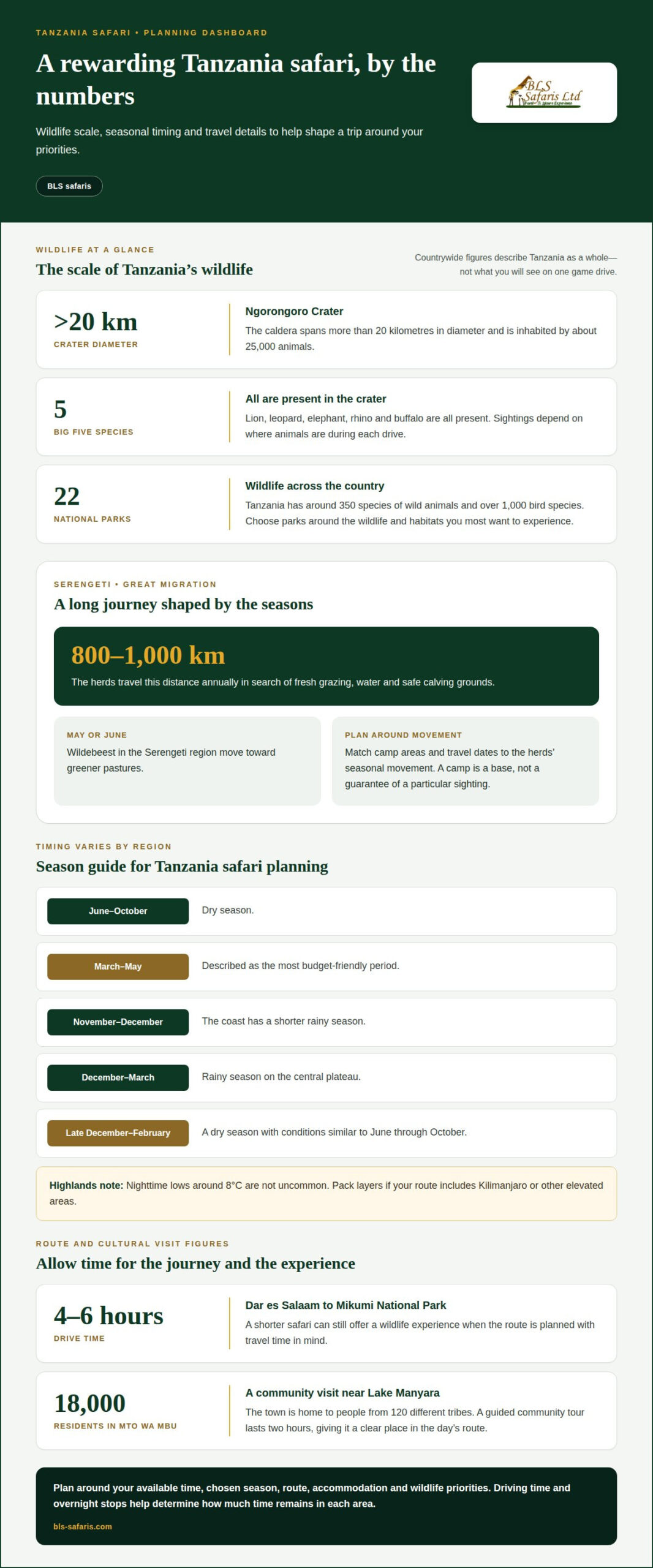
A shorter Tanzania safari can still offer a rewarding wildlife experience: the drive from Dar es Salaam to Mikumi National Park takes about 4 to 6 hours. The overall cost depends on your route, accommodation, transport and travel season, with the price set after a quote request. For a manageable trip that is not rushed, plan around your available time and priorities.
It’s natural to wonder how Tanzania safari costs fit alongside wildlife viewing, seasonal timing and distances between parks. This guide explains the main planning choices, so you can understand what shapes your budget and build a trip at a pace that suits you.
You’ll find practical guidance on choosing a season, planning around the wildebeest migration and deciding whether a shorter safari suits your plans. We’ll also cover travel logistics and how a tailor-made itinerary can bring your route, accommodation and wildlife priorities together.
Key Takeaways
- Choose parks around the wildlife you most want to see, then shape the route to fit your available time.
- Use seasonal patterns to guide your travel dates, and consider how conditions differ across Tanzania.
- Follow the wildebeest migration by matching your Serengeti camp location and timing to the herds’ movement.
- Understand how accommodation, transport and itinerary choices affect the overall safari budget.
- Short trips can still work when the route is planned carefully and travel time between destinations is considered.
How is the wildlife viewing in Tanzania?
A Tanzania safari can combine Ngorongoro Crater with other northern parks, including the Serengeti. The best route depends on the wildlife and landscapes you most want to experience.
Ngorongoro Crater Wildlife Viewing
The Ngorongoro Crater offers a distinct setting for wildlife viewing: its caldera spans more than 20 kilometres in diameter and is inhabited by about 25,000 animals. Lion, leopard, elephant, rhino and buffalo, all members of the Big Five, are present here. A game drive lets you look for wildlife across the crater floor, while the surrounding highlands add another landscape to the journey.
For a broader view of the region, consider how the crater fits with nearby northern Tanzania parks. Tanzania has 22 national parks, around 350 species of wild animals and over 1,000 bird species. Those figures describe the country as a whole, not what you will see on a single drive. Choose parks based on your priorities, such as seeking the Big Five or allowing time for varied habitats and birdlife.
Crater Game Drives and Accommodation
Plan your crater game drives around where you’ll stay overnight. Accommodation near the crater can shape the day’s route, while a stay elsewhere may suit an itinerary that also includes the Serengeti or other northern parks. Compare locations and accommodation styles, then decide how much time you want for game drives versus travel between places.
A Ngorongoro Crater safari can be planned as a focused wildlife visit or one part of a longer northern circuit. For a private trip, the route and accommodation can be arranged around your preferred pace and the parks you want to include. Keep the crater’s scale in mind when setting expectations: a large wildlife area offers varied viewing, but sightings depend on where animals are during each drive.
Combining the Serengeti and Ngorongoro Crater brings two major wildlife areas into one itinerary. The Big Five are present in both parks, so you can plan around these species while allowing time for each area’s distinct landscape. The Serengeti is known for the Great Migration, while the crater’s enclosed caldera offers a concentrated setting for game viewing.
Start planning your route with your available travel time and main wildlife interests. Then decide whether to spend more time in the Serengeti, add the crater or include another northern park. A balanced itinerary accounts for driving time, overnight stops and time in each area, rather than trying to squeeze every park into one trip.
When is the best time to visit Tanzania?
The best time for a Tanzania safari depends on your priorities, from dry-season wildlife viewing to rainy-season travel. The dry season runs from June through October, while March through May is described as the most budget-friendly period. Match the season to your chosen destinations, and allow time for community visits alongside parks such as Lake Manyara.
Seasonal conditions vary across the country. Tanzania’s coast has a shorter rainy season in November and December, while the central plateau’s rainy season runs from December to March. Late December through February also brings a dry season with conditions similar to June through October. In the highlands, nighttime lows around 8°C are not uncommon, so pack layers if your route includes Kilimanjaro or other elevated areas.
For a northern circuit trip, consider how the season suits your mix of parks and cultural stops. A vehicle-based route through Lake Manyara, Ngorongoro and nearby communities can combine wildlife drives with time outside the parks. The right timing depends on what matters most: drier conditions, a more budget-conscious travel period, or a particular mix of landscapes and local experiences.
Mto wa Mbu offers a community visit alongside the famous Lake Manyara area. The town has about 18,000 residents from 120 different tribes, and a guided community tour lasts two hours. This gives the visit a clear time frame when arranging it around a game drive. A local meal can add another practical point of connection; traditional Tanzanian dishes include vitumbua, ndizi kaanga and nyama.
Maasai village visits and Hadzabe cultural experiences offer a different focus from wildlife viewing by vehicle. The Hadzabe are hunter-gatherers, and their language is described as unrelated to any other. A visit can offer a chance to learn about Datoga communities and their ways of life. If you want these encounters, allow time for them in your route rather than treating them as brief stops between parks.
Visitor reviews can help you understand how past travellers describe an experience. Look for details that matter to your plans, such as time spent in a community, whether a local meal is included and how the visit fits into the day’s route. Use these specifics to set expectations, then consider whether the activity suits your interests and available time.
For a trip that includes Kilimanjaro, Lake Manyara and cultural visits, timing and routing go hand in hand. Choose the season, then arrange park days and community experiences around it. This helps create an itinerary with space for both wildlife and local encounters.
Serengeti safari camps and the wildebeest migration
The Serengeti is home to the largest mammal migration on the planet. Camp location and the time you spend in the national park shape how you plan around the herds.
Safari Camps and Migration
The Great Migration involves herds travelling 800 to 1000 km annually to find fresh grazing, water and safe calving grounds. Wildebeest in the Serengeti region move toward greener pastures in May or June. Since the herds travel, choose camp areas and travel dates with their seasonal movement in mind.
For a migration-focused stay, consider how the camp’s location fits your route and time in the Serengeti. A camp is a base, not a guarantee of a particular sighting. Spending time in the park gives your itinerary more flexibility to follow wildlife movements instead of relying on a single drive.
Serengeti Wildlife Drives
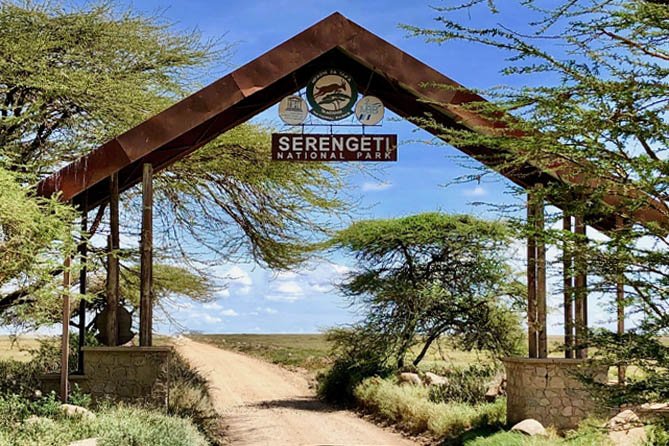
Game drives are the main way to explore wildlife across Serengeti National Park. The park’s size makes route planning important: a minimum of 3 days is recommended for a visit. That allows more time for drives and reduces pressure to cover the park in a brief stop.
Build each drive around your camp’s position and the wildlife priorities for that day. The Serengeti National Park landscape supports varied wildlife viewing, while migration-focused routes also need to account for where herds are moving.
Before setting your route, decide whether migration viewing or a broader wildlife experience matters more. A migration-focused itinerary can prioritise time in areas used by moving herds. A wider Serengeti visit can balance those drives with other wildlife viewing across the national park.
Check how much of your visit is available for game drives, not just how many nights you’ll stay at camp. The camp’s location affects travel distances to the areas you plan to explore. Consider the route, drive times, overnight stops and time set aside for wildlife viewing together.
The Serengeti Wildlife Research Centre lecture is included as a Journeys Highlight Moment. It offers a different way to engage with the park alongside wildlife drives. If this educational experience interests you, make room for it in your itinerary rather than squeezing it between tightly scheduled drives.
Use a simple planning sequence: choose your travel period, identify your migration or wildlife priorities, then match camps to your route. This helps keep your time in the Serengeti focused and shows how the park fits with other northern Tanzania stops.
Migration viewing is one part of the experience, not the only reason to visit the Serengeti. A well-paced itinerary combines wildlife drives, camp location and time to learn about the national park. These choices let you plan around the herds without turning every day into a race to follow them.
How much does a Tanzania safari cost?
Tanzania Safari costs depend on the route, accommodation, transport and travel season. Park fees and permit needs also depend on the parks and activities included, so account for them in your itinerary rather than treating them as a fixed amount.
Safari Costs and Tour Pricing
For a private tour, the main cost factors include travel days, overnight stays, park choices and vehicle arrangements. A route through Arusha, the Serengeti and Ngorongoro involves different logistics from a trip focused on one reserve. Adding Zanzibar also changes the journey’s structure and accommodation plan.
The price depends on your itinerary and is provided after a quote request. For a Tanzania safari, review how accommodation, transport, guiding, meals and park-related costs are handled in the proposal. A compelling itinerary works best when its pace and included services match your priorities.
Park Fees and Safari Permits
Park fees and permits vary by itinerary. The parks you visit and activities you choose determine which charges and permissions apply, so your planned route matters. Review these costs alongside accommodation and transport in the trip proposal.
For example, a Tanzania safari that includes Serengeti National Park differs from one that adds other reserves or activities. Review the park list and planned experiences together with the overall cost. This makes it easier to see how each stop affects your budget.
When choosing a Tanzanian tour operator, focus on the details of the proposed journey. Look for a clear route, overnight locations, transport arrangements and an explanation of what the quoted amount covers. These details help you understand the trip and compare itineraries by their inclusions, not just their headline price.
Arusha can serve as a starting point for a northern circuit, while a Zanzibar extension adds a coastal stay after wildlife viewing. Decide whether your priority is time among elephants and other wildlife, a slower-paced stay, or a combination of parks and coast. That choice helps shape the itinerary.
Extensions work best when they connect naturally with the main route. Adding Zanzibar, for example, means planning the transition from inland parks to the coast. A shorter extension may suit limited travel time, while a longer route can allow for additional reserves or a slower pace between stops.
Before booking, choose your preferred parks and accommodation style, and decide whether you want a private itinerary. Then review the route and its inclusions together, including park-related costs. This gives you a clearer basis for shaping a trip around your available time and priorities.
Getting to Tanzania and short safari options
For a short trip, plan your arrival point, road transfer and first park together. The drive from Dar es Salaam to Mikumi National Park takes about 4 to 6 hours.
US visitors need travel documents suited to their itinerary; visa and vaccination requirements depend on the current entry and health rules for their route.
Travel to Tanzania
Build the first and last days around your arrival and departure locations. A road journey from Dar es Salaam to Mikumi takes about 4 to 6 hours, so include that transfer when deciding how much time remains for wildlife viewing. Set out the route, overnight stops and park visits together to avoid treating travel days as full game-drive days.
For an itinerary that includes several places, consider how each transfer affects your time on the plains. A route with Mikumi, for example, needs a different road plan from a northern circuit. Keep arrival logistics and accommodation in the same schedule, then allocate your available days to travel and wildlife activities.
Short Safari Options
A short safari works best when it focuses on a clear priority instead of covering too much ground. A 4-day northern parks extension is one option; a longer stay can allow more time for wildlife viewing and travel between locations. Choose the parks around the animals and landscapes you most want to experience.
A Mikumi-focused visit, for example, can reduce the number of stops on a southern route. If seeing buffalo and other wildlife is central to your plans, prioritize time in suitable viewing areas instead of adding distant destinations. Match accommodation locations to the route so daily transfers don’t take over the trip.
A short trip doesn’t have to feel hurried. Account for your arrival day, road transfers and departure day when estimating usable safari time. Then decide which park or experience deserves the most time. This makes it easier to plan an adventure around the days you actually have.
Vaccinations, Visas, and Travel Documents
For US visitors, required travel documents and visa arrangements depend on the itinerary and current entry rules. Vaccination requirements can depend on the route and individual health circumstances. Plan these preparations separately from the safari schedule, while taking your destinations and travel dates into account.
Before finalizing a route through Tanzania, list each destination and transit point, then use the itinerary to understand the relevant entry and health requirements. A visit limited to Mikumi may involve different travel details from a trip that also includes Zanzibar. Keep travel documents accessible during transfers and accommodation check-ins.
A practical short-trip plan connects the arrival point, road time, park choice and overnight locations. For example, the 4-to-6-hour Dar es Salaam to Mikumi drive should shape the days around that visit. Allow enough time for wildlife viewing, and avoid scheduling a long transfer as though it were a full day among animals.
BLS safaris: Tanzania Safaris
BLS safaris plans tailor-made Tanzania and East Africa safaris, helping bring your travel plans together, from choosing parks and setting a practical route to arranging handpicked lodges. Turn to the team when you want local guidance to connect wildlife priorities, travel pace and overnight stops in one itinerary.
Clear routing and transparent pricing help you understand how your trip fits together. BLS safaris plans East Africa Safaris, Uganda Safaris and Kenya Safaris, too. Share your travel dates, preferred places and most important experiences to start shaping a Tanzania safari around your priorities.
Whether you’re planning a Tanzania safari focused on wildlife or combining different experiences, BLS safaris can bring your choices together in one itinerary. Share your priorities to begin planning at a pace that suits you.
Shape a safari around what matters to you
Start with the experiences you want most and the pace that suits your travel plans. Your dates, chosen destinations and accommodation preferences can turn those priorities into a clear route, with room for travel and time in the parks.
BLS Safaris can shape a Tanzania safari around those choices. The team also plans East Africa Safaris, Uganda Safaris and Kenya Safaris . Share the places and experiences you have in mind to start shaping an itinerary around your interests.
A Tanzania safari takes shape one thoughtful choice at a time. Start with what matters most, then build your trip from there.
Frequently Asked Questions
Are there ATMs in Tanzania?
Yes, ATMs are available in Tanzania’s larger towns and main travel hubs, but access can be limited on safari routes. Arusha and Dar es Salaam offer more opportunities to withdraw cash than remote park areas. Plan cash access before leaving a town, and carry a suitable payment option for small purchases or places without reliable ATM access. Don’t rely on finding a machine during a game-drive day.
Are these trips ready to book?
Listed itineraries provide a starting point, and your trip can be tailored to your dates and preferences. To begin booking with BLS Safaris, share your plans through WhatsApp, email or the online form. A deposit is required to secure permits. Before confirming, review the proposed route, travel dates and included arrangements to ensure the booking reflects the journey you intend to take.
How long should you stay in Tanzania?
Plan at least 7 days if you want to see many of Tanzania’s highlights. The right stay depends on how many parks you want to visit, the distance between them and whether you’re adding time on the coast. For a shorter visit, concentrate on one area instead of packing in distant stops. That leaves more of your available time for the experience you came for.
How do I select a reliable Tanzanian tour operator?
Choose an operator that explains the route, package inclusions and booking steps clearly. BLS Safaris tailors journeys to travelers’ dates, pace, budget and preferred experiences, with listed packages for 1-12 participants. The company is Licensed by the Uganda Tourism Board (UTB/RTT/TT/2025/101532). Use these details to understand who is arranging your trip and how its itinerary fits your needs.
How far in advance should I book an African safari?
Book an African safari 9 to 12 months before departure, especially if your dates are fixed or your itinerary depends on a particular migration area. This gives you time to shape the route, arrange accommodation and consider how travel days fit together. If you’re planning closer to departure, start with your preferred dates and priorities, then build the itinerary around what can be arranged for that period.
How safe is Tanzania for tourists?
Plan your visit carefully: arrange transfers in advance, follow your guide’s instructions and keep valuables secure. During wildlife activities, stay with your guide and follow the rules for each location. In towns, use transport arranged for your itinerary and keep your travel documents accessible but protected. A clear daily plan helps you know where you’re going and who is coordinating each transfer.
What are the best places for a safari in Tanzania?
The best places depend on the wildlife and landscapes you want to experience. Serengeti National Park is a strong choice for migration-focused viewing, while Ngorongoro Crater offers game drives in a distinct caldera setting. Tarangire and Lake Manyara can add variety to a northern circuit. Choose fewer areas for a short trip, and consider distances between parks before adding another stop.
When is the best time of year to go on safari in Tanzania?
June through October is the dry season and a popular period for safari travel. March through May is described as the most budget-friendly time, while late December through February also brings dry-season conditions. The best fit depends on your priorities, chosen parks and route. If you’re combining inland wildlife areas with the coast, remember that rainy-season patterns differ across Tanzania.