
Semuliki National Park lies in Bwamba County in Bundibugyo District, along Uganda’s western border with the Democratic Republic of the Congo. The Rwenzori Mountains rise to the southeast, Lake Albert lies to the north, and the Lamia and Semuliki rivers mark parts of the park boundary. First protected as a forest reserve in 1932, Semuliki became a national park in 1993. It covers 220 square kilometres on the floor of the Albertine Rift Valley, at an altitude of 670 to 760 metres above sea level.
The forest is the easternmost extension of the Ituri Forest of the Congo Basin and East Africa’s only true lowland tropical rainforest. Moist semi-deciduous forest dominated by ironwood gives way to swamp forest, streams, oxbow lakes and wetlands. Temperatures range from about 18°C to 30°C, while annual rainfall averages 1,250 mm. The main rains fall from March to May and September to December, when low-lying sections can flood.
Semuliki protects 53 mammal species, including 11 primates, and 441 recorded bird species. Blue monkeys, red-tailed monkeys, olive baboons, grey-cheeked mangabeys, black-and-white colobus, chimpanzees and potto live in the forest. Forest buffaloes, elephants, water chevrotains, dwarf antelopes, bush pigs and unusual small mammals add to the park’s Central African character. Many animals remain inside thick cover, so tracks, calls and brief sightings form an important part of wildlife viewing here.
The Sempaya Hot Springs are the park’s best-known natural feature. Superheated water rises through faults created by the Albertine Rift, producing steaming pools and a geyser that reaches about two metres. A guided forest walk connects the two springs and adds opportunities to see birds, butterflies and monkeys. Semuliki National Park is separate from Toro Semliki Wildlife Reserve, which lies farther northeast towards Lake Albert. The national park protects lowland rainforest, while the reserve contains open savannah, riverine woodland and Lake Albert habitats.
Attractions in Semuliki National Park
Semuliki brings together lowland forest, hot springs, the Semuliki River and wildlife with strong Central African affinities. Thick vegetation replaces the open plains found in many Ugandan parks, and the best encounters come on foot with a guide. The following attractions define a visit to the national park.
Sempaya Hot Springs
The Sempaya Hot Springs consist of two main springs known locally as the male and female springs. Bintente, the male spring, forms a broad steaming pool about 12 metres in diameter. Reaching it takes roughly one hour along a forest trail and swamp boardwalk. Nyasimbi, meaning “the female ancestors,” is the female spring. A 15-minute walk through palm forest leads to its geyser, which sends boiling water and steam up to two metres into the air. The surrounding pools are hot enough to cook eggs, and local guides demonstrate this at the designated cooking point. Keep to the boardwalk and viewing areas because the water and ground around the vents can cause serious burns. The springs also hold deep cultural meaning for the Bamba community, whose traditions connect the site with ancestral and spiritual life.
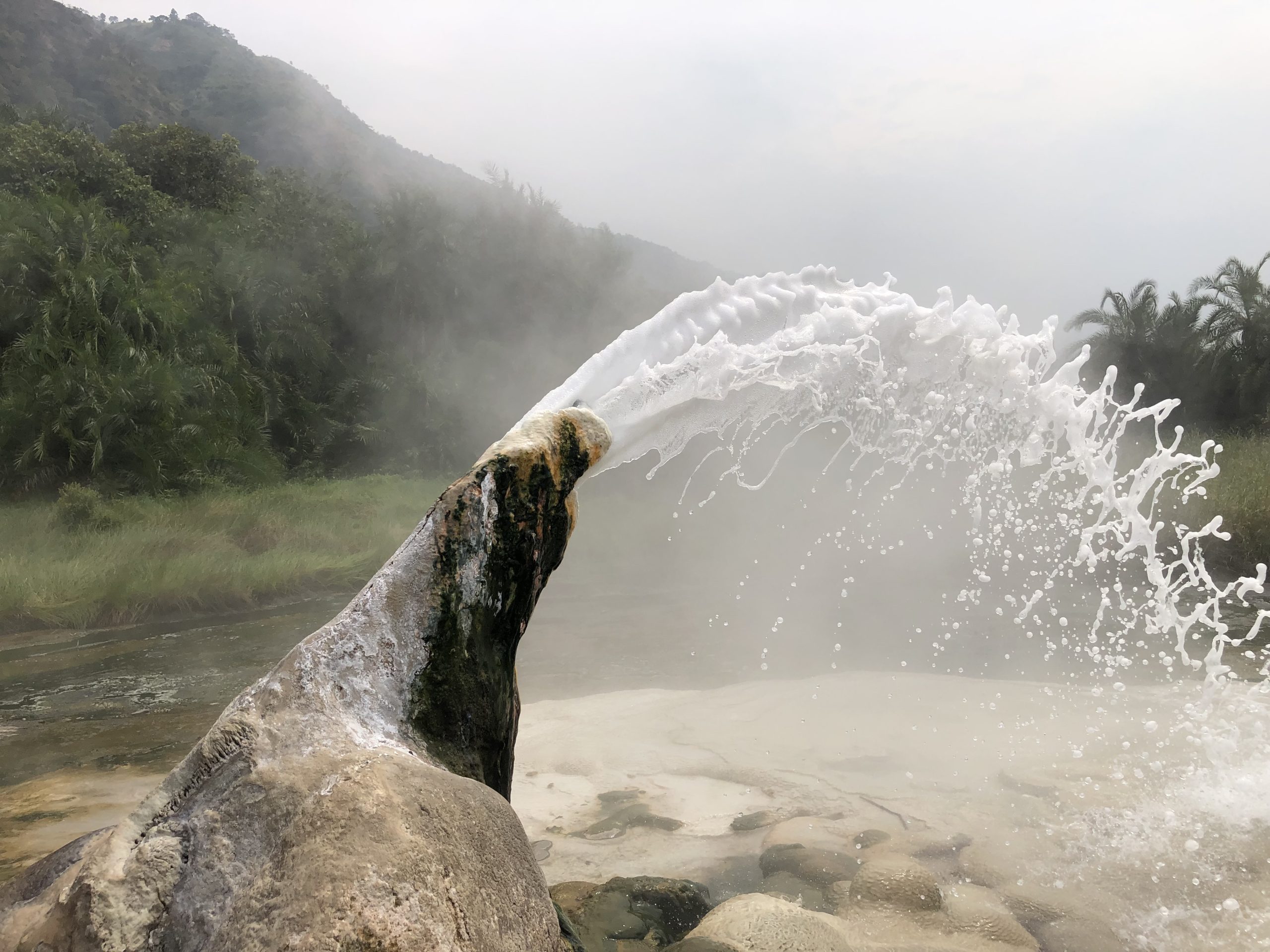
Sempaya Hot Springs
Forest Birds of Semuliki
Semuliki has 441 recorded bird species, including 35 Congo-Guinea forest species found nowhere else in East Africa. The forest is one of Uganda’s strongest destinations for birds that live high in the canopy or deep inside dense undergrowth. Look and listen for the Nkulengu rail, Ituri batis, Congo serpent eagle, black dwarf hornbill, black-wattled hornbill, piping hornbill, Gabon woodpecker, spot-breasted ibis, white-bellied kingfisher, red-sided broadbill and long-tailed hawk. Early mornings give the clearest calls and the most activity. Walk slowly, pause at canopy openings and carry binoculars suited to low light. A guide who recognises calls makes a major difference because many forest species reveal their presence before they come into view.
Primates and Other Forest Wildlife
The park’s 11 primate species include chimpanzees, Central African red colobus, Dent’s mona monkeys, blue monkeys, red-tailed monkeys, black-and-white colobus, grey-cheeked mangabeys, olive baboons and vervet monkeys. De Brazza’s monkeys also occur in the wider Semuliki landscape. Potto and bushbabies become active after dark. Forest elephants, forest buffaloes, water chevrotains, dwarf antelopes, bush pigs, civets and leopards also live here. Dense vegetation makes these mammals harder to see than animals on a savannah game drive. Fresh tracks, feeding signs and movement in the canopy help a guide locate them, while longer walks improve the chance of a clear sighting.
Semuliki River
The Semuliki River flows north from Lake Edward to Lake Albert and forms part of the border between Uganda and the Democratic Republic of the Congo. Its meanders, wetlands and forest edge support hippos, crocodiles and numerous waterbirds. The river is an important feature of the wider valley, but boat excursions for visitors operate from Ntoroko on Lake Albert in Toro Semliki Wildlife Reserve, not from the rainforest trails inside Semuliki National Park. This distinction matters when planning the day. Use Sempaya and Ntandi for national park activities, then allow a separate road transfer if you want a Lake Albert boat trip or savannah wildlife drive in the reserve.
Activities in Semuliki National Park
The national park is best explored on foot. Guided walks lead to the hot springs, birding sites and deeper forest, while nearby Toro Semliki Wildlife Reserve adds game drives, chimpanzee walks and Lake Albert boat trips. Plan the two protected areas as separate stops rather than treating every activity as if it begins at Sempaya.
Birdwatching in Semuliki National Park
Birding takes place along the forest trails, around Sempaya and on the 6-kilometre road between Sempaya and Ntandi, where breaks in the vegetation provide useful views into the canopy. The Kirumia Trail is the main route for a longer birding day. It runs for about 14 kilometres through the forest towards the Semuliki River and can also be covered as an overnight camping trip. Target species include African piculet, Cassin’s spinetail, Bates’s nightjar, Nkulengu rail, Ituri batis, Congo serpent eagle, piping hornbill, black dwarf hornbill, Gabon woodpecker, spot-breasted ibis, white-bellied kingfisher, yellow-throated cuckoo, yellow-throated nicator, red-bellied malimbe and Western bronze-naped pigeon. Dense foliage rewards patience. Listen first, move quietly and leave enough time to wait at fruiting trees and canopy gaps.
Forest Walks and Hiking Trails
Semuliki’s guided trails reveal its palms, ironwood forest, swamp vegetation, butterflies, birds and primates at close range. Short nature walks begin around Sempaya and connect the male and female hot springs. The female spring is a 15-minute walk from the tourism office, while the male spring requires about an hour each way along a forest trail and boardwalk. The Red Monkey Trail follows the park’s eastern boundary towards the Semuliki River and is a useful route for primates and forest birds. The Kirumia Trail covers about 14 kilometres through the heart of the forest to the river. It works as a full-day walk, but birders gain more time by camping overnight with prior arrangements. Trails can be muddy or overgrown after rain. Wear firm waterproof footwear, long trousers and a long-sleeved shirt, and carry drinking water and rain protection.
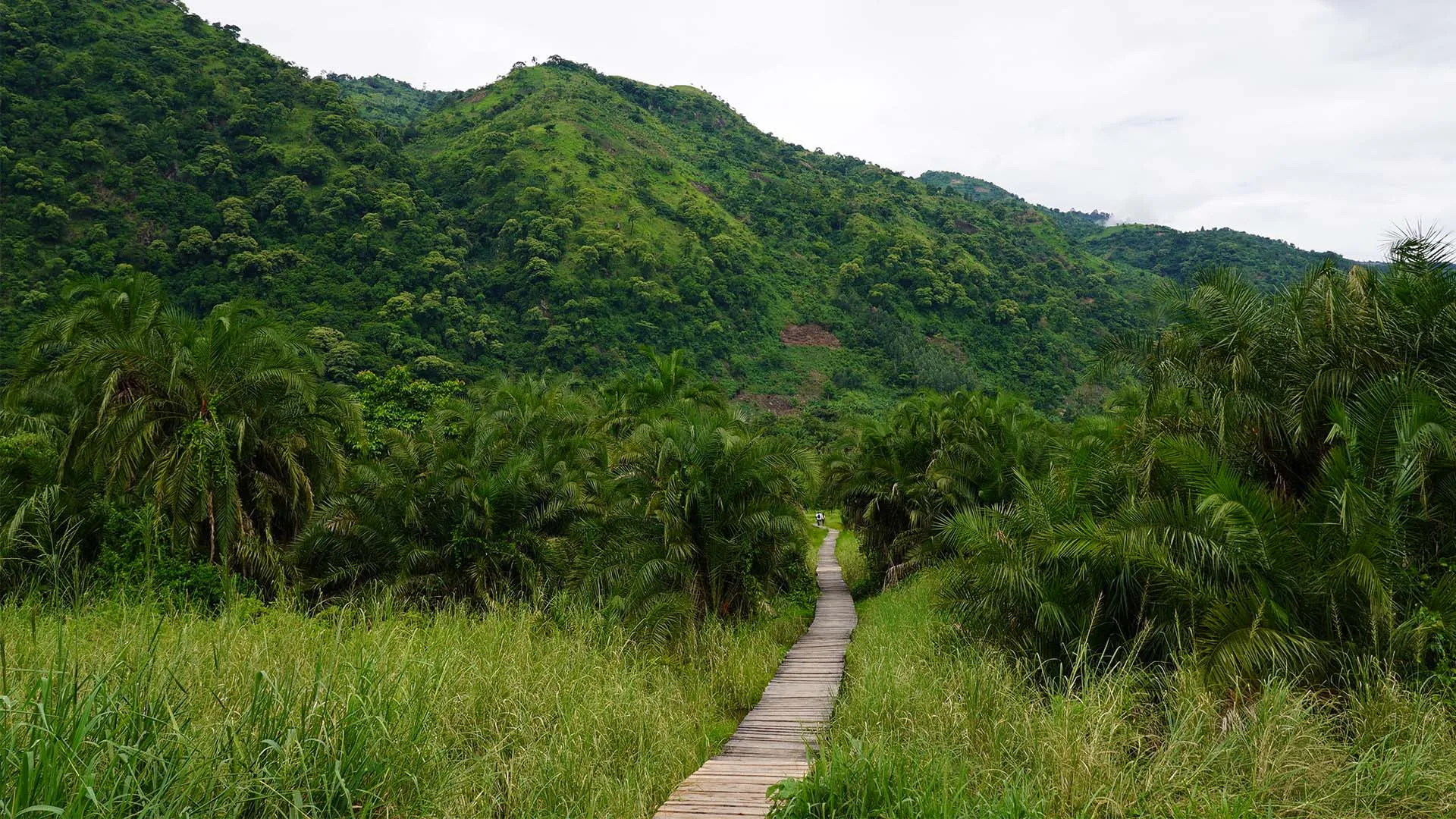
Visit the Sempaya Hot Springs
Start from the Sempaya tourism office and walk with a guide through palm forest to Nyasimbi, the female spring. Its boiling pools surround a central geyser that throws water and steam up to two metres high. The shorter trail takes about 15 minutes, making it accessible to visitors with limited time. Bintente, the male spring, lies farther into the forest and takes about one hour to reach along a trail and swamp boardwalk. The walk is as important as the springs. Watch the canopy for monkeys and hornbills, and check the undergrowth for butterflies and smaller birds. Use only the approved cooking point if you want to boil an egg, and remain behind the safety barriers throughout the visit.
Game Drives
Game drives take place in Toro Semliki Wildlife Reserve, about 20 kilometres east of Semuliki National Park. Three main tracks cross the open grasslands around Semliki Safari Lodge, where forest and savannah wildlife meet. Elephants, buffaloes, waterbuck, Uganda kob, warthogs and crocodiles are regular possibilities, while lions, leopards and bushbabies require more time and luck. Day drives cover the open plains and riverine areas. A night drive focuses on nocturnal animals and birds under the conditions set for the reserve. Use a 4×4 during the rains and arrange the drive in advance because it does not begin from Sempaya or the national park’s forest trails.
Chimpanzee and Primate Tracking
Guided chimpanzee and primate walks take place in the Mugiri River Forest inside Toro Semliki Wildlife Reserve. The walk lasts about 4 to 6 hours and follows forest paths used by chimpanzees, black-and-white colobus, red-tailed monkeys, vervet monkeys, baboons and other primates. Fruiting fig trees draw chimpanzees into the forest during the wetter months. Book this activity for the reserve rather than arriving at Sempaya for a national park chimpanzee trek. The reserve charges separately for the guided walk, so include the activity when confirming your date and visitor category. Wear long trousers, a long-sleeved shirt and firm walking shoes, and carry water and a light snack.
Semuliki River Walks and Boat Trips
Forest-edge walks near the Semuliki River focus on birds, primates and wetland habitats. Guided access depends on the route and current water level, so arrange the walk at the appropriate visitor point before entering the forest. Boat trips leave from Ntoroko on Lake Albert in Toro Semliki Wildlife Reserve. These outings search for shoebills, hippos and waterbirds, with views towards the rift escarpment and Nkusi Falls. Allow separate transfer time from Semuliki National Park because the boat launch is not beside Sempaya. Combining the forest park and the Lake Albert side works best over at least two days.
Cultural Experiences Around Semuliki
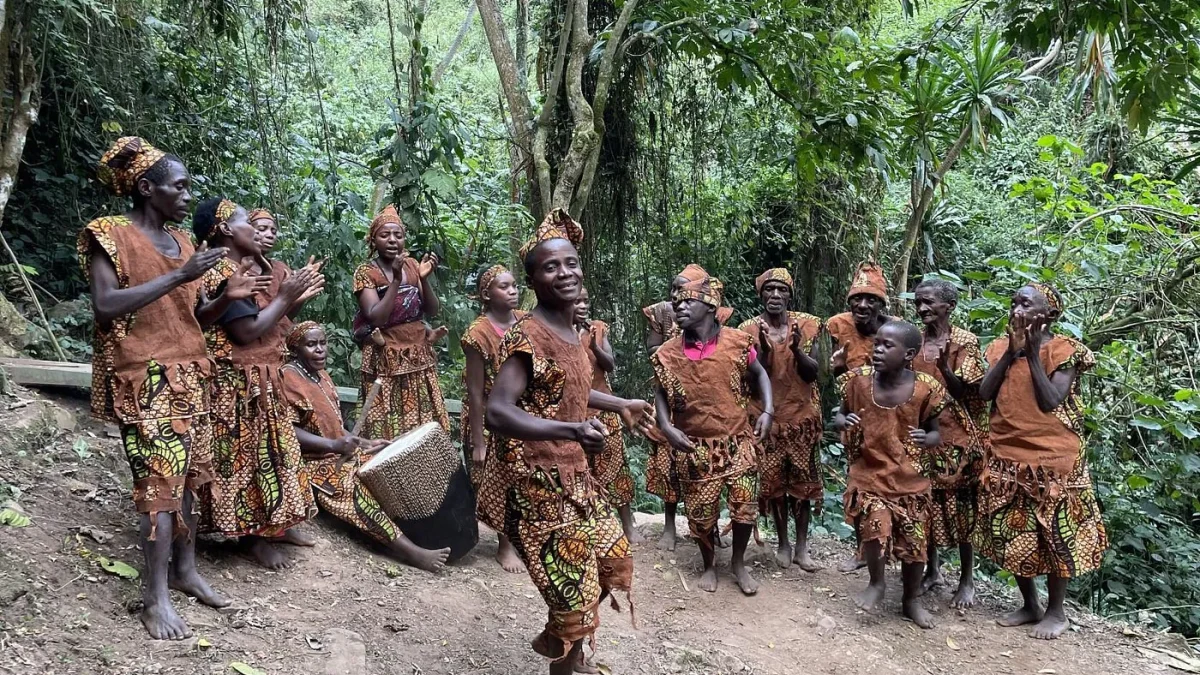
Four communities shape the wider Semuliki landscape. The Bwamba farm at the base of the Rwenzori Mountains, the Bakonzo cultivate the mountain slopes, the Batuku keep cattle on the open plains, and the Batwa maintain strong cultural ties to the forest edge. Community visits introduce local building methods, medicinal plants, traditional fire-making and the ways families use the land around the park. Choose an organised visit led by community members and allow time for conversation rather than treating it as a brief performance. Ask before photographing people or homes, and pay activity fees through the established community arrangement.
Best Time to Visit Semuliki National Park
Semuliki remains open throughout the year. Rain affects forest trails, river levels and the final road sections, while bird and primate activity continues in every season. The driest periods generally fall from June to August and December to February. The main rains arrive from March to May and September to November, with some rain continuing into December.
April to September: Drier Conditions and Easier Access
June to August gives the firmest trails and easiest road access within this part of the year. April and May sit within the main rainy season, while September begins the second wet period. Travel remains possible in all these months, but footwear, road conditions and daily timing should match the rainfall. For easier forest walking, choose June, July or August. April, May and September bring greener vegetation, active amphibians and strong birding, together with mud and a greater chance of afternoon rain. Build extra time into walks instead of trying to fit several forest activities into a tight day.
October to March: Wetter Forest and More Challenging Roads
October and November are wet, while December to February form a relatively drier window. March marks the start of the heavier rains. The forest never becomes fully dry, so carry rain protection in every month. After a downpour, boardwalks become slippery and low sections of trail can flood. December, January and February suit travellers who want easier movement without waiting for the middle-year dry period. October, November and March reward birders and visitors comfortable with humid conditions and slower trail progress. A 4×4 gives more security on unsurfaced access roads after prolonged rain.
How to Get to Semuliki National Park
Fort Portal is the main gateway to Semuliki. From there, follow the surfaced Fort Portal to Bundibugyo road across the Rwenzori escarpment to Sempaya. The descent into the Semuliki Valley gives wide views across the rift before the road reaches the forest.
By Road from Kampala and Fort Portal
The direct Kampala to Fort Portal route through Mityana and Mubende covers about 290 kilometres and takes 4 to 5 hours before stops. From Fort Portal, Sempaya is about 60 kilometres away, a drive of roughly 1 to 2 hours depending on traffic, weather and stops on the escarpment. Allow 6 to 7 hours from Kampala to the park on a clear travel day. The longer route through Masaka, Mbarara and Kasese covers about 465 kilometres to Fort Portal and takes 7 to 8 hours before continuing to Semuliki. It suits an itinerary that already includes Lake Mburo, Queen Elizabeth or the Rwenzori Mountains. Sempaya is the entry point for the hot springs, while the park headquarters at Ntandi lie farther along the Bundibugyo road. Buses, shared taxis and minibuses run from Fort Portal towards Bundibugyo and can drop passengers near Sempaya. Arrange the return journey and local movement before setting out because departures thin out later in the day. A private vehicle remains the simplest option for combining Sempaya, Ntandi and accommodation outside the park.
By Air from Entebbe
There is no scheduled passenger flight directly into Semuliki National Park. Chartered aircraft can use an airstrip in Toro Semliki Wildlife Reserve, followed by a road transfer to the rainforest park or accommodation. Flight time, minimum passenger numbers and landing arrangements depend on the charter operator and aircraft. For most itineraries, a scheduled flight to Kasese still leaves a substantial road journey through Fort Portal, so it does not always save enough time to justify the connection. Driving from Entebbe or Kampala gives the most direct and flexible approach, particularly when the trip includes Fort Portal or Kibale
Where to Stay in Semuliki National Park
Choose accommodation by location. Bumaga keeps you close to Sempaya and the forest trails. Bundibugyo provides simple town hotels and local services. Semliki Safari Lodge and Ntoroko Game Lodge serve Toro Semliki Wildlife Reserve, so they suit travellers adding game drives, chimpanzee walks or Lake Albert activities rather than visitors focused only on the national park.