What Fitness Level Is Required for Gorilla Trekking?
What Fitness Level Is Required for Gorilla Trekking?
A moderate fitness level is recommended for gorilla trekking. You should be comfortable walking for several hours, climbing and descending slopes, and keeping your balance on uneven or muddy ground. Prepare for stepping over roots and moving through vegetation, rather than walking along a smooth path. The effort varies with the gorillas’ location and trail conditions. Build your walking endurance through regular walks and hill practice, and wear boots you have already broken in. Tell BLS Safaris about your walking ability and any mobility concerns before booking so assistance can be discussed. A less demanding trek can be requested, but a short route cannot be guaranteed.
Gorilla Trekking Fitness at a Glance
Think about how you manage longer walks, hills, and uneven ground. These considerations help you discuss preparation and assistance with BLS Safaris, rather than determine eligibility through a fixed fitness score.
| Fitness consideration | What to expect | How to prepare |
|---|---|---|
| Walking endurance | Several hours outdoors, with walking time depending on the gorillas’ location | Gradually extend your regular walks |
| Uphill effort | Climbs that require sustained effort | Include hills or stairs in your preparation |
| Downhill control | Descents that require careful footing and can tire your legs | Practise descending slopes at a controlled pace |
| Balance | Roots, uneven steps and slippery patches | Walk on varied surfaces and discuss assistance needs |
| Carrying equipment | A daypack containing water, lunch and personal items | Test your packed bag or arrange a porter |
| Mobility support | Some visitors need help beyond carrying a bag | Discuss support before permits are arranged |
What Makes Gorilla Trekking Physically Demanding?
The challenge comes from the ground you cross as well as the time you spend walking. A relatively short route can still involve steep climbs, slippery descents and slow progress through vegetation.
Walking Time and the Return Journey
The gorillas’ location determines how far you walk to find them. Remember that reaching the family is only part of the outing. After viewing, you still need enough energy to walk back, including climbs or descents encountered on the return route.
Steep Slopes, Mud and Uneven Ground
Roots, muddy patches and irregular steps require careful foot placement. You can find yourself lifting your feet over vegetation, bending beneath branches or crossing a slope rather than following a level path. Descending also takes concentration, particularly when your legs are tired.
Altitude and Walking Pace
Elevation varies between parks and routes. At higher elevations, uphill walking can feel more demanding than a similar walk at home. Start steadily, tell your ranger when you need a break and avoid rushing to match another visitor’s pace.
How to Assess Your Walking Readiness
Think about your most recent longer walk. How long were you walking, what was the ground like and how did you feel afterwards? A walk on flat pavement tells you less about trekking readiness than an outing that includes hills and uneven footing. Consider whether you can climb steadily, descend with control and step over obstacles without losing balance. Notice how frequently you need breaks and whether tiredness affects your footing towards the end. These observations help identify where preparation or assistance is needed. Tell BLS Safaris what you can comfortably manage. “I walk for an hour on flat ground but struggle with steep descents” gives clearer information than “I have average fitness.” Share any mobility limitations before permits are arranged. This assessment helps with planning, but does not guarantee an easy route.
How to Prepare for Gorilla Trekking
Begin preparing several weeks before departure. Regular walking gives you time to build endurance, identify uncomfortable footwear and understand where you need assistance.
Build Walking Endurance
Start with walks you can comfortably manage, then gradually extend the time. Include a longer outing when you feel ready, taking breaks as needed. Aim to finish with enough energy to continue walking rather than exhausting yourself early.
Practise Hills and Uneven Trails
Add gentle hills before progressing to steeper slopes. Practise descending as well as climbing, paying attention to controlled steps and balance. Where available, use safe walking trails with uneven surfaces instead of relying entirely on flat pavement.
Test Your Boots and Daypack
Wear your trekking boots and socks during preparation walks. Check for rubbing, slipping heels or pressure on your toes when descending. Try your daypack with the items you intend to carry and adjust the straps for comfort. If a health condition or injury affects your walking, seek individual medical advice before increasing exercise and discuss support with us.
Can You Request a Less Demanding Gorilla Trek?
If you are concerned about long walks, steep slopes or uneven ground, let BLS Safaris know before booking. Explain how far you can comfortably walk and any difficulties you might have, so these can be considered when arranging your gorilla trek. On the morning of the trek, speak to the ranger during the briefing and explain your limitations clearly. You can ask for a less demanding trek, but an easier route or a nearby gorilla family cannot be guaranteed. Gorillas move freely through the forest, and finding them can involve steep hills, muddy trails and uneven ground, even when the walk is relatively short. Choosing a particular park or sector of Bwindi does not guarantee an easy trek. If you need substantial assistance to manage the walk, discuss this with BLS Safaris well in advance. This gives you time to understand what support can be arranged and whether the trek is suitable for your needs.
Porters, Walking Sticks and Sedan Chairs
Gorilla trekking in Bwindi involves steep slopes, muddy trails and uneven ground, but a few practical arrangements can make the walk more manageable. Depending on your needs, you can hire a porter, use a walking stick or arrange a sedan chair for additional mobility support.
Porter Assistance
Hiring a porter makes the trek easier by taking the weight of your daypack off your shoulders. Your porter can also offer a helping hand on steep or slippery sections of the trail, allowing you to concentrate on your footing as you climb and descend. Speak to your guide before the trek to arrange a porter and confirm the cost.
Walking Sticks
A walking stick comes in handy when crossing muddy ground, stepping over exposed roots or walking down steep slopes. It gives you extra support and helps you maintain your balance on uneven sections of the trail. Ask your guide about getting one before the trek begins.
Sedan Chairs in Bwindi
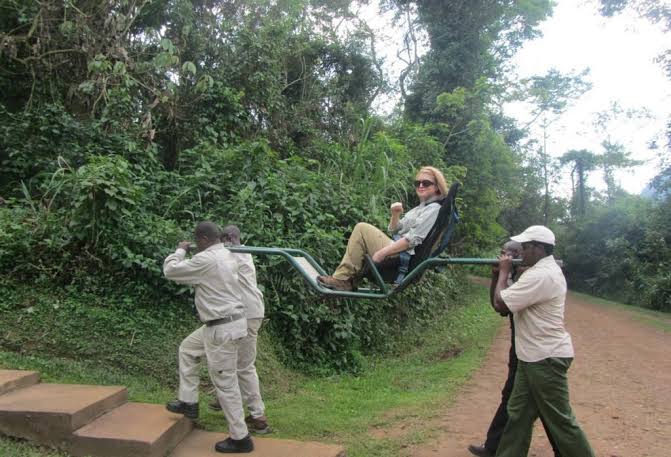
For visitors with limited mobility who cannot manage the trek on foot, a sedan chair carried by a team of porters can provide an alternative way to reach the gorillas. If you need this assistance, contact BLS Safaris well in advance to discuss your mobility needs, check availability and confirm the cost. Make these arrangements before purchasing your gorilla trekking permit so that the necessary support can be organised ahead of your visit.
Planning for Older Visitors and Mobility Concerns
Plan around what you can comfortably manage, rather than your age alone. Tell us about difficulty with stairs, steep descents, prolonged standing or getting into vehicles. These details affect accommodation and transfers as well as the forest walk. Ask about steps between your room, restaurant and vehicle pickup point. A lodge near the trekking start can still have steep paths within its grounds, so confirm room access before booking. Allow time to rest after arrival and keep the afternoon after trekking flexible. Avoid combining the trek with a long onward transfer or another demanding walk. Where substantial assistance is needed, confirm the arrangements before purchasing permits.
Does Gorilla Habituation Require More Stamina?
Gorilla habituation requires preparation for a longer outing. In Uganda, the experience allows up to four hours with the gorillas, compared with up to one hour during standard trekking. Neither allowance includes the complete walk to reach the group and return. The extra time is not necessarily spent sitting in one place. Be prepared to remain on your feet and move as directed by the guides when the gorillas change position. Walking difficulty still depends on their location, the terrain and conditions that day. If longer walks already leave you exhausted, discuss whether standard trekking would better suit your ability before booking habituation with BLS Safaris.

Recent Posts
Kenya Safari Tours: 7 Essential Things to Compare Before Booking
Kenya Safari Packages: How to Choose the Right Trip for You