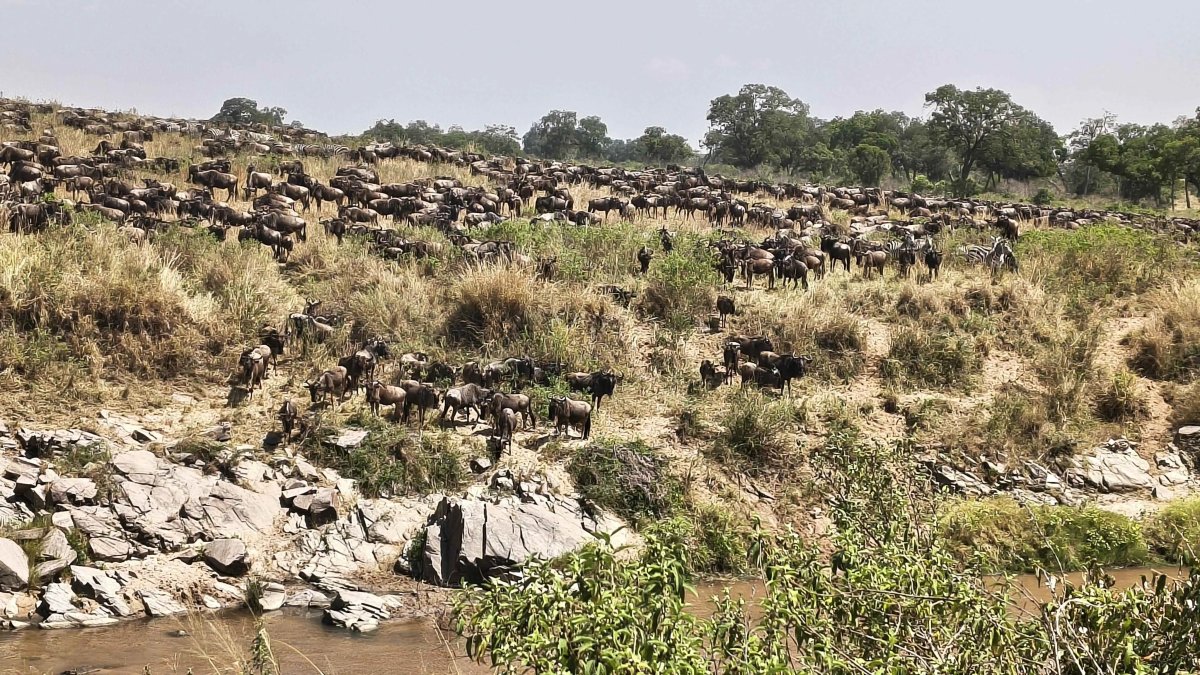
Three nights is a practical minimum for a Masai Mara safari, while four to five nights gives you more time for game drives without rushing. If you’re deciding how many days to spend in the Masai Mara, plan around four to six days, including travel, for a more relaxed visit.
It makes sense to want enough time for wildlife viewing while fitting your safari comfortably into a wider trip. A shorter stay can work, especially if you fly in, while extra nights leave more room for unhurried drives and a flexible schedule.
This guide explains how nights translate into safari days and game drives, what to expect on the plains, and how your ideal stay can change with your travel style. You’ll come away with a clearer idea of whether a brief visit, a first-time safari, or a longer stay suits you best.
Key Takeaways
- Three nights is a practical starting point for a first Masai Mara safari, while a longer stay allows more time for game drives.
- Count both nights and full days in the reserve when comparing itineraries; arrival and departure can limit time for wildlife viewing.
- Choose your trip length based on how you’ll travel, how much time you want on game drives, and whether the Masai Mara is part of a wider Kenya safari.
- The Great Migration is typically present from July through October, but river crossings are unpredictable, so extra nights give you more opportunities to look for them.
- Expect a full day in the reserve to be shaped by early starts, extended game viewing, and a picnic break during a full-day drive.
Game-drive days by number of nights
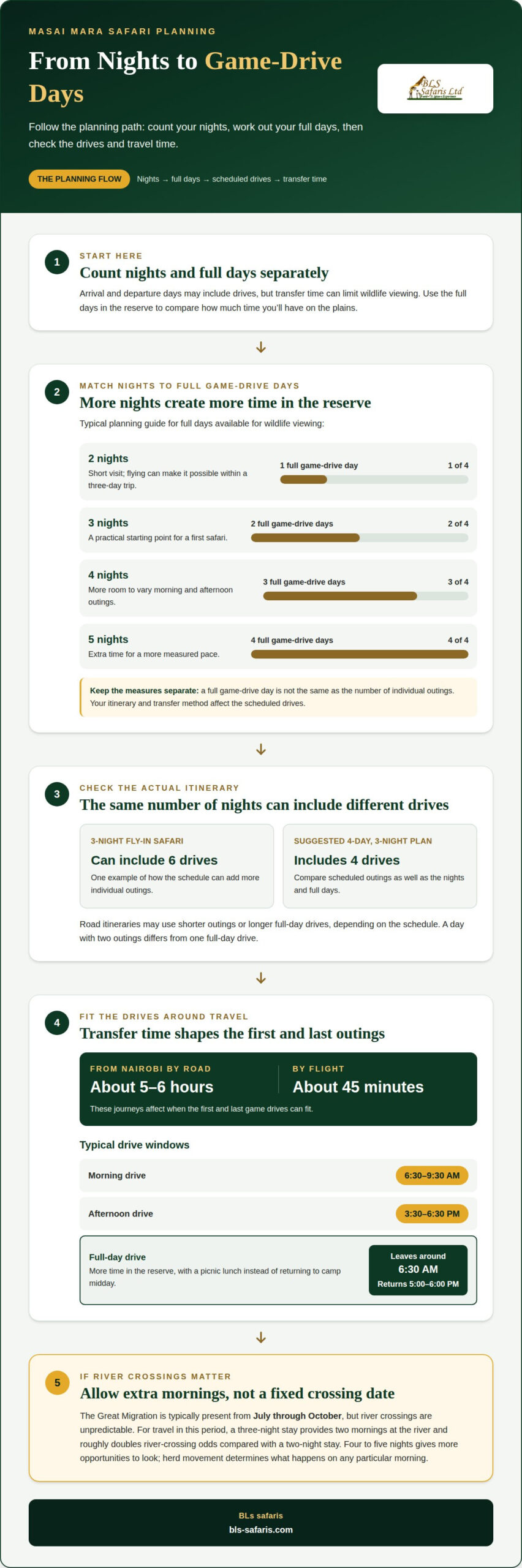
For a Masai Mara safari, count nights and full days separately. Two nights usually allow one full game-drive day, while three nights can provide two. Four nights can allow three full game-drive days, and five nights can allow four. Arrival and departure days may include drives, but transfer time affects how much wildlife viewing fits around them.
How Many Days in the Masai Mara for Game Drives?
Your drive total depends on the itinerary and whether outings are split into morning and afternoon drives. Road itineraries can include shorter outings or longer full-day drives, depending on the schedule. A three-night fly-in safari can include six game drives. One suggested four-day, three-night plan includes four drives, so compare the scheduled outings as well as the nights.
Standard morning drives in the Masai Mara run from 6:30 to 9:30 AM. Afternoon drives usually run from 3:30 to 6:30 PM. A full-day drive typically leaves camp around 6:30 AM and returns between 5:00 and 6:00 PM. That longer outing allows more time in the reserve, with a picnic lunch rather than a return to camp midday.
- Two nights: One full game-drive day; flying can make this short stay possible within a three-day trip.
- Three nights: Two full days for wildlife viewing, with drive totals shaped by the schedule and transfer method.
- Four nights: Three full game-drive days, leaving more room to vary morning and afternoon outings.
- Five nights: Four full game-drive days, with extra time to explore at a more measured pace.
Travel time helps explain the difference between a short visit and several full days on the plains. The road journey from Nairobi takes about 5-6 hours, while a flight takes about 45 minutes. Those journeys shape when the first and last drives can fit. If your plan includes a village visit, treat it as a separate activity when weighing drive time.
For practical planning, compare the nights, full days, and scheduled drives together. A day with two outings differs from a full-day drive, even if both occupy much of the day. An East Africa safari itinerary can also account for transfers between destinations, so the Masai Mara stay fits the wider route rather than being planned in isolation.
Recommended stay length for first-time visitors
For a first Masai Mara safari, plan on three nights. That gives you two full game-drive days, rather than relying on arrival and departure days for wildlife viewing. Those travel days may still include a drive, depending on your transfer and arrival schedule. Three nights offers a clearer balance between reaching the reserve and spending meaningful time on the plains.
A budget-friendly visit can last three days and two nights. It suits travellers with limited time, especially when the itinerary uses a flight to reduce transfer time. The trade-off is fewer full days in the reserve, so each morning and afternoon drive matters more. If a delayed arrival or early departure shortens a drive, there is less spare time to adjust the plan.
First-time visitors often benefit from more than one full day of game drives. Wildlife sightings vary across the reserve, and a second day lets you explore different areas instead of concentrating all your viewing into one outing. It also gives you time to experience the daily rhythm: an early morning drive, a break at camp, then an afternoon outing. The right stay depends on whether these drives are your main priority or one part of a wider Kenya trip.
A 4-day Masai Mara itinerary can provide two full days on the plains when travel time is managed efficiently. This can be a useful middle ground for a first safari, with time for multiple drives and transfers at either end. Compare the actual full days in the reserve, not just the total trip length. A five-day trip with long road transfers offers less viewing time than one planned around shorter transfers.
If river crossings are a priority, consider four to five nights in the Masai Mara. Crossings are unpredictable, so a longer stay gives you more mornings near the river without treating a crossing as a scheduled event. For travel between July and October, a three-night stay provides two mornings at the river and roughly doubles river-crossing odds compared with a two-night stay. Extra time creates more opportunities to watch the river area, while herd movement determines what happens on any particular morning.
Before choosing your stay length, match the number of nights to your travel pace and wildlife priorities. A three-night first visit works well for a focused introduction; a longer stay gives river viewing and additional game drives more space. If you’re shaping a first-time safari around those priorities, share your preferred trip length and wildlife interests to discuss an itinerary.
Stay length by trip type
The right Masai Mara safari length depends on whether the reserve is your main destination or one stop on a longer Kenya route. Count full days in each place, not only the total days shown in a package.
Time in the Reserve and Conservancies
There’s no separate fixed number of days for the national reserve versus private conservancies. Plan around the areas and experiences you want to include. If you want to visit both, allow time in each as well as for travel between them. Moving between areas uses time that could otherwise be spent on game drives.
For a reserve-focused trip, centre the schedule on the Mara and its wildlife viewing. A conservancy-focused plan shifts some time outside the reserve, while a combined itinerary divides days between both. Choose based on your priorities, whether that means exploring the reserve, visiting a conservancy, or including both in one safari.
Safari Package Length
A common Masai Mara safari itinerary runs for 4 days, while a classic Kenya circuit combining the Maasai Mara, Amboseli, and a Rift Valley lake takes 10 to 12 days. The package length matters because each extra destination needs space in the route, not just a place on the itinerary.
A four-day package suits a trip focused on the Mara, while a longer circuit leaves time to include other regions. For example, a four-day Masai Mara safari keeps the plan centred on the reserve. Compare the destinations and full days at each stop before choosing.
For a short trip from Nairobi, the departure and return schedule can shape the first and final safari days. A day counted in the package may include travel, so it does not always mean a full day of game viewing. Check the itinerary’s daily sequence: when it leaves Nairobi, when it reaches the Mara, and whether an afternoon drive is planned.
Migration-focused travel calls for a different kind of planning. The Great Migration is typically present in the Maasai Mara from July through October, but that season alone doesn’t determine how many days to book. Consider how much of your trip you want to devote to the Mara, then leave room for the rest of your Kenya route and its transfers. To give you the best shot at witnessing the river crossings and experiencing the great migration, plan for a 7-day migration safari in the Mara.
Think of trip length as a choice between focus and variety. A four-day plan concentrates the visit on the Masai Mara; a 10- to 12-day circuit can add Amboseli and a Rift Valley lake. The best fit depends on whether you prefer more time in one area or a wider view of Kenya.
What to expect during a stay
A stay in the Maasai Mara National Reserve usually revolves around time in the safari vehicle, rest at camp, and meals between outings. A full-day game drive lasts 8-12 hours and includes a picnic lunch in the reserve. That extended day lets you remain out during the middle hours instead of returning to camp for lunch.
On a full-day outing, a picnic break becomes part of the day’s rhythm. Pause to eat, then continue exploring with your guide. A day focused on wildlife viewing, for example, may combine time in one area with travel to another, rather than ending after a single sighting. The exact route depends on wildlife movement and the day’s plan.
Your stay can also include different kinds of outings. In Maasai Mara conservancies, some night game drives run from 6:30 to 9:00 PM. These are separate from daytime viewing and add an evening activity to the safari. Their availability depends on the area and itinerary, so they are not the same as a standard daytime drive in the national reserve.
- Daytime: A full-day drive lasts 8-12 hours and includes a picnic lunch.
- Evening: Some conservancy drives take place from 6:30 to 9:00 PM.
- Between outings: Time at camp breaks up long drives and provides space for meals and rest.
River crossings may be a key interest, especially during migration season. They are not scheduled events, so time near a river is an opportunity to observe, not a set appointment. A longer stay can create more chances to visit on different days, while wildlife movement determines what you see on each outing.
Flying to the Mara shapes your arrival day differently from travelling by road. Either way, check how the itinerary uses your time after arrival: it may include an afternoon drive, or plan the first outing for the following day. This detail affects how much wildlife viewing fits into the trip, even when two itineraries list the same number of nights.
Maasai cultural experiences, such as a village visit, can add a different focus to a safari day. Treat this as a separate activity when comparing schedules, rather than assuming it replaces or forms part of a game drive. A clear daily plan should show how time is divided between wildlife viewing, travel, meals, rest, and any cultural visit.
How long is the Great Migration season in the Masai Mara?
The Great Migration is typically present in the Maasai Mara from July through October, a four-month window. July to October are also identified as the peak migration months, when prices are highest. This season offers a period to plan around, but it doesn’t mean every day or river visit will bring the same activity.
For trip planning, distinguish the migration season from the number of days you spend in the reserve. The season describes when migration is typically present; your stay length determines how much time you have for game drives during that window. A visit in those months can focus on the migration, while the itinerary still needs to account for travel and time elsewhere in Kenya.
Choose travel dates by deciding which part of the July-to-October window fits your wider plans. Then compare how many complete days your itinerary leaves for the Masai Mara. A trip that arrives near the start of its stay and leaves soon after may offer less viewing time than its total calendar length suggests. Read each day’s plan, not just the season dates or package title.
River crossings interest many visitors during migration season, but they’re not scheduled performances. Herd movement and timing determine what unfolds at a river, so a date in July, August, September, or October can’t promise a crossing on a specific day. Build your trip around time for wildlife viewing, rather than treating a crossing as a fixed appointment.
The month you choose can also shape how you compare itineraries. A migration-focused plan should make clear how many days are spent in the Masai Mara, when game drives take place, and how transfers fit around them. If you’re comparing two trips in the same season, these details show which offers more viewing time and which includes more travel between destinations.
For a first visit, think of July through October as a planning window, not a guarantee of a particular sighting. Your safari can include wildlife viewing beyond migration activity, and the daily schedule affects how much time you spend exploring. Match your dates to your priorities, then choose a trip length that leaves enough time for the reserve within your wider Kenya itinerary.
BLS safaris: East Africa Safaris
BLS safaris can shape a Kenya safari around a Masai Mara stay that fits your wider trip. If you’re weighing nights in the reserve against transfer time or other destinations, local guidance and route planning can bring those elements together. Your itinerary can be tailored to your priorities, whether you’re planning a Mara-focused visit or including it in an East Africa safari.
Once you’ve decided how much time you want for game drives and which season suits your plans, BLS safaris can help shape the next steps. The company also plans Uganda and Tanzania safaris for travelers building a broader regional journey. Share your preferred dates, trip length, and wildlife interests to start planning.
Contact BLS safaris to discuss your Masai Mara plans.
Shape a safari that fits your plans
Deciding how many days to spend in the Masai Mara is a starting point for shaping the wider journey. Consider what you want the trip to feel like: focused wildlife viewing, a slower pace, or time across several East African destinations. A good itinerary connects those priorities with your travel dates and the route between stops.
BLS Safaris offers Kenya safaris alongside East Africa and Uganda safaris, with options for a Mara-focused trip or a broader regional journey. Share the experiences you’re hoping for and the time you have available to start shaping a practical route.
Your Masai Mara visit can be one thoughtful part of a journey built around your interests. When you’re ready, share your plans with BLS Safaris and start shaping a safari that feels right for you.
Frequently Asked Questions
How Many Days Do You Need in Maasai Mara?
For most visitors, allow five to six days for a more relaxed Mara visit, including travel. This leaves room for time in the reserve without making every transfer day carry the weight of a full safari day. If your schedule is tight, compare the actual time on the plains rather than choosing by total trip length alone. The best fit depends on how much of your wider Kenya itinerary you want to spend here.
Can you see the Great Migration in 3 days?
Yes, a three-day visit can fall within the Great Migration season, which typically runs from July through October in the Maasai Mara. A three-day, two-night fly-in trip is one way to make a short visit possible. The season offers a chance to view migrating wildlife, but river crossings are unpredictable. Before choosing a short itinerary, check how the arrival and departure schedule affects your time in the reserve.
Does Staying Longer Increase Your Chances Of Seeing River Crossings?
Yes. A longer stay gives you more mornings near the river, creating more opportunities to observe a crossing. For travel between July and October, a three-night stay provides two mornings at the river and roughly doubles river-crossing odds compared with a two-night stay. This describes the opportunity across the stay, not a crossing scheduled for a particular morning. The itinerary’s placement of drives near the river also matters.
How Does Safari Length Affect Your Budget?
A longer safari usually means more nights of accommodation and additional transport or park days, while a shorter trip can concentrate expenses into fewer days. The total also depends on accommodation level, travel method, and how the itinerary combines destinations. For a tailored safari, the price depends on the case and is given after a quote request. Comparing what each itinerary includes helps you weigh the cost against time spent in the reserve.
How many days should you spend in the Masai Mara?
Choose the length according to your main goal: a focused wildlife visit, time for migration viewing, or a broader Kenya journey. Four to six days gives many travelers more room to enjoy the reserve and fit travel into the plan. If the Masai Mara is one stop among several, consider how transfers affect the time available here. Count full days in the reserve separately from the overall trip calendar.
How many nights are recommended for a Masai Mara safari?
Three nights is a practical minimum for a safari, while four to five nights suits travelers who want more time for game viewing. Extra nights can make the schedule less dependent on arrival and departure days, especially when your route includes road transfers. Flying can reduce travel time on a short visit. Compare overnight stays with full days and planned drives before settling on a length.
What can you see in the Masai Mara on a 3-day safari?
A three-day safari gives you time for game drives and wildlife viewing, though the schedule depends on how you arrive and leave. With two nights, you have one full game-drive day; outings on arrival and departure days depend on transfer timing. A full day may include morning and afternoon drives. Wildlife movement and the areas explored shape each outing, offering different views of the reserve.
How many days are needed to see the Great Migration in the Masai Mara?
Plan around the season and the time you want for game drives, rather than expecting a set number of days to produce a particular sighting. The Great Migration is typically present in the Maasai Mara from July through October. A three-night stay provides two mornings at the river for travel during that period, while four to five nights allows more time for viewing opportunities. River crossings remain unpredictable, so plan for the wider wildlife experience too.