
Planning a Photography Safari in Uganda
Plan your journey around the subjects, light and field time that matter to your photographs.
Forest Primates / Savannah Wildlife / Birds / Landscapes
Follow the light. Give the story time.
Uganda lets one camera journey move through rainforest, open savannah, papyrus wetland, broad rivers and high mountain country. The change is not only scenic. Each setting asks you to use a different pace, lens, position and way of reading light. A gorilla in a dark forest opening, an elephant beside the Nile and a Shoebill among papyrus cannot be photographed in the same way.
Build the safari around the pictures you want to make, not the number of parks you can name. Give the strongest subjects more than one chance, keep the first and last light for field work, and allow enough room in the vehicle for every photographer. The result is a calmer journey and a set of images that shows more than wildlife at close range.
Begin With the Story You Want to Bring Home
Choose one main story before you draw the route. It may be primate life in the forest, wildlife around water, remote savannah, birds in several habitats or a wider record of Uganda. Your second and third interests can support that story, but they should not pull the journey in every direction.
A primate-led safari needs more forest time and fewer long lenses. A savannah-led trip needs repeat game drives , good vehicle space and days that begin before sunrise. A mixed portfolio works best when each stop changes the look of the pictures. Move from forest to water and then to open country instead of visiting several places that give you the same frame.
- For behaviour, protect repeat sessions rather than adding another destination.
- For variety, combine different shooting platforms such as a vehicle, boat and forest trail.
- For a strong photo story, include wide scenes, animal relationships and habitat details alongside portraits.
Match Each Destination to a Different Image
| Area | Photographic experience | How it fits the route |
|---|---|---|
| Bwindi or Mgahinga | Work on foot in mountain forest for gorillas, forest detail and a strong sense of habitat. Bwindi gives layered rainforest. Mgahinga adds bamboo and the Virunga slopes. | Pair with golden monkeys around Mgahinga or with Lake Mutanda landscapes. Continue to Queen Elizabeth when you want an open savannah contrast. |
| Kibale Forest | Follow chimpanzees through shaded forest where movement can change from the ground to the canopy in seconds. The main challenge is reaction speed in low light. | Add Bigodi for wetland edges and community-led walks, then continue to Queen Elizabeth for vehicle and boat photography. |
| Queen Elizabeth | Move between the Kasenyi plains, crater country, Ishasha and the Kazinga Channel . One park can produce vehicle, water-level and landscape images. | Combine with Kibale for chimpanzees or Bwindi for gorillas without a cross-country jump. |
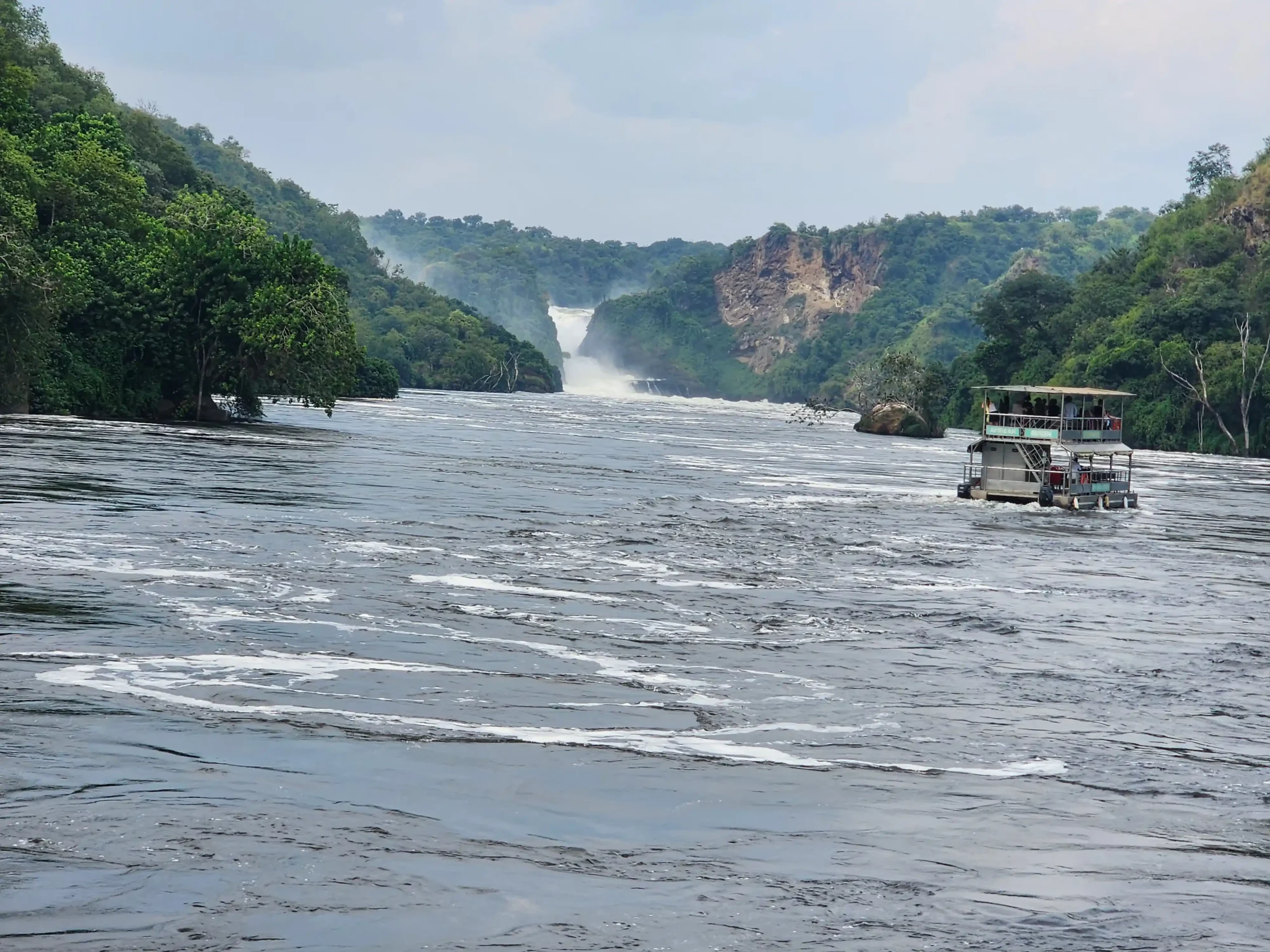
| Murchison Falls | Let the Nile shape the collection. Northern game drives give open country, while boat sessions add shoreline behaviour, reflections and the force of the falls. | Add Budongo when forest and chimpanzee work matters, or use the park as the main wildlife section of a shorter northern route. |
| Kidepo Valley | Use the Narus Valley, rocky ground and mountain walls to place wildlife inside a wide northern landscape. The setting suits dust, silhouettes and small subjects within a large frame. | Give the park several nights because of the long approach. It works best as a main destination, not a quick addition to a western circuit. |
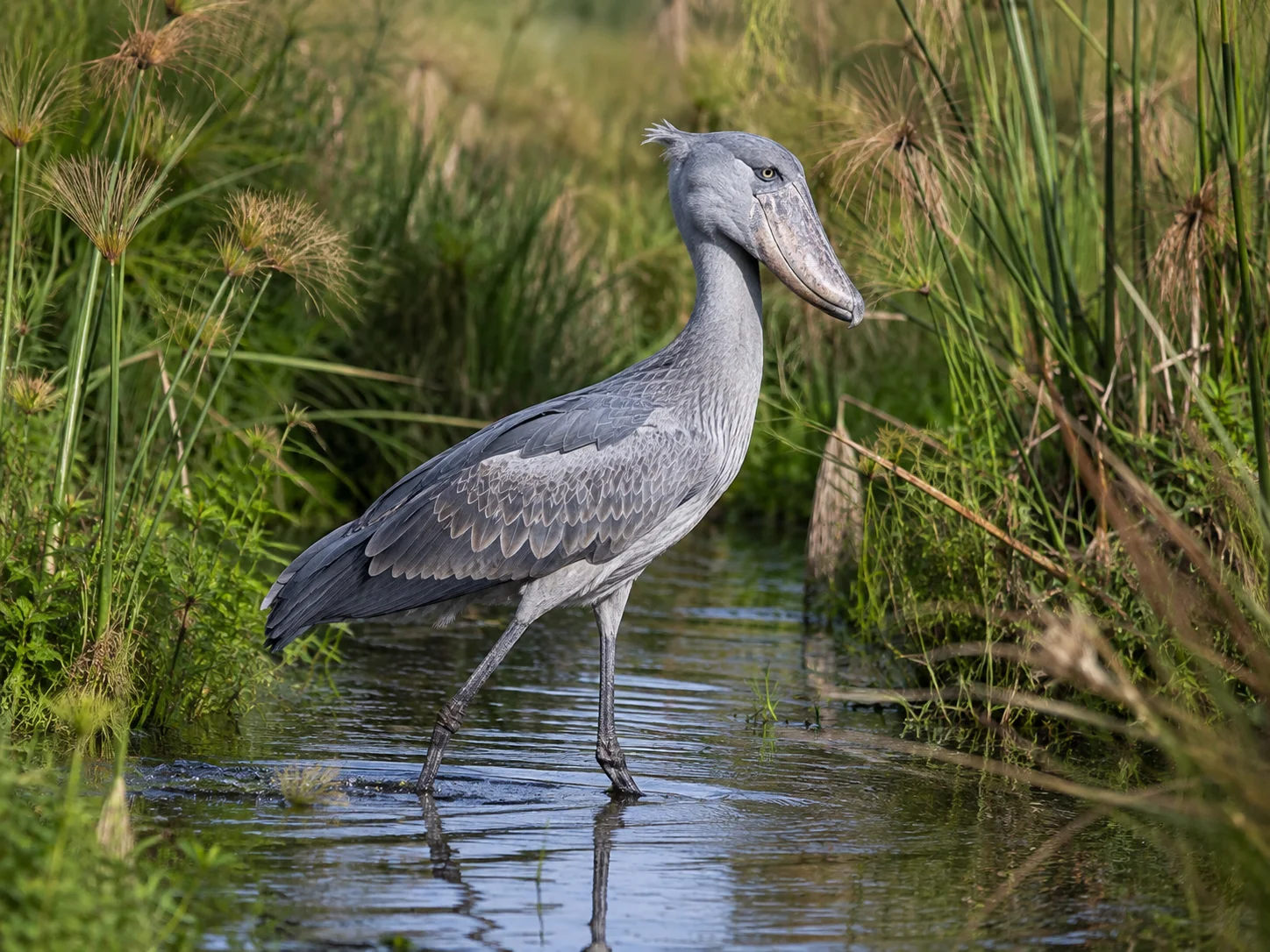
| Mabamba Wetland | Travel through papyrus channels by canoe for low-angle Shoebill and wetland images close to Entebbe. The calm water also supports reflections and wider habitat frames. | Place it at the start or end of the safari, leaving enough time around the flight schedule and changing lake conditions. |
Let the Light Set the Pace of the Day
Morning and evening do not give the same photograph. At dawn, the air is cooler, shadows are softer and wildlife often begins moving before the day becomes busy. Mist may remain over a forest, valley or lake. This is the time for quiet colour, breath in cool air, feeding activity and tracks that still hold detail.
Late light feels warmer and more dramatic. Dust catches the sun, the sky can carry more colour and backlight can outline hair, horns or grass. Animals may begin moving towards water or open ground as the heat drops. Keep enough time to stay with one promising subject until the light leaves rather than starting the drive back too early.
Midday still has a job. Use it for transfers, batteries, file backups and rest. It can also suit forest work where the canopy softens hard sun, or a boat trip when the activity matters more than warm colour. If a cloud covers the sun, a harsh hour can quickly become good portrait light. Read the conditions instead of following the clock without thought.
Know How Each Shooting Position Changes the Frame
Inside the Safari Vehicle
Vehicle space affects the photographs before the drive begins. Reserve each seat row for one camera user when long lenses and two bodies are in play. Keep the main lens mounted, the second body within reach and the bag low enough that another person can turn. Agree on how you will change sides before a sighting becomes active.
Use a beanbag on the window, door or roof opening when the vehicle design allows it. Request a stopped engine when vibration softens a still subject. Do not chase a tighter frame by crowding the animal. A better result often comes from holding a safe position and waiting for the subject to enter clear light.
From a Boat
A seat close to the water puts the lens near shoreline height and removes much of the downward angle seen from a vehicle. It is ideal for drinking animals, hippos, crocodiles, birds, reflections and wildlife crossing the bank. The platform never becomes fully still, even with a quiet engine, so begin with more shutter speed than you need on solid ground.
Secure loose straps and keep the bag closed when you are not changing equipment. Sit where the lens can turn without crossing another guest. A zoom is easier than a fixed lens when the boat changes distance. Keep a cloth close for spray, and never place an unsecured camera on the edge of the boat.
Compare boat safaris in Uganda when choosing the river, channel or wetland setting that best suits your photography plans.
On a Forest Trail or Guided Walk
On foot, every item has to be carried and protected. Use one main lens, limit loose accessories and keep both hands free on steep or wet ground. A porter can carry the camera bag and help on difficult sections while you keep control of the camera you are using.
Forest and walking sessions also reduce your freedom to change position. The guide controls the route, safety and distance. Move only when told, then use small changes in height or body angle to clear a leaf or improve the background. The field skill is not getting closer. It is making a stronger frame from the position you are given.
Our guide to walking safaris in Uganda helps you consider suitable places for guided photography on foot.
Give the Main Subjects a Different Role
Primates for Expression and Relationships
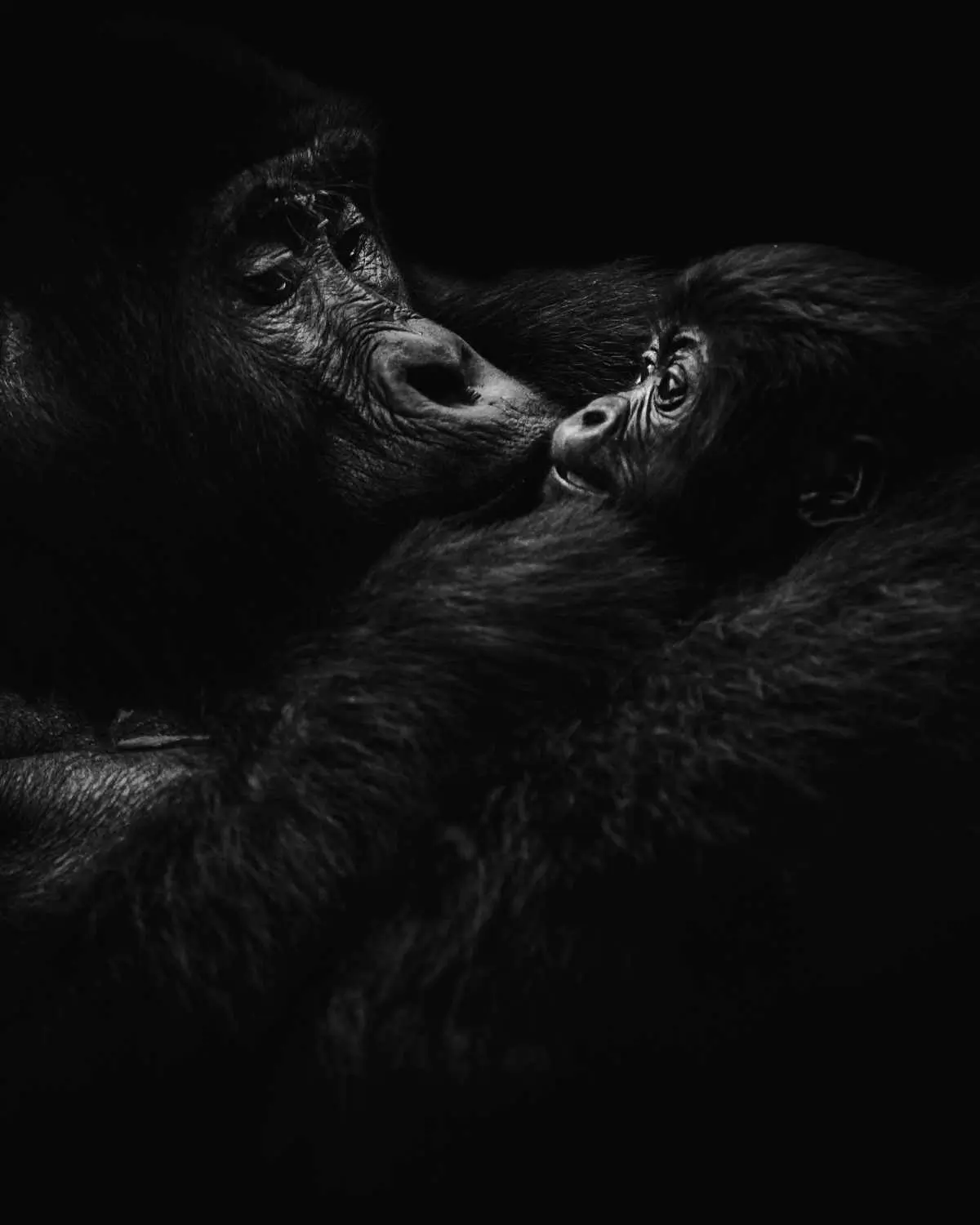
Gorillas and chimpanzees bring faces, hands, grooming, play and family bonds into the portfolio. Standard gorilla and chimpanzee tracking allows a maximum of one hour with the animals after they are found. Habituation experiences allow up to four hours. That longer time can reveal a fuller sequence, but the forest still controls light and sightlines.
Set the camera before the final approach and keep flash disabled. A flexible zoom can move from a close face to the animal within its surroundings while the lens stays mounted in damp air. Watch how one animal responds to another. A glance, touch or change in body position often carries more meaning than a tight face alone.
If chimpanzee behaviour is your main subject, read about chimpanzee habituation in Uganda before deciding which experience to book.
Savannah Wildlife for Movement and Scale
Open country gives you room to decide whether the animal or the landscape leads the picture. A long lens can isolate an eye, trunk or hunting stare. A wider frame can show the path to water, the size of a herd or the weather building behind the subject. Keep both choices ready before the animal starts moving.
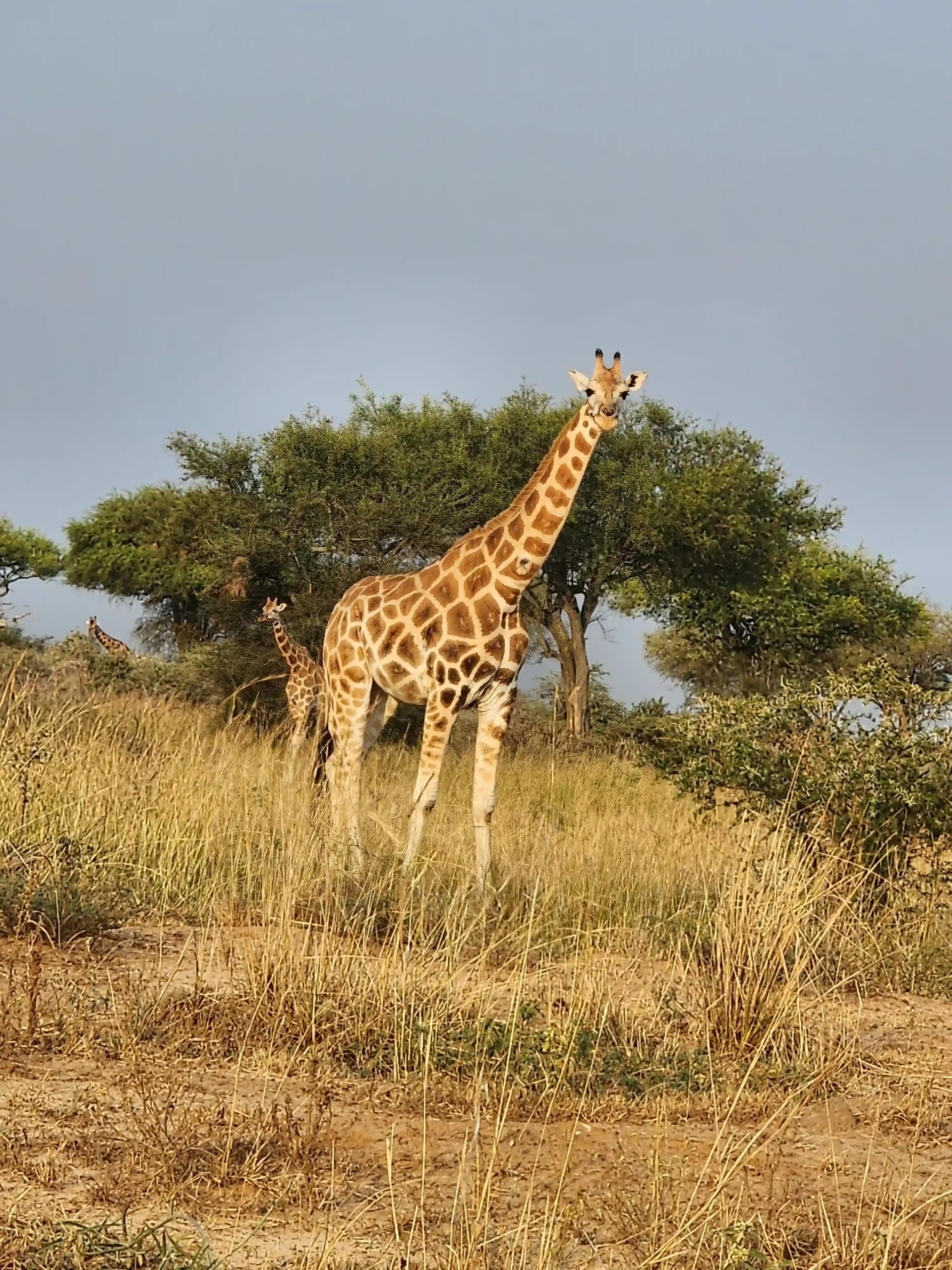
Look for behaviour instead of collecting one portrait of every species. Calves staying between adults, giraffes separating their necks, lions raising their heads and buffaloes moving through dust all give a sequence. Tell the guide which behaviour interests you so the vehicle can hold a good angle without blocking the animals.
Birds for Timing and Precision
Birds test focus, balance and reaction time across every part of the route. A Shoebill may stand still long enough for careful composition, while a kingfisher or bee-eater can turn the same session into fast flight work. Photograph the bird, then step back with the lens and show the papyrus, riverbank or woodland that explains where it lives.
If birds are a main goal, set aside full mornings with a specialist guide. Do not reduce the session to a short stop between mammal drives. A known perch, feeding edge or flight line gives you a better chance than driving on and reacting to every bird you pass.
Use our Uganda birding safaris guide to choose habitats that complement the bird photographs you want to make.
Landscapes and People for a Sense of Place
Use landscapes to join the safari together. Crater rims, the Nile, Virunga slopes, mountain forest and wide northern valleys show how much the country changes. Photograph one place in more than one way: a broad view, a compressed layer with a telephoto and a small detail that carries the weather or texture.
When people enter the story, begin with conversation and permission. Let a guide make the introduction where needed. Show the setting around a craft, market or daily task rather than taking a close portrait and leaving. Do not photograph a child or private moment without clear consent from the responsible adult.
Carry One Kit Across Several Environments
A two-lens setup covers most Uganda photography safaris. Use a wildlife zoom such as 100 to 400 mm, 100 to 500 mm or a similar range for game drives, boats and larger birds. Add a 24 to 70 mm or 70 to 200 mm lens for primates, wider wildlife scenes, people and landscape detail. The exact choice matters less than knowing how quickly each lens focuses and how steadily you can hold it.
Two camera bodies reduce lens changes in dust, rain and humid forest. Keep the wider lens on one body and the longer lens on the other. If the weight affects your walking or control, use one body with one flexible zoom. A smaller setup that stays ready is more valuable than equipment that remains packed away.
Field Bag Essentials
- Spare batteries and enough memory for bursts, long days and delayed charging.
- A beanbag for the vehicle and a strap that can be secured inside a boat.
- A fitted rain cover, dry bag and separate cover for the full backpack.
- Several clean lens cloths, a soft brush and sealed bags for dusty items.
- A wide lens for habitat, lodge grounds and landscape stops.
- Binoculars for finding subjects before lifting the long lens.
Use Settings That Protect the Moment
| Scene | Starting point | Reason |
|---|---|---|
| Walking mammal | 1/800 to 1/1250 sec, widest suitable aperture, Auto ISO | Keeps the eye and feet sharp while the animal changes pace. |
| Running or flight | 1/1600 to 1/2500 sec, continuous focus, short burst | Freezes faster movement and gives several wing or stride positions. |
| Primate at rest | Start near 1/320 to 1/500 sec with a wide aperture | Protects detail from small body movement in low forest light. |
| Boat photography | Begin near 1/1000 sec and adjust for subject speed | Covers the movement of the boat, water and photographer. |
| Landscape | Low ISO, chosen aperture and support when allowed | Lets depth, weather and light shape the frame without rushing. |
Protect the Equipment From Uganda’s Field Conditions
Rain, dust and humidity can appear on the same journey. Keep the rain cover where you can reach it without opening the whole bag. On dusty drives, close unused compartments and change lenses only when the vehicle is still and the air has settled. Clean the outside of the bag before opening it in the room.
Condensation forms when cold equipment meets warm, wet air. Leave the camera inside the closed bag while it warms, then open it after the temperature begins to balance. Silica gel helps inside a dry case, but it does not replace careful handling. At the end of the day, wipe moisture and dust away before charging or backing up files.
Use two separate backups when possible. Copy the cards to a drive each evening and keep the cards until the second copy is secure. Store the two copies in different bags. A long safari can be repeated in the future, but the exact behaviour and light from one day cannot.
Work With the Driver Guide Before the First Drive
Explain the main subjects, preferred angles and pace before you enter the park. Tell the guide whether you favour behaviour, close portraits, backlight, birds or animals within the landscape. This helps the guide read the sighting with you instead of learning your style after the best light has passed.
Use short, clear directions in the field. Ask for a small move forward, a pause, the engine off or a safe change of angle. Then listen when the guide explains why the vehicle should stay where it is. Animal space, road rules, terrain and other guests can limit the position. Good teamwork protects the wildlife and improves the chance of a natural moment.
Choose the Right Vehicle Group
A private vehicle gives you full control over stopping time, seat choice and equipment. It suits photographers with a clear shot list, heavy lenses or a need to wait for one subject. It also makes it easier to protect sunrise and continue through late light without asking non-photographers to follow the same pace.
A small group can work well when everyone shares the same goals. Limit the number of photographers so each person has a clear side and enough room to turn. Agree on lens space, seat rotation and how long the group will stay at a sighting. The problem is not sharing. It is mixing guests who want very different days.
Choose the Season by the Look You Prefer
June to September and December to February often bring drier roads and easier movement between parks. Open areas may carry less grass, water can draw animals into visible places and long travel days are less likely to be slowed by rain. Dust, pale grass and strong evening colour give the photographs a dry-season character.
Wetter months bring green backgrounds, fuller clouds, forest mist and stronger colour in the landscape. Rain can interrupt a drive or make a trail harder, yet the light after a shower can be excellent. Choose these months when atmosphere matters more than predictable roads. Protect the equipment and leave enough time for a session to pause and restart.
Uganda works throughout the year, so match dates to the main subject. Resident birds remain present, primate tracking continues and savannah wildlife does not disappear when the rain comes. The choice is about the look, access and level of weather change you are ready to handle.
Allow Enough Days for the Pictures to Develop
Count full field days, not only nights. Arrival, park transfers and domestic flights can remove the light you hoped to use. Two nights in a park may give only one dawn and one evening. When one subject matters deeply, add another night before adding another place.
| Length | Best fit | What the time allows |
|---|---|---|
| 5 to 7 days | One clear story with one or two bases | Concentrate on gorillas and a nearby savannah park, or use Murchison as the main wildlife destination with a forest or wetland addition. |
| 10 to 14 days | A balanced Uganda portfolio | Combine primates, a savannah park and a boat setting while keeping several full mornings and evenings for photography. |
| 15 days or more | Repeat chances and remote settings | Add Kidepo, specialist bird sites or several primate sessions without turning every change of habitat into a rushed transfer. |
Browse our Uganda safari packages for route ideas, then ask us to adapt the timing, vehicle space and number of nights around your photography priorities.
Keep the Photograph Honest
Wildlife welfare comes before the frame. Never ask the guide to block an animal, move too close or change its behaviour. Do not use food, calls or sudden movement to attract attention. Follow every ranger instruction during primate tracking, guided walks and boat sessions. Some positions will not be available, and some encounters will not produce a clean photograph.
The strongest Uganda collection will show patience as well as skill. Let animals move on their own terms, keep the habitat in the story and accept the weather you are given. When the route, light and field conduct work together, the pictures feel connected to the country rather than taken from a list of sightings.
Photography Safari FAQs
How many days should I allow for a photography safari in Uganda?
Which destinations work well together for photography?
What camera lenses should I bring?
How much time can I spend photographing gorillas and chimpanzees?
Is a private safari vehicle better for photographers?
Can I combine bird photography with a general wildlife safari?
Are boat safaris useful for wildlife photography?
How should I protect my camera equipment during the safari?
Build your Uganda journey around the photographs you want to make.
Share your main subjects, travel dates, equipment needs and preferred pace. We will help plan a route with suitable guiding, vehicle space and time in the field.