A Uganda safari brings together several moving parts, and what to include in a Uganda safari depends on the parks and experiences you choose. Gorilla and chimpanzee trekking require permits; park fees, game drives, boat cruises, and guided nature walks may also form part of the itinerary. Review the trip plan to see what is included and how the activities fit together.
It helps to know what your trip covers before you set off. This guide explains how permits and park fees fit into an itinerary, what to expect from wildlife activities, and how travel between destinations shapes the experience. You’ll also see how gorilla trekking in Bwindi and Mgahinga differs from chimpanzee trekking in Kibale, helping you plan around your interests.
Key Takeaways
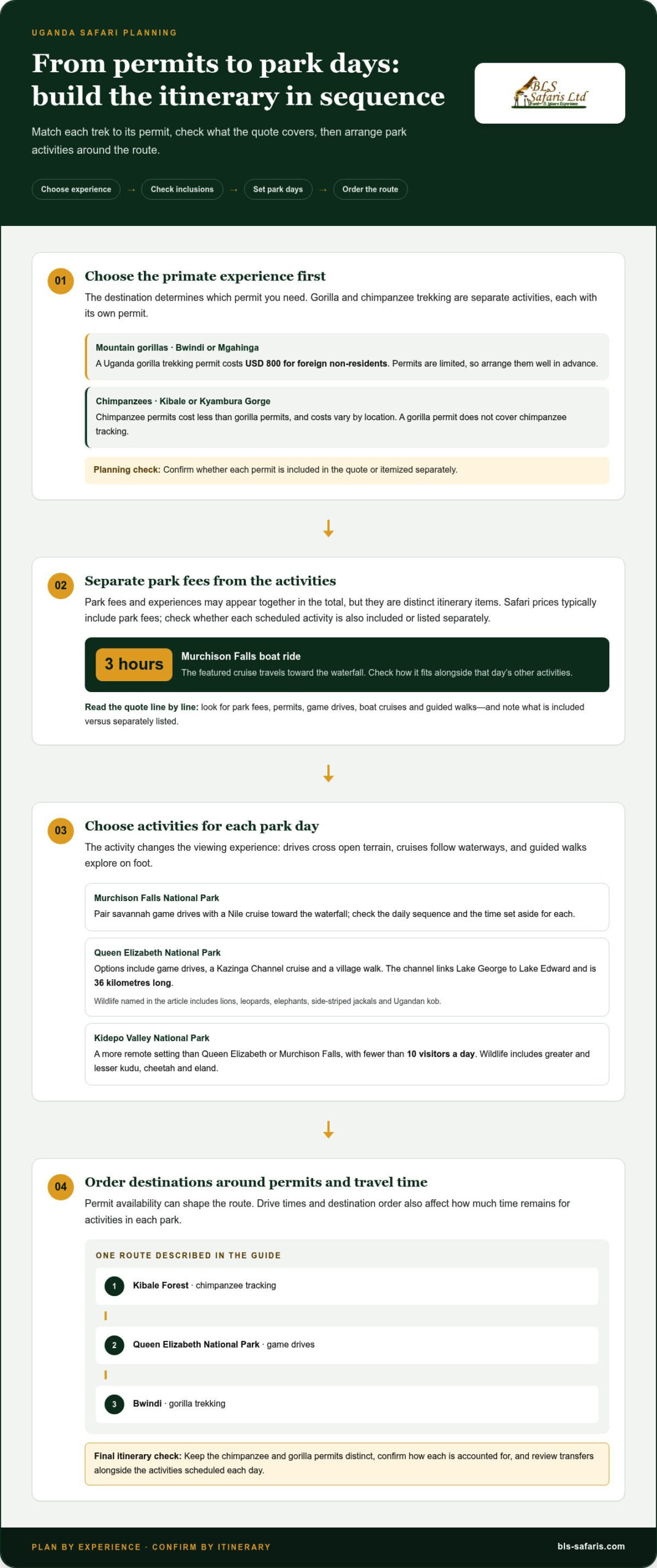
- Gorilla trekking takes place in Bwindi and Mgahinga, while Kibale is known for chimpanzee trekking. Plan for the relevant permit in each destination.
- A Uganda gorilla trekking permit costs USD 800 for foreign non-residents; chimpanzee permits cost less and vary by location.
- Read the itinerary to see how park fees and activities are handled, including game drives, boat cruises, and guided walks.
- At Murchison Falls National Park, a boat ride can add a different perspective on the landscape and wildlife; the featured itinerary’s cruise lasts 3 hours.
- Consider drive times and the order of destinations when choosing an itinerary, as they shape how much time you have for activities in each park.
1. Primate Trekking Permits: How Much Are the Permits and Are They Included?
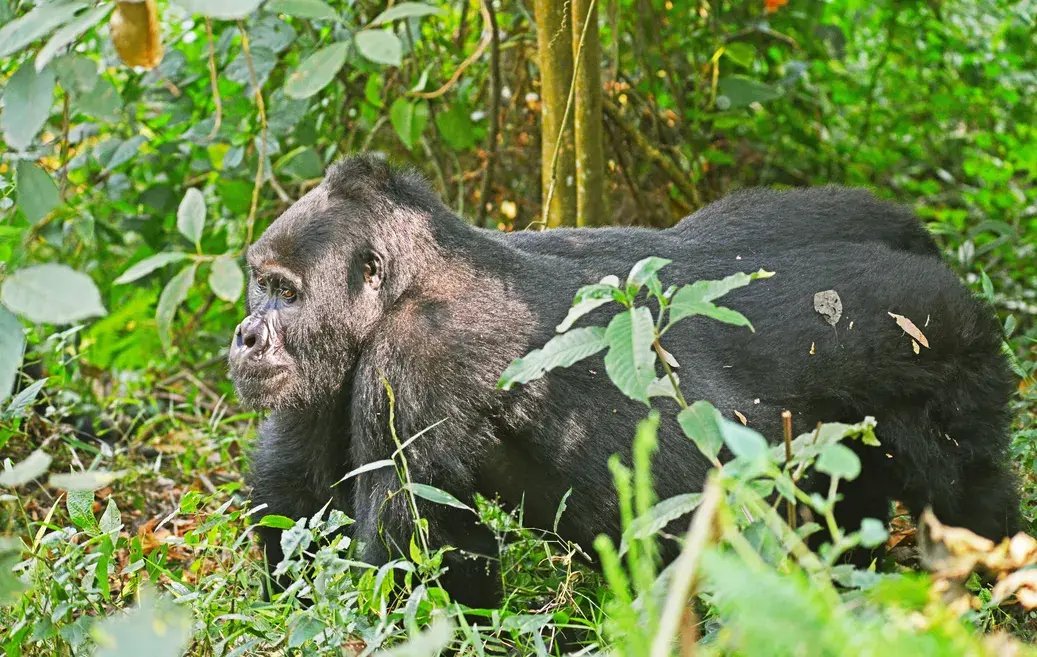
Mountain gorilla trekking takes place in Bwindi Impenetrable Forest National Park and Mgahinga Gorilla National Park. A Uganda gorilla trekking permit costs USD 800 for foreign non-residents. This permit is a distinct part of the trip budget, so look for it in the itinerary’s inclusions. A safari quote may show the permit as included or list it separately. Comparing the itemized costs helps you understand what the quoted total covers before choosing your adventure.
Gorilla permits are limited, so travelers are advised to arrange them well in advance. A permit is tied to a trek in Bwindi or Mgahinga, not to general wildlife activities. Choose the destination and travel sequence around the permit, and allow time to reach the forest. If your trip combines Bwindi gorilla trekking with savannah wildlife viewing, account for the journey between the forest and the parks. The route affects how much time is left for game drives.
Chimpanzee trekking is a separate activity with a separate permit. Kibale Forest is identified for chimpanzee tracking, while chimpanzee permit costs are lower than gorilla permit costs and vary by location. Kyambura Gorge is another place to consider for chimpanzee tracking within a Uganda wildlife itinerary. The location shapes the route and the permit cost, so compare the destination as well as the activity. For a forest-focused experience, Kibale Forest chimpanzee tracking is a distinct option.
To combine mountain gorillas, chimpanzees, and savannah wildlife, plan the stops in a practical order. One route could pair chimpanzee tracking in Kibale with game drives in Queen Elizabeth National Park, then continue to Bwindi for gorilla trekking. Each primate activity requires its own permit: a gorilla permit does not cover chimpanzee tracking. Keep the two permits distinct in your itinerary and compare the full plan with a route focused on savannah wildlife.
Before choosing a route, decide which primate experience matters most, then build other stops around it. Choose Bwindi or Mgahinga for mountain gorillas, and either Kibale, Budongo Forest, Kalinzu Forest, or Kyambura Gorge for chimpanzees. Arrange permits early, as availability can shape your itinerary. Review how each permit is accounted for in the trip plan. This sequence clarifies what to include in a Uganda safari and helps align forest trekking with wildlife viewing.
2. Park Fees and Activities: What Experiences Are Included?
Park fees and activities are separate parts of a Uganda safari itinerary, even when they appear together in the total. Safari prices typically include park fees, while the experiences scheduled inside each park depend on the route. At Murchison Falls National Park, the featured boat ride lasts 3 hours. Review the itinerary line by line to see whether that cruise, game drives, and other activities are included or listed separately.
The Murchison Falls cruise adds a river perspective to wildlife viewing. Visitors can travel by boat toward the waterfall and watch for wildlife along the way. Since the listed ride lasts 3 hours, it takes a meaningful portion of the day. Look at the planned start and finish of the cruise alongside that day’s other activities, rather than assuming it fits around a full game-drive schedule.
Queen Elizabeth National Park offers a different mix of savannah and water-based viewing. Its wildlife includes lions, leopards, elephants, side-striped jackals and Ugandan kob. The Kazinga Channel links Lake George to Lake Edward and is described as 36 kilometres long. A cruise there gives visitors another way to view the park’s landscape and animals. Check whether the itinerary schedules the channel cruise as an included activity, separate from the park fee.
A village walk near Queen Elizabeth can add a community-focused experience alongside game drives and a Kazinga Channel cruise. Each activity offers something different: game drives focus on wildlife, the cruise follows the waterway, and a walk gives you time on foot in the local area. Kibale is a separate forest destination for chimpanzee tracking, so adding it changes the route. Review the itinerary to see which stops are planned and how they connect.
Choose clothing for both open vehicles and time outdoors. Breathable layers, long trousers and a light rain layer are practical options. For walks around Queen Elizabeth or forest tracking near Kibale, wear closed-toe walking shoes or sturdy boots with a secure grip. Keep a warmer layer handy for early starts, when conditions on a game drive can be cooler.
Kidepo Valley National Park offers a more remote safari setting than Queen Elizabeth or Murchison Falls. It receives fewer than 10 visitors a day, making it a distinct choice for travelers seeking a quieter park experience. Its wildlife includes greater and lesser kudu, cheetah, and eland. When comparing routes, weigh Kidepo’s remoteness against the other parks and activities you want to include. A useful next step is to shape a safari itinerary around your preferred activities, with park fees and experiences presented clearly.
3. Game drives, boat cruises, and guided nature walks
Uganda’s safari activities offer different ways to experience wildlife. Game drives cross open terrain, boat cruises follow rivers and channels, and guided walks explore areas on foot. At Murchison Falls National Park, you can pair savannah drives with a Nile boat cruise toward the waterfall. Ask for each activity to be shown on the itinerary by day, alongside transfers between parks. This makes it easier to see how much time is set aside for wildlife viewing.
At Murchison Falls, the Nile cruise offers wildlife viewing from the water, while a game drive explores the park by vehicle. The contrast shapes the day: a boat trip follows the river, while a drive covers land habitats. Review the itinerary for the activity sequence and where each day begins and ends. The experiences complement one another but are not interchangeable, so account for the journey between activity areas when reviewing the route.
In Queen Elizabeth National Park, the Ishasha sector is known for tree-climbing lions. A drive through Ishasha gives you the opportunity to look for them among the trees, along with other wildlife in this part of the park. Sightings vary with animal movement and conditions, so the itinerary should allow time in the relevant habitat without promising a sighting. Compare an Ishasha drive with other Queen Elizabeth activities, such as a Kazinga Channel cruise, to see how the route balances land and water viewing.
Transport also affects how game drives work. A private 4×4 vehicle gives a travelling party its own vehicle for the route, while a driver-guide handles navigation and helps interpret wildlife and landscapes. Confirm the itinerary’s transport arrangement in its inclusions, and note whether the same vehicle connects Entebbe with the parks. The arrangement matters on longer routes because transfers and wildlife viewing both use travel time. A clear daily plan shows when the vehicle is transferring between destinations and when it is available for a drive.
Lake Mburo National Park offers other ways to experience Uganda’s wildlife, including a safari walk, horse-riding safari or mountain-bike wildlife viewing. A walk changes the pace from a vehicle-based drive and brings attention to tracks, plants and smaller details. Check how the activity fits with the day’s route and game drive. For a varied safari, compare vehicle viewing in Murchison Falls or Queen Elizabeth with a guided walk at Lake Mburo, and consider how much time is assigned to each.
4. What should I expect on a Uganda safari?
A Uganda safari combines travel between destinations with wildlife viewing, primate experiences and time at lodges. A two-week itinerary can link Murchison Falls, Kibale Forest, Queen Elizabeth National Park, Bwindi Impenetrable Forest and Lake Mburo. Each stop has a different focus, so allow time for travel as well as activities. Review the route day by day to see where drives, trekking and time at the lodge fit.
Private, tailor-made itineraries can organize those experiences around your priorities, such as gorilla trekking, chimpanzee tracking, or savannah game drives. Destination-based plans focus on a particular area, while a broader route connects several parks. For example, a plan combining Kibale and Bwindi adds primate experiences, while Queen Elizabeth adds savannah wildlife viewing. Lodges and transfer timing also shape the pace, whether you prefer a simple route or a luxury stay.
Uganda’s southern region has dry seasons from June through August and December through February, lighter rain from September through November, and heavier rain from March through May. Choose travel dates around your preferred activities and destinations, then consider how seasonal conditions fit the route. The right timing depends on whether gorilla trekking, game drives, or birding is your main priority.
Travel documents and visa requirements depend on your nationality, purpose of travel and planned stay in Uganda. Check the entry requirements for your passport and prepare the necessary documents before departure. Pack breathable layers, long trousers, a rain layer and sturdy, closed-toe shoes for forest walks, game drives and changing conditions between parks.
Plan vaccinations and medicines around your health history, itinerary and activities, including time in forests such as Bwindi or Kibale. Discuss these factors with a travel-health professional before departure. For safari safety, follow your guide’s instructions, stay inside the vehicle during game drives unless directed otherwise, and keep a respectful distance from wildlife.
For photography, bring a camera, suitable lenses, spare batteries, and a way to protect your equipment from dust or rain. Binoculars can help you spot wildlife during drives in Murchison Falls or Queen Elizabeth National Park. Deciding what to include in a Uganda safari means balancing travel time, park activities and rest, then matching each day to the experiences you value most.
5. Bwindi Impenetrable Forest
Bwindi Impenetrable Forest is one of Uganda’s destinations for mountain gorilla trekking. The experience takes place on foot, with visitors accompanied through forest habitat to find a gorilla group. It differs from a vehicle-based game drive in Queen Elizabeth National Park. If seeing mountain gorillas is a priority, include Bwindi clearly in your route and plan around the trek.
The global mountain gorilla population is 1,063, according to the research fact provided for this article. That figure refers to mountain gorillas worldwide, not the number in Bwindi alone. Bwindi’s role in a Uganda itinerary is to provide the forest setting for trekking. Treat the visit as a dedicated stop rather than a brief add-on between unrelated activities. This helps you plan suitable travel time to and from the forest.
Start with the trekking permit and visit date, then arrange the route around Bwindi. A gorilla permit does not cover chimpanzee tracking in Kibale Forest. If you want both primate experiences, plan for separate destinations and activities. A route can connect Kibale and Bwindi with savannah wildlife viewing, but each stop needs enough time for its own experience.
Consider how you want to balance activities around the trek. A gorilla-focused stay can leave room for forest scenery and rest, while a wider Uganda safari can connect Bwindi with Queen Elizabeth National Park or Lake Mburo. These additions offer different landscapes and wildlife viewing, but require travel between destinations. Compare the daily route with your priorities rather than adding parks without allowing time for the journeys.
When reviewing an itinerary, check that it names Bwindi, identifies the trekking activity, and shows where the forest falls in the route. Then review how the permit is handled in the trip plan and how transport connects the park with the next stop. Pack sturdy, closed-toe footwear and clothing suitable for a forest walk. These details distinguish the trek from general park activities and clarify what your Uganda safari includes.
Bwindi suits travelers who place mountain gorillas high on their priority list. It can also anchor a longer itinerary that combines primate trekking with savannah parks. Decide whether you want a focused forest visit or a broader route, then choose the surrounding destinations accordingly. This gives the itinerary a practical structure, with Bwindi’s trekking experience at its center.
BLS safaris: East Africa Safaris
BLS Safaris can bring your Uganda safari priorities together in a tailored itinerary. Its Uganda Safaris can combine experiences such as gorilla trekking, chimpanzee tracking and savannah wildlife viewing, with routes and lodge stays arranged around your interests. For a wider regional journey, East Africa Safaris can connect Uganda with destinations in Kenya or Tanzania.
Turn to BLS Safaris when you’re ready to shape your route, compare experiences, and understand how the itinerary fits together. Share the activities and destinations that matter most to start planning a journey tailored to your interests.
Contact BLS safaris to discuss your safari plans.
Shape Your Safari Around What Matters Most
Turn your priorities into a balanced route by deciding which experiences matter most, how much time you want at each destination, and what pace suits your travel style. Deciding what to include in a Uganda safari becomes easier when you treat these choices as one connected plan rather than a checklist of separate activities.
BLS Safaris offers Uganda Safaris for trips focused on the country, as well as East Africa Safaris and Kenya Safaris for broader regional plans. Our tailor-made planning brings destinations, lodge stays, and travel routes together around your interests, helping you shape a trip where each part fits.
Start your Uganda journey with the experiences you care about most, then build a route that feels right for you.
Frequently Asked Questions
What should I expect on a Uganda safari?
Expect a trip that alternates between road transfers, outdoor activities, and time at your lodge. The pace depends on the route: linking Murchison Falls, Kibale and Bwindi involves travel between different landscapes and experiences. Leave room for meals and rest, especially around a trekking day or a longer transfer. Choosing what to include in a Uganda safari is easier when you decide your priorities before adding extra stops.
Accommodation and Meals: What Are the Lodging Inclusions?
Your safari itinerary should show accommodation and meal arrangements, so compare the lodging and meals included for each night. BLS Safaris’ itineraries include permits, transport, lodging, and meals, with transparent pricing and no hidden fees, ever. Accommodation style shapes the feel of a trip, from a comfortable base near a park to a more luxurious stay. Review the overnight stops against your route, particularly when travel between parks takes time.
Cultural Experiences: What Can I Do Around Safari Lodges?
Cultural experiences can be part of a wider Uganda safari alongside wildlife and primate activities. Their fit depends on your route and how much time you want outside the parks. Ask for cultural activities to be shown clearly in the itinerary, with their location and timing alongside lodge stays and transfers. This makes it easier to balance community experiences with game viewing and rest.
How long to stay?
Choose the length of your stay based on how many regions and activities you want to combine. A focused gorilla trek may suit a shorter trip, while a broader route can link Murchison Falls, Kibale, Queen Elizabeth and Bwindi. A two-week itinerary allows room for several destinations, but the right duration depends on your pace and priorities. Give each major experience enough time instead of adding parks that leave little room to enjoy them.
Park Fees and Activities: What Experiences Are Included?
Park fees are typically included in safari prices, while activities depend on the itinerary. Check how the plan handles game drives, boat cruises, and guided walks, and whether each activity is scheduled on a specific day. For example, a river cruise and a game drive offer different ways to experience a park. Reading the day-by-day plan helps you understand how activities fit around transfers, meals, and overnight stays.
Primate Trekking Permits: How Much Are the Permits and Are They Included?
A gorilla trekking permit in Uganda costs USD 800 for foreign non-residents. Chimpanzee trekking permits cost less, and the amount varies by location. Each permit relates to its own primate activity, so account for both when planning gorilla and chimpanzee trekking. BLS safaris states that its itineraries include permits. Review the itinerary’s cost breakdown to see how permits are presented within your safari arrangements.
What is the best Uganda 10-day itinerary for wildlife?
A balanced 10-day wildlife itinerary can connect savannah parks with a forest experience, while keeping the route manageable. Consider Murchison Falls for game drives and a Nile cruise, Kibale for chimpanzee tracking, and Queen Elizabeth for savannah wildlife. Add Bwindi if mountain gorillas are a priority, allowing the route to account for trekking and travel. Choose destinations based on your wildlife interests rather than trying to cover every park.
When should I go?
Uganda’s southern region has dry seasons from June through August and December through February. Lighter rains fall from September through November, while heavier rains occur from March through May. Let your preferred activities and route guide your timing, and consider how seasonal conditions may affect forest trekking, park drives, and travel between destinations. For trips covering several regions, compare the seasonal pattern for the southern route with the places you plan to visit.