Choosing a tour operator for gorilla trekking in Uganda or Rwanda starts with matching the destination to your travel plans, preferred trek, and comfort with road transfers. Rwanda offers a shorter journey from Kigali to its trekking area, while Uganda has trekking options in Bwindi Impenetrable Forest and Mgahinga Gorilla National Park.
It’s natural to weigh travel time and trekking effort alongside the chance to see gorillas. This guide compares the two countries’ trekking locations, trek duration, and what to look for when choosing an operator, so you can decide which destination best fits your journey.
Key Takeaways
- Compare permit costs and booking arrangements alongside your overall itinerary, not as isolated details.
- Allow flexibility in your trekking day: the walk to find gorillas can vary, while time with them is limited to one hour.
- Choose a Rwanda safari operator that makes the itinerary, transport, accommodation, meals, and included activities clear.
- Use your starting point, preferred trekking area, and tolerance for road travel to decide which country fits your plans.
- Look for a safari plan that connects permit arrangements, lodge location, and trekking logistics into one coherent route.
Where to go for gorilla trekking: Uganda or Rwanda?
Choosing between Uganda and Rwanda means comparing permit costs, booking routes, and how each trek fits your itinerary. Uganda’s lower foreign non-resident permit price may suit budget-conscious travellers, while Rwanda offers a shorter drive from Kigali to Volcanoes National Park.
Permit Costs and Inclusions
The permit allows one hour with mountain gorillas. It covers gorilla trekking, not a separate chimpanzee activity. Compare the permit cost with your route, accommodation, and transfers rather than treating it as the full safari cost.
Permit Availability and Advance Booking
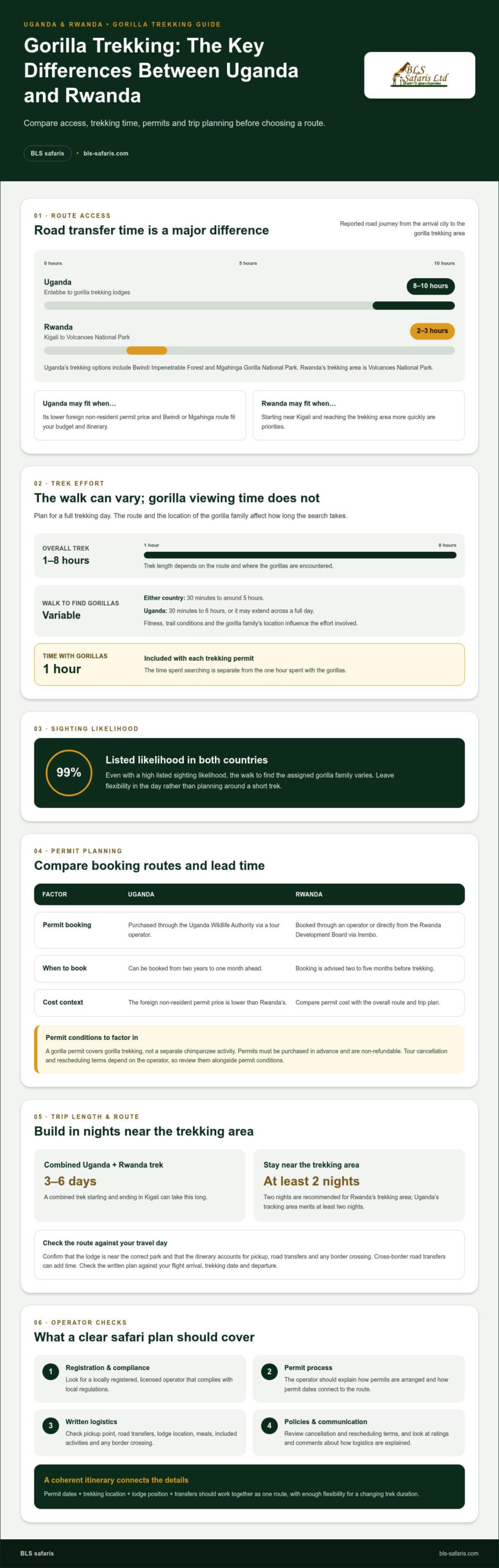
Uganda gorilla permits are purchased through the Uganda Wildlife Authority via a tour operator. Rwanda permits can be booked through an operator or directly from the Rwanda Development Board through its Irembo platform. Uganda permits can be booked from two years to one month ahead, while Rwanda permits are advised to be booked two to five months before trekking. Planning early gives you more flexibility to align dates and locations.
How do you choose a reputable gorilla trekking tour operator?
Look for a locally registered, licensed operator that complies with local regulations, explains the permit process, and provides a clear itinerary. Check how the proposed route connects permit dates, transfers, and accommodation in Bwindi or Volcanoes National Park.
What licences and permits should operators have?
Operators should be locally registered, licensed, and compliant with local regulations. In Uganda, operators should be licensed by the Uganda Tourism Board (UTB). The trekking permit is separate: Uganda permits go through the Uganda Wildlife Authority via an operator, while Rwanda permits are arranged through an operator or the Rwanda Development Board’s Irembo platform. The RDB also regulates and licences tour operators in Rwanda.
What are cancellation, refund, and rescheduling policies?
Gorilla trekking permits must be purchased in advance and are non-refundable. Tour cancellation and rescheduling terms depend on the operator, so review them alongside the permit conditions before paying.
For a practical comparison, start with the trek location and the route from your arrival point. Entebbe to Uganda’s gorilla trekking lodges takes eight to 10 hours by road, while Kigali is two to three hours from Volcanoes National Park. That difference can shape how much time you allow for transfers, trekking, and other stops.
| Option | Foreign non-resident permit | Booking route | Nearby access point |
|---|---|---|---|
| Uganda | Uganda Wildlife Authority through a tour operator | Entebbe, with a long road transfer to gorilla lodges | |
| Rwanda | Tour operator or Rwanda Development Board via Irembo | Kigali, a shorter drive to Volcanoes National Park |
Choose Uganda if its permit price and the Bwindi or Mgahinga route better fit your budget and itinerary. Choose Rwanda if starting near Kigali and reaching Volcanoes National Park more quickly are priorities.
Gorilla sighting likelihood and trek duration
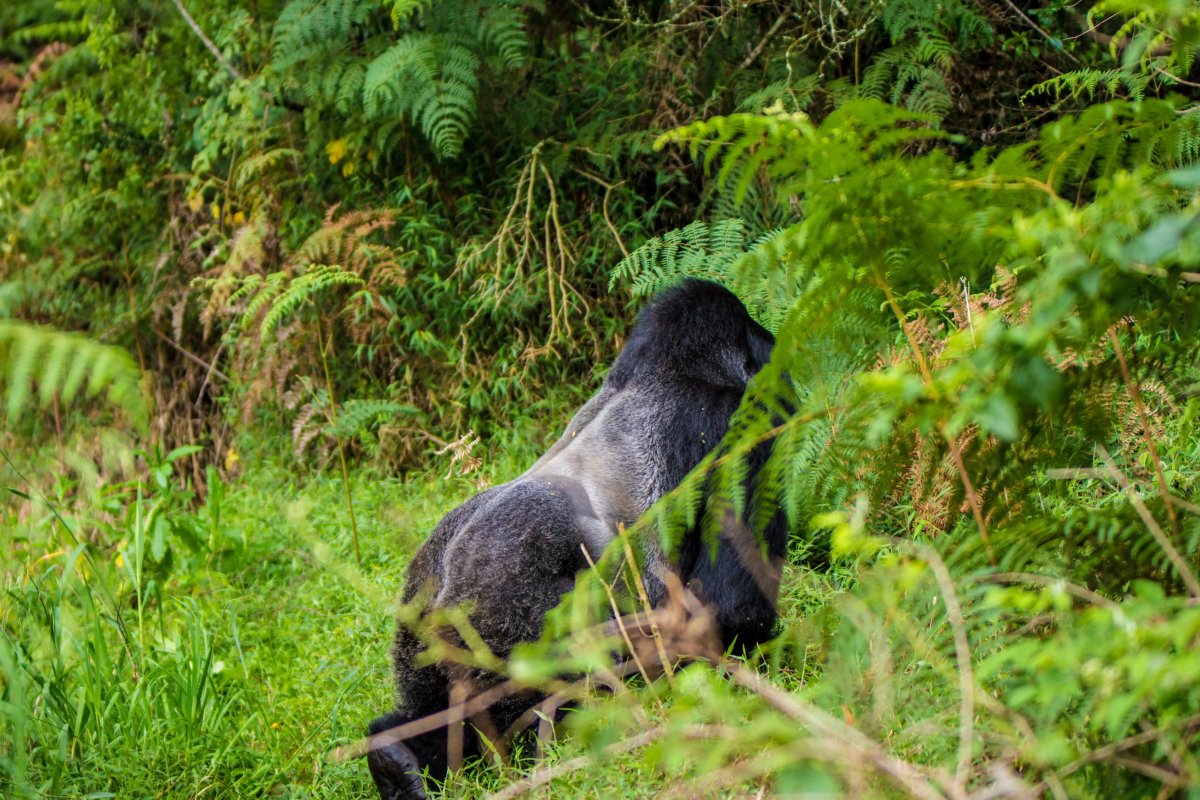
In Uganda and Rwanda, the listed gorilla sighting likelihood is 99%, but finding the assigned family still takes a variable walk. Of all the gorilla safaris we have made in Uganda and Rwanda, the visitors have never missed on seeing the gorillas. A gorilla trek may last from one to eight hours, depending on the route and where the mountain gorillas are encountered. Plan for a full trekking day rather than assuming a short walk, and leave space in your itinerary for changing conditions.
The walk itself can take 30 minutes to around five hours in either country. In Uganda, it may range from 30 minutes to six hours or extend across a full day. Fitness, trail conditions, and the location of the gorilla family influence the effort involved. A useful operator will explain the route and help you prepare for a trek that may be shorter or longer than expected.
The time spent searching is separate from the time with the gorillas: each permit allows one hour with them. The trek’s duration matters when planning transport, meals, and the rest of your day. Ask how early the journey to the park begins, where you stay the night before, and how the itinerary allows for a later return.
What transport, lodging, and border-crossing arrangements should a gorilla trekking operator provide?
The itinerary should identify your pickup point, road transfers, lodge location, and any border crossing. Cross-border road transfers can add time to the journey, so confirm the expected duration and border arrangements with your operator. Staying near the trekking area helps keep the journey on trekking day manageable.
Trip length depends on whether gorilla trekking is your main purpose or one part of a wider Africa journey. A combined Uganda and Rwanda trek starting and ending in Kigali can take three to six days. A two-night stay is recommended for Rwanda’s gorilla trekking area, while Uganda’s tracking area merits at least two nights. This allows time for arrival, trekking, and onwards travel without squeezing every transfer into one day.
In Uganda, two days of gorilla trekking may suit travellers who want another trekking opportunity in their schedule. Each trek requires its own permit, so arrange permit dates before finalising other activities. If you are adding Tanzania or other destinations, account for the extra transfers and time between countries rather than treating each trek as a standalone day.
Before booking, compare the written itinerary against your flight arrival, trekking date, and departure. Check that the lodge is positioned for the correct park and that the operator has included the Kigali-to-Bwindi border transfer when relevant. Share your preferred trekking dates and route to shape a journey around the time you have available.
Choosing an operator for a Rwanda gorilla safari
Choosing a tour operator for gorilla trekking in Uganda or Rwanda means assessing more than a route and a lodge. For a Rwanda safari, look for clear communication, responsible permit handling, and an itinerary tailored to your interests. Read online ratings and comments about how the operator explains logistics and coordinates plans.
A practical first step is to compare the written itinerary with the operator’s stated services and policies. The guidance for this topic recommends aiming for online reviews averaging 4 to 5 stars. It also advises against taking an operator seriously if it takes two days to respond to an initial inquiry. Use response quality to judge whether the details are being handled carefully, not simply how quickly a message arrives.
- Confirm that the operator is locally registered, fully licensed, and compliant with Rwanda’s local regulations.
- Check that the itinerary clearly lists activities, transport, meals, accommodation, and what the final cost covers.
- Establish whether the operator arranges private tours, group tours, or both, and how the choice changes the itinerary.
- Ask how insurance is handled and whether the operator can suggest potential providers.
- Look for relevant tourism or conservation affiliations, which can indicate a commitment to responsible operations.
Good planning matches the trip to your pace and priorities. An operator can connect lodge location and trekking plans with your interests, budget, and hiking ability. For example, travellers who prefer a shorter journey from Kigali may focus on Volcanoes National Park, while those combining Rwanda with Bwindi Impenetrable Forest need a route that accounts for the border and added travel. Ask for the sequence of destinations in writing.
Combining gorilla trekking with other safaris can make a longer East Africa journey more varied, but each addition affects routing and time. A Rwanda tour can take 10 to 14 days, leaving room to plan additional destinations or activities around the gorilla trek. Discuss what matters most, such as wildlife viewing, cultural experiences, or time in a reserve, then review how each stop fits the travel schedule.
Other activities should complement the trek rather than crowd it. Golden monkey tracking near Volcanoes National Park is one possible addition; Uganda itineraries may pair gorilla trekking with wildlife or chimpanzee experiences. The right mix depends on your interests and travel between locations, so compare the order of activities as well as the list.
Consider how the operator explains conservation and local partnerships. Clear information about responsible trekking practices and relevant affiliations is more useful than broad claims. A well-structured proposal should make the route, inclusions, and activity choices easy to understand before you commit.
Further factors to weigh when selecting your operator
- Local ownership and ground team: Ask who guides and drives on trekking day, how long they have worked in the region, and whether the company runs its own vehicles or subcontracts. Our guide to local operators versus international safari companies explains how the two models differ.
- Booking route and middlemen: Find out whether you deal with the operator directly or through an agent, as this affects communication and who answers when plans change. See agent versus direct booking.
- Price transparency: Request an itemised quote showing what is covered and what is extra, then compare quotes on that basis rather than on the headline total. Our page on what permits and activities are included shows what to look for.
- Flexibility and tailoring: A good operator adapts the route, pace and lodges to your group instead of offering only fixed packages. Tailor-made planning is a useful benchmark.
- Guides and group size: Ask about guide experience, language skills, vehicle type and how many travelers share a vehicle.
- Support during the trip: Confirm whom you can contact on the ground, how problems such as delays or illness are handled, and what safety arrangements are in place.
- Special needs: Share ages, fitness levels and dietary needs early, so the operator can suggest suitable trails, porters and lodges.
- Past traveler feedback: Look for detailed, recent reviews that describe logistics and guiding, not only the gorilla sighting.
Trek locations in Uganda and Rwanda
Uganda’s trekking choices are Bwindi Impenetrable Forest National Park and Mgahinga Gorilla National Park. Bwindi has 22 habituated gorilla families, while Mgahinga has one. Together, Uganda’s parks have 23 families available to tourists. Rwanda’s treks take place in Volcanoes National Park, where around 12 habituated families are available. These locations shape the route, lodge choice, and the activities that can fit around your trek.
Bwindi is divided into four trailhead areas, so the sector assigned for your trek matters. Lodging near the correct trailhead can reduce extra driving on trekking day. Buhoma is Bwindi’s first and most developed trekking site. A plan that names Bwindi without identifying its sector leaves an important routing detail unanswered. Ask for the trekking area and lodge location together, then compare them with your arrival and departure plans.
Volcanoes National Park offers a more concentrated trekking base. From Kigali, the drive to the park takes two to three hours, and the drive to the trek start point typically takes 30 to 60 minutes. In Uganda, reaching Bwindi and Mgahinga involves a longer journey from major arrival points. A short scheduled flight from Entebbe toward Bwindi can reduce the road portion, but still requires a transfer to the trekking area.
Terrain and trail conditions affect how demanding a gorilla trek feels. Forest paths can be uneven, steep, or muddy, and the assigned route determines the day’s effort. Build walking stamina before traveling with regular walks on varied terrain. If you have concerns about mobility or fitness, share them during itinerary planning so the operator can discuss the route and practical support, including hiring a porter.
Pack for a forest walk, not just the lodge. Sturdy walking shoes, long trousers, a lightweight rain layer, and gloves can help with changing trail conditions and vegetation. Carry drinking water and a small daypack for personal essentials, and protect camera gear from rain. Follow park guidance on what to bring and how to behave around mountain gorillas. Responsible tourism means respecting the animals and their habitat.
For a combined East Africa itinerary, compare the trekking park with your other planned stops. Bwindi can pair with Uganda wildlife activities, while Volcanoes National Park can fit a Rwanda-focused route. Align the trekking location, arrival airport, and lodge area before adding another national park or reserve. These choices determine whether the trip flows naturally or involves avoidable backtracking.
Comparing Uganda and Rwanda for gorilla trekking
Uganda and Rwanda both offer mountain gorilla tracking, but the best fit depends on your route, trekking base, and plans beyond the forest. Compare the full journey, not just the park: arrival city, transfer time, accommodation location, and other wildlife stops all affect how the safari flows.
Rwanda’s Volcanoes National Park is about two to three hours by road from Kigali. Uganda’s trekking takes place in Bwindi Impenetrable Forest National Park or Mgahinga Gorilla National Park, and the journey from Entebbe to the trekking lodges takes eight to 10 hours by road. That makes Rwanda a practical option for travelers prioritizing a shorter transfer from Kigali. Uganda may suit travelers who want to choose between two trekking parks.
The trekking settings differ, too. Bwindi has four trailheads, so the right sector influences where you stay and how you reach the start point. Rwanda concentrates gorilla trekking in Volcanoes National Park. Uganda has 23 habituated families available to tourists across its parks, compared with around 12 in Rwanda. Those figures describe available families, not a guarantee about which group you will track.
Consider what else you want from East Africa. A Uganda itinerary can include a stop in Kibale alongside gorilla tracking, while a Rwanda-focused trip can keep more of its route around Volcanoes National Park. Each added national park means another transfer to plan. Compare the order of stops and overnight locations before adding activities, especially if your travel time is limited.
Season can shape the experience in both countries. The dry seasons are June to September and December to February. Long rains occur from March to May, while short rains fall from October to November. Use these periods as planning context, then consider how trail conditions, park location, and your preferred travel dates work together.
Use these practical steps to make the choice:
- Choose Rwanda if a shorter road journey from Kigali to the trekking park is a priority.
- Choose Uganda if you value a choice between Bwindi and Mgahinga, or want to plan stops across its trekking regions.
- Compare the lodge’s location with the assigned park or Bwindi sector, not simply the country name.
- Map every wildlife stop and transfer, including Kibale if it forms part of your Uganda route.
- Match your travel dates to the seasonal pattern and leave enough time for transfers around the trek.
In short, Rwanda can simplify access from Kigali, while Uganda offers more trekking locations and habituated families. Let your starting point, preferred park, and wider itinerary guide your decision.
BLS safaris: East Africa Safaris
BLS safaris can help turn your Uganda or Rwanda gorilla trekking decision into a joined-up safari itinerary. Our local guidance and clear routing connect trekking plans with travel between destinations, accommodation, and wildlife or cultural experiences. Consider BLS safaris when comparing a Uganda-focused journey with a wider East Africa route, or planning to combine Uganda with Kenya or Tanzania.
Safari planning is tailored to your interests and preferred pace, with handpicked lodges and support from enquiry through travel. Share your likely travel dates, arrival point, and desired experiences to help shape a route that fits your plans.
Contact BLS safaris to discuss your gorilla trekking itinerary.
Shape a journey around your priorities
Choosing a tour operator for gorilla trekking in Uganda or Rwanda is about more than selecting a country. Consider your preferred pace, the wildlife or cultural experiences you want to include, and how you want to balance travel time with time in each place.
Use your planning conversation to set priorities: which destination matters most, what you are happy to leave out, and how much flexibility you want around travel days. Clear preferences help shape a coherent itinerary with the trek at its heart.
Ready to move from comparing options to planning a route? Share your priorities and preferred travel window with BLS Safaris. Start with the experience you want, then build the rest of the journey around it.
Your gorilla trek can be the beginning of a thoughtful East Africa journey. Take the next step when you’re ready.
Frequently Asked Questions
How much does a gorilla trekking permit cost?
For foreign non-residents, a permit costs $800 in Uganda and $1,500 in Rwanda. These are permit costs, not the total price of a safari. Your overall trip also depends on its route, accommodation, transport, and other planned activities. Compare the permit with the complete itinerary, especially if you’re adding wildlife stops or travel between parks.
What is the minimum age limit for gorilla trekking?
The minimum age for gorilla trekking is 15 years in both Uganda and Rwanda. This matters when planning for families: a younger traveler can’t join the trek, even if the rest of the group is eligible. Consider arranging an itinerary with other suitable activities for anyone under 15, rather than assuming the whole party can enter the forest together.
Will I definitely see the gorillas?
The stated sighting likelihood is 99% in Uganda and Rwanda. Gorilla tracking involves walking through forest to find a habituated family, so the length and effort of the search can differ from one trek to another. Keep your schedule flexible after trekking day, particularly if you have a flight or another fixed activity soon afterward.
How much do Uganda and Rwanda gorilla trekking permits cost in 2026?
In 2026, the foreign non-resident permit costs $800 in Uganda and $1,500 in Rwanda. The permit allows one hour with the gorillas. Keep this fee separate from your safari budget for accommodation, transport, meals, and any additional activities.
What is included in gorilla trekking tour packages, and what costs extra?
Package inclusions vary, so read the itinerary’s itemized details before booking. BLS safaris itineraries include permits, transport, lodging, and meals. Extras can depend on your chosen route and activities, so compare the proposed itinerary with what you want to do. For example, a plan combining gorilla trekking with another park should clearly show how the added travel and overnight stays are handled.
How do Uganda and Rwanda gorilla trekking tours compare in price, trek difficulty, and access?
Uganda’s foreign non-resident permit costs less, while Rwanda offers quicker road access from Kigali to Volcanoes National Park. Trek difficulty depends on the route, terrain, and location of the gorilla family, not simply the country. Compare the assigned park, lodge position, and transfer plan together for a clearer picture than permit price alone.
Which Uganda and Rwanda national parks offer gorilla trekking, and where do tours depart?
Uganda gorilla trekking takes place in Bwindi Impenetrable Forest National Park and Mgahinga Gorilla National Park. Rwanda’s trekking destination is Volcanoes National Park. Tours commonly route from Entebbe for Uganda or Kigali for Rwanda, with the park and lodge determining the final transfer. Confirm that the itinerary names the specific park and, for Bwindi, its trekking sector.
How far in advance should I book a gorilla permit and tour operator?
Plan several months ahead where possible. Gorilla trekking permits are advised to be booked three to five months before the trek; Rwanda permits are advised two to five months ahead. Uganda permits can be booked from two years to one month in advance. Contact an operator early enough to coordinate permit dates with your preferred travel dates and the rest of your itinerary.