Families on East Africa Safaris have no single age threshold: in Kenya and Tanzania, many operators allow children of any age on game drives. For families on an East Africa safari, the more useful guide is whether the camp and daily pace suit your children, from shorter outings and downtime to shared family spaces. The right accommodation can help make the trip enjoyable for everyone, rather than too demanding.
It’s natural to wonder whether young children will stay engaged or whether grandparents and teenagers will enjoy the same itinerary. Families can make a safari work across generations by choosing camps that accommodate different ages and allowing enough time to rest between activities.
Here, you’ll learn which ages tend to suit different safari experiences, what to look for in child-friendly camps, and how to plan for several generations. We’ll also explore family-friendly destinations and accommodation across East Africa, so you can picture a trip that feels comfortable, practical, and rewarding for everyone.
Key Takeaways
- Choose safari activities around children’s interests and energy, and match the daily pace to the youngest and oldest travellers.
- Look for camps that can adapt activity times and offer family-friendly spaces, so everyone has room to rest and reconnect.
- Build a multi-generational itinerary around comfortable travel days, shared experiences, and flexibility for different preferences.
- Compare destinations and camp styles by the activities and accommodation arrangements that best fit your family.
- Plan room arrangements and time between activities with care to make the stay more comfortable for the whole group.
1. How Old Should Kids Be for an African Safari?
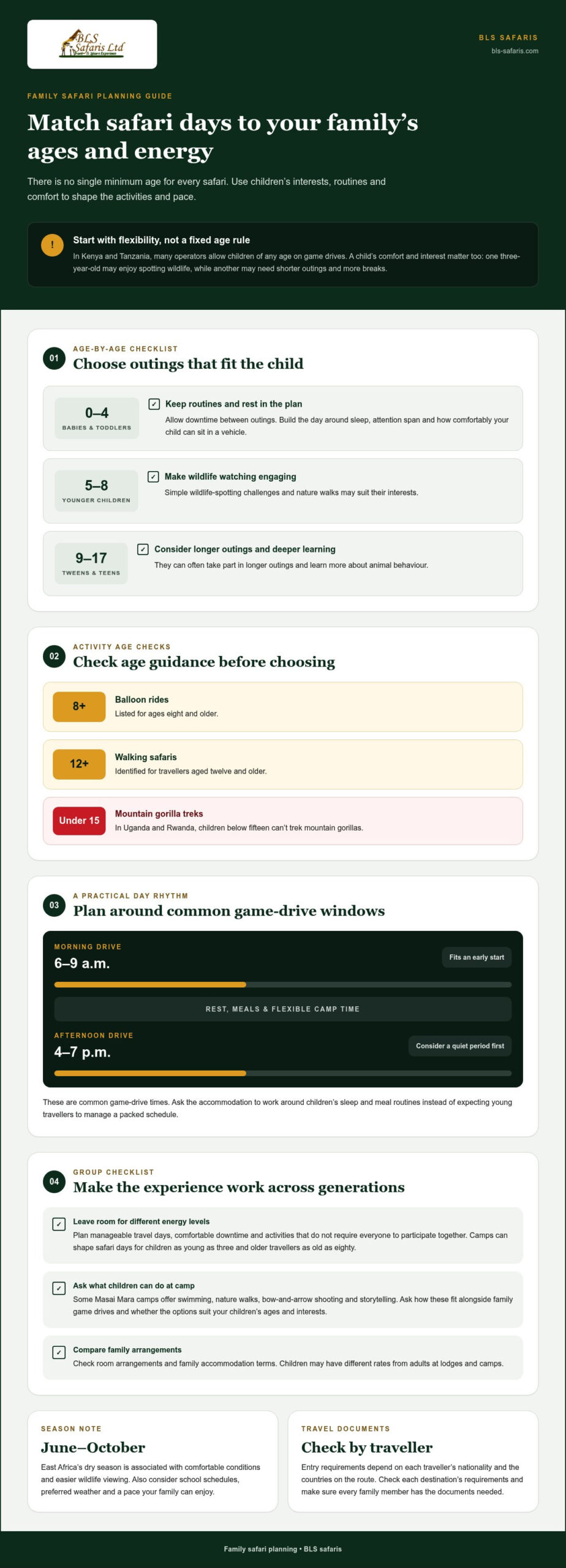
There isn’t one minimum age for every safari. In Kenya and Tanzania, many operators allow children of any age on game drives, but a child’s comfort and interest matter as much as the rules. One three-year-old may enjoy spotting wildlife, while another may need shorter outings and more breaks. Choose the itinerary around the youngest traveller’s sleep, attention span, and ability to sit comfortably in a vehicle.
Age can help you match activities to children’s interests. Babies and toddlers aged 0–4 generally need a flexible routine, with downtime between outings. Children aged 5–8 may enjoy simple wildlife-spotting challenges and nature walks. Tweens and teens aged 9–17 can often take part in longer outings and learn more about animal behaviour. Walking safaris are identified for travellers aged 12 and older, while balloon rides are listed for ages 8 and older. In Uganda and Rwanda, children below 15 can’t trek mountain gorillas.
Plan around typical game-drive times, which are often 6–9 a.m. or 4–7 p.m. If your child wakes early, a morning drive can fit naturally before breakfast or rest. If mornings are difficult, consider an afternoon outing, then allow a quiet period beforehand. Ask the accommodation to shape the day around children’s sleep and meal routines, rather than expecting young travellers to manage a packed schedule.
In the Masai Mara, some camps offer children’s activities such as swimming, nature walks, bow-and-arrow shooting, and storytelling. These can keep children engaged while parents enjoy time together. Ask how activities fit alongside family game drives, then choose options that suit your children’s ages and interests. Children may also have different rates from adults at lodges and camps, so compare family accommodation terms as you plan.
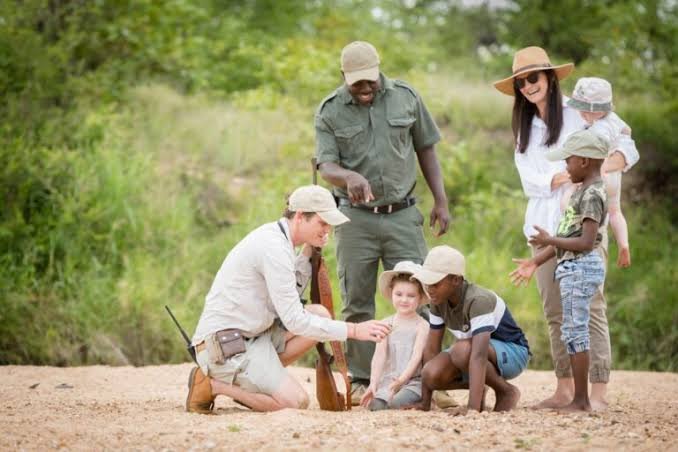
Grandparents can enjoy the same safari when the itinerary allows for manageable travel days, comfortable downtime, and activities that don’t require everyone to participate together. East African camps can shape the safari day for children as young as three and older travellers as old as eighty. For a family with a toddler and an older relative, for example, plan a shared wildlife outing followed by flexible rest time at camp.
Entry requirements depend on each traveller’s nationality and the countries on the route. Check the entry and travel-document requirements for each destination and make sure every family member has the documents needed for the trip. East Africa’s dry season runs roughly June to October and is associated with comfortable conditions and easier wildlife viewing. Choose travel dates around school schedules, preferred weather, and a pace your family can enjoy.
2. Are safari lodges and camps child-friendly?
Child-friendly accommodation does more than provide a place to sleep. East African camps can shape the safari day for children as young as three and older travellers as old as eighty. Families on an East Africa safari can compare room layouts, camp activities, and outing schedules. Flexibility matters when relatives share wildlife drives but need different rest periods, meal routines, or activities. Ask how children can spend time at camp between excursions.
Kenya and Tanzania make practical first safari destinations because both offer established wildlife regions and family accommodation. In Kenya, a lodge near the Maasai Mara can provide a base for drives and time back at camp. In Tanzania, a route may continue through the Serengeti and on to Karatu. Choose each stop for how it supports your family’s pace, not only how close it is to a national park.
A ten-day journey from Nairobi to Arusha can connect Kenya and Tanzania without trying to cover every region. The route can include the Maasai Mara, Lake Victoria, the Serengeti, Karatu, and Arusha. Allow for substantial road travel: the drive to the Maasai Mara on Day 2 takes approximately six hours. The Lake Victoria transfer on Day 4 takes approximately six to seven hours, so plan a calm evening afterward.
Later legs also shape the experience. The drive to Serengeti National Park on Day 5 takes approximately three hours, and the Serengeti-to-Karatu journey on Day 7 takes approximately three and a half hours. Travel to Arusha on Day 9 takes approximately two and a half hours. The return journey toward Nairobi on Day 10 takes approximately five hours. Consider these transfers before arranging drives or other activities.
Plan an itinerary with children by grouping nearby destinations, avoiding frequent accommodation changes, and allowing time to rest after longer drives. Ask for family rooms or rooms near one another, since these arrangements are usually made upon request. Pack comfortable layers for morning drives, sun protection, and familiar items that help children settle at camp. For families on East Africa safaris, these practical choices can make travel days easier to manage.
Kenya can also work well as a first safari destination on its own. Sarova Mara Game Camp is one example of a family base in the Maasai Mara area, while a Kenya-to-Tanzania route adds different landscapes and another national park experience. Compare accommodation by location, room layout, and downtime options. A good match helps families plan a wildlife trip that works for children and adults alike.
3. Planning a safari for multiple generations
Multi-generational family trips are often called “3G” vacations because they bring three generations together. In East Africa, a safari lasting seven to ten days gives relatives time to share experiences without rushing between destinations. Plan around everyone’s priorities: parents may want wildlife drives, children may enjoy active outings, and grandparents may prefer a gentler daily rhythm. A shared itinerary works best when it includes both group activities and room for individual choices.
For children younger than 15, plan around the vehicle and the guide as well as the destination. A lodge with closed or private vehicles can give families more control over the pace of game drives. Look for a junior rangers programme and guides experienced with youngsters, so children have age-appropriate ways to engage with wildlife. These choices can also help adults enjoy the outing without expecting every traveller to have the same attention span.
Teenagers aged 15–18 may welcome classic open safari vehicles and more active experiences. In Uganda, gorilla trekking can be an option for this age group, while younger children below 15 can’t trek mountain gorillas in Uganda or Rwanda. That age difference doesn’t have to divide the family: in Bwindi Impenetrable National Park and Volcanoes National Park, children can take nature walks, community walks, and biking tours while their parents trek.
Build each day around experiences relatives can share, then leave space for separate interests. For example, some family members can head out while others rest at camp, and then everyone can reconnect over a meal. In Tanzania, national park fees don’t begin until a child is five years old. Include age-related costs and activity eligibility in your planning, so the itinerary reflects each family member rather than assuming one size fits all.
Start planning a multi-generational trip nine to twelve months ahead. This gives the family time to coordinate travel dates, discuss mobility and comfort needs, and choose suitable accommodation. East African family arrangements, such as rooms close together or opposite one another, are usually made upon request. Share room preferences early, and consider how easily grandparents and children can meet between activities.
For vaccinations and malaria prevention, base precautions on the countries visited, travel dates, children’s ages, and individual health needs. Include insect-bite prevention and careful food and water choices in your family’s travel preparations.
Before settling the route, gather each generation’s priorities and use them to shape the pace, activities, and accommodation. A tailor-made East African safari itinerary can help bring those preferences into one practical plan, leaving the family more time to focus on shared memories.
4. Family-friendly safari destinations and camps
Choose destinations based on the experiences your family most wants to share, then match accommodation to the pace. A wildlife-focused trip could centre on Kenya’s Ol Pejeta Conservancy, home to the last remaining northern white rhinos. In Tanzania, the Serengeti offers game viewing and hot-air balloon rides for visitors aged eight and older. These options suit different interests, so decide whether your family values animal encounters, time in nature, or a special shared adventure most.
For families interested in varied activities, Murchison Falls National Park in Uganda combines game drives with a boat trip on the Nile. Morning drives are described between 6am and 10 am, while evening drives run from 5pm to 7pm. The afternoon cruise to the bottom of the falls takes 3hrs, and a Nile delta trip offers birding opportunities, including a chance to look for the shoebill. Consider whether your children and older relatives would enjoy a full activity day or prefer one main outing.
Tanzania’s Serengeti and Ruaha National Park offer different wildlife priorities. The Serengeti pairs wildlife viewing with balloon rides, while Ruaha is known for lion super prides of 20 or more. Choose one area based on the family’s interests rather than adding parks simply to lengthen the route. Fewer changes of accommodation can leave more time for relaxing together and enjoying each destination.
In Uganda’s Bwindi Impenetrable National Park and Rwanda’s Volcanoes National Park , families can consider nature walks, community walks, and biking tours while eligible adults trek gorillas. Children below 15 years old aren’t allowed to trek mountain gorillas in Uganda or Rwanda, so plan the visit around activities everyone can enjoy. The family members who stay behind can explore local nature and community experiences instead of waiting without a plan.
Before choosing a camp or lodge, compare its setting with your family’s itinerary. A stay close to your planned activities can reduce unnecessary transfers, while a quieter base may suit families who value downtime. Ask for rooms close together or opposite one another, an arrangement usually made upon request. In Kenya’s Masai Mara, some camps offer children’s activities such as storytelling, swimming, and nature walks. Choose options that fit your family’s ages and interests.
Make a short list of priorities before choosing among East African destinations: wildlife, cultural encounters, active outings, or a slower camp-based stay. Then consider how each stop connects with the next and whether the whole group can enjoy the planned activities. For a family drawn to Uganda’s landscapes and wildlife experiences, Uganda safari destinations can be considered alongside Kenya and Tanzania when shaping the route.
5. Family safari lodges in East Africa
The best family accommodation is the one that fits your group’s daily rhythm, room needs, and preferred wildlife viewing. East African options include lodges and tented camps, but the label alone doesn’t tell you what a stay will be like. Compare the layout, distance between rooms, and how easily family members can gather or find quiet time. These details matter when children and adults share a base for several nights.
Camp size can help you understand the setting, though it doesn’t determine whether a stay suits your family. Mobile luxury tented camps accommodate up to twelve occupants, while boutique tented camps accommodate 18 to 30 people. Permanent tented camps accommodate 75 to 100 people, and lodges house approximately 75 to 100 people. Smaller settings may feel more intimate; larger properties may have more shared spaces. Consider which atmosphere best suits your family’s comfort.
Give room arrangements specific attention. In East Africa, rooms close together or opposite one another are usually arranged upon request. Share your preferred setup during planning, especially if grandparents need to be near children or family members want separate sleeping spaces. A clear room plan can make it easier to regroup between activities while allowing different generations some privacy.
For children younger than 15, the accommodation can also shape the safari experience. Choose a lodge with closed or private vehicles, a junior rangers program, and guides experienced with youngsters. These features can support a more flexible outing and give children engaging ways to learn about wildlife. Ask how the daily activities fit with the family’s plans, rather than choosing a camp on appearance alone.
Location matters as much as the room itself. In Kenya, the Emakoko is about a 15-minute drive from Nairobi National Park’s east gate, making it an example of accommodation near a wildlife destination. In the Maasai Mara, some camps offer children’s activities such as storytelling, swimming, and nature walks. Match the camp to the experience you want, whether that means convenient access to viewing or more activities close to camp.
Use a simple comparison before deciding: note each option’s room layout, camp size, location, family activities, and vehicle arrangements. Then consider how those details work for every generation, not just the adults choosing the destination. A well-matched lodge or tented camp gives your family a practical base for shared safari time and unhurried breaks.
BLS safaris: East Africa Safaris
BLS safaris helps families tailor East Africa Safaris to children’s ages, shared interests, and comfortable travel days. Its customized planning brings route choices, handpicked lodges, and wildlife or cultural experiences together in one itinerary, rather than treating accommodation as a separate booking.
Turn to BLS safaris when you’re weighing destinations or balancing the needs of different generations. Uganda Safaris, Kenya Safaris, and Tanzania Safaris can each be part of a family journey, with clear routing and local guidance to help you compare the options. Share your priorities, such as room arrangements, activity preferences, and how much time you want between travel days.
For a safari planned around your family, contact BLS safaris to discuss the journey you have in mind.
Shape a Safari Your Family Can Enjoy Together
Before settling on a route, invite each traveller to name one experience they most hope to have. For families on an East Africa safari, that conversation can reveal the right balance of wildlife, cultural experiences, and unhurried time together. It also helps turn different expectations into a personal trip, rather than a checklist of stops.
Next, agree on what matters most for comfort and connection. Your family might prioritise staying close together, having flexible days, or making space for shared outings and individual interests. Keep those priorities at the centre as you refine the plan, and let them guide your destination and accommodation choices.
BLS safaris can bring those preferences together in a tailor-made East Africa journey, with options across Uganda and Kenya. Share what your family wants from the trip and take the next step when you’re ready.
Your family’s safari can start with a clear plan built around the experiences you’re most looking forward to sharing.
Frequently Asked Questions
How Old Should Kids Be for an African Safari?
Children can join game drives in Kenya and Tanzania at any age, but the best starting point depends on the child’s comfort and interest. For a young child, plan shorter outings and breaks; older children may enjoy longer wildlife viewing. Match activities to age as well: walking safaris are identified for ages 12 and older, and mountain gorilla treks in Uganda and Rwanda are restricted to children aged 15 and older.
Is it safe to go on safari with young children?
A safari with young children can be planned around their needs by choosing suitable activities, vehicles, and experienced guides. For children younger than 15, a lodge with closed or private vehicles and guides experienced with youngsters can help shape outings for the family. Stay together during activities and follow the guide’s instructions around wildlife. A flexible plan also gives children time to rest between drives.
What Ages Are Best for a Family Safari?
There isn’t one ideal age for every family. Children aged 5–8 may enjoy wildlife spotting and camp activities, while tweens and teens aged 9–17 can take on longer outings and more active experiences. Babies and toddlers aged 0–4 often need more downtime built into the day. Consider what your child enjoys, how long they stay engaged, and how they handle travel before choosing activities.
Are safari lodges and camps child-friendly?
Some East African camps adapt the safari day for children and older travellers, while others focus on different types of guests. Before choosing, compare the room setup, family activities, and how game drives are arranged. For instance, a camp with swimming or storytelling can give children enjoyable downtime between wildlife outings. Also consider how easily the family can gather after separate activities.
Can grandparents with limited mobility go on safari?
Yes, a safari itinerary can include grandparents with limited mobility when the travel and activities suit their comfort. Prioritise fewer accommodation changes, manageable transfers, and opportunities to rest at camp rather than joining every outing. Discuss walking requirements and access between rooms, dining areas, and vehicles during planning. For example, a grandparent can relax at camp while other family members take a more active excursion.
What Type of Accommodation Works Best for Three Generations?
Accommodation with nearby rooms can help three generations spend time together while keeping some privacy. In East Africa, rooms close together or opposite one another are usually arranged upon request. Families can compare boutique tented camps, which accommodate 18 to 30 people, with larger lodges that house approximately 75 to 100 people. Focus on room layout, shared spaces, and how the property fits the family’s daily plans.
What cultural activities are available for families?
Families can include cultural experiences such as a Maasai village visit in the Maasai Mara. Some camps also offer children’s storytelling and nature walks that introduce local surroundings in an accessible way. Choose activities that suit the group’s ages and interests, and make time to listen and learn together. A shared cultural experience can add a different perspective to wildlife-focused days.
What are the best family-friendly safari destinations in East Africa?
Kenya and Tanzania suit families seeking classic wildlife viewing, with the Maasai Mara and Serengeti among the well-known choices. Uganda’s Murchison Falls National Park combines game drives with a boat trip on the Nile, while Bwindi offers nature and community activities for children when eligible adults trek gorillas. Rwanda’s Volcanoes National Park also has family activities for children who cannot join a gorilla trek.