A rewarding Tanzania safari isn’t always the longest or most elaborate. Tanzania safari packages can be tailored to your available time, preferred travel style, and wildlife priorities, so the best fit is the itinerary that brings them together.
It’s natural to start with the cost, but there’s no single price for every itinerary. The total depends on the route, duration, accommodation, and travel style, and is provided in a quote based on your plans.
Safari lengths vary too. Some itineraries focus on a few parks, while a longer route can keep you in the bush for two full weeks. Private or group travel also affects the pace and feel of the journey.
This guide explains what shapes package costs, how to choose a trip length, and how Tanzania’s wildlife-viewing areas and safari styles compare. Use these details to find an itinerary that feels practical as well as memorable.
Key Takeaways
- Choose travel dates with your wildlife priorities in mind, since migration viewing shifts between parts of the Serengeti during the year.
- Compare itineraries by route, accommodation, and travel style to understand what shapes the overall cost.
- Match trip length to your priorities: a shorter safari can focus on key parks, while a longer route allows more time in the bush.
- Consider whether a group or private tour better suits your preferred pace, flexibility, and way of travelling.
- Use featured itineraries as starting points, then shape the route around the experiences that matter most to you.
How is the wildlife viewing in Tanzania?
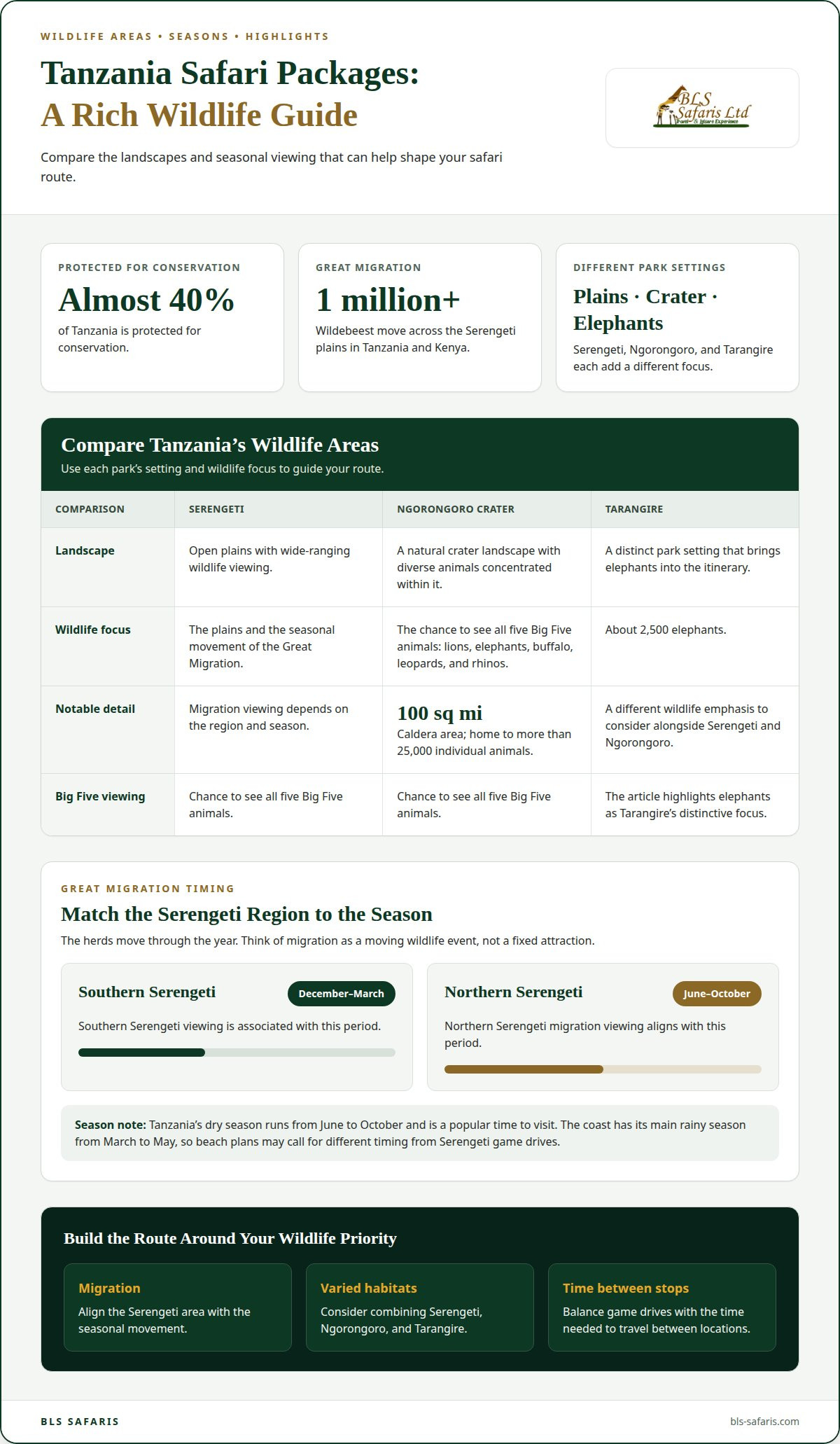
Tanzania offers wildlife viewing across varied landscapes, from Serengeti plains to the Ngorongoro Crater. Almost 40% of the country is protected for conservation.
Tanzania’s visa requirements depend on your nationality and purpose of travel. Vaccination needs depend on your itinerary and health, while travel insurance should account for medical care and emergencies during visits to remote parks.
Tanzania Safari Packages for Seasonal Wildlife Viewing
Tanzania’s dry season runs from June to October and is a popular time to visit. Match your dates to the region you most want to see rather than treating the country as one viewing area. The coast has its main rainy season from March to May, so beach plans may call for different timing from Serengeti game drives.
Wildlife and the Great Migration
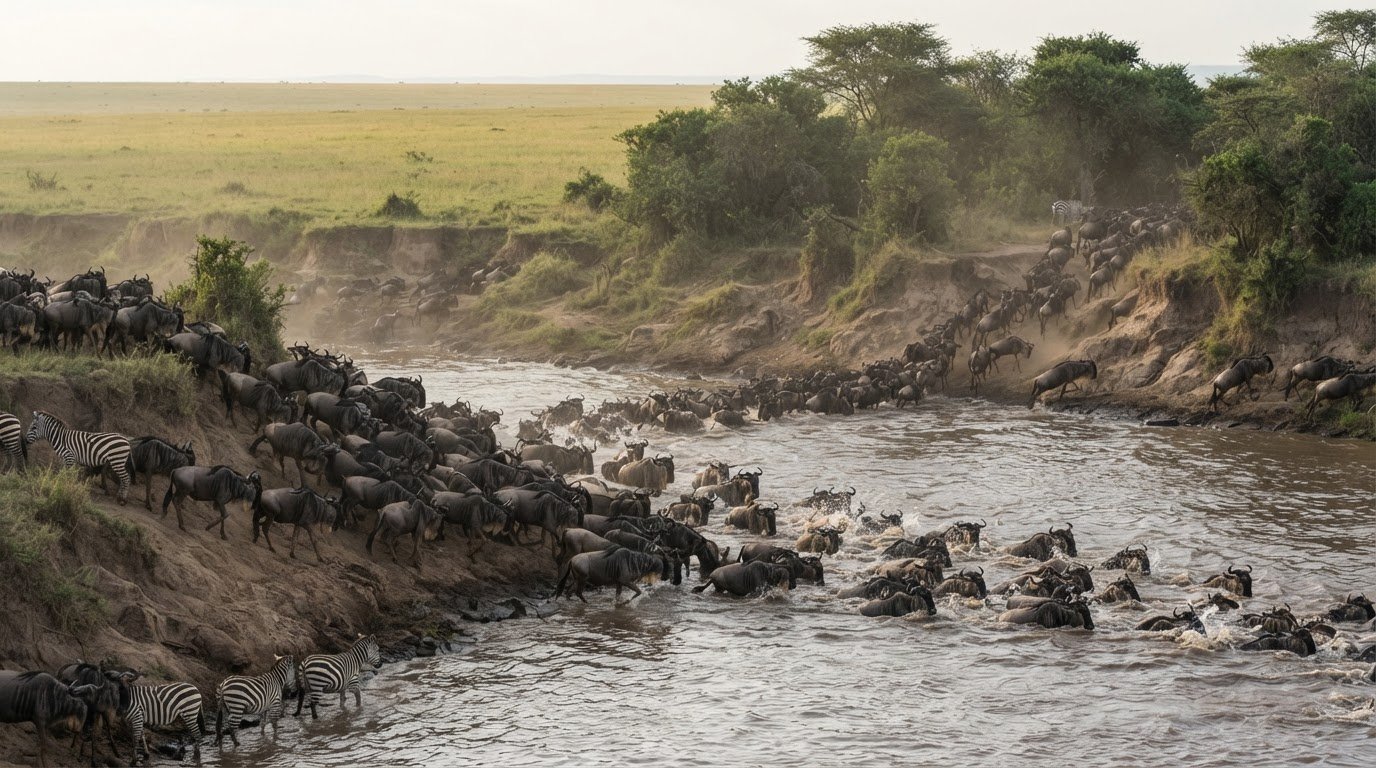
The Great Migration involves more than a million wildebeest moving across the Serengeti plains in Tanzania and Kenya, according to Tanzania National Parks Authority. The herds move through the year: Southern Serengeti viewing is associated with December-March, while Northern Serengeti migration viewing aligns with June-October. Choose the region and season together, because migration is a moving wildlife event, not a fixed attraction.
Parks and Crater Viewing
Serengeti National Park and Ngorongoro Crater both offer the chance to see all five Big Five animals: lions, elephants, buffalo, leopards, and rhinos. The Ngorongoro Crater caldera covers 100 square miles and is home to more than 25,000 individual animals. Tarangire National Park offers a different focus, with about 2,500 elephants.
Each park adds a different setting to a Tanzania safari. The Serengeti’s open plains suit wide-ranging wildlife viewing, while Ngorongoro concentrates diverse animals within a natural crater landscape. Tarangire brings elephants into the itinerary. For a broader regional comparison, wildlife and safari packages in Uganda and Rwanda offer another way to consider East African destinations.
Set your wildlife priority before choosing a route. If migration is central, align the Serengeti area with the seasonal movement. For varied habitats, consider combining parks such as Serengeti, Ngorongoro, and Tarangire. This helps balance game drives with the time needed to travel between locations.
Think about the nature experience you want. A Serengeti-focused itinerary gives more attention to the plains and migration, while adding Ngorongoro or Tarangire brings different landscapes and wildlife into view. Let your priorities guide the sequence of parks and the time spent at each stop.
How much does a Tanzania safari cost?
The cost depends on the itinerary, not a standard figure. Route, trip length, accommodation, transport, park fees, and travel style all affect the total. Your quote reflects the itinerary and the choices that shape its final cost.
Tanzania’s park fees depend on the parks and itinerary included. Protected areas have rules for visitors and guide conduct. Follow park instructions and your guide’s directions during game drives.
Compare Itineraries by What They Include
A Tanzania itinerary can focus on northern parks, add a coast stay, or connect destinations across East Africa. A route through Tarangire and Serengeti, for example, differs from one that also includes Zanzibar. Each stop affects travel time and the balance between game drives and other activities. Compare routes and inclusions, not just the number of days.
Ten-Day Luxury Safari Itineraries
A 10-day Tanzania Spectacular itinerary provides one example of a longer safari plan. A luxury itinerary may place more emphasis on selected accommodation and a measured pace between destinations. The specific route matters: time in Serengeti, Ngorongoro, or Tarangire shapes the wildlife focus, while any beach extension adds a different setting. Treat the itinerary as a framework, then consider whether its stops match your priorities.
Tailor-Made Private Safari Itineraries
A private itinerary can be arranged around your travel dates, preferred pace, and main interests. Start by choosing a focus, such as wildebeest viewing, elephants, or a mix of wildlife and landscapes. Then set the route and decide where extra time matters most. A private plan gives your party more say in the sequence of parks, while the trip length and inclusions still shape the cost.
Kilimanjaro and Longer Routes
Kilimanjaro climbing is a different kind of itinerary from a wildlife safari. One Northern Circuit Route climb is listed as an 11-day small-group trip. Allowing for a mountain climb changes the trip’s purpose and schedule, so consider whether you want Kilimanjaro alone or a combined journey with wildlife viewing. A Tanzania safari can also connect with Kenya or other East African destinations, but each added country affects routing and time.
Use your available days to shape the plan. A focused route can spend its time in fewer parks, while a longer journey can include more regions or a beach stay. If you’d like to shape the route around your priorities, share your itinerary preferences.
Safari duration and starting prices
Trip length shapes a Tanzania safari, while route, accommodation, transport, and season influence its cost. A short itinerary may focus on nearby parks; a longer journey can include more destinations, extra travel days, or time on the coast. These choices affect the budget more than the number of nights alone.
Tanzania and Kenya packages differ mainly by their routes and the places included. A Tanzania itinerary can focus on Serengeti, Ngorongoro, and Tarangire; a combined route can add Kenya’s wildlife areas. The Great Migration moves across the Serengeti plains in Tanzania and Kenya, making a cross-border itinerary an option for travellers interested in following wildlife across both countries. See a Kenya and Tanzania safari itinerary as an example of that broader routing.
Use sample itinerary lengths to judge how much ground a trip covers, rather than treating one duration as standard. A four-day Tarangire and Ngorongoro route concentrates on two destinations. An eight-day Northern Circuit itinerary allows more time for park visits and road transfers. A two-week safari gives more room to travel between parks, though the pace depends on the route.
For budgeting, first identify what the itinerary includes. Park visits, accommodation, road transfers, meals, and internal transport can all shape the total. A route through several reserves may involve more travel than a focused stay in one area. Compare itineraries side by side by their inclusions and destinations, not just their length.
Seasonal land-arrangement prices also depend on travel dates and the itinerary’s stops. A season associated with particular wildlife viewing may affect which area the route prioritizes, while accommodation and transport choices influence the total. A Serengeti-focused trip and a southern Tanzania route, for example, have different destinations and logistics. Decide which experience matters most before comparing seasonal plans.
Starting-price labels can make trips look comparable, but they may describe different lengths, routes, and inclusions. A seven-day safari, an eleven-day journey, and a beach extension don’t offer the same experience. Check how time is divided among game drives, transfers, and rest, then compare those details with your budget.
For a practical comparison, list your preferred parks, available travel days, and must-have experiences. Then weigh each itinerary against those priorities. This helps explain why two Tanzania safaris of similar length can cost differently, and why a longer route may suit one traveller better than a shorter, more focused trip.
Group, private, and personalized tours
Tanzania safari options include shared group trips, private journeys, and tailor-made itineraries. Routes can focus on wildlife, include cultural experiences, or combine a safari with Zanzibar. The right format depends on the flexibility you want, who you’re travelling with, and which stops matter most.
On a group safari, travellers share a planned route and travel schedule. One listed small-group Tanzania safari has a minimum of 3 and a maximum of 6 people per jeep. That format can suit solo travellers or companions who enjoy sharing game drives. Check how the itinerary divides time between parks such as Serengeti and Ngorongoro Crater, since a fixed route leaves less room for personal changes.
A private safari gives your party a dedicated itinerary, while a tailor-made journey is shaped around your interests and travel pace. For example, you might prioritize wildlife viewing around Arusha, add cultural activities, or finish with time in Zanzibar. This approach makes it easier to set the sequence of destinations around your plans. A tailor-made East Africa itinerary can also connect Tanzania with other regional stops.
Guide and vehicle arrangements affect how each safari day feels. Before choosing a trip format, check whether the plan describes shared or private transport and how game drives fit into the schedule. In Ngorongoro Crater, for example, viewing time depends on the day’s route and planned activities. A private itinerary gives your group more control over its pace, while a shared tour follows the group schedule.
Compare the formats against your travel priorities:
- Group tour: Follow a set route and share the safari experience with other travellers.
- Private tour: Keep the journey focused on your own travelling party and preferred pace.
- Personalized itinerary: Arrange destinations around interests such as wildlife, culture, or Zanzibar.
Each option suits a different kind of trip. A group journey can work well when a shared schedule fits your plans. Private travel may suit your party if you have specific interests or want more control over the daily pace. Tailor-made itineraries bring these choices together, from the parks you visit to the time spent at each destination. Compare the route, vehicle arrangements, and planned activities before choosing a format.
Featured Tanzania safari packages
Featured itineraries offer practical starting points for comparing Tanzania’s wildlife, landscapes, and travel styles. Each package sets out a route and trip structure. Review the accommodation, transfers, guidance, and planned activities to understand what the itinerary involves.
Package Inclusions
Inclusions depend on the itinerary, so read each package as a complete plan rather than judging by its name. Look at how accommodation, transport between destinations, local guidance, and game drives are described. A Serengeti route, for example, may focus on wildlife drives, while a Tanzania and Zanzibar itinerary adds a coastal stay. Clear routing shows how each part connects.
Check how each day is divided between travel and activities. A short package might visit Tarangire and Ngorongoro, while a longer route can include more time in a national park or add another destination. Note whether the plan describes shared or private travel and how much flexibility it allows. These details help you compare the actual experience, not just the itinerary’s headline.
Featured Package Options
Different itinerary styles highlight different parts of Tanzania. A four-day Tarangire and Ngorongoro route centres on two wildlife destinations. A six-day Serengeti migration and Ngorongoro itinerary combines migration-focused drives with crater landscapes. A seven-day calving-season safari focuses on a specific wildlife experience, while an eleven-day Tanzania and Zanzibar trip pairs safari time with the coast.
Choose a route that matches your main reason for travelling. If the Great Migration is your priority, consider an itinerary planned around its seasonal movement. For varied wildlife and landscapes, a route linking Serengeti and Ngorongoro offers a different balance. A beach extension makes sense if Zanzibar is also part of the trip you want.
Package descriptions can make different itineraries seem similar, but each route allocates time differently. Compare named stops, nights, planned drives, and transitions between safari areas. A Serengeti-focused journey, for instance, gives the park more attention, while a multi-stop itinerary spreads time across destinations. The six-day Serengeti migration and Ngorongoro itinerary shows how two wildlife priorities can be combined.
Use featured packages as a guide, not a rulebook. Start with your preferred wildlife experience, then consider trip length, travel pace, and whether Zanzibar belongs in the plan. This makes it easier to find an itinerary that fits your priorities and identify details you may want tailored.
BLS safaris: Tanzania Safaris
BLS safaris plans Tanzania safaris around your preferred wildlife, travel dates, and pace. Turn to the team when you’ve compared routes and want help bringing your priorities together in a clear itinerary. Planning includes local guidance, clear routing, handpicked lodges, and transparent, itemised pricing.
If you’re considering more than one destination, BLS safaris can connect Tanzania with other regional experiences, including Kenya and Uganda safaris. Start with your preferred parks, available time, and whether wildlife, culture, or a beach stay matters most. The team can shape a journey around those priorities.
Contact BLS safaris to discuss your Tanzania itinerary and request a tailored quote.
Shape a safari around what matters most
Choosing Tanzania safari packages gives you the chance to shape a trip around what you value, rather than simply selecting a route from a list. Think about the experience you want to remember, whether that means time in nature, a shared adventure, or connecting several East African destinations. A clear starting point makes planning more useful.
BLS Safaris can help turn those priorities into a considered travel plan. Alongside Tanzania safaris, the company offers East Africa, Uganda, and Kenya safaris. This regional range can help if your plans include more than one country or you’re still deciding where to focus.
Begin with the essentials: when you hope to travel, who is joining you, and what matters most on the trip. From there, the route and pace can take shape around your preferences. You don’t need to have every detail settled before starting the conversation.
Your Tanzania journey can begin with one simple idea. Contact BLS Safaris when you’re ready to start planning.
Frequently Asked Questions
When is the best time to visit Tanzania?
June to October is Tanzania’s dry season and a popular time to visit. For migration viewing, match your dates with the Serengeti area: Southern Serengeti viewing is associated with December-March, while Northern Serengeti viewing aligns with June-October. If your trip includes the coast, bear in mind that its main rainy season runs from March to May. Choose dates around your main destination and travel priorities.
How do I select a reliable Tanzanian tour operator?
Look for clear itineraries, transparent written pricing, and local knowledge relevant to your route. Check that the operator explains what the quoted package includes, such as permits, transport, lodging, and meals. BLS safaris is Licensed by the Uganda Tourism Board (UTB/RTT/TT/2025/101532) and offers locally guided, tailor-made journeys. A detailed quote should make it easier to understand the route and planned arrangements before you book.
How safe is Tanzania for tourists?
Tanzania is best approached with sensible planning and attention to your surroundings. Use the transport arranged for your itinerary, keep valuables secure, and follow your guide’s instructions during wildlife activities. A route through Serengeti and Ngorongoro, for example, involves time in protected areas as well as travel between destinations. Prepare your personal needs and travel documents before departure, and keep important items accessible during transfers.
Is tipping required in Tanzania?
Tipping is a way to recognize service, and suggested amounts vary by setting. In restaurants and other hospitality venues, 10% is usual for good service, while 15-20% is suggested for exceptional service. Carry small amounts if you expect to tip during your trip, and consider the service you received. Safari staff and hospitality workers may have different roles, so avoid assuming one amount fits every situation.
What are the best national parks in Tanzania?
The best park depends on the experience you want. Serengeti National Park suits travellers focused on open plains and the Great Migration, while Ngorongoro Crater offers wildlife viewing within a caldera. Tarangire is a strong option for elephant viewing. If time is limited, choose parks that support one main priority rather than trying to include every destination in one route.
What are the safari vehicles like?
Safari vehicles provide transport between destinations and during game drives, but arrangements vary by itinerary. A group trip may involve sharing a vehicle, while a private journey is planned for your own travelling party. Consider how much time you’ll spend on transfers and drives, and whether the vehicle setup suits your group. The itinerary should make its transport arrangements clear alongside the route and activities.
How much do Tanzania safari packages cost per person?
The cost of Tanzania safari packages depends on the route, trip length, accommodation, transport, season, and included activities. Rather than comparing headline prices alone, review what each quote covers and how many destinations the itinerary visits. BLS Safaris provides transparent, itemised quotes that include permits, transport, lodging, and meals, with no hidden fees, ever. Share your preferred dates and priorities to receive a package shaped around your plans.
What are the best national parks and safari destinations in Tanzania?
Serengeti, Ngorongoro Crater, and Tarangire are useful starting points for planning a northern Tanzania safari. They offer distinct settings, letting you combine broad plains, crater scenery, and elephant-focused wildlife viewing. Arusha can serve as a starting point for Tanzania itineraries. If you also want time on the coast, Zanzibar can be added as a separate part of a wider trip.