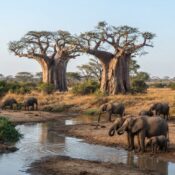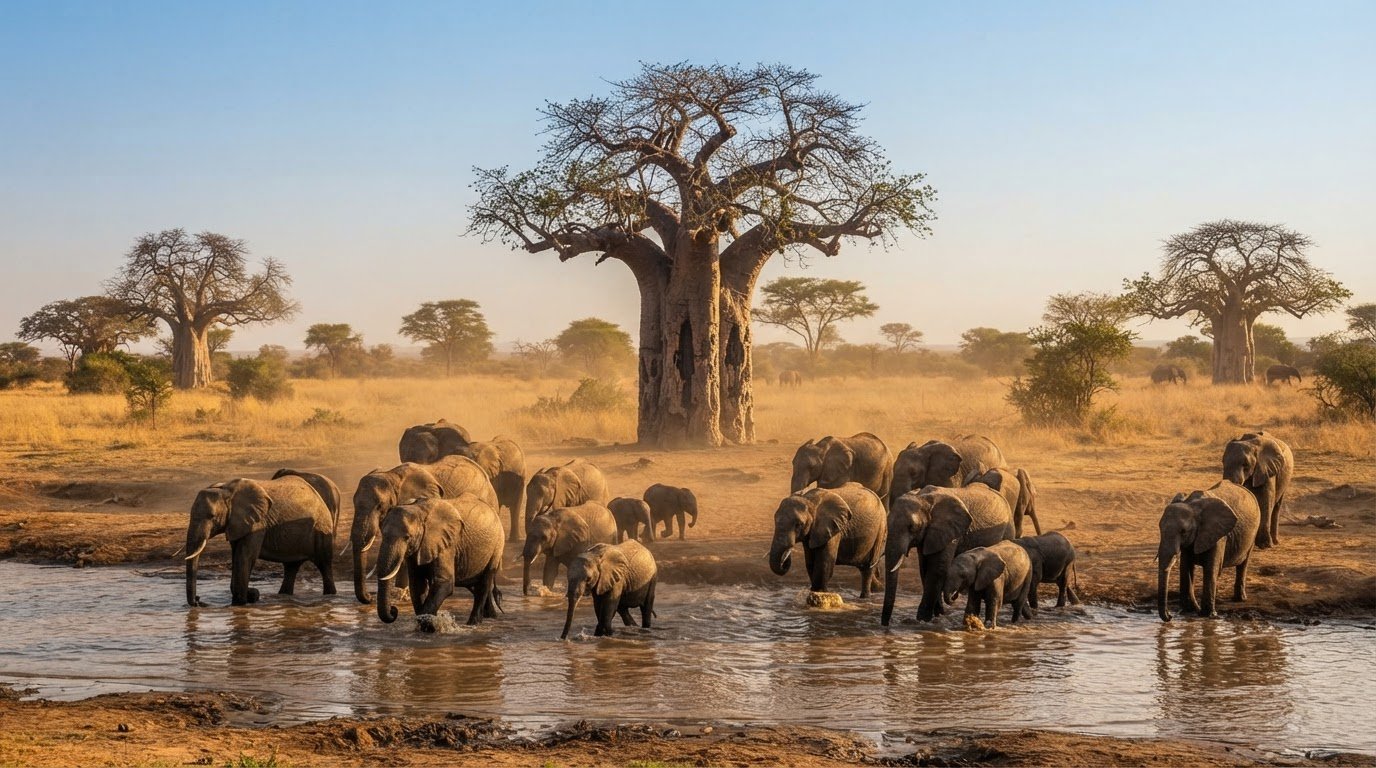
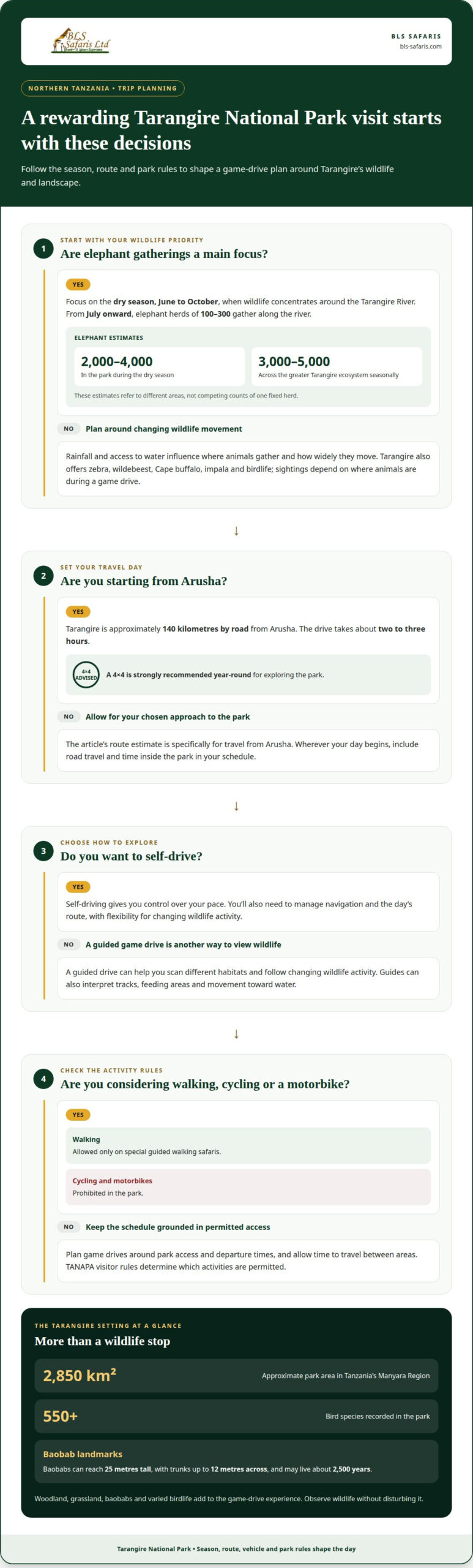
Tarangire National Park covers about 2,850 square kilometres in Tanzania’s Manyara Region. It is a great place to see elephants, baobabs and birds. In the dry season, 2,000 to 4,000 elephants are estimated to live in the park, and herds gather near the Tarangire River. These herds are a main reason safari travellers visit.
Location matters, too. Tarangire National Park is in northern Tanzania, where wildlife moves with the seasons. Knowing where it is and which places are nearby helps you plan a route that balances travel time with time in the park.
This guide covers what to expect, from elephants and park size to the drive between Tarangire National Park and Lake Manyara. We will also cover the other destinations you can combine with Tarangire. Use it to decide how the parks might fit into your safari itinerary.
Key Takeaways
- Learn how seasonal wildlife movement shapes elephant viewing and when herds gather near water.
- See how the park’s landscape, including its baobabs and birdlife, adds to the safari experience.
- Understand the practical route from Arusha and the main details that influence getting to the park.
- Plan a northern Tanzania itinerary with a clearer sense of the drive between Tarangire and Lake Manyara.
- Discover how a Tanzania safari can bring these destinations together in a thoughtfully planned route.
How many elephants are in Tarangire?
Elephant counts in Tarangire National Park change with the season and the area counted. In the dry season, the park itself has an estimated 2,000 to 4,000 elephant population. The wider Tarangire ecosystem has approximately 3,000 to 5,000 elephants over the year, as animals move between the park and nearby areas. These numbers cover different areas, so they are not rival counts of one fixed herd.
The seasons shape what visitors may see. The dry season runs from June to October, when wildlife gathers around the Tarangire River, a key water source. From July onwards, elephant herds of 100 to 300 gather along the river. Some herds dig in the dry riverbed to find underground water, so the river is an important place to go for game drives. Rain and access to water affect where animals gather and how far they move.
How does Tarangire compare with Serengeti and Ngorongoro for wildlife viewing? Tarangire is known for seasonal elephant gatherings and wildlife along the river. Serengeti and Ngorongoro offer different settings on Tanzania’s northern safari circuit. The best choice depends on the landscapes and wildlife you want most.
Elephants are only part of the story. You may also see zebra, wildebeest, Cape buffalo and impala, with large herds mostly seen in the June to November dry season. Tarangire is also known for tree-climbing lions, though sightings depend on where animals are during a game drive. A guided drive lets you search different habitats and follow the wildlife as it moves.
Watch animals without disturbing them. Guides can read signs such as tracks, feeding areas and movement toward water, and explain how the seasons affect what you see. Researchers also track animal numbers and movement over time. This helps explain why elephant counts change by season and depend on whether they cover the park or the wider ecosystem.
For a wider East African trip, you can add time in Uganda; this Uganda safari planning guide covers that part of the journey. In Tarangire, a dry-season visit puts the river and its herds at the centre of your wildlife viewing.
How big is Tarangire, and where is it?
Tarangire National Park covers approximately 2,850 square kilometres in Tanzania’s Manyara Region, in the north of the country. It is Tanzania’s 9th largest national park and is big enough to offer more than one landscape, with baobab trees, wildlife and many birds. Its location in northern Tanzania’s safari region makes it a special stop for travellers.
Baobabs are among the park’s best-known features. In Tarangire National Park, these trees can reach 25 metres tall, with trunks up to 12 metres across, and may live about 2,500 years. Their wide trunks and branching shapes stand out across the landscape, next to the wildlife moving through the park.
Baobabs are worth a look for more than their appearance. On a game drive, look for their wide trunks and unusual outlines, and see how they frame the scenery. Elephants and baobabs are both part of Tarangire’s character, but they are separate features of the ecosystem and not proof of any link between them.
Birds give you another reason to look beyond the large mammals. More than 550 bird species have been recorded in the park, so birdwatching is a big part of a visit. Look at branches and open areas as you travel, and listen for different calls, colours and shapes. This variety appeals to visitors who want more than big-animal sightings.
Baobabs also give the plant life its special look. Their size and shape stand out from the plants around them, and they are handy landmarks as the scenery changes along your route. You can enjoy the wildlife and also notice the trees, plants and wider setting.
The Tarangire ecosystem reaches beyond the park boundary, so the landscape is part of a wider region. Baobabs, birds and wildlife make the park about more than animal sightings. A Tanzania itinerary can leave room for both game viewing and quiet time in the natural surroundings.
If you’re shaping a route around the park’s landscapes, a tailored Tanzania safari itinerary can bring those priorities together with your wider travel plans.
What is Tarangire National Park known for?
Tarangire National Park is known for its wildlife, varied scenery and place on Tanzania’s northern safari circuit. Woodland and grassland change the view as you travel, and animals such as wildebeests add to the game drive. From Arusha, the park is approximately 140 kilometres away by road, a drive of about two to three hours.
Before leaving Arusha, plan your route and vehicle. A 4×4 is strongly recommended for exploring the park year-round. Count both the road journey and the time inside Tarangire National Park when planning your day, especially if you combine the drive with wildlife viewing.
Self-driving lets you set your own pace, but you must handle navigation and the day’s route yourself. Plan stops around the areas you want to see, and stay flexible as wildlife moves. TANAPA visitor rules say which activities are allowed: walking is only allowed on special guided walking safaris, and cycling and motorbikes are not allowed in the park.
Park access times also affect your schedule. Plan game drives around the allowed entry and exit times, and leave time to travel between areas. A realistic schedule lets you enjoy the landscape and animals instead of rushing between stops.
How many days should you spend in Tarangire National Park?
It depends on whether you want one focused game drive or more time for several drives and different habitats. Think about your arrival from Arusha, the pace of your wider trip and how much time you want for wildlife viewing.
Tarangire appeals because of its easy access, scenery and wildlife, not because any sighting is guaranteed. Wildebeest and other animals move through woodland and grassland, and each drive is different. Plan around your time, the activities you prefer and the TANAPA rules for visitors.
Tarangire National Park is home to the oldest known elephant to give birth to twins and has more than 55 mammal species. The Ngorongoro Crater is about 180 kilometres away, a drive of about four hours.
Park location and size
Tarangire National Park lies in Tanzania’s Manyara Region, in the north of the country. It covers approximately 2,850 square kilometres, a large part of a wider landscape. The Tarangire River runs through the ecosystem and is a key source of fresh water for wild animals during the annual dry season. This is why the park’s location matters beyond its place on a map.
The park’s history explains its present boundaries. The area was made a game reserve in 1957, and Tarangire National Park was established in 1970. These are two separate steps: first a reserve, then a national park. This shows how the protected area grew over time.
The park’s size also affects how you plan a visit. It has varied landscapes, so one route may show only part of it. The Tarangire River, the surrounding habitat and animal movements all affect where you see wildlife. Instead of one fixed viewpoint, think of your route as a way to see different parts of the landscape.
Water and seasonal movement link the park to the wider Tarangire ecosystem. In the dry season, animals gather around the Tarangire River, while seasonal movements reach beyond the park. Buffalo and other wildlife are part of this picture. Animal numbers in one area change with water and movement, so seasonal patterns do not stop at the park boundary.
The number of species also shows the park’s natural value. Tarangire has more than 95 mammal species and about 550 bird species. These figures show recorded variety, not a promise that you will see every species. A game drive through different habitats helps you see how the park supports both mammals and birds.
When planning your itinerary, match the map to the experience you want: river landscapes, wildlife movement or birdwatching. The park’s size and place in the Manyara Region make route choices important, especially when you combine Tarangire with other northern Tanzania destinations. Leave time to travel between areas, and remember that the Tarangire River is one feature of a much larger ecosystem.
Distance from Lake Manyara National Park
The drive between Tarangire National Park and Lake Manyara National Park is often given as about 70 kilometres, while another estimate says about 100 kilometres. Drive time estimates also differ: one says approximately 1 hour, another approximately two hours. Treat these as route estimates, not one fixed journey time.
This matters when you plan a day between parks. Distance and time depend on your exact start and end points, the road you take and the conditions that day. A transfer between visitor areas may differ from the distance between park boundaries. Use your itinerary’s real pickup and drop-off places to work out how much of the day is left for wildlife viewing.
If your itinerary covers both parks, decide whether Tarangire or Lake Manyara comes first, then plan the transfer around your activities. A morning game drive, the road journey and an afternoon arrival all take time. If you visit both parks in one day, keep the schedule realistic and do not use the drive time for another full activity.
The parks offer different settings in northern Tanzania, so travelling between them means moving between experiences. Tarangire is known for its river landscape and seasonal wildlife movements, while Lake Manyara is a separate park. Wildlife depends on habitat and animal movements, so plan each stop around its own landscape and do not expect the same sightings in both parks.
Before you set out, map the route from your accommodation or meeting point to the next place. Confirm the order of stops, leave time for the drive and keep your planned arrival time in mind. This matters most on a travel day with a game drive, because road time cuts the time you have inside either park.
A route with both parks suits travelers who want different park visits without treating them as one place. The distance is easy to manage in a northern Tanzania itinerary, but the best schedule depends on where you start, where you finish and how much time you give each park. The Lake Manyara National Park guide can help you compare the nearby stop with Tarangire as you plan your route.
For a smoother transfer, settle the order of parks and the day’s priorities before you travel. A clear plan helps balance the drive with time for wildlife and the surrounding landscapes.
Other destinations to combine with Tarangire
Tarangire fits well into a northern Tanzania safari with other parks and wildlife areas. Combining parks gives you a varied trip, with different landscapes, habitats and ways to see wildlife, instead of just one destination.
Lake Manyara National Park
Lake Manyara National Park is one of the easiest additions to Tarangire. The two parks are very different, so you can pair Tarangire’s baobabs, river and elephant herds with Lake Manyara’s lake, woodland and birds.
Serengeti National Park and the Ngorongoro Crater
A route that goes on to the Serengeti National Park and the Ngorongoro Crater adds more of northern Tanzania’s major wildlife landscapes. It works well if you want to see Tarangire’s seasonal wildlife movements along with the Serengeti’s open plains and the crater’s special setting.
Arusha and Mount Kilimanjaro
Arusha National Park can add forest, lakes and mountain views to a Tarangire itinerary. Mount Kilimanjaro National Park suits travelers who want to include Tanzania’s famous mountain. These places can balance game drives with scenic time before or after Tarangire.
When choosing what to combine, think about the wildlife you most want to see, the order of your parks and the time you have for transfers. Tarangire, Lake Manyara, the Serengeti and the Ngorongoro Crater make a classic northern Tanzania trip, while Arusha or Mount Kilimanjaro can add a different pace and landscape.
BLS safaris: East Africa Safaris
BLS safaris can plan a Tanzania safari that brings Tarangire National Park and Lake Manyara together in a clear, practical route. The safari can also include other destinations of choice. This helps you decide how to split your time between parks, where to go next and how the trip fits your wider plans. Our planning can include local guidance, routing and handpicked lodges.
For a bigger regional trip, BLS safaris also plans East Africa Safaris , Uganda Safaris and Kenya Safaris . Tell us the places and experiences you have in mind and we will shape a tailor-made itinerary. To plan your Tanzania route, contact BLS safaris and share the trip you’d like to take.
Shape Your Northern Tanzania Journey
Start by deciding what safari pace suits you. Think about how much time you want for wildlife drives, whether you’d like to add nearby parks and how the route fits your wider travel plans. These choices turn a list of places into a practical trip.
BLS Safaris can plan a tailor-made itinerary around your priorities, whether you’re travelling in Tanzania or across East Africa. We also offer Uganda and Kenya if you’re linking places across the region. Tell us the places and experiences that matter to you to start shaping a route through Tarangire National Park and beyond.
Take the planning one step at a time. A route built around your interests helps you enjoy Tanzania at a pace that works for you.
Frequently Asked Questions
Why Should You Visit Tarangire?
Tarangire offers a safari shaped by wildlife, varied landscapes and seasonal movements. It suits travelers who want to combine game drives with birdwatching and special scenery, instead of focusing on one animal. Before choosing your route, think about how Tarangire fits with nearby parks and how much time you want to spend travelling between stops. This helps you set a comfortable pace for your northern Tanzania trip.
How good is the birding in Tarangire?
Birding is a strong reason to visit the park, with more than 550 species recorded. Bring binoculars and take time to watch, not just look while driving. A guide can help you identify birds by sight and sound, and visiting different habitats makes a game drive more rewarding. The number recorded shows the park’s variety, not a list every visitor will see in one visit.
How much does a Tarangire safari cost per person?
The price depends on your itinerary and is given after you request a quote. The main cost factors are travel dates, length of the safari, transport, lodging, meals and permits. A private trip and a shared trip can cost differently, so compare what each includes instead of looking only at the headline price. For a useful estimate, tell us your dates, preferred pace and type of accommodation when you request a quote.
Is there a migration in Tarangire?
Yes. Seasonal movements bring wildlife through the Tarangire ecosystem, and animal numbers and locations change with water and grazing. In the dry season, animals gather around water, including the Tarangire River. This local movement is different from the famous Serengeti migration. Plan around the seasons and expect wildlife locations to change during your trip.
What other animals will I see in Tarangire?
Besides elephants, you may see zebra, wildebeest, Cape buffalo and impala. The park also has many other mammal species, and predators such as lions may be present. Sightings depend on where animals are during a drive, so scan open areas and woodland instead of watching one spot. A guide can read tracks and behavior, which adds meaning even when an animal stays out of view.
Why are the baobabs such a big deal here?
Baobabs give the landscape a special shape and make memorable landmarks on a drive. Their wide trunks and unusual branches stand out against the plants around them, and they add a strong sense of place to photos and along the route. They also draw attention to the variety of scenery beyond the wildlife. Take time to enjoy them between sightings, keep a respectful distance and follow your guide’s advice during stops.
Where is Tarangire National Park, and how do you get there?
Tarangire National Park is in Tanzania’s Manyara Region, south of Arusha. Most travelers go by road from Arusha, then enter the park for game drives. The best route and travel time depend on where you start and your itinerary, so plan the transfer along with your other northern Tanzania stops. If you combine places, set the order first and leave enough time for both the drive and your activities.
What is the best time of year to visit Tarangire National Park?
The dry season, from June to November, is popular for wildlife viewing because animals gather around water. Elephant herds gather along the Tarangire River from July onward, so those months are useful if elephants are your priority. Choose a season that suits your interests, whether wildlife groups, birding or a wider park itinerary. Keep game drives flexible because animals move across the ecosystem.