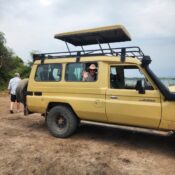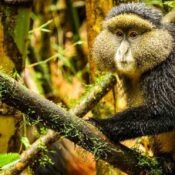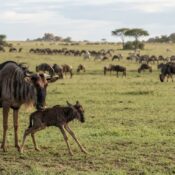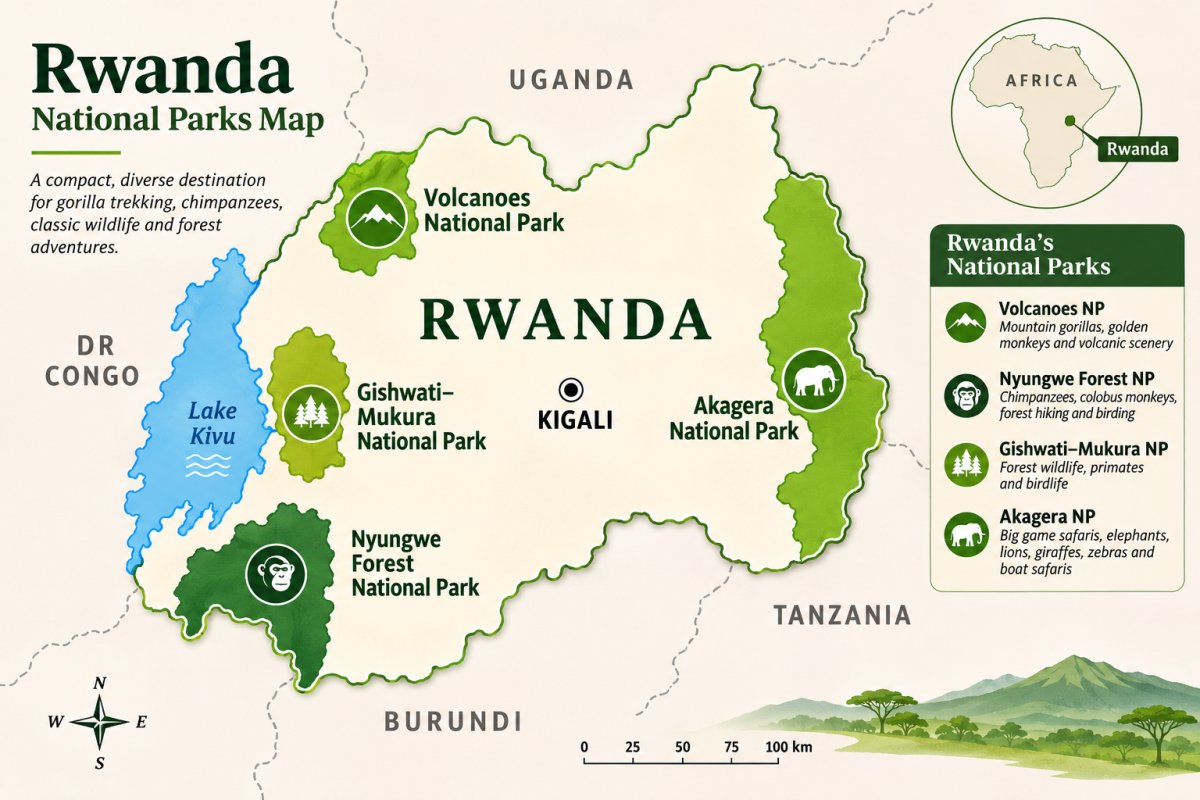
Rwanda’s wildlife story reaches well beyond mountain gorillas. The right Rwanda safari packages can combine gorilla trekking in Volcanoes National Park, golden monkey experiences in the same region, and classic wildlife viewing in Akagera, Rwanda’s only Big Five reserve.
It’s natural to focus first on seeing gorillas, but the best-fitting trip depends on the wildlife and places you want to experience, as well as the time you have. This guide explains what animals to expect, how gorilla trekking works, what kinds of stays are available, and how itineraries, trip lengths, and costs compare. You’ll also see how adding places such as Nyungwe National Park or Akagera can shape the route and pace of a safari. With those choices laid out clearly, it’s easier to picture a Rwanda trip that suits your priorities and make informed plans with a safari operator.
Key Takeaways
- Plan around the wildlife you most want to see, from mountain gorillas and golden monkeys to Akagera’s classic safari animals.
- Understand how gorilla trekking in Rwanda works and what to consider when planning your permit, park visit, and time on the trail.
- Compare lodge stays and trip options by route, length, and what each itinerary includes, rather than by price alone.
- Explore how Nyungwe Forest, Lake Kivu, and local cultural experiences can add variety to a Rwanda itinerary.
- Citizens of all countries can get a Rwandan visa on arrival without applying in advance, a policy in place since 1 Jan 2018, according to the Rwanda Directorate General of Immigration and Emigration.
Mountain gorilla trekking in Volcanoes National Park
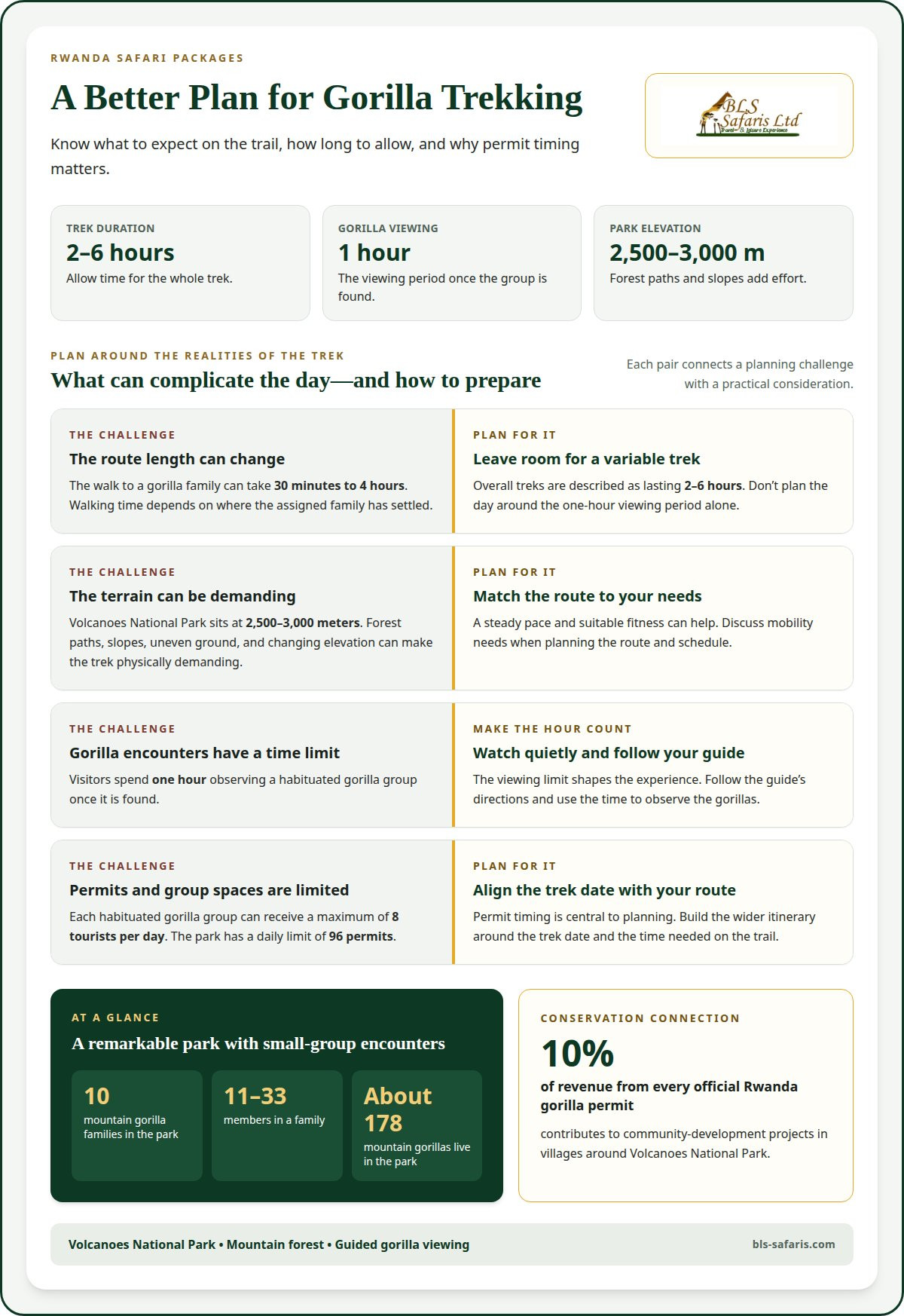
Gorilla trekking in Volcanoes National Park takes visitors into mountain forest to observe a habituated gorilla family. Plan for variable walking times, high elevation, limited permits, and a one-hour viewing period.
Gorilla Trekking Experiences
Each visit focuses on one habituated gorilla group. Rwanda’s Volcanoes National Park is home to 10 mountain gorilla families, with family sizes ranging from 11 to 33 members. About 178 mountain gorillas live in the park. The trek’s walking time depends on where the assigned family has settled.
The walk to a gorilla family can take 30 minutes to 4 hours. Overall treks are also described as lasting 2-6 hours, so allow time for more than the viewing period. Visitors spend one hour observing the gorillas once the group is found. That limit shapes the experience: watch quietly, follow the guide’s directions, and make the most of the time.
Volcanoes National Park sits at elevations of 2500-3000 metres. Its forest paths and slopes make the trek physically demanding, and the walking distance can vary with the gorilla family’s location. A steady pace and suitable fitness help visitors manage uneven ground and changes in elevation. Discuss mobility needs when planning the route and schedule.
Permit Fees and Visitor Limits
Each habituated gorilla group can receive a maximum of eight tourists per day, and Volcanoes National Park has a daily limit of 96 permits. These visitor limits help keep each group encounter small. They also make the permit a central part of planning: the trek date must align with the wider itinerary.
Since 1 Jan 2018, citizens of all countries can get a Rwandan visa on arrival without applying in advance, according to the Rwanda Directorate General of Immigration and Emigration. Keep this entry step in mind alongside the park visit when arranging travel dates and arrival plans.
Gorilla conservation also connects the trek with nearby communities. Ten per cent of revenue from every official Rwanda gorilla permit contributes to community-development projects in villages around Volcanoes National Park. The conservation story includes Dian Fossey, who spent 18 years studying gorillas in Rwanda’s Virunga Mountains. Visitors can deepen their understanding by learning about gorilla research and the role of local communities in protecting wildlife.
For a wider look at Rwanda and Uganda safari costs, wildlife, and packages, consider how the gorilla trek fits with other destinations. For example, a route can pair Volcanoes National Park with Lake Kivu while keeping permit timing and walking demands in view.
What accommodation options are available on Rwanda safari tours?
Accommodation shapes the pace, comfort, and overall cost of Rwanda safari tours. Options include city hotels, safari lodges, and camps, with the right fit depending on your route, room preferences, and time in each area. A Kigali stay suits an itinerary starting in the capital, while lodging near Akagera National Park can shorten daily travel to wildlife activities.
Room arrangements also shape the experience. A private room offers more personal space, while shared arrangements may suit travellers comfortable sharing. Consider how many nights your route spends in each location, not just the accommodation category. A well-paced plan connects each stay with the next activity and avoids long transfers without a clear purpose.
Trip length depends on the places and experiences you want to include. A full week is recommended for exploring Kigali, taking a gorilla trek, and visiting other areas. A comprehensive safari covering the main wildlife regions is often planned over 7-10 days, while sought-after wildlife experiences require at least 6-7 days. Shorter trips can focus on one region, such as Akagera National Park, rather than combining several distant stops.
Safety and comfort are also linked to the itinerary’s rhythm. A tightly packed schedule can leave little room to rest between drives and outdoor activities. A professional planner can arrange overnight stops around the route, accommodation needs, and planned experiences. This helps keep travel days practical, especially when a trip combines mountain scenery, wildlife viewing, and cultural visits.
Package prices vary with accommodation level, room occupancy, transport, route, meals, and activities. A clear itinerary should itemise lodging, meals, transport, and park fees and identify exclusions such as optional activities or personal expenses. Park fees and permits can make up a significant part of a wildlife-focused itinerary, so check that their inclusion is clear before booking. Compare what each package covers, not just its total price.
For entry planning, U.S. passport holders need a passport valid for at least six months from entry into Rwanda and receive a 30-day tourist visa on arrival. Since 1 Jan 2018, citizens of all countries can get a Rwandan visa on arrival without applying in advance, according to the Rwanda Directorate General of Immigration and Emigration. Include relevant vaccination records in your travel-document planning; specific vaccination needs depend on personal health and travel plans.
Choose your preferred stay style, room arrangement, and trip length, then have the route built around them. You can request a tailored Rwanda safari plan that sets out the itinerary and package inclusions clearly.
Conservation experiences and local culture
Rwanda’s conservation story extends beyond wildlife viewing. In Akagera National Park, Nyungwe Forest, and villages near protected areas, visitors can learn how landscapes, wildlife, and community life connect. A thoughtful itinerary pairs game drives or forest walks with locally guided experiences, giving each visit a clear focus rather than treating culture as a brief stop between activities.
Local guides add context to what you see along the route. In Akagera, a guide can explain how habitats support elephants and different bird species. Around Nyungwe, a forest walk introduces visitors to primates and other forest life. The value lies not only in spotting wildlife but also in understanding its habitat and how people interact with the landscape.
Nyungwe National Park is especially suited to primate and bird experiences. The park has 13 primate species, and forest activities can include chimpanzee tracking and a canopy walk. Pairing these experiences allows visitors to explore the forest from the trail and above the trees. A Nyungwe chimpanzee and canopy walk itinerary can help illustrate how a visit may combine guided wildlife activities with time in the forest.
Akagera offers a different conservation setting. Visitors can look for elephants and other wildlife during a game drive, then add a boat trip on Lake Ihema to see the park’s wetlands. Lake Ihema and its surrounding wetlands have over 500 bird species. This range makes the lake a strong example of how a safari can include more than land-based animal viewing. A guide can help visitors observe birds while explaining the wetland habitat.
Community visits offer another perspective. At Nyamirambo Women’s Centre, visitors can take part in a lunch and shop visit; proceeds help support the centre’s education and training programmes. This connects a cultural stop with local work. A visit is most meaningful when the itinerary allows time to engage with people and activities, rather than rushing through for a photograph.
Choose experiences that match your interests and route. For birdlife, consider Nyungwe or Akagera; for primates, plan time in Nyungwe; for community culture, include a visit such as Nyamirambo Women’s Centre. A local guide can connect each stop with its setting and explain what you’re seeing. Combining these activities adds depth while balancing wildlife, conservation, and local culture.
How many days can a professional plan for a comprehensive Rwanda safari experience?
A Rwanda itinerary can be shaped around your available time and priorities. For a comprehensive trip, connect Nyungwe Forest, Lake Kivu, and other wildlife areas without treating each stop as a separate journey. The key planning decision is how much time to allow for forest activities, lakeside experiences, and transfers between destinations.
Nyungwe Forest suits travelers interested in chimpanzee tracking and guided forest activities. A planned visit can combine chimpanzee encounters with a canopy walk, giving the forest more than one place in your itinerary. The Nyungwe chimpanzee and canopy walk itinerary shows how these experiences can fit into one regional plan.
Chimpanzee tracking differs from a mountain gorilla visit. It takes place in Nyungwe’s forest, while gorilla trekking is associated with Volcanoes National Park. Plan these experiences along a route that accounts for the distance between regions and allows time for each activity. This prevents the forest encounter from feeling like a quick stop between drives.
Lake Kivu offers a change of pace after time among trees and wildlife. A lakeside itinerary can include a coffee experience, connecting the landscape with local production and culture. Place Lake Kivu between forest activities and other destinations to avoid making it a separate journey. This balance allows time for outdoor exploration and relaxation by the water.
For a longer safari, combine Nyungwe Forest with Volcanoes National Park and Akagera National Park. This route brings forest primates, mountain gorillas, and savanna wildlife into one trip. A golden monkey experience can fit alongside a visit to the Volcanoes area, while Lake Kivu offers a distinct lakeside stop. The order depends on your starting point and the activities that matter most.
Route planning also determines how many days you need. A focused Nyungwe and Lake Kivu journey involves fewer regional changes than a circuit that adds Akagera and Volcanoes National Park. Weigh drive times, activity schedules, overnight locations, and your preferred pace. When these elements align, a comprehensive trip feels connected rather than rushed.
Share your priorities, whether chimpanzees, time by the lake, gorillas, or broader wildlife viewing. Your route and overnight stays can then be planned around those choices, including the forest and lakeside experiences that matter most. The result is an unforgettable Rwanda journey shaped by your available time and the places you want to explore.
Rwanda safari itinerary examples and prices
Rwanda itineraries range from focused wildlife trips to longer routes linking Kigali, forests, lakes, and savanna. Packages can combine guided activities, transport, accommodation, and park experiences; inclusions depend on the route and trip design.
Safari Destinations and Itineraries
Start with destinations that match your interests. A focused Akagera itinerary can center on game drives and a Lake Ihema boat cruise, while a primate trip can focus on Volcanoes National Park or Nyungwe Forest. Longer routes can connect Kigali, Nyungwe, Lake Kivu, and Akagera National Park. Compare itineraries by destination, activity time, and transfers.
A broader itinerary can link several regions, offering a different view of Rwanda’s landscapes and wildlife. The daily schedule shows how each destination fits into the journey and helps you decide whether to prioritize more activities or a slower pace.
Itinerary Accommodation
Accommodation follows the route, with overnight stays planned around each region and activity. Review the day-by-day itinerary to see where you’ll stay and how each location fits the schedule. Staying near a park can make an early wildlife activity easier to reach, while a night in Kigali may suit arrival or departure plans.
Room arrangements and comfort level also shape your trip. Consider how the accommodation choices fit your preferred pace and the destinations on your route.
Rwanda Safari Packages: Package Types and Inclusions
Options include Akagera wildlife trips, primate-focused journeys, gorilla and golden monkey combinations, and broader circuits across several destinations. Inclusions vary, so review whether your plan covers accommodation, meals, ground transport, guided activities, and park fees. Note any expenses that are separate.
Price depends on itinerary length, accommodation, transport, meals, activities, and park or permit fees; the total is provided after a quote request. Compare the itinerary and its inclusions alongside the overall cost, rather than relying on a headline figure alone.
A focused trip can center on one priority, such as Akagera wildlife or a primate encounter. A broader circuit connects more destinations and involves additional transfers and overnight stays. Use the daily schedule to judge which approach suits your interests and preferred pace.
BLS safaris: Rwanda Safaris
BLS safaris plans Rwanda safari packages for travelers who want to turn wildlife interests and available travel time into a clear itinerary. Its tailor-made journeys can combine gorilla trekking, Akagera wildlife viewing, Nyungwe Forest, and Lake Kivu around your priorities, with local guidance, clear routing, handpicked lodges, and transparent pricing.
Turn to BLS safaris when you’re ready to bring destinations, accommodation, transport, and activities together in one trip plan. For a wider regional route, East Africa Safaris can connect Rwanda with Uganda Safaris or Kenya Safaris.
Share the experiences and pace you have in mind, and invite BLS safaris to help shape your Rwanda trip. Contact BLS safaris.
Shape the Rwanda trip that fits you
First decide how you want the journey to feel: focused on one wildlife experience, balanced across different landscapes, or extended into a broader regional trip. That choice gives your safari planner a useful starting point for shaping the route, pace, and accommodation around your interests. The right Rwanda safari packages reflect your priorities, rather than simply adding more stops.
BLS Safaris plans Rwanda Safaris and broader journeys through our East Africa Safaris, Uganda Safaris, and Kenya Safaris. Share the places and experiences that matter most, along with the time you have available. A clear conversation can turn those preferences into a practical trip plan.
Start with the experience you most want to remember, then build the itinerary around it. Your Rwanda journey can begin with a simple idea and take shape one considered choice at a time.
Frequently Asked Questions
What wildlife can I expect to see when on safari in Rwanda?
Rwanda offers different wildlife experiences across its parks. Volcanoes National Park is known for mountain gorilla and golden monkey trekking, while Nyungwe National Park has 13 primate species, including chimpanzees. Akagera National Park is Rwanda’s only Big Five reserve, and Lake Ihema’s wetlands support over 500 bird species. Your sightings depend on the parks and activities included in your itinerary, so choose destinations around the wildlife you most want to experience.
When is the best time to visit Rwanda?
The best time to visit depends on your activities. For wildlife viewing, the dry seasons are June to September and December to February. For gorilla trekking, the dry seasons are June to September and December to January, while the rainy seasons run March to May and October to November. Birdwatching is ideal from December to January and May to September. Match your travel dates to your main interests rather than assuming one season suits every activity.
How do you choose a reliable tour operator for a Rwanda trip?
Choose an operator that clearly explains the route, daily activities, accommodation, transport, and package inclusions. Ask for a day-by-day itinerary showing how park visits fit together and allowing realistic travel between destinations. For a gorilla-focused trip, permit arrangements should be clear in the plan. Look for local guidance and direct answers about what is included. These details show how your journey will be organized.
How much does a luxury Rwanda safari cost?
Luxury safari costs depend on the itinerary, accommodation level, transport, meals, activities, and park fees. Private arrangements and the number of destinations also shape the plan. BLS Safaris provides a tailored, itemized quote based on your dates, route, and preferences. Compare the inclusions rather than relying on the word “luxury” alone, since comfort levels and experiences can differ between itineraries.
How safe is Rwanda for tourists?
A responsible trip plan makes transport, park activities, and daily arrangements clear before travel. Use the local guidance arranged for your itinerary, follow instructions during wildlife activities, and keep travel documents accessible. BLS Safaris can organize routing and activity logistics around your trip. Safety also depends on your needs and circumstances, so share mobility or other practical requirements during planning. This helps shape the itinerary around your comfort and the activities involved.
What are the major attractions in Rwanda?
Major attractions include mountain gorilla trekking in Volcanoes National Park, chimpanzee experiences and canopy walks in Nyungwe Forest, and wildlife viewing in Akagera National Park. Lake Kivu offers lakeside scenery, while Kigali’s Genocide Memorial provides an important place to reflect on the country’s history. These attractions suit varied interests, from primates and birds to culture and landscapes. A route can focus on one region or connect several destinations.
How much do Rwanda safari packages cost per person?
The per-person cost depends on your route, dates, accommodation, transport, meals, activities, and park or permit fees. Group size and room arrangements also affect how costs are shared. Compare Rwanda safari packages by their full inclusions and daily itinerary, not just the starting total. BLS Safaris provides an itemized quote based on your travel plans, making it easier to see how your chosen experiences shape the final cost.
What is the best time of year for a Rwanda safari?
For drier conditions across a broad wildlife itinerary, June to September is a useful period to consider. December to February is another dry season for wildlife viewing. If birdwatching is your main goal, December to January and May to September are considered ideal periods. The best dates still depend on your planned parks and activities, so build the itinerary around your priority experience first, then choose a season that supports it.