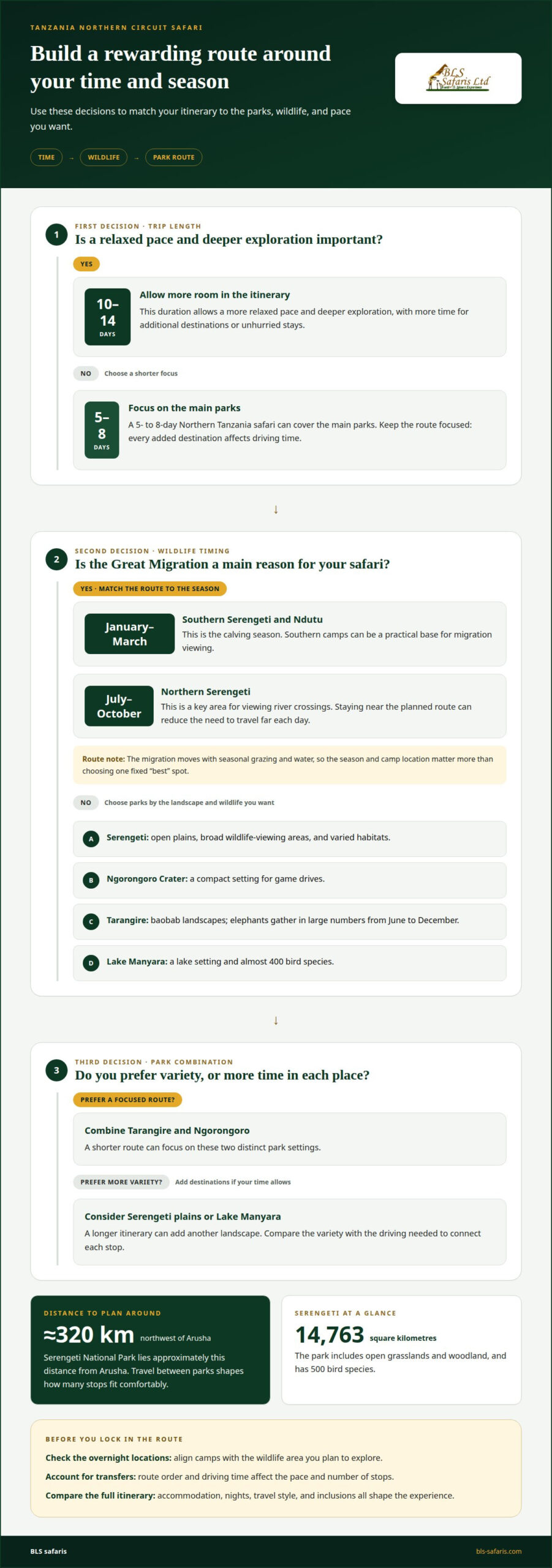
A rewarding Tanzania Northern Circuit Safari depends on the route as much as the number of days. A 5- to 8-day trip can cover the main parks, while 10 to 14 days allows a more relaxed pace and deeper exploration. The right length depends on which destinations you want to include and how much time you’d like between drives.
It’s natural to focus first on the Serengeti, Ngorongoro Crater, and Tarangire. But Northern Tanzania covers a wide area, so the order of stops and how you travel between them shape the experience. A well-planned Tanzania Northern Circuit Safari makes the most of your time without packing every day too tightly.
This guide explains where Northern Tanzania is, which circuit destinations and routes to consider, and how safari duration, prices, and transport compare. You’ll also see how the season and your preferred pace can influence the plan, so you can start shaping a trip around your interests and available time.
Key Takeaways
- See how Northern Tanzania’s location and seasonal migration patterns can shape where your safari focuses.
- Compare route styles and decide which parks and experiences belong in your itinerary.
- Understand how accommodation, trip length, and travel style affect safari costs.
- Learn how road transfers and flights can influence the pace and order of your stops.
- Discover how BLS Safaris can help shape a Tanzania safari around your interests and travel plans.
Where is Northern Tanzania?
Northern Tanzania lies around Arusha, with safari routes extending west toward Serengeti National Park and the Ngorongoro Conservation Area. Serengeti National Park is approximately 320 km northwest of Arusha. The region’s well-known parks include Tarangire, Lake Manyara, Ngorongoro, and the Serengeti. Together, these destinations make a Northern Circuit itinerary, with travel time between parks shaping how many stops fit comfortably.
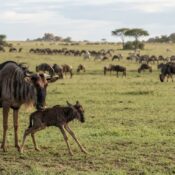
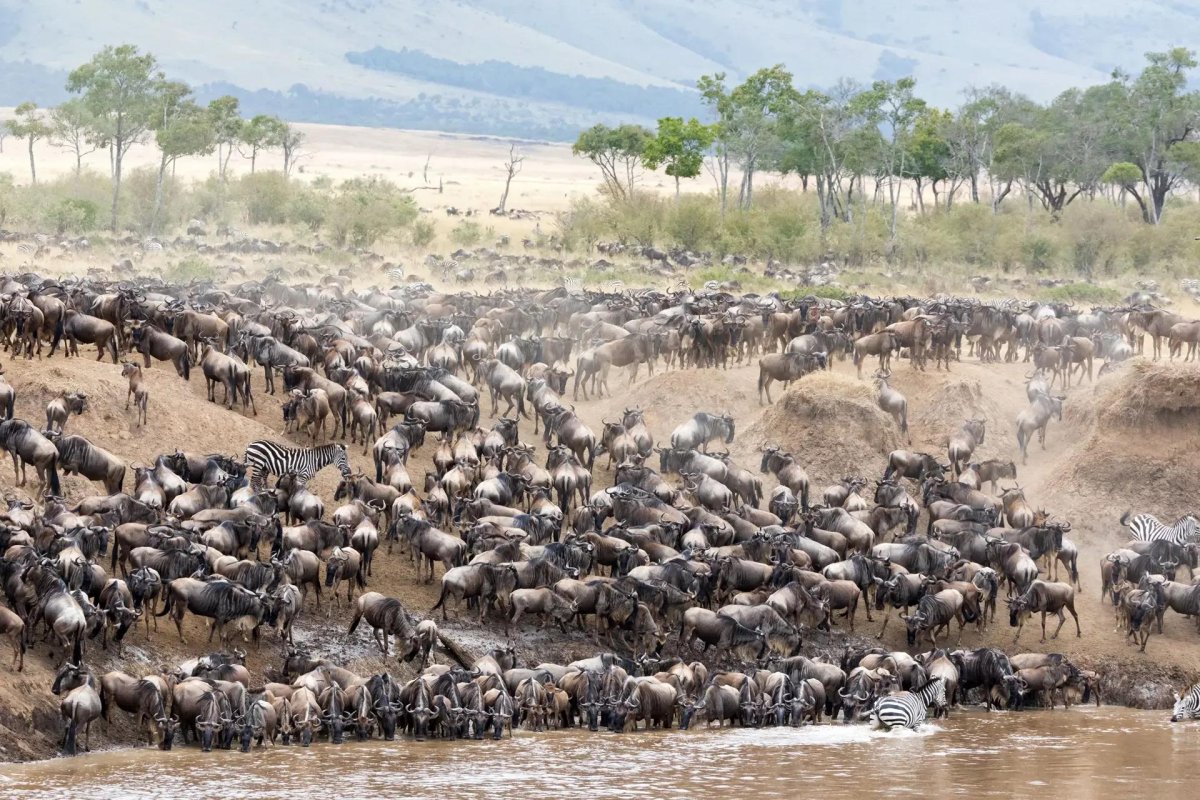
The Great Migration follows seasonal grazing and water across the Serengeti ecosystem. Millions of wildebeest move through Tanzania, with approximately 200,000 zebra also involved in the annual migration. January to March is the calving season in the southern Serengeti and Ndutu area, making southern camps a practical base for migration viewing then. From July through October, the northern Serengeti is a key location for viewing river crossings. The migration moves, so an itinerary’s season and camp location matter more than choosing one fixed “best” spot.
Serengeti wildlife viewing also offers chances to see the Big Five: lion, leopard, elephant, buffalo, and rhinoceros. Sightings depend on where animals are during a game drive, so a longer stay can provide more opportunities to explore different areas. In the southern plains, migration-focused itineraries can pair Ndutu with the Serengeti. In the north, staying near the route planned for river-crossing season reduces the need to travel far each day. Some mobile tented camps move every four months to follow the wildebeest migration.
For a migration-focused safari, match your overnight stops to the season and the wildlife area you want to explore. A camp near Ndutu fits a calving-season route, while northern Serengeti accommodation suits travel planned around river crossings. A route can also combine the Serengeti with Ngorongoro or Tarangire, but each added destination affects driving time. An eight-day Northern Circuit itinerary shows one way to structure a Tanzania route around several destinations.
When choosing an operator, look for clear routing, named overnight locations, transparent inclusions, and a suitable safari vehicle. Driving conditions and park requirements can make independent travel difficult, so consider arranging transport and guidance in advance. Park entry fees and rules can vary by park and visitor category, so the itinerary should show where fees apply and explain the relevant entry arrangements.
Visa requirements depend on your nationality and travel plans. Vaccination advice depends on your health history and itinerary, while travel insurance should address medical care, evacuation, and trip disruption. Discuss health preparations with a qualified travel-health professional before departure, and make sure your policy covers the activities and places on your safari route.
Tanzania Northern Circuit Safari Destinations and Itineraries
Choose parks based on the landscapes and wildlife you most want to see. Your route also needs to match your available days, preferred comfort level, and travel pace.
Park Combinations and Comparisons
Serengeti National Park is known for its open plains and broad wildlife-viewing areas, while Ngorongoro Crater offers a compact setting for game drives. Tarangire adds baobab landscapes and elephants, which gather there in large numbers from June to December. Lake Manyara brings a different park experience, with its lake and almost 400 bird species. Compare the range of landscapes with the driving needed to connect each stop.
Itinerary Length and Travel Style
A short itinerary can focus on a few parks, while an extended route leaves more time for additional destinations and unhurried stays. For example, a 5- to 8-day Northern Tanzania safari can cover the main parks; 10 to 14 days allows a more relaxed pace and deeper exploration. Custom-made plans can adjust the route and overnight stays around wildlife interests and travel style.
Accommodation is one way to shape the experience. Budget itineraries may use simpler lodging or camping, while mid-range plans balance comfort and time on safari. Luxury itineraries can prioritise higher-end stays and a more tailored rhythm. Across all styles, the route, number of nights, and accommodation choices shape the overall plan, so compare each itinerary’s inclusions rather than relying on its category alone.
For a shorter route, combining Tarangire with Ngorongoro can keep the focus on two distinct park settings. A longer itinerary can add the Serengeti plains or Lake Manyara, depending on interests and the time available. A Northern Circuit itinerary of eight days is one example of a route designed around several destinations. The best combination depends on whether you value more park variety or more time in each place.
Safety planning matters too. Road conditions can be challenging, so guided transport helps manage travel between parks. Keep a safe distance from wildlife and follow your guide’s instructions. Prepare for your health needs based on your route, arrange travel-health advice before departure, and choose insurance suited to your activities.
Serengeti, Ngorongoro, and Tarangire Itineraries
Combining these parks gives a safari a mix of open plains, crater landscapes, and wildlife-rich woodland. The best order depends on your route, chosen stops, and time available for game drives.
Serengeti Wildlife and Ecosystems
Serengeti National Park covers 14,763 square kilometres, with habitats that include open grasslands and woodland. These landscapes support varied wildlife viewing, and game drives can focus on different areas as the route crosses the park. The Serengeti also has 500 bird species. For migration-focused travel, the season and the location of overnight stays help shape where each day’s drive takes place.
Game Drives and Camping
Game drives let visitors explore more of the Serengeti than a single viewpoint, with driving time shaped by the park area and itinerary. Camping is one way to keep the route focused on wildlife destinations; for example, a five-day Tanzania budget safari is described as a camping safari. Compare overnight locations and the time planned for drives, not just the number of parks on the schedule.
A route can begin near Arusha and continue to Tarangire, then Ngorongoro and the Serengeti. Tarangire covers 2,600 square kilometres, while the Ngorongoro Crater spans 260 square kilometres and shelters close to 30,000 animals. These contrasts make the parks complementary rather than interchangeable. A shorter route may focus on Tarangire and Ngorongoro, while more days allow time for the Serengeti’s wider plains.
Lake Manyara can add another landscape to a multi-park itinerary, while a longer trip can include more nights in the Serengeti. One six-day route explores Tarangire, Lake Manyara, Serengeti National Park, and Ngorongoro Crater. A Serengeti migration and Ngorongoro itinerary show how the plains and crater can fit into one journey.
For a safari that continues to Zanzibar, allow time for both the wildlife route and the coast. The parks are spread out, so each added stop changes the driving pattern. Build the itinerary around the experience you value most: more time tracking wildlife in Serengeti National Park, a crater visit, or a wider mix of destinations.
Tanzania Northern Circuit Safari Durations and Prices
Safari length shapes how many parks fit and how much time remains for game drives. Tour costs depend on the route, travel season, accommodation, and transport style.
Safari Duration and Tour Options
A four-day safari can focus on a small selection of parks, while a five-day route can cover several Northern Circuit highlights. An eight-day itinerary gives more room for the Serengeti and Ngorongoro, and a longer plan can add time at Lake Manyara or Tarangire. Choose the duration by balancing park variety against time spent travelling between stops.
The season can shape the route as well as the daily plan. A February or March itinerary may focus on the migration in the southern Serengeti, while July through October can suit travel to the northern Serengeti for river crossings. A seven-day tour can include a migration focus, while a trip of 10 to 14 days allows a more relaxed pace and deeper exploration.
Per-Person Safari Prices
Per-person safari prices vary with the number of travel days, accommodation level, transport, park choices, and season. A budget camping plan and a luxury lodge itinerary have different cost structures, even when both include the Serengeti. The price of a tailored safari depends on its details and is provided after a quote request.
Compare tour options by checking what the per-person figure covers, such as accommodation, transport, meals, and planned activities. The route matters too: adding Lake Manyara or Tarangire changes the travel plan, while extra nights in the Serengeti affect accommodation and trip length. Look for clear inclusions so you can compare like with like.
A shorter safari may suit travelers with limited time, but several long transfers can leave less time for wildlife viewing. An extended itinerary can spread park visits across more days and allow a slower pace. For example, a six-day itinerary can combine Tarangire, Lake Manyara, Serengeti National Park, and Ngorongoro Crater. A safari followed by Zanzibar beach time needs additional days for the coast.
Mount Kilimanjaro can also be part of a broader Tanzania holiday, but climbing and wildlife safaris are different experiences. Decide which activities matter most before setting the itinerary length. Whether you choose camping or lodges, a famous park or a wider variety of landscapes, start comparisons with the route, nights, and inclusions.
How a Safari Operator Arranges Transport Around the Tanzania Northern Circuit Safari
Transport planning connects arrival points, park gates, overnight stops, and game drives into a workable route. For a safari in Africa, the operator matches each road transfer to the itinerary, giving travel between Arusha, Tarangire National Park, Ngorongoro, and the Serengeti a clear purpose.
First, the operator aligns the arrival transfer with your flight and first overnight stop. Kilimanjaro International Airport is a half-hour drive from Arusha, while the flight from Dar es Salaam to Arusha takes two hours. Travel time between Arusha and Lake Manyara is one factor to consider when planning the route.
Next, the operator plans travel between parks around your chosen stops. The route may link Tarangire National Park with Ngorongoro Crater before continuing to Serengeti National Park, rather than doubling back through Arusha. The order affects how much of each day is available for wildlife viewing, so the plan should distinguish transfer time from game-drive time.
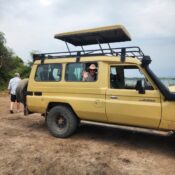
Road conditions also shape the schedule. Heavy rains in northern Tanzania may affect roads in April and May, changing journey times and the practical order of stops. Self-driving is unsuitable because roads can be challenging, signage is limited, and park regulations require experienced guides. A guided vehicle helps coordinate park access and travel between destinations.
For migration travel, the operator matches road routing and overnight locations to the area where wildebeest are expected seasonally. A northern Serengeti route for river crossings differs from a southern route around Ndutu during calving season. Keeping the camp close to the planned wildlife area reduces unnecessary transfers and leaves more time for drives. Elephants in Tarangire and migration viewing in the Serengeti can shape different route priorities.
Before travel, the itinerary should make each transport stage easy to follow: arrival pickup, transfer to the first stay, journeys between parks, and the final departure transfer. It should name overnight stops and show where game drives fit between them. This is especially useful when an iconic wildlife adventure combines several parks or continues beyond the circuit. Clear routing helps you understand how each transfer supports the experience, not just how far the vehicle travels.
BLS safaris: Tanzania Safaris
BLS safaris can turn your Northern Circuit plans into a clear Tanzania safari itinerary . Our tailor-made safari planning brings together route choices, handpicked lodges, local guidance, and support from enquiry through travel. This is useful when you want several parks connected at a comfortable pace.
Start with the essentials: your travel dates, available days, preferred accommodation style, and main wildlife interests. These choices shape the route. A Serengeti migration focus, for example, can affect where the itinerary spends its nights, while adding Ngorongoro Crater or Tarangire changes the journey between stops. BLS safaris can use these priorities to plan a route around the experience you value most.
Trip length is another key decision. An eight-day Northern Circuit plan offers one starting point for arranging park visits, while a shorter or longer trip can be tailored to your schedule and interests. Good planning connects overnight stays with park visits and road transfers, rather than treating each destination as a separate booking. This helps you understand how the itinerary fits together before travel.
Accommodation and routing also influence the character of a safari. BLS safaris plans tailor-made trips with handpicked lodges and clear routing, so you can see where you’ll stay and how each stop connects. Transparent, itemised pricing makes it easier to understand the proposed plan, including permits, transport, lodging, and meals, with no hidden fees, ever.
If your wider trip includes more than Tanzania, BLS safaris also plans East Africa Safaris, Uganda Safaris, and Kenya Safaris. A multi-country journey can bring several destinations into one itinerary, while a Tanzania-focused plan keeps the time and route centered on its parks. The right option depends on your priorities and how much of the region you want to experience.
Before planning, bring together your preferred travel dates, trip length, accommodation preferences, and must-see experiences. These details give the itinerary a practical starting point. BLS safaris can guide your route and lodging choices and provide support from enquiry through travel. Contact BLS safaris to begin planning a Tanzania safari around your trip.
Frequently Asked Questions
What is the Northern Circuit?
The Northern Circuit is a safari route through northern Tanzania’s main wildlife areas. It commonly links Serengeti National Park, Ngorongoro Conservation Area, Tarangire National Park, and Lake Manyara National Park. Arusha is a common starting point for road journeys between these destinations. The route isn’t a fixed itinerary: the park combination, overnight stops, and travel pace can all change to suit the trip.
What’s Excluded?
Anything outside the package’s stated itinerary and inclusions should be treated as an extra, not assumed to be part of the trip. BLS Safaris’ quoted packages include permits, transport, lodging, and meals as set out in the itinerary. Optional add-ons are quoted separately. Before booking, review the itinerary to see which meals, accommodation, permits, and activities are covered by your package.
What’s Included?
BLS Safaris’ quoted safari packages include permits, a vehicle for transport, lodging, and meals according to the itinerary. The itinerary shows how those elements fit together, including where you stay and which journeys are planned. For example, a package with several park stops will show its route and overnight arrangements, so you can understand the travel plan alongside the wildlife activities.
What is Tanzania’s Northern Circuit safari and which parks are included?
A Northern Circuit safari is a wildlife journey through parks and conservation areas in northern Tanzania. Common stops include Serengeti National Park, Ngorongoro Conservation Area, Tarangire National Park, and Lake Manyara National Park. Not every itinerary includes all four. A shorter trip may concentrate on fewer parks, while a longer route can add destinations or allow more time at each stop.
What is the best time of year for a Northern Circuit safari?
The best season depends on the wildlife and landscapes you want to experience. Northern Tanzania’s dry-season wildlife-viewing period generally runs from June through October, while the green season runs from November through March. The southern Serengeti and Ndutu area are associated with calving from January to March. The northern Serengeti is a key area for river crossings from July through October.
How many days are needed for a Tanzania Northern Circuit safari?
Plan around 5 to 8 days for the main parks, or 10 to 14 days for a more relaxed itinerary with deeper exploration. The shorter range suits travelers prioritizing key stops; the longer range leaves more room for additional nights and less hurried transfers. Include arrival and departure arrangements when counting your available safari days, so park visits don’t have to compete with flight connections.
What is the Great Migration schedule in Serengeti National Park?
The Great Migration moves through the Serengeti ecosystem throughout the year, following grazing and water. From January to March, the southern Serengeti and Ndutu area are associated with calving. From July through October, the northern Serengeti is a key area for planning river-crossing viewing. Because the animals move seasonally, align overnight locations with the area you hope to explore.
How much does a Northern Circuit safari cost, including park fees and lodging?
There isn’t one fixed price for every Northern Circuit itinerary. The cost depends on the route, travel dates, accommodation, transport, and trip length, as well as the permits and meals in the plan. BLS Safaris provides a price after a quote request, with permits, transport, lodging, and meals included in its quoted packages. Review the itinerary’s inclusions to understand how park visits and stays are covered.