A rewarding Uganda wildlife safari starts with choosing what you most want to see. Uganda’s dry seasons for gorilla trekking run from July to October and December to February; for gorilla and chimpanzee tracking, they fall from December to February and June to September. The green season, from November to April, brings migratory bird species from Europe and northern Africa.
Start with the calendar, then consider how Uganda’s regions and waterways shape the journey. This guide explains how seasonal conditions affect your plans, where to look for wildlife along the Victoria Nile and Kazinga Channel, and what Kidepo Valley adds to a route through northeastern Uganda. It also covers practical ways to connect Uganda with a wider East African itinerary, so you can choose a journey suited to your interests and available time.
Key Takeaways
- Match your travel season to your priorities, and plan gorilla or chimpanzee permits three to six months ahead to improve your chance of securing availability.
- In Murchison Falls National Park, combine time on the Victoria Nile with land-based wildlife viewing for a varied safari experience.
- Use a Kazinga Channel boat safari to observe wildlife along the water, including hippos and birdlife.
- Build an East African itinerary around the experiences and regions you value most, allowing for the travel connections between destinations.
- Consider Kidepo Valley National Park for a northeastern Uganda safari, with a distinct setting and a wide range of wildlife.
1. When is the Best Time for Wildlife Viewing in Uganda?
For gorilla trekking in Bwindi and Mgahinga, Uganda’s dry seasons are July to October and December to February. Gorilla and chimpanzee tracking also has a dry season from June to September, as well as December to February. These periods can suit travellers prioritising forest treks, while the green season, from November to April, brings migratory bird species from Europe and northern Africa. Choose dates around the wildlife experiences that matter most to you.
Rainfall can affect a day’s plans, but no single month suits every traveller. April, May and November bring heavy rainfall and some sunshine for gorilla safaris. June, July, August and late December are peak seasons for gorilla trekking in Uganda and Rwanda For a Uganda wildlife safari, weigh seasonal conditions alongside your preferred destinations and activities, such as birding or visiting Kidepo.
Bwindi Impenetrable National Park is home to nearly half of the world’s mountain gorillas, spread across four sectors. Its forest setting makes trekking here distinct from wildlife viewing on open plains. Mgahinga Gorilla National Park offers another location for mountain gorilla trekking, with one habituated gorilla family. Compare how each park fits your wider route and the gorilla experience you want.
Permits shape the planning sequence. Gorilla trekking in Uganda is limited to eight visitors per gorilla family per day, so availability depends on the family and date. Booking gorilla and chimpanzee permits three to six months in advance increases the chance of securing availability. First choose your park and preferred trekking period, then arrange the rest of the itinerary around those plans.
Gorilla habituation is separate from standard trekking. In Bwindi, two gorilla groups are available for the habituation experience, which focuses on observing a group becoming accustomed to human presence. It may suit travellers looking for a different kind of forest visit. Compare the experience with standard trekking before setting dates, since the activity and location affect how it fits your route.
For a connected itinerary, consider how Bwindi or Mgahinga pairs with other wildlife stops rather than treating gorilla tracking as an isolated visit. A gorilla trekking and wildlife itinerary in Uganda can help frame the route around forest trekking, birding or other park experiences. Set the gorilla location and permit dates first, then build the remaining stops around them.
2. Nile wildlife safaris in Murchison Falls National Park
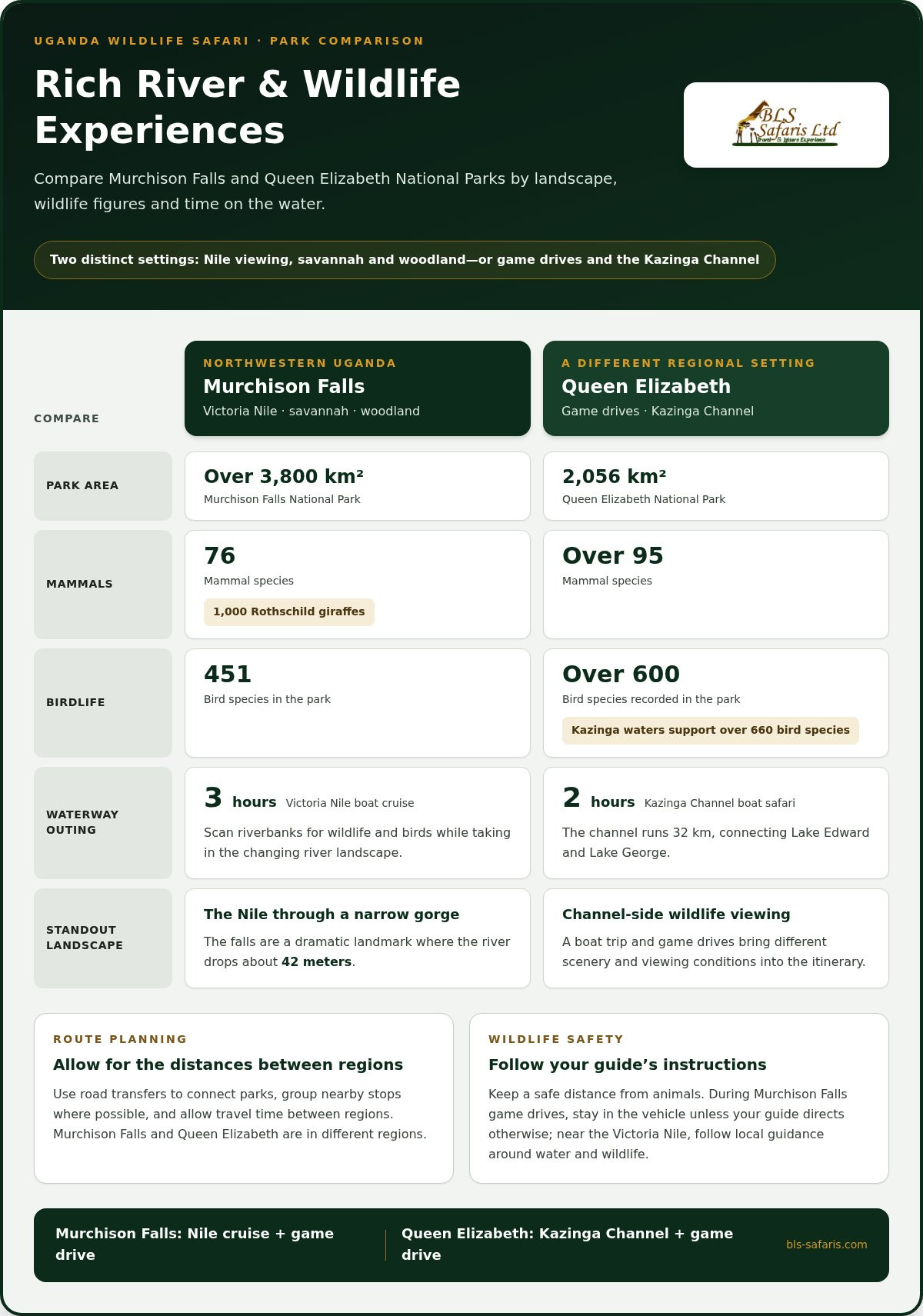
Murchison Falls and Queen Elizabeth National Park offer different wildlife settings. Murchison combines Nile viewing, savannah and woodland, while Queen Elizabeth pairs game drives with the Kazinga Channel. Compare each park’s location with your route: Kidepo lies in northeastern Uganda, while Murchison and Queen Elizabeth are in different regions.
Murchison Falls National Park covers over 3,800 km² in northwestern Uganda and supports 76 mammal species. Its open landscapes create opportunities to look for wildlife during game drives, while the Victoria Nile adds a water-based perspective. The Falls form a dramatic landmark where the Nile passes through a narrow gorge and drops about 42 metres. The park is also home to a population of 1,000 Rothschild giraffes.
A boat cruise on the Victoria Nile lasts three hours. From the water, scan the riverbanks for wildlife and birds, and enjoy a view of the river’s changing landscape. Murchison Falls National Park has 451 bird species, making the cruise relevant to visitors interested in birding as well as mammals. Pairing a boat trip with a game drive gives you two distinct ways to explore one national park.
Queen Elizabeth National Park offers a useful contrast for wildlife viewing. It covers 2,056 square kilometres and supports over 95 mammal species, with more than 600 bird species recorded there. Game drives and the Kazinga Channel bring different scenery and viewing conditions into the itinerary. Comparing Queen Elizabeth National Park with Murchison Falls helps you choose between river-focused exploration and a varied park visit.
Plan travel between Uganda’s national parks around their locations and your activities. Use road transfers to connect parks, group nearby stops where possible, and allow travel time between regions. For example, arrange Murchison Falls and Queen Elizabeth in a practical sequence instead of adding distant destinations without accounting for the route.
Prepare for health and wildlife risks with a few simple habits. Carry personal medicines and insect protection, follow your guide’s instructions, and keep a safe distance from animals. In Murchison Falls National Park, stay in the vehicle during game drives unless your guide directs otherwise. Near the Victoria Nile, follow local guidance around the water and wildlife.
For a Uganda wildlife safari, pack for both vehicle viewing and time outdoors. Bring comfortable closed-toe shoes, lightweight clothing, a rain layer, sun protection and binoculars for birding. In Murchison Falls, boat trips and game drives call for practical layers suited to changing conditions. Keep essentials easy to reach during transfers between parks.
To shape the route around river time and land-based wildlife viewing, consider a Murchison Falls safari itinerary. If you’d like help arranging park stops and transfers, share your Uganda safari plans.
3. Boat safaris on the Kazinga Channel and Victoria Nile
A boat safari offers a different way to experience Uganda’s wildlife, bringing the waterway and its banks into view. In Queen Elizabeth National Park, the Kazinga Channel boat safari lasts two hours. The channel runs 32 kilometres, connecting Lake Edward and Lake George. Its waters support over 660 bird species, and the area is known for having the world’s highest concentration of hippos.
On a Kazinga Channel cruise, watch the shoreline as well as the water. Hippos are a defining sight, and birdlife adds another focus. Bring binoculars if you have them, and scan both banks rather than looking only ahead. Taking your time can help you spot smaller details, including birds near the water’s edge.
The Victoria Nile offers a complementary boat experience in Murchison Falls National Park. Rather than comparing the rivers using a single wildlife checklist, consider the character of each outing and how it fits your route. The Kazinga Channel pairs naturally with Queen Elizabeth’s game drives. The Victoria Nile places the boat trip within Murchison’s wider landscape and river setting.
Build your day around the boat trip’s location. In Queen Elizabeth National Park, combine the Kazinga Channel with a game drive to experience both land and water. At Murchison Falls, include the Victoria Nile in a broader park visit. These combinations make a boat safari a distinct activity, not a substitute for driving through the park.
Water-based viewing can balance a more active itinerary. Gorilla trekking involves walking through forest terrain, while chimpanzee tracking in Kibale is another forest experience. A boat trip offers a different pace and viewpoint compared to these activities. Travellers interested in mountain gorillas, chimpanzees and wildlife viewing can add variety with river outings, rather than making every park day a trek or climb.
Keep binoculars and a camera within reach, and follow your guide’s instructions aboard. Allow the full two hours for a Kazinga Channel cruise; on the Victoria Nile, plan around the boat outing and other park activities. The right pairing depends on whether your itinerary prioritises Queen Elizabeth National Park, Murchison Falls, or both.
4. Combining Uganda with East African safari itineraries
Yes. Combine wildlife viewing in Uganda with gorilla trekking or chimpanzee tracking, then extend the route to other East African destinations. For a balanced plan, pair permit-based forest activities with broader wildlife experiences and arrange stops in a practical travel sequence.
Begin by choosing the experiences that will anchor your trip. Gorilla trekking in Bwindi or Mgahinga and chimpanzee tracking in Kibale each require a visit to a specific park. Murchison Falls adds Nile landscapes, while Budongo Forest can complement a northern Uganda route. These locations help determine the order of stops before you consider adding another country.
Rwanda can be a natural neighboring-country addition for travelers interested in gorilla trekking across the region. Kenya or Tanzania can extend an East African journey with a different country focus. Instead of trying to include every destination, choose the experiences that matter most, then plan around the distances and sequence between them.
Think of a combined itinerary as connected regional chapters. Uganda can offer forest trekking, river scenery and national park visits. Rwanda, Kenya or Tanzania can follow if their experiences match your priorities. A logical route between destinations helps make travel days purposeful and leaves time to enjoy each place.
Use this planning order:
- Choose the main experience, such as mountain gorilla trekking or chimpanzee tracking.
- Select the Ugandan parks that support that plan, such as Bwindi, Kibale or Murchison Falls.
- Decide whether Rwanda, Kenya or Tanzania adds a meaningful next chapter.
- Arrange transfers and activity dates around the selected locations.
Planning the sequence also helps avoid a common mistake: adding distant stops before working out how they connect. A northern Uganda visit to Murchison Falls and Budongo Forest needs a different route from a journey centered on Bwindi and southwestern Uganda. Choose your regions first, then plan cross-border travel around them.
Uganda, Kenya and Tanzania can form one connected three-country journey rather than separate trips. Plan the route around your preferred wildlife and scenery, where you want to spend time, and how much travel you want between stops. A Uganda, Kenya and Tanzania itinerary gives you a framework for making those decisions. For a Kenya extension, this guide to how many days in the Masai Mara can help you plan time for game drives without rushing.
Keep the overall pace realistic. Gorilla permits and chimpanzee tracking dates determine when you need to be in particular parks, while other stops can be arranged around them. Set activity dates early when combining Uganda with other East African destinations, especially if your journey also includes Rwanda or places farther afield.
5. Safari destinations and wildlife in northeastern Uganda
Kidepo Valley National Park gives a Uganda wildlife itinerary a distinct northeastern chapter. The park covers about 1,440 square kilometers and supports 77 mammal species. It is also recorded as having 475 bird species, making it a meaningful choice for travelers who want game viewing and birding in one destination. Its wide, open setting contrasts with forest visits elsewhere in Uganda.
Choose Kidepo for its regional experience, not simply as another stop on the route. Its position in northeastern Uganda means you need to plan the journey around the other parks in your itinerary. Decide first whether Kidepo is a priority, then allow enough time for its game drives and birding.
The park’s range of mammals and birds creates two complementary ways to spend time there. On a game drive, focus on scanning the landscape and watching for movement rather than expecting every sighting in one area. For birding, take time to observe carefully and identify species as you go. Kidepo’s 475 recorded bird species give dedicated birdwatchers a clear reason to plan time beyond general wildlife viewing.
When shaping a broader Uganda safari, compare Kidepo with forest-based destinations such as Bwindi, Kibale and Mgahinga. These parks are associated with gorillas, chimpanzee tracking and forest activities, while Kidepo offers a different setting for wildlife viewing. Decide which habitat and activity you want from each park rather than treating gorilla tracking and Kidepo as interchangeable.
Conservation is part of visiting Uganda’s protected destinations. Follow your guide’s instructions, observe wildlife without approaching it, and leave the natural environment undisturbed. These simple choices matter in Kidepo, as they do during gorilla trekking near habituated mountain gorillas in Bwindi or Mgahinga. Each location and activity has specific guidance, so follow the instructions for your visit.
For a practical route, choose Kidepo alongside destinations that match your interests, then plan the travel sequence. A journey centered on northeastern Uganda can focus on Kidepo’s wildlife and scenery; a broader itinerary can connect it with forest tracking or other national parks. Decide whether Kidepo will anchor the route or complement another priority.
BLS safaris: East Africa Safaris
BLS safaris helps bring your Uganda wildlife plans together with a clear route and experiences shaped around your priorities. Our Uganda Safaris can focus on wildlife, gorilla trekking or cultural experiences, while East Africa Safaris can connect Uganda with Kenya or Tanzania.
Turn to BLS Safaris when you’re ready to coordinate park visits, travel between regions and the wider itinerary. Safari planning includes local guidance, handpicked lodges and transparent pricing, with support from enquiry through travel. It’s a practical next step if you want help connecting your preferred season, river experiences and destinations in one journey.
Explore BLS Safaris’ options and get in touch through bls-safaris.com.
Make your next planning decision
Your Uganda wildlife safari can start with one clear choice: the experience you most want to build the journey around. Then decide how much of the trip to spend in Uganda and whether to include neighboring destinations. A focused route leaves more time for each place, while a wider East African journey can connect distinct experiences across borders.
BLS Safaris offers Uganda Safaris and East Africa Safaris , with Kenya Safaris as an option for extending your travels. Share your priorities, preferred destinations and travel window to start shaping a route that fits. The next step is to turn those ideas into a plan.
Make one planning decision at a time, and let your interests guide the journey.
Frequently Asked Questions
When is the Best Time for Wildlife Viewing in Uganda?
The best time depends on whether your priority is forest tracking, savannah wildlife or birding. Choose dates around your main activity first, then arrange park visits and transfers accordingly. For example, if you’re combining a forest trek with game drives, consider how conditions affect both activities rather than planning around one park alone. Birders can also weigh seasonal migration alongside their preferred locations.
How much does a Uganda Safari cost?
There’s no single cost for every Uganda safari: the total depends on destinations, dates, transport, lodging and selected activities. A trip focused on one park differs from a multi-region route with tracking permits and several stays. BLS Safaris provides personalized quotes based on your itinerary, dates and budget. Safari packages include permits, transport, lodging and meals, so you can assess the trip as a complete plan.
What are the best national parks for a wildlife safari in Uganda?
The best park depends on what you hope to see. Choose Murchison Falls for Nile scenery and game drives, Queen Elizabeth for varied wildlife experiences, or Kidepo Valley for a northeastern route. Bwindi and Mgahinga suit travelers prioritizing mountain gorilla trekking, while Kibale is known for chimpanzee tracking. If you’re combining parks, compare their activities and the route between them before choosing your stops.
When is the best time of year for a Uganda wildlife safari?
For a Uganda wildlife safari, first decide whether your main focus is trekking, general wildlife viewing or birding. Seasonal conditions can affect these activities differently, so a mixed itinerary should allow flexibility between forest visits and open-country game drives. Birders can also consider the green season’s migratory species. Set key activity dates first, then build the rest of your journey around them.
Which animals can you see on safari in Uganda, and where?
Wildlife viewing varies by destination in Uganda. Queen Elizabeth National Park’s Kasenyi Plains are known for elephants, buffaloes, lions and leopards; wild white rhinos can be seen at Ziwa Rhino Sanctuary. Kibale is a destination for chimpanzees, while Bwindi and Mgahinga are associated with mountain gorillas. Match each wildlife priority to its location, then plan your route around those experiences.
How much does a Uganda safari cost, including park fees, lodging, and transport?
The overall cost depends on the parks, activities, travel dates, lodging choices and transport needed for your route. Plan for park entry and permits alongside accommodation and transfers, and compare complete itineraries rather than individual items alone. BLS Safaris builds customized journeys around destinations, dates and budget, with quotes that set out the components of your planned safari.
What are the current Uganda national park entry fees and safari permit prices?
There isn’t one total fee for every itinerary: park entry and activity permits depend on the places and experiences you choose. Gorilla trekking and chimpanzee tracking involve activity-specific permits, while a game-drive itinerary has different planning components. To budget, identify your parks and planned activities first, then factor in lodging and transport. A personalized safari quote can bring those elements together.
How do you book a gorilla trekking permit in Uganda, and what are the rules?
Choose your park and preferred trekking period, then book your permit three to six months in advance to improve your chance of securing availability. Gorilla trekking is limited to eight visitors per gorilla family per day.